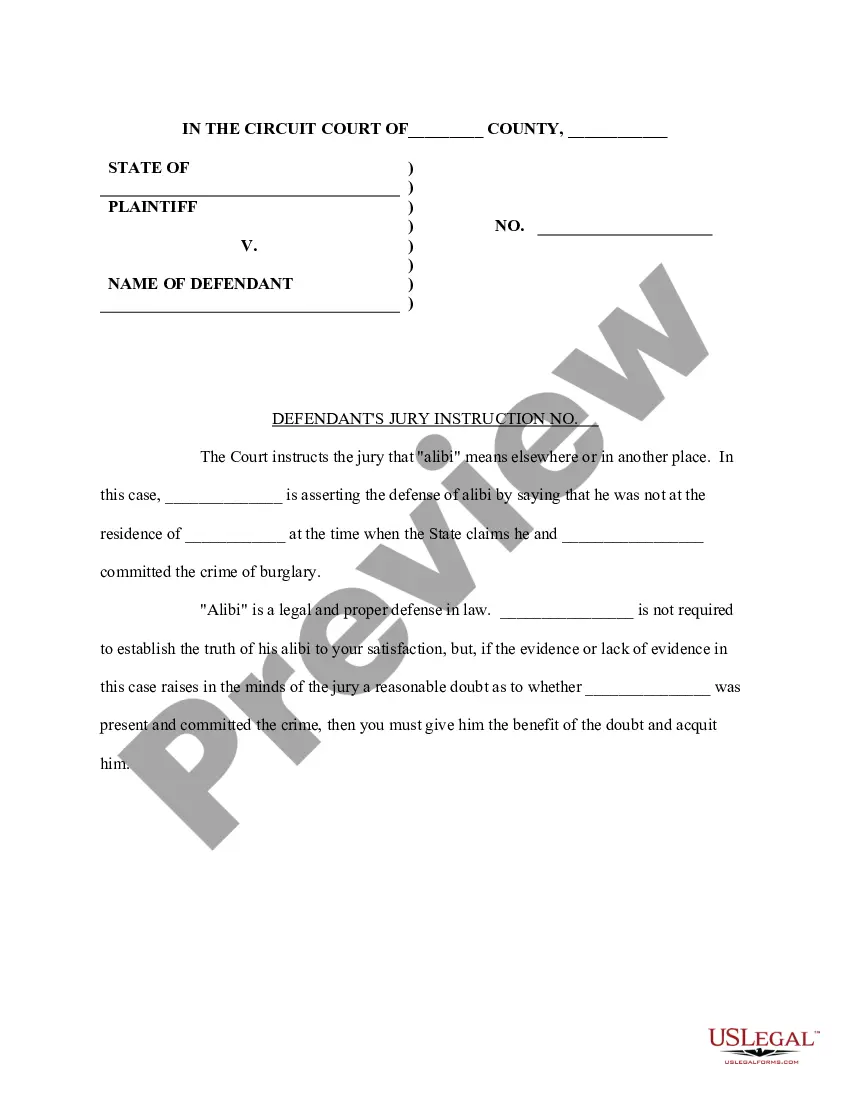
Minnesota Alibi Instruction
Description
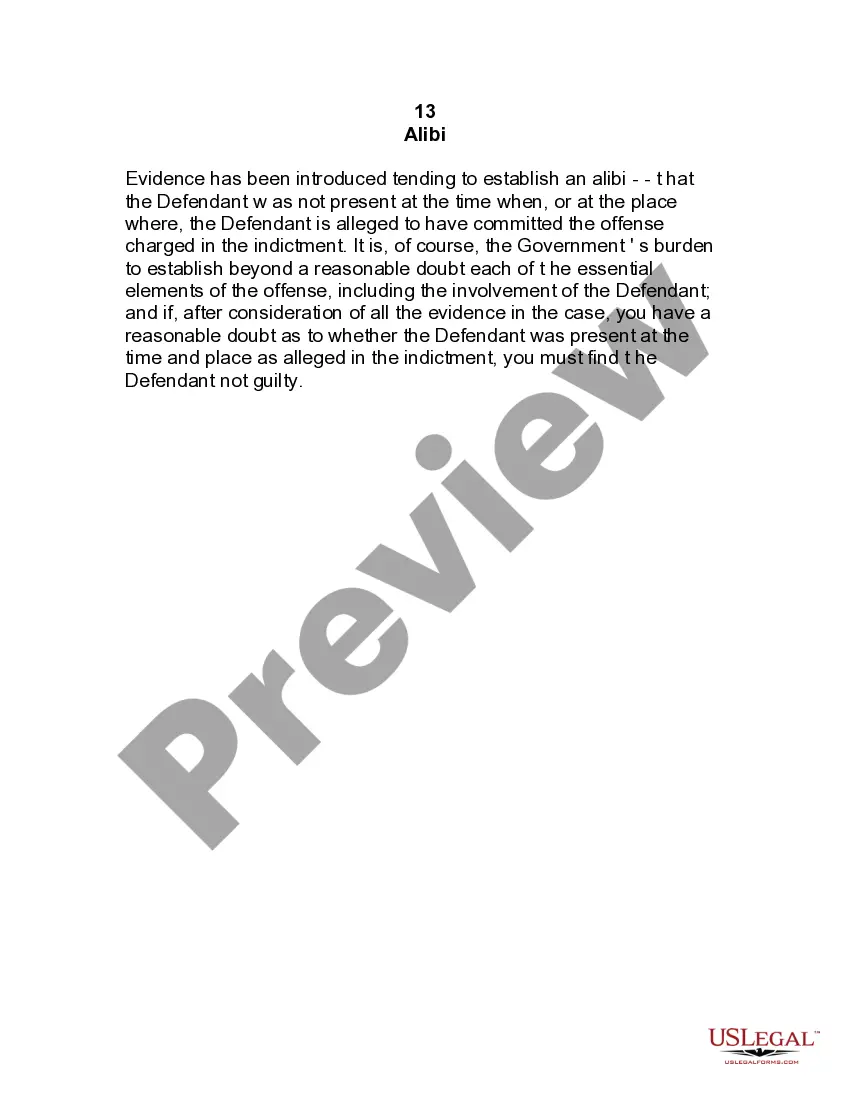
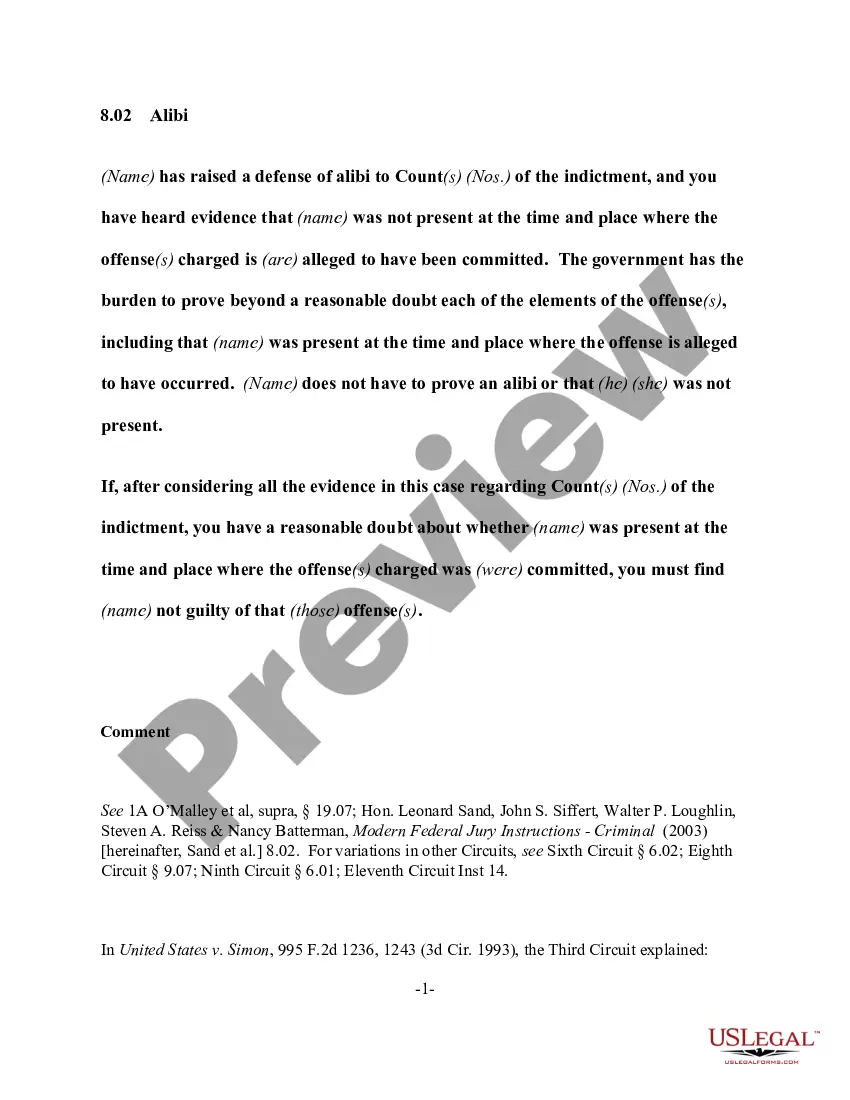
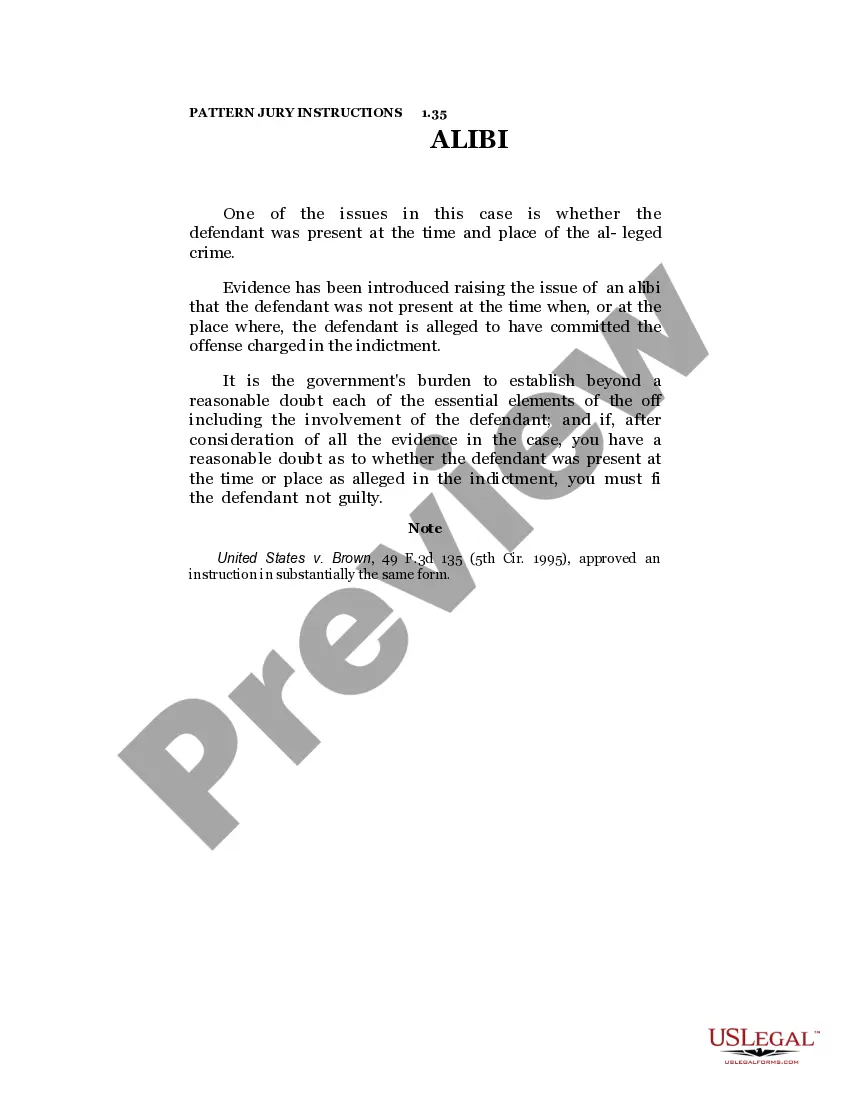
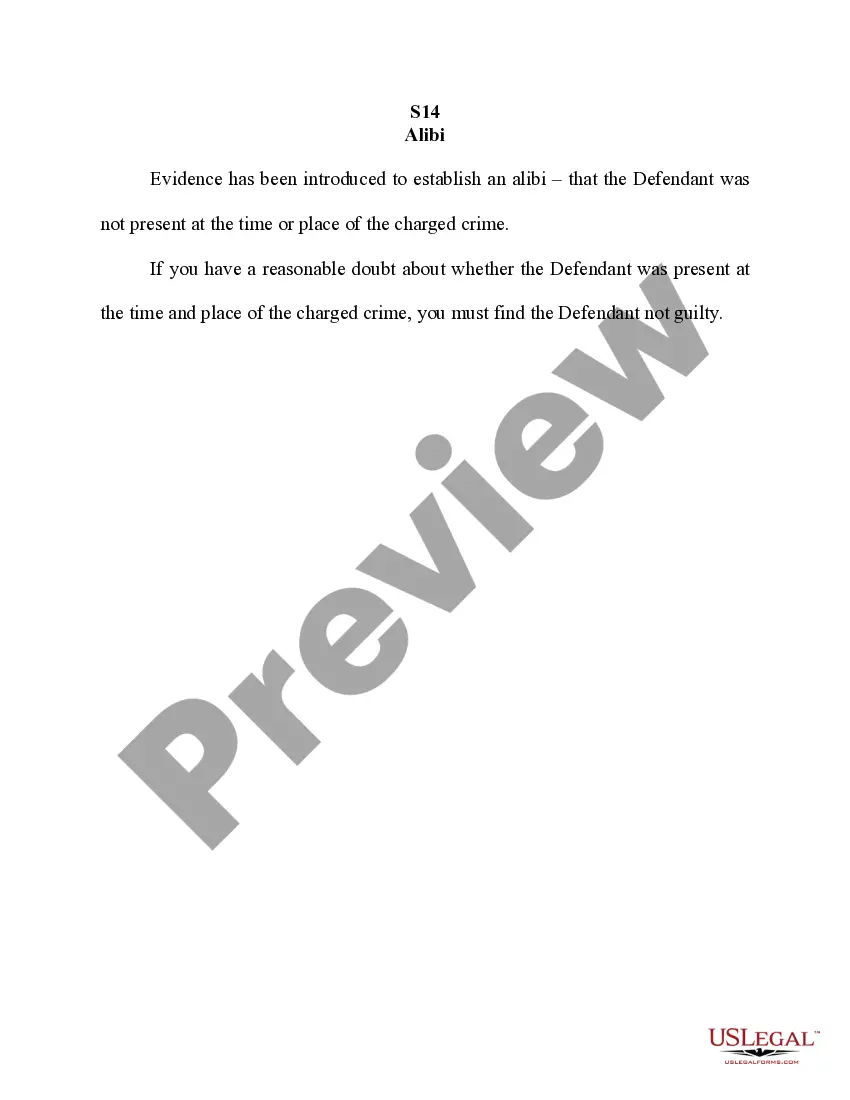
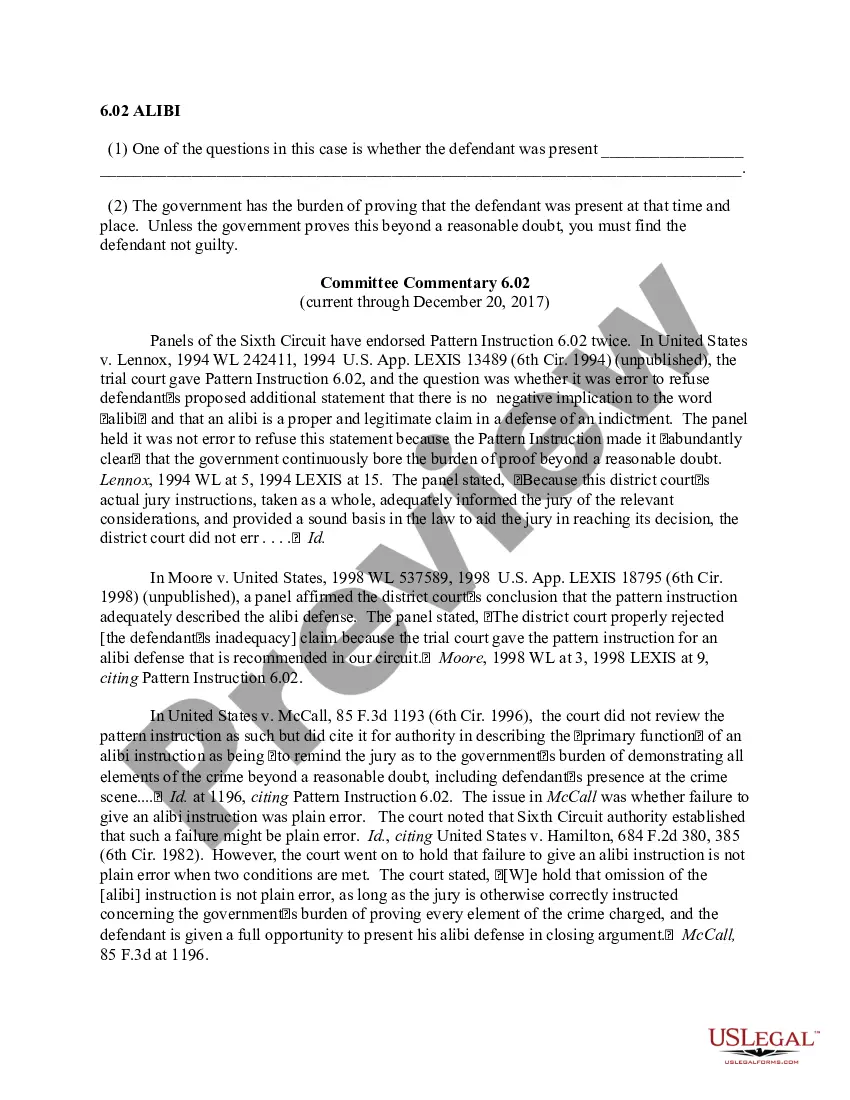
How to fill out Alibi Instruction?
If you desire to be thorough, download, or print valid document templates, utilize US Legal Forms, the largest assortment of valid forms available online.
Leverage the site's straightforward and convenient search to locate the documents you require. Various templates for business and personal uses are categorized by types and states, or keywords.
Employ US Legal Forms to find the Minnesota Alibi Instruction in just a few clicks.
Step 5. Complete the transaction. You can use your credit card or PayPal account to finalize the purchase.
Step 6. Choose the format of your legal form and download it to your device. Step 7. Fill out, edit, and print or sign the Minnesota Alibi Instruction. Each legal document template you obtain is yours indefinitely. You will have access to every form you downloaded within your account. Go to the My documents section and select a form to print or download again. Be proactive and download and print the Minnesota Alibi Instruction with US Legal Forms. There are millions of professional and state-specific forms available for your business or personal needs.
- When you are already a US Legal Forms user, Log In to your account and click on the Download button to retrieve the Minnesota Alibi Instruction.
- You can also access forms you previously downloaded in the My documents section of your account.
- If you are using US Legal Forms for the first time, follow the steps below.
- Step 1. Ensure you have chosen the form for the correct region/state.
- Step 2. Use the Preview option to review the form’s details. Don’t forget to read the description.
- Step 3. If you are not satisfied with the form, use the Search field at the top of the screen to find other versions of the legal form template.
- Step 4. Once you have located the form you need, click the Download now button. Select the pricing plan you prefer and enter your details to register for an account.
Form popularity
FAQ
In federal criminal trials, the jury must reach a unanimous decision in order to convict the defendant. After they reach an agreement on a verdict, they notify the judge, the lawyers, and the defendant in open court.
Verdict: The official decision or finding of the jury which is reported to the court.
The Right to a Jury Trial The Minnesota Constitution, Article I, Section 4 guarantees a jury trial in the state court system. The right of the defendant to fair legal process includes having his or her fate determined by ?a jury of peers,? meaning representative members of the community.
In a criminal offense trial, all 12 jurors must agree on a judgment, whether it is a guilty verdict or otherwise, to reach a unanimous decision. If the jurors are unable to reach a unanimous verdict, the trial may result in a hung jury. Even if only one juror disagrees, a hung jury may occur.
The verdict in a criminal case must be unanimously decided, meaning every single one of the jurors must agree with a finding of guilty or not guilty. If even one juror disagrees with the outcome, there can be no final judgment in the case. When a finding is not unanimous, this is referred to as a hung jury.
If a defendant is found not guilty, by the magistrate, jury or judge, they will be 'acquitted' and free to go. If the defendant pleads guilty or is found guilty by the judge or jury, they are convicted and the judge will pass sentence.