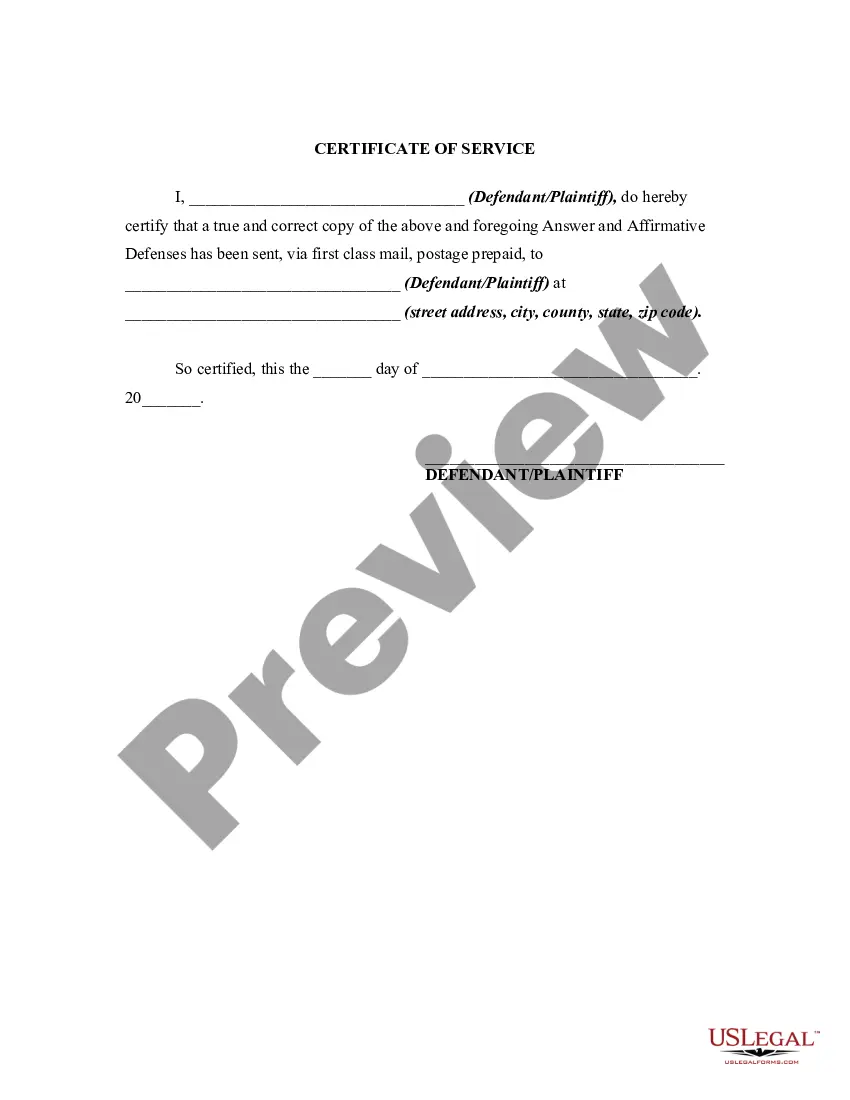
This is a certificate of service which complies with the Federal Rules of Civil Procedure. This form is used to prove that a document has been served on the party named within.
Minnesota Certificate of Service
State:
Multi-State
Control #:
US-00961ABG
Format:
Word;
Rich Text
633 downloads
Description
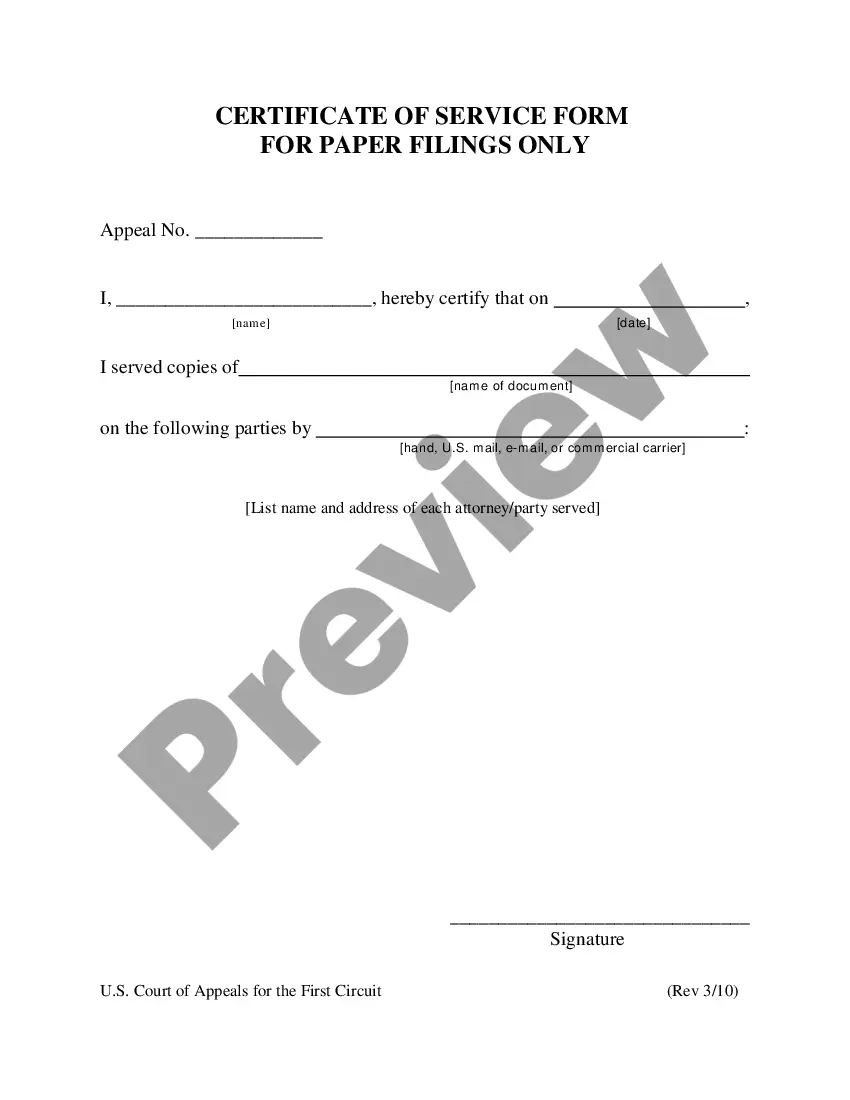
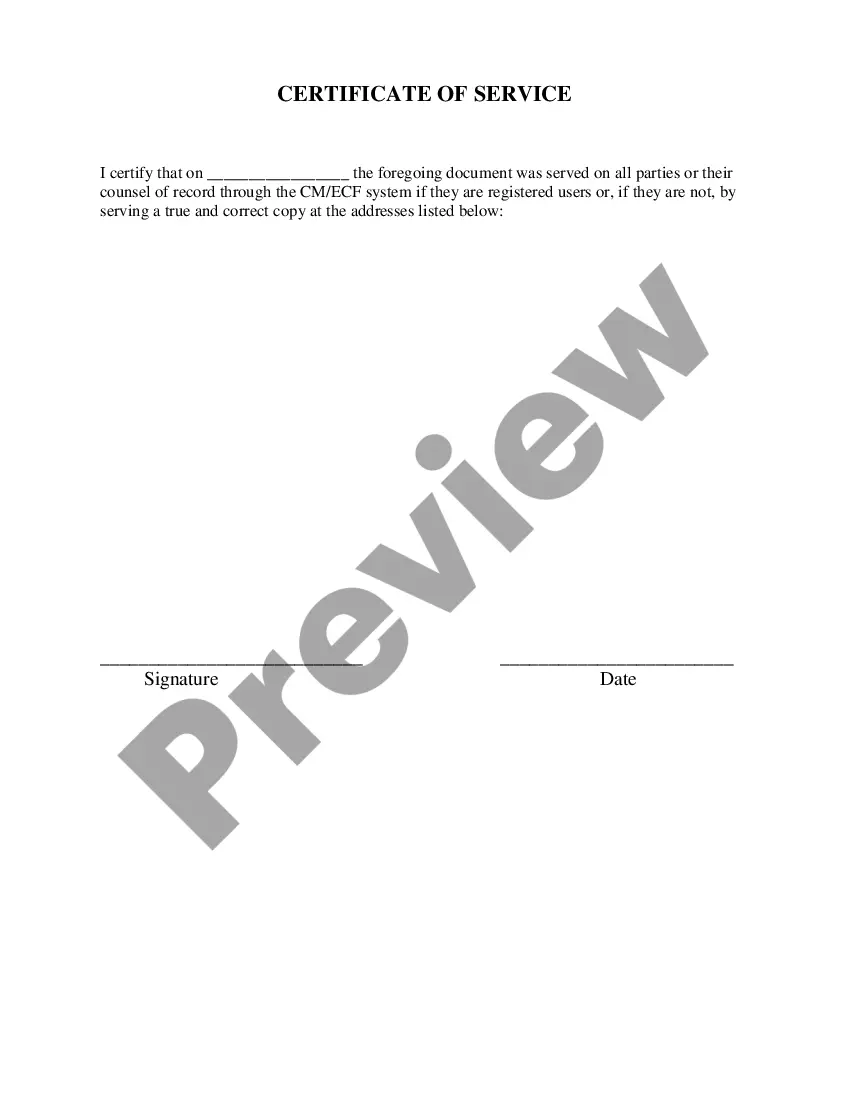

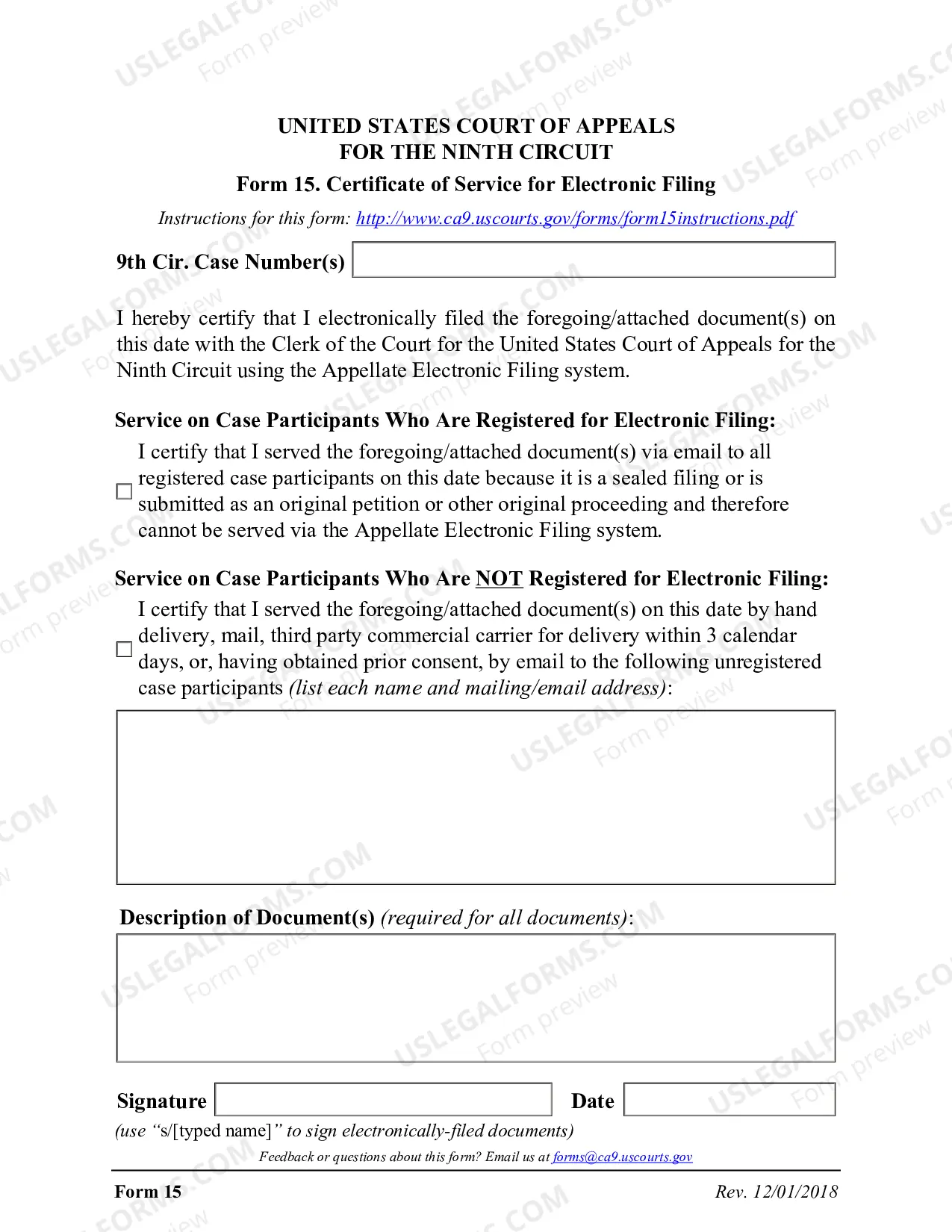
Get your form ready online
Our built-in tools help you complete, sign, share, and store your documents in one place.
Built-in online Word editor
Make edits, fill in missing information, and update formatting in US Legal Forms—just like you would in MS Word.
Export easily
Download a copy, print it, send it by email, or mail it via USPS—whatever works best for your next step.
E-sign your document
Sign and collect signatures with our SignNow integration. Send to multiple recipients, set reminders, and more. Go Premium to unlock E-Sign.
Notarize online 24/7
If this form requires notarization, complete it online through a secure video call—no need to meet a notary in person or wait for an appointment.
Store your document securely
We protect your documents and personal data by following strict security and privacy standards.

Make edits, fill in missing information, and update formatting in US Legal Forms—just like you would in MS Word.

Download a copy, print it, send it by email, or mail it via USPS—whatever works best for your next step.

Sign and collect signatures with our SignNow integration. Send to multiple recipients, set reminders, and more. Go Premium to unlock E-Sign.

If this form requires notarization, complete it online through a secure video call—no need to meet a notary in person or wait for an appointment.

We protect your documents and personal data by following strict security and privacy standards.
Looking for another form?
How to fill out Certificate Of Service?
Locating the appropriate legal document template can be quite a challenge.
Certainly, there are many templates accessible online, but how can you locate the legal form you require.
Utilize the US Legal Forms website. The service offers a vast array of templates, including the Minnesota Certificate of Service, which you can utilize for business and personal purposes.
You can review the form using the Preview button and examine the form description to ensure it is suitable for you.
- All of the forms are reviewed by professionals and comply with federal and state regulations.
- If you are already registered, Log In to your account and click on the Download button to obtain the Minnesota Certificate of Service.
- Use your account to browse through the legal forms you have previously obtained.
- Navigate to the My documents section of your account and retrieve another copy of the document you need.
- If you are a new user of US Legal Forms, here are simple instructions that you should follow.
- First, ensure you have selected the correct form for your city/state.
Form popularity
FAQ
Clerical mistakes in judgments, orders, or other parts of the record and errors therein arising from oversight or omission may be corrected by the court at any time upon its own initiative or on the motion of any party and after such notice, if any, as the court orders.
Rule 5 prescribes the procedure at the defendant's initial appearance. In most misdemeanor cases, the initial appearance will also be the time of arraignment and disposition. Rule 5.02 requires the appointment of a qualified interpreter for a defendant disabled in communication.
Service by mail shall be made only by the sheriff or by any other person who is at least 18 years of age who is not a party to the proceeding.
Comment - Rule 6. In misdemeanor cases a citation must be issued if the misdemeanor charged is not punishable by incarceration.
The only plea a defendant may enter at the Rule 8 hearing is a guilty plea. If the defendant pleads guilty, the pre-sentencing and sentencing procedures in these rules must be followed. If the defendant does not wish to plead guilty, the arraignment must be continued until the Omnibus Hearing.
Rule 5 is intended to require an attorney appearing in a case to pay the application fee once in the case.
41.02Involuntary Dismissal; Effect Thereof (a) The court may upon its own initiative, or upon motion of a party, and upon such notice as it may prescribe, dismiss an action or claim for failure to prosecute or to comply with these rules or any order of the court.
Execution. Process to enforce a judgment for the payment of money shall be a writ of execution, unless the court directs otherwise.