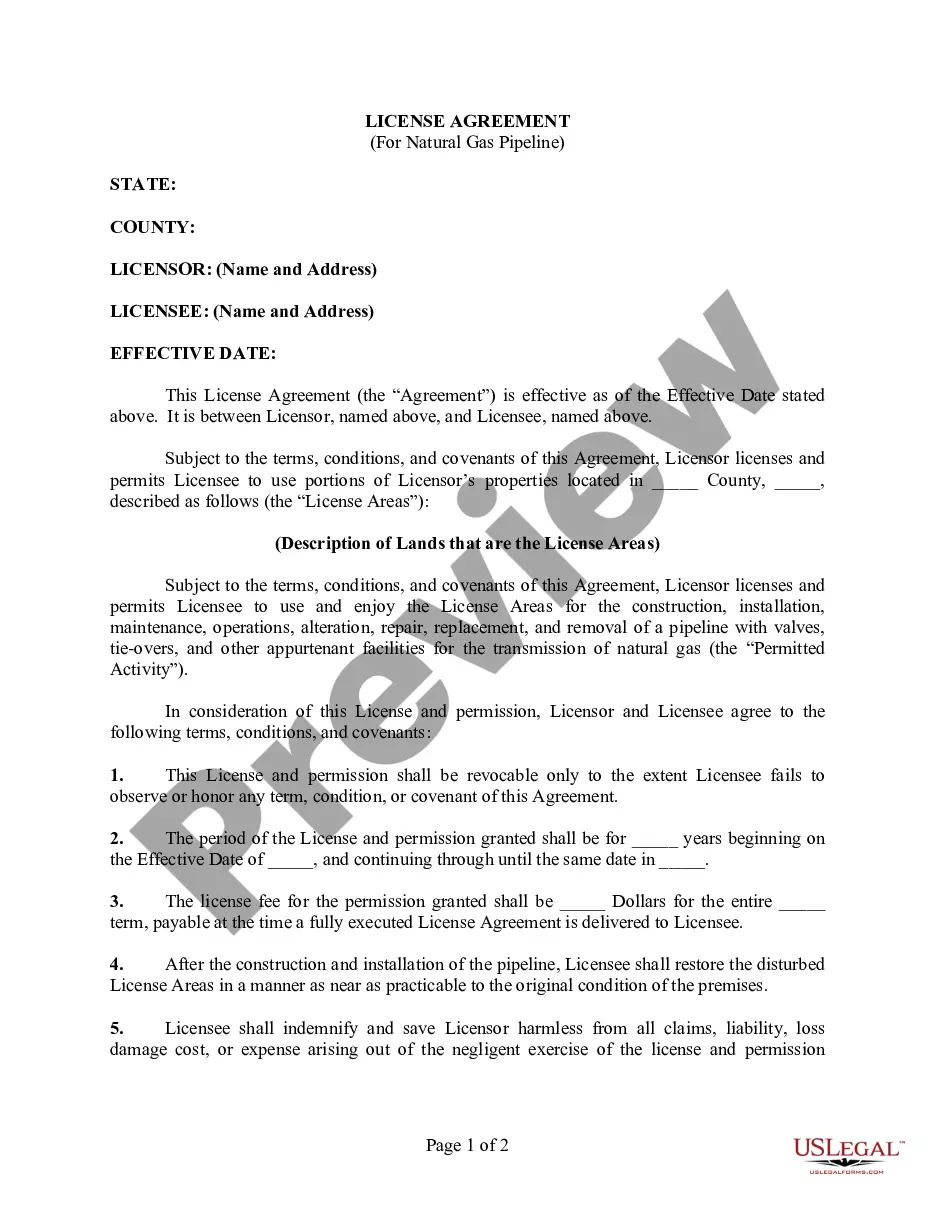
Minnesota Partnership Agreement Involving Silent Partner
Description
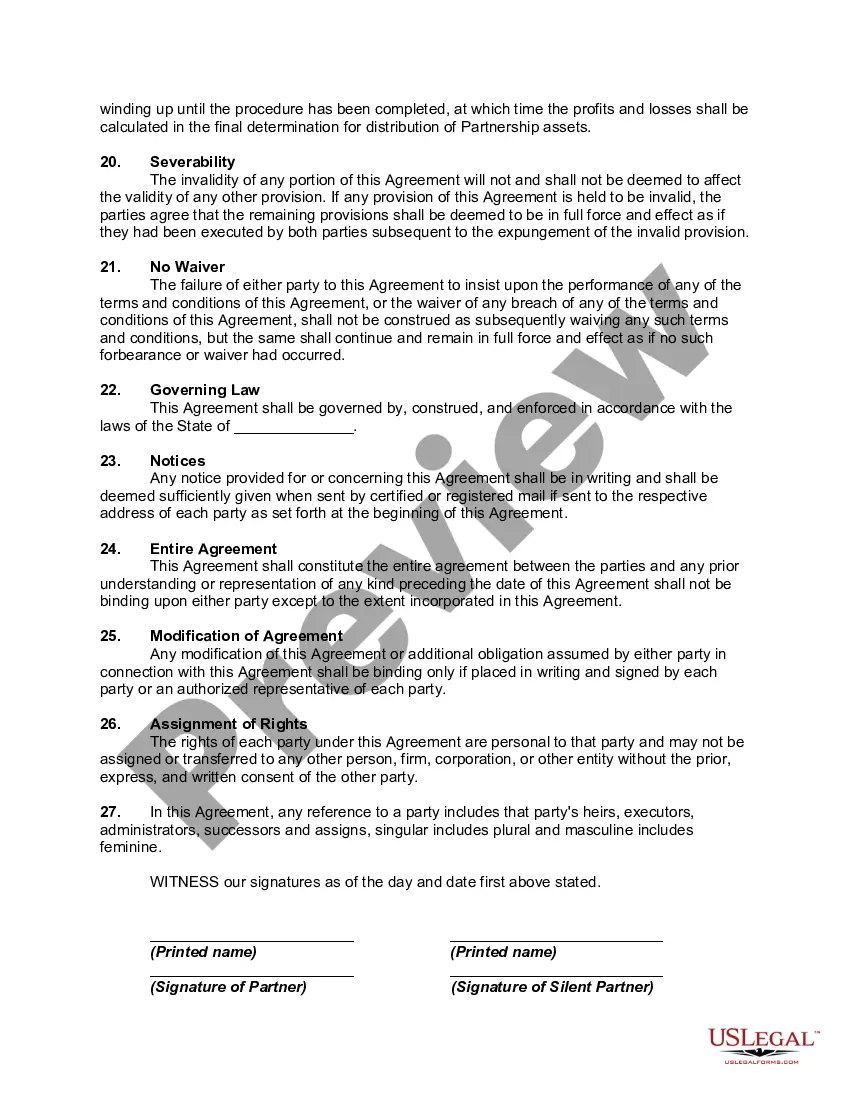
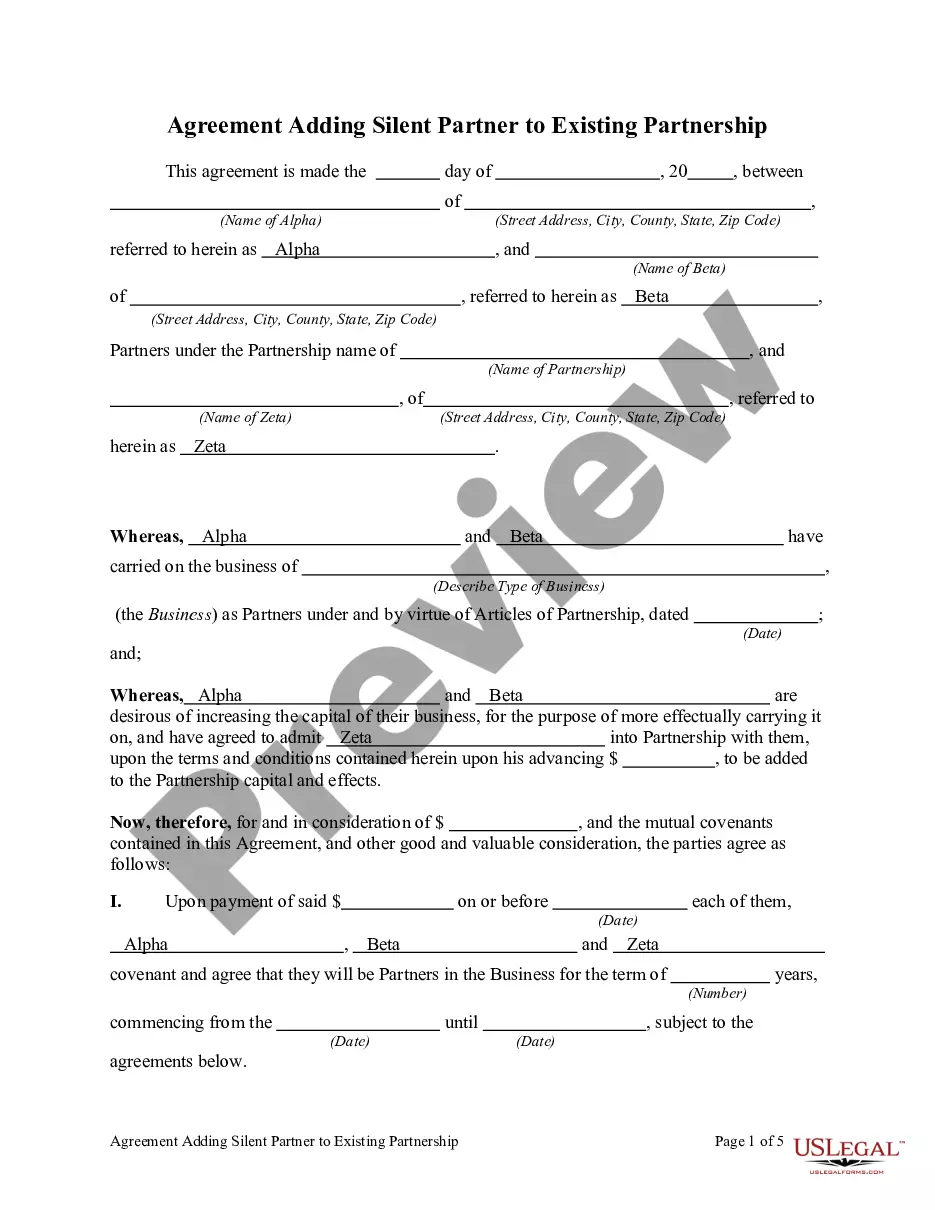
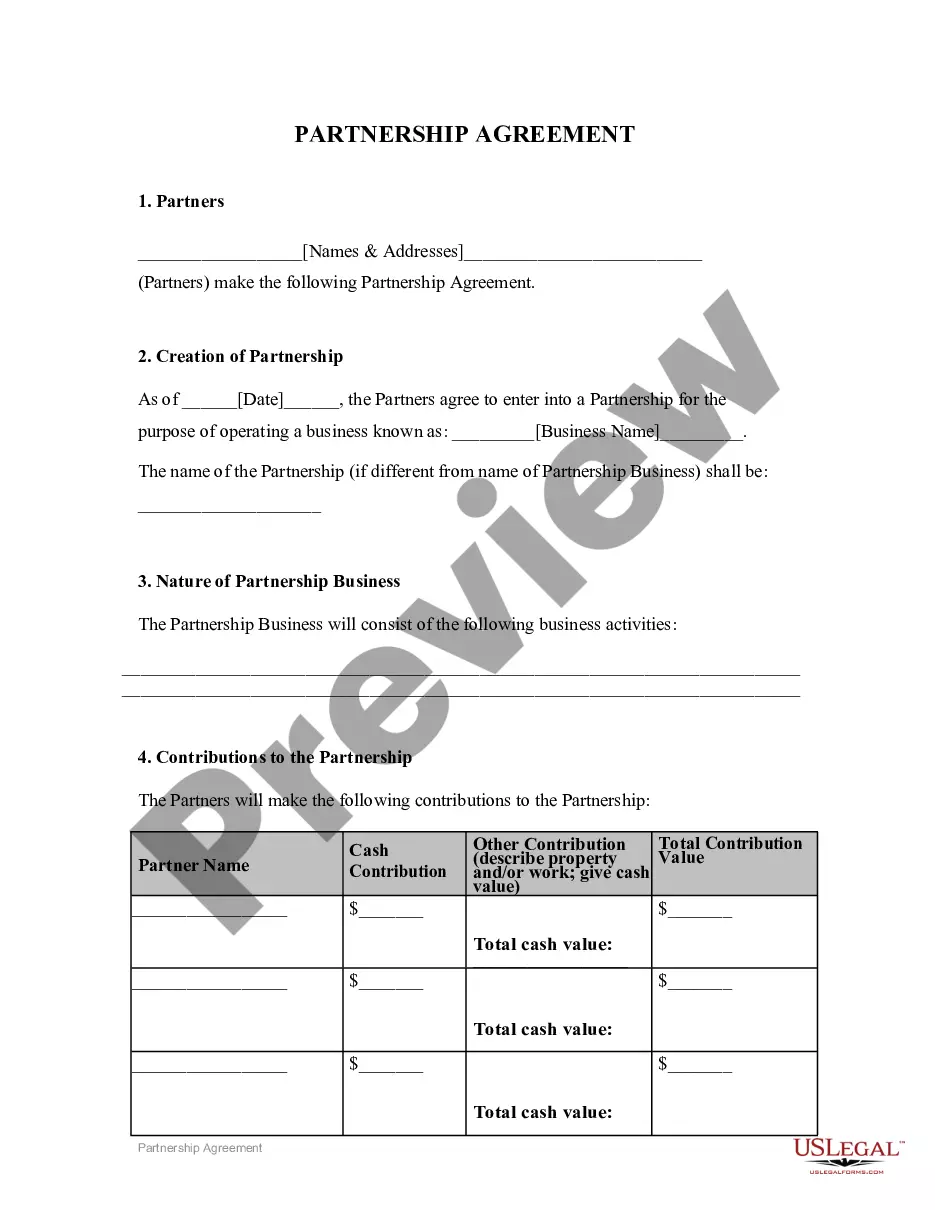
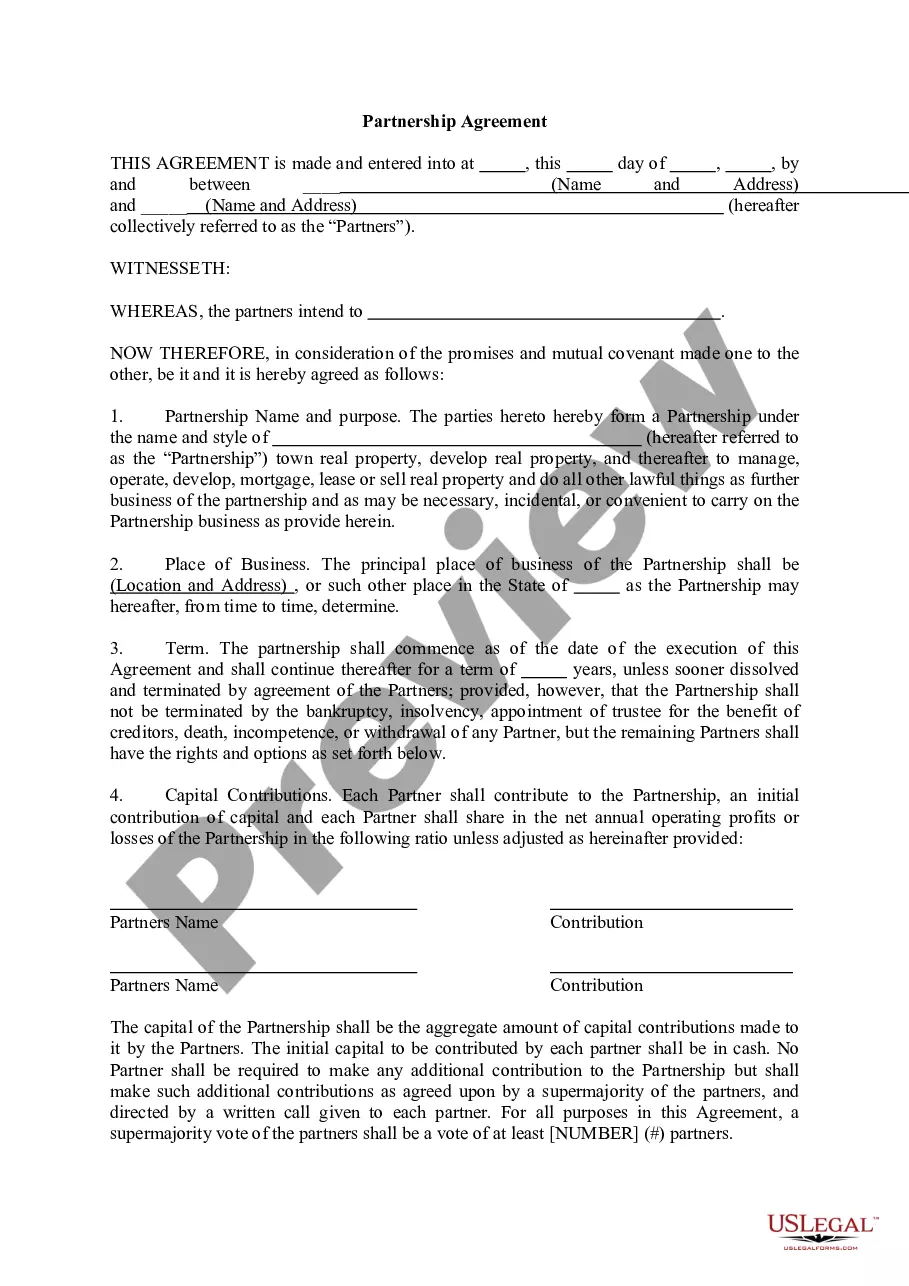
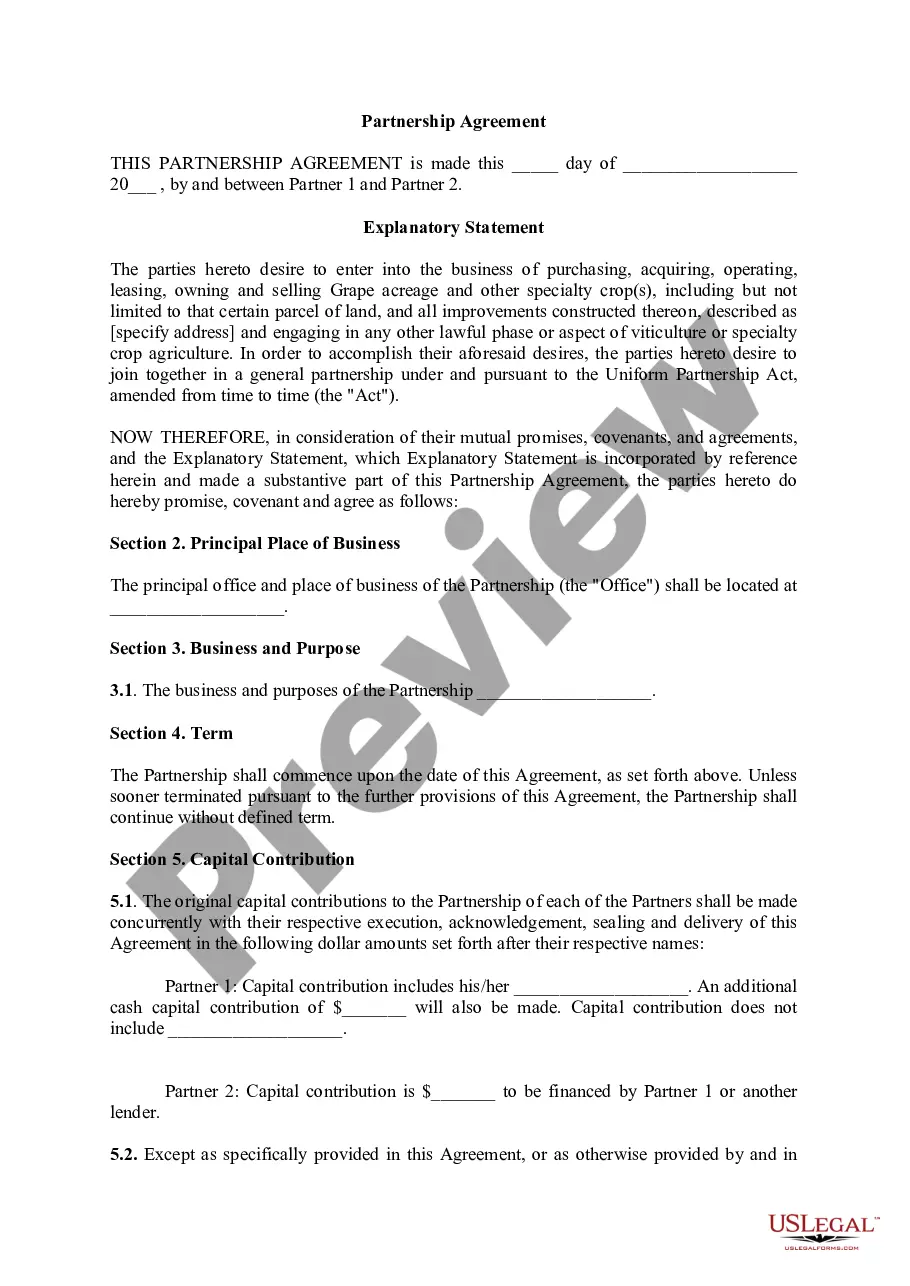
Get your form ready online
Our built-in tools help you complete, sign, share, and store your documents in one place.
Make edits, fill in missing information, and update formatting in US Legal Forms—just like you would in MS Word.
Download a copy, print it, send it by email, or mail it via USPS—whatever works best for your next step.
Sign and collect signatures with our SignNow integration. Send to multiple recipients, set reminders, and more. Go Premium to unlock E-Sign.
If this form requires notarization, complete it online through a secure video call—no need to meet a notary in person or wait for an appointment.
We protect your documents and personal data by following strict security and privacy standards.

Make edits, fill in missing information, and update formatting in US Legal Forms—just like you would in MS Word.

Download a copy, print it, send it by email, or mail it via USPS—whatever works best for your next step.

Sign and collect signatures with our SignNow integration. Send to multiple recipients, set reminders, and more. Go Premium to unlock E-Sign.

If this form requires notarization, complete it online through a secure video call—no need to meet a notary in person or wait for an appointment.

We protect your documents and personal data by following strict security and privacy standards.
Looking for another form?
How to fill out Partnership Agreement Involving Silent Partner?
Are you currently in a position that requires documents for either corporate or personal purposes nearly every day.
There is a selection of valid document templates accessible online, yet finding versions you can trust is challenging.
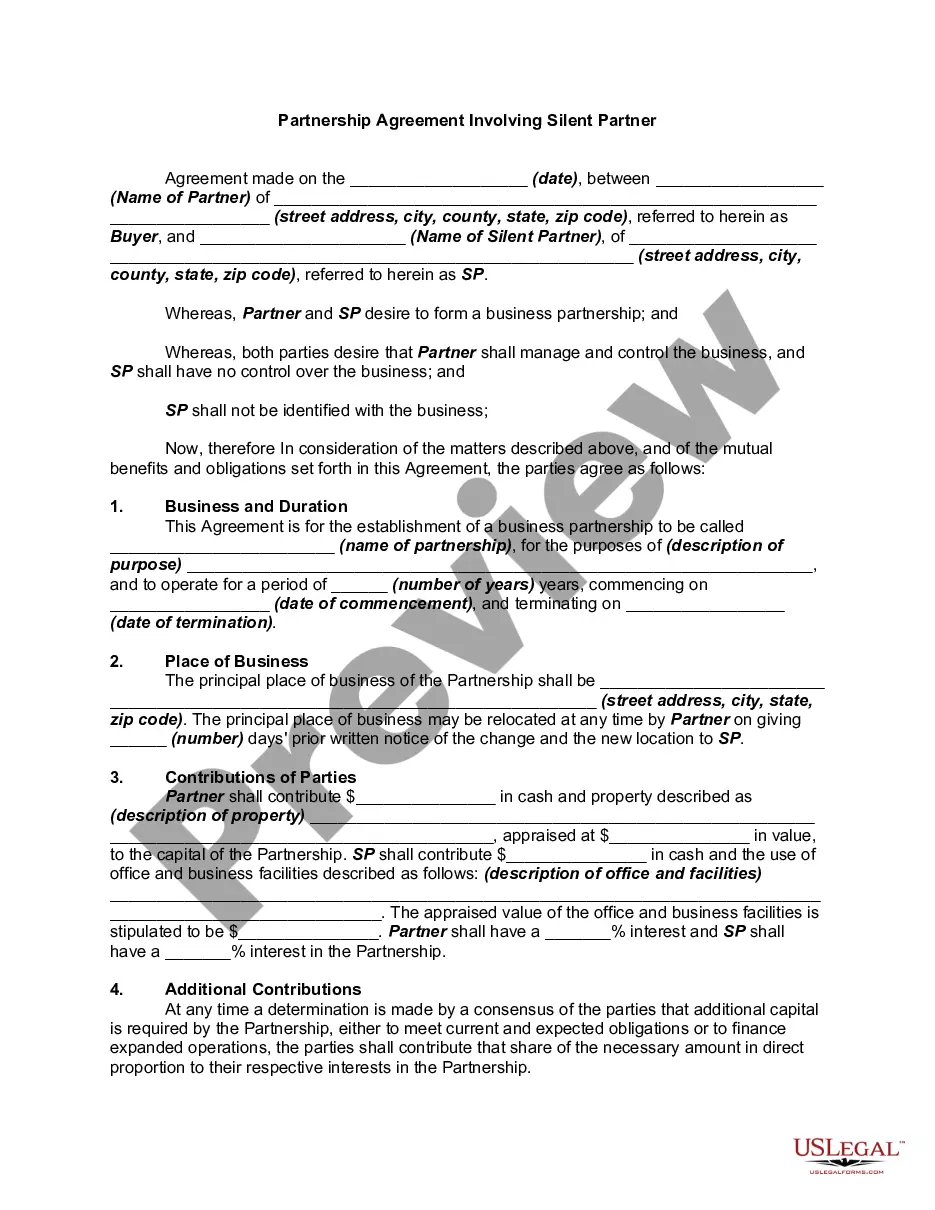
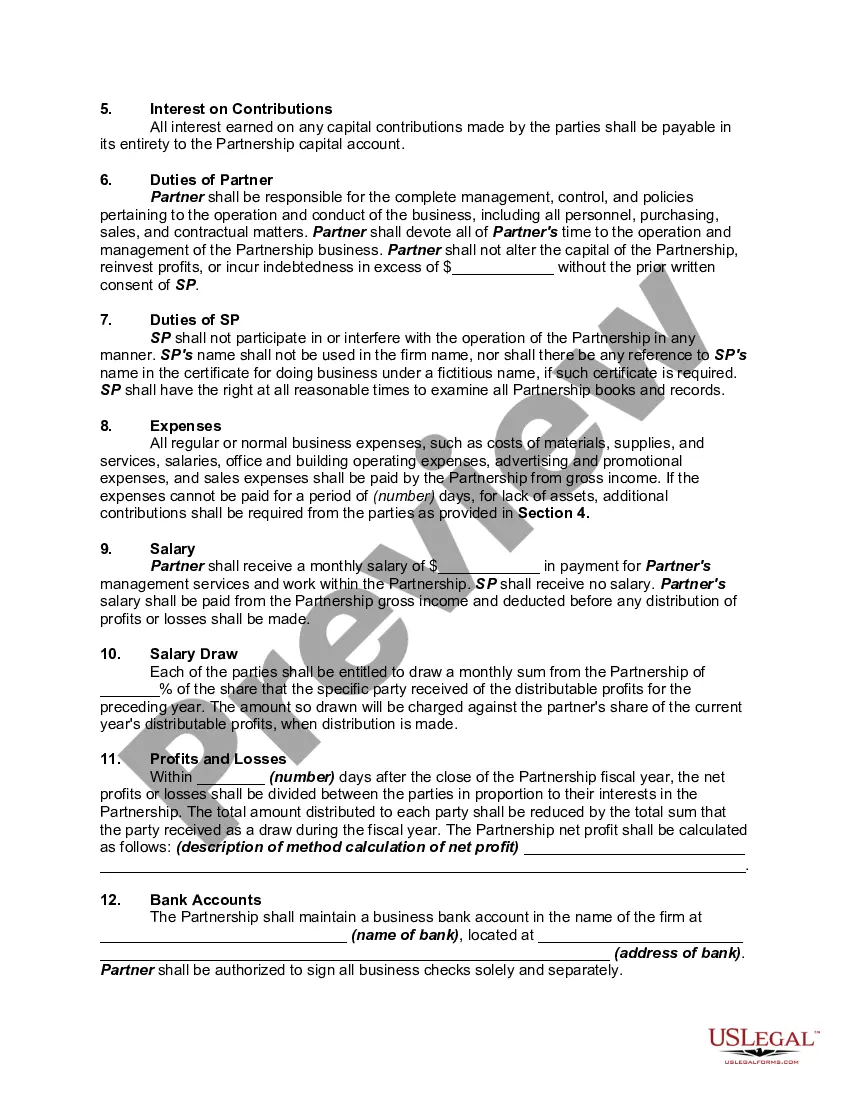
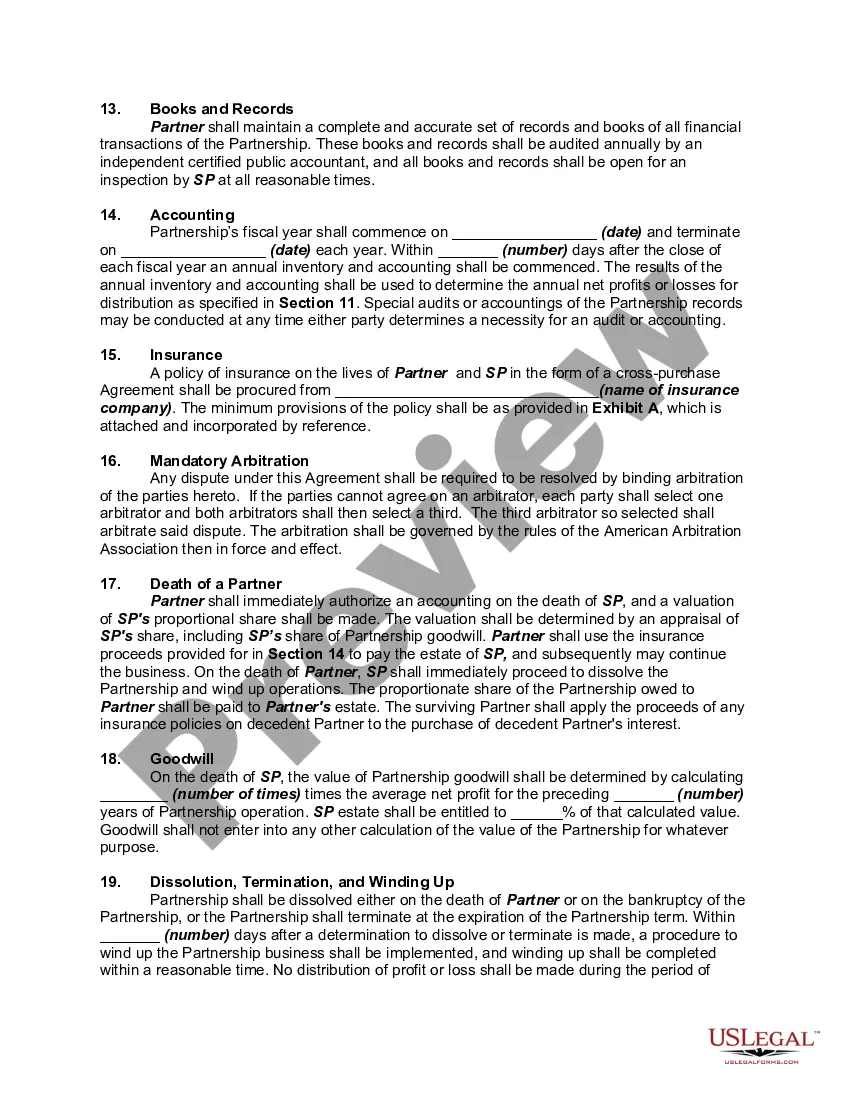
US Legal Forms offers a vast array of form templates, such as the Minnesota Partnership Agreement Involving Silent Partner, designed to comply with federal and state regulations.
Once you find the correct form, click Get now.
Select your desired pricing plan, fill out the necessary information to create your account, and pay for the transaction using your PayPal or credit card.
- If you are already familiar with the US Legal Forms website and have an account, simply Log In.
- Then, you can download the Minnesota Partnership Agreement Involving Silent Partner template.
- If you do not have an account and wish to start using US Legal Forms, follow these steps.
- Obtain the form you need and ensure it is for the correct state/region.
- Utilize the Preview button to review the form.
- Check the description to confirm that you have selected the right template.
- If the form does not match what you need, use the Research field to find the appropriate form.
Form popularity
FAQ
Yes, a partnership can have a silent partner, and many do to combine resources and minimize risk. In a Minnesota Partnership Agreement Involving Silent Partner, including a silent partner can be beneficial for capital infusion while allowing them to remain uninvolved in daily operations. Clear agreements ensure that all partners understand the silent partner's role and profit-sharing.
A silent partner typically has limited liability, meaning they are not personally responsible for the partnership's debts beyond their investment. However, in a Minnesota Partnership Agreement Involving Silent Partner, it's essential to outline the extent of liability to prevent misunderstandings. It's advisable to consult legal expertise to understand the implications fully.
The percentage allocated to a silent partner is usually defined in the partnership agreement. In a Minnesota Partnership Agreement Involving Silent Partner, this figure can range based on the contributions of the silent partner and the overall profit-sharing structure agreed upon. Transparency and clear communication are vital in these negotiations to ensure fairness.
A silent partner clause in a partnership deed outlines the roles, responsibilities, and profit-sharing for the silent partner. This section is crucial in a Minnesota Partnership Agreement Involving Silent Partner as it helps clarify expectations and protect each partner's interests. The clause should detail how profits are distributed and what rights the silent partner has in terms of decision-making.
The percentage a silent partner receives in a Minnesota Partnership Agreement Involving Silent Partner can vary based on various factors. Typically, it depends on the partner's investment amount, the expected return, and the agreement terms. Mutual understanding between partners is essential to define a fair share that reflects the silent partner's contribution while promoting a healthy partnership.
To add a silent partner to your LLC, start by drafting a Minnesota Partnership Agreement Involving Silent Partner. This agreement should outline the roles, responsibilities, and profit-sharing arrangements of all partners, ensuring clarity for both active and silent partners. Next, make the necessary adjustments to your LLC's operating agreement to reflect this new partnership structure. Finally, file any required documentation with the state of Minnesota to officially recognize the silent partner in your business.
When a partnership agreement is silent on specific issues, it means that the document does not address those topics, leading to potential ambiguities or misunderstandings. This can create challenges in management or profit sharing. It is wise to define any unclear points in a Minnesota Partnership Agreement Involving Silent Partner to avoid future conflicts and to ensure all partners are on the same page.
To set up a silent partnership, clearly define the roles and responsibilities of partners in a Minnesota Partnership Agreement Involving Silent Partner. This agreement should specify the silent partner's investment, profit sharing, and rights within the partnership. Additionally, professional legal assistance can help ensure all aspects are legally sound and beneficial for both active and silent partners.
When there is no partnership deed, the partnership will be governed by the default provisions of Minnesota partnership law. This may lead to uncertainty regarding profit-sharing, management responsibilities, and partner liabilities. To mitigate risks, it’s advisable to create a Minnesota Partnership Agreement Involving Silent Partner that outlines all necessary terms and conditions for a smooth operation.
If the partnership deed is silent on certain matters, it is crucial to consult with all partners to clarify those issues. You might need to refer to the general provisions of partnership laws in Minnesota or negotiate a new agreement. The Minnesota Partnership Agreement Involving Silent Partner can be utilized to address any ambiguities and document everyone's understanding and consent.