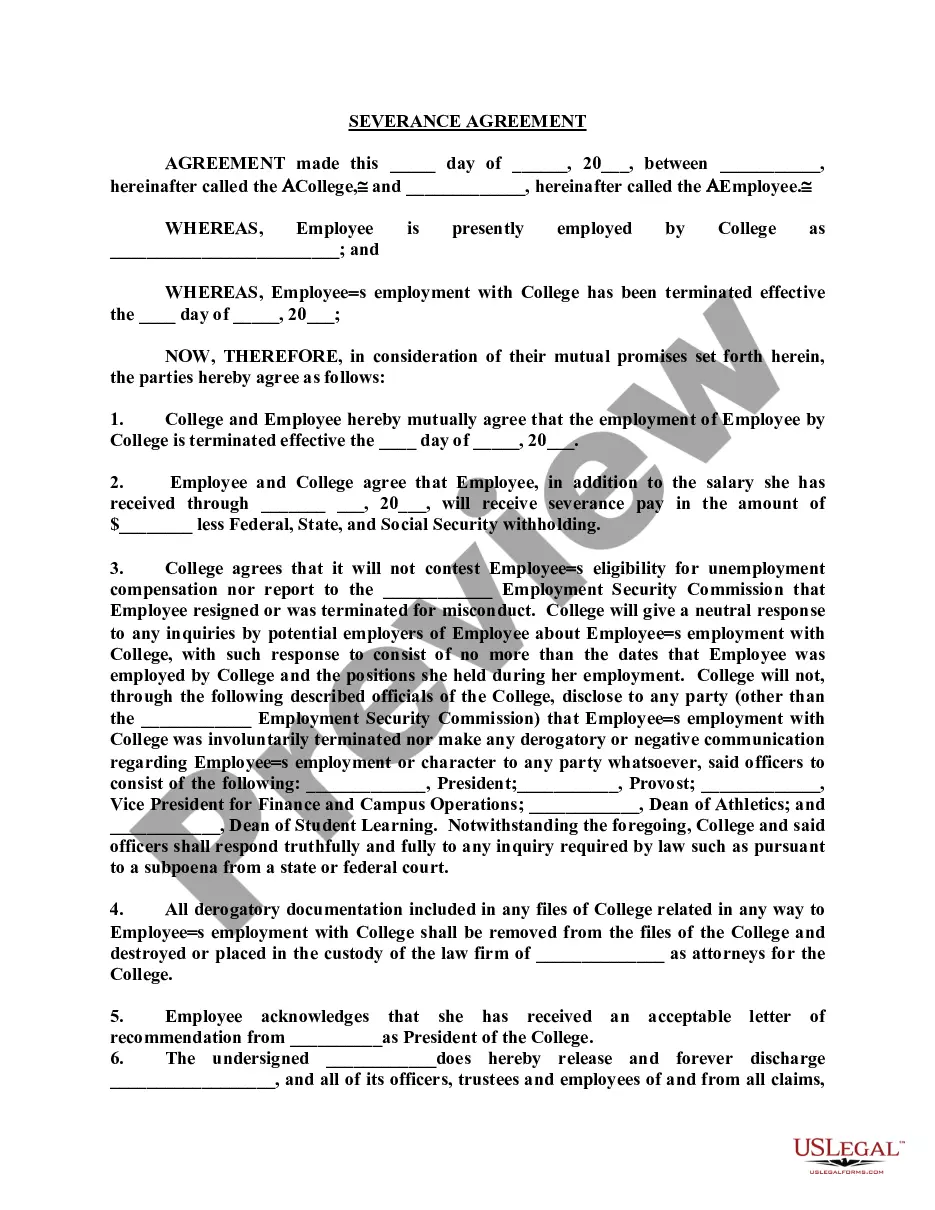
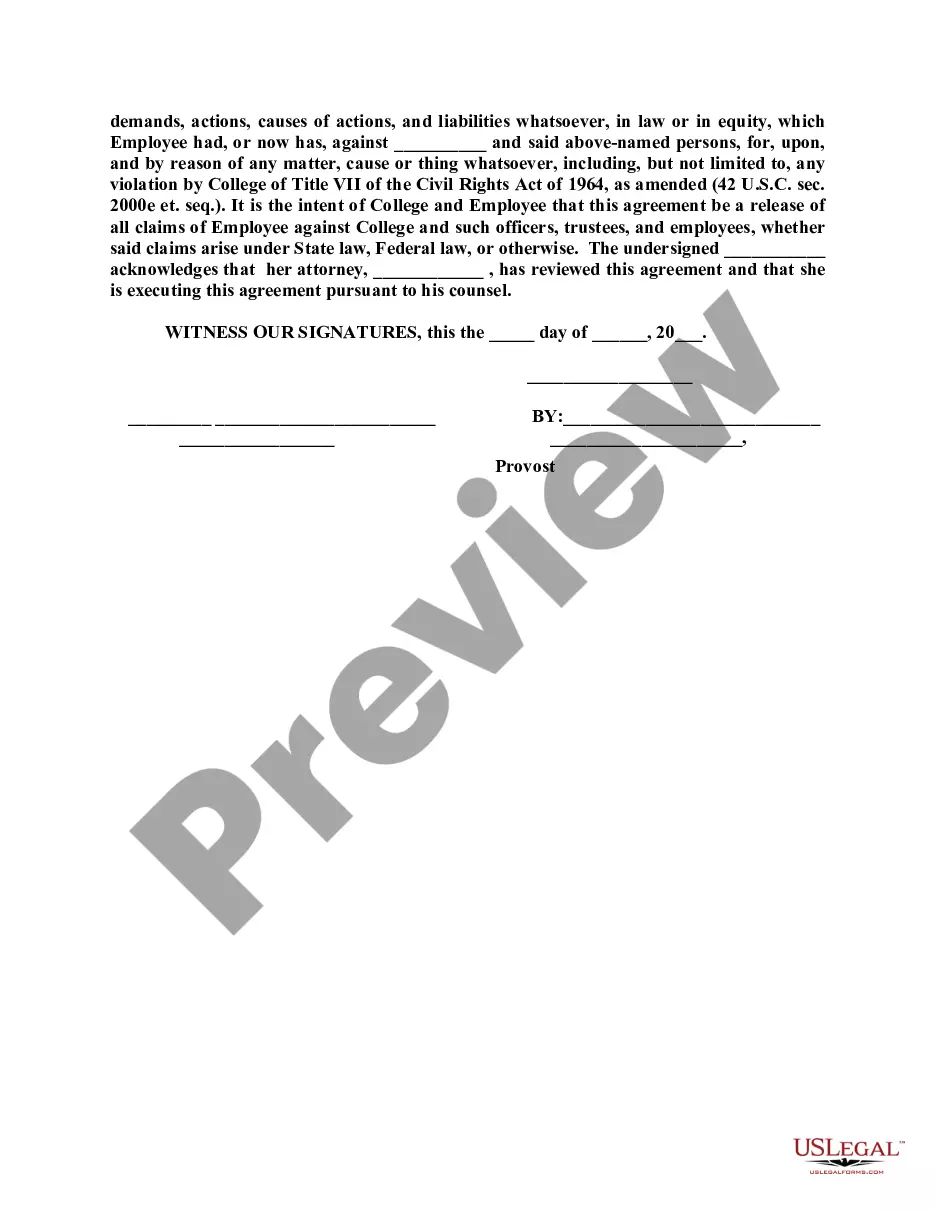
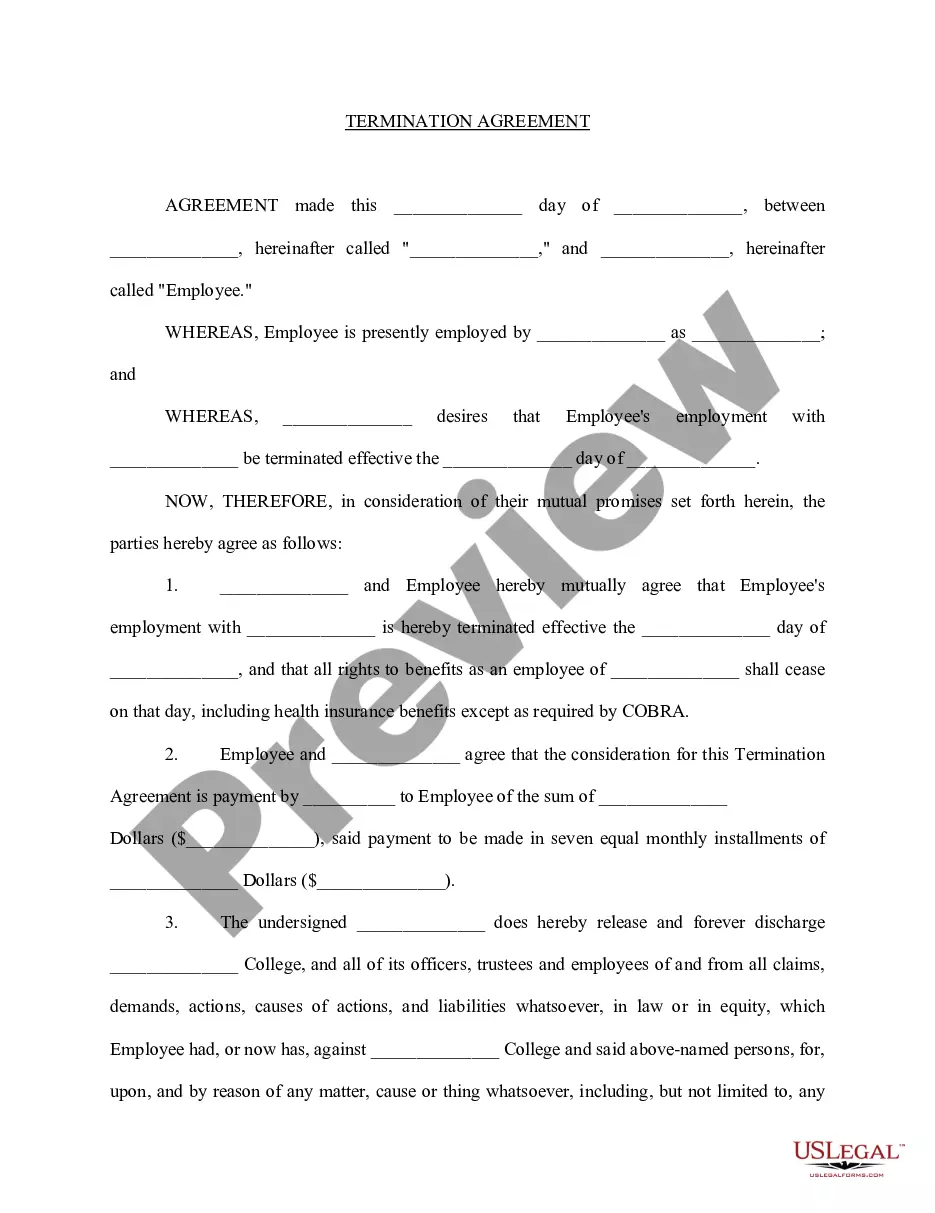
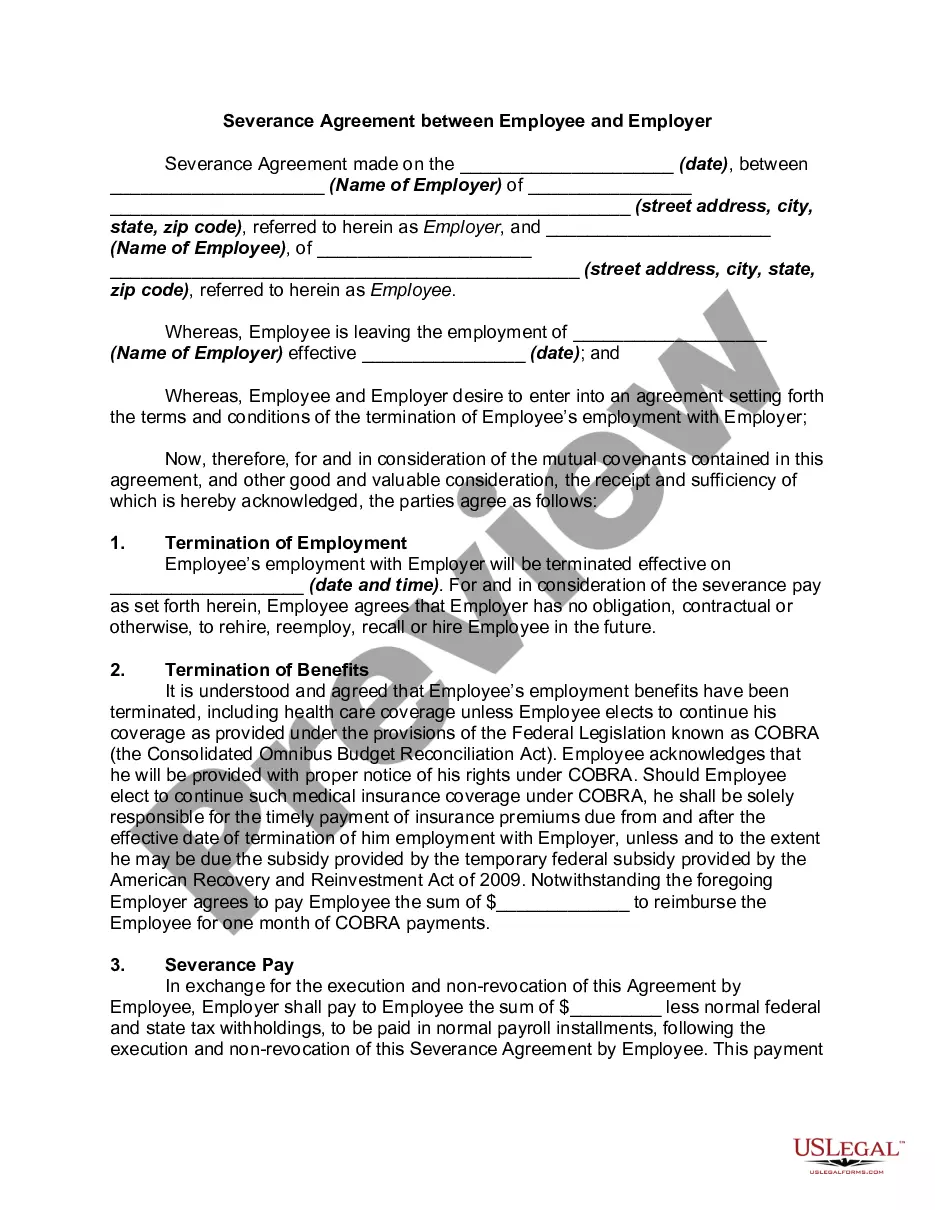
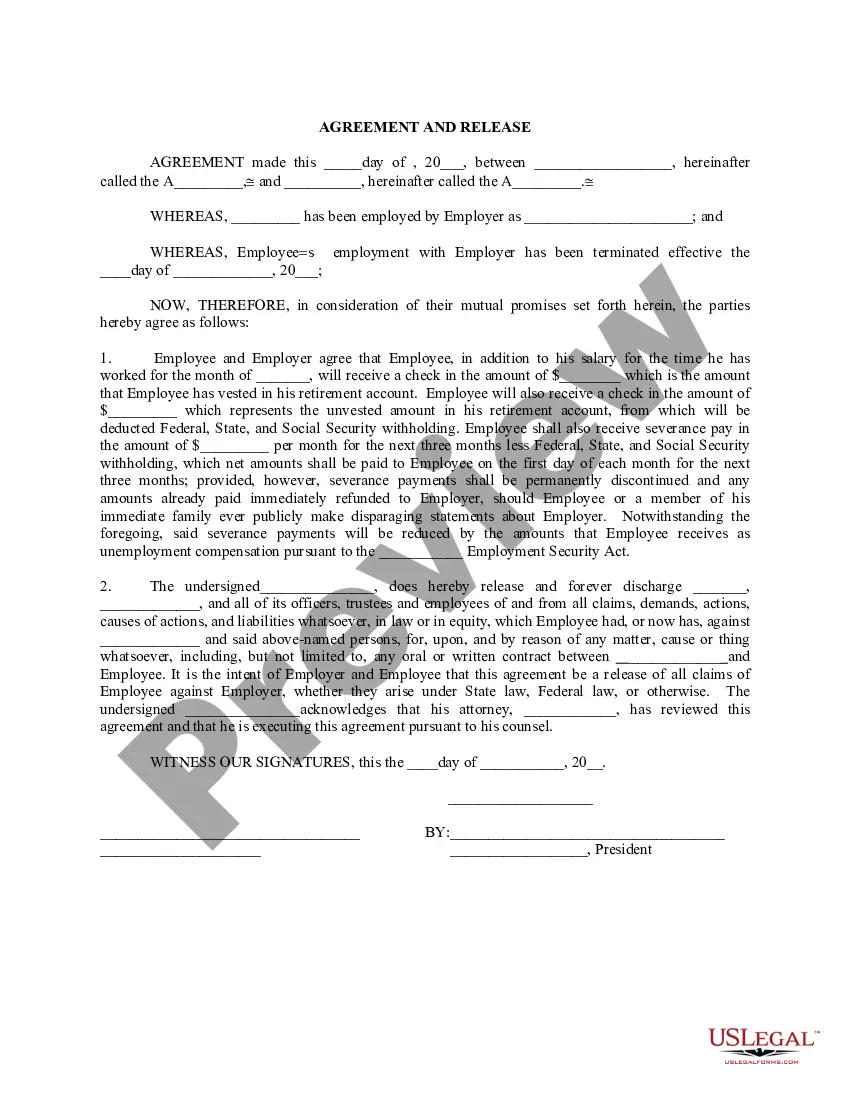
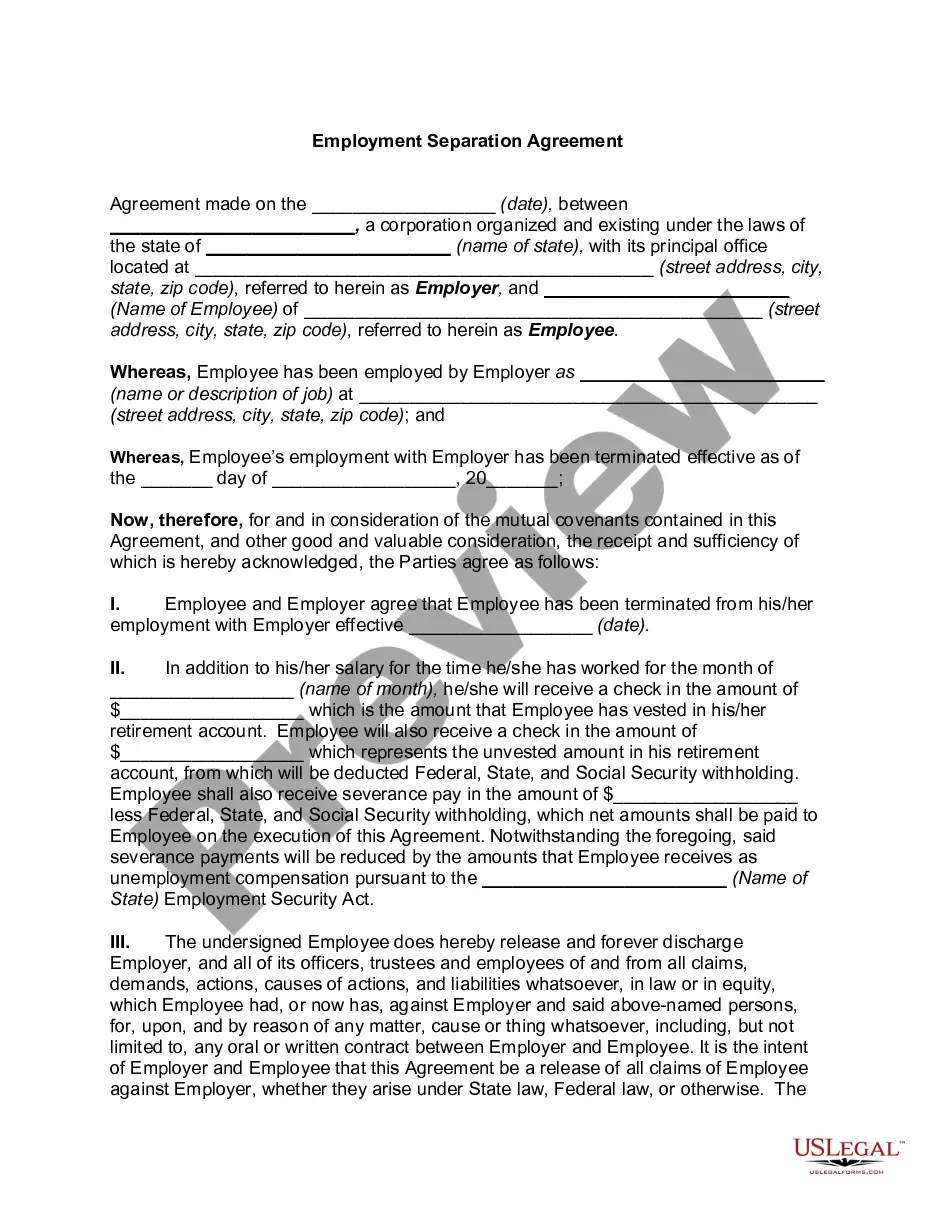
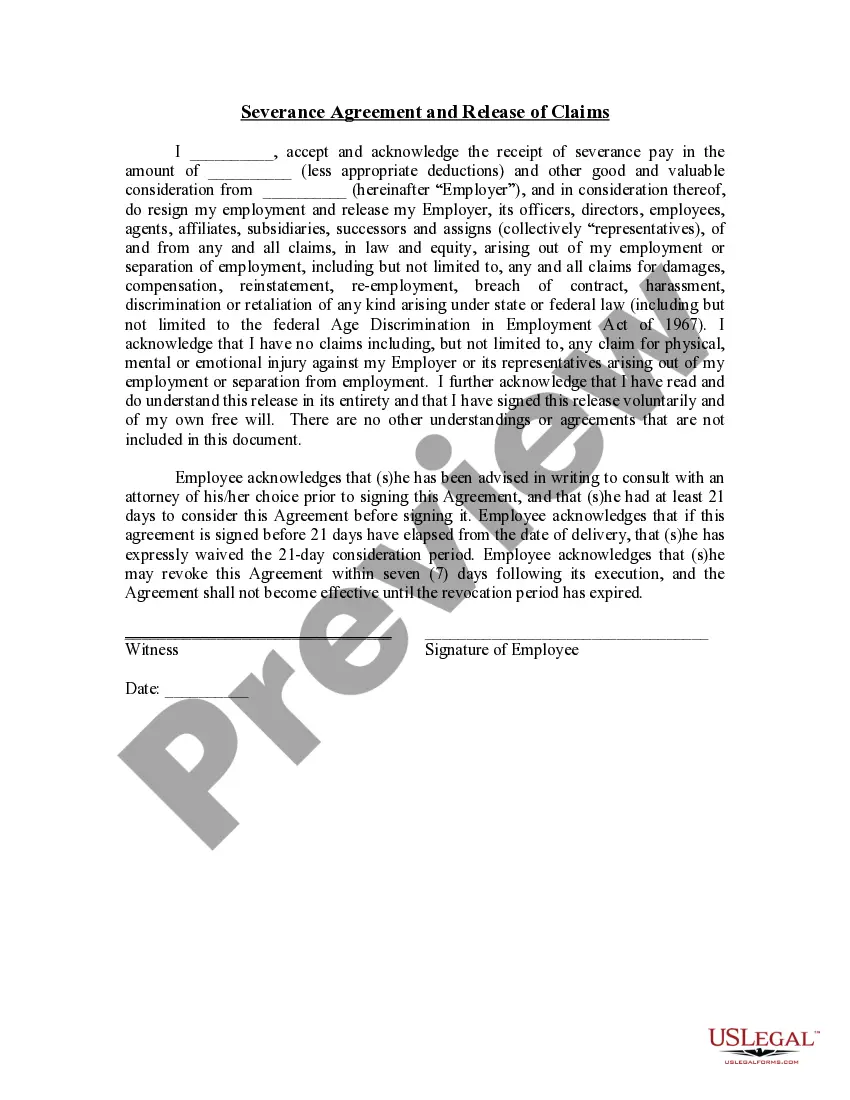
Minnesota Severance Agreement between Employee and College
Description
Get your form ready online
Our built-in tools help you complete, sign, share, and store your documents in one place.
Make edits, fill in missing information, and update formatting in US Legal Forms—just like you would in MS Word.
Download a copy, print it, send it by email, or mail it via USPS—whatever works best for your next step.
Sign and collect signatures with our SignNow integration. Send to multiple recipients, set reminders, and more. Go Premium to unlock E-Sign.
If this form requires notarization, complete it online through a secure video call—no need to meet a notary in person or wait for an appointment.
We protect your documents and personal data by following strict security and privacy standards.

Make edits, fill in missing information, and update formatting in US Legal Forms—just like you would in MS Word.

Download a copy, print it, send it by email, or mail it via USPS—whatever works best for your next step.

Sign and collect signatures with our SignNow integration. Send to multiple recipients, set reminders, and more. Go Premium to unlock E-Sign.

If this form requires notarization, complete it online through a secure video call—no need to meet a notary in person or wait for an appointment.

We protect your documents and personal data by following strict security and privacy standards.
Looking for another form?
How to fill out Severance Agreement Between Employee And College?
You can utilize time online trying to locate the valid document format that meets the federal and state requirements you have.
US Legal Forms provides a vast selection of valid forms that are reviewed by experts.
It is easy to download or print the Minnesota Severance Agreement between Employee and Institution from the services.
In order to find another version of your form, use the Search box to seek the format that suits you and your needs.
- If you possess a US Legal Forms account, you can Log In and click the Obtain button.
- After that, you can complete, edit, print, or sign the Minnesota Severance Agreement between Employee and Institution.
- Every valid document format you receive belongs to you permanently.
- To acquire an additional copy of the purchased form, visit the My documents section and click the corresponding button.
- If you are using the US Legal Forms site for the first time, follow the simple guidelines below.
- First, ensure that you have selected the correct document format for your state/city of preference.
- Check the form description to verify that you have picked the appropriate form.
Form popularity
FAQ
My employer deceived me into signing a claim of releases that I didn't want to sign. What can I do? Fraud, misrepresentation, duress, or unconscionability are common defenses you can use if you want to void a severance agreement that you already signed.
After separation from employment, you are not eligible for unemployment benefits for the number of weeks of your regular pay the severance payment represents.
A Settlement Agreement (formerly known as a Compromise Agreement) is a legally binding agreement between you and your employer. This usually provides for a severance payment by the employer in return for your agreement not to pursue any claims in a Tribunal or a Court.
Severance Pay In accordance with the Payment of Gratuity Act 1972, a worker is entitled to a gratuity payment upon termination of his service after five years of continuous employment. Amount of severance pay is equal to 15 days' wages for each completed year of service.
Here are the key steps for negotiating an exit package:Understand the components of a severance package.Wait before signing paperwork.Read everything carefully.Get an expert opinion.Understand your priorities.Negotiate for more than money.Decide on a reasonable request.Leverage your success.More items...?
Severance pay a retrenched employee must at least be paid 1 week's pay for each completed year of ongoing service. However, the employer must pay the retrenched employee the amount specified in any policy or his/her employment contract, if that amount is larger.
The primary reasons for offering a severance package are to soften the blow of an involuntary termination and to avoid future lawsuits by having the employee sign a release in exchange for the severance.
Minnesota labor laws do not require employers to provide employees with severance pay. If an employer chooses to provide severance benefits, it must comply with the terms of its established policy or employment contract.
Mutual termination agreement (employment): International This is an agreement dealing with a simple and straightforward termination of employment that has been mutually agreed between the employer and the employee.
Final Paycheck Requirements In Minnesota Under Minnesota Statute §181.13, any employee who quits his or her job is legally entitled to receive a final paycheck on the next scheduled pay date, or within 20 days of the last day of work, whichever date comes earlier.