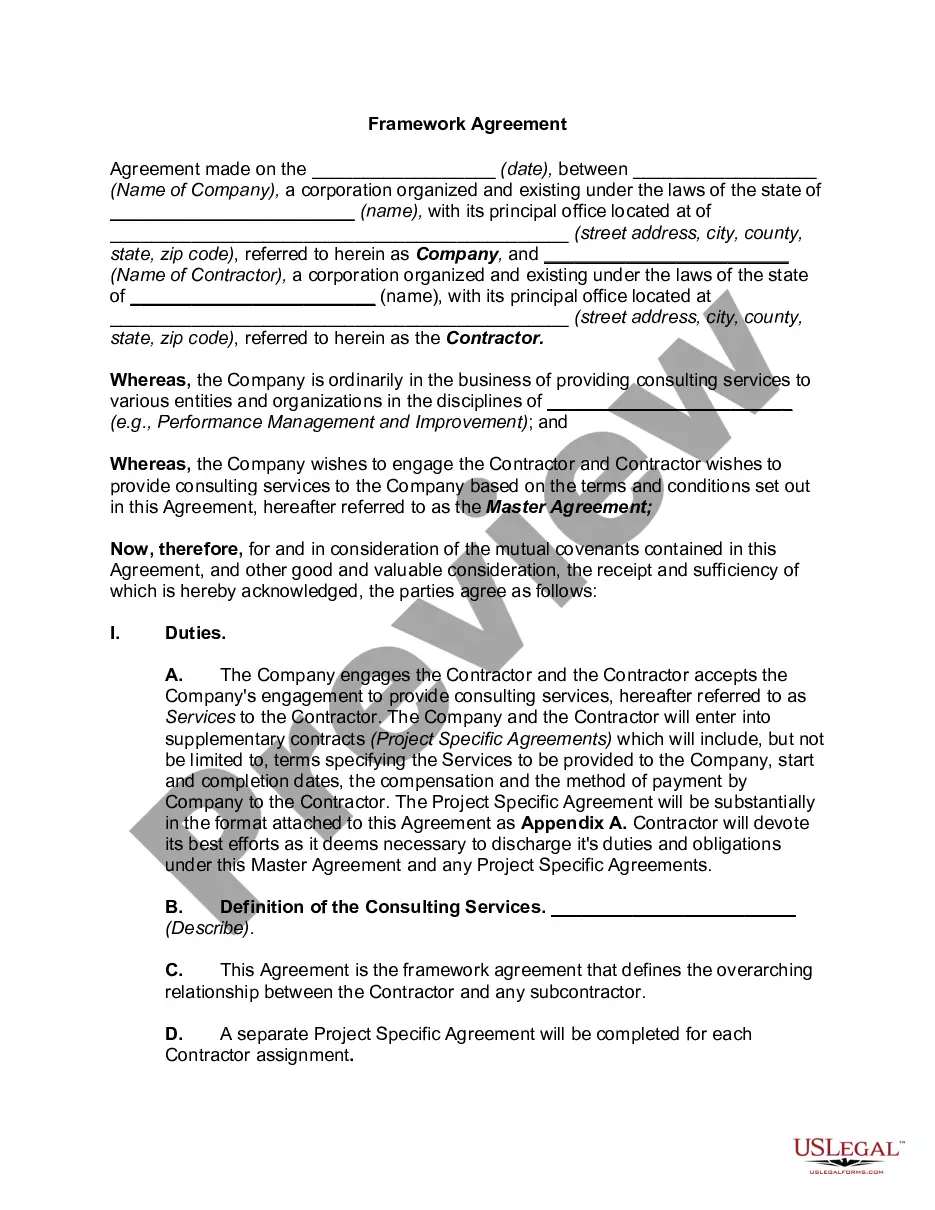
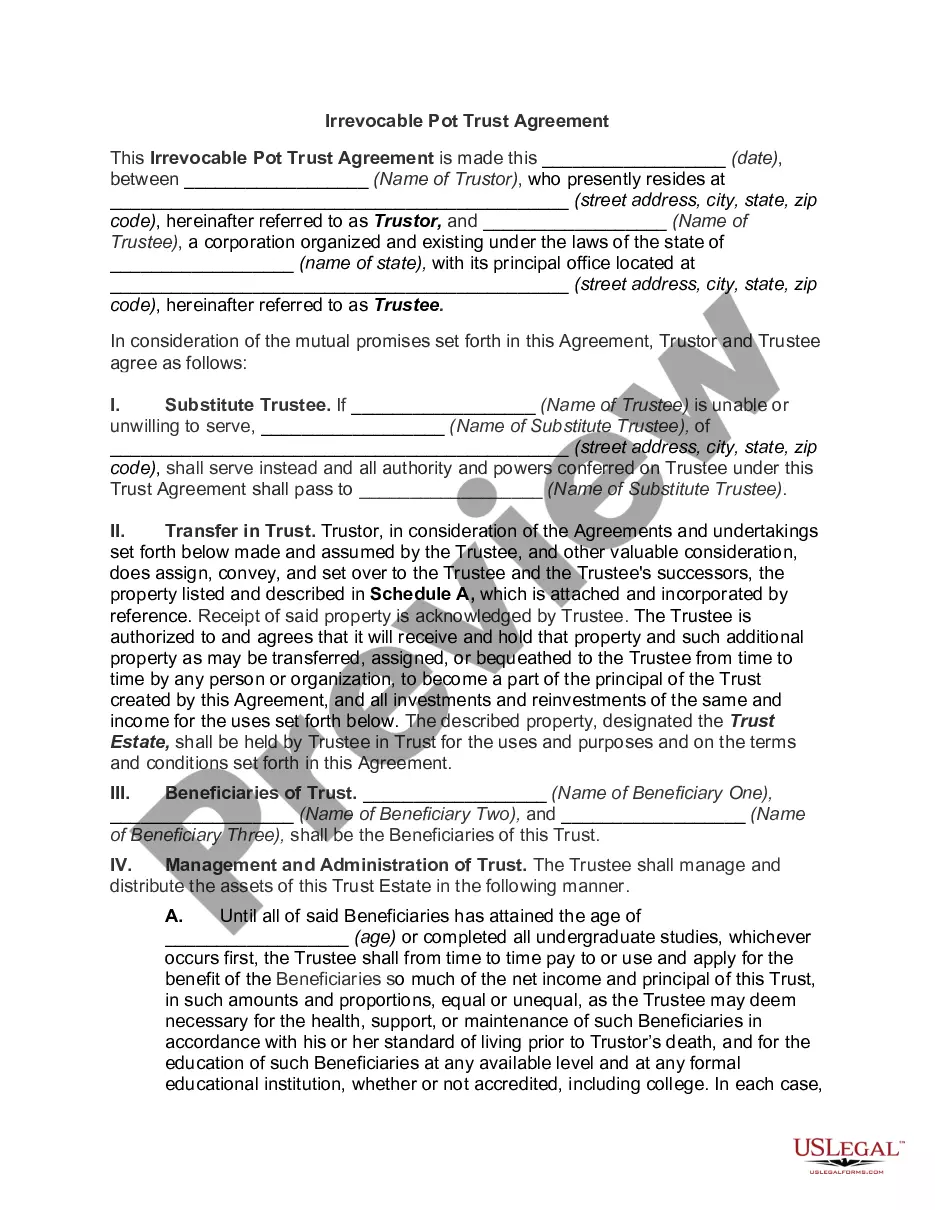
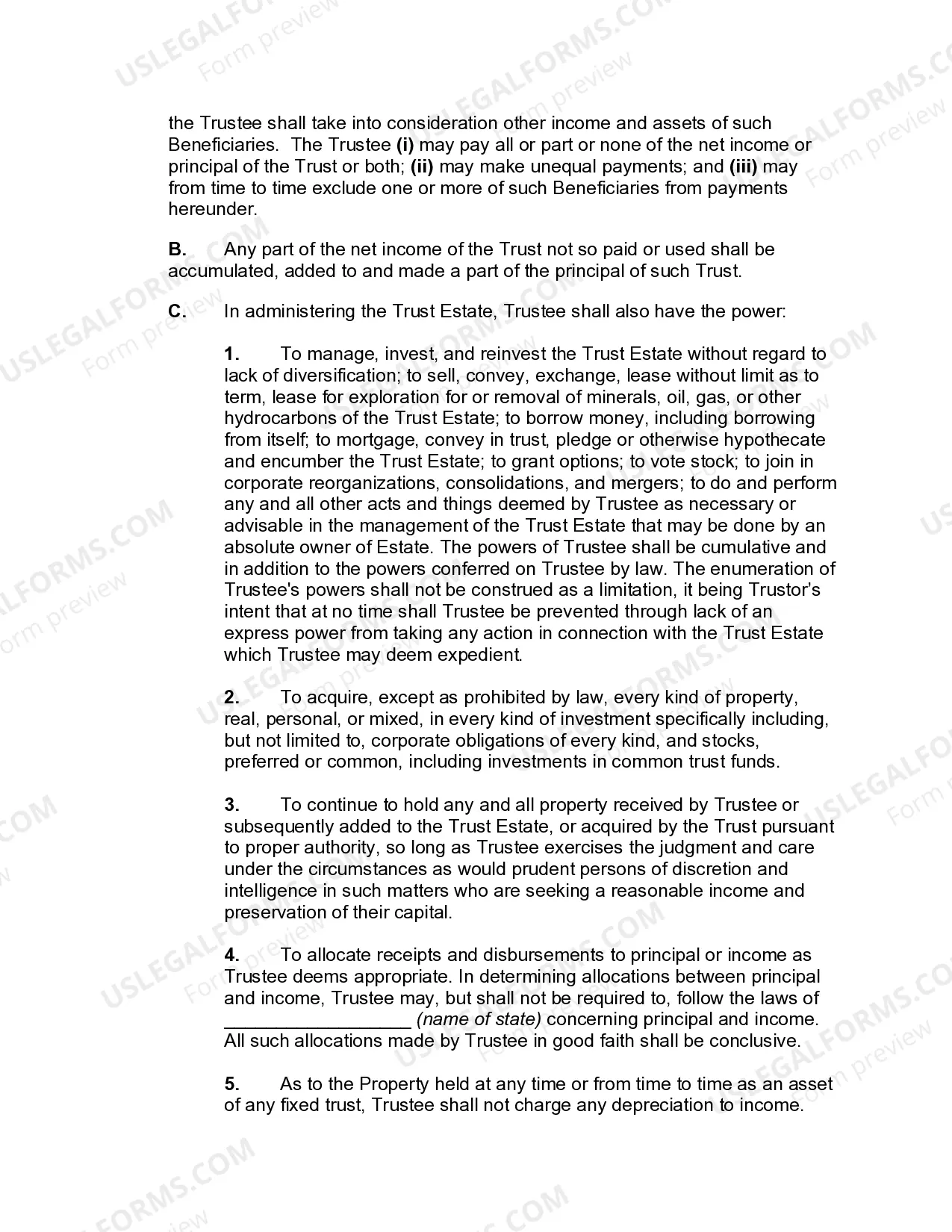
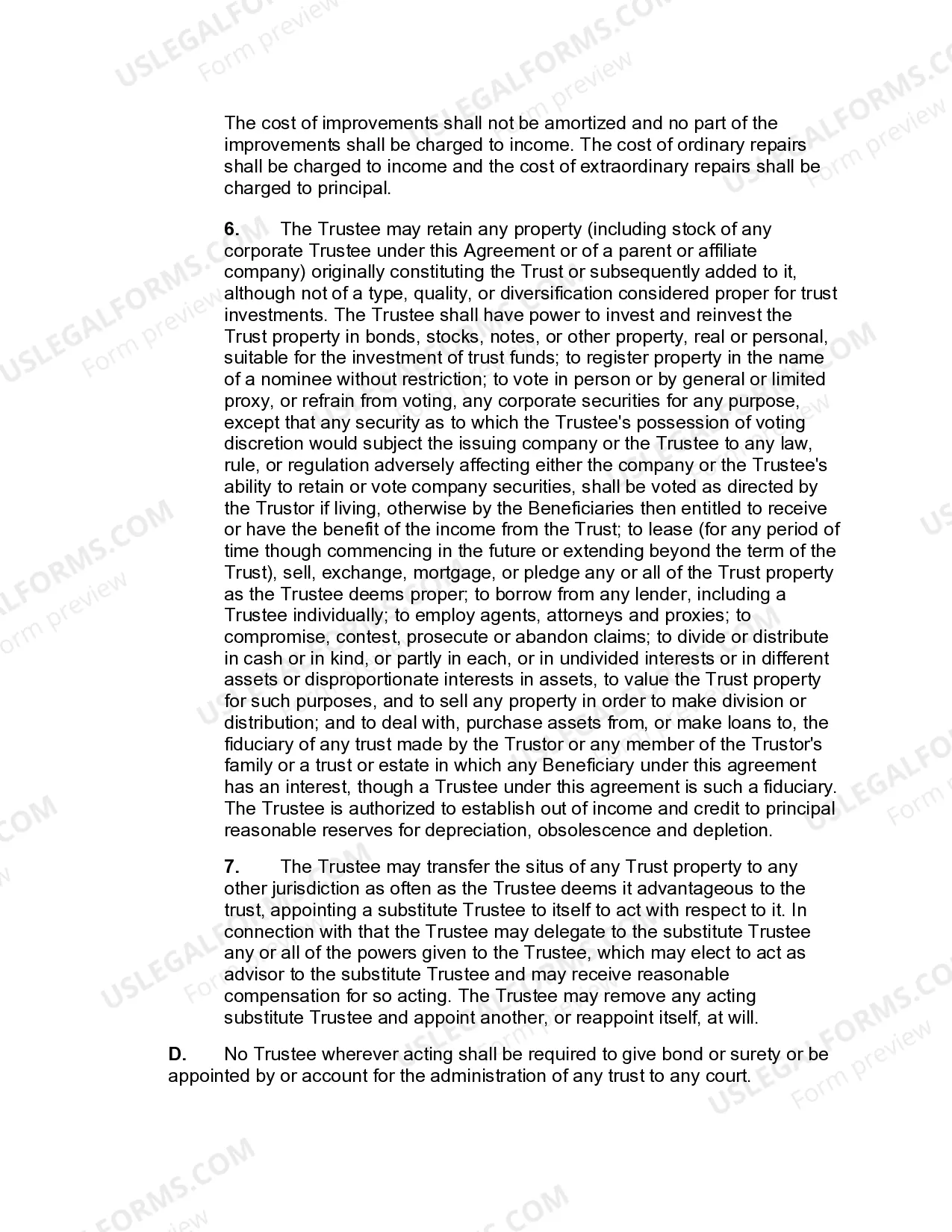
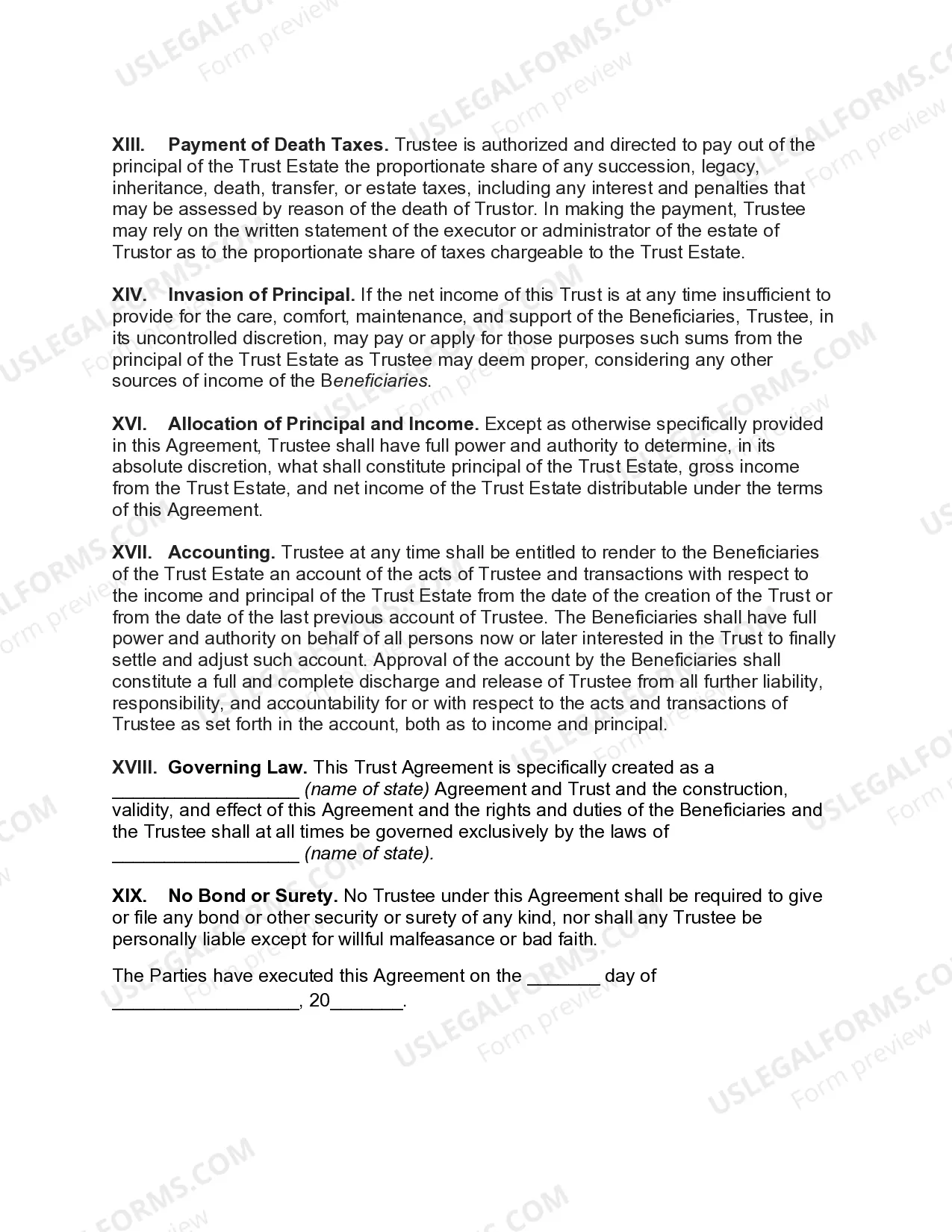
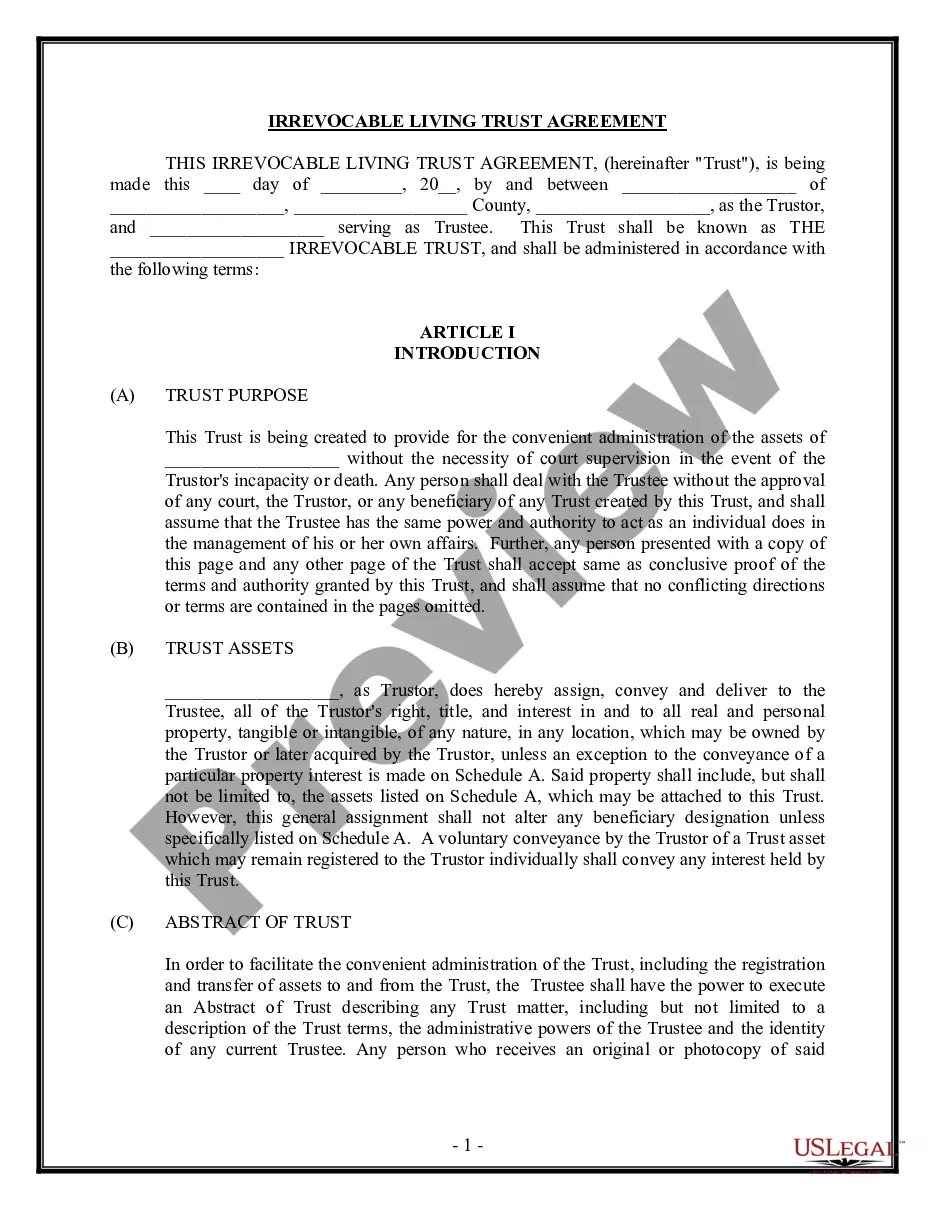
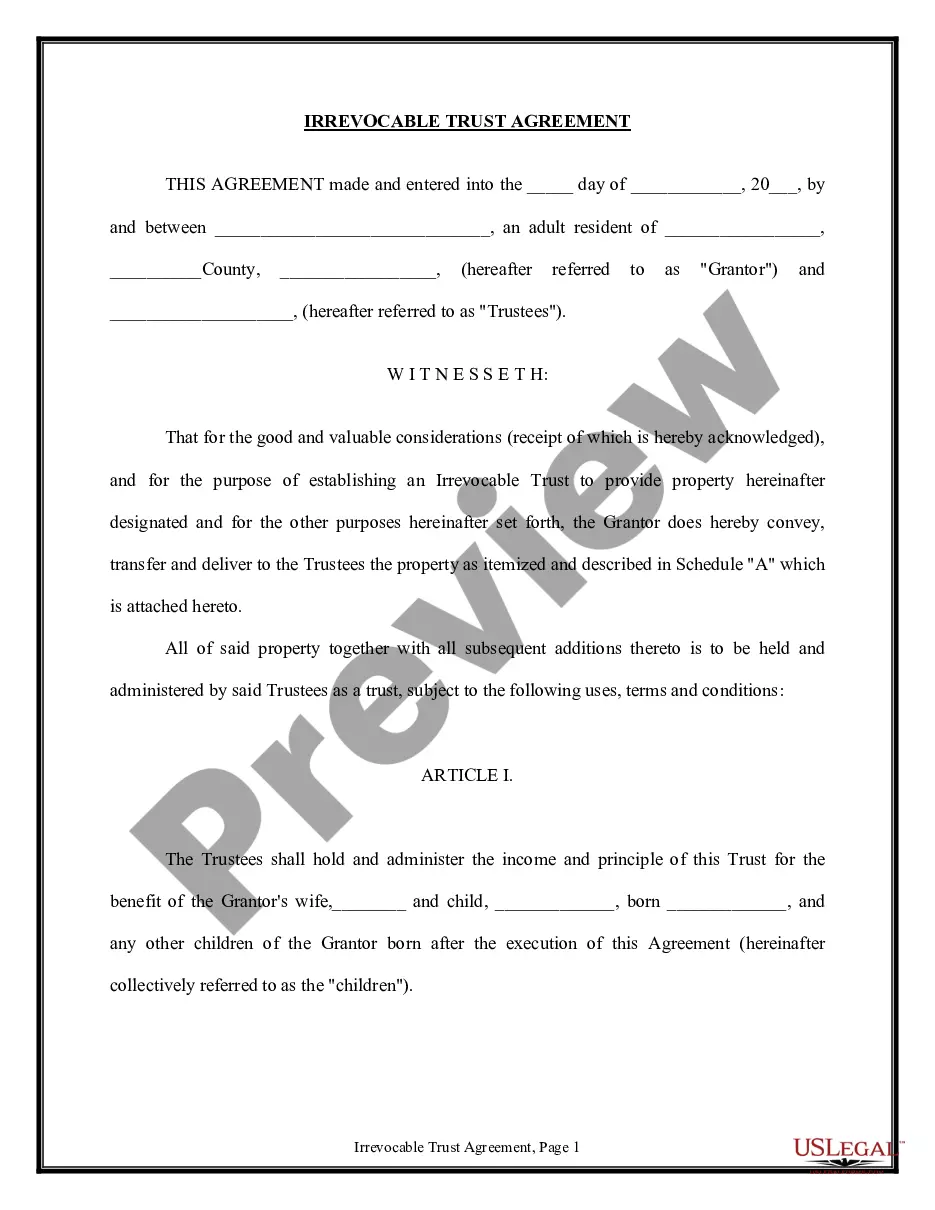
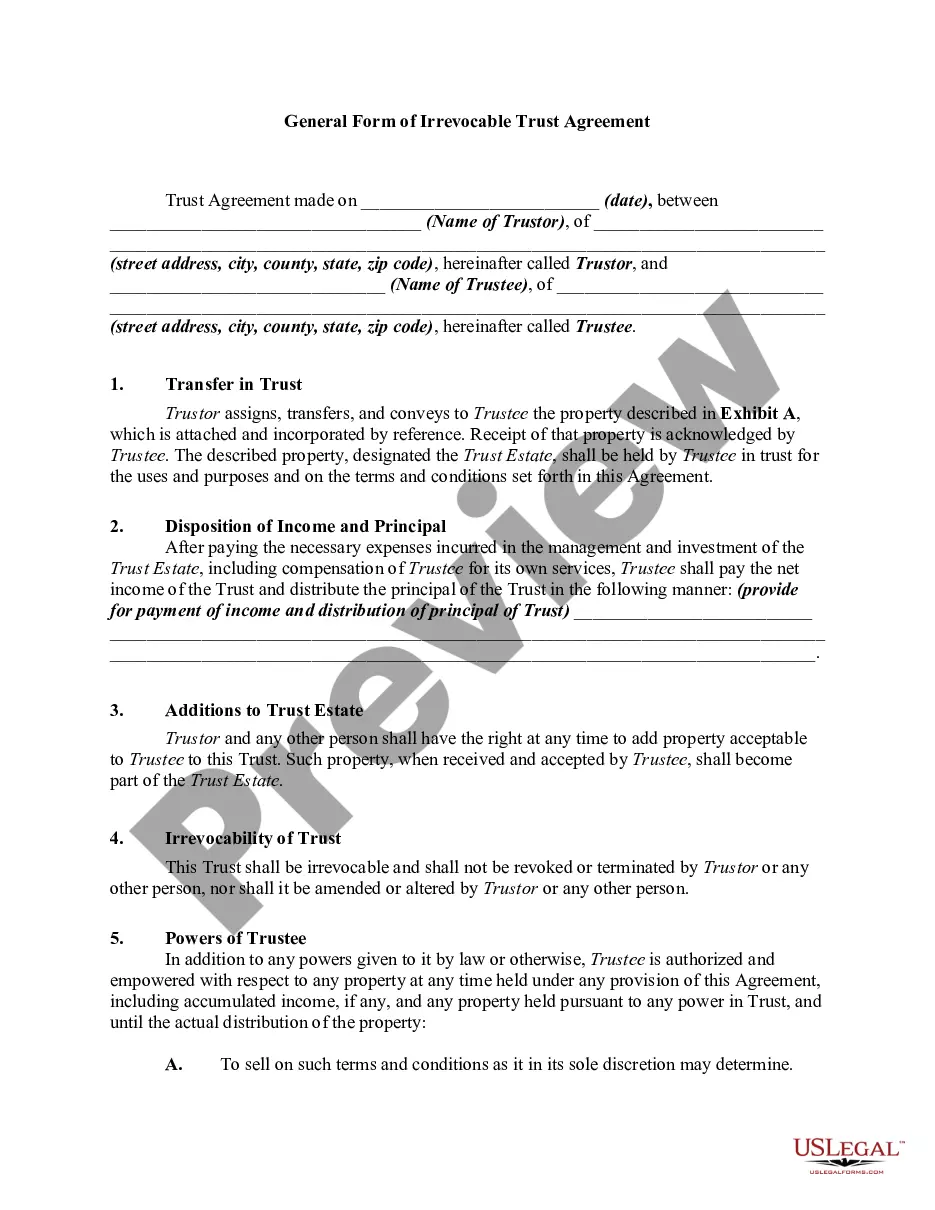
An irrevocable trust is a trust that cannot be modified or terminated without the permission of the beneficiary. In most states, a trust will be deemed irrevocable unless the Trustor specifies otherwise. Once the Trustor has transferred assets into the trust, s/he has no rights of ownership to the assets and the trust. Irrevocable trusts are preferred because it removes all incidents of ownership, thereby effectively removing the trust's assets from the grantor's taxable estate. The Trustor is also relieved of the tax liability on the income generated by the assets. This is the opposite of a "revocable trust", which allows the Trustor to modify the trust.
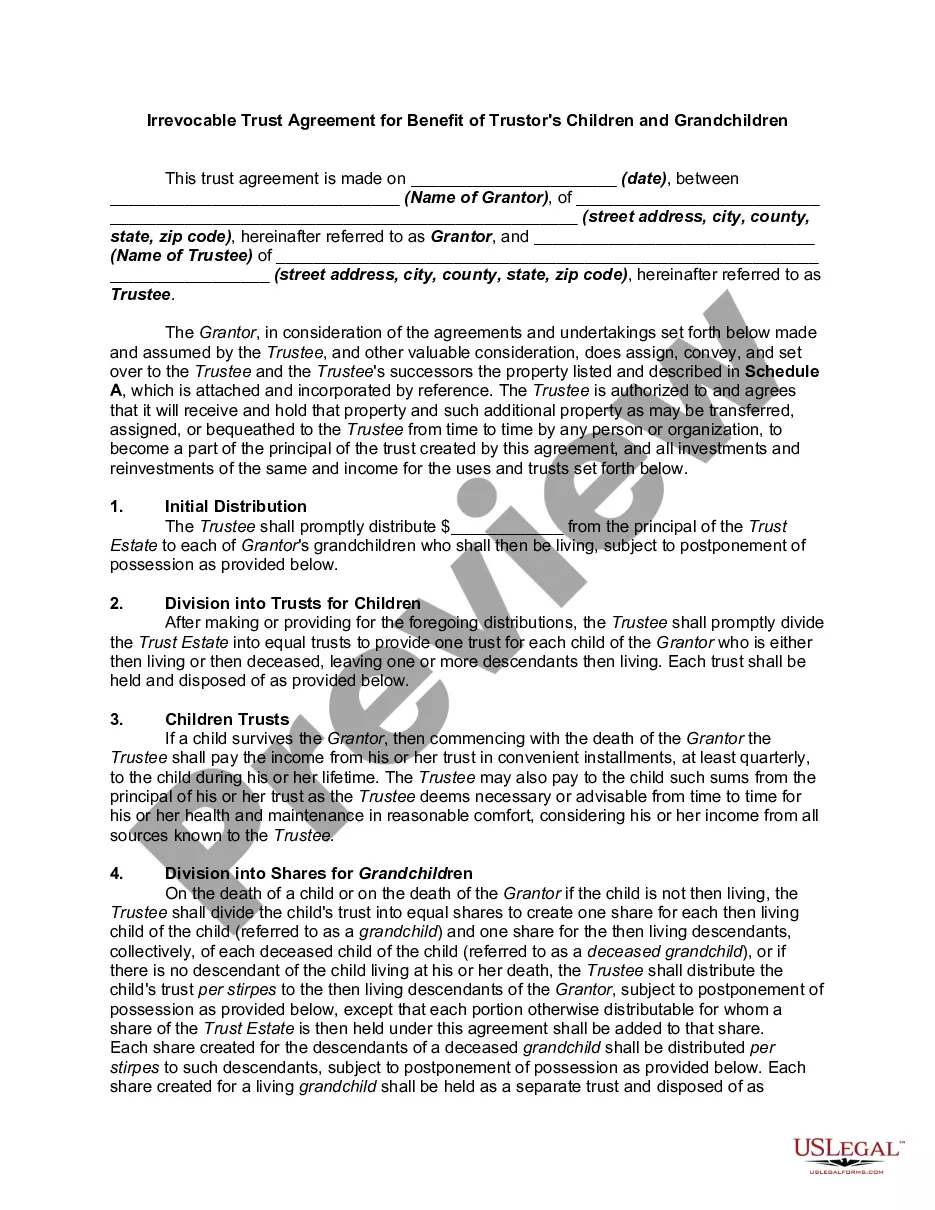
A Pot Trust is a trust set up for more than one beneficiary, typically children. The purpose of a Pot Trust is to keep the funds in one pot until a later event. For example, at the death of the parents, the assets may be kept in one pot until all the children have graduated from college or reached age 21.
Minnesota Irrevocable Pot Trust Agreement
Instant download
Description
Free preview


How to fill out Irrevocable Pot Trust Agreement?
Are you presently in a circumstance where you frequently require documentation for both business or personal activities? There are numerous legitimate document templates available online, but finding reliable ones can be challenging.
US Legal Forms provides a vast array of form templates, such as the Minnesota Irrevocable Pot Trust Agreement, which are designed to comply with both state and federal regulations.
If you are already familiar with the US Legal Forms website and possess an account, simply Log In. After that, you can download the Minnesota Irrevocable Pot Trust Agreement template.
Select a convenient document format and download your copy.
You can access all the document templates you have purchased in the My documents section. If needed, you can obtain another copy of the Minnesota Irrevocable Pot Trust Agreement at any time. Simply select the required form to download or print the document format. Utilize US Legal Forms, the most extensive collection of legal forms, to save time and reduce mistakes. This service offers professionally prepared legal document templates that can be utilized for various purposes. Create your account on US Legal Forms and start making your life easier.
- If you do not have an account and wish to start using US Legal Forms, follow these instructions.
- Select the form you need and ensure it is for the correct city/county.
- Use the Preview button to review the form.
- Check the description to confirm that you have selected the right form.
- If the form does not meet your needs, utilize the Search field to find the form that satisfies your requirements.
- Once you find the appropriate form, click Buy now.
- Choose the pricing plan you wish, provide the necessary information to process your payment, and complete the transaction using PayPal or a credit card.
Form popularity
FAQ
The trust belongs to all the beneficiaries. If the person selling property in an irrevocable trust uses the trust's money for his own needs in any way or transfers trust money to himself, he is considered by the law to be taking everyone's money, not just his own.
Under an irrevocable trust, legal ownership of the trust is held by a trustee. At the same time, the grantor gives up certain rights to the trust.
Revocation by Consent The law of the state the irrevocable trust was formed in will specify when and under what circumstances you can dissolve an irrevocable trust. Most states allow all the beneficiaries to agree in writing to dissolve the trust.
The irrevocable trust will automatically dissolve if its intent has been fulfilled. You might also contend that: The purpose of the trust has become illegal, impossible, wasteful or impractical to fulfill; Compliance with trust terms preclude accomplishing a material purpose of the trust; and.
Irrevocable Trusts Generally, a trustee is the only person allowed to withdraw money from an irrevocable trust. But just as we mentioned earlier, the trustee must follow the rules of the legal document and can only take out income or principal when it's in the best interest of the trust.
The grantor of an irrevocable trust with the following characteristics could be considered the equity owner of the trust: (1) The trust was a grantor trust for federal tax purposes. The grantor was the sole funding source of the trust.
As discussed above, irrevocable trusts are not completely irrevocable; they can be modified or dissolved, but the settlor may not do so unilaterally. The most common mechanisms for modifying or dissolving an irrevocable trust are modification by consent and judicial modification.
Where modification or termination is by consent, the settlor (creator of the trust) may also initiate the petition. A proceeding under any of these provisions begins with a petition filed in probate court, asking the court to grant the modification or termination. The request is a formal court proceeding.
One type of trust that will protect your assets from your creditors is called an irrevocable trust. Once you establish an irrevocable trust, you no longer legally own the assets you used to fund it and can no longer control how those assets are distributed.
The only three times you might want to consider creating an irrevocable trust is when you want to (1) minimize estate taxes, (2) become eligible for government programs, or (3) protect your assets from your creditors.