Missouri Quitclaim Deed - Two Married Couples to a Limited Liability Company
About this form
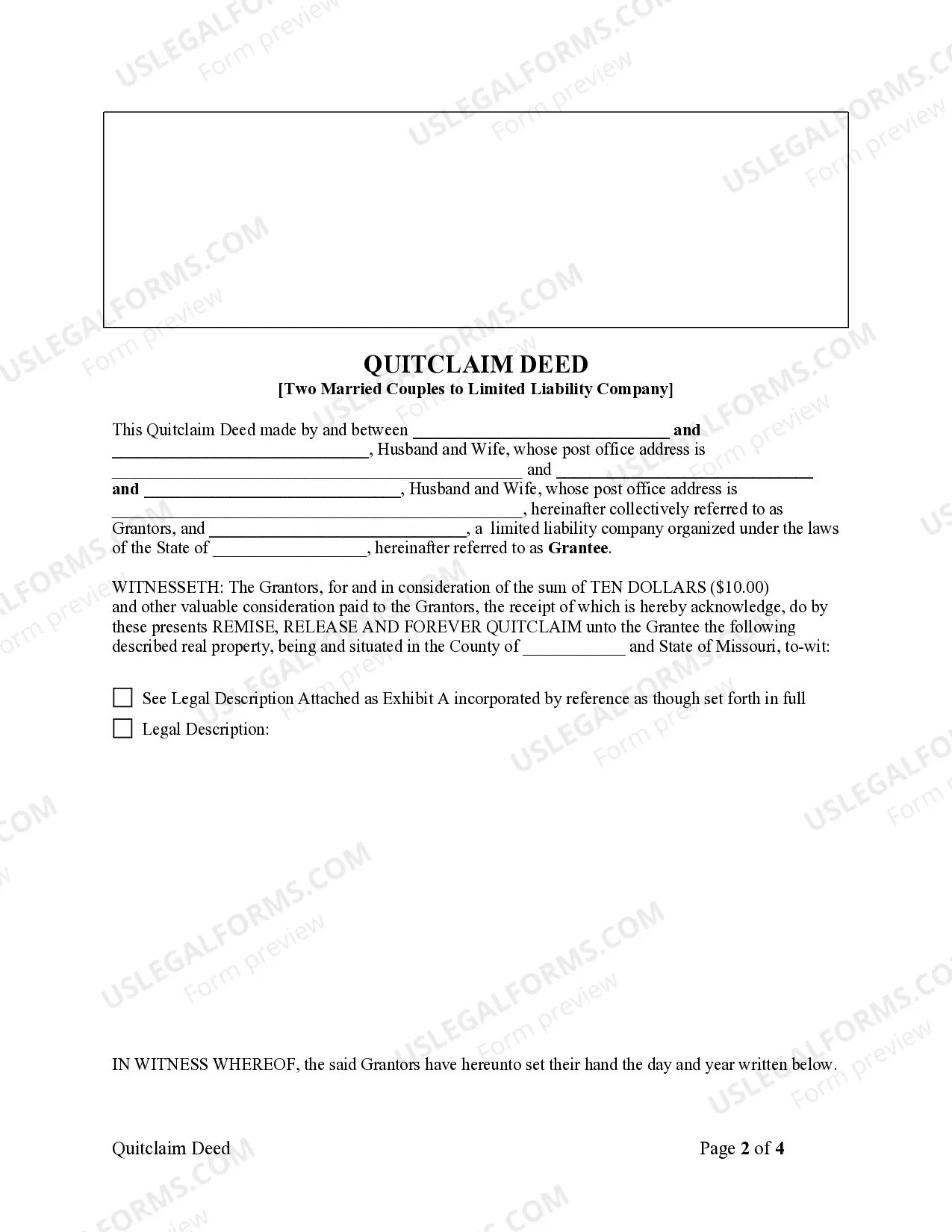
The Quitclaim Deed - Two Married Couples to a Limited Liability Company is a legal document that allows two married couples to transfer their interest in a property to a limited liability company (LLC). Unlike other deeds, a quitclaim deed does not guarantee that the grantors own the property, making it a simpler form of conveyance. This form complies with all state statutory laws, ensuring proper legal standing in the transfer process.
Main sections of this form
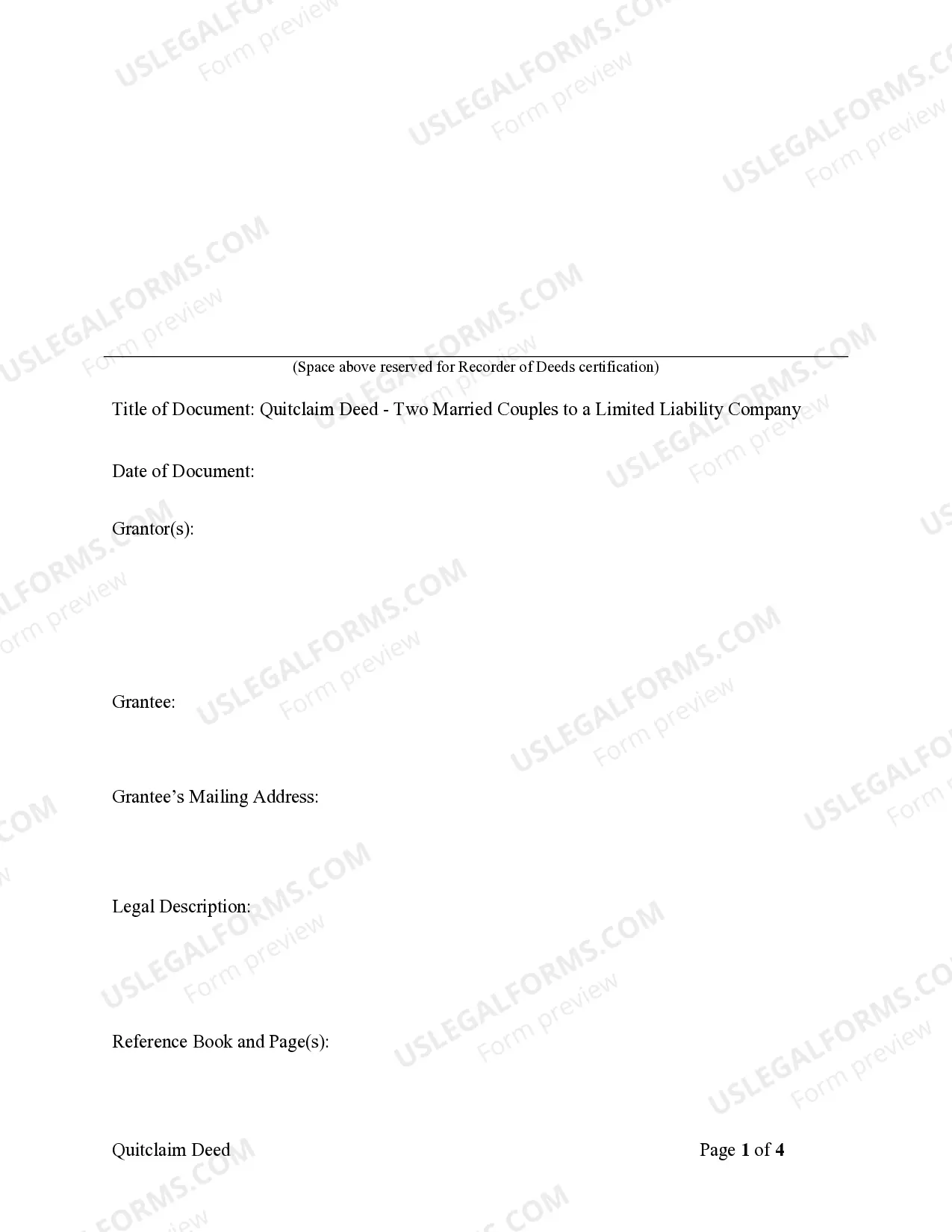
- Names of the grantors (two married couples) and the grantee (the LLC).
- Description of the property being transferred.
- Details of consideration (payment for the property).
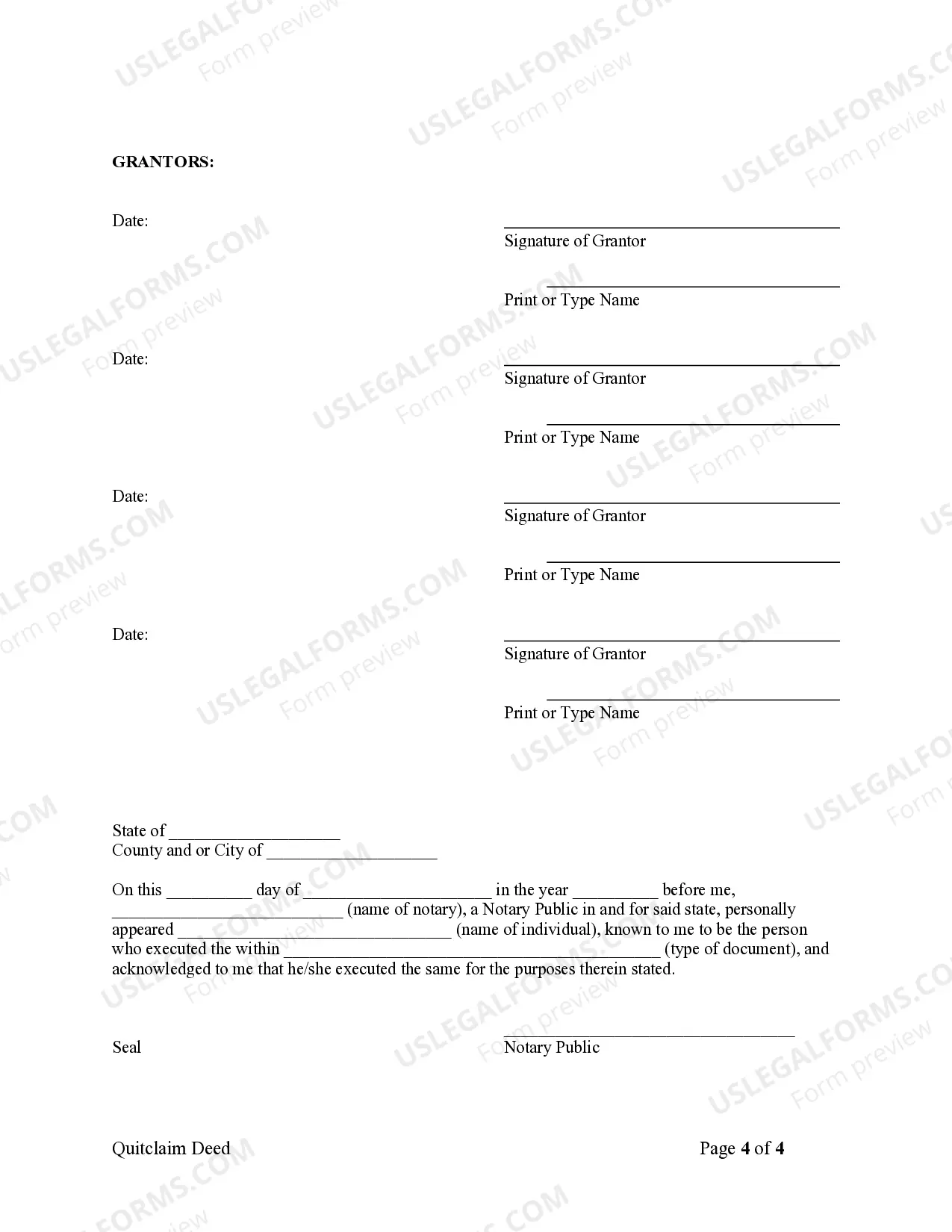
- Signature and acknowledgment of the grantors.
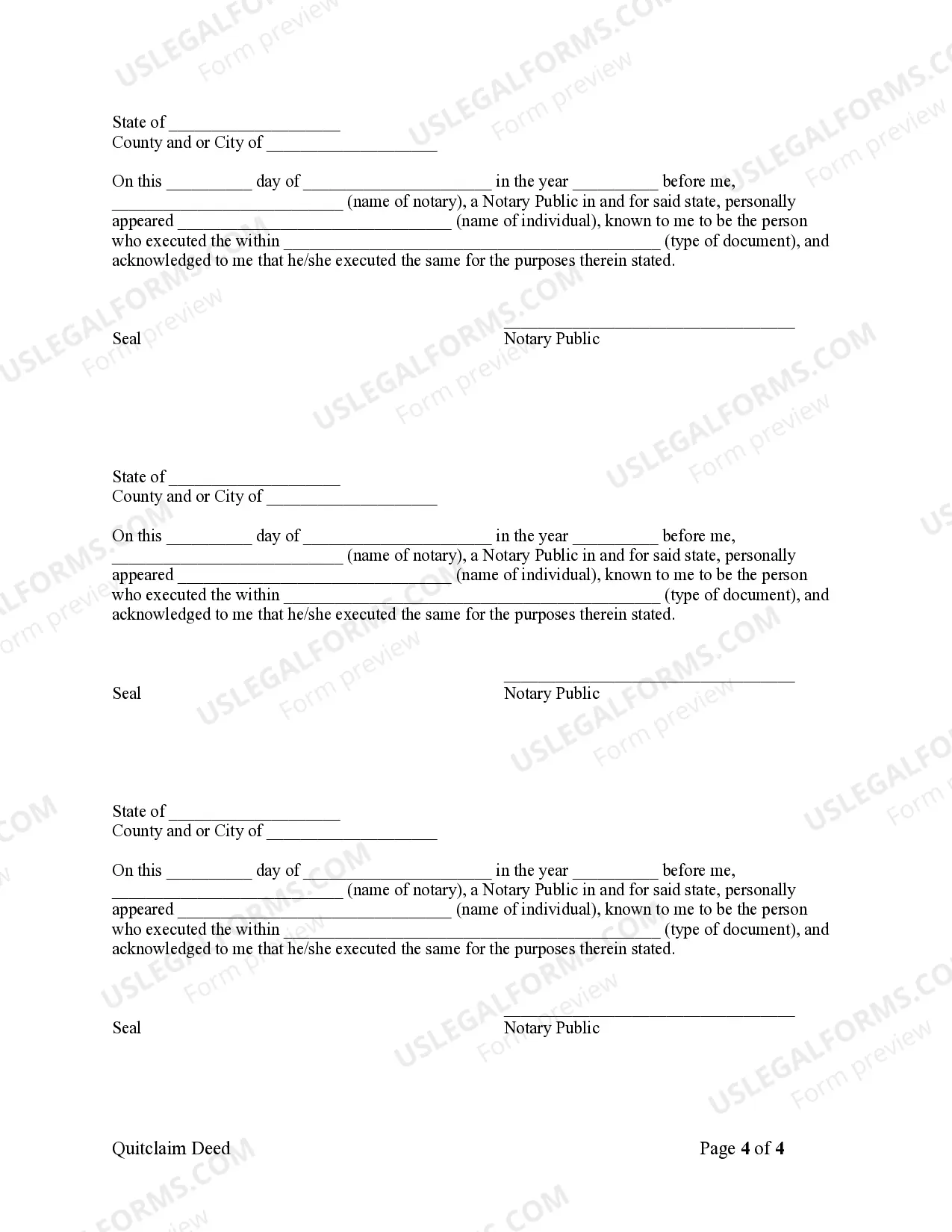
- Notary public section to validate the deed.





When to use this form
This form is commonly used when two married couples wish to transfer ownership of a property they hold jointly to a limited liability company. This might occur during the formation of a business, when the couples want to protect their personal assets, or when simplifying property management under the LLC. It is suitable for both residential and commercial properties.
Who needs this form
- Married couples who jointly own property and want to transfer it to an LLC.
- Business partners who wish to consolidate ownership of assets within an LLC.
- Property owners looking for an alternative method of holding title to real estate.
Instructions for completing this form
- Identify the parties involved: the grantors (two married couples) and the grantee (the LLC).
- Provide a detailed description of the property being transferred.
- Specify the consideration amount, typically a nominal sum, such as ten dollars.
- Have all grantors sign the deed in the designated sections.
- Arrange for a notary public to acknowledge the signatures.
Does this form need to be notarized?
This form must be notarized to be legally valid. US Legal Forms provides secure online notarization powered by Notarize, allowing you to complete the process through a verified video call.
Get your form ready online
Our built-in tools help you complete, sign, share, and store your documents in one place.
Make edits, fill in missing information, and update formatting in US Legal Forms—just like you would in MS Word.
Download a copy, print it, send it by email, or mail it via USPS—whatever works best for your next step.
Sign and collect signatures with our SignNow integration. Send to multiple recipients, set reminders, and more. Go Premium to unlock E-Sign.
If this form requires notarization, complete it online through a secure video call—no need to meet a notary in person or wait for an appointment.
We protect your documents and personal data by following strict security and privacy standards.
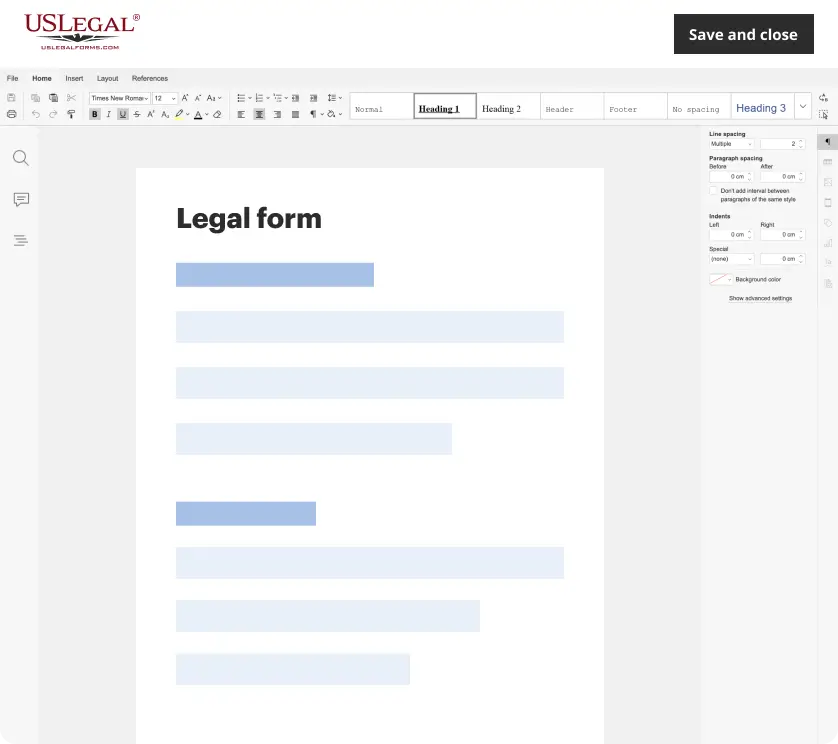
Make edits, fill in missing information, and update formatting in US Legal Forms—just like you would in MS Word.
Download a copy, print it, send it by email, or mail it via USPS—whatever works best for your next step.
Sign and collect signatures with our SignNow integration. Send to multiple recipients, set reminders, and more. Go Premium to unlock E-Sign.
If this form requires notarization, complete it online through a secure video call—no need to meet a notary in person or wait for an appointment.
We protect your documents and personal data by following strict security and privacy standards.
Typical mistakes to avoid
- Failing to include a comprehensive property description.
- Not providing notarization, which is essential for validity.
- Omitting signatures from all grantors involved in the transaction.
Why complete this form online
- Convenient access from anywhere, allowing you to complete the form at your own pace.
- Editable fields where you can input information directly into the form.
- Reliable templates drafted by licensed attorneys, ensuring compliance with legal standards.
Looking for another form?

Form popularity
FAQ
Yes, you can add someone to a quitclaim deed, but this is typically done by creating a new deed that includes all parties. In the case of a Missouri Quitclaim Deed - Two Married Couples to a Limited Liability Company, both existing and new owners must agree to the change. Make sure to properly execute and file the new deed with your county's recorder office to maintain clarity of ownership.
Yes, you can prepare your own quitclaim deed in Missouri, but it's essential to ensure that the document meets all legal requirements. Using a Missouri Quitclaim Deed - Two Married Couples to a Limited Liability Company template can simplify this process. Platforms like uslegalforms provide easy-to-use templates that ensure your deed is legally sound. This can save you time and potential legal issues down the road.
Yes, a spouse can retain certain rights to property even after signing a quitclaim deed, depending on state laws. In Missouri, if the quitclaim deed does not explicitly transfer all rights, the spouse may still have some claim to the property. Therefore, it is vital to understand the implications of using a Missouri Quitclaim Deed - Two Married Couples to a Limited Liability Company. Consulting with a legal expert can clarify these rights.
To add your husband's name to your house deed in Missouri, you will need to complete a Missouri Quitclaim Deed - Two Married Couples to a Limited Liability Company. This document allows you to transfer ownership interest. Both parties must sign the deed, and it should be filed with the county recorder's office. Ensure you check any local requirements to make the process smooth.
To create a valid quitclaim deed in Missouri, you need several essential elements. First, include the names of the grantor and grantee, along with their signatures. Additionally, provide a detailed legal description of the property and ensure the document is notarized. By following these requirements, you can effectively use a Missouri Quitclaim Deed - Two Married Couples to a Limited Liability Company to facilitate property transfers.
While a quitclaim deed is a straightforward way to transfer property, it carries risks. The primary danger is that it does not guarantee the ownership of the property; it merely transfers whatever interest the grantor has. This means that if there are any liens or claims against the property, the new owner could inherit those issues. Understanding these risks can help you make informed decisions when using a Missouri Quitclaim Deed - Two Married Couples to a Limited Liability Company.
A quitclaim deed can become invalid for several reasons, including lack of proper signatures from all parties involved, missing legal descriptions of the property, or failure to meet state-specific requirements. In Missouri, it is crucial that the deed is notarized and meets all local regulations to ensure its validity. If you're navigating this process, consider using resources like US Legal Forms to guide you through creating a valid Missouri Quitclaim Deed - Two Married Couples to a Limited Liability Company.
In Missouri, if one owner of a jointly held property passes away, the surviving owner typically retains full ownership. This transfer occurs automatically, thanks to the right of survivorship present in joint tenancy arrangements. However, if the property is held as tenants in common, the deceased owner's share passes to their estate. It's essential to understand these distinctions, especially when considering a Missouri Quitclaim Deed - Two Married Couples to a Limited Liability Company.
To add your spouse to a quit claim deed, you will first need to create a new deed that includes both names. You can use a Missouri Quitclaim Deed - Two Married Couples to a Limited Liability Company template for this purpose. Make sure to fill in the required information accurately and sign the document in front of a notary. Finally, file the new deed with your local county recorder's office to ensure that the change is legally recognized.