Missouri Transfer on Death Deed or TOD - Beneficiary Deed - Husband and Wife to a Trust
What is this form?
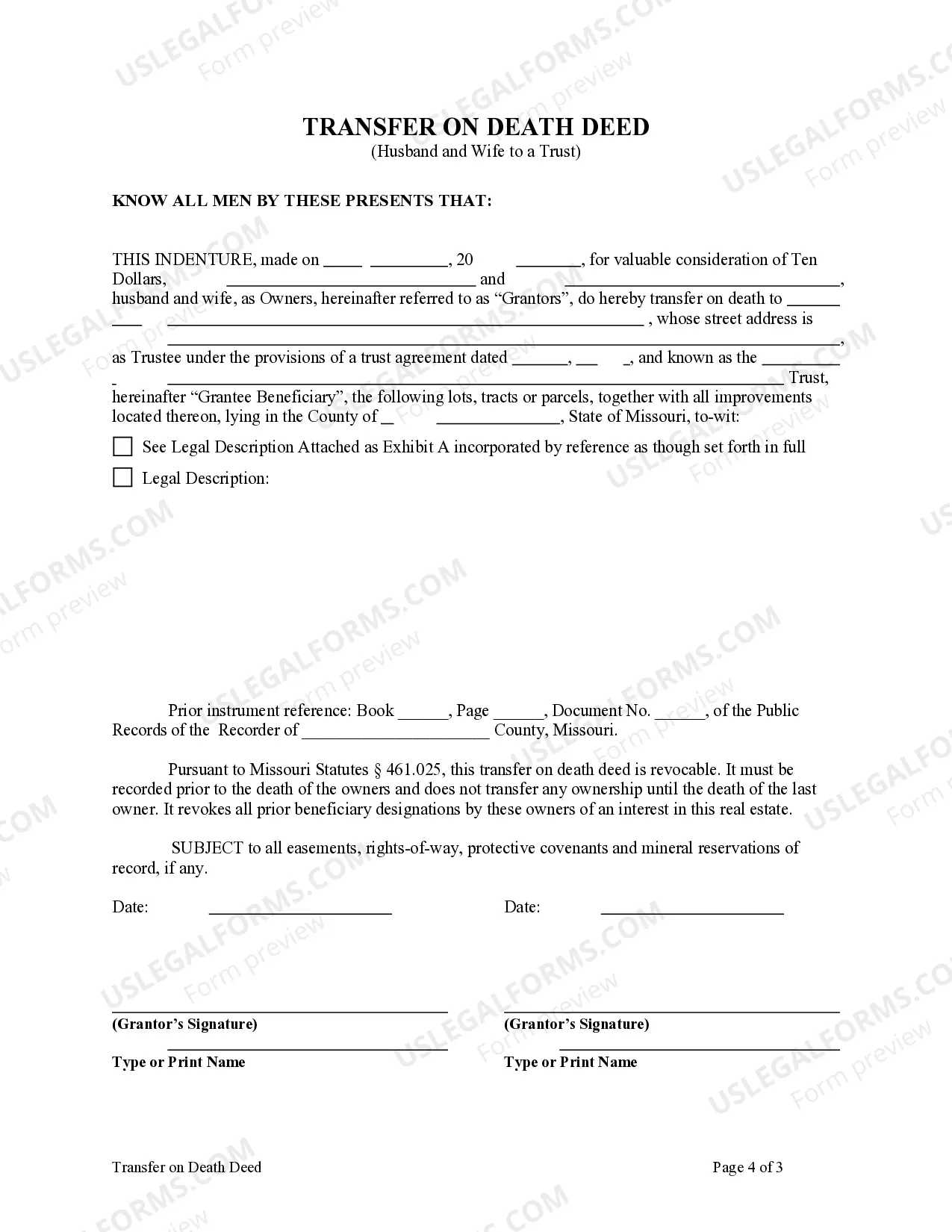
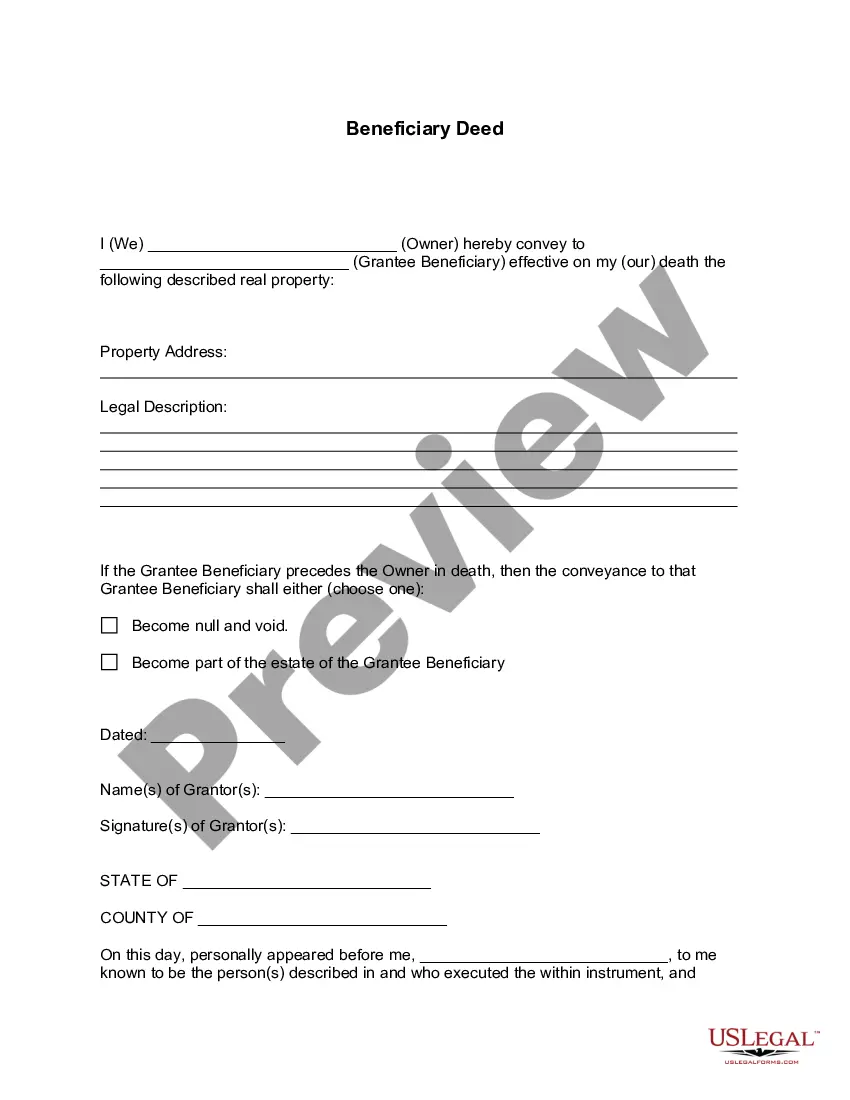
The Transfer on Death Deed, also known as a Beneficiary Deed, is a legal document that allows property owners, specifically a husband and wife, to transfer their real estate upon the death of the last surviving owner to a designated beneficiary. This form is revocable until the death of the last surviving grantor, meaning the grantors can change or cancel it at any time while they are alive. Unlike a traditional will, the TOD deed avoids probate and gives immediate property rights to the beneficiary after the owner's death.
Main sections of this form
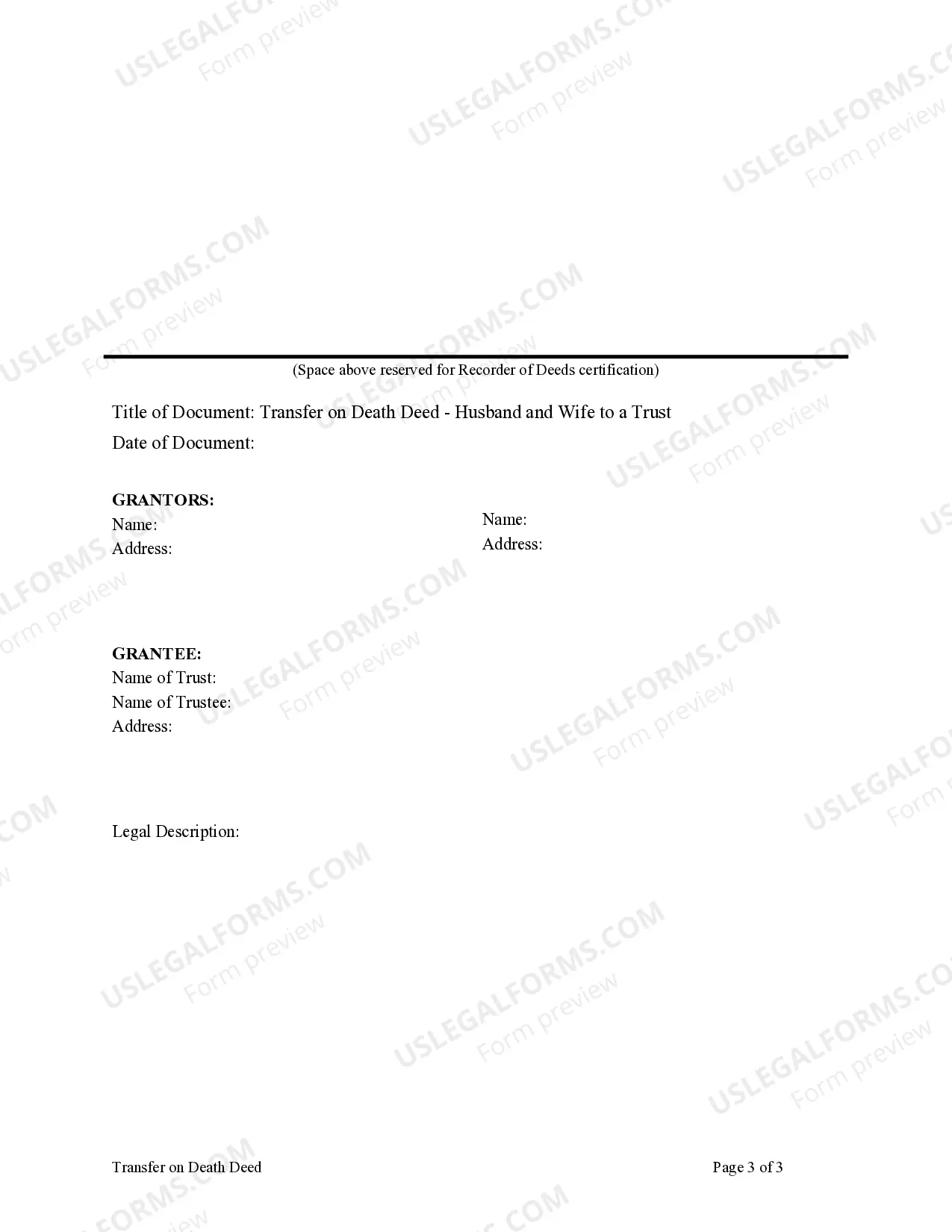
- Identification of grantors (husband and wife) and grantee (beneficiary).
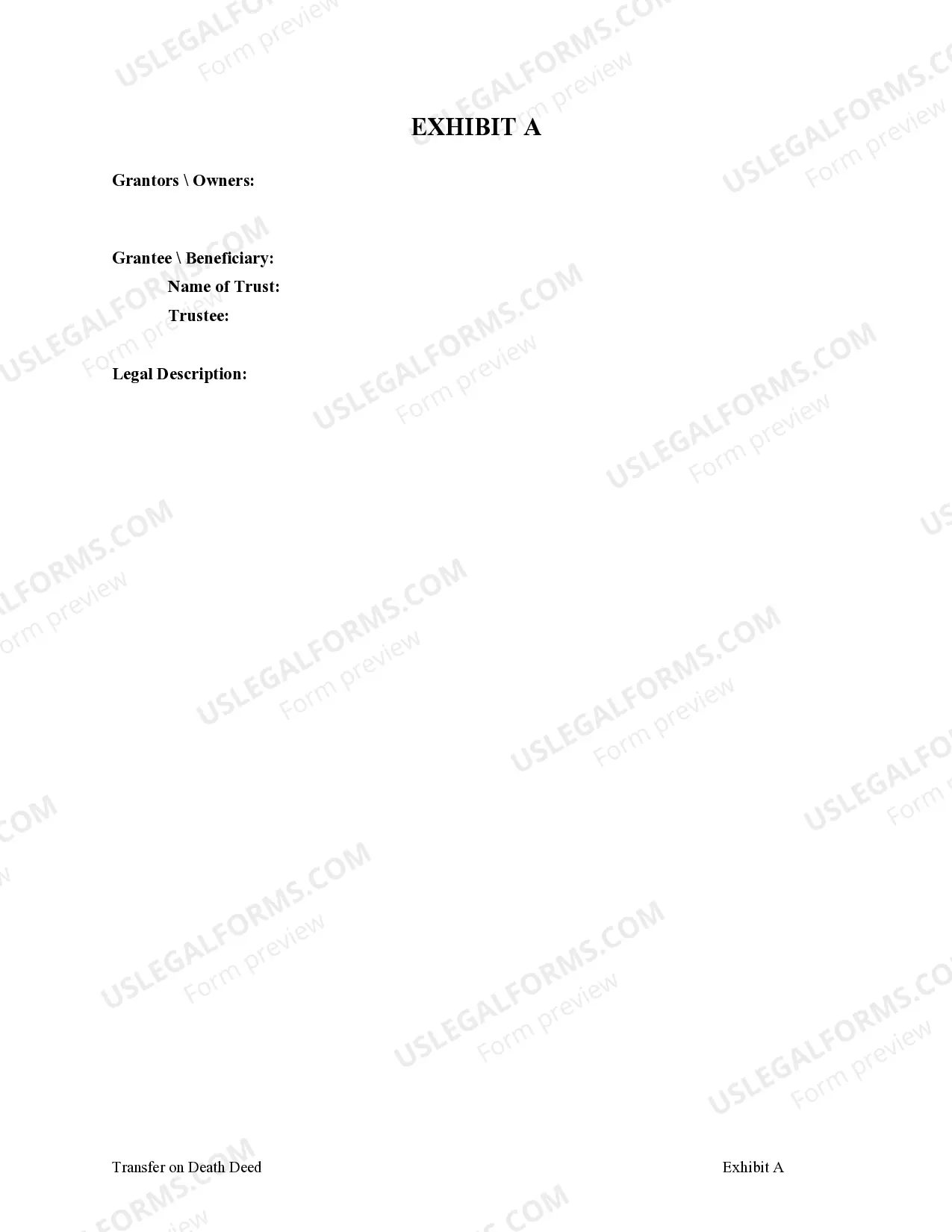
- Legal description of the property being transferred.
- Revocation clause for any prior beneficiary designations.
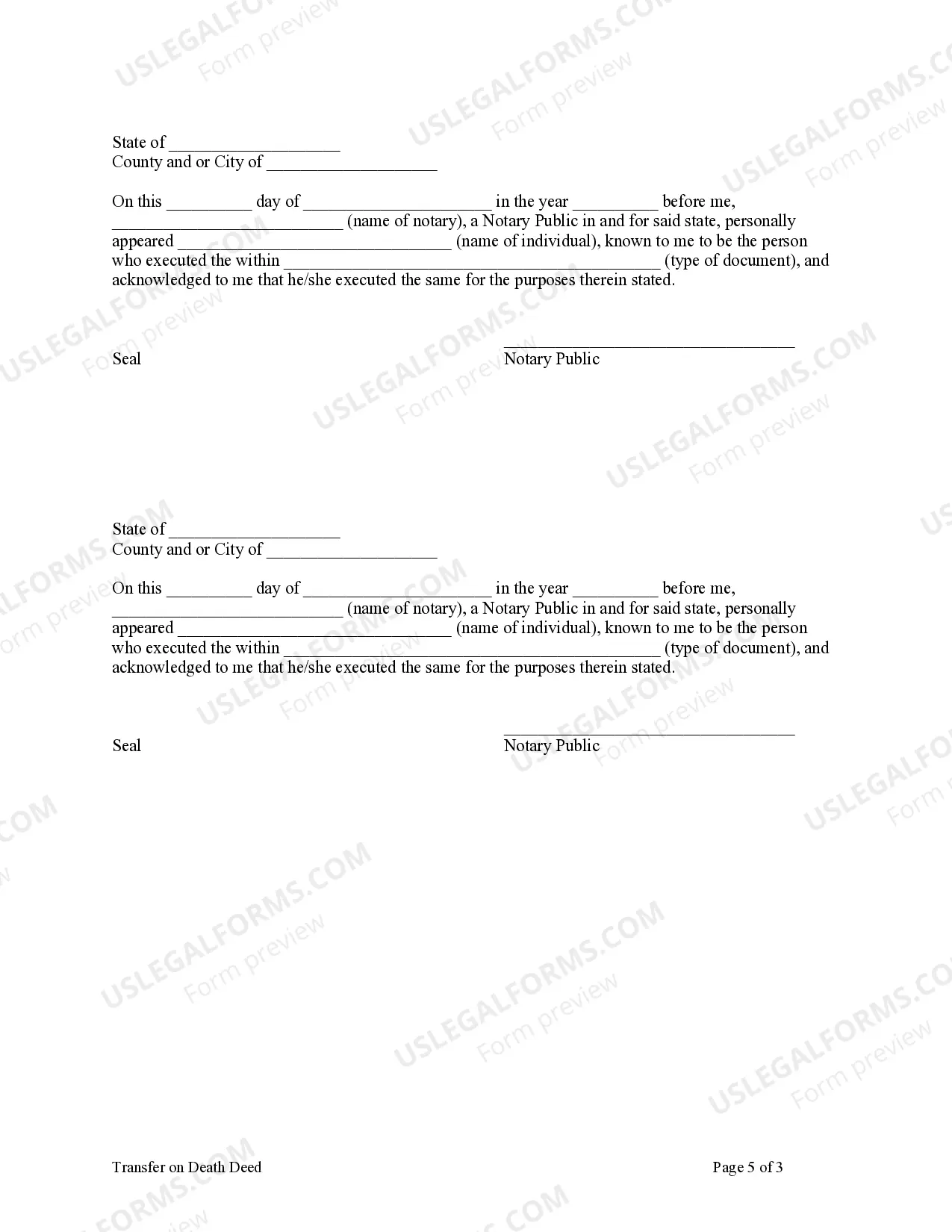
- Notary public acknowledgment section for legal validation.
- Signature lines for grantors and the notary public.

When to use this document
This form should be used by couples who wish to ensure that their property is transferred directly to a third party without the need for probate upon the death of the last surviving spouse. It is particularly useful when both individuals want to maintain control over their property while they are alive but want a clear plan for future transfer after their passing.
Who this form is for
- Married couples who own real estate in their names.
- Individuals looking to simplify the transfer of their property after their death.
- Property owners who want to avoid probate for their heirs.
Completing this form step by step
- Identify the full names of the husband and wife as grantors.
- Designate the beneficiary who will receive the property upon the death of the last surviving grantor.
- Provide a legal description of the property being transferred.
- Sign the document in front of a notary public to ensure legal validity.
- Record the completed deed with the appropriate local authority before the death of the last surviving grantor.
Notarization guidance
This form must be notarized to be legally valid. US Legal Forms provides secure online notarization powered by Notarize, allowing you to complete the process through a verified video call.
Get your form ready online
Our built-in tools help you complete, sign, share, and store your documents in one place.
Make edits, fill in missing information, and update formatting in US Legal Forms—just like you would in MS Word.
Download a copy, print it, send it by email, or mail it via USPS—whatever works best for your next step.
Sign and collect signatures with our SignNow integration. Send to multiple recipients, set reminders, and more. Go Premium to unlock E-Sign.
If this form requires notarization, complete it online through a secure video call—no need to meet a notary in person or wait for an appointment.
We protect your documents and personal data by following strict security and privacy standards.

Make edits, fill in missing information, and update formatting in US Legal Forms—just like you would in MS Word.

Download a copy, print it, send it by email, or mail it via USPS—whatever works best for your next step.

Sign and collect signatures with our SignNow integration. Send to multiple recipients, set reminders, and more. Go Premium to unlock E-Sign.

If this form requires notarization, complete it online through a secure video call—no need to meet a notary in person or wait for an appointment.

We protect your documents and personal data by following strict security and privacy standards.
Mistakes to watch out for
- Failing to record the deed before the death of the last surviving grantor.
- Not providing a complete legal description of the property.
- Overlooking the need for notarization for validity.
- Conflicting beneficiary designations that have not been revoked.
Benefits of completing this form online
- Easy to fill out and customize to your specific needs.
- Convenient access to legal forms at any time.
- Reliable documents drafted based on current legal standards.
- Ability to save and print for record-keeping.
Looking for another form?
Form popularity
FAQ
To fill out a beneficiary deed form, you should provide your name, the property description, and the names of the beneficiaries. Ensure that you include all required signatures and have the deed notarized to make it legally binding. This process can be simplified using USLegalForms, which offers comprehensive templates for the Missouri Transfer on Death Deed or TOD - Beneficiary Deed - Husband and Wife to a Trust, helping you navigate the paperwork efficiently.
Filling out a transfer on death deed form involves several key steps. Begin by entering your name and the property description, followed by the names of the beneficiaries who will receive the property after your death. Don't forget to sign the deed in the presence of a notary public to validate it. For ease and accuracy, consider using USLegalForms, which offers templates for the Missouri Transfer on Death Deed or TOD - Beneficiary Deed - Husband and Wife to a Trust.
While you do not necessarily need a lawyer to create a TOD deed in Missouri, having legal assistance can ensure that all details are correctly handled. A lawyer can provide valuable advice on how the Missouri Transfer on Death Deed or TOD - Beneficiary Deed - Husband and Wife to a Trust works and help you avoid common pitfalls. However, many individuals successfully complete these deeds on their own, especially with resources from platforms like USLegalForms.
A beneficiary deed for a house in Missouri allows property owners to transfer their real estate to designated beneficiaries upon their death, without going through probate. This type of deed is particularly useful for couples, such as husband and wife, who want to ensure their property passes directly to their trust beneficiaries. It provides a clear and straightforward way to manage estate planning. For detailed guidance, USLegalForms provides resources tailored to the Missouri Transfer on Death Deed or TOD - Beneficiary Deed - Husband and Wife to a Trust.
To fill out a Missouri beneficiary deed form, start by providing the names and addresses of the current owners, along with the details of the property. Next, include the names of the beneficiaries who will inherit the property upon the owner's death. Ensure that you also sign and date the document in front of a notary public. For a seamless experience, consider using USLegalForms, which offers templates specifically designed for the Missouri Transfer on Death Deed or TOD - Beneficiary Deed - Husband and Wife to a Trust.
To file a Transfer on Death Deed in Missouri, you must first complete the appropriate form, ensuring all required information is accurate. After completing the deed, you must sign it in the presence of a notary and then file it with the local County Recorder of Deeds. Utilizing a Missouri Transfer on Death Deed or TOD - Beneficiary Deed - Husband and Wife to a Trust simplifies this process. Platforms like US Legal Forms provide the necessary templates and guidance to help you navigate the filing smoothly.
While a Missouri Transfer on Death Deed or TOD - Beneficiary Deed - Husband and Wife to a Trust offers several benefits, it also comes with some disadvantages. One significant concern is that the deed does not provide protection from creditors after the owner's death. Furthermore, if the property is sold during the owner's lifetime, the deed becomes void. This means that careful consideration is necessary before choosing this option for estate planning.
In Missouri, you file a Transfer on Death Deed with the local County Recorder of Deeds where the property is located. It is essential to ensure that the deed is recorded before the property owner's death to be effective. By using a Missouri Transfer on Death Deed or TOD - Beneficiary Deed - Husband and Wife to a Trust, the process becomes straightforward, allowing you to designate your beneficiaries properly. Additionally, using a trusted platform like US Legal Forms can guide you through the filing process.
Determining whether a trust or a Missouri Transfer on Death Deed or TOD - Beneficiary Deed - Husband and Wife to a Trust is better depends on your financial situation and goals. A trust provides comprehensive management of assets and can be useful during your lifetime, while a TOD deed simplifies the transfer process and avoids probate. If you seek an easy and direct transfer of property to your beneficiaries, a TOD deed may be the ideal choice for you.
Choosing between a revocable trust and a Missouri Transfer on Death Deed or TOD - Beneficiary Deed - Husband and Wife to a Trust depends on your specific needs. A revocable trust offers flexibility and can manage assets during your lifetime, while a TOD deed is straightforward and avoids probate. If you prioritize simplicity and direct transfer, a TOD may be the better choice; however, if you seek comprehensive management of your assets, consider a trust.