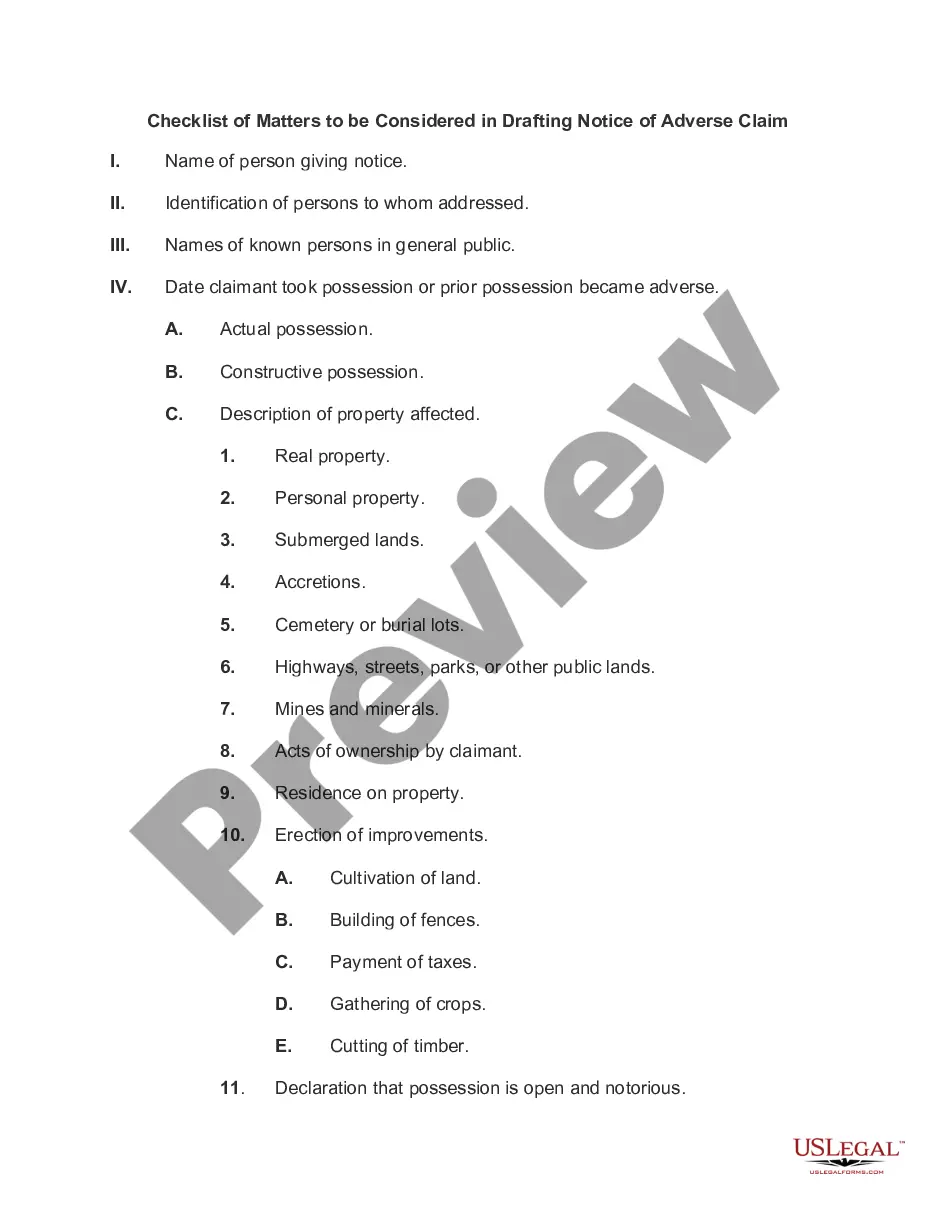
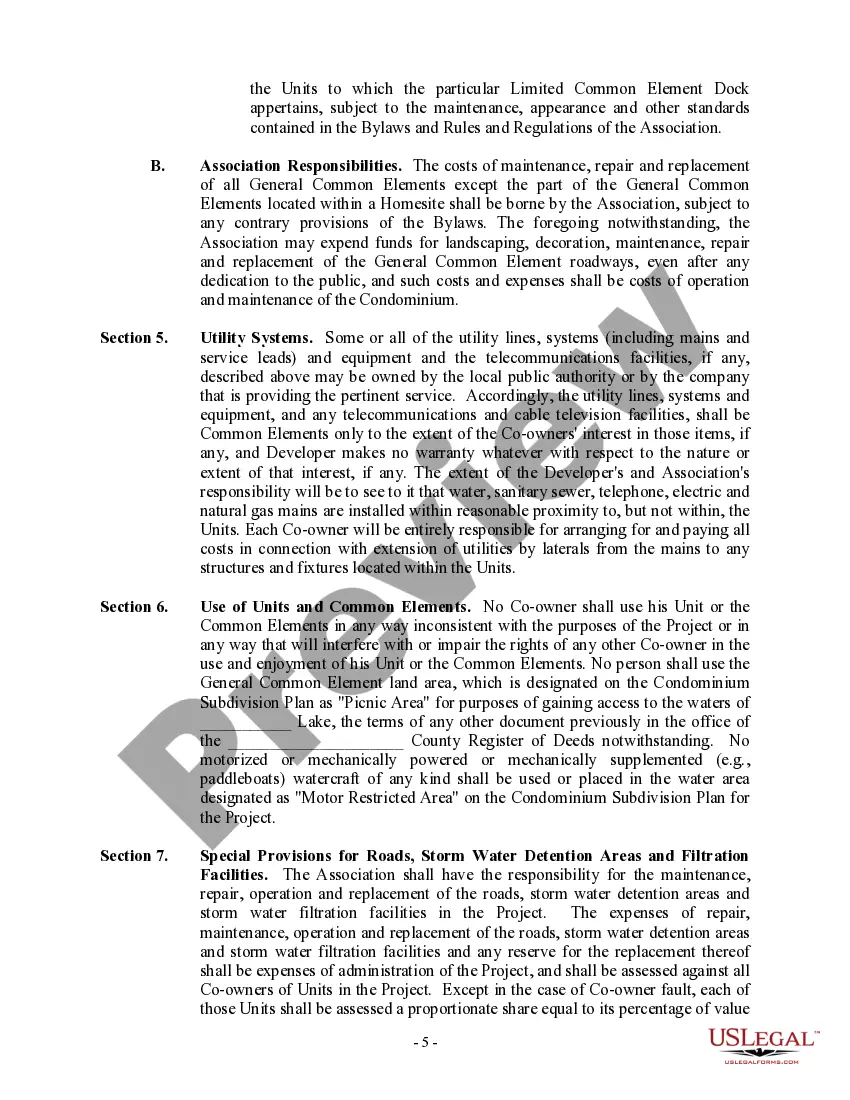
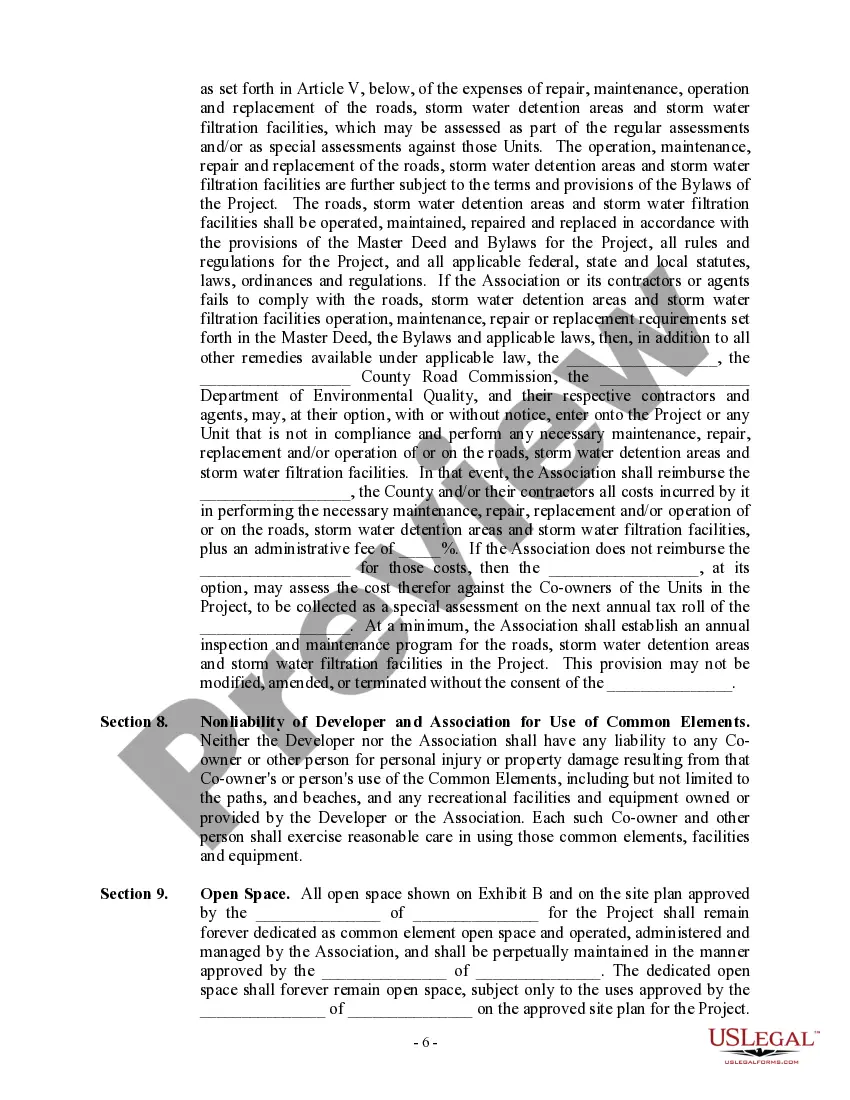
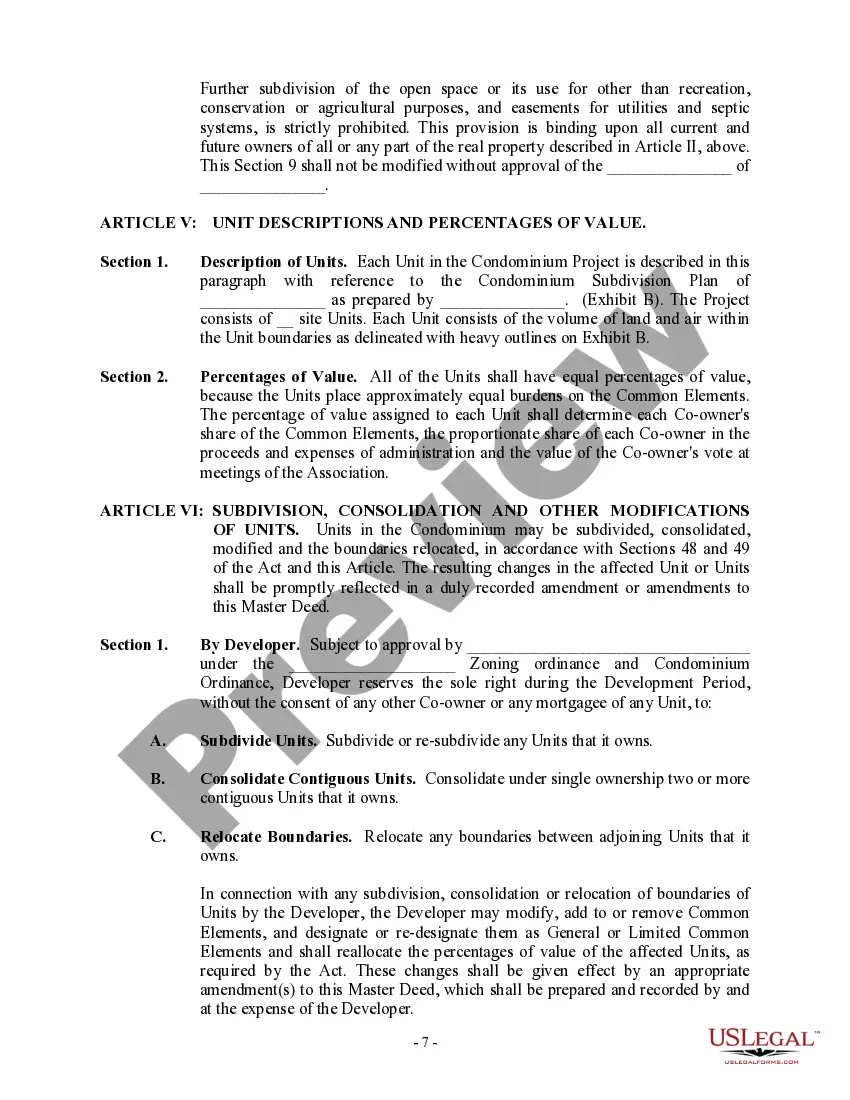
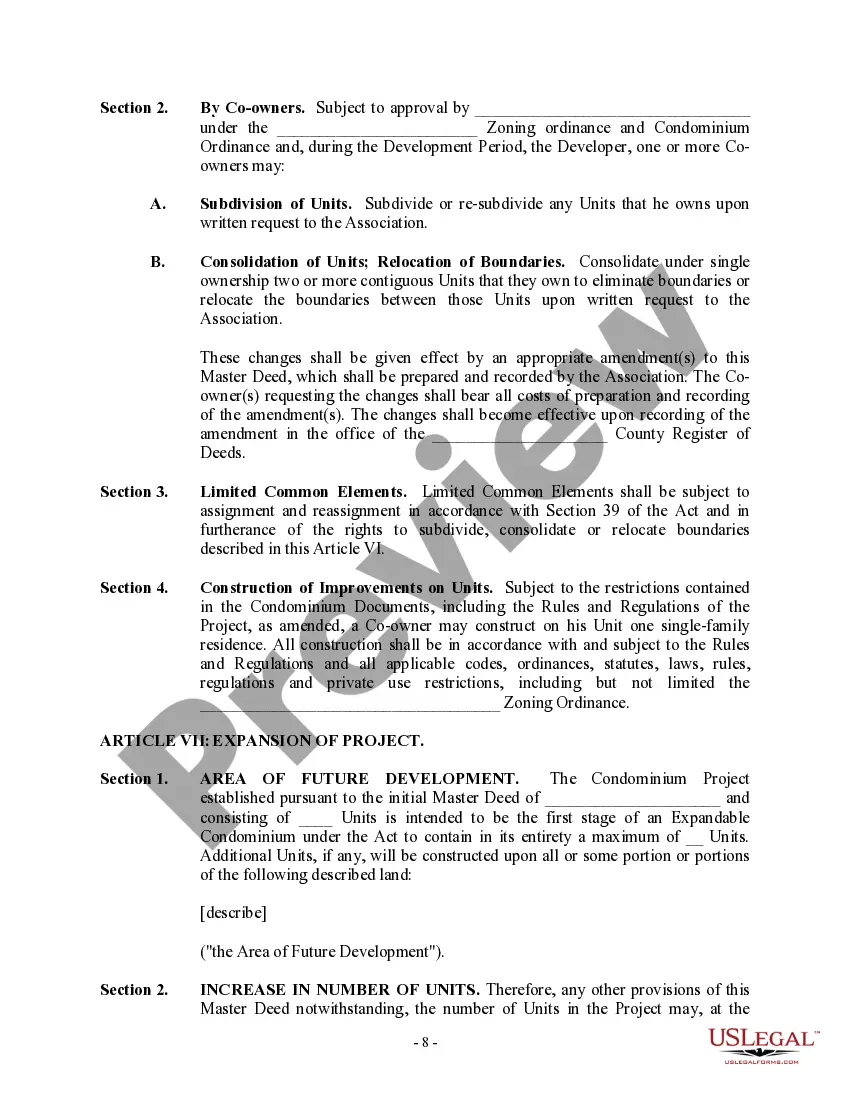
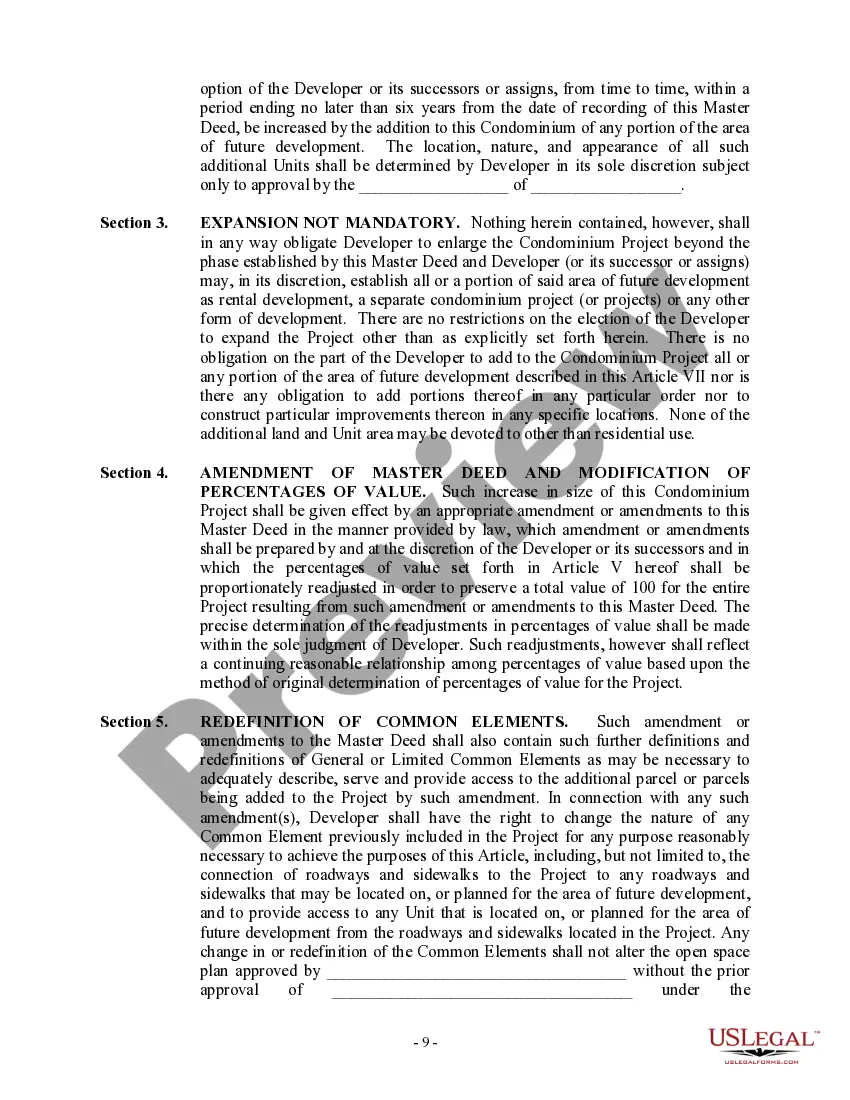
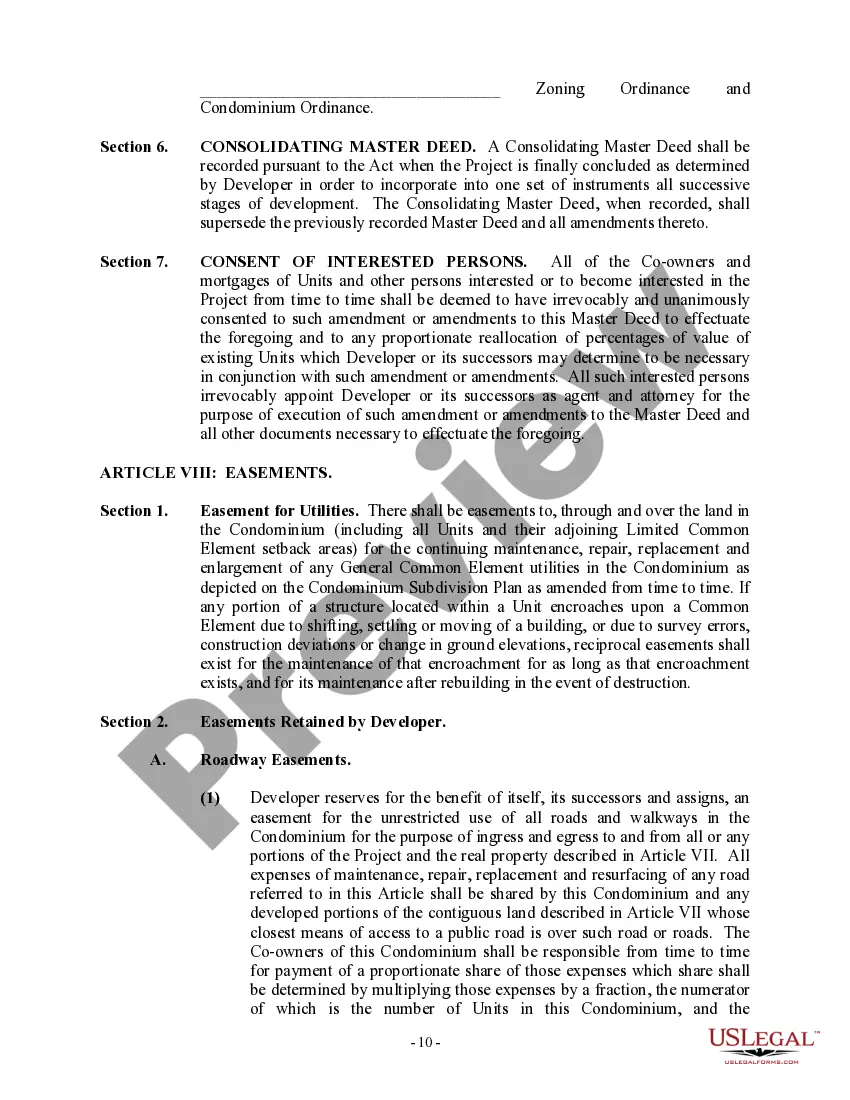
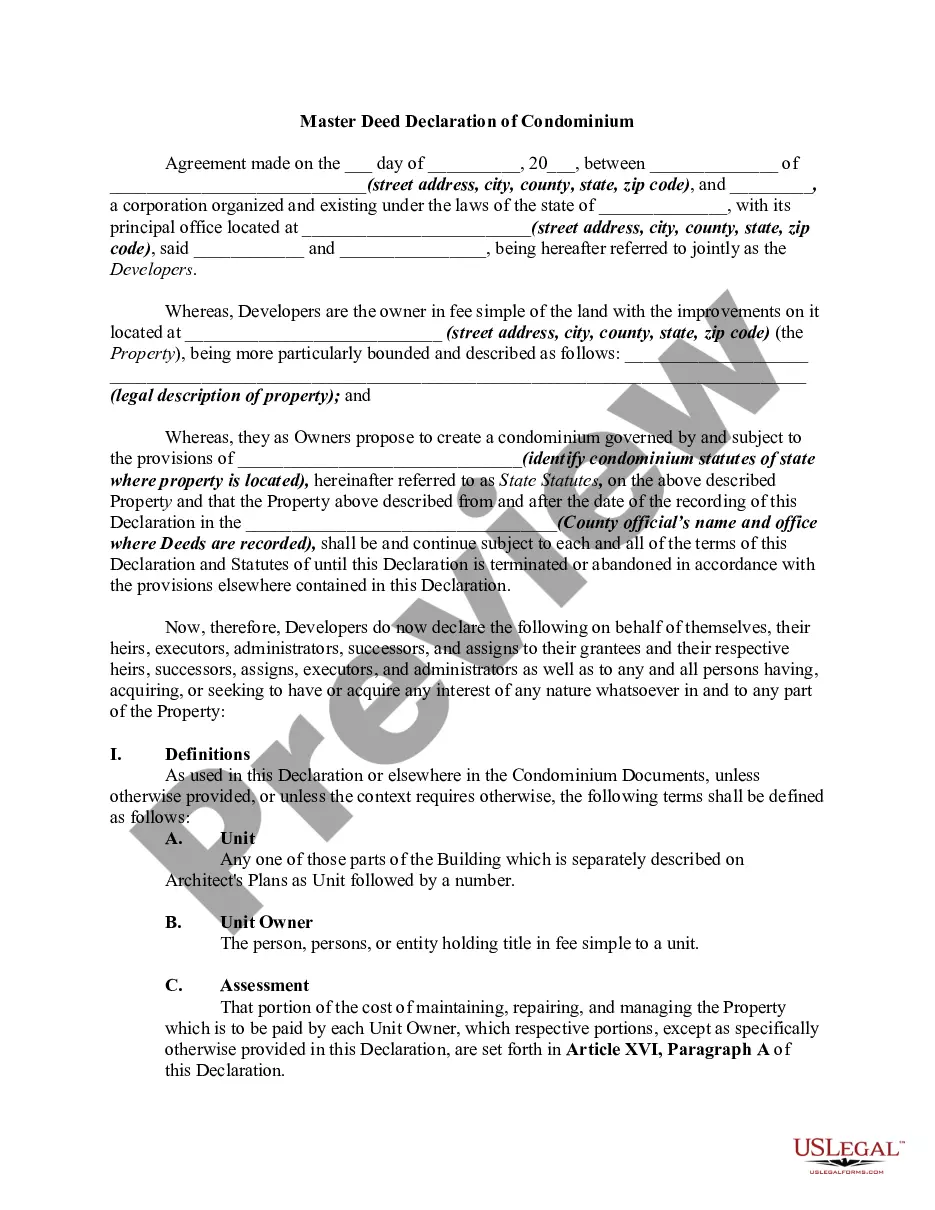
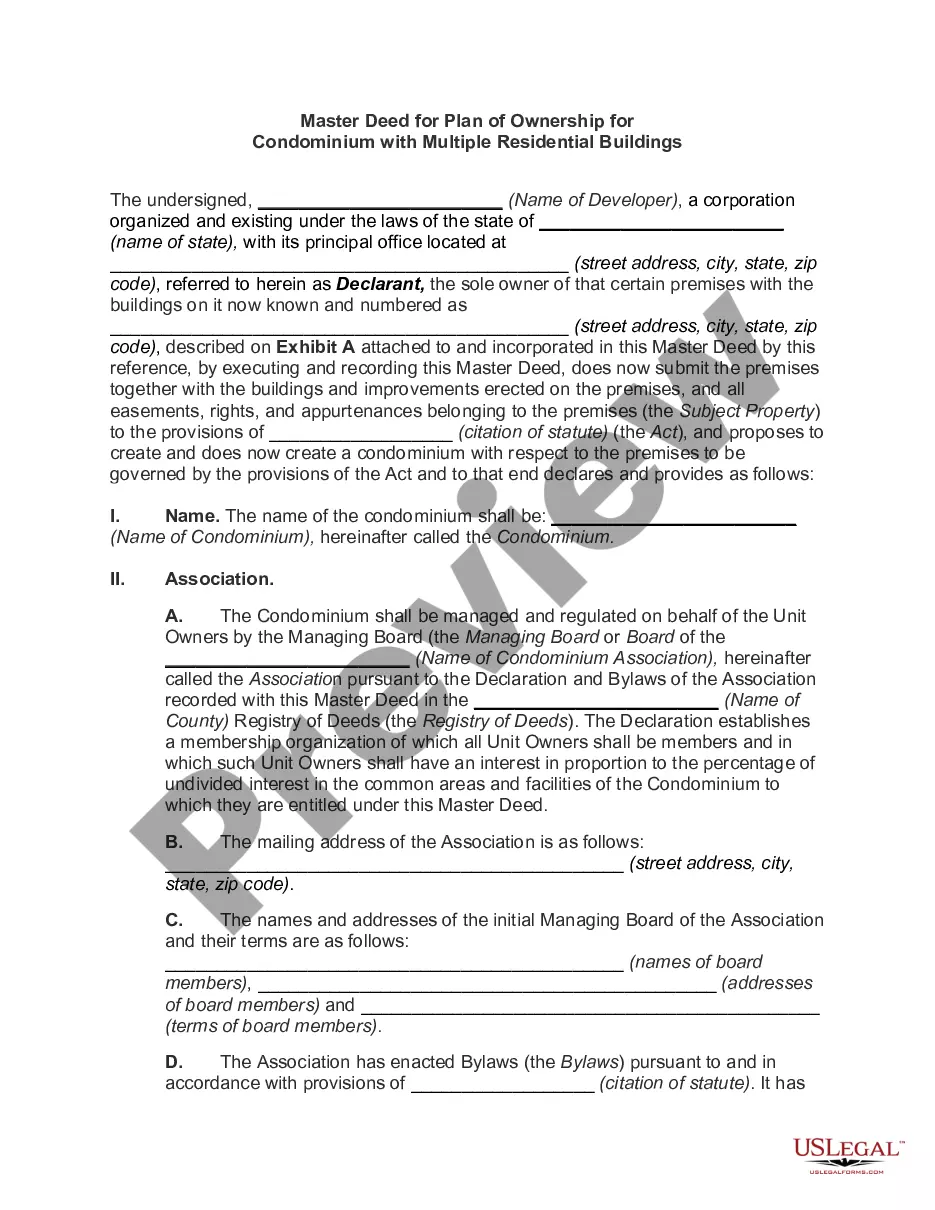
This form is a Master Deed. This Master Deed is executed by a developer pursuant to the provisions of the Condominium Act. The deed contains a legal description of the project and the responsibilities of the co-owner.
Missouri Condominium Master Deed - Residential Condo Development
Instant download
Description
Free preview

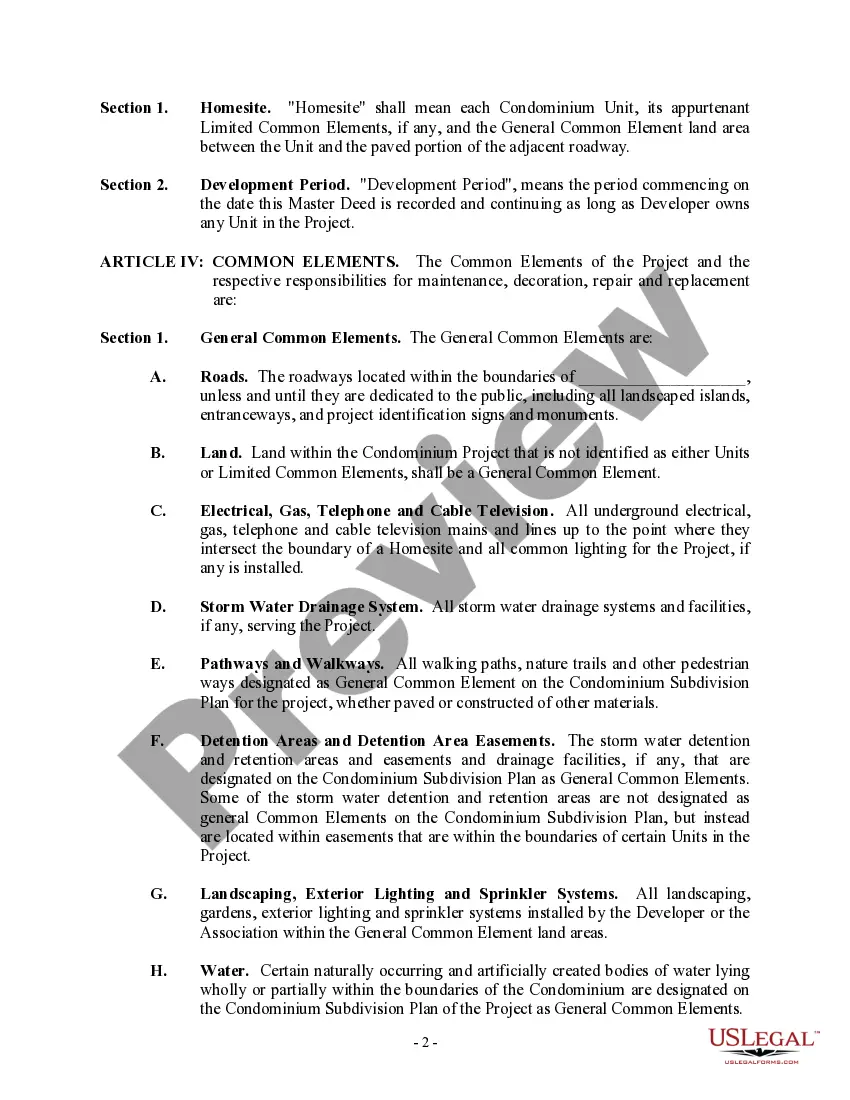
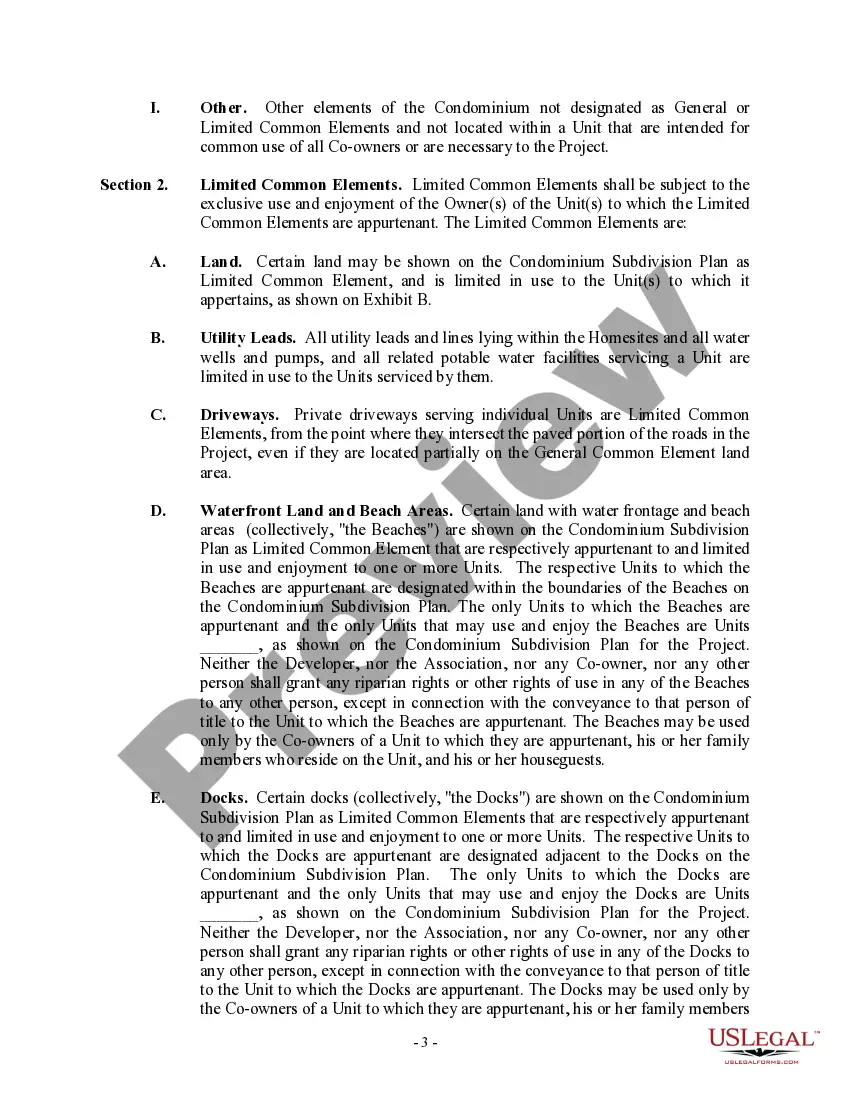
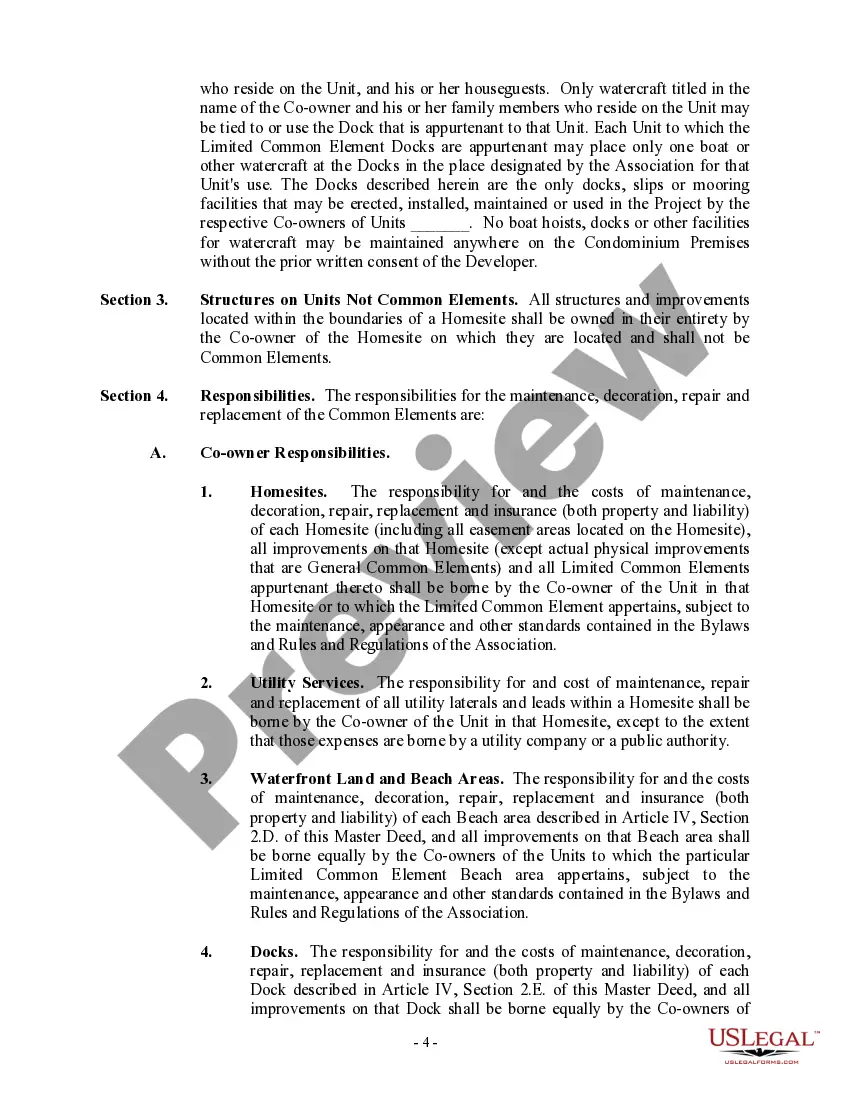


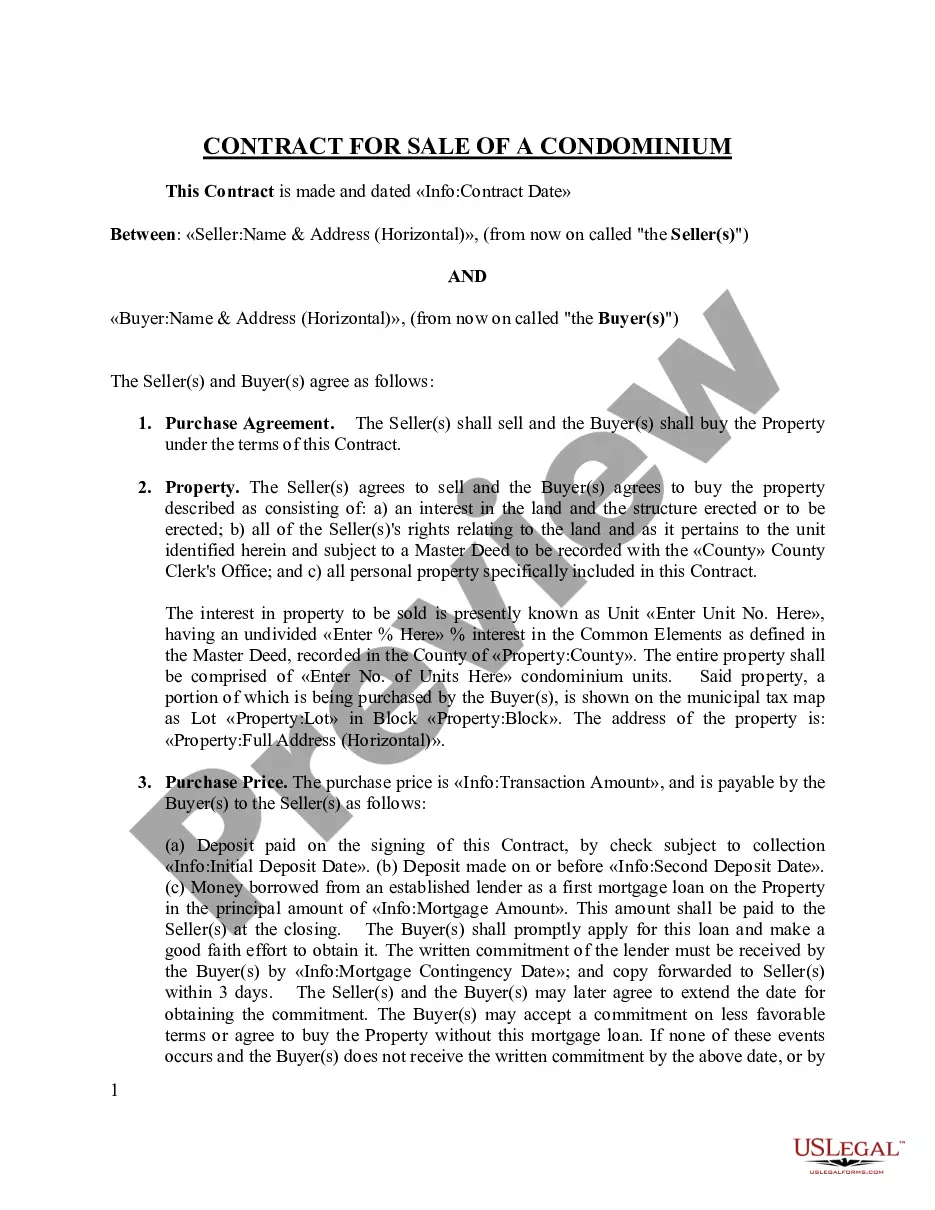
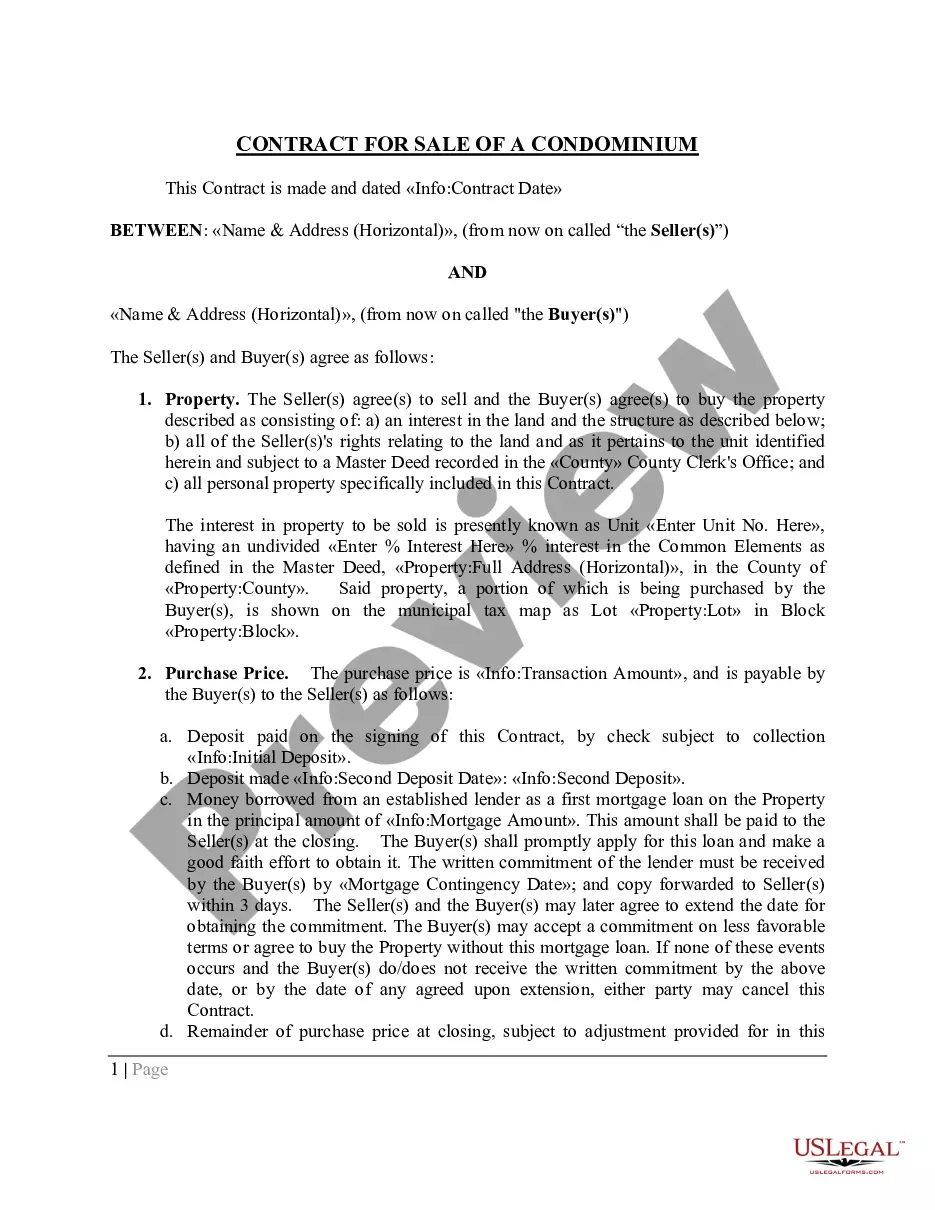

How to fill out Condominium Master Deed - Residential Condo Development?
Are you presently in a scenario where you require documents for sometimes business or specific operations nearly every day.
There are numerous legal document templates accessible online, but finding ones you can trust is not simple.
US Legal Forms offers thousands of document templates, such as the Missouri Condominium Master Deed - Residential Condo Development, which can be filled out to comply with state and federal regulations.
If you obtain the right template, just click Acquire now.
Choose the pricing plan you would like, provide the necessary information to create your account, and pay for the order with your PayPal or credit card. Select a convenient file format and download your copy. Find all the document templates you have purchased in the My documents menu. You can get an additional copy of the Missouri Condominium Master Deed - Residential Condo Development anytime, if needed. Just click the desired template to download or print the document template. Use US Legal Forms, one of the most comprehensive collections of legal forms, to save time and avoid mistakes. The service offers professionally crafted legal document templates that you can use for various purposes. Create an account on US Legal Forms and start making your life easier.
- If you are already familiar with the US Legal Forms site and have an account, simply Log In.
- Then, you can download the Missouri Condominium Master Deed - Residential Condo Development template.
- If you do not have an account and wish to start using US Legal Forms, follow these steps.
- Find the template you need and make sure it is for the correct city/county.
- Utilize the Review option to examine the document.
- Check the information to ensure that you have selected the right template.
- If the template is not what you are looking for, use the Search field to find the template that fits your needs and requirements.
Form popularity
FAQ
Condo laws are often called Horizontal property or strata title acts. Owners have Fee simple title but share common elements to which they are tenants in common.
Master deed. This is a deed filed by a condominium owner to record the property and allow sales of the individual condos and use of communal areas by owners.
A condominium is a form of ownership, not a type of building. Existing apartment buildings can be turned or "converted" into condominiums, and condominiums can be changed back into traditional apartment buildings.
A condo owner owns the space inside their condo and shares ownership interest in the community property, such as the floor, stairwells, and exterior areas. A general requirement of ownership is monthly payments to the condominium association in charge of property upkeep.
Apartment buildings typically have one sole proprietor, whereas condominiums are collectively owned by a group of tenants. Subsequently, this means that most apartment inhabitants are provided with the same benefits and rental rates as those in their neighboring units.