Mississippi Motion to Require Drug Testing of Parent in a Proceeding to Modify Child Custody Award
Understanding this form
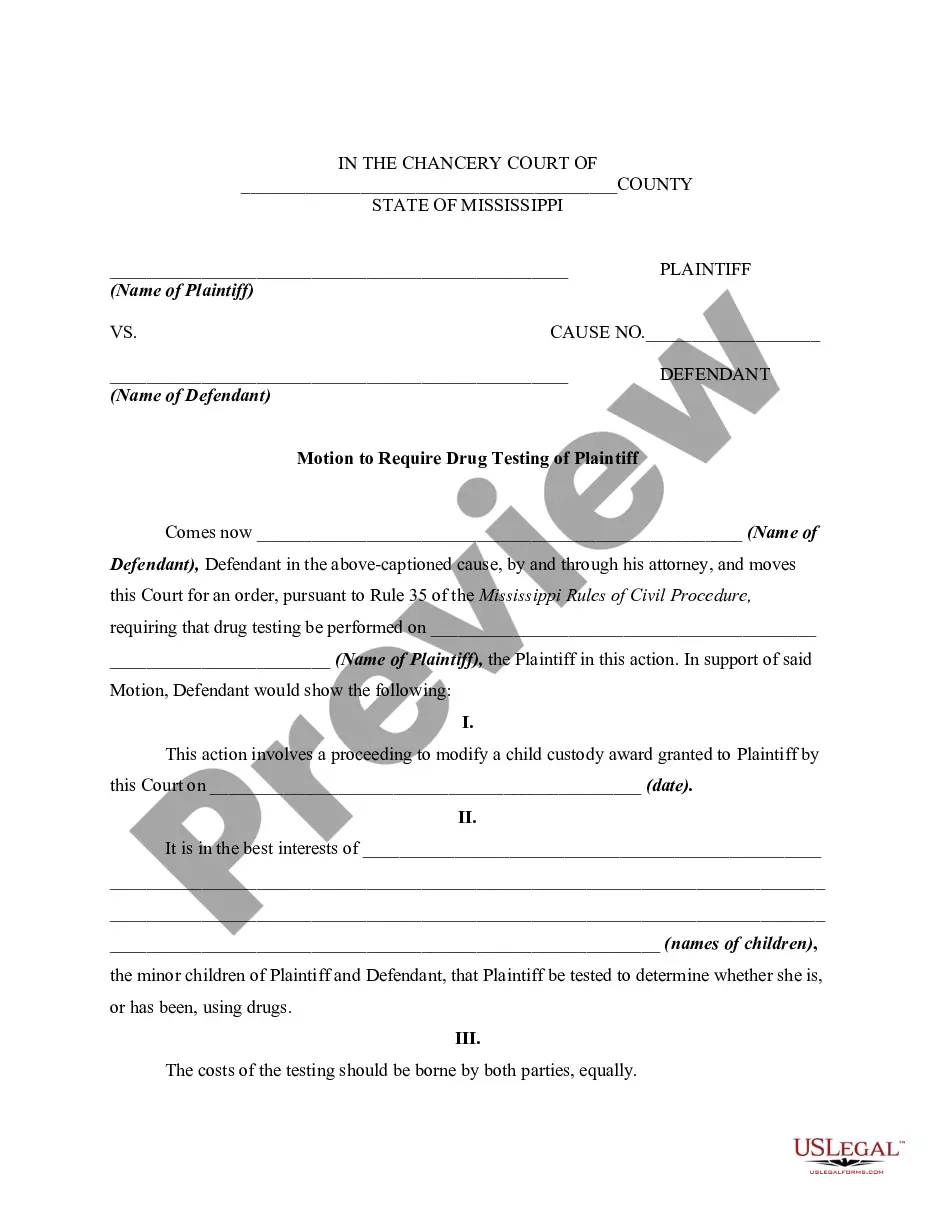
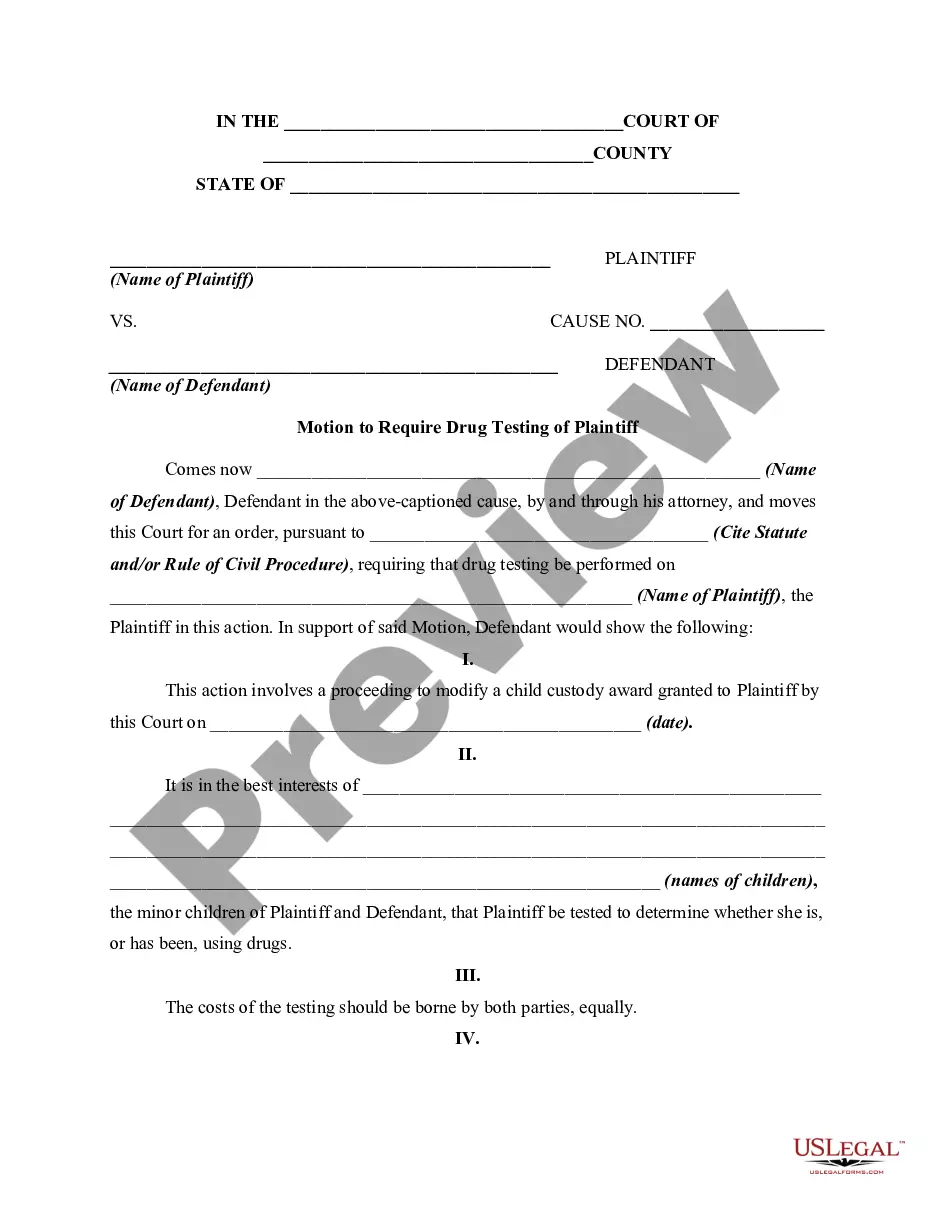
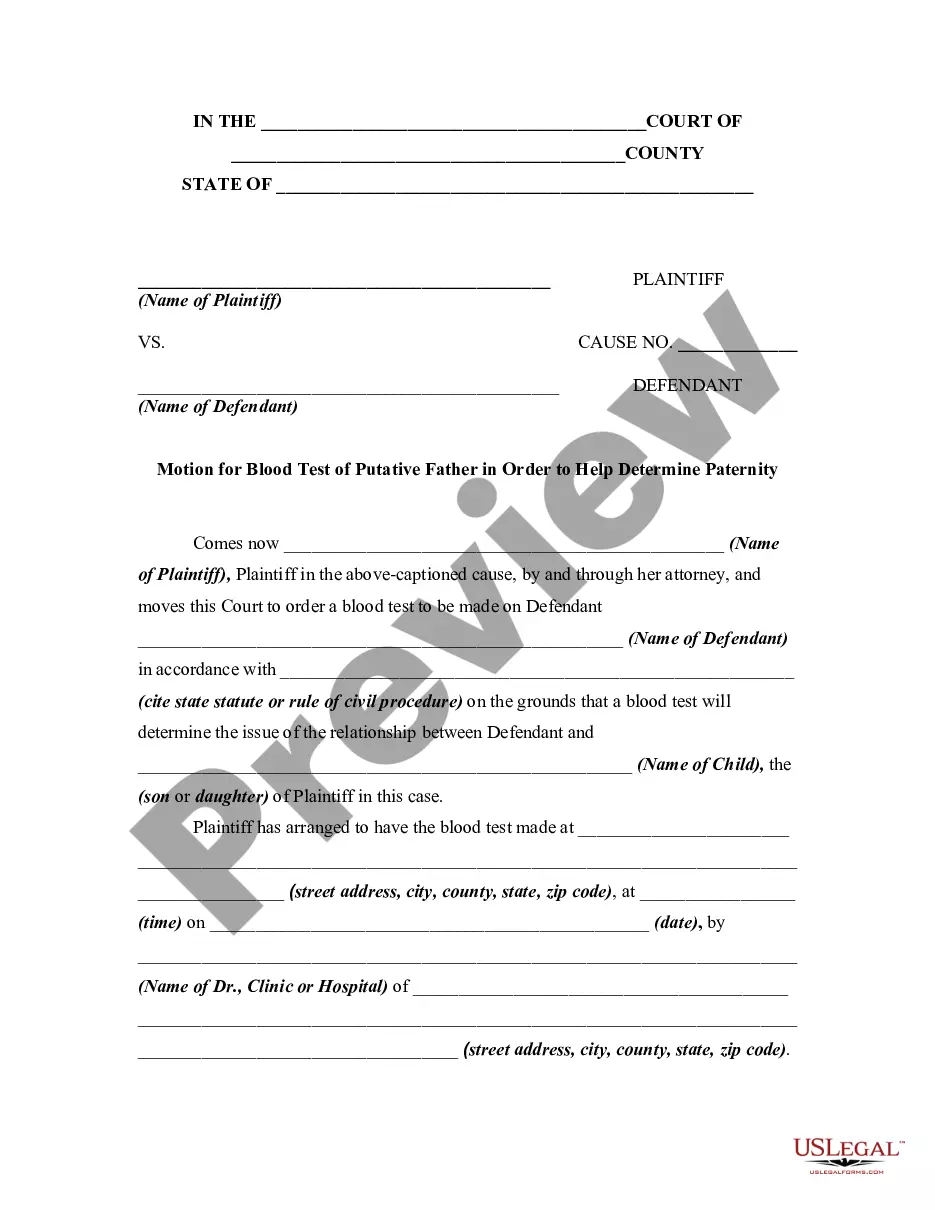
The Motion to Require Drug Testing of Parent in a Proceeding to Modify Child Custody Award is a legal document used in Mississippi courts. This form is specifically designed to request drug testing for a parent involved in a custody modification case. It contrasts with other motions by focusing solely on the necessity of drug testing to ensure the safety and well-being of the children involved in the custody award. The motion can be initiated by the opposing parent and is governed by Rule 35 of the Mississippi Rules of Civil Procedure.
Form components explained
- Plaintiff and defendant information, including names and case numbers.
- Statement outlining the reason for the motion, specifically regarding the modification of child custody.
- Arguments supporting the need for drug testing, focusing on the best interest of the children.
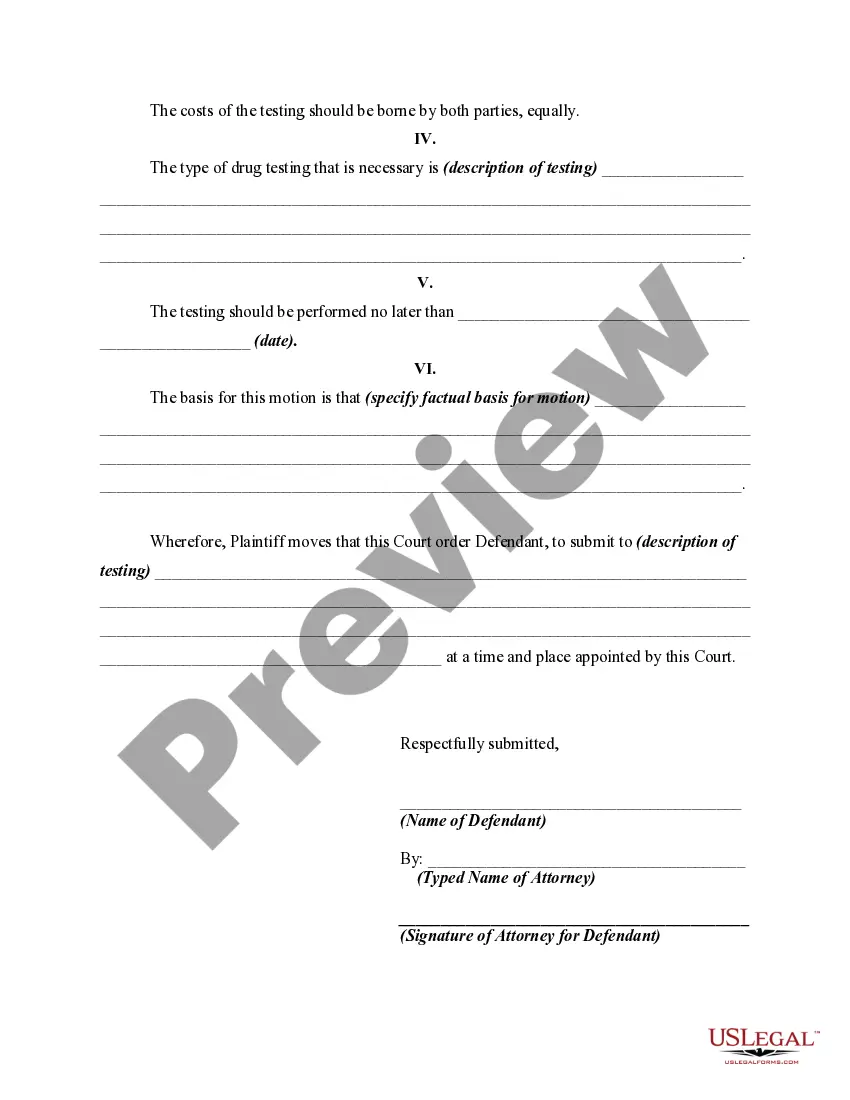
- Specification of the type of drug testing requested and associated costs.
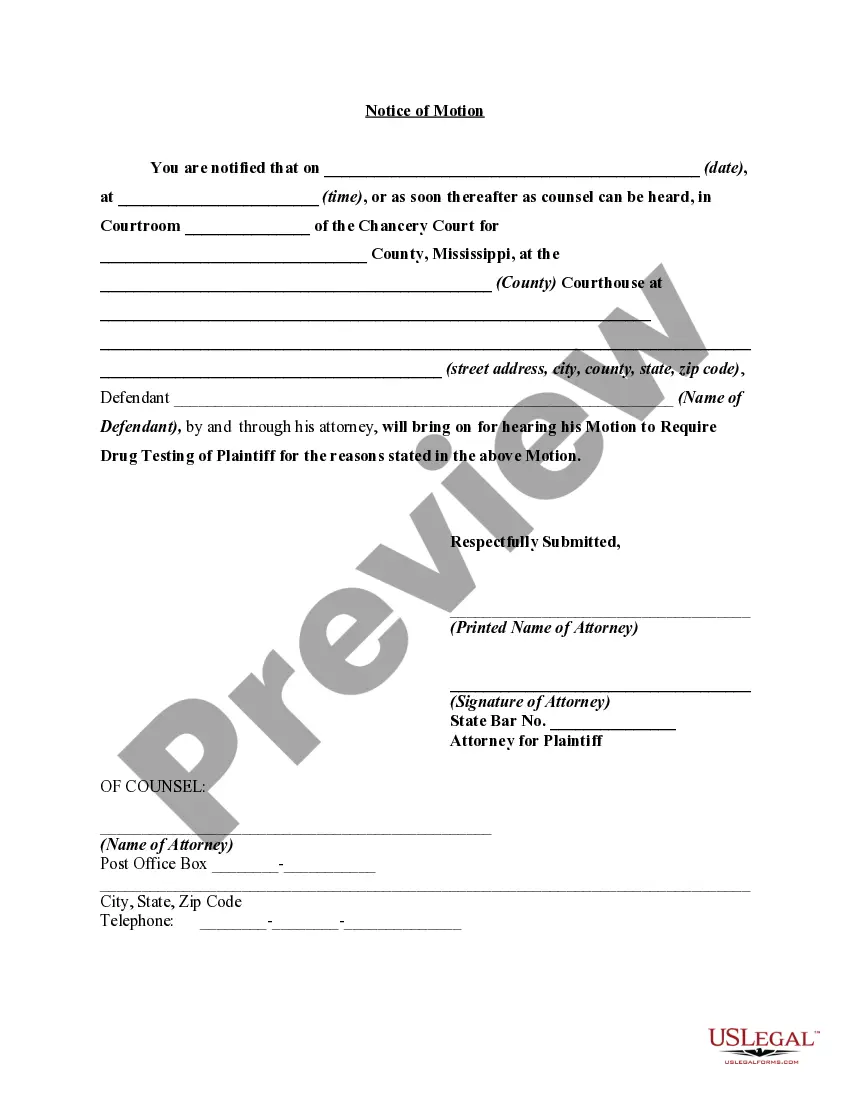
- Dates for testing and hearing notifications.


Situations where this form applies
This form is essential when one parent believes that the other is using drugs, which may negatively impact their parenting abilities. It can be used during proceedings to modify an existing child custody arrangement, particularly when there are concerns about the children's welfare. If there are significant changes in circumstances or allegations of substance abuse, this form becomes crucial to ensure the safety and stability of the children involved.
Intended users of this form
This motion is intended for:
- Parents seeking to modify child custody arrangements due to concerns about drug use by the other parent.
- Guardians or legal representatives of the children involved who have legitimate concerns about parental substance abuse.
- Any party involved in a custody battle who believes drug testing is necessary to protect the interests of the minor children.
How to complete this form
- Identify the parties involved by entering the names of the plaintiff and defendant, along with the case number.
- Provide a detailed statement outlining the reasons for the drug testing request, emphasizing the welfare of the children.
- Specify the type of drug testing and any related costs that will be equally shared between the parties.
- Indicate the desired date for testing and the proposed date for the hearing.
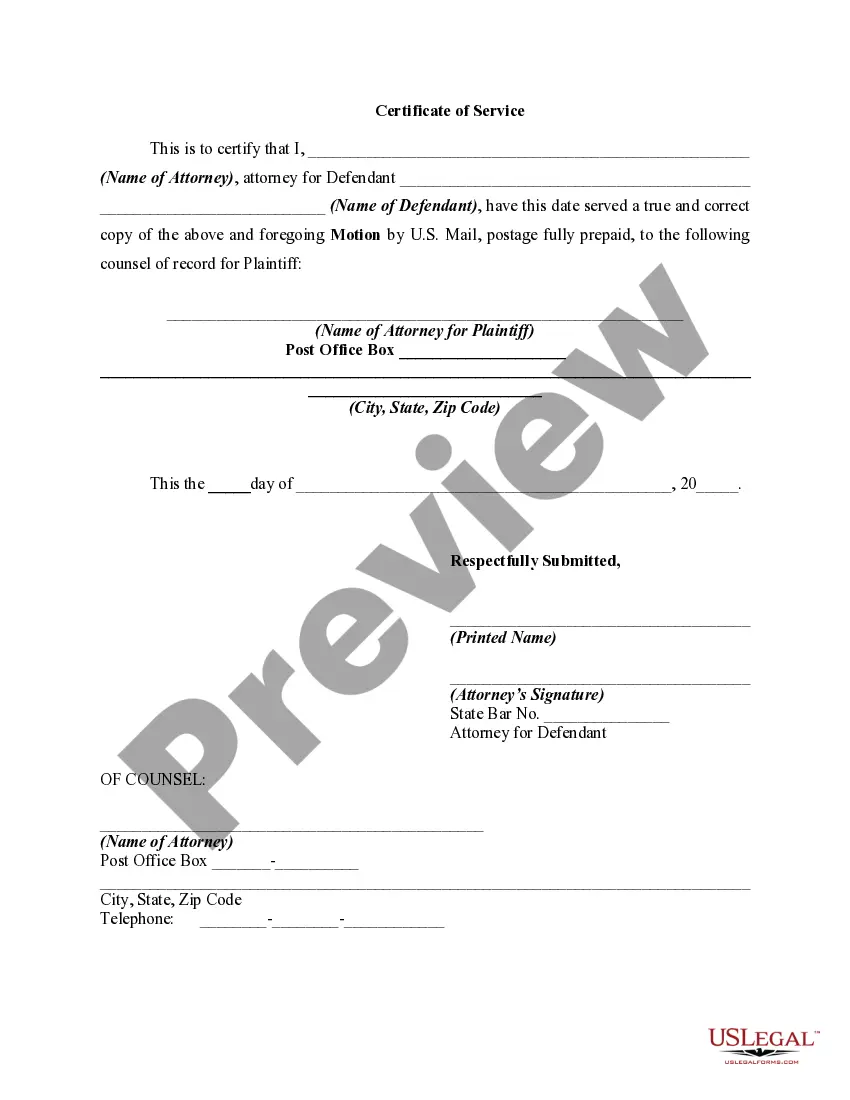
- Ensure that all required signatures and contacting details of the attorneys are included and correct.
Notarization requirements for this form
This form does not typically require notarization unless specified by local law. However, it is always advisable to check local requirements for additional stipulations regarding court documents.
Get your form ready online
Our built-in tools help you complete, sign, share, and store your documents in one place.
Make edits, fill in missing information, and update formatting in US Legal Forms—just like you would in MS Word.
Download a copy, print it, send it by email, or mail it via USPS—whatever works best for your next step.
Sign and collect signatures with our SignNow integration. Send to multiple recipients, set reminders, and more. Go Premium to unlock E-Sign.
If this form requires notarization, complete it online through a secure video call—no need to meet a notary in person or wait for an appointment.
We protect your documents and personal data by following strict security and privacy standards.

Make edits, fill in missing information, and update formatting in US Legal Forms—just like you would in MS Word.

Download a copy, print it, send it by email, or mail it via USPS—whatever works best for your next step.

Sign and collect signatures with our SignNow integration. Send to multiple recipients, set reminders, and more. Go Premium to unlock E-Sign.

If this form requires notarization, complete it online through a secure video call—no need to meet a notary in person or wait for an appointment.

We protect your documents and personal data by following strict security and privacy standards.
Mistakes to watch out for
- Failing to include all necessary party information, such as the correct names or case numbers.
- Neglecting to provide a clear and compelling argument for why drug testing is required.
- Not specifying the type of drug test or the date by which testing must occur.
- Overlooking the signature requirements for the motion and the certificate of service.
Benefits of using this form online
- Convenience of accessing legally compliant templates from anywhere at any time.
- Editability allows you to customize the form easily for your specific situation.
- Reliable legal standards ensure that the form meets state requirements.
Legal use & context
- The motion must demonstrate the necessity for drug testing based on substantiated claims.
- The court has discretion in granting such motions, which may impact custody decisions significantly.
Main things to remember
- This motion is a legal request to ensure children's safety regarding parental substance use.
- Completing this form accurately is essential for it to be considered by the court.
- Users should be aware of local court requirements for filing and potential notarization needs.
Looking for another form?
Form popularity
FAQ
If the test results in a positive reading, meaning there is drug residue in the body, the results are forwarded to a medical review officer, who reviews the results and looks for any possible valid medical explanation for the results.
Setting Age-Appropriate Limits. Understanding and Responding to the Child's Needs. History of Childcare Involvement. Methods for Resolving the Custody Conflict with the Other Parent. Child Abuse. Domestic Violence. Substance Abuse. Psychiatric Illness.
Judges must decide custody based on the best interests of the child." The best interests of the child law requires courts to focus on the child's needs and not the parent's needs. The law requires courts to give custody to the parent who can meet the child's needs best .
If one parent has a significant criminal history or there are signs of substance abuse, those issues can definitely play into a custody determination. A history of alcohol or drug abuse can significantly affect your custody agreement and influence the Court's decision when granting access to your child.
If you fail the drug test, it's likely the judge won't give you the same rights as a parent who tested negative for any of these substances. This often includes severely limiting the amount of time you have with your child, often requiring supervision of some form in order to protect the child.
According to the Equal Employment Opportunity Commission (EEOC), "if the results of a drug test reveal the presence of a lawfully prescribed drug or other medical information, such information must be treated as a confidential medical record." As a best practice, all drug test results should be filed in a confidential
Instances of abuse or neglect; Willing failure to provide the child with basic necessities or needs; Abandonment of the child or children; or. Exposing the child to emotionally harmful or psychologically damaging situations.
Home drug testing can be beneficial when it produces a positive result that accurately identifies an adolescent who is abusing substances and is in need of treatment. If a child tests positive on a home drug test, a medical professional should discuss the test results with the teen and interpret them.
In order to prove alcoholism or drug abuse, the evidence presented can include such things as medical reports, DUI arrests, drug arrests, court-ordered or voluntary treatment programs that then failed, witness testimony, job loss or difficulty maintaining one's job due to substance abuse, random drug tests, remote