Mississippi Affidavit of Residence
Overview of this form
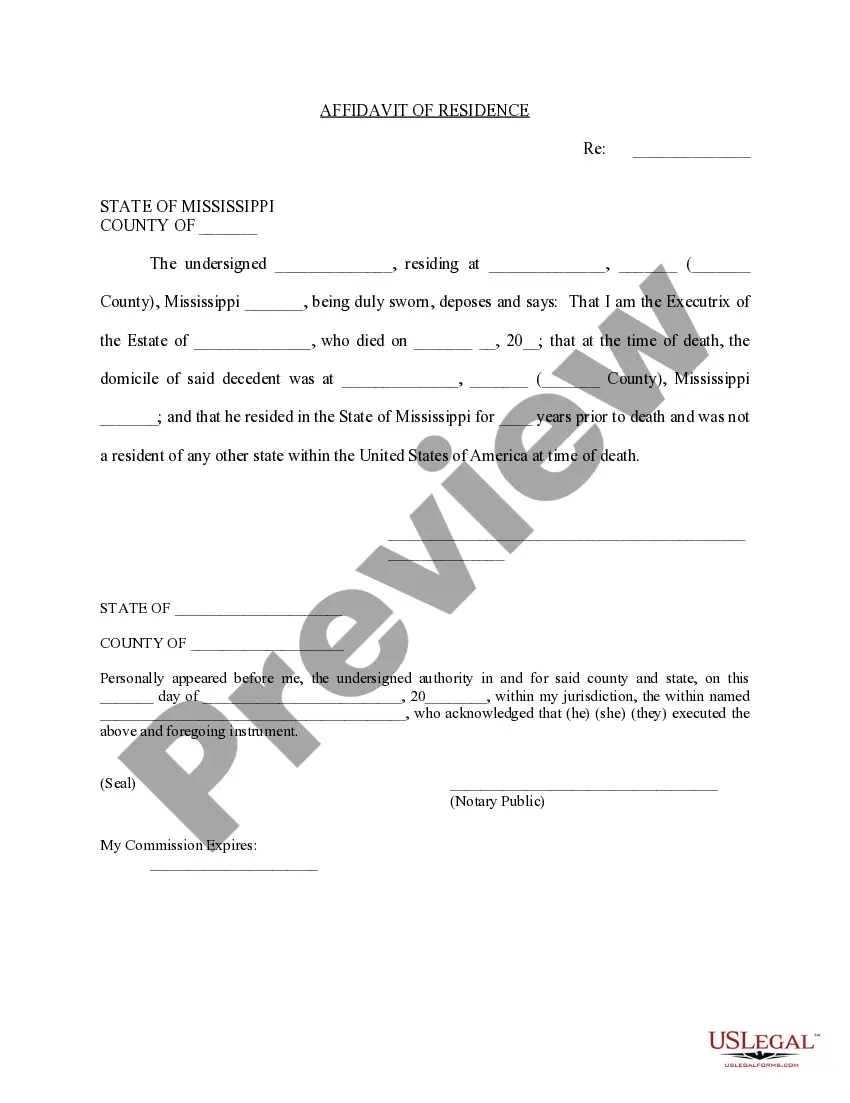
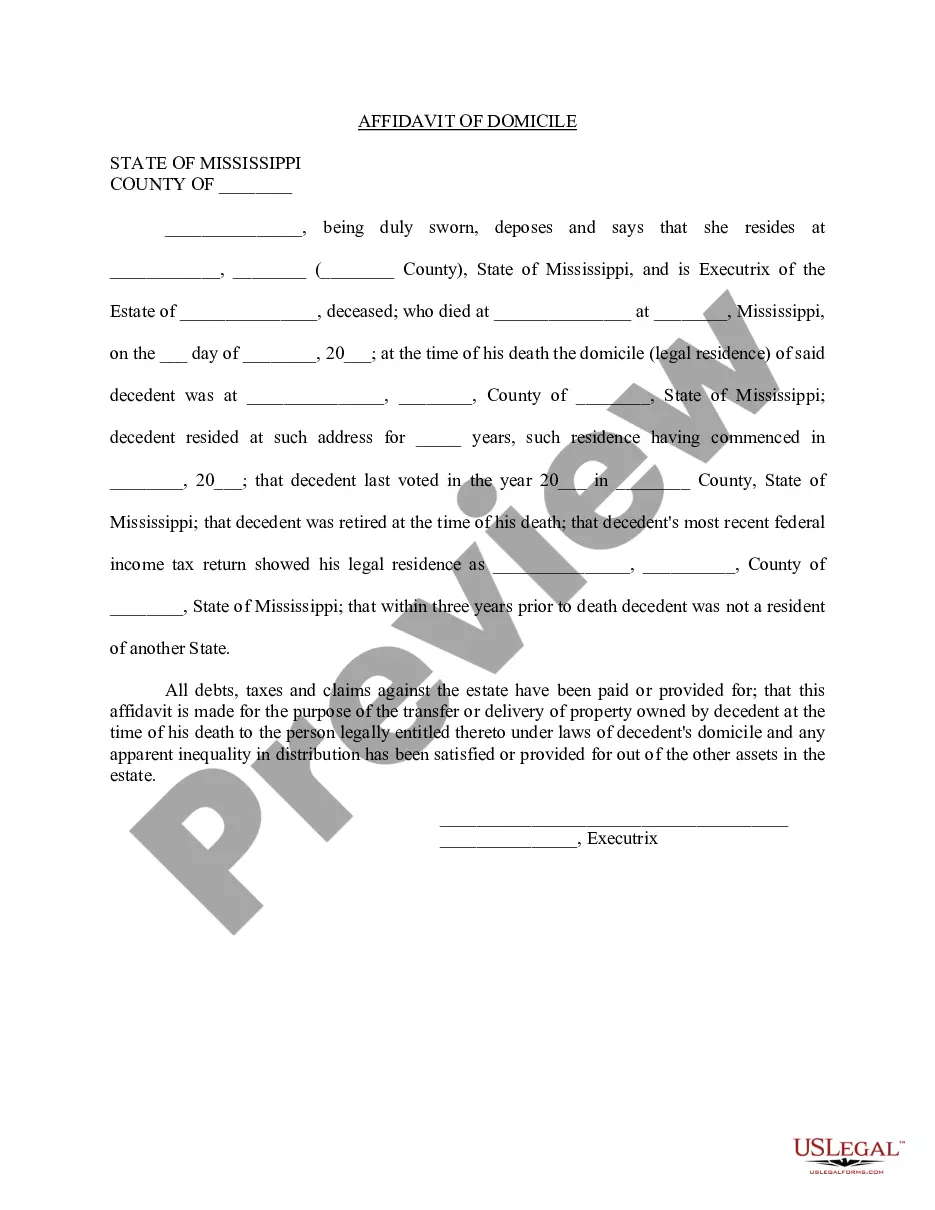
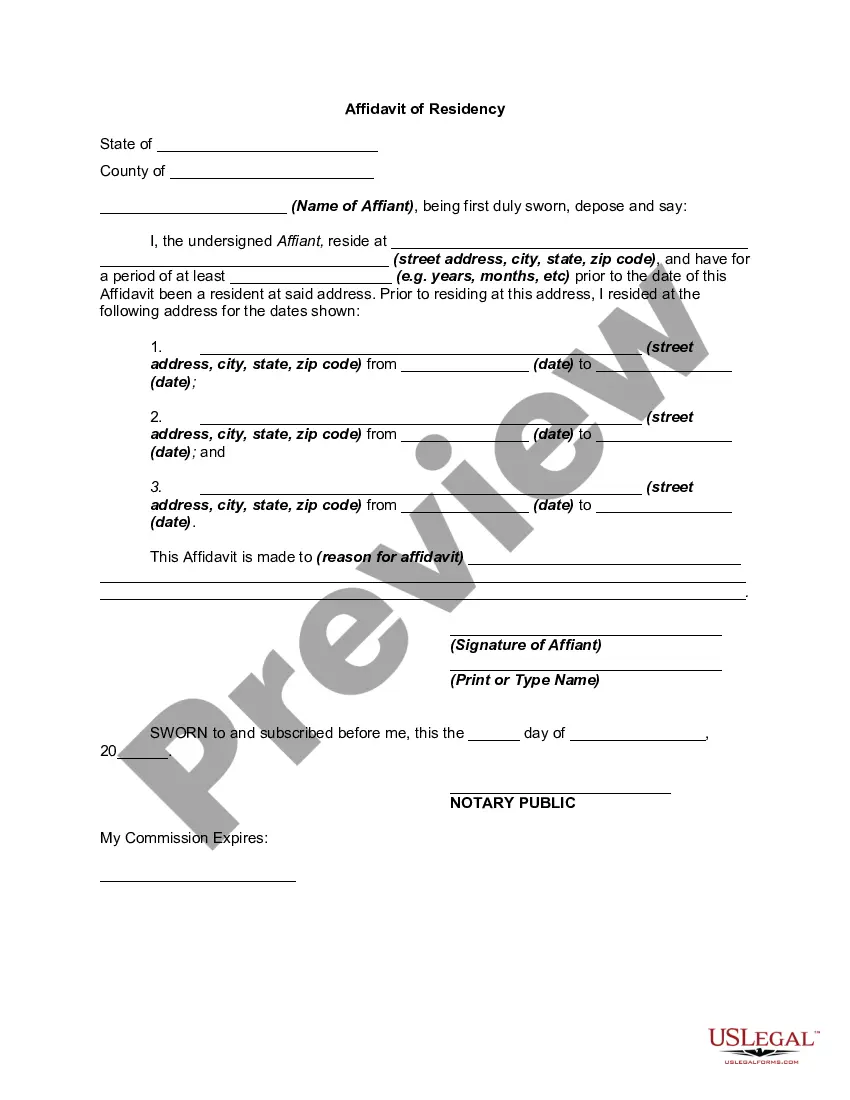
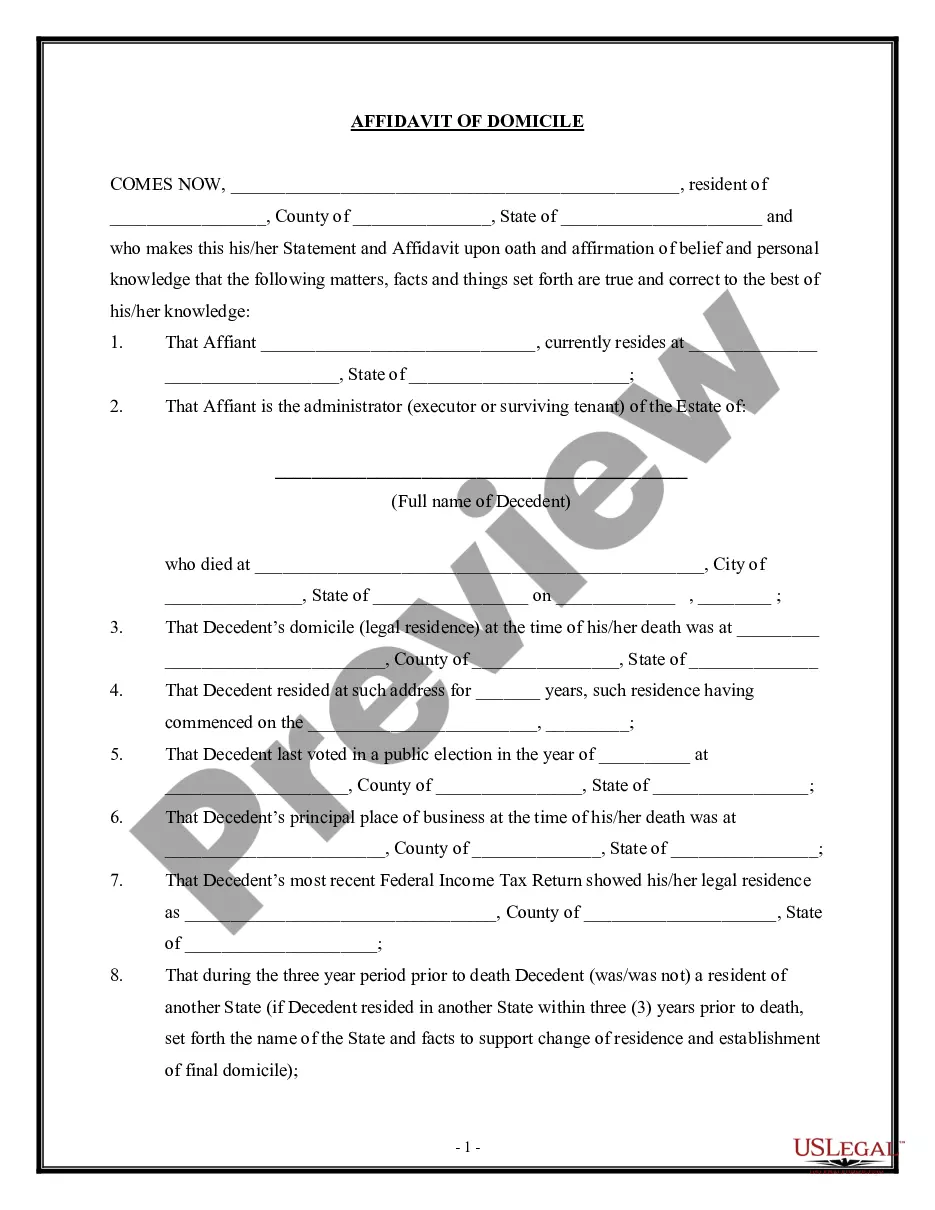
The Affidavit of Residence is a legal document used to confirm the address of a deceased individual, known as a decedent, at the time of their death. This form is particularly essential in estate administration and helps clarify the decedent's domicile for matters related to their estate, such as probate processes. Unlike similar documents, this affidavit focuses specifically on verifying residency, providing necessary information for the settlement of the deceased's affairs.
What’s included in this form
- Affiant information: Details about the person verifying the residency.
- Decedent details: Name and date of death of the deceased individual.
- Domicile verification: The specific address where the decedent resided at the time of death.
- Duration of residence: The number of years the decedent lived in Mississippi prior to death.
- Notary section: A designated area for notarization by a public official.
Common use cases
This affidavit should be used when there is a need to establish the residency of a deceased person for legal purposes. It may be required during the probate process, to settle the deceased's estate, or when dealing with certain financial institutions to confirm the decedent's domicile at the time of death.
Who needs this form
- Executors or executrices of an estate handling the probate process.
- Beneficiaries or heirs of the deceased seeking to clarify residency for estate claims.
- Legal representatives or attorneys involved in estate matters.
- Individuals involved in resolving the deceased's financial or legal affairs.
How to prepare this document
- Identify the affiant: Write the name and address of the person verifying the residency.
- Enter decedent information: Provide the full name and date of death of the individual.
- Specify the address: Fill in the complete address where the decedent resided at the time of death.
- Indicate the duration of residence: Mention how many years the decedent lived in Mississippi.
- Complete the notary section: Ensure the document is notarized on the specified date.
Is notarization required?
Yes, this form must be notarized to be legally valid. US Legal Forms offers integrated online notarization services, allowing you to connect with a notary public via secure video call, 24/7. This service ensures your affidavit is correctly executed without the need for physical travel.
Get your form ready online
Our built-in tools help you complete, sign, share, and store your documents in one place.
Make edits, fill in missing information, and update formatting in US Legal Forms—just like you would in MS Word.
Download a copy, print it, send it by email, or mail it via USPS—whatever works best for your next step.
Sign and collect signatures with our SignNow integration. Send to multiple recipients, set reminders, and more. Go Premium to unlock E-Sign.
If this form requires notarization, complete it online through a secure video call—no need to meet a notary in person or wait for an appointment.
We protect your documents and personal data by following strict security and privacy standards.

Make edits, fill in missing information, and update formatting in US Legal Forms—just like you would in MS Word.

Download a copy, print it, send it by email, or mail it via USPS—whatever works best for your next step.

Sign and collect signatures with our SignNow integration. Send to multiple recipients, set reminders, and more. Go Premium to unlock E-Sign.

If this form requires notarization, complete it online through a secure video call—no need to meet a notary in person or wait for an appointment.

We protect your documents and personal data by following strict security and privacy standards.
Mistakes to watch out for
- Failing to provide accurate information about the decedent's residence.
- Not having the document notarized before submission, if required.
- Leaving fields blank or incorrect dates, leading to potential delays.
Why use this form online
- Convenient download: Access the form instantly without needing to visit an office.
- Editability: Fill out the form multiple times until it meets your needs before finalization.
- Reliability: Legal forms are drafted by licensed attorneys, ensuring compliance with relevant laws.
What to keep in mind
- The Affidavit of Residence is essential for confirming the domicile of a deceased individual.
- It is primarily used by executors and legal representatives in estate matters.
- This form requires notarization to ensure its legal validity.
- Proper completion includes accurate details about the decedent's residency and personal knowledge of the affiant.
Looking for another form?

Form popularity
FAQ
To write a letter for proof of residence, provide your legal name, certify your address and the length of time you've lived there, note any other residents living at that address, and type a legally binding oath about the accuracy of the information provided; you should also be prepared to have a landlord and/or notary
How do I show Proof of Residency? Obtain a utility bill from the address you currently reside, along with a letter from the person you are living with stating that you and your child(ren) are living with them, and explain that you have no mail and/or bills in your name.
Electronic utility bills showing an Alberta address. Telephone bill. Gas bill. Cable TV bill.Other non-utility statements or correspondence mailed to your Alberta address. Bank / Credit Card statement. Alberta Social Benefit Statements. Income tax assessment summary (Notice of Assessment)
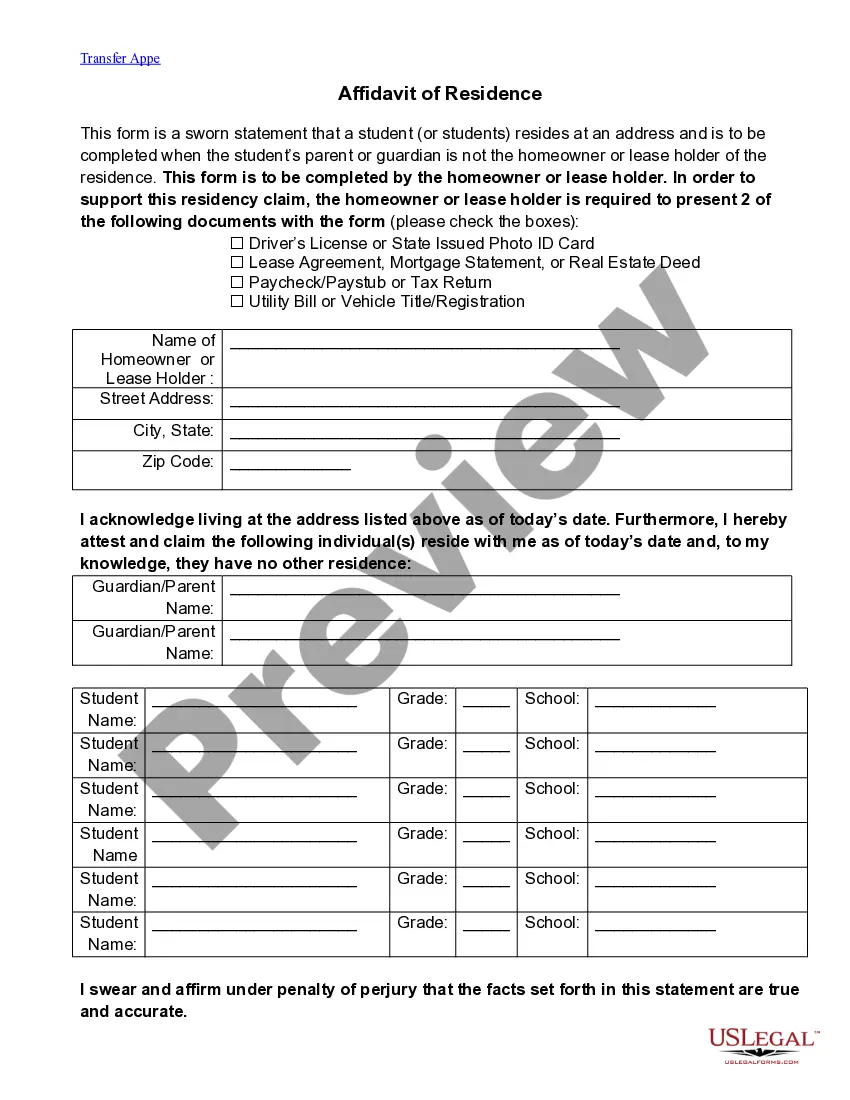
An affidavit for proof of address or simply affidavit of residence is a document is that is used to legally prove a person's address. Affidavits of residence require the deponent to mention the following details. Permanent address. Current address. Police station under which the residence falls.
Full Name of Applicant/Deponent. Date of Birth of Applicant. Full Address of which the Applicant is making Affidavit. Duration from which the Applicant is residing at the concerned address. Declaration of true Statements.
Full legal name; Full address; Facts surrounding the residence; Document name and if applicable, number verifying the ID of the affiant; and. Reason the Affidavit is needed.
Government-issued photo ID. Residential lease/property deed. Utility bill. Letter from the government/court (marriage license, divorce, government aid) Bank statement. Driver's license/learner's permit. Car registration. Notarized affidavit of residency.
Use your legal name. State your relationship with the subject. If you are an employer, add your job title and company name. If you are a landlord, add the property's name, address, and letterhead. Provide your full address and contact information.
Two proofs of residency, examples include: Lease/Purchase agreement. Utility Bill (Lights, Water, or Gas) A Mississippi Car Tag receipt.