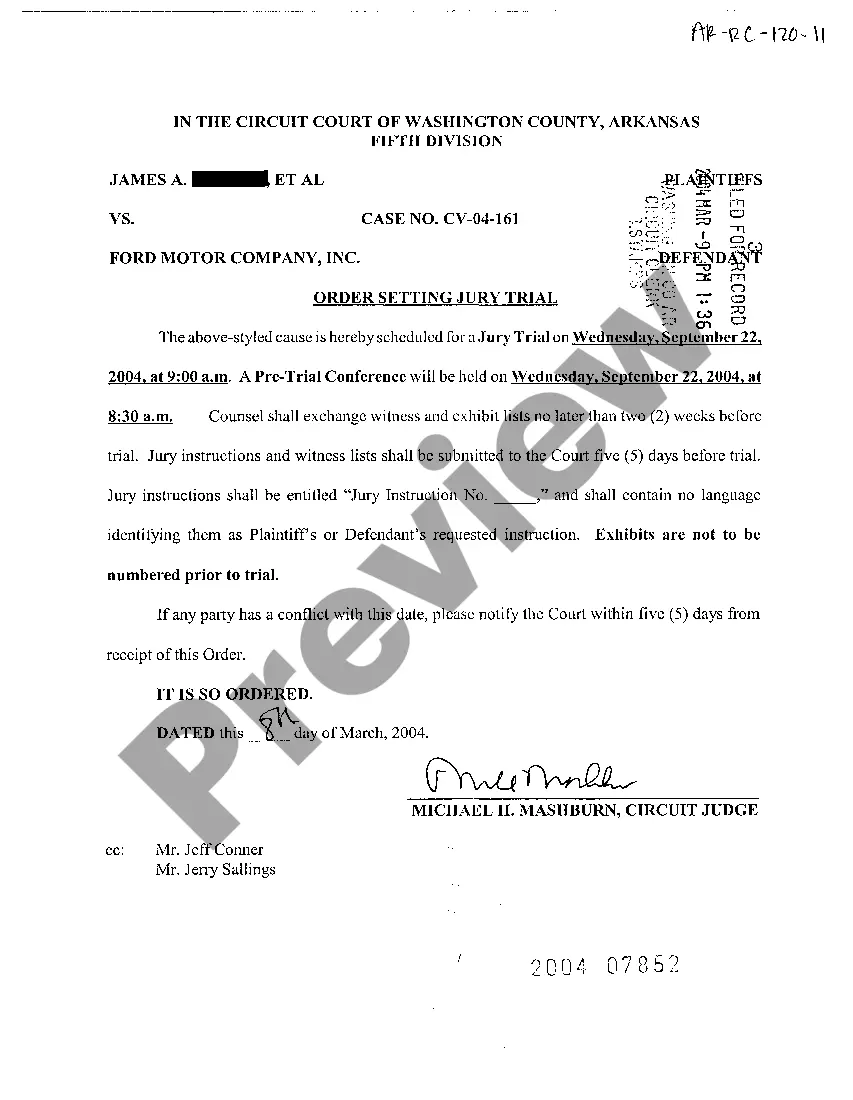
Mississippi Application for Fixing Date of Hearing on Petition to Ratify and Confirm Ordinance
Description
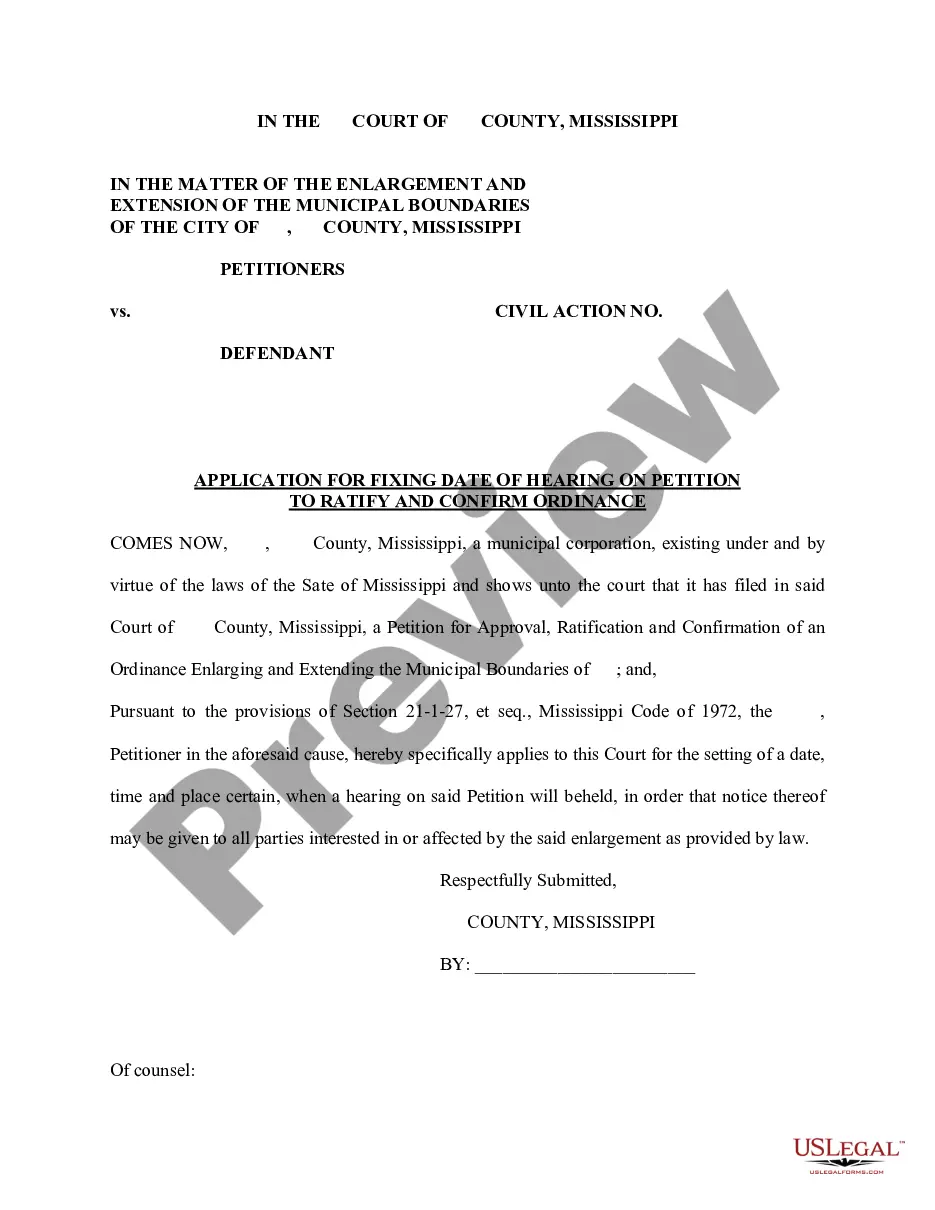
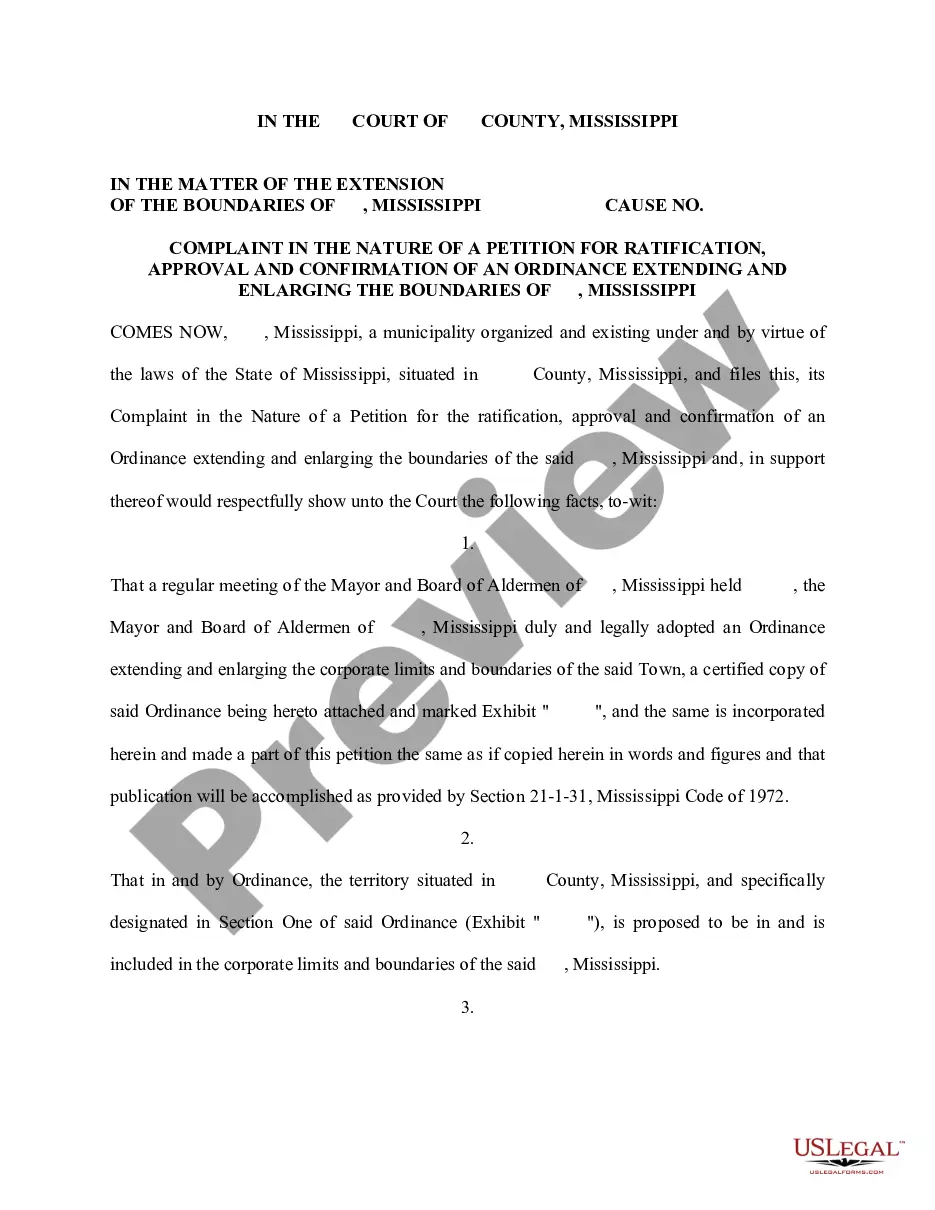
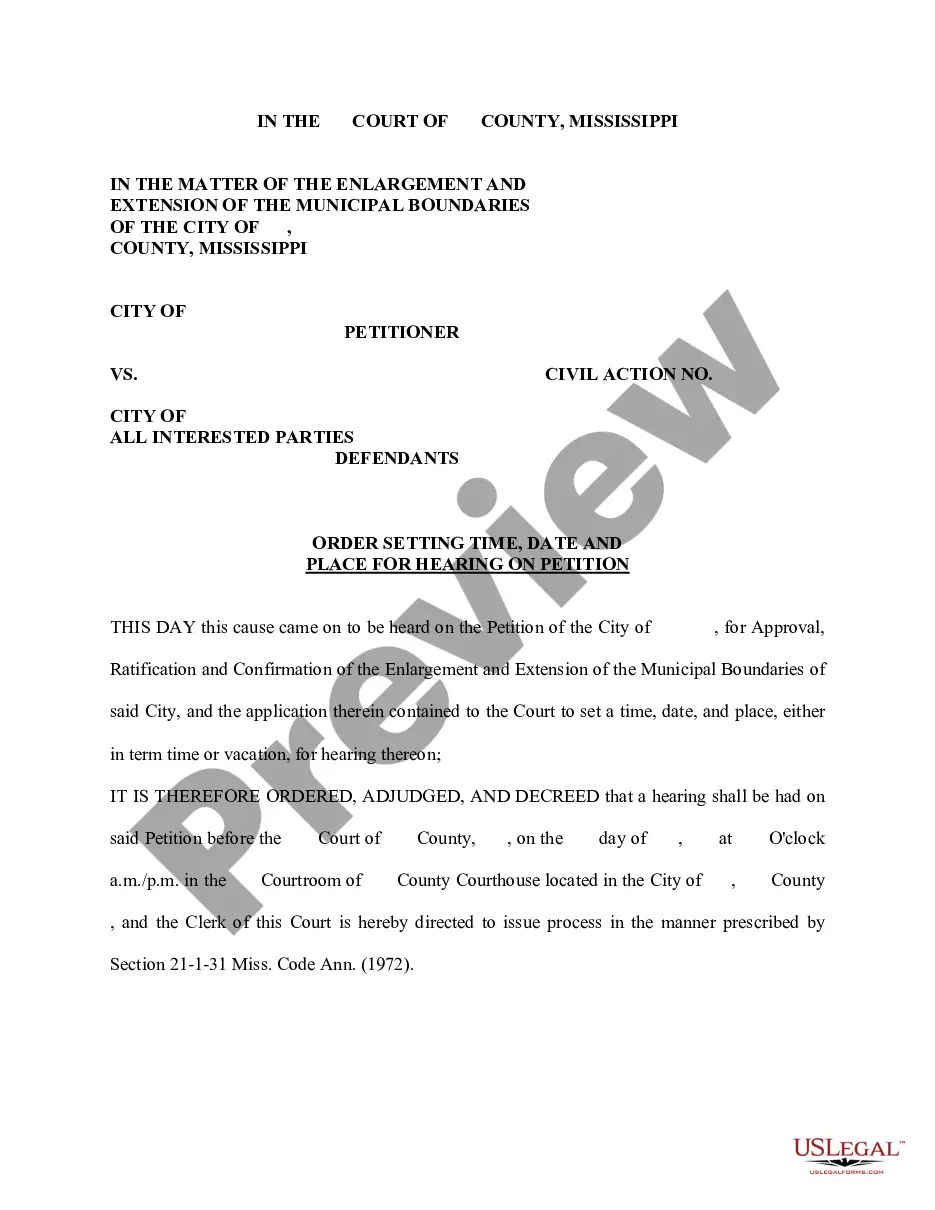
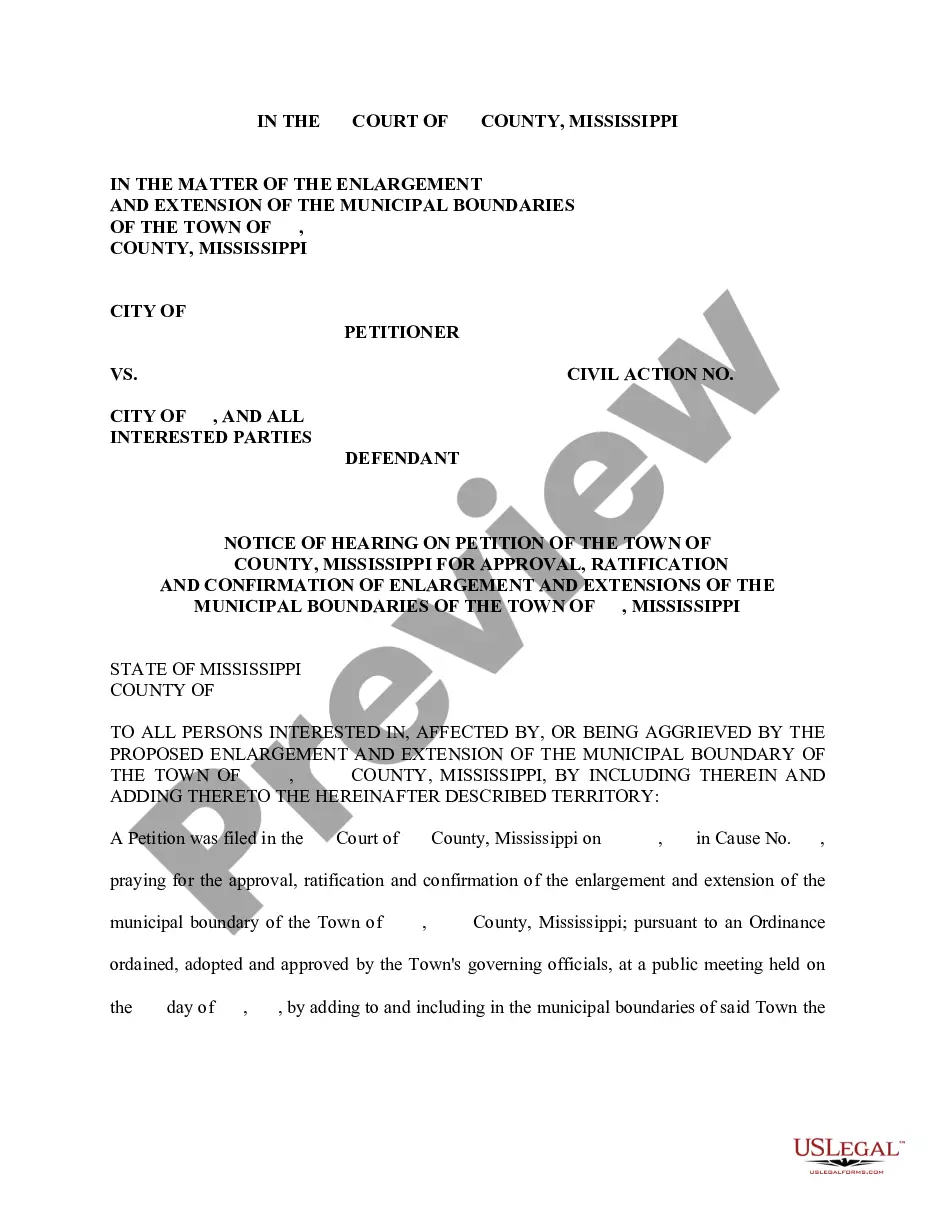
How to fill out Mississippi Application For Fixing Date Of Hearing On Petition To Ratify And Confirm Ordinance?
Acquire a printable Mississippi Application for Setting Date of Hearing on Petition to Validate and Confirm Ordinance within a few mouse clicks in the most extensive library of legal electronic files.
Locate, download, and print expertly drafted and certified samples on the US Legal Forms website. US Legal Forms has remained the leading provider of affordable legal and tax documents for US citizens and residents online since 1997.
Once you have downloaded your Mississippi Application for Setting Date of Hearing on Petition to Validate and Confirm Ordinance, you can fill it out in any online editor or print it out and complete it manually. Utilize US Legal Forms to access 85,000 expertly drafted, state-specific documents.
- Users who already possess a subscription must Log In directly to their US Legal Forms account, download the Mississippi Application for Setting Date of Hearing on Petition to Validate and Confirm Ordinance, and find it saved in the My documents tab.
- Users without a subscription should follow the steps outlined below.
- Ensure your form complies with your state’s regulations.
- If available, review the form’s description for additional information.
- If provided, preview the document to see more details.
- When you’re confident the form is suitable for your needs, click on Buy Now.
- Create a personal account.
- Select a plan.
- Use PayPal or credit card.
- Download the document in Word or PDF format.
Form popularity
FAQ
First, USCIS has to send your file to the NVC. That can often take six to eight weeks after approval of the I-130, and possibly even longer in some cases.You already have to wait until your priority date is current and a visa becomes available before NVC can do anything anyway.
Priority date: This is the date that U.S. Citizenship and Immigration Services (USCIS) received your I-130 petition. Think of this date as your place in the green card line. You can find your priority date on the I-797 form mailed by USCIS approving your I-130 petition.
The date on which a debtor files a petition for relief under the Bankruptcy Code and commences its bankruptcy case. This date is used to determine what is property of the estate and is the date by which creditors' claims are measured.
Background. A chapter 7 bankruptcy case does not involve the filing of a plan of repayment as in chapter 13. Instead, the bankruptcy trustee gathers and sells the debtor's nonexempt assets and uses the proceeds of such assets to pay holders of claims (creditors) in accordance with the provisions of the Bankruptcy Code.
Post-petition debt is all debt that you incur after your bankruptcy case is filed. These debts will not be a part of your bankruptcy case and cannot be discharged. You are still liable on this debt and must pay for it.
Secured creditors, like banks, typically get paid first in a Chapter 11 bankruptcy, followed by unsecured creditors, like bondholders and suppliers of goods and services. Stockholders are typically last in line to get paid. Not all creditors get repaid in full under a Chapter 11 bankruptcy.
This chapter of the Bankruptcy Code generally provides for reorganization, usually involving a corporation or partnership. A chapter 11 debtor usually proposes a plan of reorganization to keep its business alive and pay creditors over time. People in business or individuals can also seek relief in chapter 11.
You have one year after your priority date becomes current in the Application Final Action Dates chart to pursue your visa or green card.
When a case's priority date becomes current (or sometimes shortly before that), USCIS would review the case and identify any new issues such as expired medicals and issue an RFE.There is no standard processing time for when a case is to be approved once its priority date becomes current.