Mississippi Protective Covenants
Description
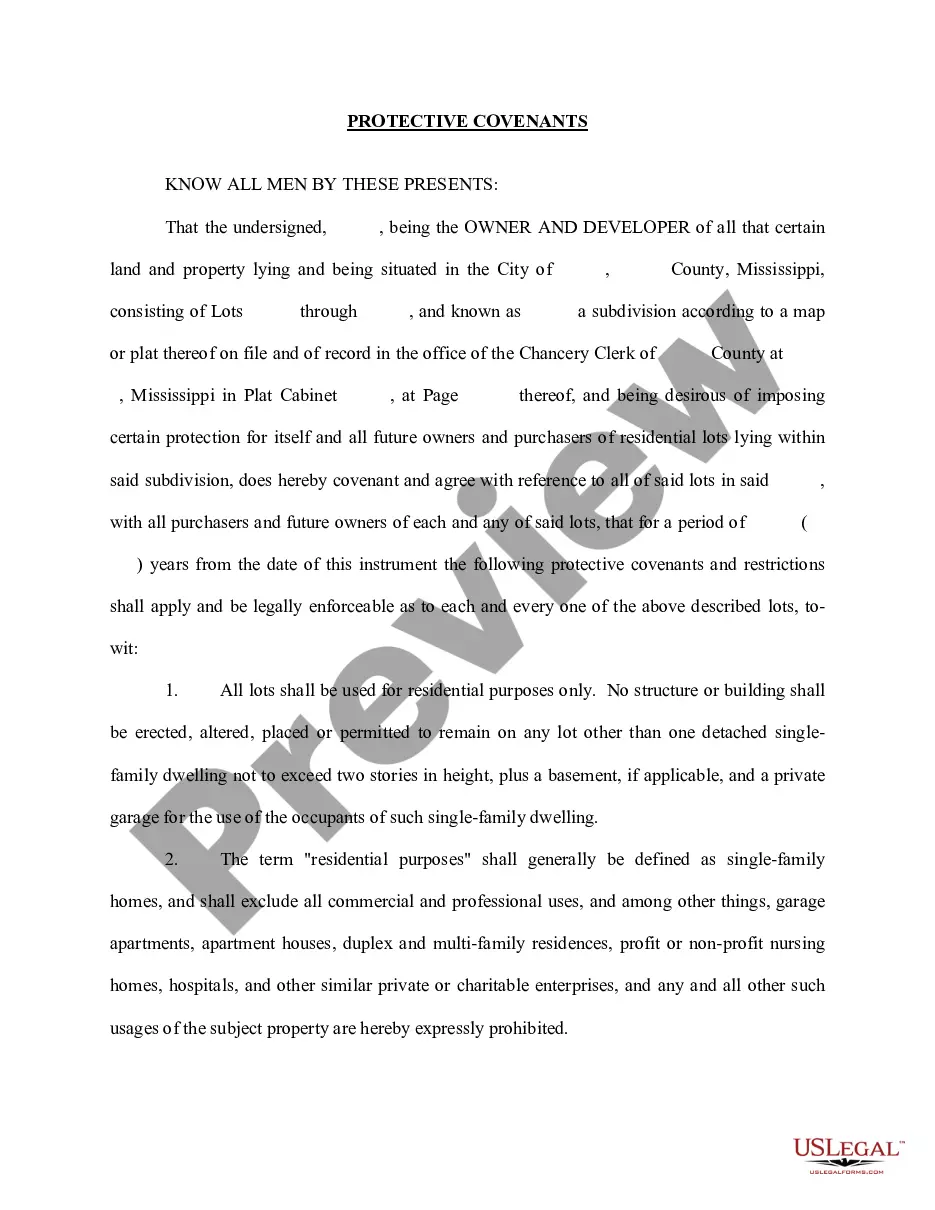
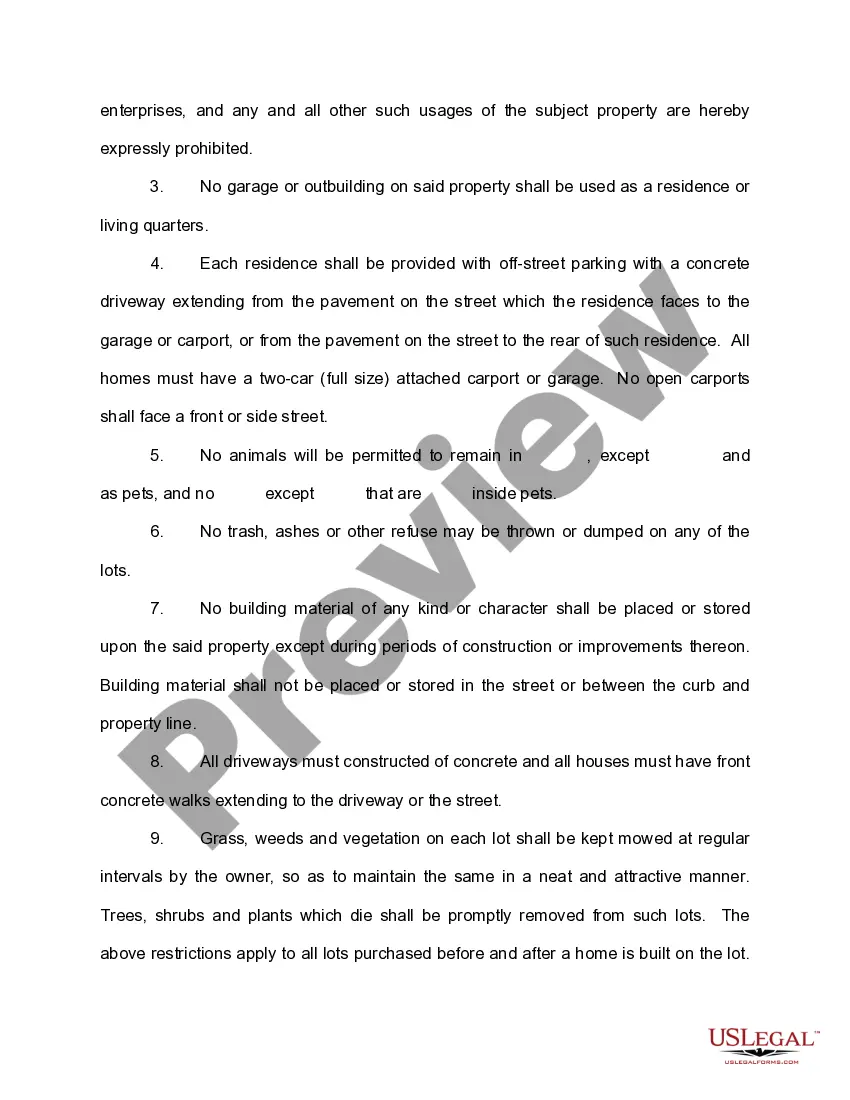
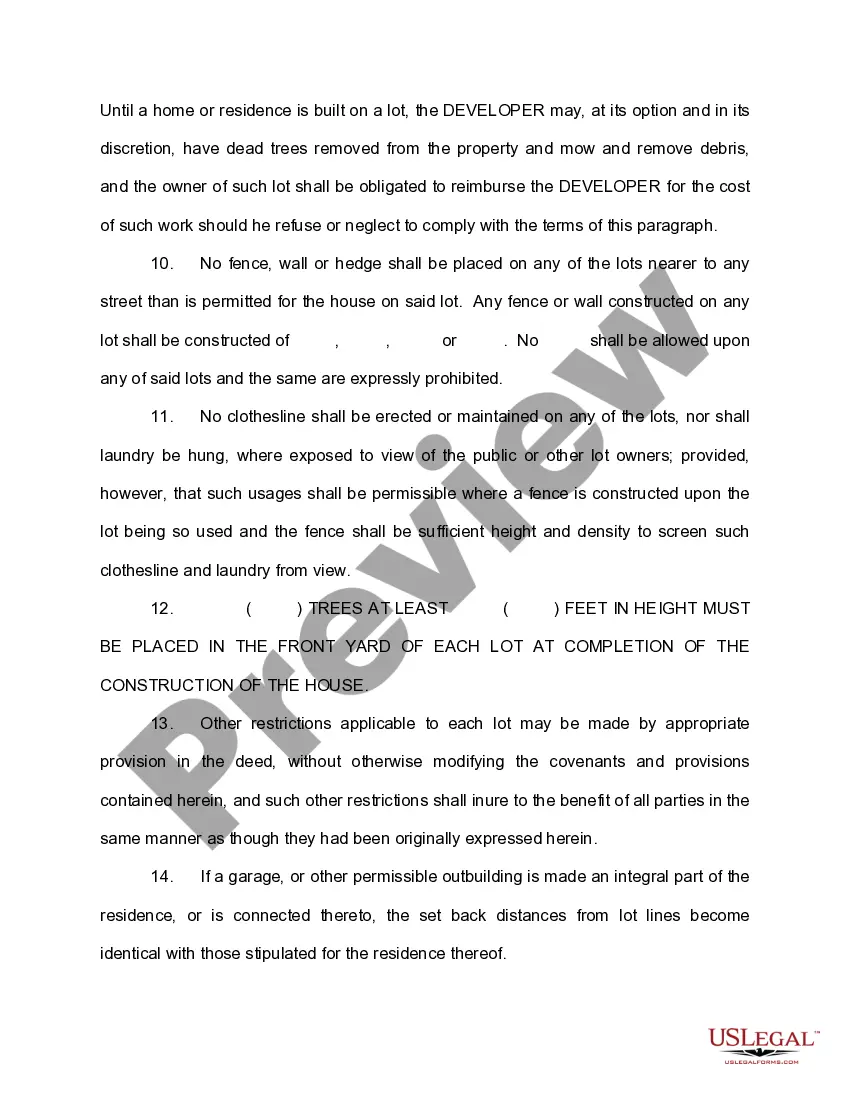
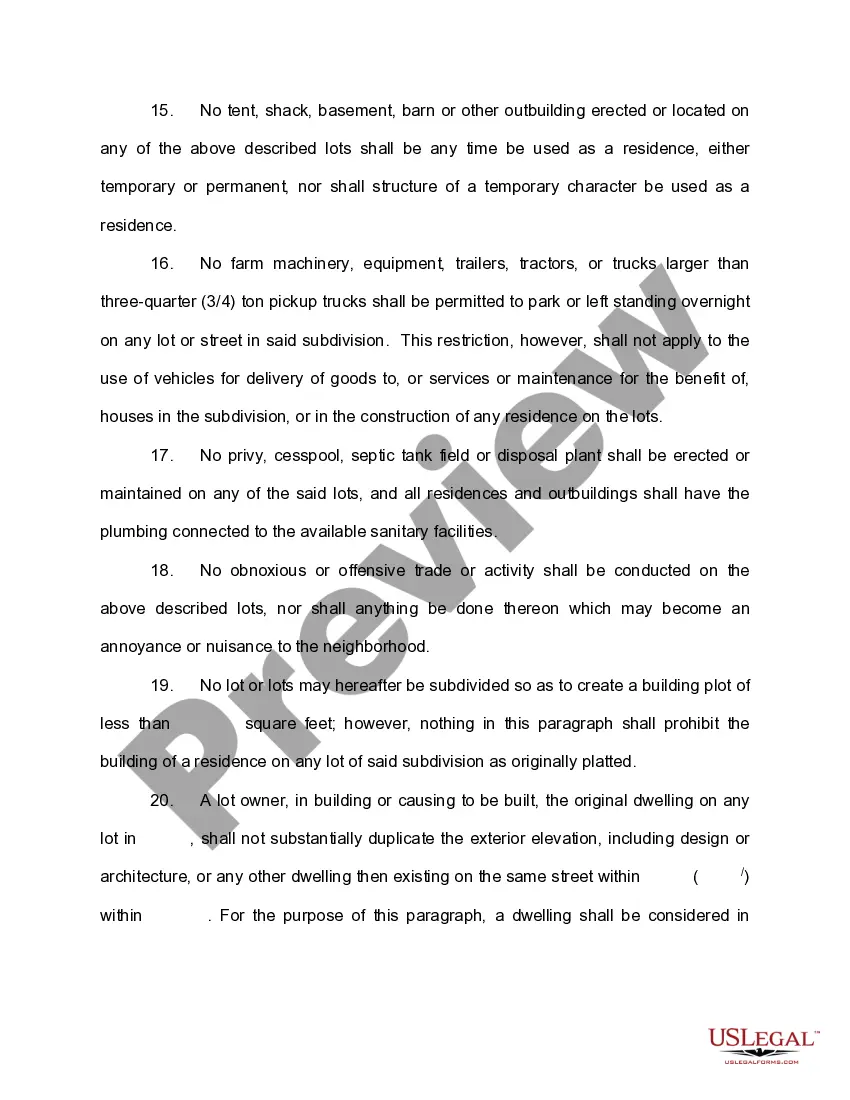
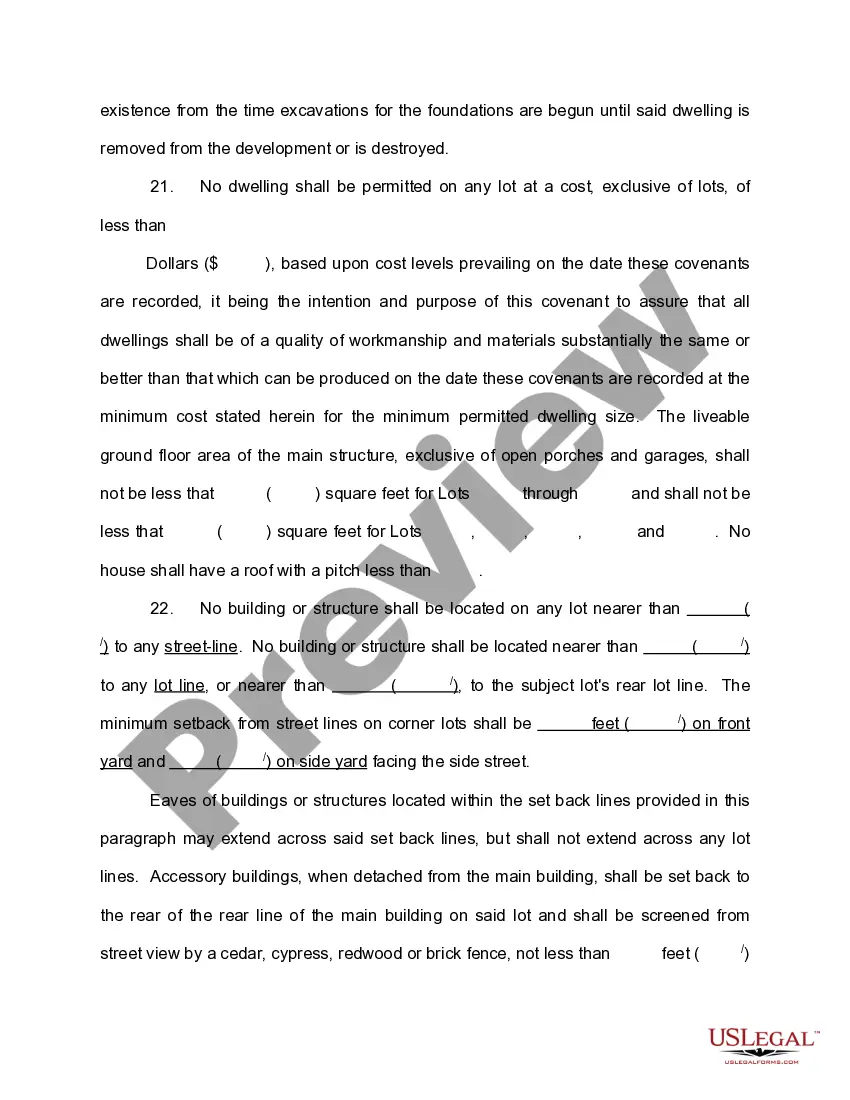
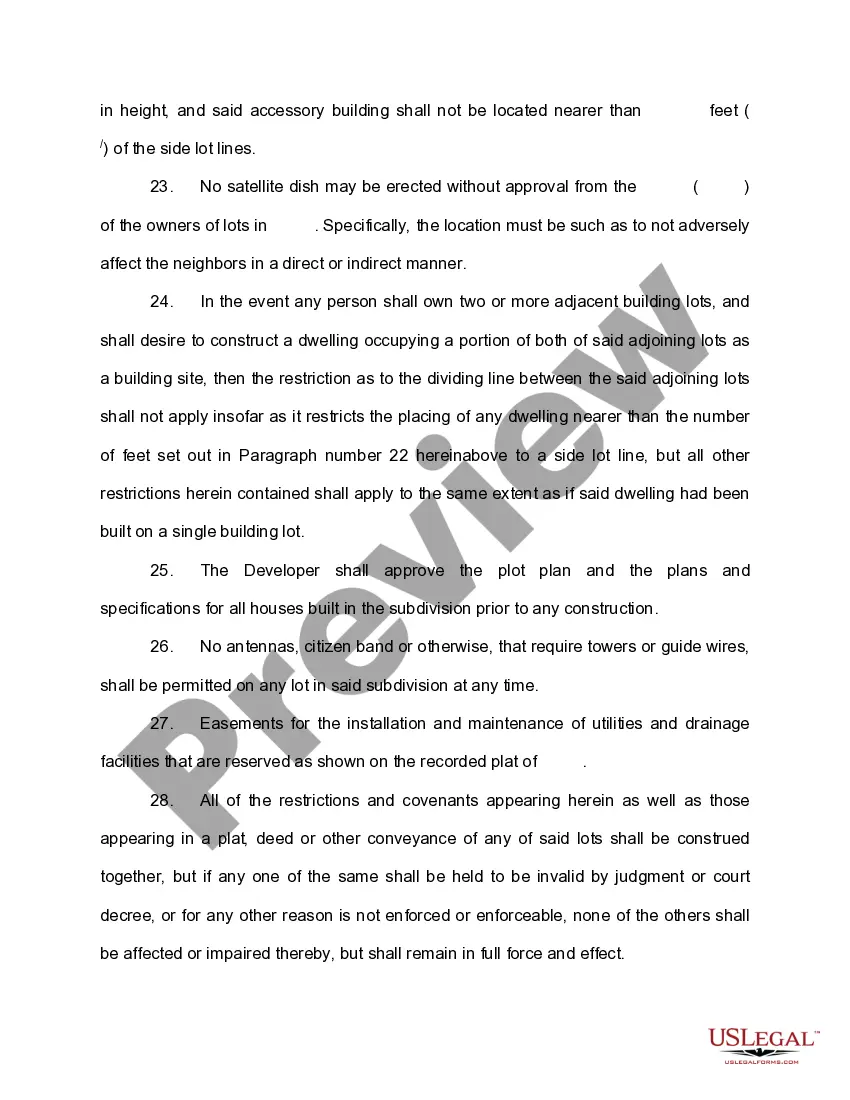
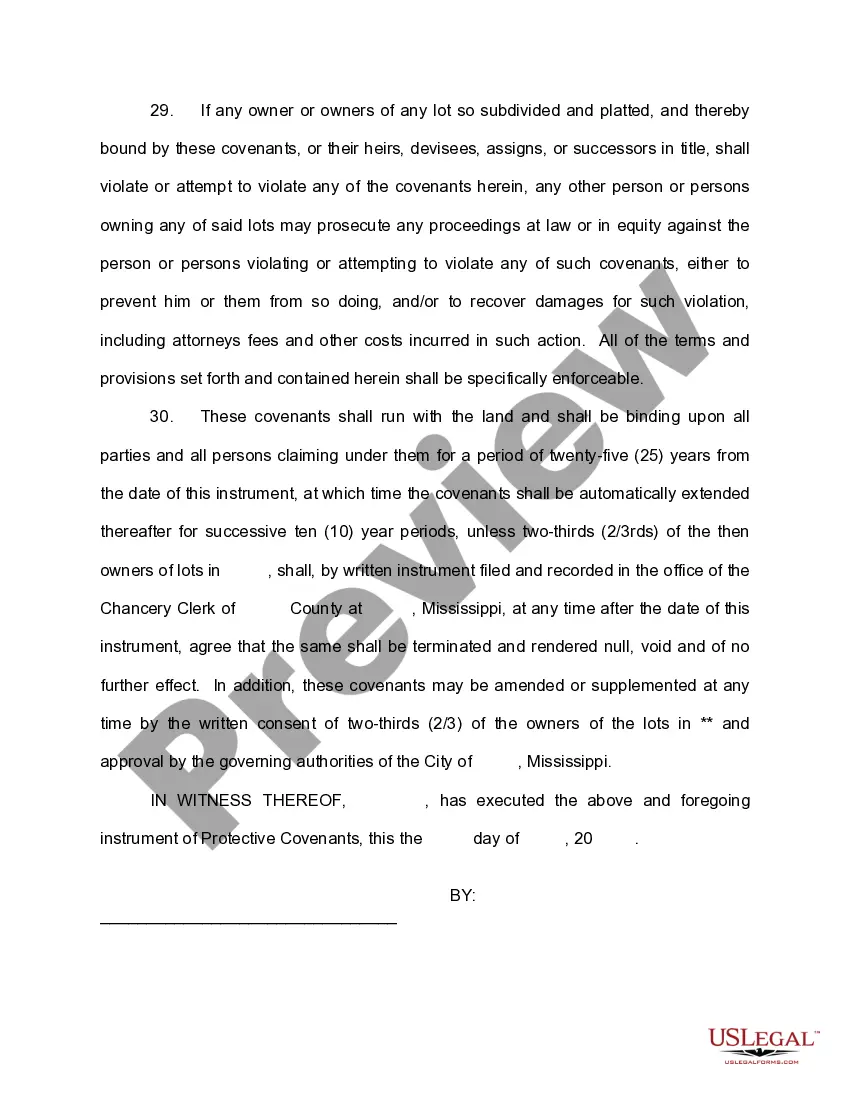
How to fill out Mississippi Protective Covenants?
Acquire a printable Mississippi Protective Covenants with just a few clicks from the largest collection of legal electronic files.
Locate, download, and print expertly prepared and validated samples on the US Legal Forms website. US Legal Forms has been the leading provider of economical legal and tax documents for US citizens and residents online since 1997.
After downloading your Mississippi Protective Covenants, you can complete it in any online editor or print it out and fill it in by hand. Utilize US Legal Forms to access 85,000 professionally drafted, state-specific documents.
- Users with a subscription must Log In directly to their US Legal Forms account, download the Mississippi Protective Covenants, and find it saved in the My documents section.
- Individuals without a subscription need to follow the steps below.
- Ensure your template complies with your state’s regulations.
- If available, review the form’s description to learn more.
- If available, examine the form for additional information.
- Once you confirm the template is suitable, simply click Buy Now.
- Establish a personal account.
- Select a plan.
- Using PayPal or credit card.
- Download the document in Word or PDF format.
Form popularity
FAQ
Revoke Rights and Privileges. In some cases, the HOA board can take away the rights and privileges of homeowners who violate a covenant. For instance, the board can revoke the homeowner's right to vote in the next board elections.
If a neighbour threatens to breach a restrictive covenant binding on them you will probably want to obtain an injunction to prevent breach rather than simply claim monetary compensation.Generally only the owner of land which was, or was part of, the land intended to be benefited by the covenant, can enforce it.
If a neighbour threatens to breach a restrictive covenant binding on them you will probably want to obtain an injunction to prevent breach rather than simply claim monetary compensation.Generally only the owner of land which was, or was part of, the land intended to be benefited by the covenant, can enforce it.
Legally, a properly recorded covenant (technically, a "restrictive deed covenant") is binding and enforceable. Even when covenants are not part of the contract and are instead signed among neighbors (such as a mutual compact), they are binding and may be litigated if breached.
What happens if I breach a restrictive covenant? If you own a property and unknowingly (or otherwise) breach a restrictive covenant then you could be forced to undo any offending work (such as having to pull down an extension), pay a fee (often running into thousands of pounds) or even face legal action.
Statement in a deed that specified actions, or improvements, can or cannot take place on a given property. The covenants may stipulate the use of the property, restrict the number of occupants, and prohibit certain actions (e.g., early morning parties, animals).
Protective covenant. A part of an indenture or loan agreement that limits certain actions a company may take during the term of the loan to protect the lender's interests.
In respect of covenants, for them to be enforceable, both the benefit and burden must run in common law or both must run in equity. So if the benefit runs in common law but the burden only runs in equity (or vice versa) the covenant will not be enforceable.