Mississippi Petition to Close Estate by Executor
About this form
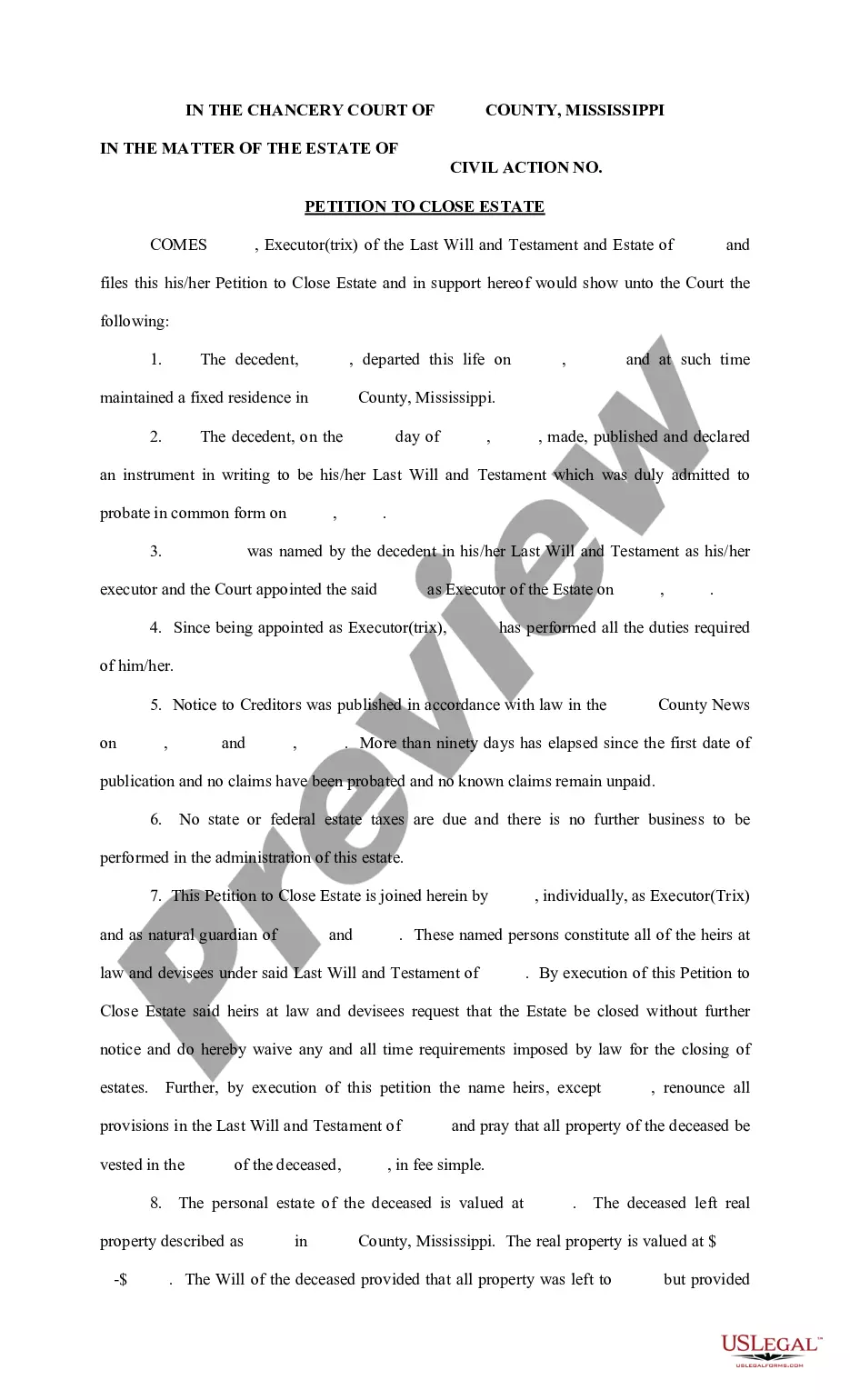
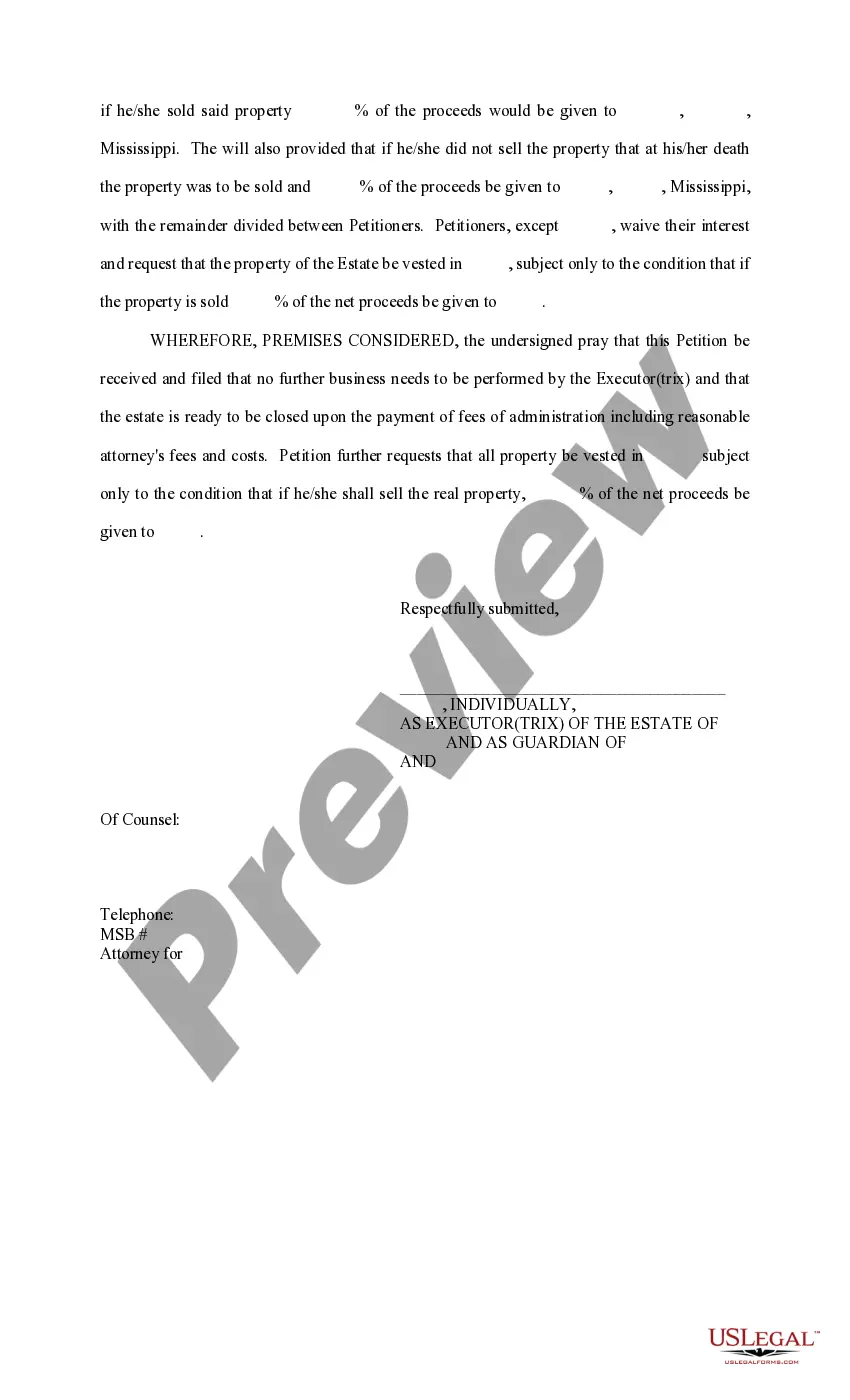
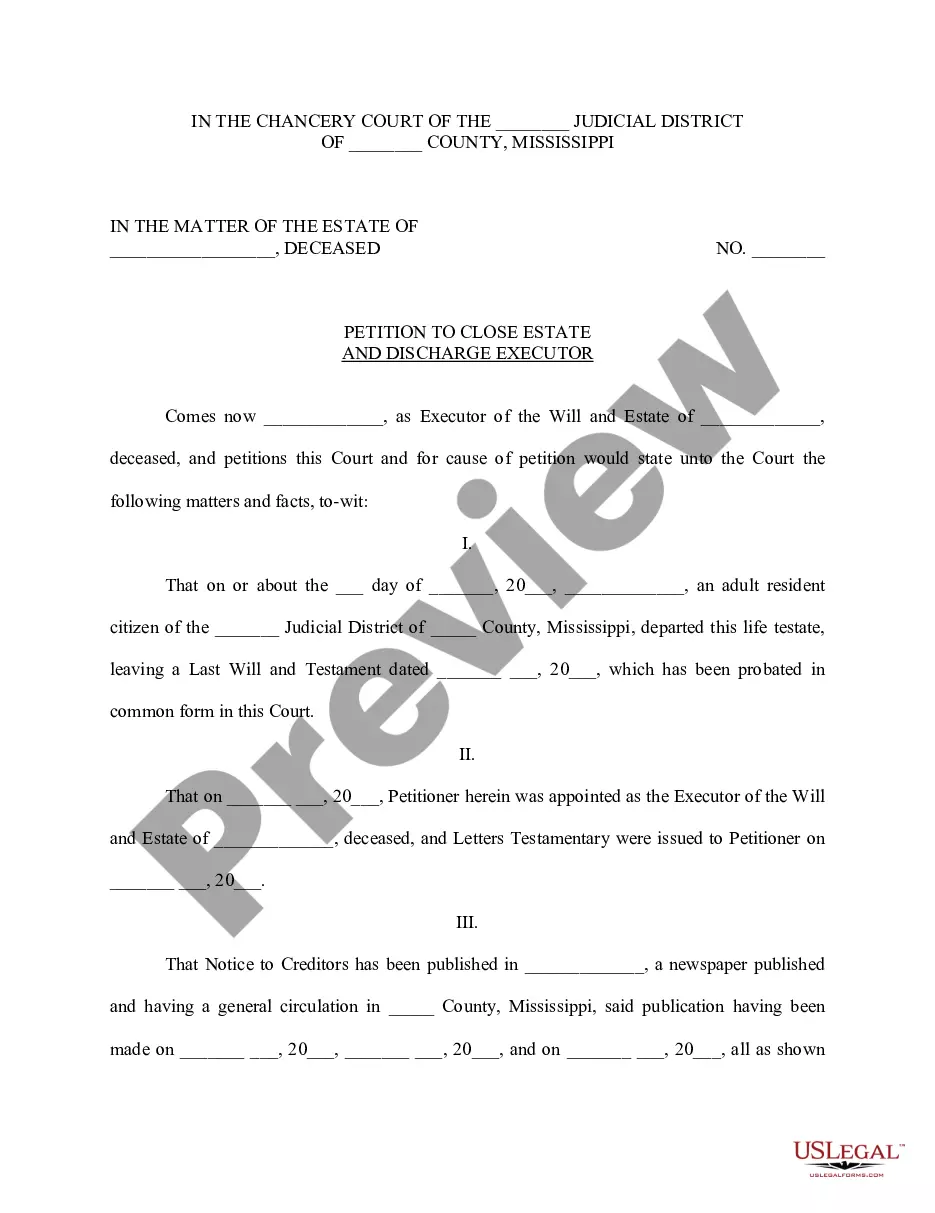
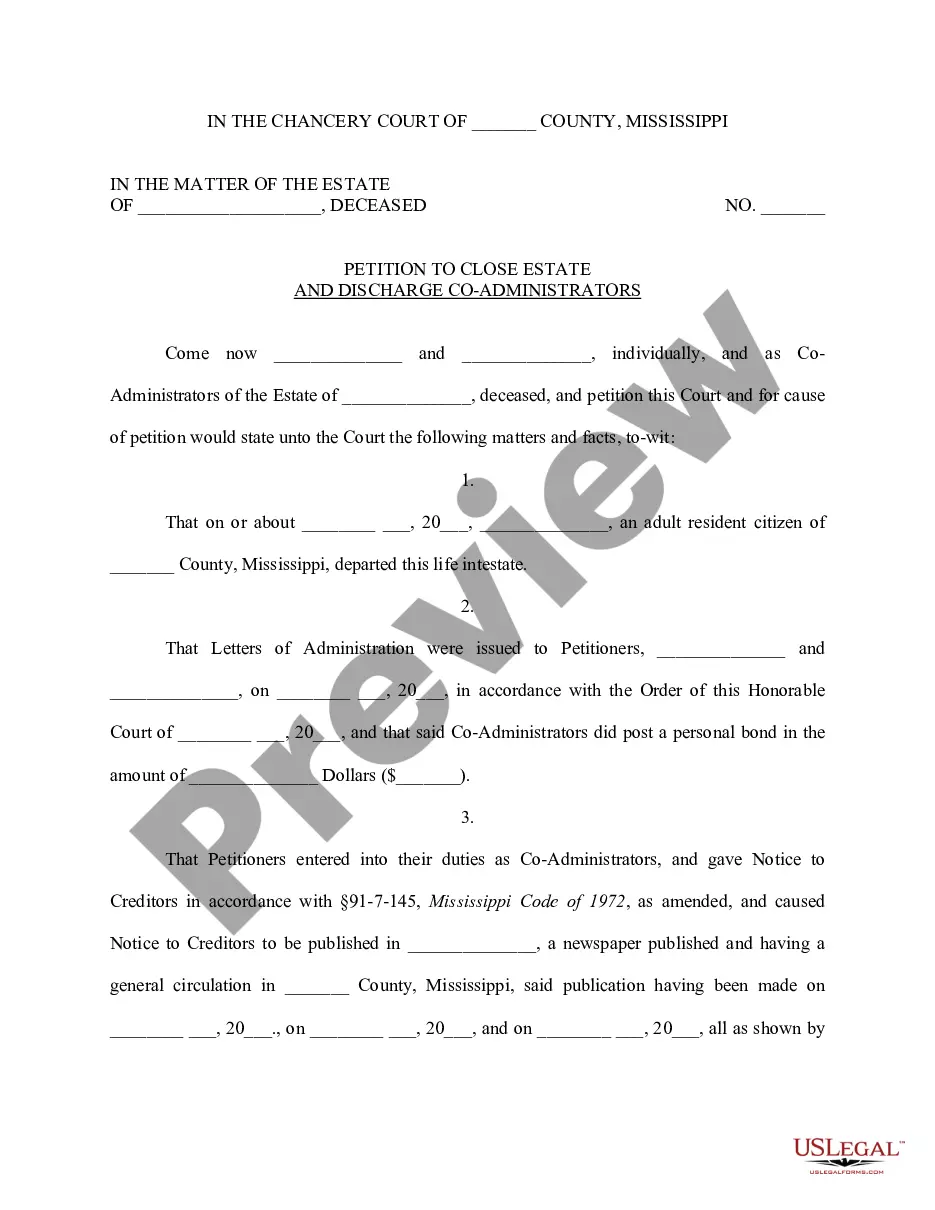
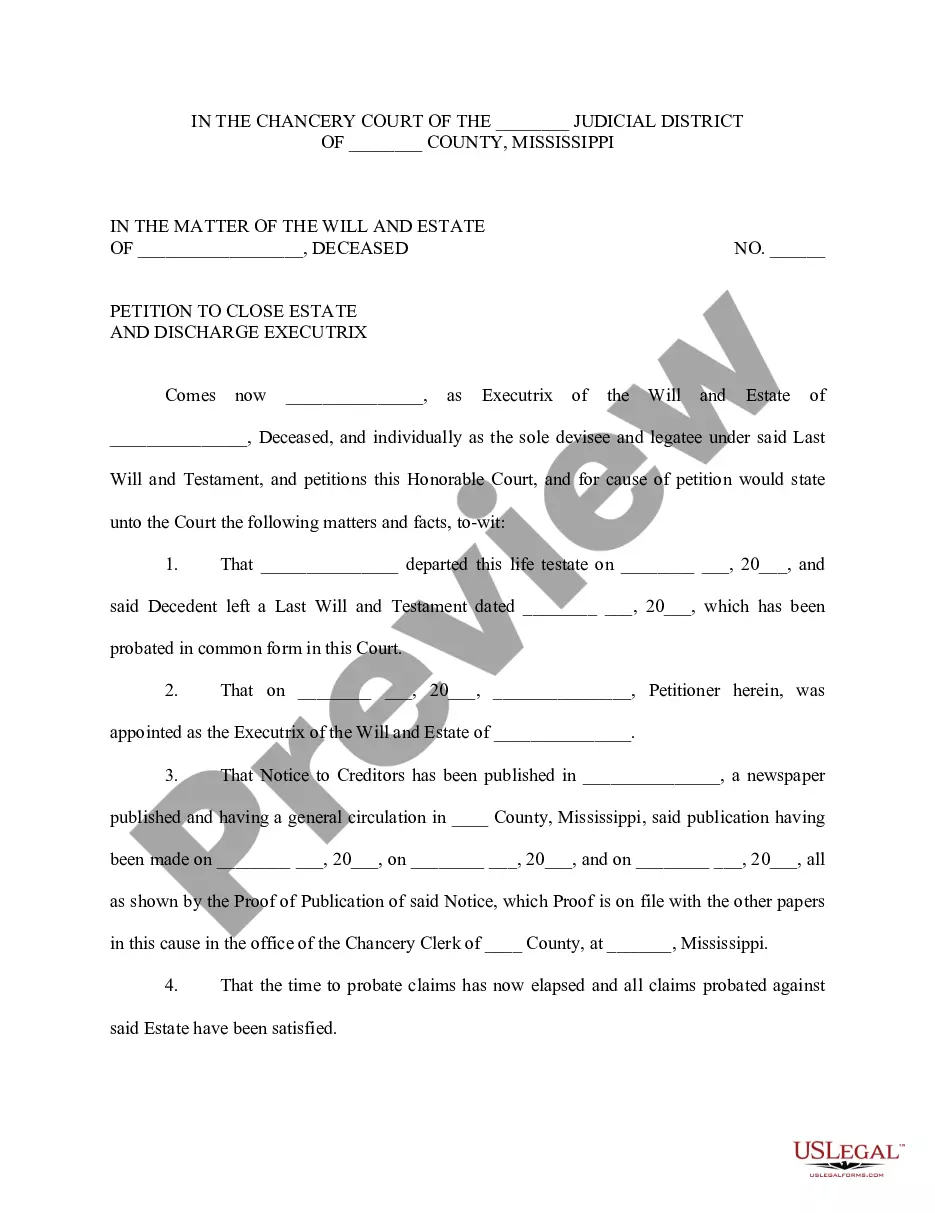
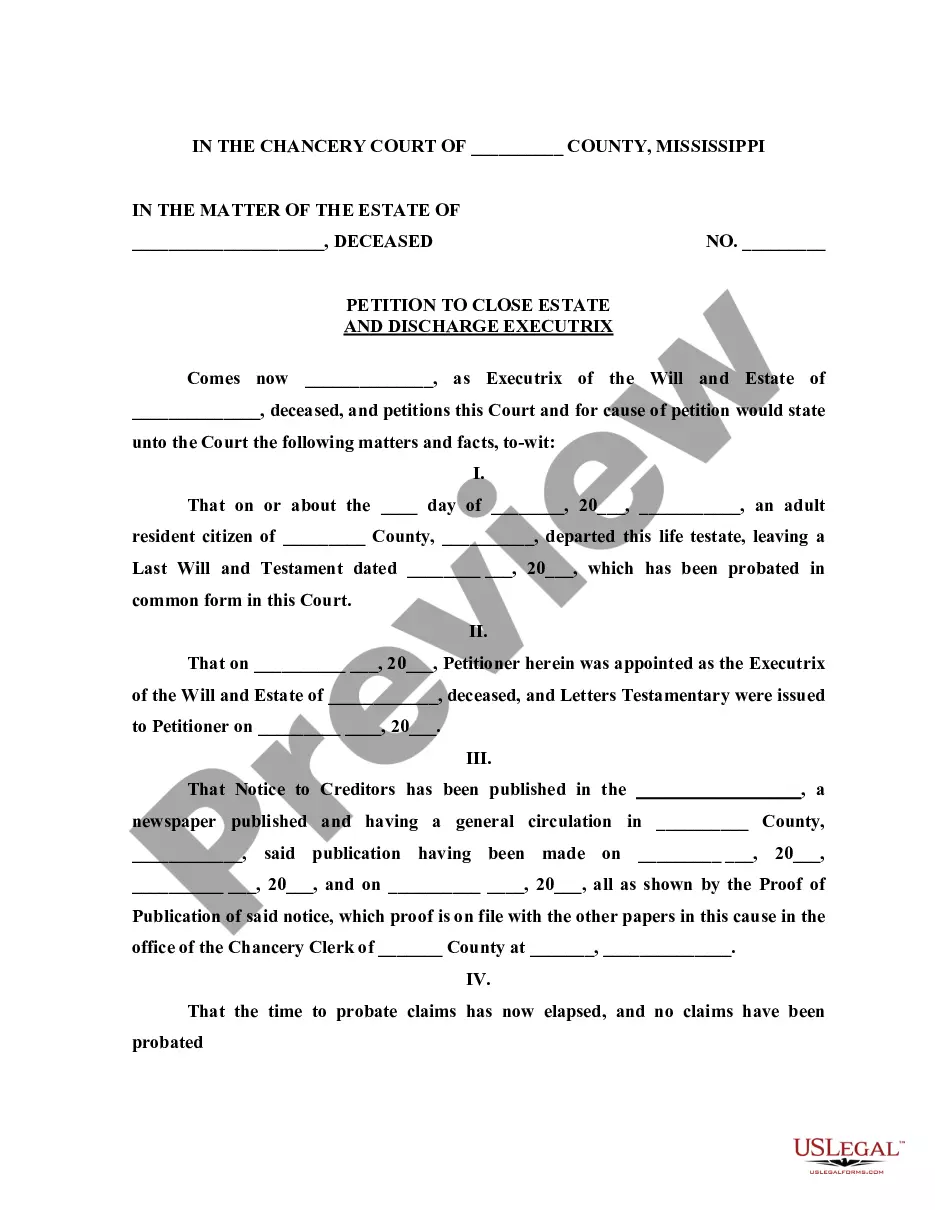
The Petition to Close Estate by Executor is a legal document used to request a court's approval to close an estate that has been administered. This form is specifically tailored for executors of estates who have completed their duties and wish to formally conclude the probate process. Unlike other forms related to estate management, this petition is focused solely on closing the estate and confirming that no outstanding taxes or duties remain.
Form components explained
- Identification of the executor and relevant estate details.
- Statement confirming no state or federal estate taxes are owed.
- Declaration that all administrative tasks have been completed.
- Request for the court to close the estate officially.
- Space for signatures and dates to finalize the petition.
When to use this form
This form should be used when an executor has completed all necessary steps in the administration of an estate, including settling debts, distributing assets, and ensuring all taxes are paid. The petition is essential for formally ending the estate's probate process in the court and obtaining the necessary legal approval to close the estate.
Who can use this document
This form is intended for:
- Executors or personal representatives of a deceased person's estate.
- Individuals responsible for winding down an estate's affairs.
- Professionals assisting families with estate administration.
How to prepare this document
- Identify the names and contact details of the executor.
- Provide information about the deceased and the estate.
- Indicate that all debts and taxes are settled.
- Include any necessary details pertaining to the estate closure.
- Sign and date the petition before submission to the court.
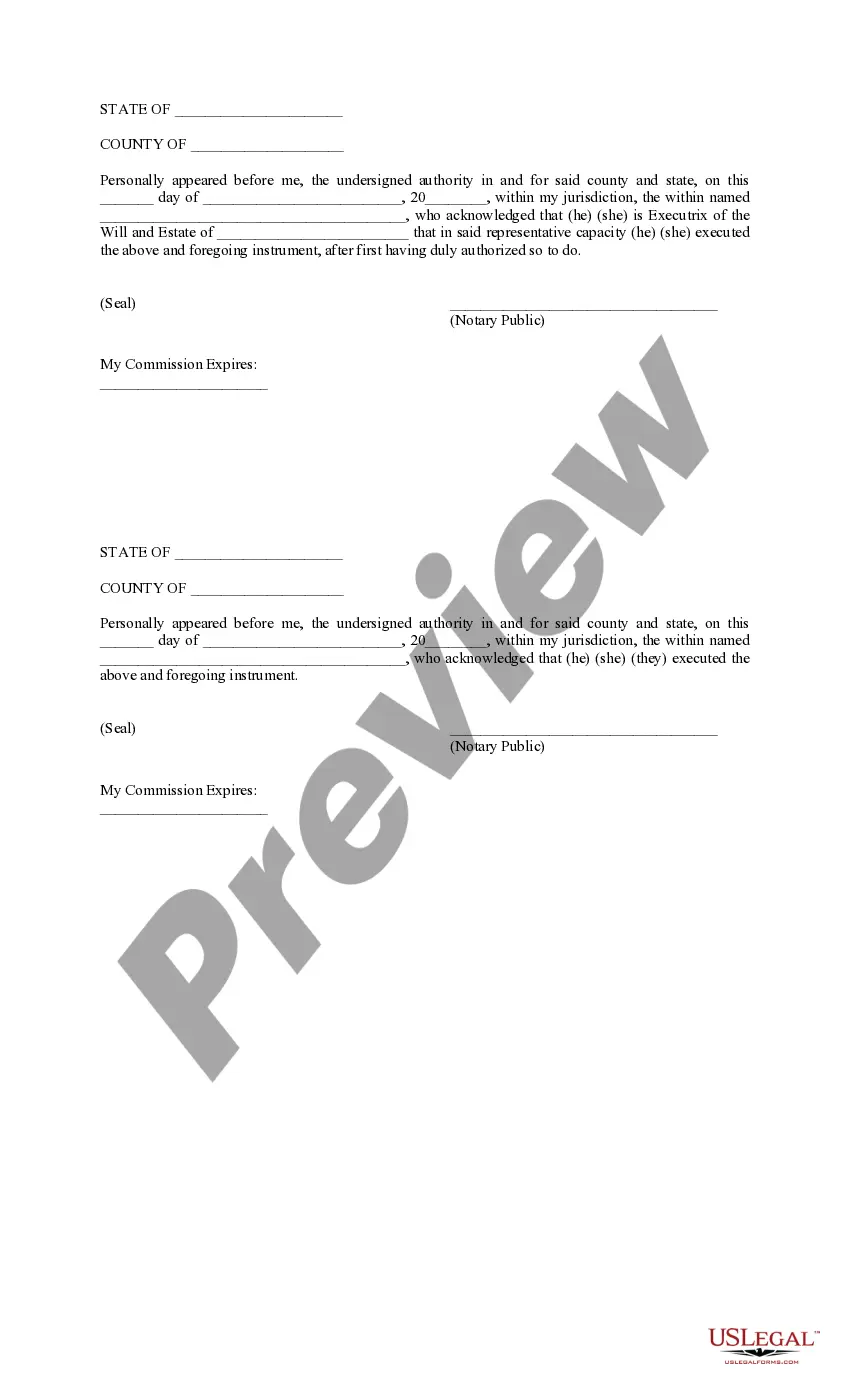
Does this form need to be notarized?
This form does not typically require notarization unless specified by local law. Be sure to check your jurisdictionâs requirements to ensure the petition is valid upon submission to the court.
Get your form ready online
Our built-in tools help you complete, sign, share, and store your documents in one place.
Make edits, fill in missing information, and update formatting in US Legal Forms—just like you would in MS Word.
Download a copy, print it, send it by email, or mail it via USPS—whatever works best for your next step.
Sign and collect signatures with our SignNow integration. Send to multiple recipients, set reminders, and more. Go Premium to unlock E-Sign.
If this form requires notarization, complete it online through a secure video call—no need to meet a notary in person or wait for an appointment.
We protect your documents and personal data by following strict security and privacy standards.

Make edits, fill in missing information, and update formatting in US Legal Forms—just like you would in MS Word.

Download a copy, print it, send it by email, or mail it via USPS—whatever works best for your next step.

Sign and collect signatures with our SignNow integration. Send to multiple recipients, set reminders, and more. Go Premium to unlock E-Sign.

If this form requires notarization, complete it online through a secure video call—no need to meet a notary in person or wait for an appointment.

We protect your documents and personal data by following strict security and privacy standards.
Common mistakes
- Failing to confirm that all tax obligations are met before filing.
- Leaving required sections blank or incomplete.
- Not providing accurate information about the estate's assets and liabilities.
- Submitting the form without signatures and dates.
Benefits of using this form online
- Convenient access to legal forms anytime without the need for in-person appointments.
- Easy to fill out, allowing for quick adaptation to individual situations.
- Templates provided by licensed attorneys ensure compliance with legal standards.
Legal use & context
- The form serves as official documentation to the court about the closure of the estate.
- Ensures that all parties involved in the estate are informed and in agreement with the closure.
- Helps prevent future disputes regarding the estate management and closure.
Quick recap
- The Petition to Close Estate by Executor is crucial for formalizing an estate closure after completing administrative duties.
- It is essential to confirm that there are no outstanding tax obligations or debts before using this form.
- Completing this form accurately enables executors to finalize the estate process with the court.
Looking for another form?
Form popularity
FAQ
In the best of circumstances, the Mississippi probate process usually takes 4 to 6 months. This would only be possible if the estate was fairly simple, all interested parties are agreeable, and documents are signed and returned to the probate attorney in a timely manner.
An executor acts until the estate administration is completed or if they resign, die or are removed for cause.
By Stephanie Kurose, J.D. Closing a person's estate after they die can often be a long, detailed process. This includes paying off debts, filing final tax returns, and, finally, distributing the estate's assets according to the wishes of the deceased.
The Executor's Final Act, Closing an Estate The personal representative, now without any estate funds to pay his lawyer, must respond. Even if the charges are baseless, the executor is stuck paying the legal bill. Instead, before making any distribution, the administrator should insist on receiving a release.
Q: How Long Does an Executor Have to Distribute Assets From a Will? A: Dear Waiting: In most states, a will must be executed within three years of a person's death.
Generally, an executor has 12 months from the date of death to distribute the estate. This is known as 'the executor's year'. However, for various reasons the executor may have been delayed and has not distributed the estate within this time frame.
Notify all creditors. File tax returns and pay final taxes. File the final accounting with the probate court. Distribute remaining assets to beneficiaries. File a closing statement with the court.
A simple estate with just a few, easy-to-find assets may be all wrapped up in six to eight months. A more complicated affair may take three years or more to fully settle.