Mississippi Jury Instruction - Good Faith Duty
Description
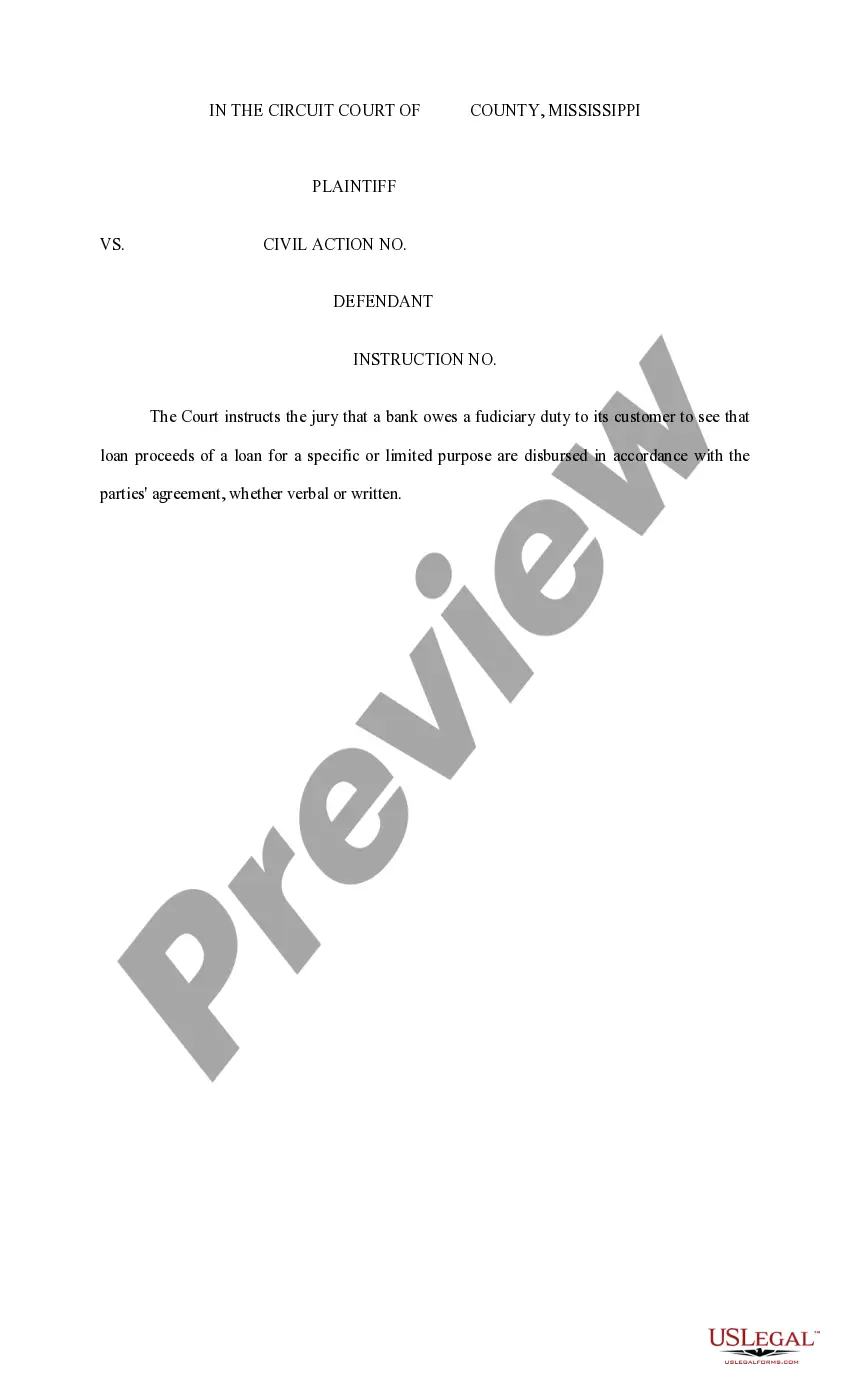
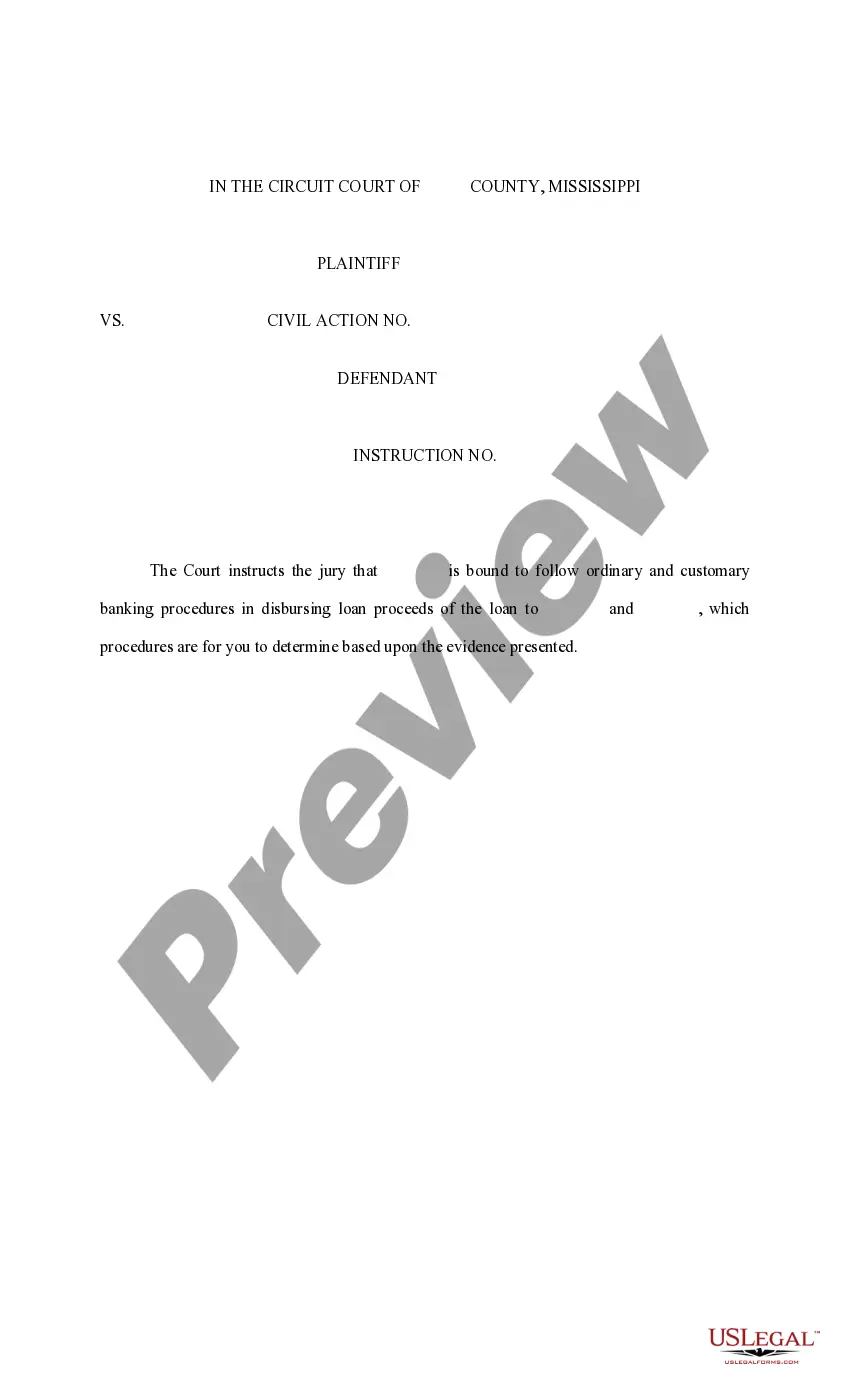
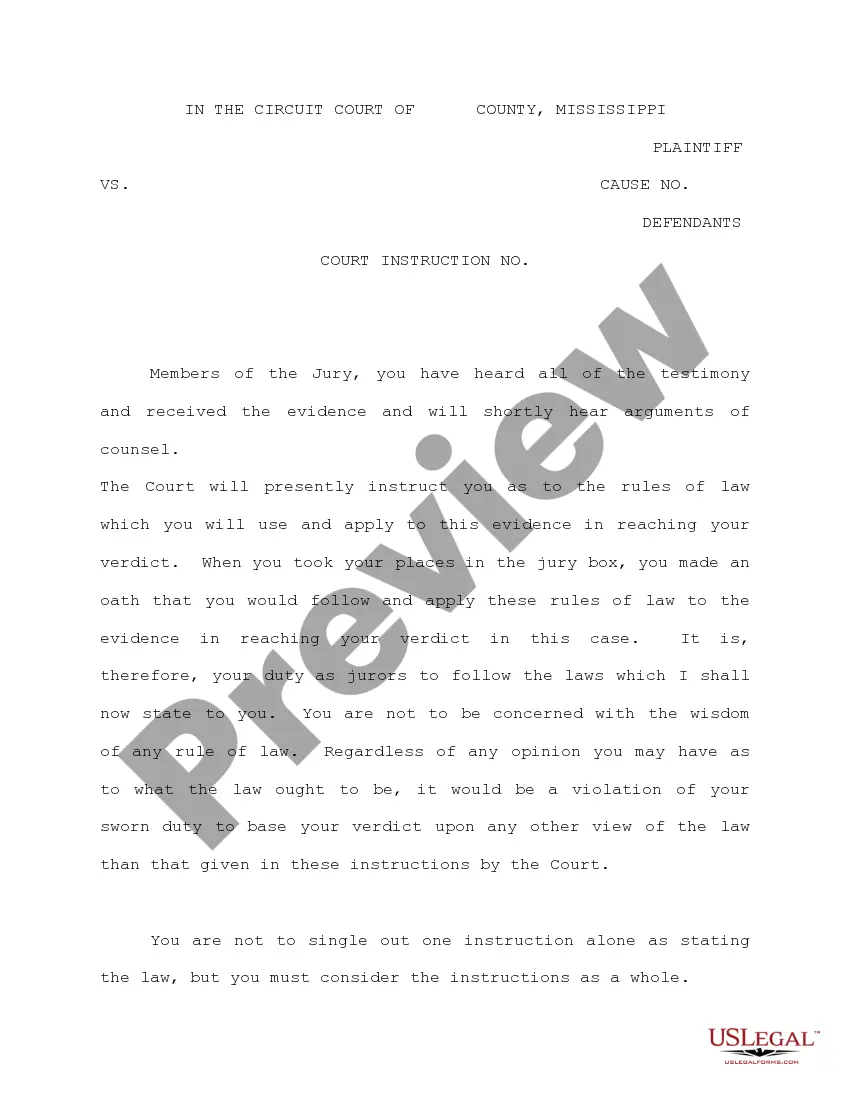
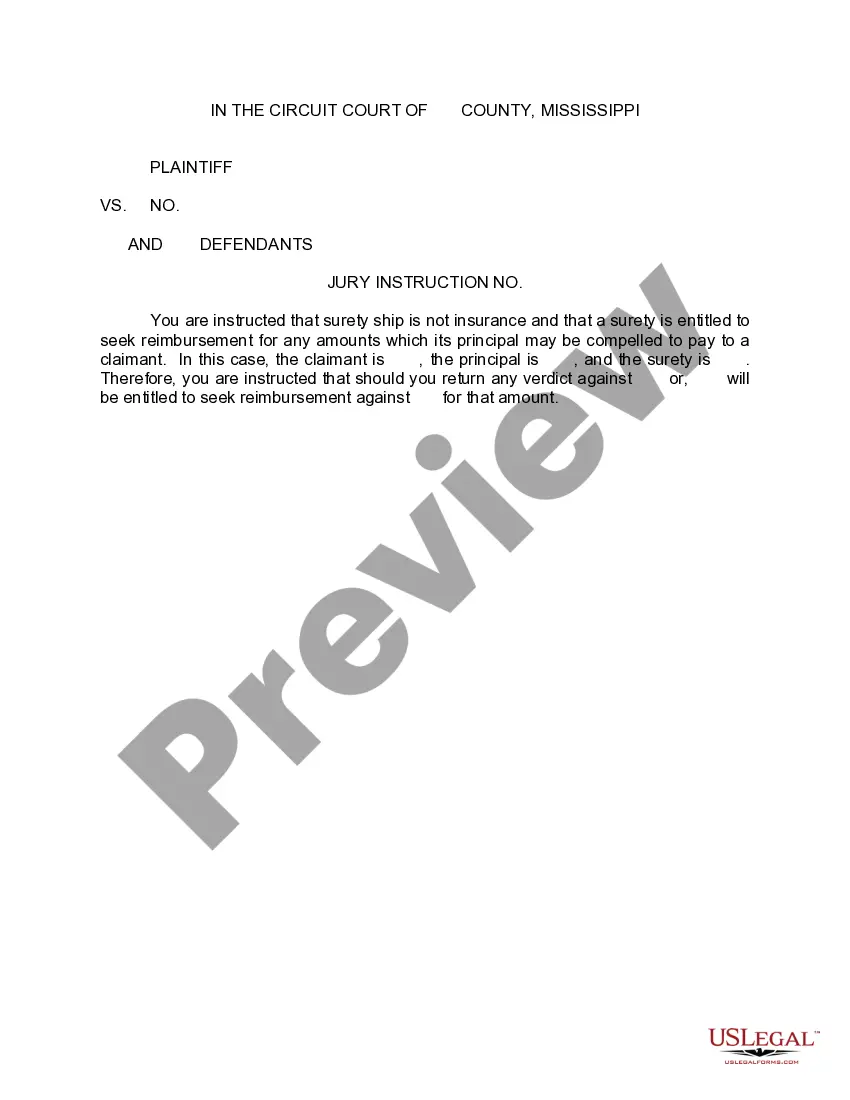
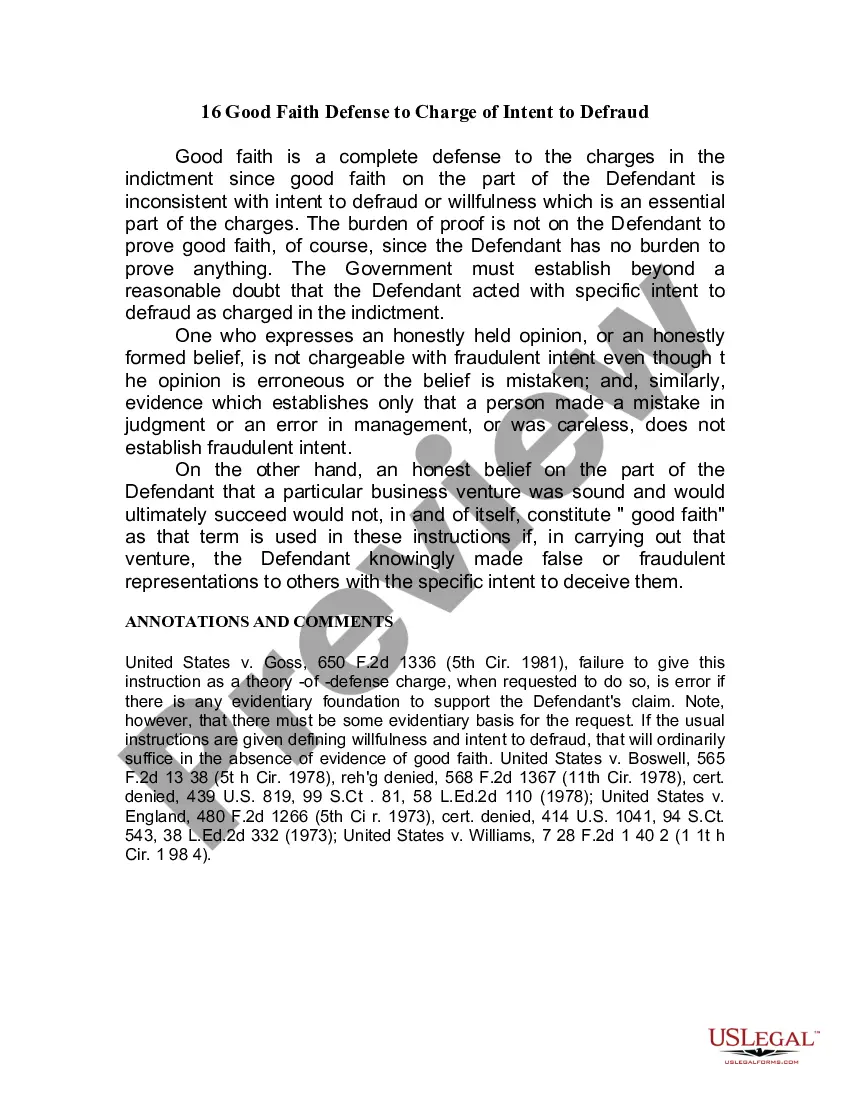
How to fill out Mississippi Jury Instruction - Good Faith Duty?
Acquire a printable Mississippi Jury Instruction - Good Faith Obligation within just a few clicks in the most extensive collection of legal e-documents.
Locate, download, and print expertly crafted and certified samples on the US Legal Forms site. US Legal Forms has been the leading provider of affordable legal and tax documents for US citizens and residents online since 1997.
Once you have downloaded your Mississippi Jury Instruction - Good Faith Obligation, you can complete it in any online editor or print it out and fill it in manually. Utilize US Legal Forms to gain access to 85,000 professionally drafted, state-specific documents.
- Customers with a subscription need to Log In to their US Legal Forms account, download the Mississippi Jury Instruction - Good Faith Obligation, and find it saved in the My documents section.
- Individuals without a subscription should follow the instructions below.
- Ensure your template complies with your state's regulations.
- If available, read the form's description for more details.
- If accessible, examine the form to see additional content.
- When you are confident the form satisfies your needs, click on Buy Now.
- Create a personal account.
- Choose a plan.
- Make payment through PayPal or credit card.
- Download the form in Word or PDF format.
Form popularity
FAQ
Good faith has generally been defined as honesty in a person's conduct during the agreement. The obligation to perform in good faith exists even in contracts that expressly allow either party to terminate the contract for any reason. Fair dealing usually requires more than just honesty.
A term that generally describes honest dealing. Depending on the exact setting, good faith may require an honest belief or purpose, faithful performance of duties, observance of fair dealing standards, or an absence of fraudulent intent.
In current business negotiations, to negotiate in good faith means to deal honestly and fairly with one another so that each party will receive the benefits of your negotiated contract. When one party sues the other for breach of contract, they may argue that the other party did not negotiate in good faith.
The Principle of Good Faith in Contract Law It is a settled principle of contract law that a contracting party must perform her contractual duties in good faith. The meaning of the duty of good faith is complex.
Courts also invoke good faith when officers rely on law that later changes. For example, if officers attach a GPS to a car without a warrant because existing law allows them to, but a later Supreme Court decision holds that warrants are required, evidence found pursuant to the GPS search will probably be admitted.
A term that generally describes honest dealing. Depending on the exact setting, good faith may require an honest belief or purpose, faithful performance of duties, observance of fair dealing standards, or an absence of fraudulent intent.
Notably, the implied covenant of good faith and fair dealing is included in every contract whereas the duty of good faith requires the existence of a fiduciary relationship.Every party to a contract is not, however, subject to the duty of good faith as not every contract creates a fiduciary relationship.
A good faith clause refers to the manner in which parties in an agreement act with each other. It is often for an employer and employee relationship, where good faith would cause both parties to act respectfully to one another.
In contract law, the implied covenant of good faith and fair dealing is a general presumption that the parties to a contract will deal with each other honestly, fairly, and in good faith, so as to not destroy the right of the other party or parties to receive the benefits of the contract.