Mississippi Jury Instruction - Expert Witness
What is this form?
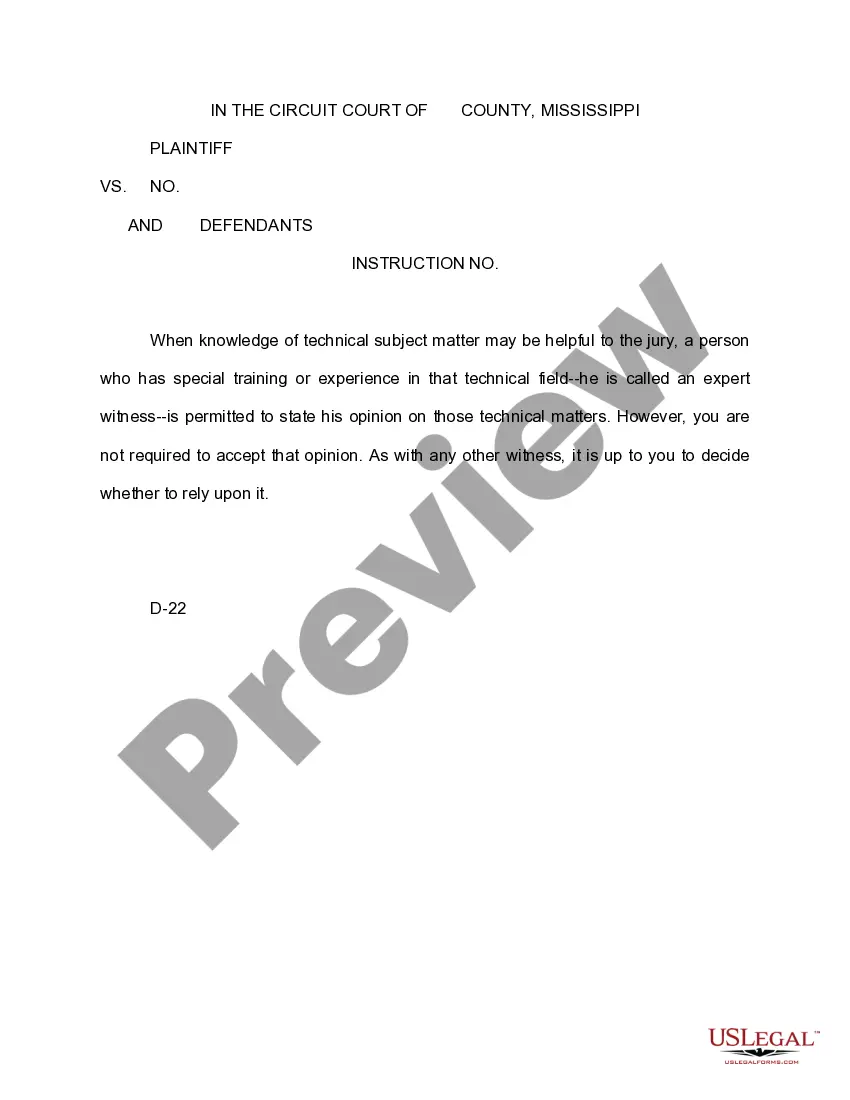
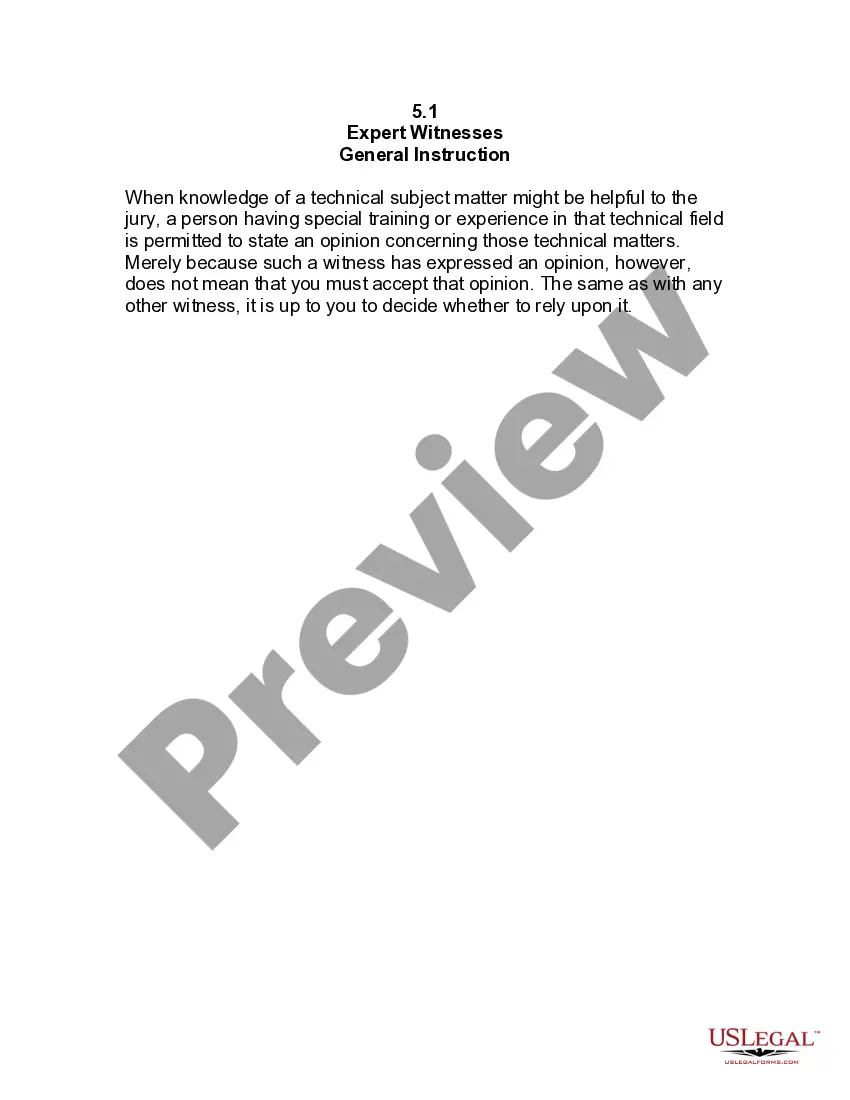
The Jury Instruction - Expert Witness form is a legal document used in Mississippi courts to guide jurors on how to evaluate the testimony of expert witnesses. This form outlines that when a jury requires knowledge of a technical subject, an expert witness can provide informed opinions. However, jurors are not obligated to accept those opinions. This form is crucial for ensuring that expert testimony is understood and appropriately weighed in legal proceedings, distinguishing it from other jury instructions that may not specifically address expert witnesses.
What’s included in this form
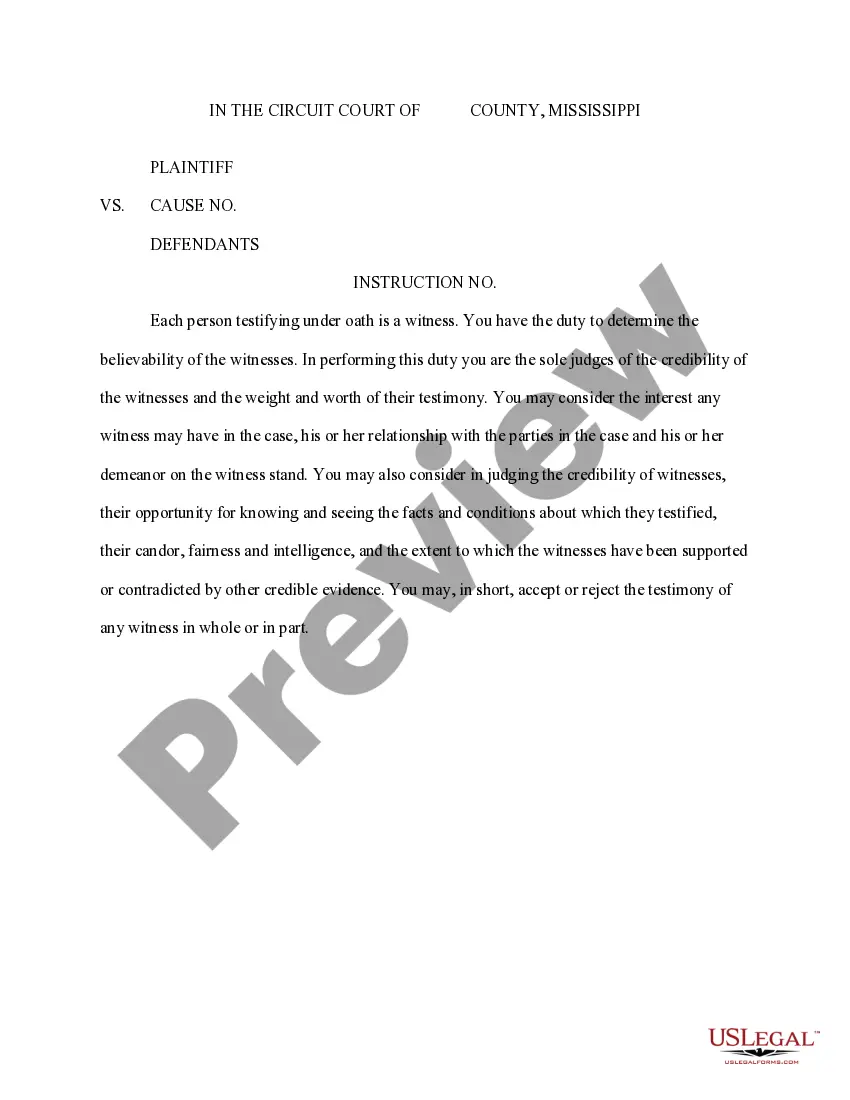
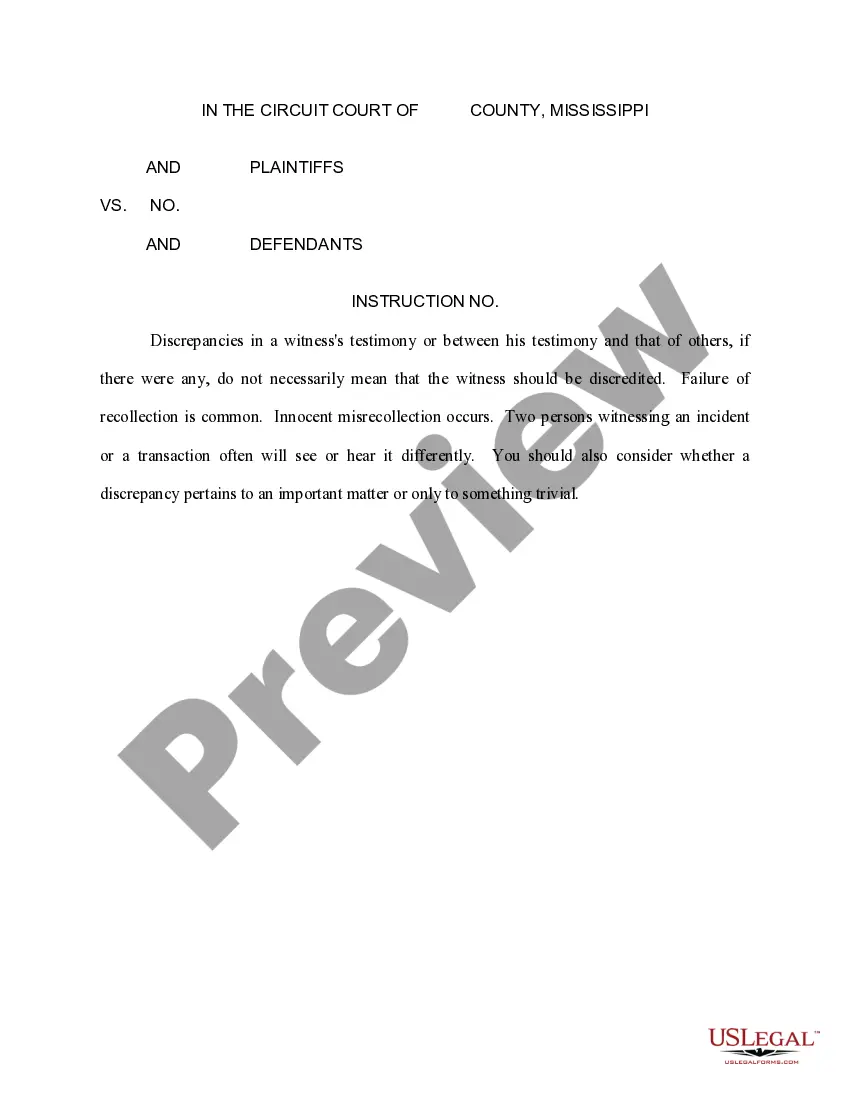
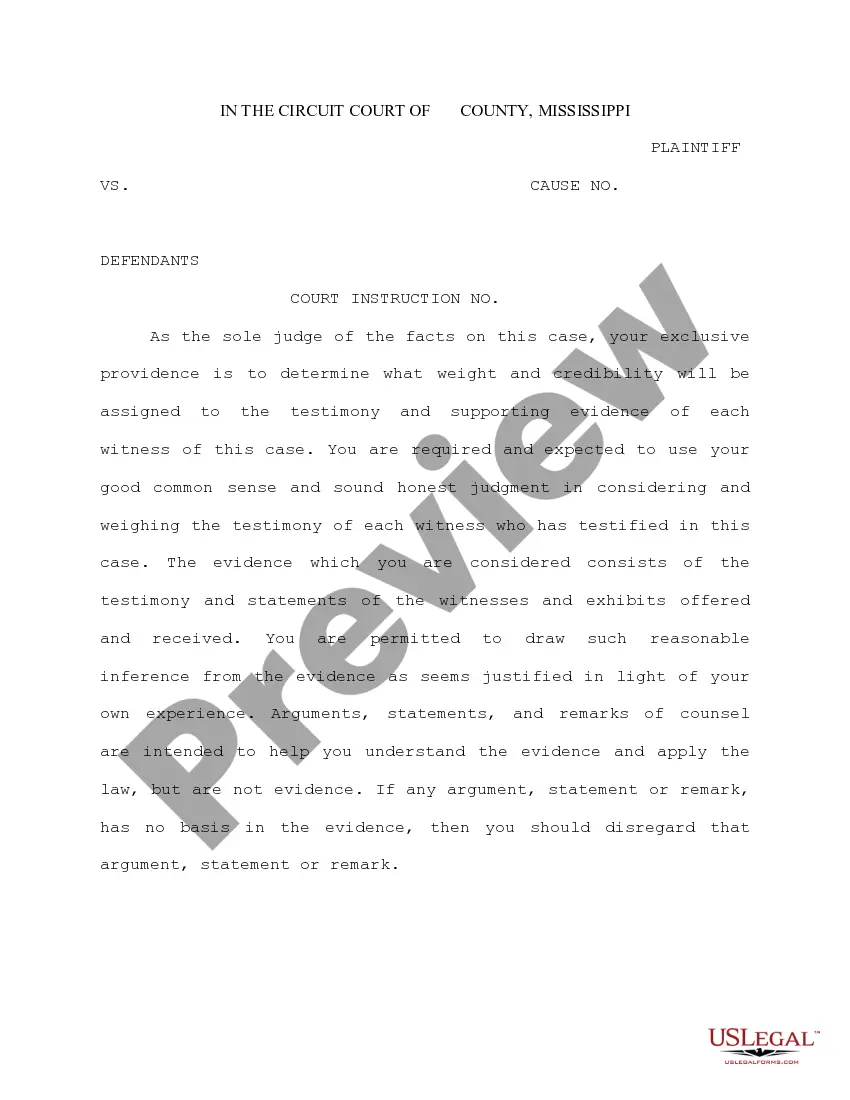
- Case title and number: Identifies the plaintiff and defendants involved in the proceedings.
- Instruction number: Provides a reference for the specific jury instruction being used.
- Definition of an expert witness: Clarifies the role of an expert witness in aiding juror understanding of technical matters.
- Juror discretion: Emphasizes that jurors are not required to accept the expert's opinion and must make their own determination.
Common use cases
This form is used in legal cases where expert testimony is presented, particularly in complex cases that require specialized knowledge. It is applicable in situations involving medical, scientific, financial, or technical issues where jurors need guidance to interpret evidence or expert opinions effectively. Use this form to ensure jurors understand the significance and limitations of the expert witness testimony offered during the trial.
Who this form is for
- Attorneys representing plaintiffs or defendants in court cases that involve expert witnesses.
- Judges who need a standardized instruction on expert witness testimony for jury instructions.
- Court officials seeking to provide clarity on how jurors should approach expert opinions.
Completing this form step by step
- Fill in the case title and number at the top of the form to identify the specific legal case.
- Insert the appropriate instruction number as designated for internal reference.
- Clearly state the definition and role of the expert witness in the instruction text.
- Reiterate the importance of juror discretion regarding adherence to expert opinions.
- Review the entire document to ensure that all sections align with current laws and standards.
Notarization requirements for this form
This form does not typically require notarization to be legally valid. However, some jurisdictions or document types may still require it. US Legal Forms provides secure online notarization powered by Notarize, available 24/7 for added convenience.
Get your form ready online
Our built-in tools help you complete, sign, share, and store your documents in one place.
Make edits, fill in missing information, and update formatting in US Legal Forms—just like you would in MS Word.
Download a copy, print it, send it by email, or mail it via USPS—whatever works best for your next step.
Sign and collect signatures with our SignNow integration. Send to multiple recipients, set reminders, and more. Go Premium to unlock E-Sign.
If this form requires notarization, complete it online through a secure video call—no need to meet a notary in person or wait for an appointment.
We protect your documents and personal data by following strict security and privacy standards.

Make edits, fill in missing information, and update formatting in US Legal Forms—just like you would in MS Word.

Download a copy, print it, send it by email, or mail it via USPS—whatever works best for your next step.

Sign and collect signatures with our SignNow integration. Send to multiple recipients, set reminders, and more. Go Premium to unlock E-Sign.

If this form requires notarization, complete it online through a secure video call—no need to meet a notary in person or wait for an appointment.

We protect your documents and personal data by following strict security and privacy standards.
Typical mistakes to avoid
- Using outdated language that may not comply with current case law.
- Failing to clearly define the expert witness role, leading to juror confusion.
- Neglecting to emphasize juror discretion regarding expert opinions.
Benefits of completing this form online
- Convenient download from US Legal Forms, allowing quick access to essential legal documents.
- Editable format enabling customization to fit specific case needs without hassle.
- Reliability ensured by licensed attorneys who draft and review the templates.
Legal use & context
- This form is enforceable in Mississippi courts, ensuring proper jury instructions regarding expert witness testimony.
- It is essential for upholding the reliability of expert opinions presented during trials.
Quick recap
- The Jury Instruction - Expert Witness form assists jurors in understanding expert testimony.
- Jurors are not required to accept expert opinions, reinforcing their independent judgment.
- This form must comply with Mississippi case law for valid legal use.
Looking for another form?
Form popularity
FAQ
1) Confidence. Confidence matters. 2) Rigor. Expert witnesses need to have scientific or specialized knowledge that is the basis for their opinion. 3) Consistency. An expert opinion is delivered primarily in three stages. 4) Attention to Detail. 5) Trustworthiness. 6) Experience. 7) Effective Communication. 8) Dedication.
An expert is somebody who has a broad and deep competence in terms of knowledge, skill and experience through practice and education in a particular field.An expert, more generally, is a person with extensive knowledge or ability based on research, experience, or occupation and in a particular area of study.
When the expert witness does the same, he or she is considered biased. If the evidence or opinions are not helpful or persuasive to the judge or jury, they are given less weight than usual. However, when the expert has become swayed by evidence, injury or the defending party, he or she may be disqualified in the case.
A person who has seen the person writing or signing. This is mentioned under section 6o of the act. When the court himself compares the document in question with any other document which is proved genuine in the court.
The witness must be competent in the subject matter. They may be qualified through knowledge, skill, practical experience, train- ing, education, or a combination of these factors. Minimally, the expert witness must know underlying methodology and procedures employed and relied upon as a basis for the opinion.
In the federal courts, judges determine the credibility of expert witnesses in a pre-trial Daubert hearing. See Daubert v. Merrell Dow Pharmaceuticals, 509 U.S. 579 (1993). In considering witnesses' qualifications, judges may consider information that is not admissible as evidence.
Per the Federal Rules of Evidence, a qualified expert witness is a witness who has the knowledge, skill, education, experience, or training in a specialized field. Some professions, like attorneys and physicians, require a license in order to formally become a member of that profession.
You can force the opposing expert, on cross-examination, to disclose the bases of her opinion, and, if it is based on inaccurate or incomplete information, then the jury should discount her opinion.
There are two types of witness immunity; immunity against criminal prosecution based on the testimony and immunity against civil liability for harm caused by the testimony. If a witness lies on the stand or in deposition, the witness may be prosecuted for the crime of perjury.