Mississippi Motion to Intervene
About this form
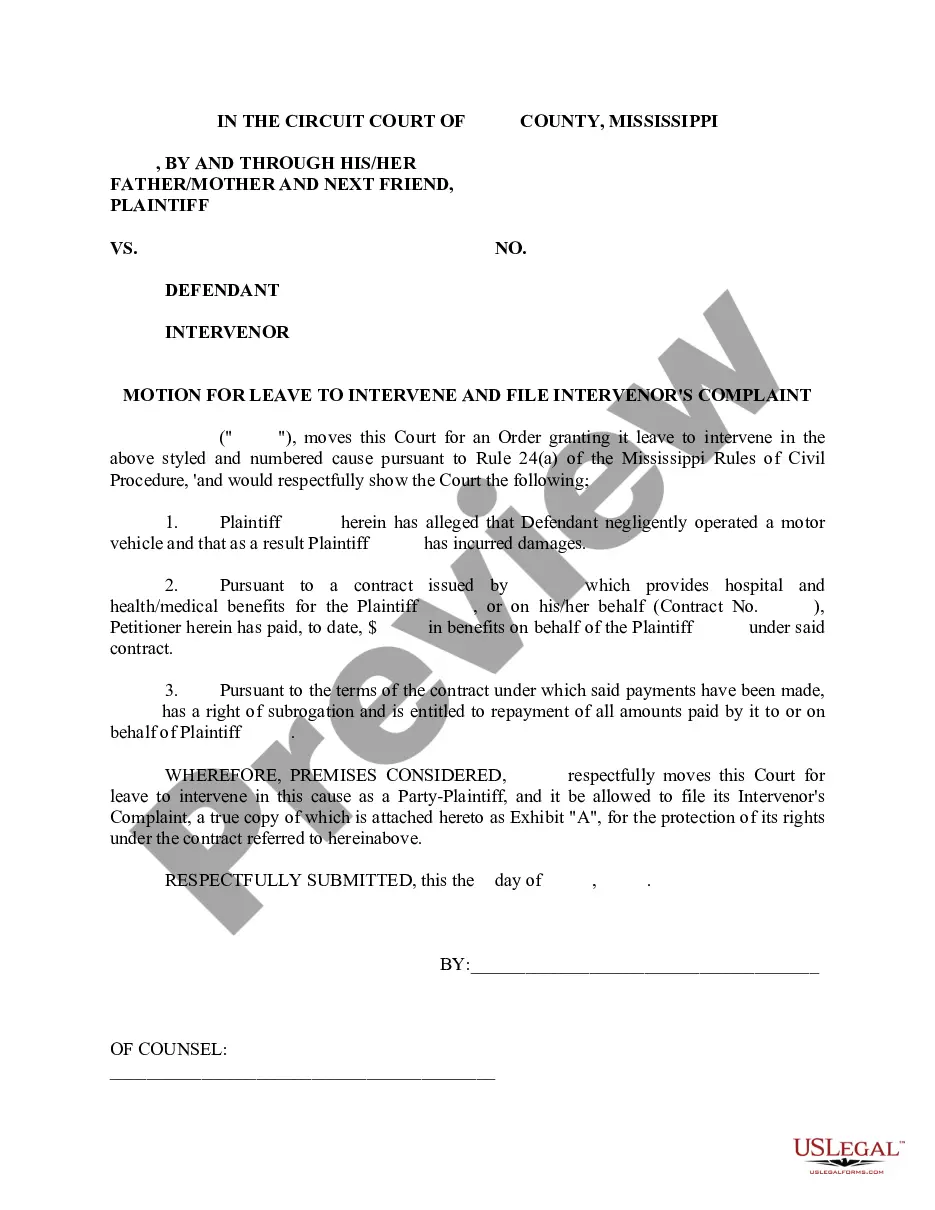
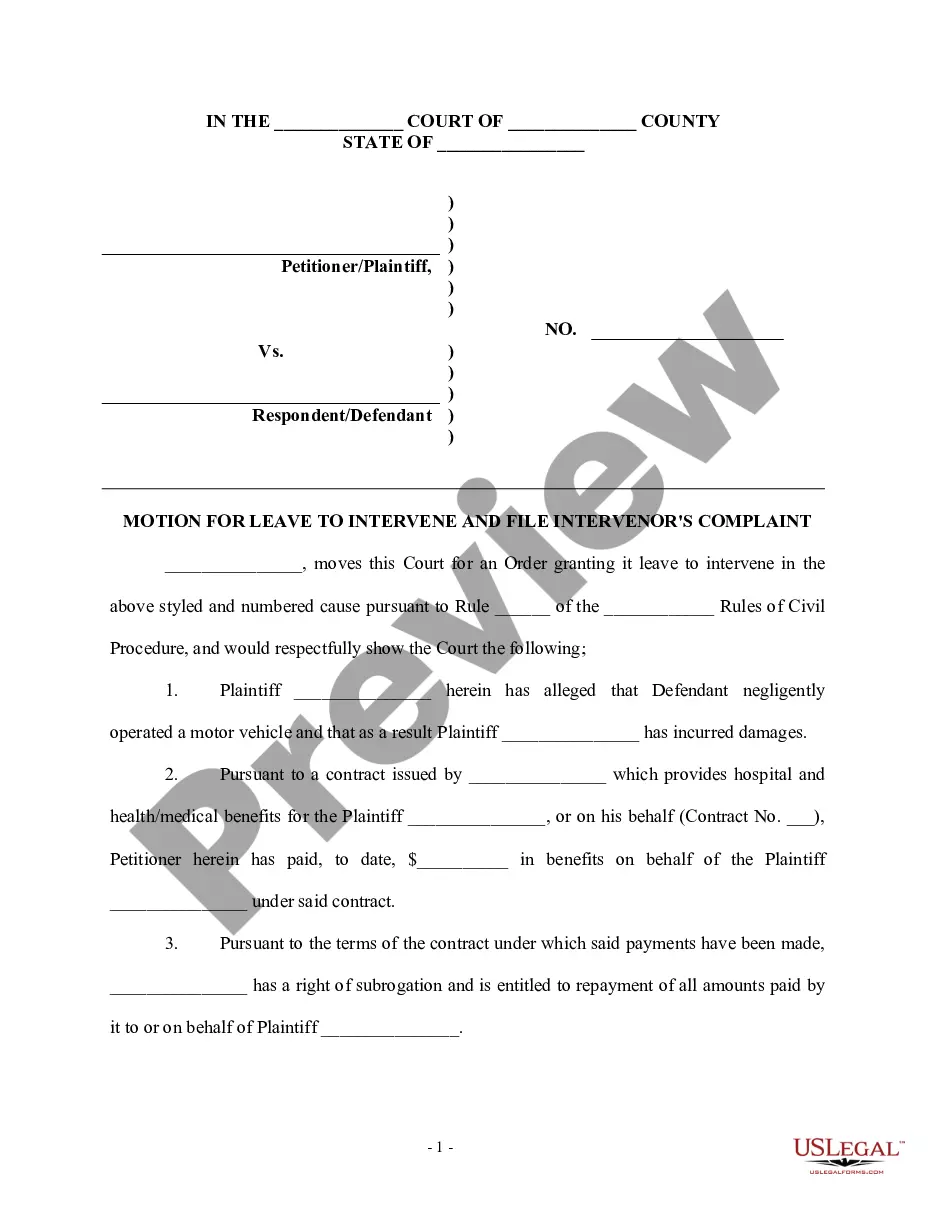
A Motion to Intervene is a formal request to the court that allows a person or entity, not originally a party to a lawsuit, to join the proceedings. This motion is critical when an individual or organization believes their interests are at stake and they wish to protect those interests by becoming involved in the case. Unlike other motions, a Motion to Intervene specifically addresses the need for a new party to participate in ongoing litigation. This form can be adapted to fit your unique situation and is available for download in standard formats.
Main sections of this form
- Title and jurisdiction information.
- Identification of existing parties involved in the lawsuit.
- Statement of interest demonstrating why intervention is necessary.
- Legal basis supporting the request for intervention.
- Signature lines for the intervening party and the attorney, if applicable.
Situations where this form applies
This form is useful in situations where a new party has a significant stake in the outcome of a case but was not included as a party in the original proceedings. For example, if a dispute involves property rights that affect a neighboring landowner, that person may file a Motion to Intervene to ensure their voice is heard. Other instances may include cases involving business interests, family law disputes, or the rights of individuals affected by a governmental action.
Who needs this form
- Individuals or entities who seek to protect their legal interests in an ongoing lawsuit.
- Attorneys representing clients who wish to intervene in a case.
- Organizations that have a vested interest in the outcome of legal proceedings.
How to complete this form
- Provide the title and jurisdiction details at the top of the form.
- Identify the current parties involved in the lawsuit clearly.
- State your interest in the case and explain why you should be allowed to intervene.
- Cite the legal basis under which you are making the motion.
- Add signatures and dates where required.
Does this document require notarization?
In most cases, this form does not require notarization. However, some jurisdictions or signing circumstances might. US Legal Forms offers online notarization powered by Notarize, accessible 24/7 for a quick, remote process.
Get your form ready online
Our built-in tools help you complete, sign, share, and store your documents in one place.
Make edits, fill in missing information, and update formatting in US Legal Forms—just like you would in MS Word.
Download a copy, print it, send it by email, or mail it via USPS—whatever works best for your next step.
Sign and collect signatures with our SignNow integration. Send to multiple recipients, set reminders, and more. Go Premium to unlock E-Sign.
If this form requires notarization, complete it online through a secure video call—no need to meet a notary in person or wait for an appointment.
We protect your documents and personal data by following strict security and privacy standards.

Make edits, fill in missing information, and update formatting in US Legal Forms—just like you would in MS Word.

Download a copy, print it, send it by email, or mail it via USPS—whatever works best for your next step.

Sign and collect signatures with our SignNow integration. Send to multiple recipients, set reminders, and more. Go Premium to unlock E-Sign.

If this form requires notarization, complete it online through a secure video call—no need to meet a notary in person or wait for an appointment.

We protect your documents and personal data by following strict security and privacy standards.
Avoid these common issues
- Failing to clearly define the interest in the case.
- Not providing adequate legal justification for the intervention.
- Missing signatures or dates, which can render the form invalid.
Advantages of online completion
- Convenience of downloading and completing the form at your own pace.
- Editable formats that allow for easy customization to fit your specific circumstances.
- Reliable access to documents drafted by licensed attorneys, ensuring legal validity.
Legal use & context
- A Motion to Intervene enables affected parties to actively participate in legal proceedings.
- This motion must be filed correctly to prevent dismissal.
- Adhering to court timelines and local rules is essential for the motion's success.
What to keep in mind
- A Motion to Intervene allows third parties to join a case.
- This document must specify a legitimate interest in the litigation.
- Ensure compliance with local rules for successful filing.
Looking for another form?

Form popularity
FAQ
A motion for intervention, in the context of family law, is a petition by an interested party to testify to the best interests of a child when the existing parties cannot adequately protect a child's best interests.
The entry into a lawsuit by a third party into an existing civil case who was not named as an original party but has a personal stake in the outcome. The nonparty who intervenes in a case is called an intervenor. The intervener joins the suit by filing a motion to intervene.
A : the act of interfering with the outcome or course especially of a condition or process (as to prevent harm or improve functioning) educational intervention surgical interventions Some women fear a specific intervention, such as being induced, having an emergency cesarean section or going through a forceps delivery.
Someone not originally a party to judicial review proceedings who by order of the court is given status to participate in the proceedings either as a full party or with more limited rights.
In law, intervention is a procedure to allow a nonparty, called intervenor (also spelled intervener) to join ongoing litigation, either as a matter of right or at the discretion of the court, without the permission of the original litigants.
Intervention in legal cases is most common in child custody litigation. If you want to intervene in a legal case whether with the plaintiff, with the defendant, or on your own with independent claims against either party you must first file a motion and ask the judge's permission.
A motion to intervene, in a divorce for instance, is a request by someone other than the wife or the husband to come into the case because that third party says they have an interest of some sort in the case.