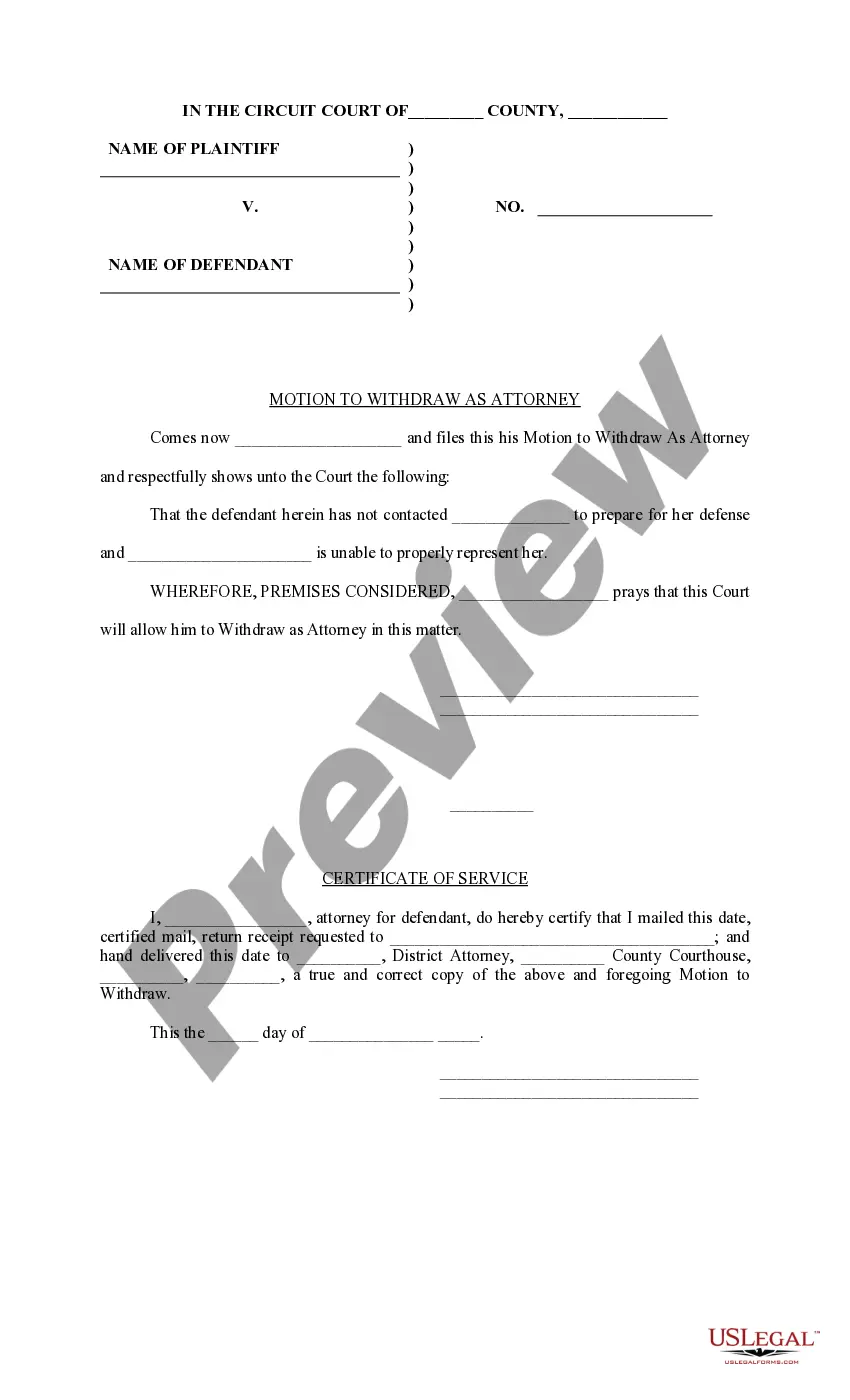
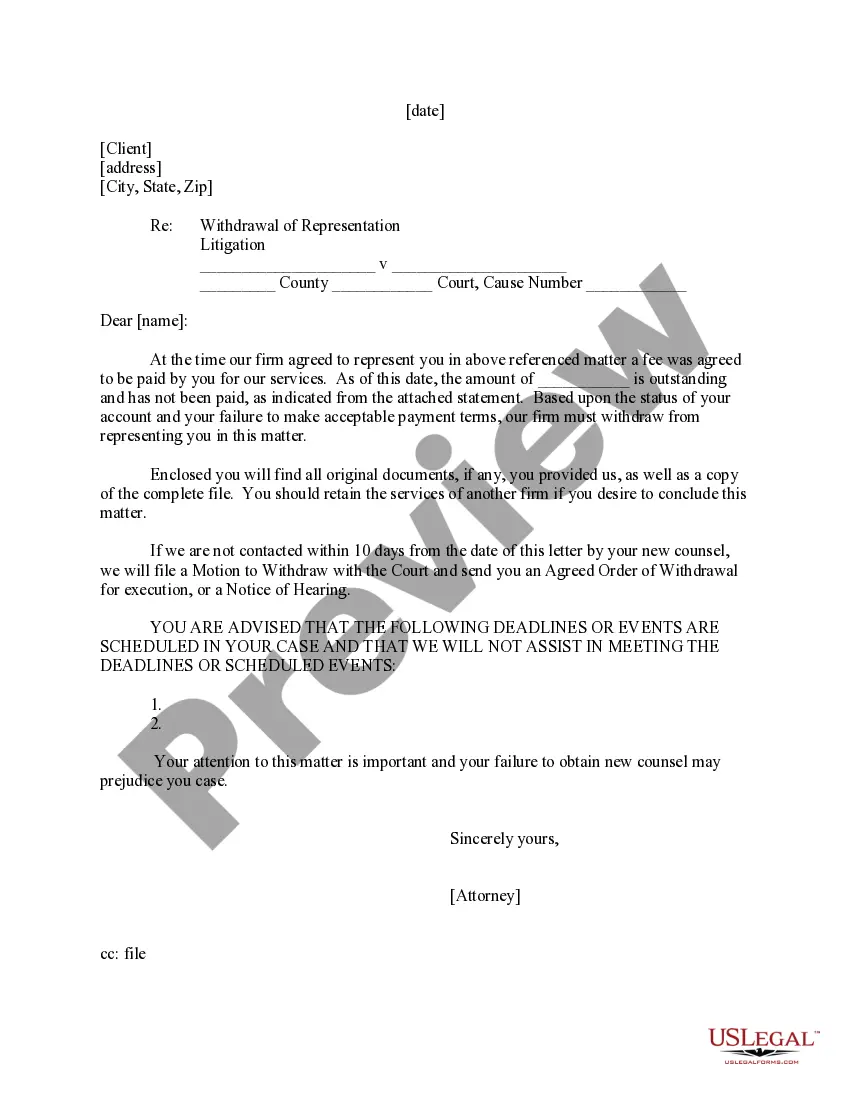
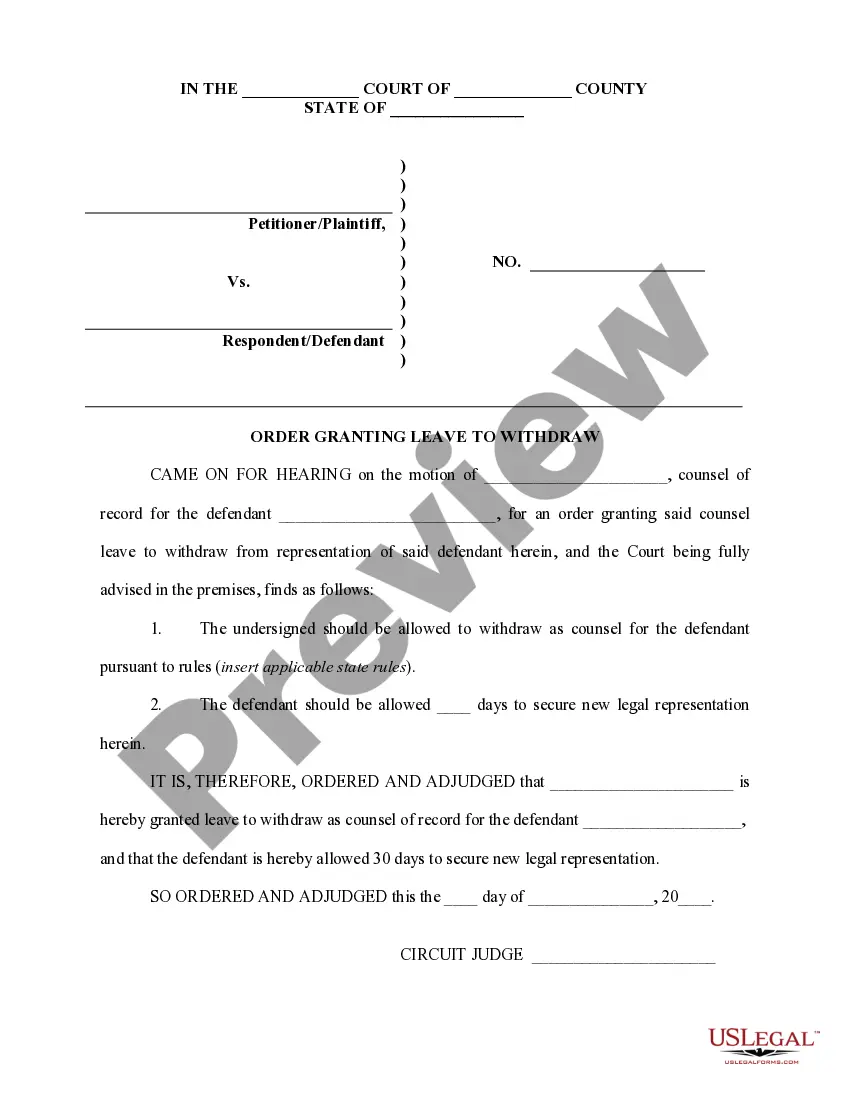
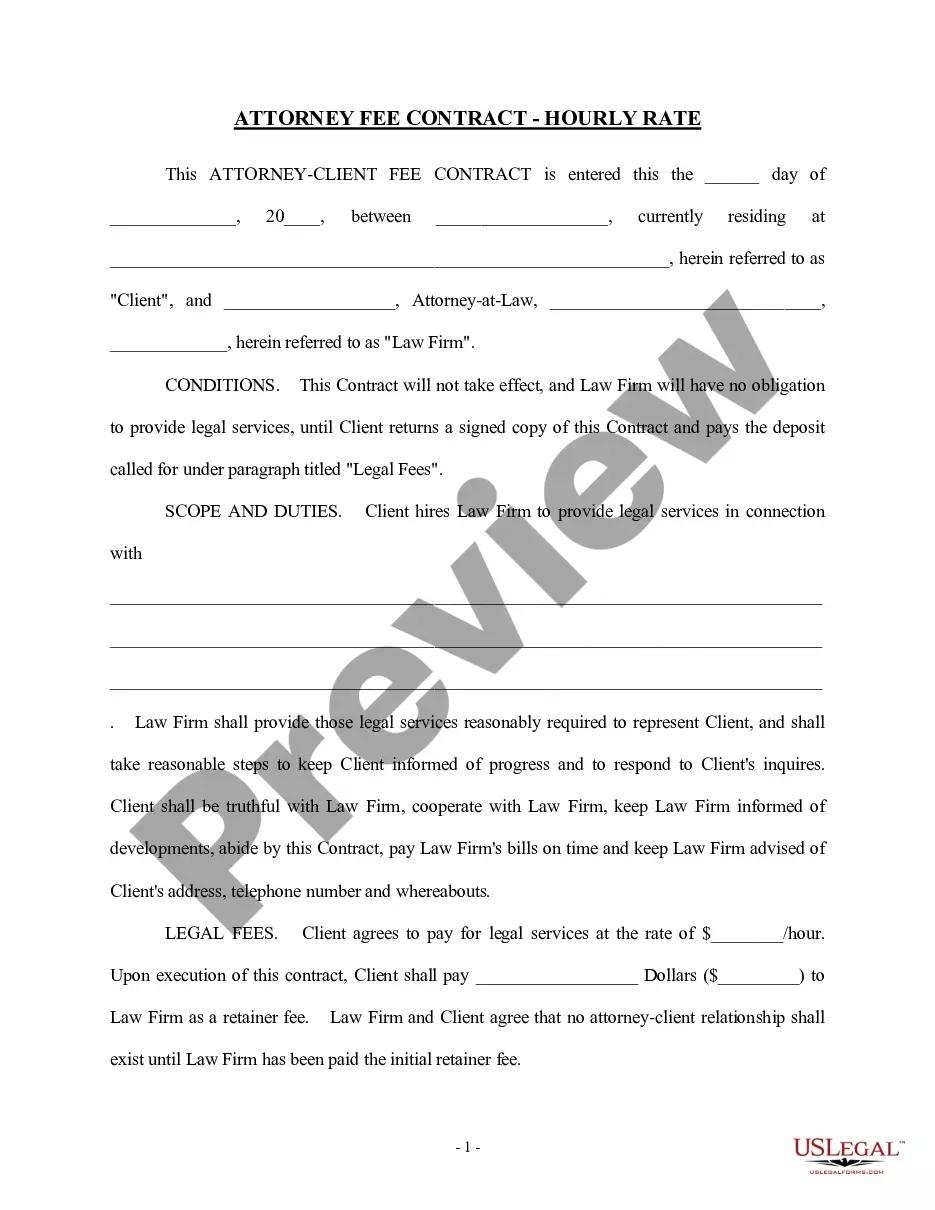
Mississippi Motion to Withdraw as Attorney
Description
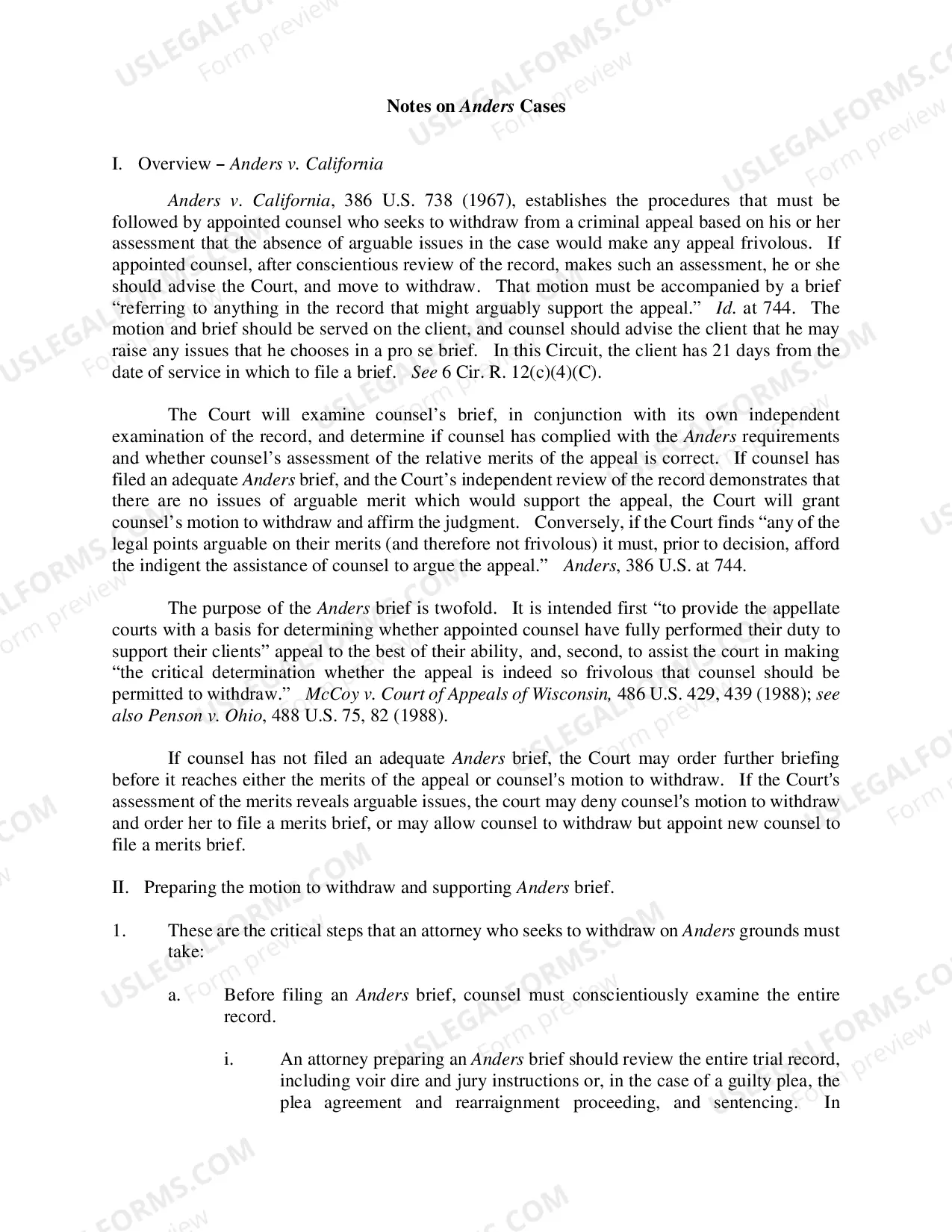
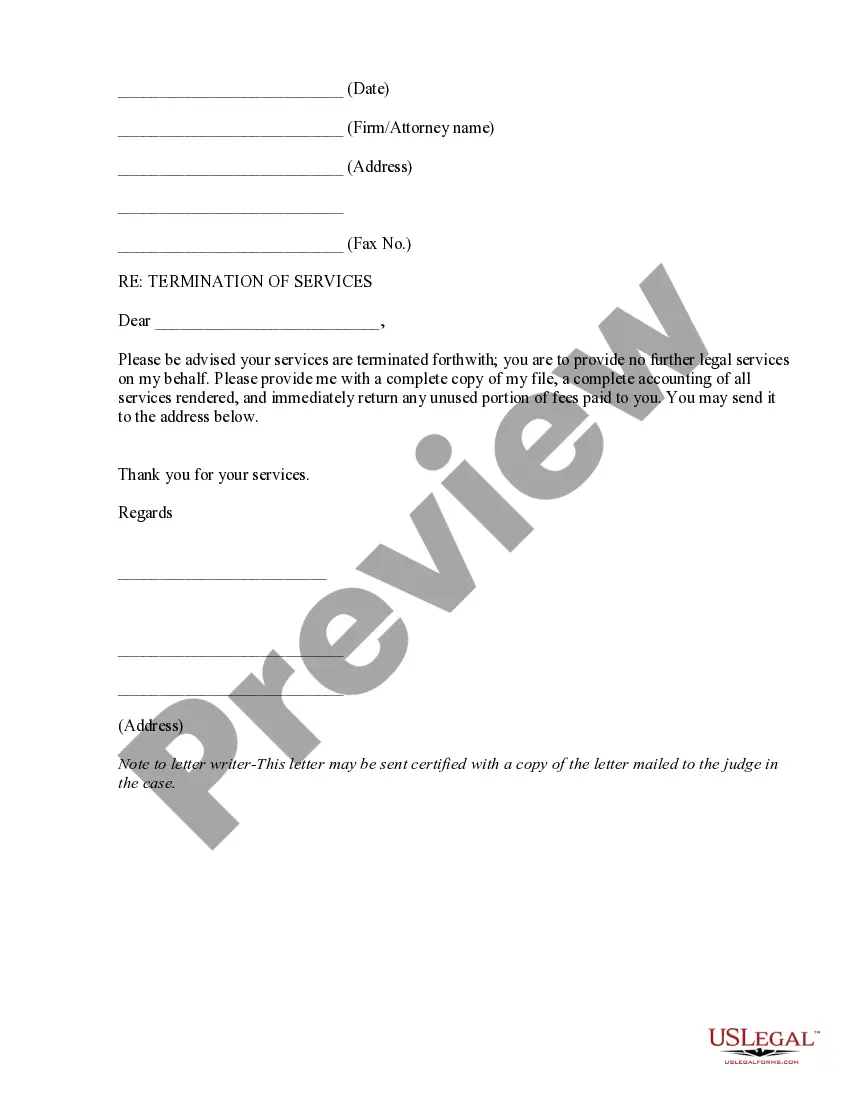
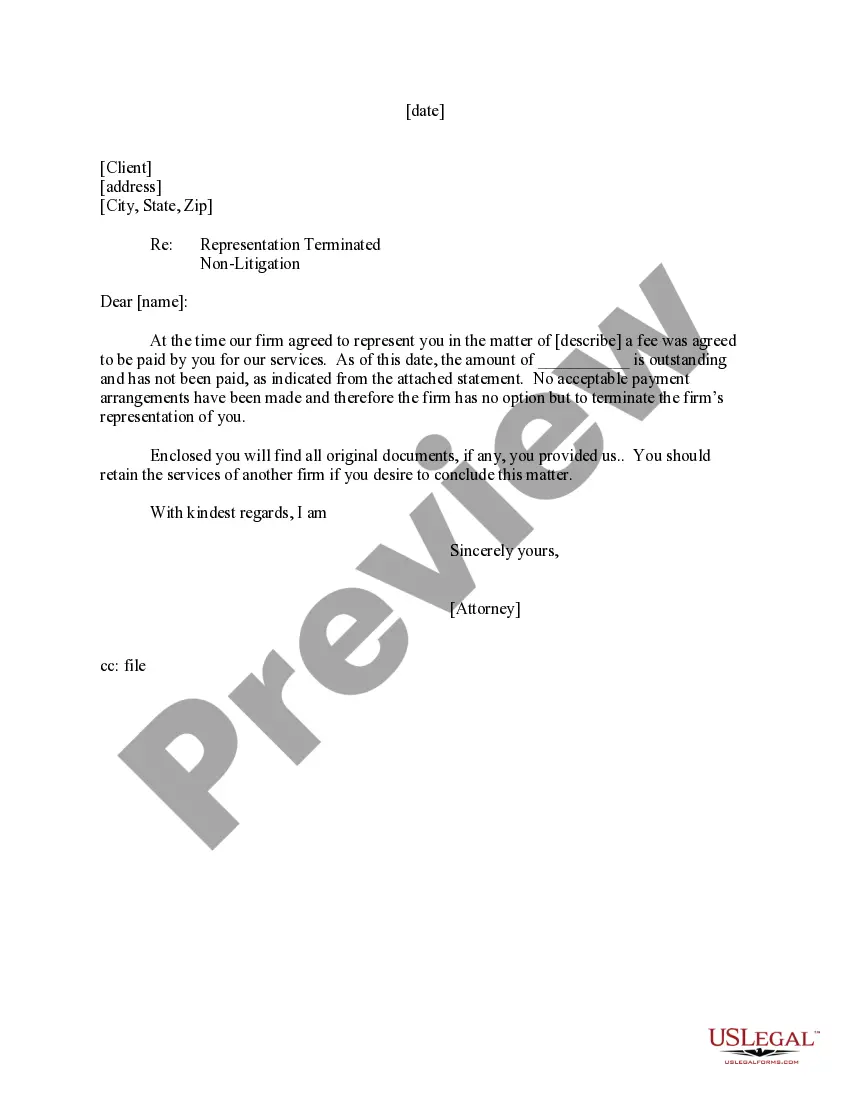
Get your form ready online
Our built-in tools help you complete, sign, share, and store your documents in one place.
Make edits, fill in missing information, and update formatting in US Legal Forms—just like you would in MS Word.
Download a copy, print it, send it by email, or mail it via USPS—whatever works best for your next step.
Sign and collect signatures with our SignNow integration. Send to multiple recipients, set reminders, and more. Go Premium to unlock E-Sign.
If this form requires notarization, complete it online through a secure video call—no need to meet a notary in person or wait for an appointment.
We protect your documents and personal data by following strict security and privacy standards.

Make edits, fill in missing information, and update formatting in US Legal Forms—just like you would in MS Word.

Download a copy, print it, send it by email, or mail it via USPS—whatever works best for your next step.

Sign and collect signatures with our SignNow integration. Send to multiple recipients, set reminders, and more. Go Premium to unlock E-Sign.

If this form requires notarization, complete it online through a secure video call—no need to meet a notary in person or wait for an appointment.

We protect your documents and personal data by following strict security and privacy standards.
Looking for another form?
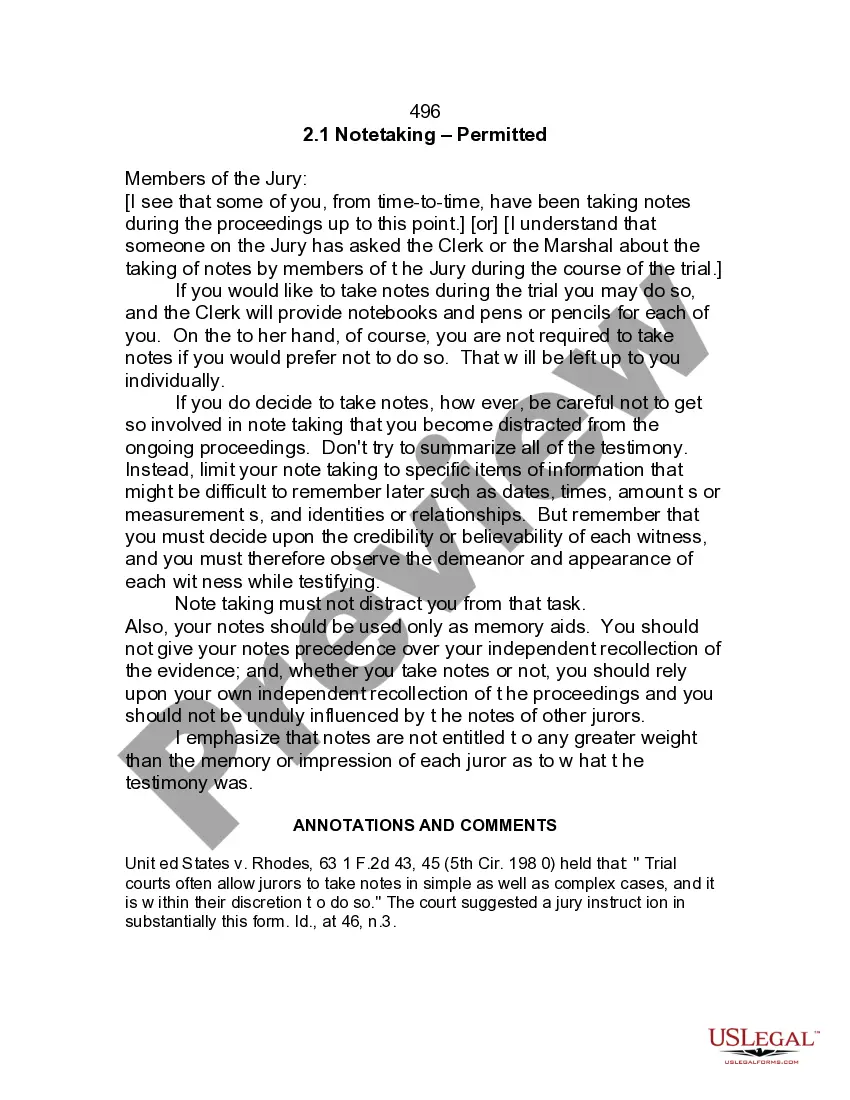
How to fill out Motion To Withdraw As Attorney?
Are you in a situation where you require documents for possibly business or particular objectives almost every day? There are numerous legitimate document templates available online, but finding ones you can trust isn't simple. US Legal Forms offers thousands of form templates, including the Mississippi Motion to Withdraw as Attorney, that are designed to meet federal and state requirements.
If you are already familiar with the US Legal Forms website and have an account, simply Log In. Afterwards, you can download the Mississippi Motion to Withdraw as Attorney template.
If you do not possess an account and wish to begin using US Legal Forms, follow these steps: Get the form you need and ensure it is for the correct city/state. Use the Review button to evaluate the form. Check the summary to ensure you have selected the correct template. If the form isn't what you're seeking, utilize the Search field to find the form that fits your needs and specifications. If you locate the appropriate form, click Acquire now. Choose the pricing plan you desire, provide the required information to create your account, and complete the purchase with your PayPal or credit card. Select a convenient file format and download your copy.
Avoid altering or removing any HTML tags. Only synonymize plain text outside of the HTML tags.
- Find all the document templates you have purchased in the My documents menu.
- You can obtain a duplicate of Mississippi Motion to Withdraw as Attorney at any time if needed.
- Click the desired form to download or print the document template.
- Utilize US Legal Forms, the most extensive collection of legal forms, to save time and avoid errors.
- The service provides expertly crafted legal document templates that can be used for various purposes.
- Create an account on US Legal Forms and start making your life a bit easier.
Form popularity
FAQ
Rule 4(h) provides that if service is not made upon a defendant within 120 days after the filing of the complaint, the claims against that defendant will be dismissed without prejudice absent good cause for the failure to timely serve the defendant.
5.5. A lawyer shall not: (a) practice law in a jurisdiction where doing so violates the regulation of the legal profession in that jurisdiction; or (b) assist a person who is not a member of the bar in the performance of activity that constitutes the unauthorized practice of law.
Rule 4.2 of the New York Rules of Professional Conduct, also known as the ?No Contact Rule,? is frequently implicated, yet not always fully understood. At a high level, the Rule prohibits lawyers from speaking directly with a party the lawyer knows to be represented by counsel about the subject of the representation.
Model Rule 1.16(b) and similar rules in many states impose additional limits on a lawyer's ability to withdraw, permitting withdrawal when: the client persists in a criminal or fraudulent course of action; the client has used the lawyer's services to perpetrate a crime or fraud;
In representing a client, a lawyer shall not communicate about the subject of the representation with a person the lawyer knows to be represented by another lawyer in the matter, unless the lawyer has the consent of the other lawyer or is authorized to do so by law or a court order.
Rule 1.7 - Conflict of Interest: General Rule (a) A lawyer shall not represent a client if the representation of that client will be directly adverse to another client, unless the lawyer reasonably believes: (1) the representation will not adversely affect the relationship with the other client; and (2) each client has ...
A lawyer shall not: (a) A lawyer shall not practice law in a jurisdiction where doing so violates the regulation of the legal profession in that jurisdiction; or (b) assist a person who is not a member of the bar in the performance of activity that constitutes the unauthorized practice of law.
For example, a party who is represented by counsel may not communicate directly to the Judge or opposing counsel. The party's attorney is responsible for communications with opposing counsel and the Judge, to avoid potential problems. Attorneys can also directly communicate with each other on behalf of their clients.