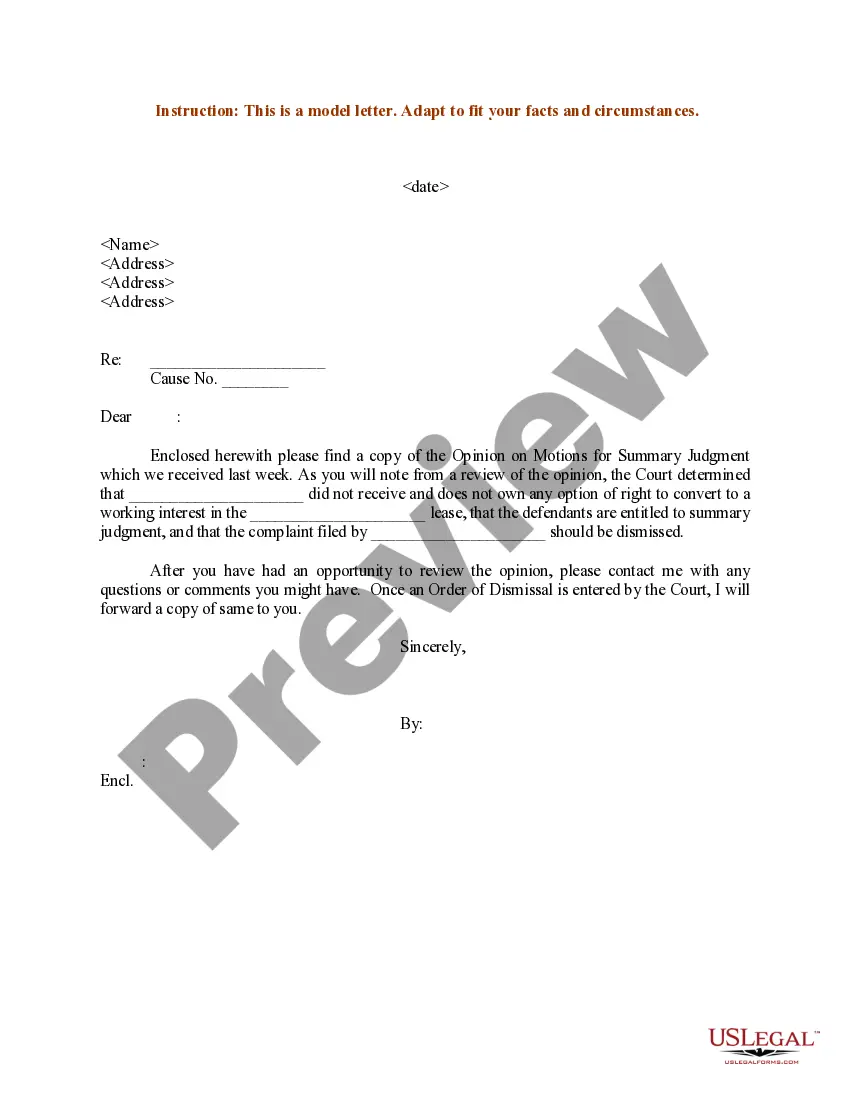
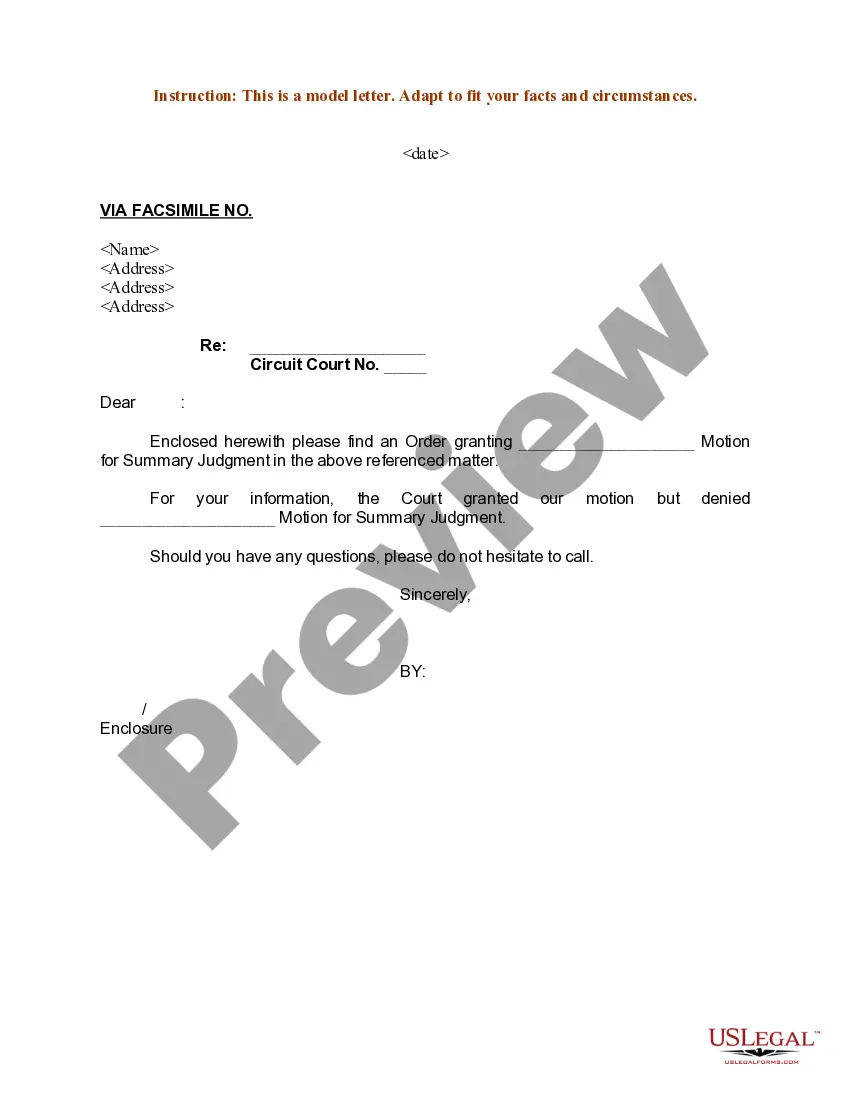
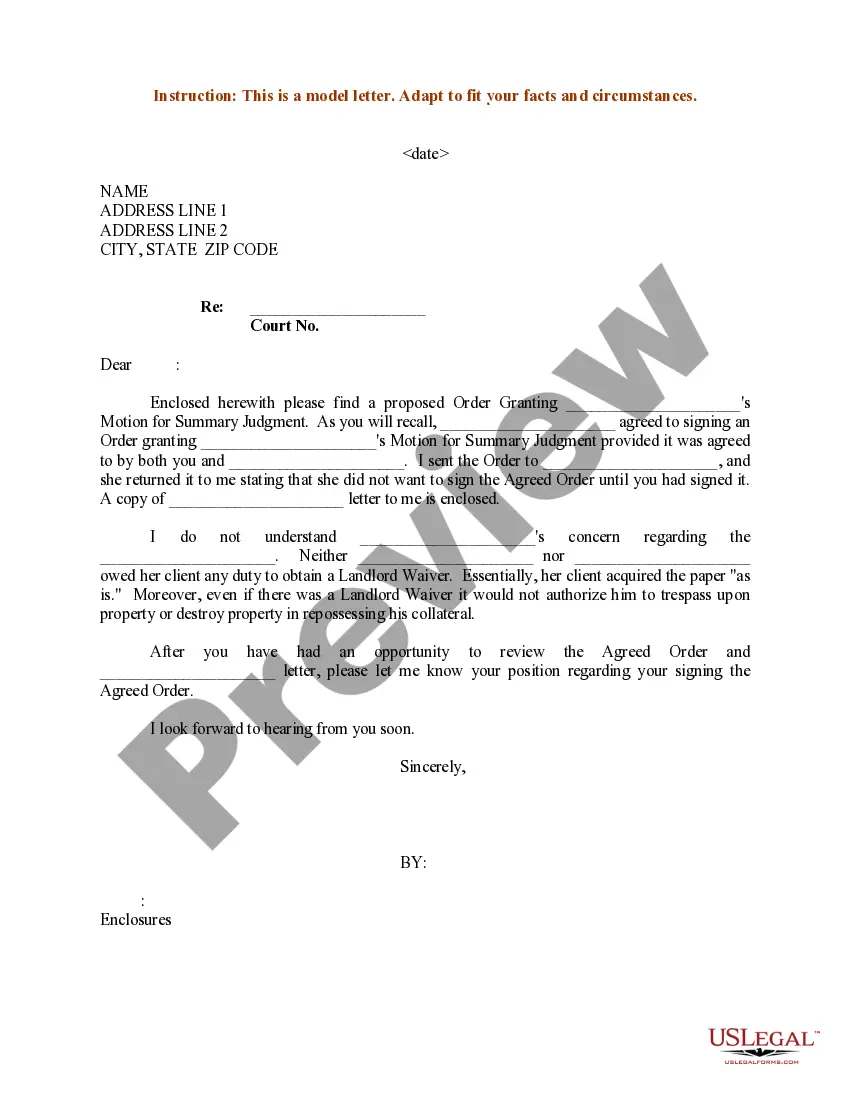
Mississippi Sample Letter for Opinions on Motions for Summary Judgment
Description
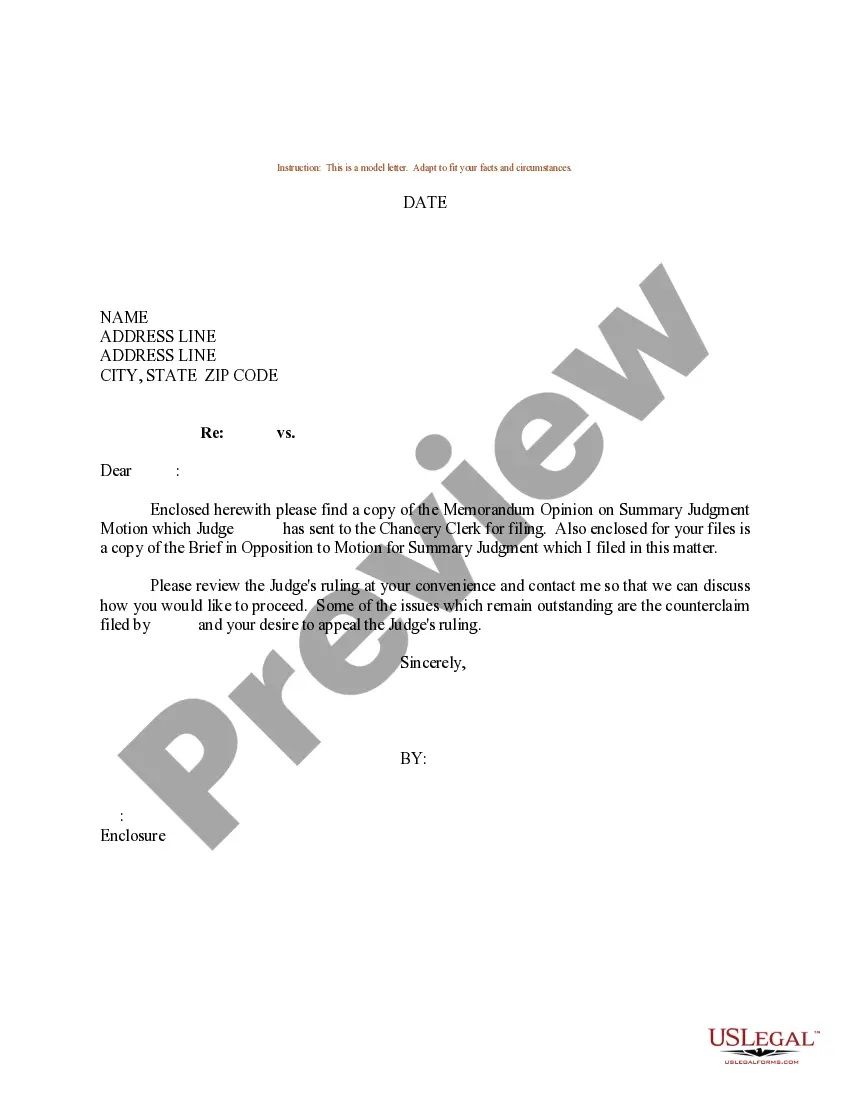
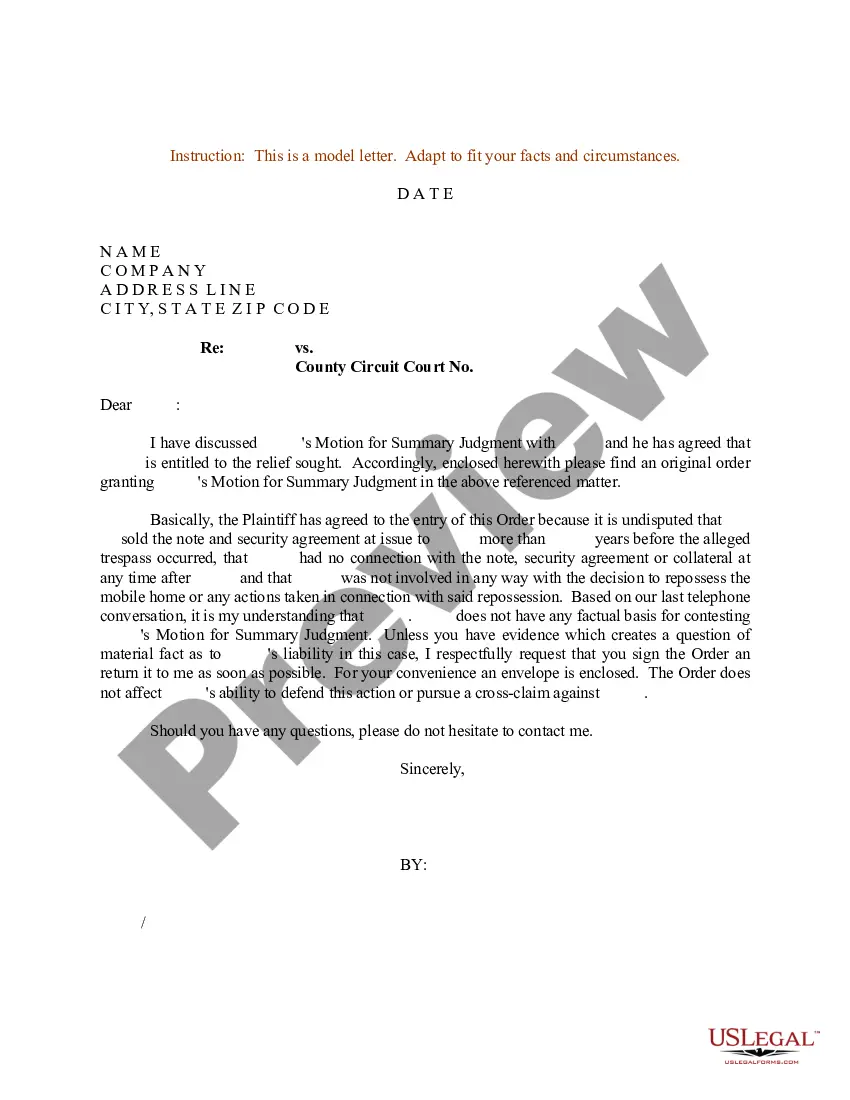
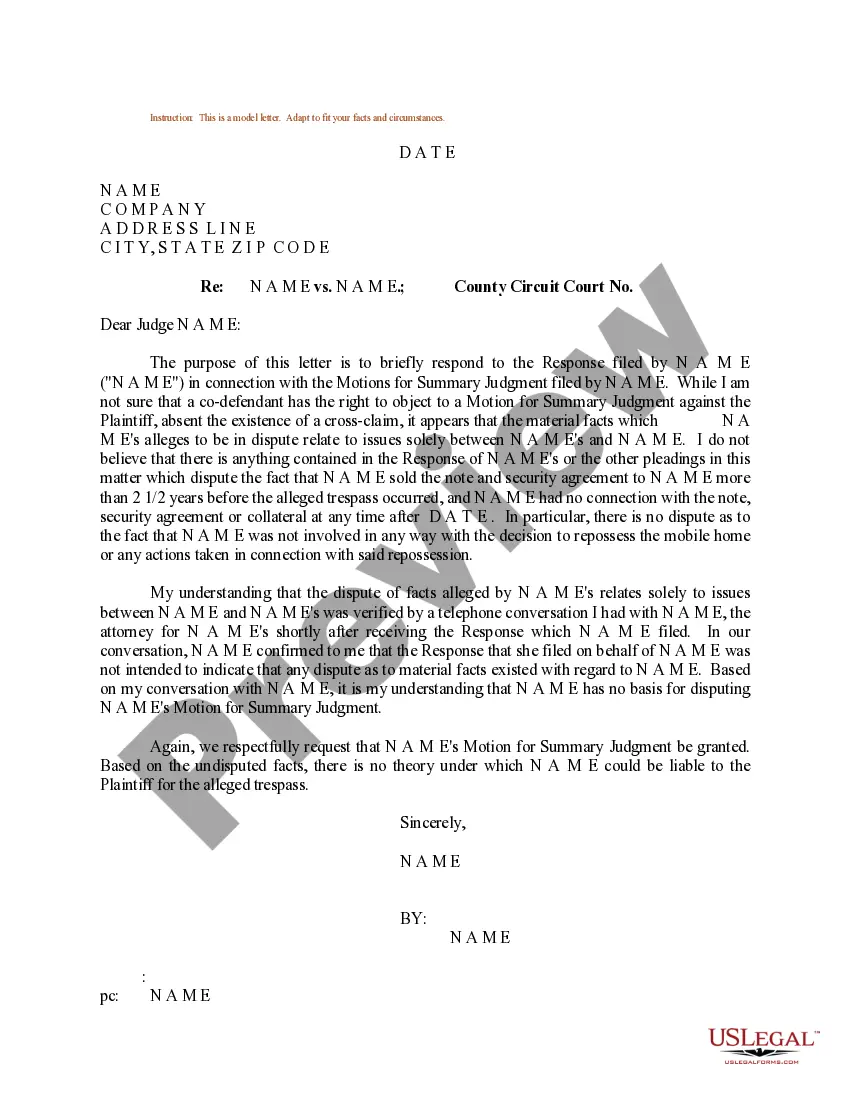
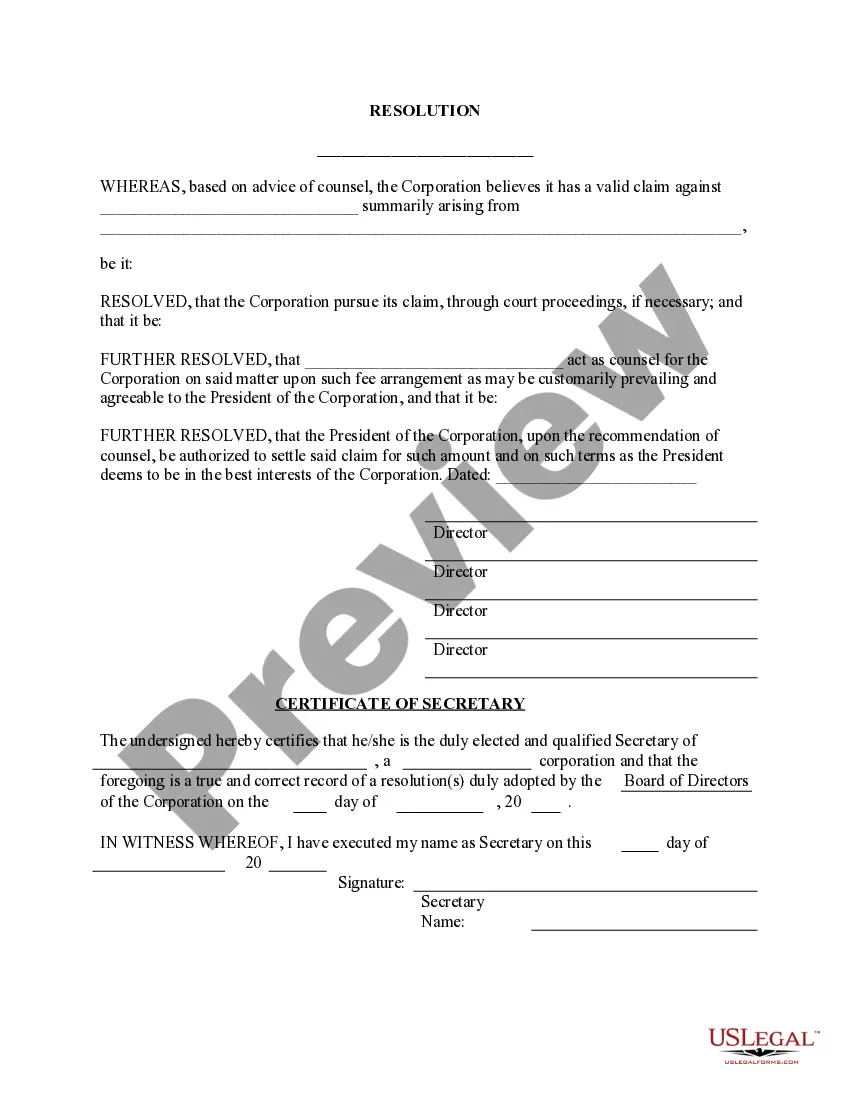
How to fill out Sample Letter For Opinions On Motions For Summary Judgment?
Finding the appropriate valid document template can be challenging. Naturally, there is an assortment of templates accessible online, but how can you acquire the valid form you require? Make use of the US Legal Forms website. This service offers a vast selection of templates, including the Mississippi Sample Letter for Opinions on Motions for Summary Judgment, which can be utilized for both business and personal purposes. All the forms are verified by experts and comply with state and federal regulations.
If you are already registered, Log In to your account and click the Download button to retrieve the Mississippi Sample Letter for Opinions on Motions for Summary Judgment. Use your account to review the legal forms you have purchased previously. Visit the My documents section of your account and obtain another copy of the document you need.
If you are a new user of US Legal Forms, here are some simple steps for you to follow: First, ensure that you have selected the correct form for your city/region. You can preview the form using the Review button and examine the form details to confirm it is the right one for you. If the form does not meet your requirements, use the Search field to find the appropriate form. Once you are certain the form is correct, click the Buy now button to acquire the form. Choose the pricing plan you want and enter the necessary information. Create your account and pay for the transaction using your PayPal account or credit card. Select the file format and download the legal document template to your device. Complete, edit, print, and sign the obtained Mississippi Sample Letter for Opinions on Motions for Summary Judgment.
Make sure to follow these guidelines to ensure you get the documents correctly and efficiently.
- US Legal Forms is the largest collection of legal forms where you can find numerous document templates.
- Utilize the service to download professionally crafted documents that comply with state regulations.
- Access a wide range of templates for various legal needs.
- All forms are vetted for accuracy and legality.
- Receive the support you need for both personal and business documentation.
- Enjoy an easy and straightforward process for obtaining legal documents.
Form popularity
FAQ
The survival trick is the early outlining of the claims and defenses, while actually drafting on Day 1 the jury instruction setting forth the required elements for the case. Toward this end, you should design your discovery to obtain the necessary evidence to prevail on the anticipated summary judgment motion.
A summary judgment is considered very difficult to win, and lawyers mostly use it as a scare tactic. However, it can be extremely beneficial. If the party moving the summary judgment wins, the case is thrown out. The most important thing in winning summary judgments is hiring competent lawyers.
The chance of success in these cases is less than 10% [1]. Another study found that summary judgment is mostly granted in Title VII cases, for example, cases involving equal pay or employment discrimination [2]. When it comes to federal cases, summary judgments are filed in 17% of total cases.
Therefore, to win on summary judgment you have to convince a judge that it is a good use of his or her very limited time and resources to write the decision. This means that your written material has to demonstrate that the law and facts support summary judgment, and contain no misstatements of law or fact.
Rule 56 of the Federal Rules of Civil Procedure governs summary judgment for federal courts. Under Rule 56, in order to succeed in a motion for summary judgment, a movant must show 1) that there is no genuine dispute as to any material fact, and 2) that the movant is entitled to judgment as a matter of law.
Stated differently, to successfully defend against summary judgment the non-moving party (you) should seek to demonstrate that indeed there are material facts in dispute. Alternatively, the non-moving party (you) can argue that the undisputed facts support a judgment as a matter of law in your favor.
If you are opposing a motion for summary judgment, your affidavit or affirmation should attach and refer to any relevant exhibits. You may also attach affidavits or affirmations from other people who have personal knowledge of relevant information regarding the motion.