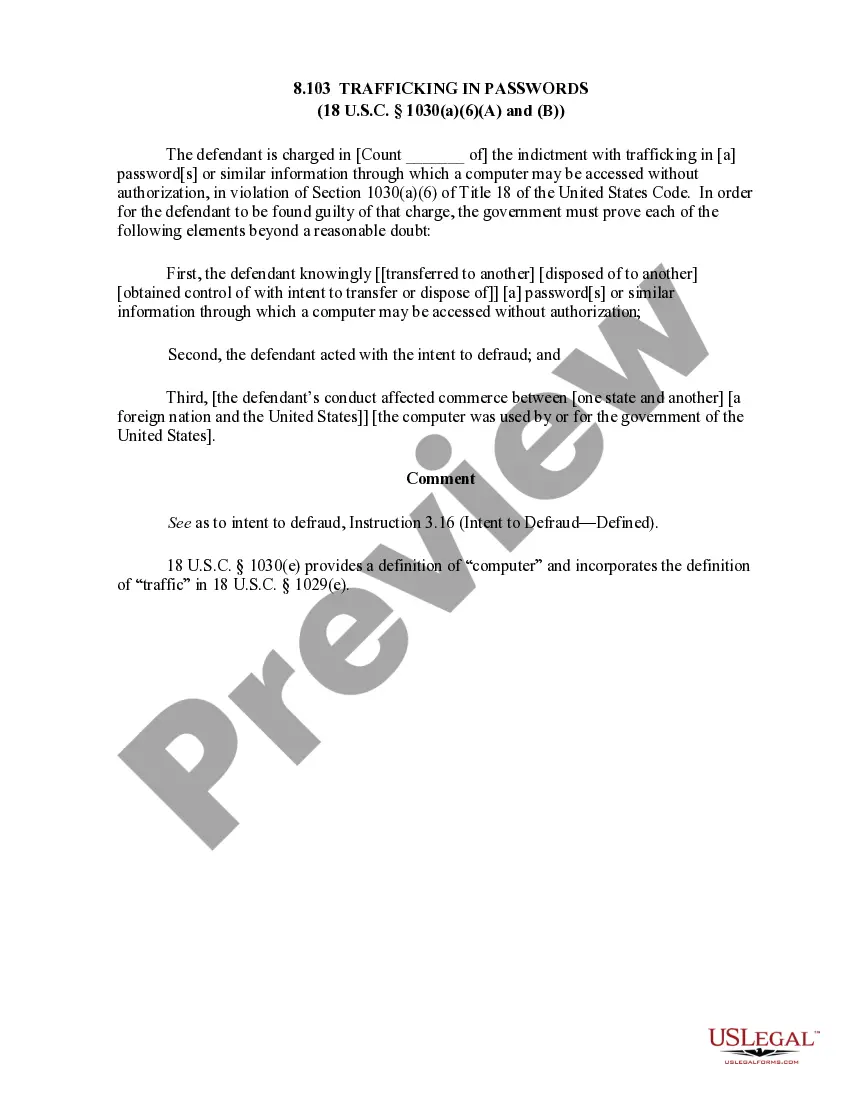
Federal Pro Se [Non-prisoner] Complaint Form:
** THIS IS NOT A FEDERAL PRO SE COMPLAINT FORM *****
Mississippi Federal Pro Se - Non-Prisoner - Complaint Form
Category:
State:
Multi-State
Control #:
US-01991
Format:
Word;
Rich Text
Instant download
Description
Free preview
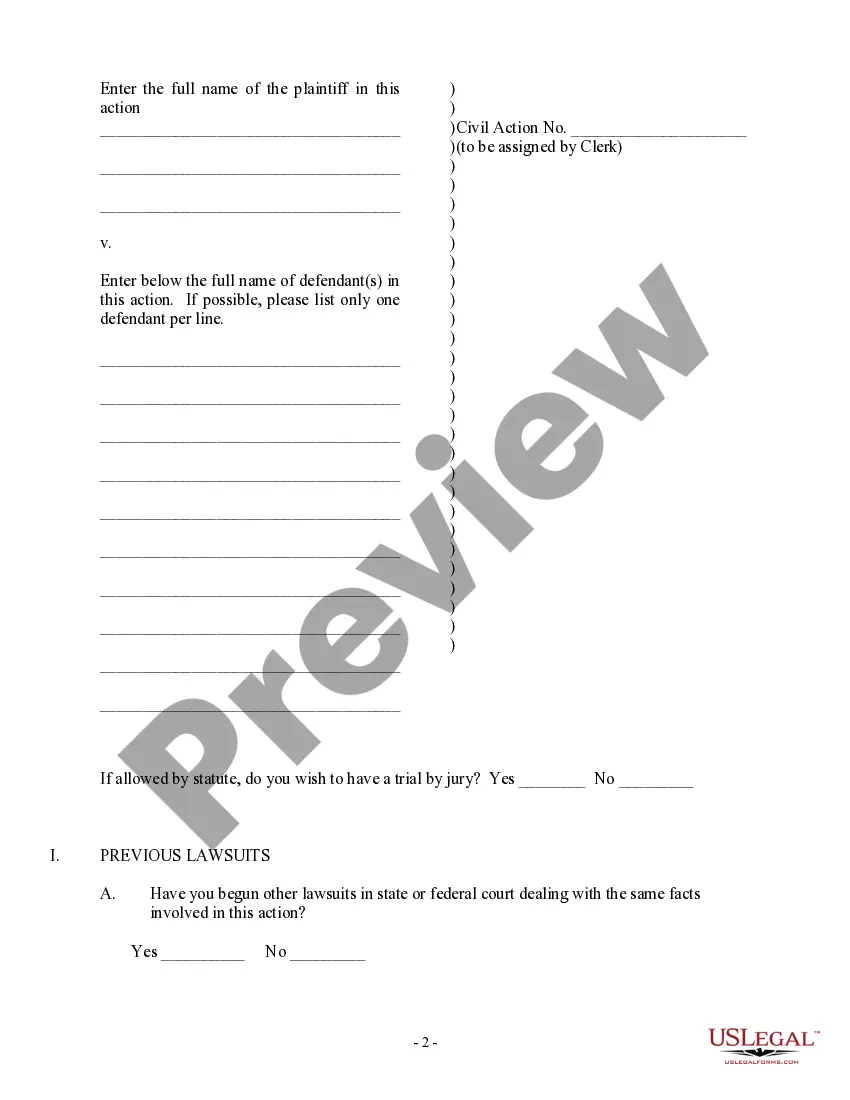
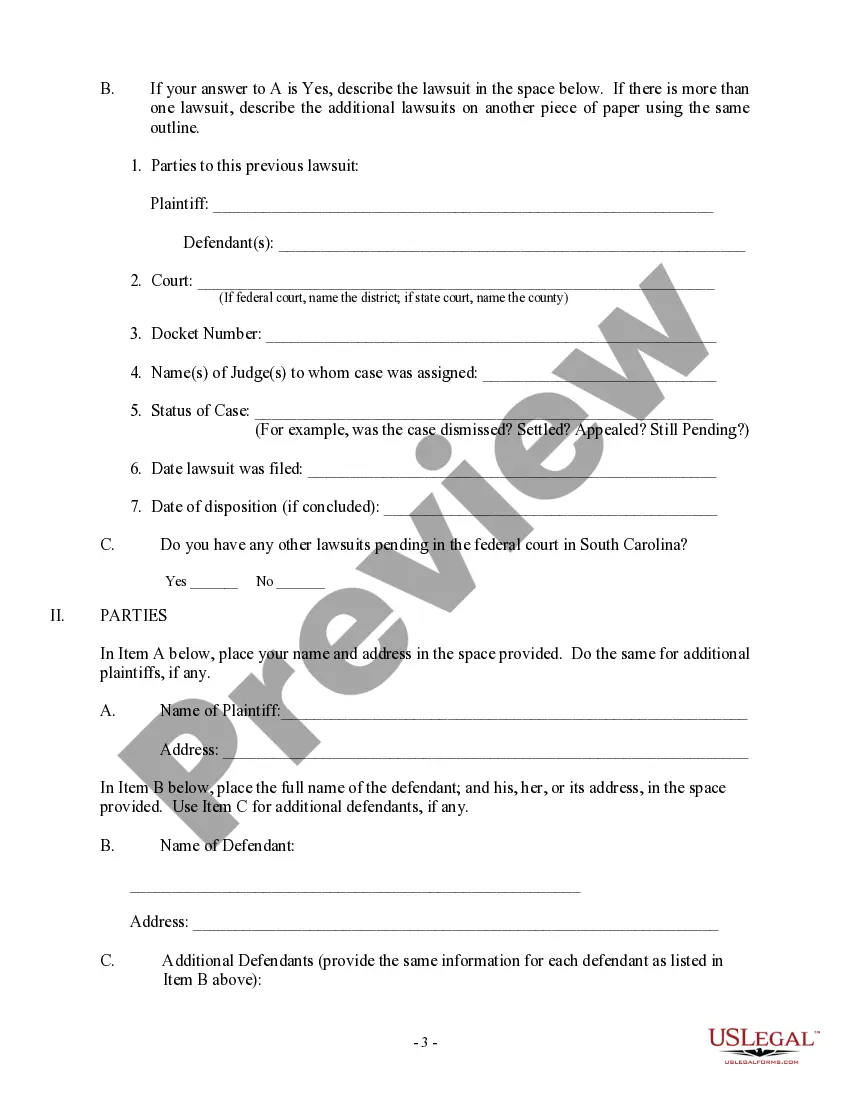
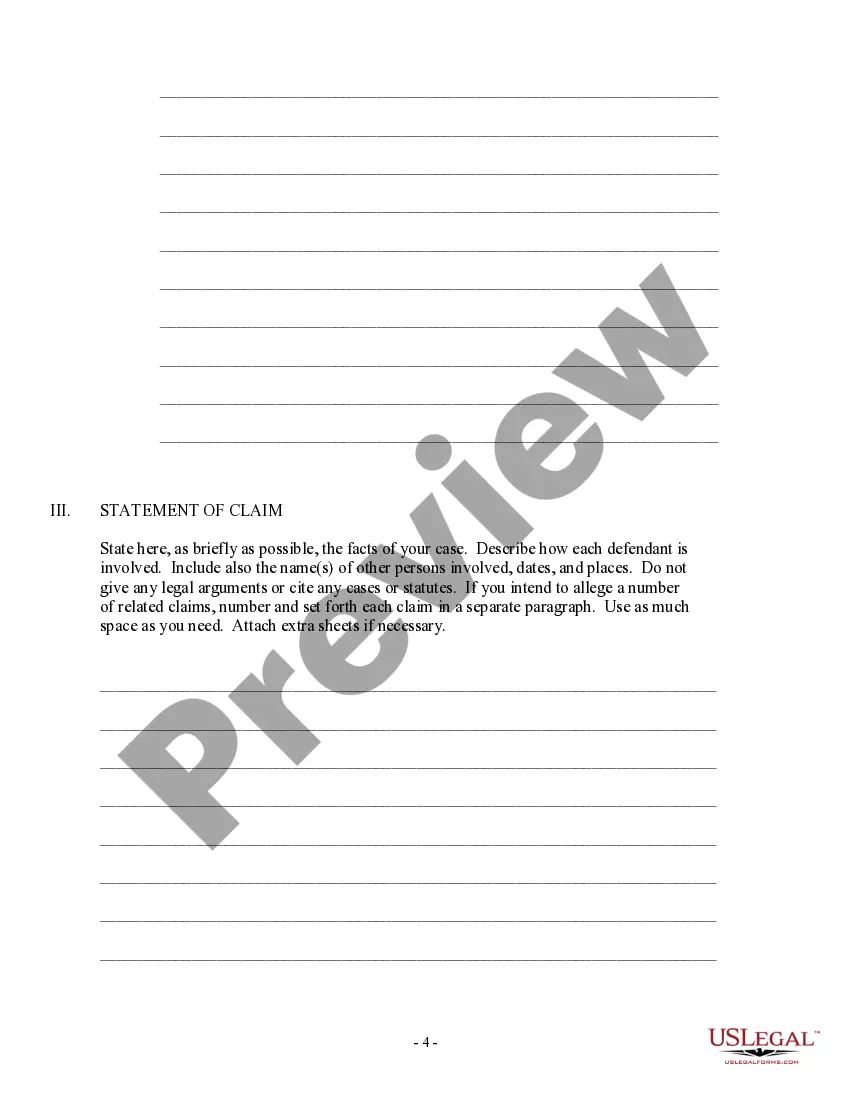
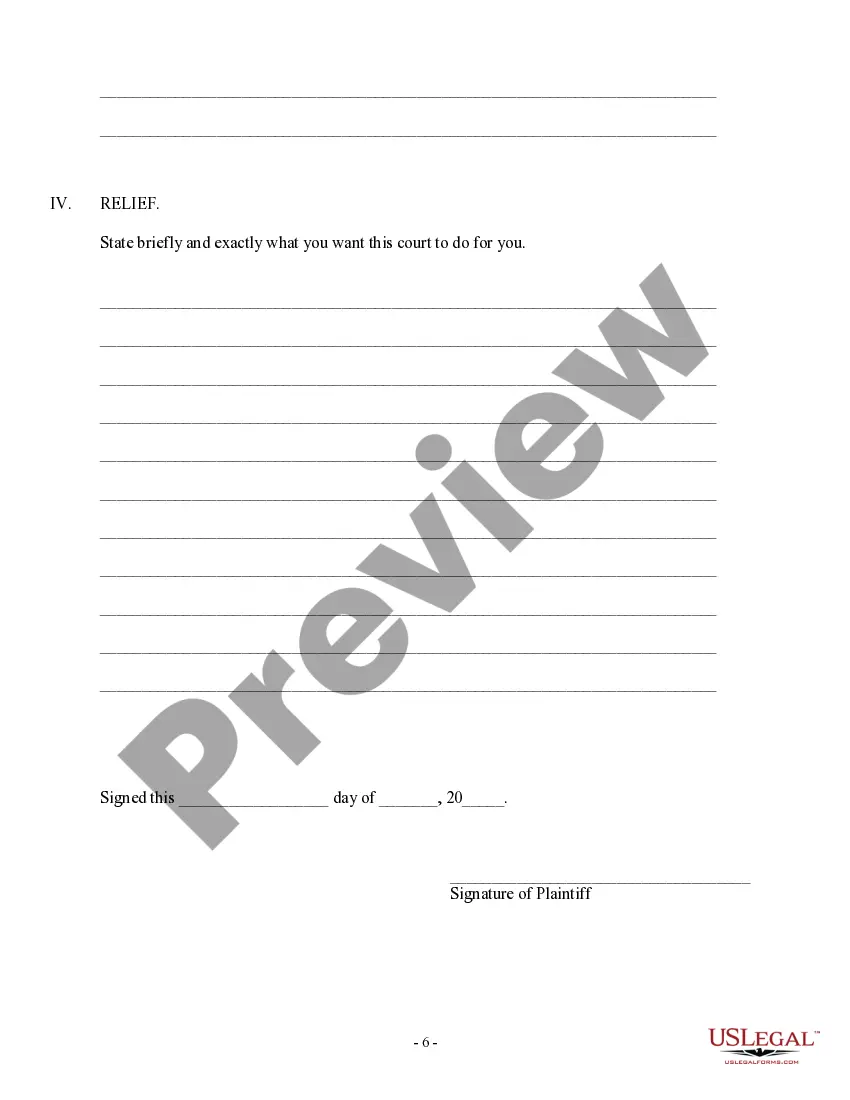
How to fill out Federal Pro Se - Non-Prisoner - Complaint Form?
US Legal Forms - one of the largest repositories of legal documents in the United States - offers a selection of legal document templates that you can download or print. Through the website, you can find numerous forms for business and personal purposes, sorted by categories, states, or keywords. You can locate the latest versions of forms such as the Mississippi Federal Pro Se - Non-Prisoner - Complaint Form in just a few moments.
If you have a monthly membership, Log In and download the Mississippi Federal Pro Se - Non-Prisoner - Complaint Form from the US Legal Forms library. The Download button will appear on every form you view. You can access all previously downloaded forms in the My documents section of your account.
If you are using US Legal Forms for the first time, here are some simple instructions to get you started: Ensure you have selected the correct form for your area/region. Click on the Preview button to examine the form's content. Read the form description to confirm that you've chosen the right one. If the form does not meet your needs, utilize the Search box at the top of the screen to find one that does. If you are satisfied with the form, confirm your choice by clicking the Purchase now button. Then, select the payment plan you prefer and provide your credentials to create an account. Complete the transaction. Use a credit card or PayPal account to finalize the purchase. Choose the format and download the form to your device. Make modifications. Fill out, edit, print, and sign the downloaded Mississippi Federal Pro Se - Non-Prisoner - Complaint Form. Every template you added to your account has no expiration date and is yours indefinitely. Therefore, to download or print another copy, simply go to the My documents section and click on the form you need.
- Access the Mississippi Federal Pro Se - Non-Prisoner - Complaint Form with US Legal Forms, one of the most extensive collections of legal document templates.
- Utilize thousands of professional and state-specific templates that meet your business or personal requirements.
- Download forms for various legal needs with ease.
- Find categorized templates based on your specific state or keywords.
- Enjoy a hassle-free experience with straightforward navigation.
- Benefit from a user-friendly interface for both downloading and managing your forms.
Form popularity
FAQ
Rule 81 in Mississippi pertains to the procedures for the removal of cases from state court to federal court. This rule outlines the requirements and timelines for filing a notice of removal and establishing jurisdiction. Understanding Rule 81 is essential for pro se litigants to ensure compliance when transitioning cases. For guidance, the Mississippi Federal Pro Se - Non-Prisoner - Complaint Form can be a valuable resource as you navigate these legal processes.
When answering a federal complaint, you must respond to each allegation made against you, either admitting, denying, or stating that you lack sufficient information to respond. Your answer should follow the format required by the Federal Rules of Civil Procedure, clearly addressing each claim. It is crucial to submit your answer within the stipulated time frame to avoid default judgment. For assistance, consider using the Mississippi Federal Pro Se - Non-Prisoner - Complaint Form, which can also guide you in preparing your response.
To format a federal complaint, you should start with a caption that includes the court name, parties involved, and the title of the document. Next, provide a clear and concise statement of your claims, outlining the facts that support your case. Ensure that your complaint adheres to the Federal Rules of Civil Procedure, particularly regarding font size, margins, and spacing. Using the Mississippi Federal Pro Se - Non-Prisoner - Complaint Form can help you align your document with these requirements.
The most common complaint involves allegations of color of law violations. Another common complaint involves racial violence, such as physical assaults, homicides, verbal or written threats, or desecration of property.
Whether you deliver or mail your complaint to the court, you must submit (i) an original of the complaint, (ii) a completed cover sheet, a copy of which can be obtained from the clerk's office, and (iii) the $402 filing fee. filing fee and any costs to have the complaint served in installments.
In Mississippi, you may file in small claims court, known as justice court, on your own for anything that is $3,500 or less. If you want to sue for more, you will have to file in a different court and may need the help of a lawyer. You may talk to the clerk of court for help in filing a lawsuit in small claims court.
As a result, civil rights cases can include some or all of the following: Freedom from excessive force by police or other law enforcement. Freedom from unreasonable searches or seizures by police or other law enforcement. Freedom from false arrest by police or other law enforcement.
Federal courts are authorized to hear only civil cases that involve one or more of the following: Questions regarding the Constitution. Questions of federal law (as opposed to state law) A dispute among residents of different states with an amount in controversy of more than $75,000.
The types of civil cases that can be brought in the Federal courts are speci- fied in Article III of the United States Consti tution. These include: Cases arising under the United Sta tes Constitution, Federal statutes, and treaties.
Civil rights are rights that citizens have to ensure political and social freedom and equality. An individual citizen can sue a government employee for violating their civil rights under 42 U.S.C. § 1983, also known as the Civil Rights Act of 1871, a federal law.