Mississippi Last Will and Testament for Married Person with Adult Children and Trust for Grandchildren
About this form
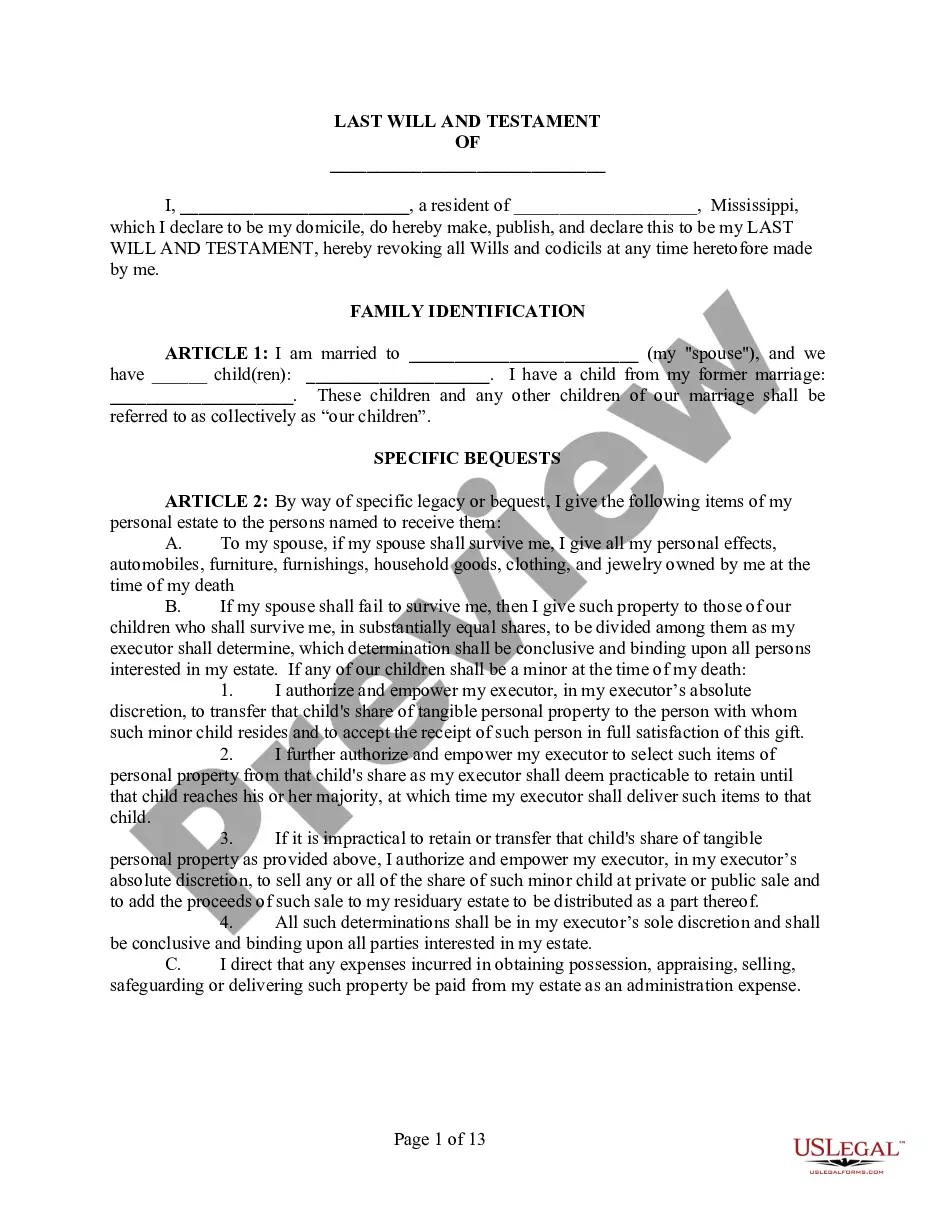
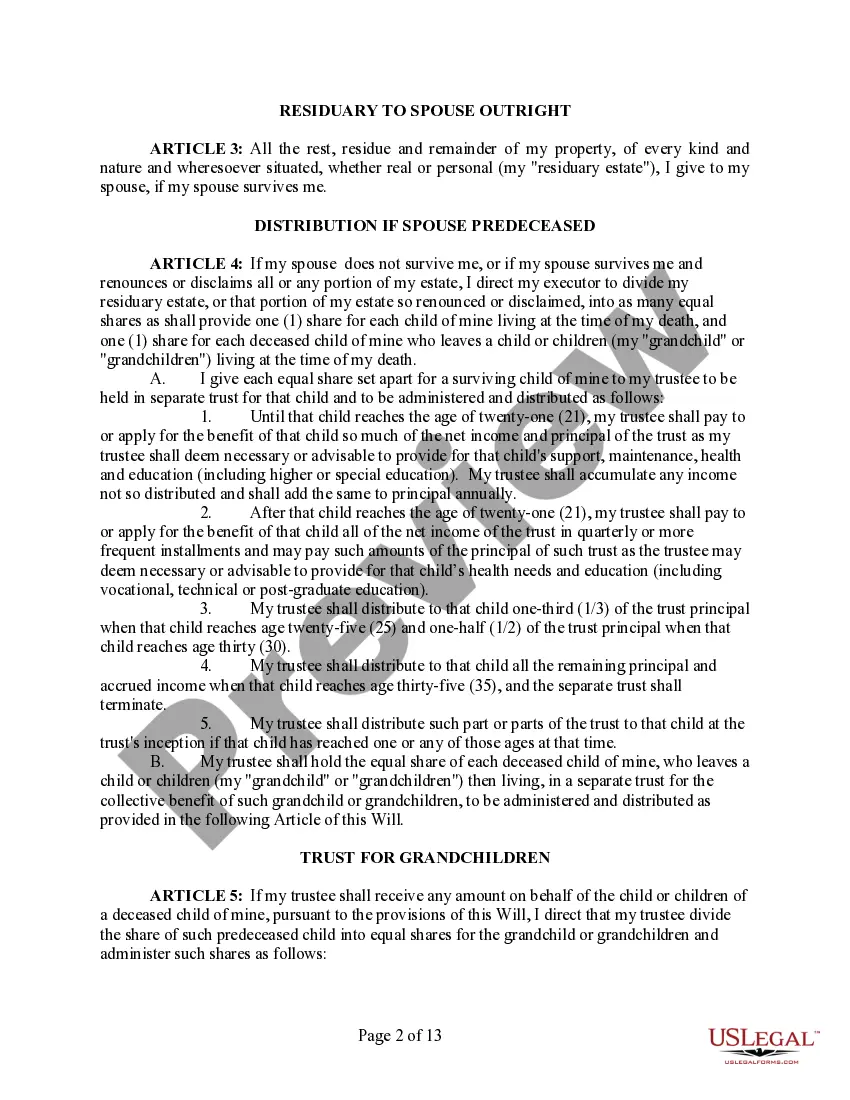
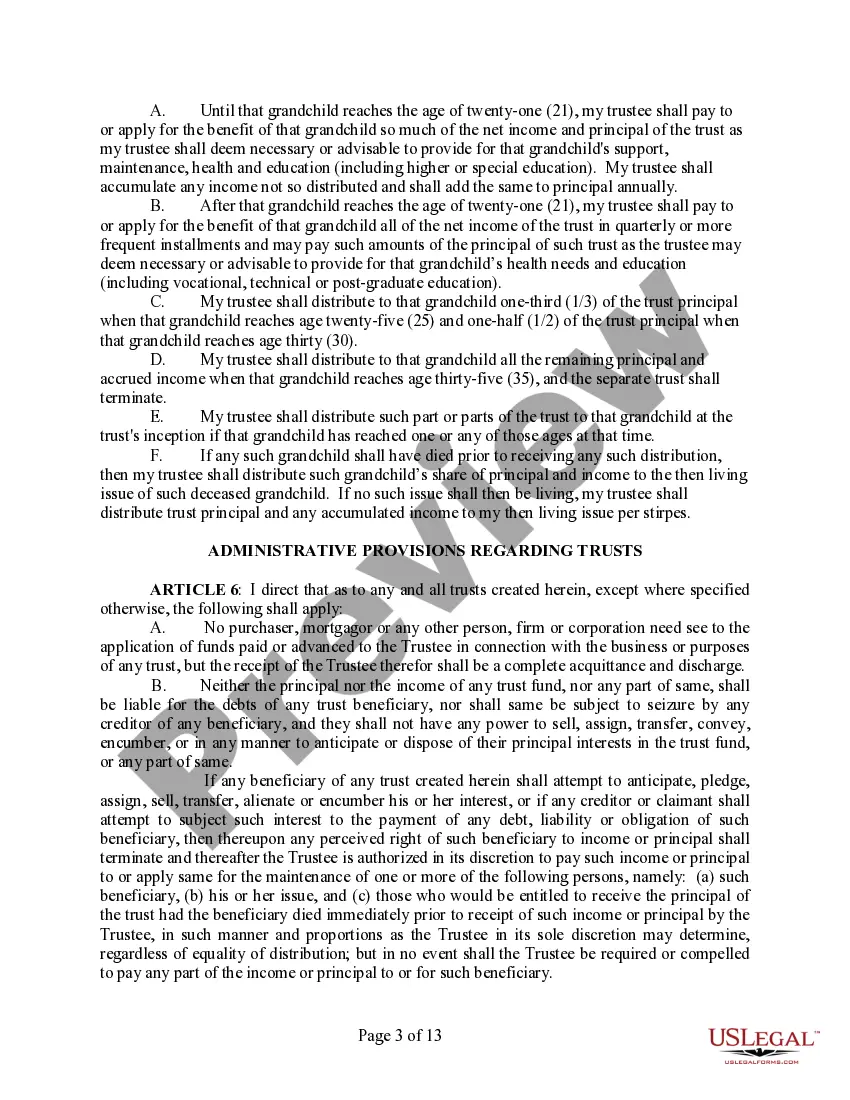
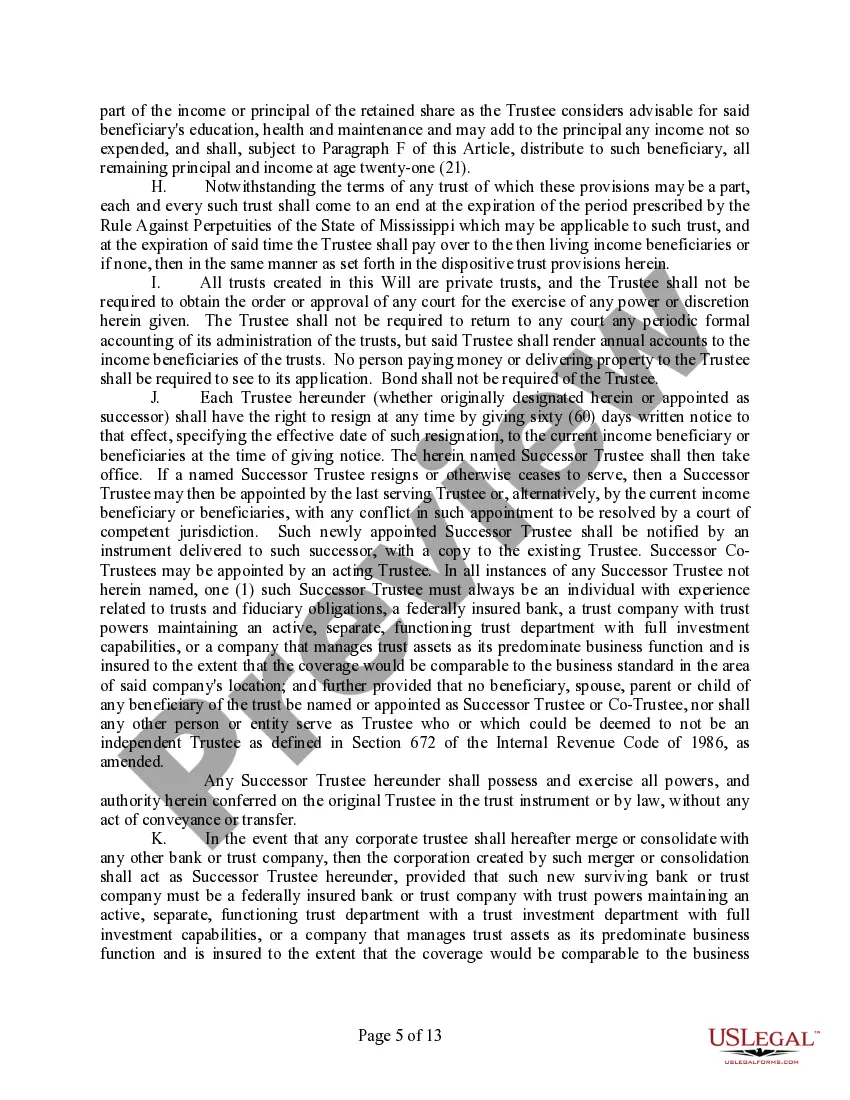
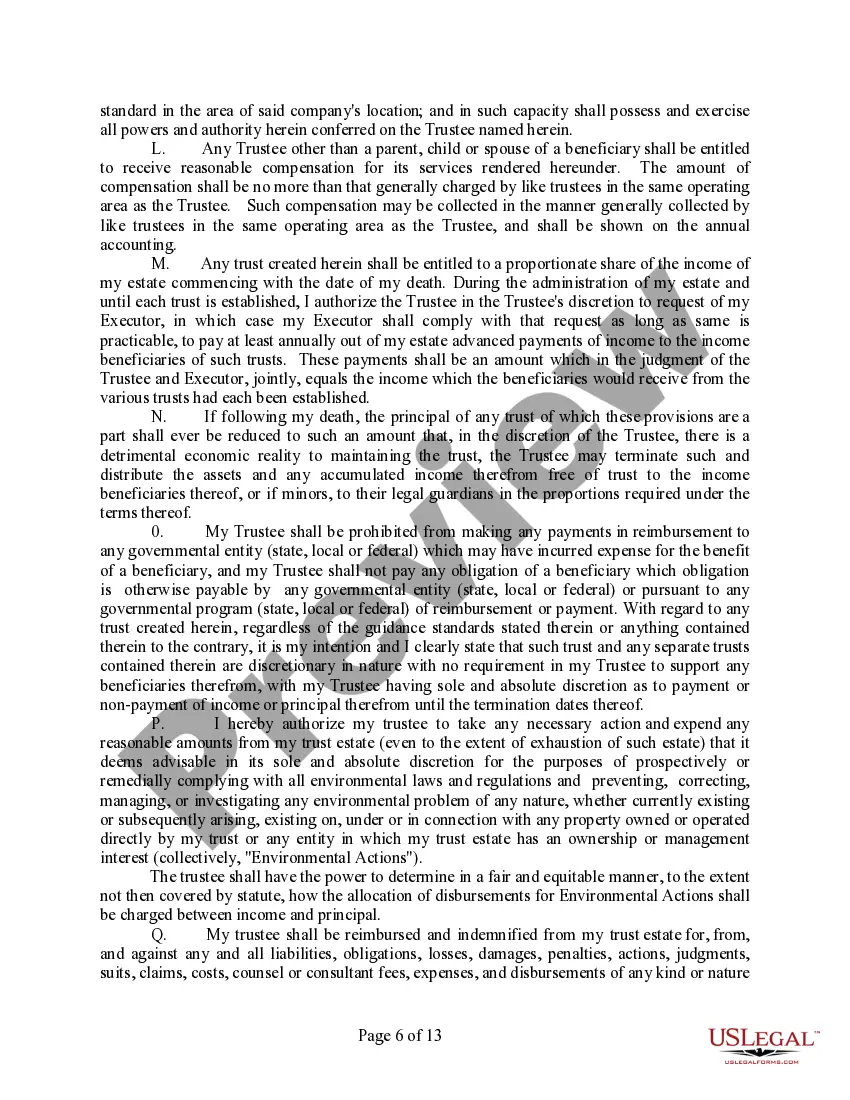
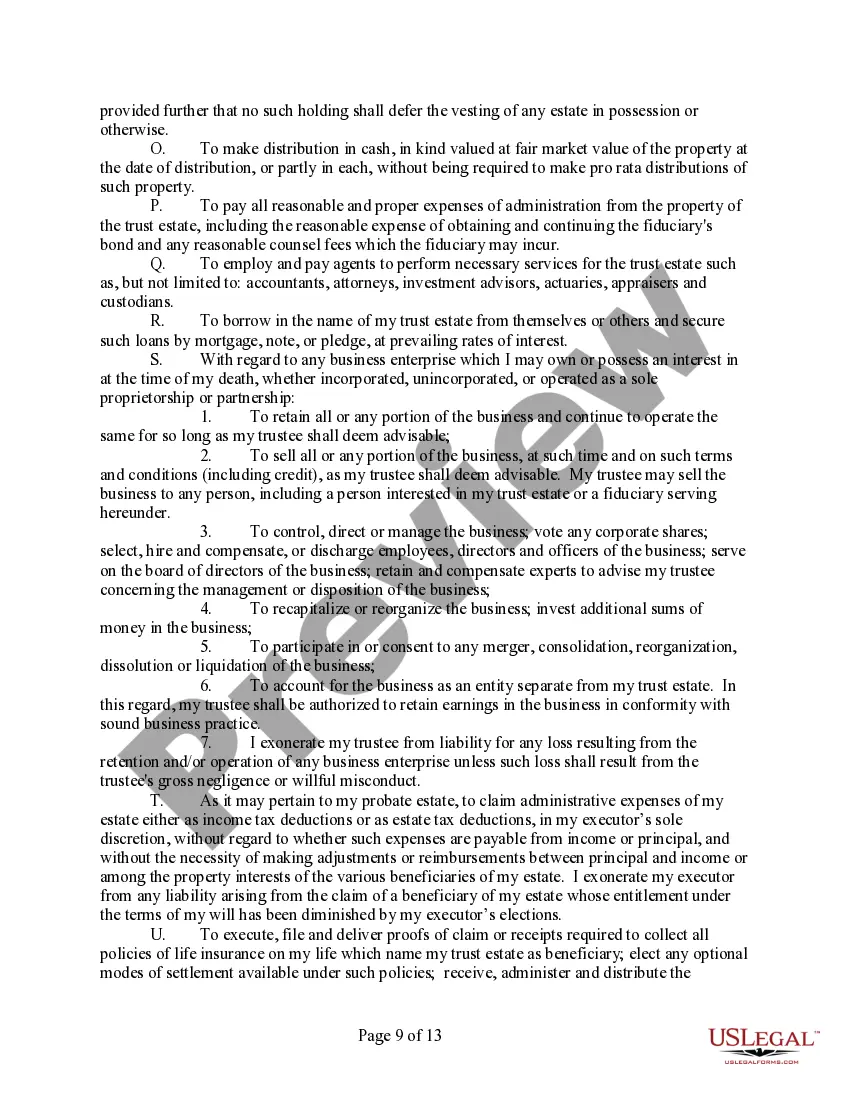
This Last Will and Testament is specifically designed for a married individual with adult children. It outlines how the individual's estate will be distributed upon their death, ensuring that provisions are made for both the surviving spouse and the grandchildren through a Special Needs Trust. This will distinguishes itself from simpler wills by incorporating intricate trust structures for beneficiaries and clarifying the distribution of assets among adult children and grandchildren, especially in cases where children may predecease the testator.
Key components of this form
- Identification of family members and beneficiaries
- Provisions for specific bequests to the surviving spouse and children
- Residuary clause defining distribution of remaining assets
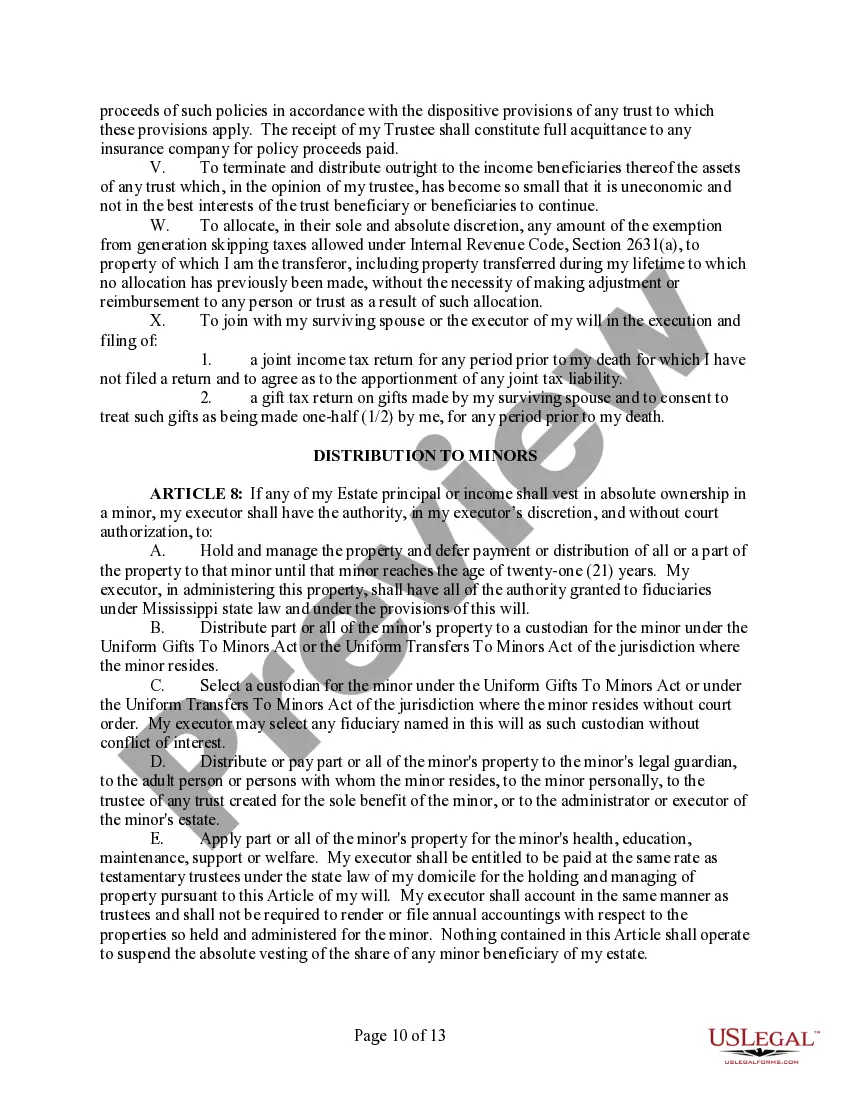
- Creation of trusts for minors and grandchildren for educational and health support
- Appointment of guardians and executors to manage the estate and trusts
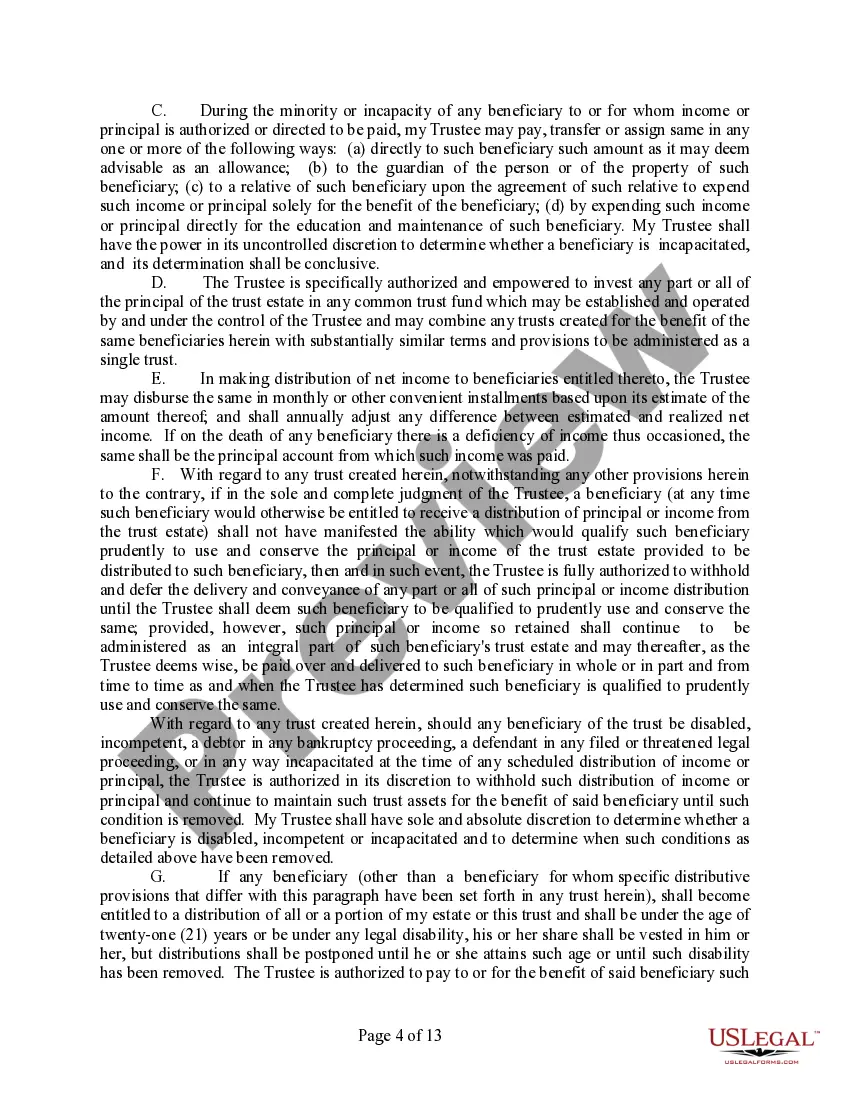
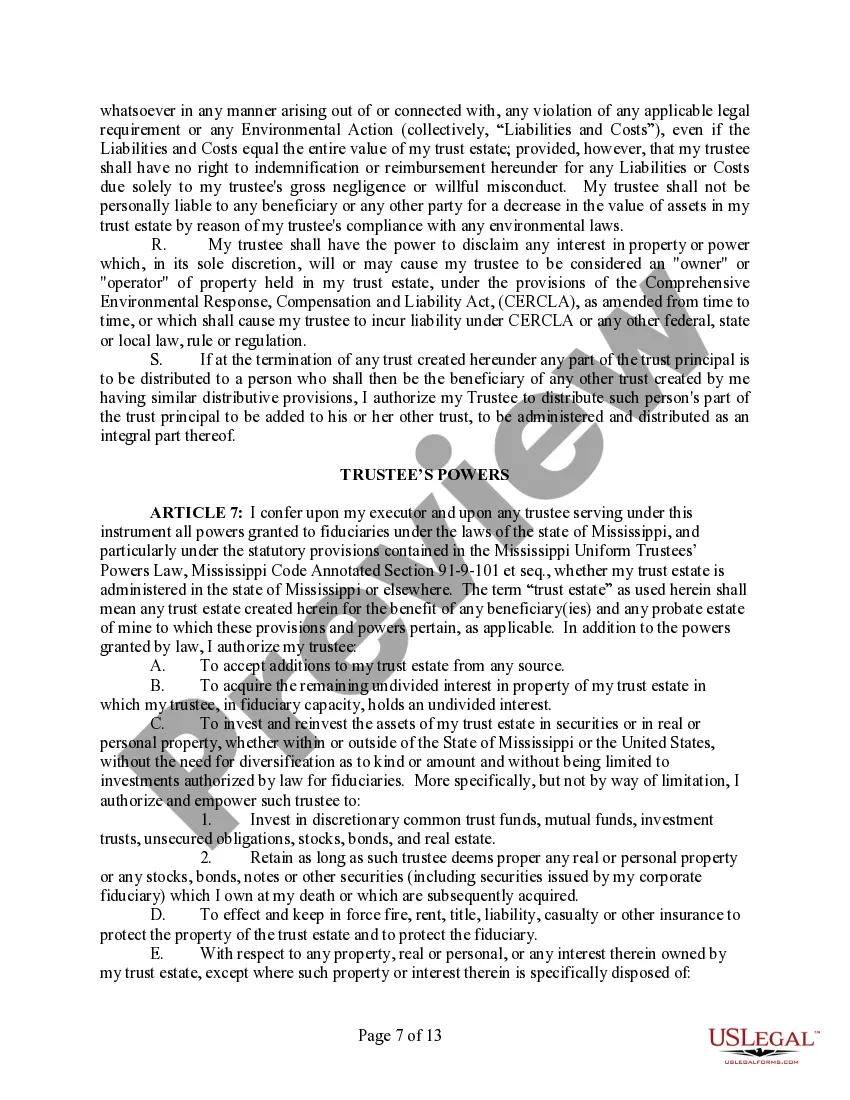
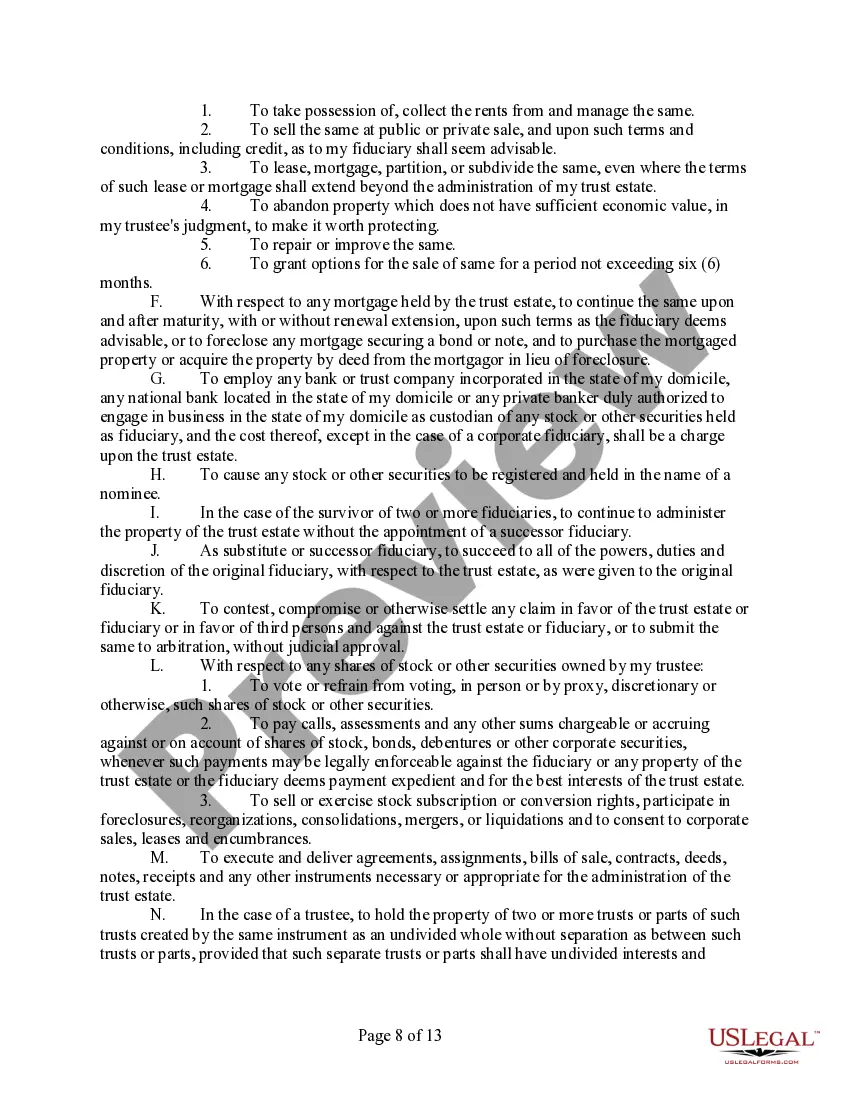
- Administrative provisions detailing trustee powers and responsibilities




When to use this form
This form is essential when a married person with adult children wishes to outline their last wishes and provide for the financial well-being of their family after their death. Use this will when you want to specify distributions, create trusts for children and grandchildren, and appoint individuals to manage your estate and care for dependents. It is particularly relevant for individuals with complex family dynamics or significant assets.
Who needs this form
- Married individuals with adult children
- Those who want to provide for their grandchildren, especially in the event a child predeceases them
- Anyone looking to establish a Special Needs Trust for a surviving spouse
- Individuals with substantial assets needing detailed distribution guidelines
- Parents who want to ensure the financial security of their children and grandchildren through trusts
Completing this form step by step
- Begin by identifying yourself and your domicile in Mississippi.
- List your spouse's name and the names of your children, including any from previous marriages.
- Specify any specific items or assets you want to bequeath and to whom.
- Detail the provisions for trusts, especially for minors and grandchildren, including their age milestones.
- Nominate your guardians and executors, ensuring they are aware and willing to serve.
Notarization guidance
No, this form does not typically require notarization unless specified by local law. However, to ensure its legal validity, it is recommended to have it signed in the presence of witnesses who are not beneficiaries.
Get your form ready online
Our built-in tools help you complete, sign, share, and store your documents in one place.
Make edits, fill in missing information, and update formatting in US Legal Forms—just like you would in MS Word.
Download a copy, print it, send it by email, or mail it via USPS—whatever works best for your next step.
Sign and collect signatures with our SignNow integration. Send to multiple recipients, set reminders, and more. Go Premium to unlock E-Sign.
If this form requires notarization, complete it online through a secure video call—no need to meet a notary in person or wait for an appointment.
We protect your documents and personal data by following strict security and privacy standards.

Make edits, fill in missing information, and update formatting in US Legal Forms—just like you would in MS Word.

Download a copy, print it, send it by email, or mail it via USPS—whatever works best for your next step.

Sign and collect signatures with our SignNow integration. Send to multiple recipients, set reminders, and more. Go Premium to unlock E-Sign.

If this form requires notarization, complete it online through a secure video call—no need to meet a notary in person or wait for an appointment.

We protect your documents and personal data by following strict security and privacy standards.
Avoid these common issues
- Failing to update the will after significant life changes such as divorce or new children.
- Not clearly identifying guardians, leading to potential disputes.
- Leaving out specific bequests, which can cause confusion and potential family conflict.
- Not having the will properly witnessed or notarized, which may render it invalid.
Advantages of online completion
- Convenience of filling out the form at your own pace.
- Access to customizable templates tailored to your needs.
- Immediate downloadable options ensure you can get started right away.
- Reduced likelihood of errors with guided prompts and explanations.
Key takeaways
- This will secures your family's future by outlining clear distribution of your estate.
- Utilizing trusts can help manage funds for minors effectively.
- Understanding specific state laws ensures the document's enforceability and compliance.
- Keep your will updated to reflect any major life events.
Looking for another form?


Form popularity
FAQ
Legal Requirements for Valid Living Will In writing. Dated. Signed by the ?principal? or creator of the living will. Signed by two adult witnesses, at least one of whom isn't related to principal OR acknowledged by a notary public.
Holographic or Handwritten Wills A holographic or handwritten will is valid in Mississippi if it's testamentary in character (i.e. intended to be a will, not just a letter to a friend) and is wholly written, dated, and signed by the testator or creator of the will.
Holographic or Handwritten Wills A holographic or handwritten will is valid in Mississippi if it's testamentary in character (i.e. intended to be a will, not just a letter to a friend) and is wholly written, dated, and signed by the testator or creator of the will.
The law requires that this document be either (1) signed by two persons who witnessed your signature, or (2) acknowledged by a Notary Public in Mississippi.
To write a will, Mississippi law states you must be at least 18 years old, of sound and disposing mind, must intend the document to be your will and must have the written will validly executed. Upon your death, your will must go through probate, a court proceeding that declares the will valid or invalid.
Ing to Title 91 Chapter 7 Section 5 of the Mississippi Code, the court can compel the person who has the will to present it. The person who has the will must file it with the court within 40 days after the person's death.
The laws are different in each state; however, in Mississippi, your Living Will requires notarization or the signatures of two witnesses. At least one of the witnesses to your Living Will form should not be a relative, spouse, adopted child, heir, or any other beneficiary.