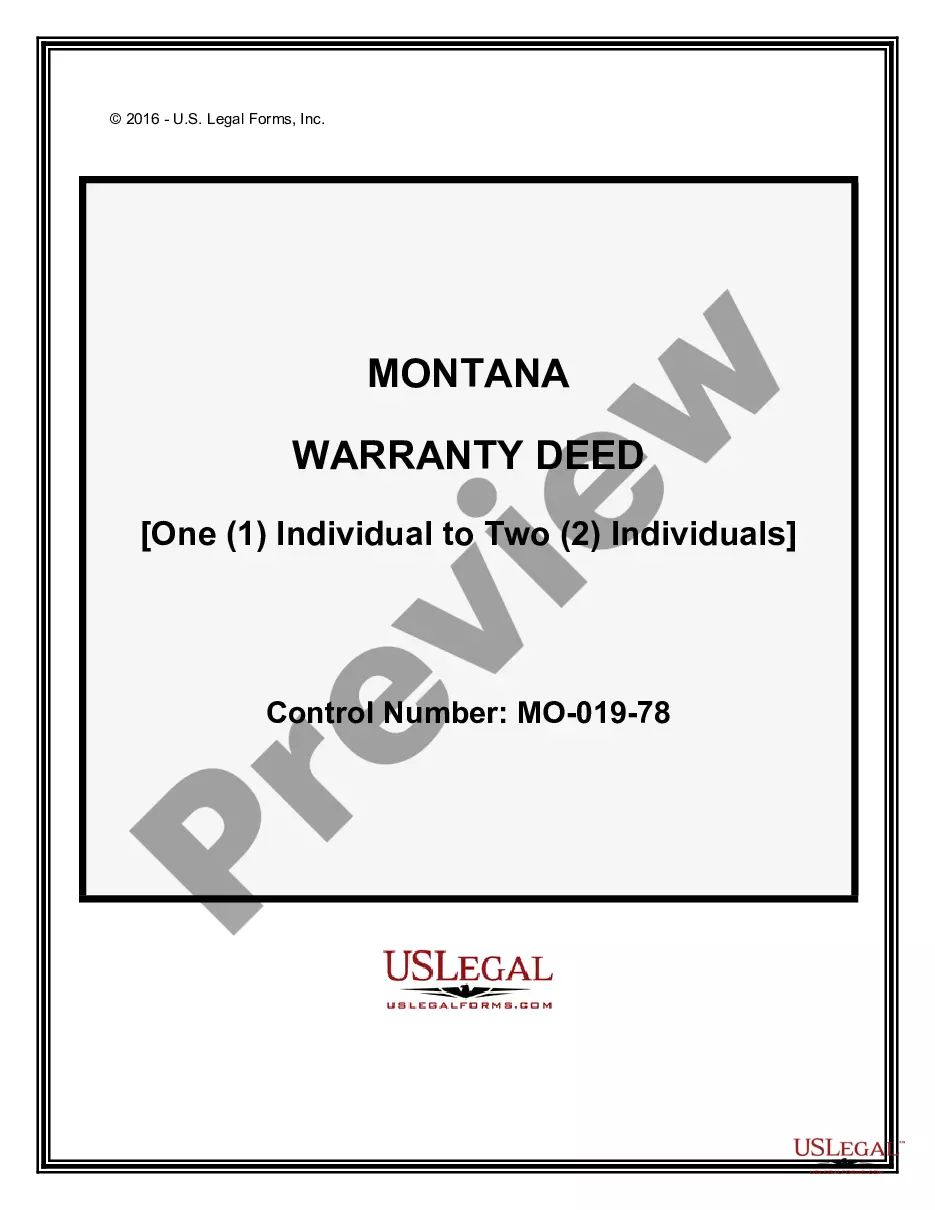
Montana Warranty Deed - One Individual to Two Individuals
What is this form?
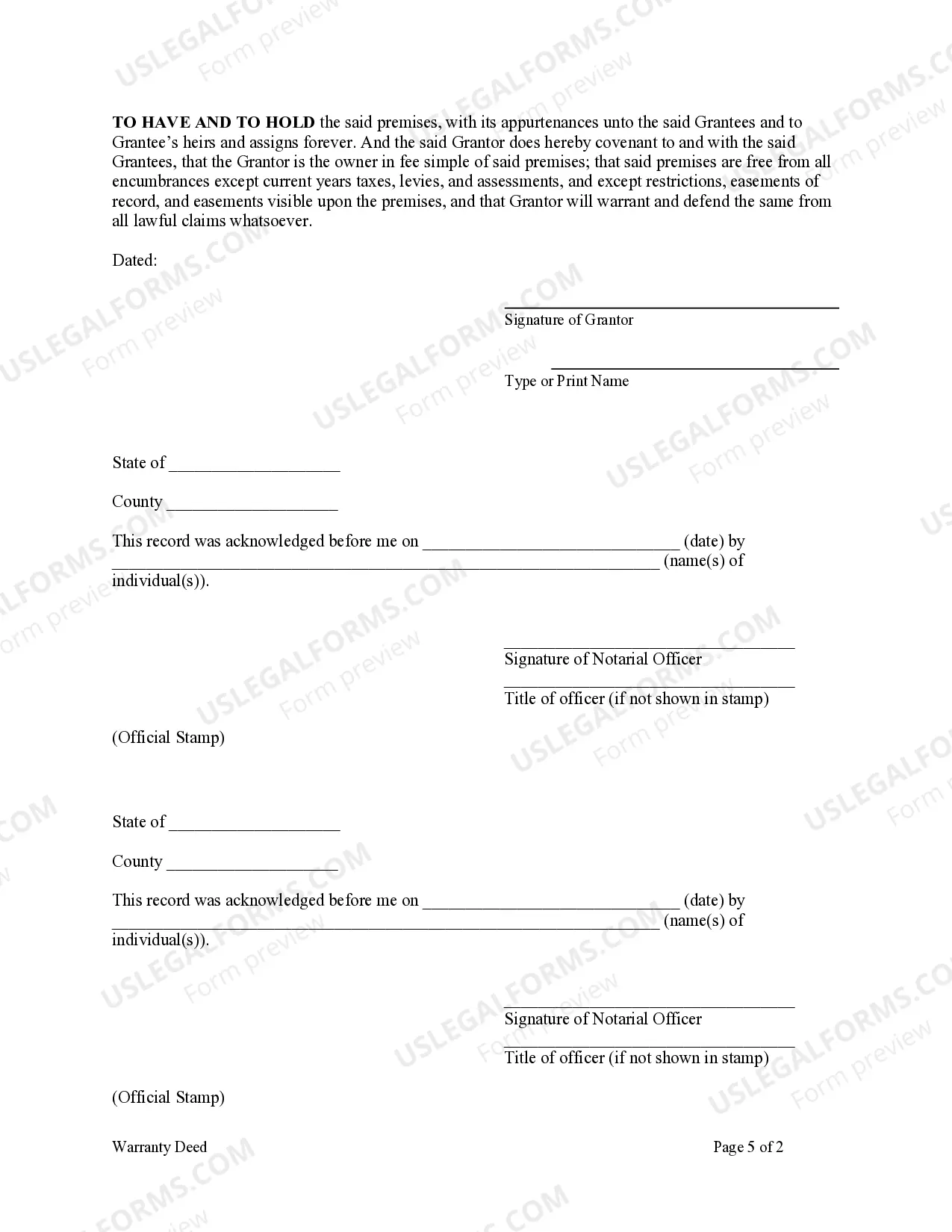
The Warranty Deed - One Individual to Two Individuals is a legal document executed by one person (the grantor) to transfer ownership of real property to two individuals (the grantees). This form delineates how the grantees will hold the property, either as tenants in common or joint tenants with the right of survivorship. It is essential for ensuring a clear title transfer and can be used to establish shared ownership rights between the parties involved.
Main sections of this form
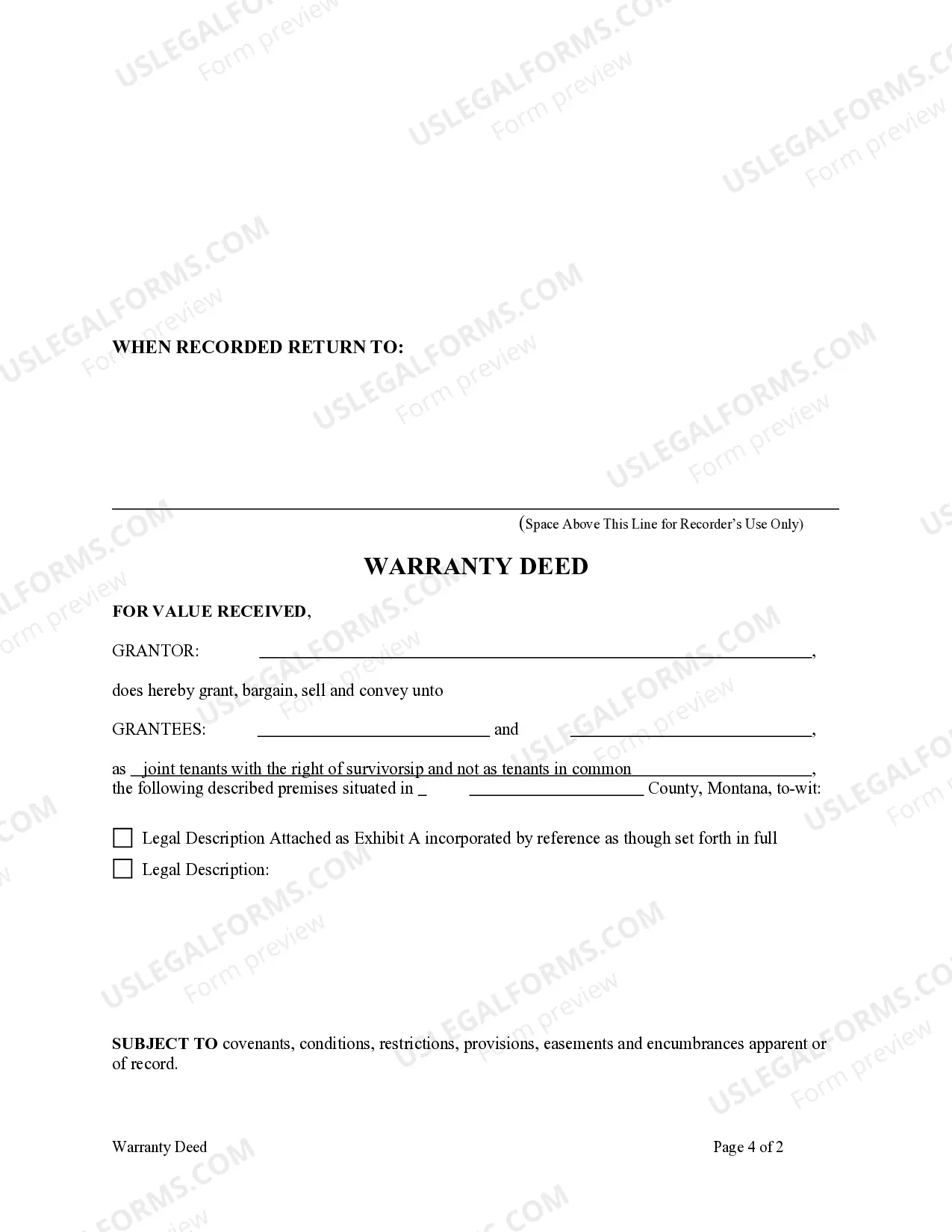
- Identification of the grantor and grantees involved in the transaction.
- Description of the property being transferred, including relevant boundaries and identifiers.
- Option to designate the ownership structure: tenants in common or joint tenants with the right of survivorship.
- Provision for signatures to validate and execute the document.
- Compliance statement confirming adherence to state laws.






When to use this document
This form is useful when an individual wishes to transfer real estate to two parties, whether they are family members, friends, or business partners. It is often used in situations such as giving property to children, co-investing in real estate, or transferring property as part of an estate plan. The choice of holding the property either as tenants in common or joint tenants with the right of survivorship will affect how property rights are handled in the event of an owner's death.
Who needs this form
- Individuals transferring property to two other individuals.
- Couples or partners who wish to jointly own real estate.
- Property owners who want to ensure their asset is passed directly to co-owners without going through probate.
- Anyone in need of a legally binding document to establish ownership rights in shared property.
Instructions for completing this form
- Identify the grantor and grantees by providing their full names and addresses.
- Clearly describe the property being conveyed, including its legal description.
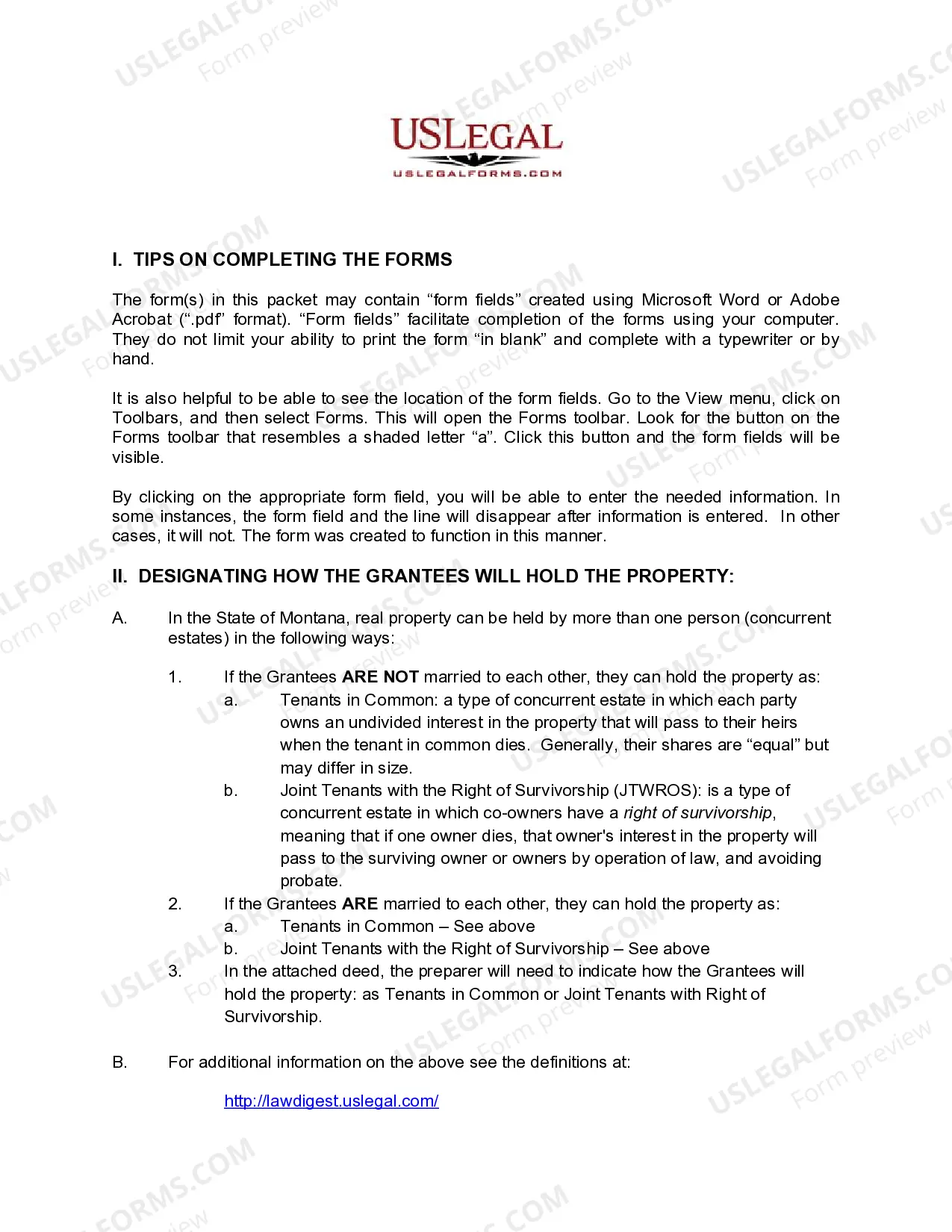
- Select the ownership type: indicate whether the grantees will hold the property as tenants in common or joint tenants with the right of survivorship.
- Both grantees must sign the form to execute the deed legally.
- Include the date of the transfer for the official record.
Is notarization required?
This form needs to be notarized to ensure legal validity. US Legal Forms provides secure online notarization powered by Notarize, allowing you to complete the process through a verified video call, available anytime.
Get your form ready online
Our built-in tools help you complete, sign, share, and store your documents in one place.
Make edits, fill in missing information, and update formatting in US Legal Forms—just like you would in MS Word.
Download a copy, print it, send it by email, or mail it via USPS—whatever works best for your next step.
Sign and collect signatures with our SignNow integration. Send to multiple recipients, set reminders, and more. Go Premium to unlock E-Sign.
If this form requires notarization, complete it online through a secure video call—no need to meet a notary in person or wait for an appointment.
We protect your documents and personal data by following strict security and privacy standards.

Make edits, fill in missing information, and update formatting in US Legal Forms—just like you would in MS Word.

Download a copy, print it, send it by email, or mail it via USPS—whatever works best for your next step.

Sign and collect signatures with our SignNow integration. Send to multiple recipients, set reminders, and more. Go Premium to unlock E-Sign.

If this form requires notarization, complete it online through a secure video call—no need to meet a notary in person or wait for an appointment.

We protect your documents and personal data by following strict security and privacy standards.
Typical mistakes to avoid
- Failing to provide complete and accurate descriptions of the property.
- Not designating the type of ownership structure properly.
- Missing signatures from the grantor and grantees.
- Omitting the date of the transaction, which is crucial for legal records.
Benefits of completing this form online
- Convenience of downloading and completing at your own pace.
- Editability allows for quick updates and changes before finalizing.
- Access to forms that are drafted to meet legal standards, ensuring reliability.
- Instant availability without the need for travel or in-person appointments.
Looking for another form?

Form popularity
FAQ
In order to provide finality to the termination of a trust or the closing of an estate, the form of deed given by a personal representative or a trustee simply calls for the seller to convey as opposed to convey and warrant the property.Again, all the buyer gets is whatever the trust or estate owned.
Special warranties allow the transfer of property title between seller and buyer. The purchase of title insurance can mitigate the risk of prior claims to the special warranty deed.
A personal representative deed and warranty deed are the same only in that they both convey ownership of land. The types of title assurance that the different deeds provide to the new owner are very different.
Adding someone to your house deed requires the filing of a legal form known as a quitclaim deed. When executed and notarized, the quitclaim deed legally overrides the current deed to your home. By filing the quitclaim deed, you can add someone to the title of your home, in effect transferring a share of ownership.
If you've recently married and already own a home or other real estate, you may want to add your new spouse to the deed for your property so the two of you own it jointly. To add a spouse to a deed, all you have to do is literally fill out, sign and record a new deed in your county recorder's office.
In a Non-Warranty Deed, the seller gives no warranties.In a Non-Warranty or Quitclaim Deed, the seller merely is giving the buyer whatever rights, if any, that the seller has in the property and the seller makes no warranties of any nature about the seller's rights in the property.
The only way to forcibly change the ownership status is through a legal action and the resultant court order. However, if an owner chooses to be removed from the deed, it is simply a matter of preparing a new deed transferring that owner's interest in the property.
Used to transfer property rights from a deceased person's estate. Involves Probate Court. Like a Quit Claim deed, there are no warranties. Generally, the Personal Representative is unwilling to warrant or promise anything relating to property that he/she has never personally owned.
Let's start with the definition of a deed: DEED: A written instrument by which one party, the Grantor, conveys the title of ownership in property to another party, the Grantee. A Warranty Deed contains promises, called covenants, that the Grantor makes to the Grantee.