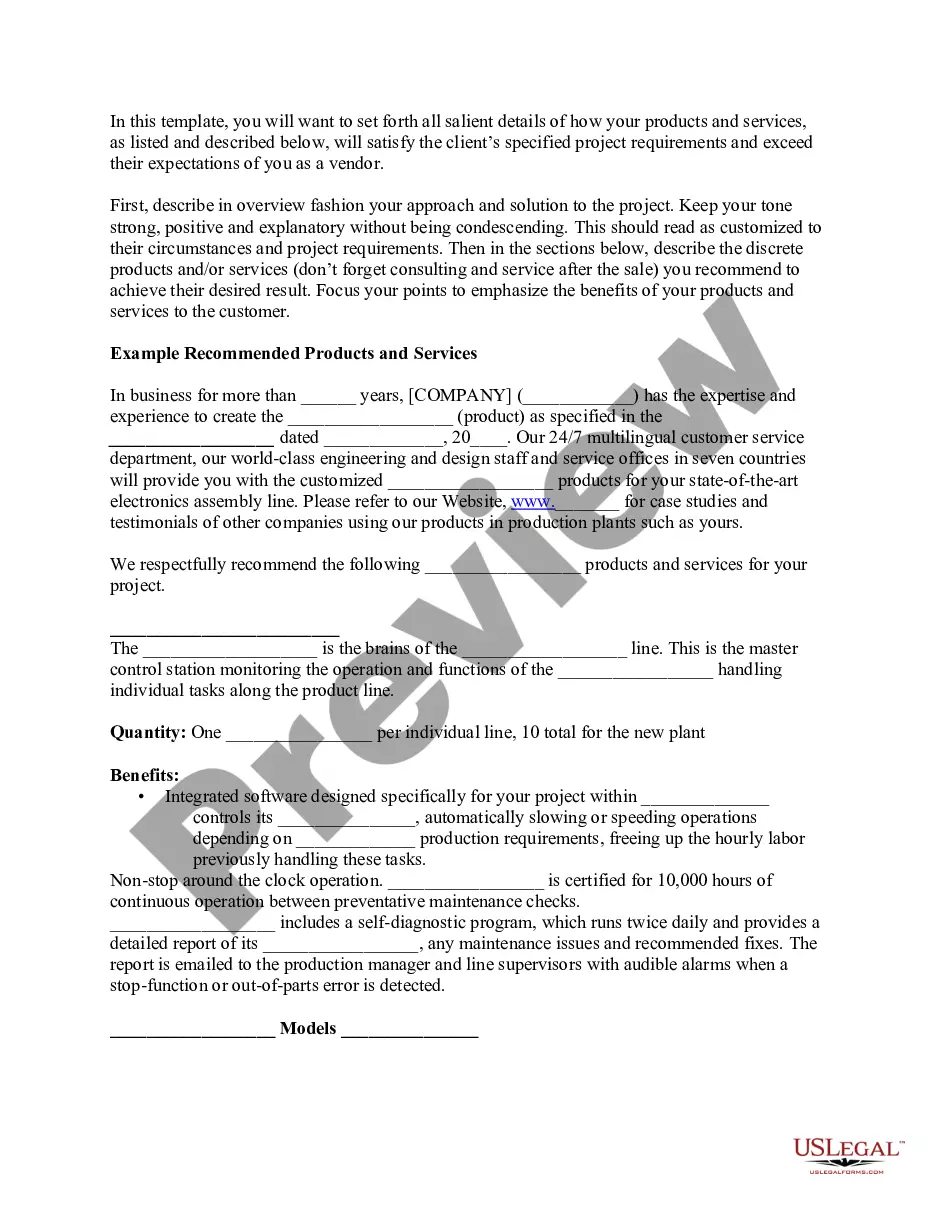
Montana Artist Licensing Agreement
Description
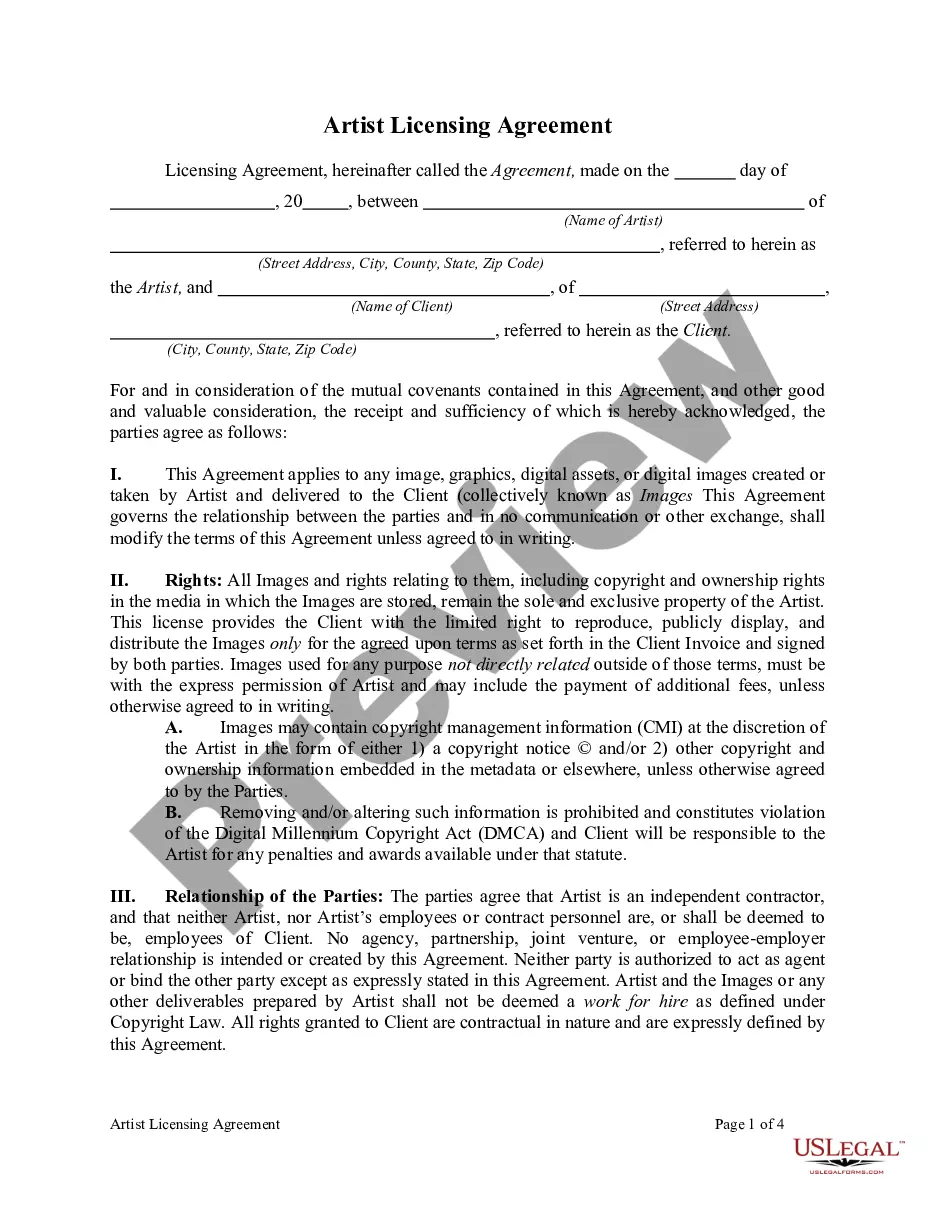
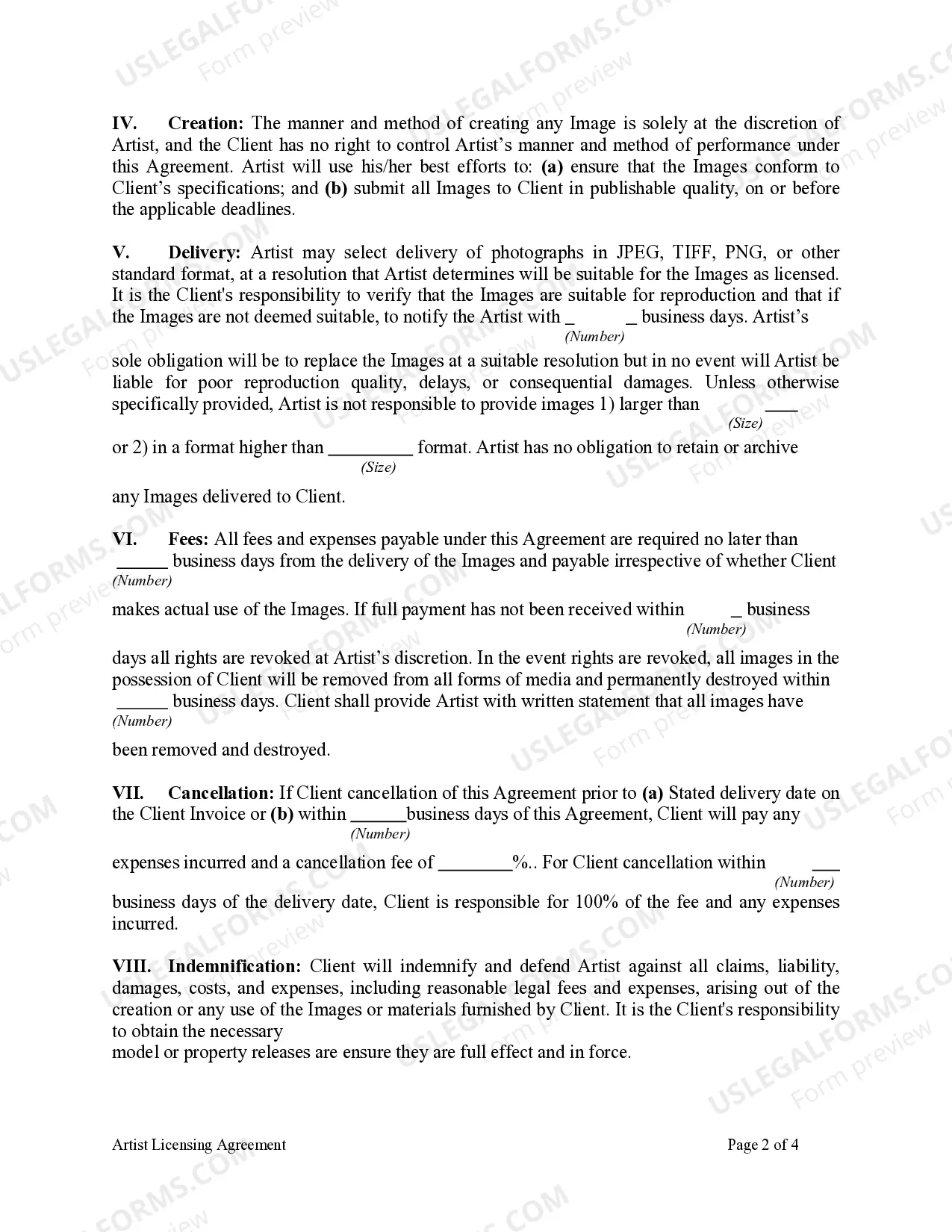
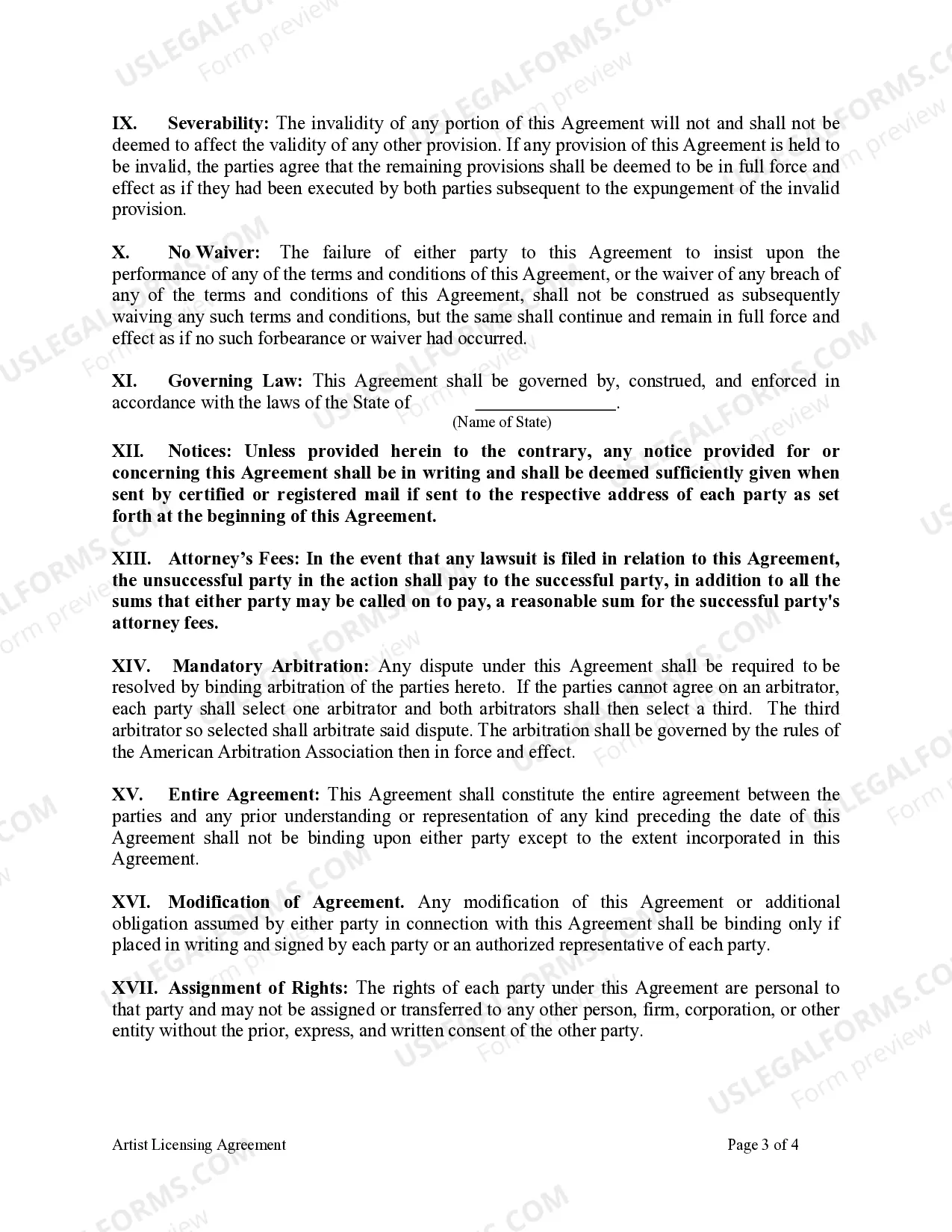
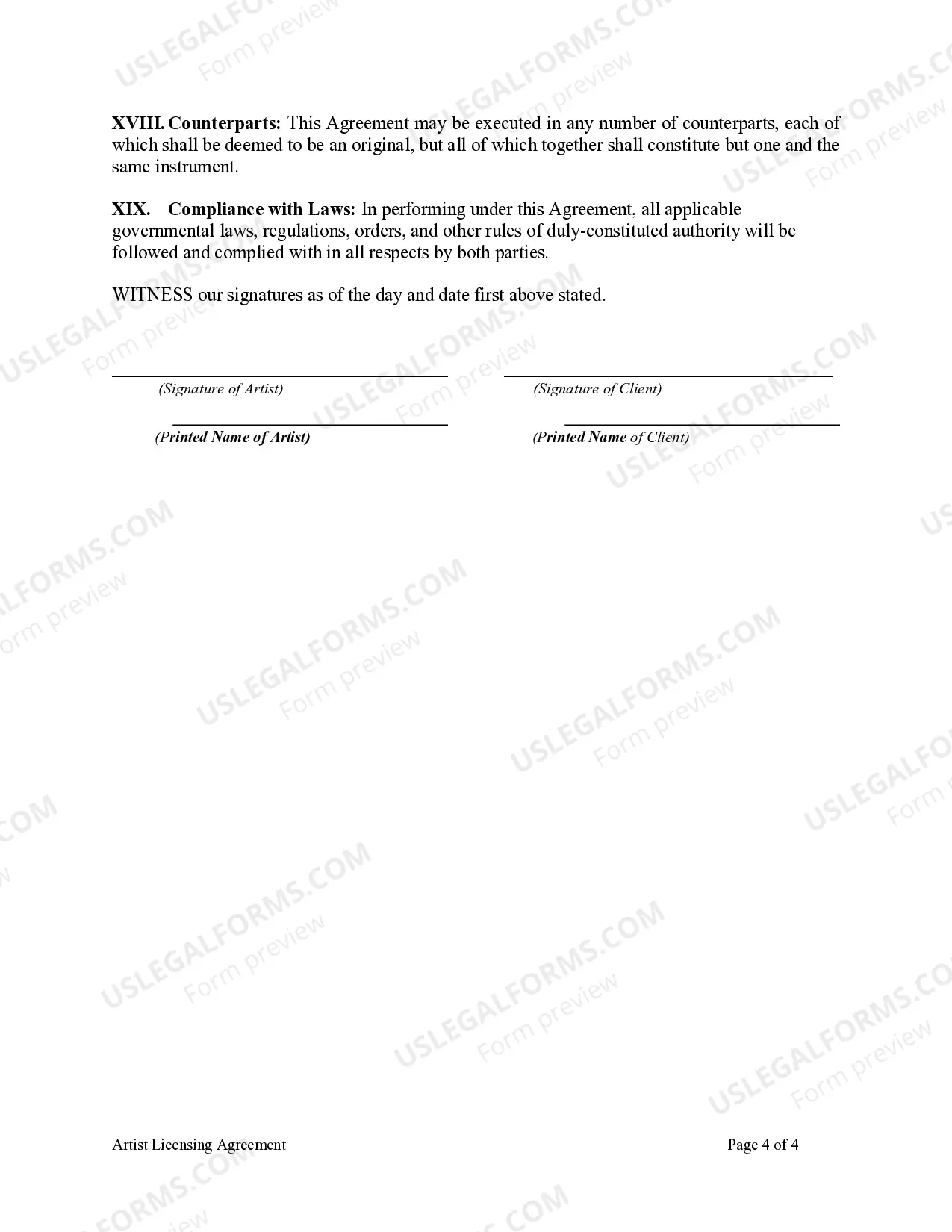
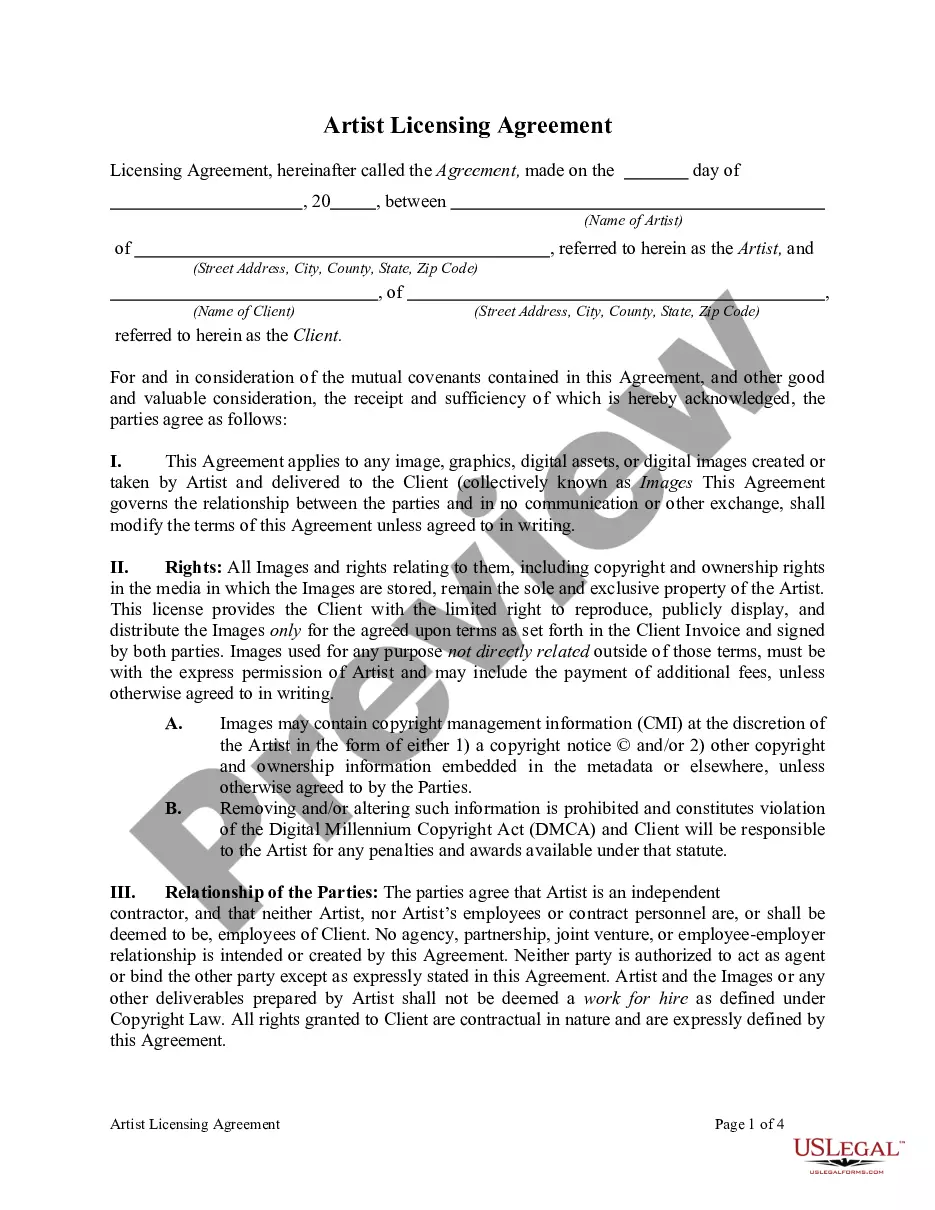
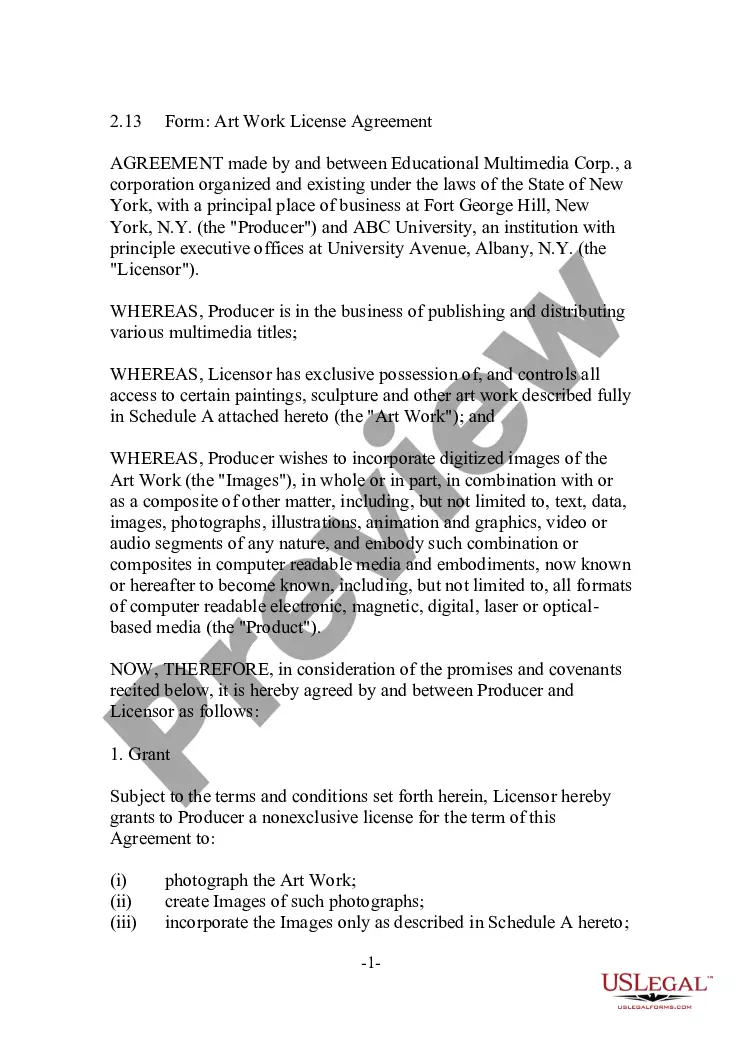
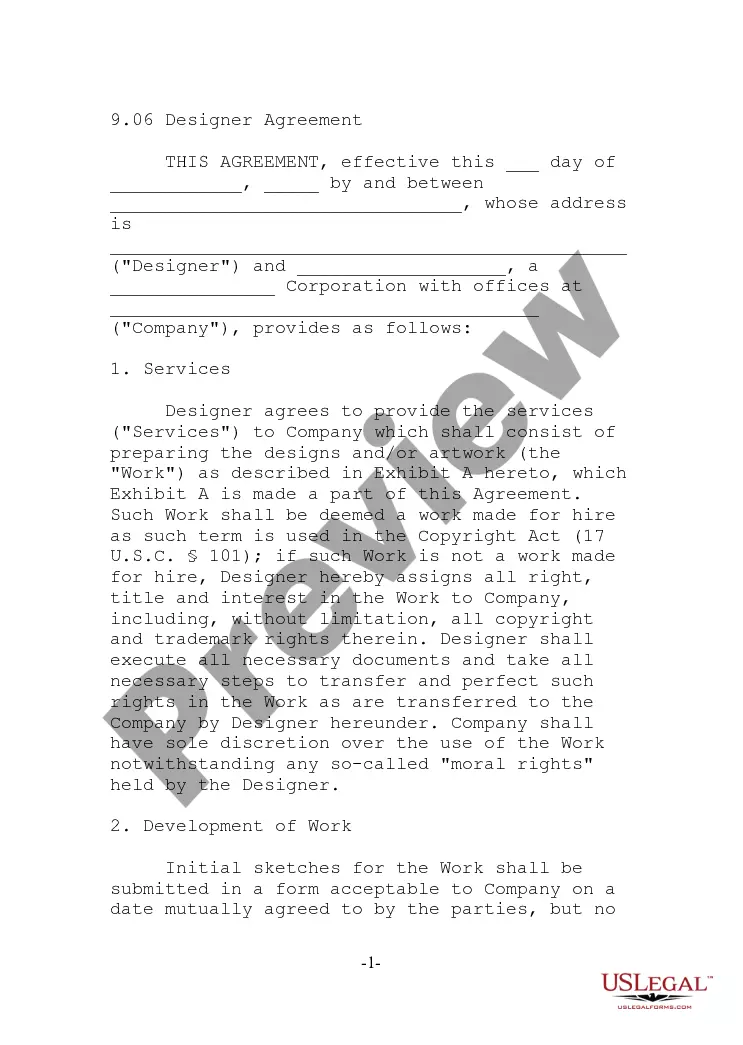
How to fill out Artist Licensing Agreement?
US Legal Forms - one of the largest collections of legal documents in the United States - provides a diverse selection of legal document templates available for download or printing. By utilizing the site, you can access numerous forms for business and personal use, organized by categories, states, or keywords. You can quickly locate the latest forms like the Montana Artist Licensing Agreement in just a few minutes.
If you have a monthly subscription, Log In and acquire the Montana Artist Licensing Agreement from the US Legal Forms catalog. The Download button will appear on every template you view. You can access all previously downloaded forms in the My documents section of your account.
If you are using US Legal Forms for the first time, here are some simple steps to help you begin: Ensure you have selected the correct form for your city/state. Click the Preview button to examine the form’s details. Review the form information to confirm you have selected the right document. If the form does not meet your requirements, use the Search field at the top of the screen to find one that does.
Access the Montana Artist Licensing Agreement with US Legal Forms, the most extensive collection of legal document templates. Utilize thousands of professional and state-specific templates that fulfill your business or personal needs and requirements.
- If you are satisfied with the form, validate your choice by clicking the Get now button.
- Then, select the pricing plan you prefer and provide your details to register for an account.
- Process the transaction. Use your credit card or PayPal account to complete the transaction.
- Choose the format and download the document to your device.
- Make modifications. Complete, edit, print, and sign the downloaded Montana Artist Licensing Agreement.
- Each template you add to your account has no expiration date and is yours forever. Therefore, if you wish to download or print another copy, simply navigate to the My documents section and click on the form you need.
Form popularity
FAQ
The three types of licensing typically include exclusive, non-exclusive, and sole licensing agreements. An exclusive license grants the licensee sole rights to use the artwork, while a non-exclusive license allows multiple parties to use the work simultaneously. A sole license falls between the two, giving the licensee rights while the artist retains ownership. Understanding these types can help you navigate the Montana Artist Licensing Agreement effectively, ensuring your rights are protected.
Selling art without a license can lead to legal complications, especially if the artwork is protected by copyright. The Montana Artist Licensing Agreement helps clarify the permissions required for selling and distributing art. Without such a license, artists risk infringing on copyright laws, which can result in fines or legal action. It is wise to consult resources like uslegalforms to understand the requirements for selling your art legally.
The artist's copyright contract, often referred to as the Montana Artist Licensing Agreement, defines the ownership rights of the artist over their work. This contract outlines how the artwork can be used, shared, or reproduced by others. By establishing clear terms, it protects the artist's rights and ensures they receive proper compensation for their creations. Using a reliable platform like uslegalforms can help you draft a comprehensive agreement that meets your needs.
How to begin licensing your art Do the research. Read books, websites and blogs such as MariaBrophy.com, Theabundantartist.com and ArtsyShark.com on how artists can license their art. ... Know your market. ... Make the pitch. ... Create a plan. ... Mock-up a catalog. ... Follow up. ... Use social media. ... License the work yourself.
With a commercial license, the artist retains ownership and copyright of the work, and can continue to use it for other purposes or license it to other clients. An exclusive license, on the other hand, grants permission to use the artist's work exclusively to one particular client or licensee.
Generally, royalties will be a percentage of the net sales of the licensee's products. The percentage will vary, but it is usually 10 percent or less unless the licensee is selling posters or prints of the artwork.
Art Licensing is usually a royalty range of 3-10%. Brand and character licensing can go as high as 15%. 2) Where it's sold determines the percentage as well.
Hear this out loud PauseA small (limited) license may be around 50-100% of the Artwork Creation fee. (So, perhaps a 12 month license, or a very small production run of promotional items, regional use only.) A non-exclusive or mid-sized license may be around 75-200% of the Artwork Creation fee. (Yes, this is a wide range.
Hear this out loud PauseThe percentage will vary, but it is usually 10 percent or less unless the licensee is selling posters or prints of the artwork. Sometimes royalties are calculated not ing to net sales but ing to the total number of products that are sold or manufactured. This is known as a per unit royalty. Did You Know?
Hear this out loud PauseEnjoy the benefits of licensing. "This means an artist can do some upfront work to arrange the licensing deal, and then get recurring income with little to no follow-up work, sometimes, for years." It's quite possible to earn thousands of dollars a year from one piece of art with the right licensing deal.