Montana Special Cemetery Gift Trust Fund
Description
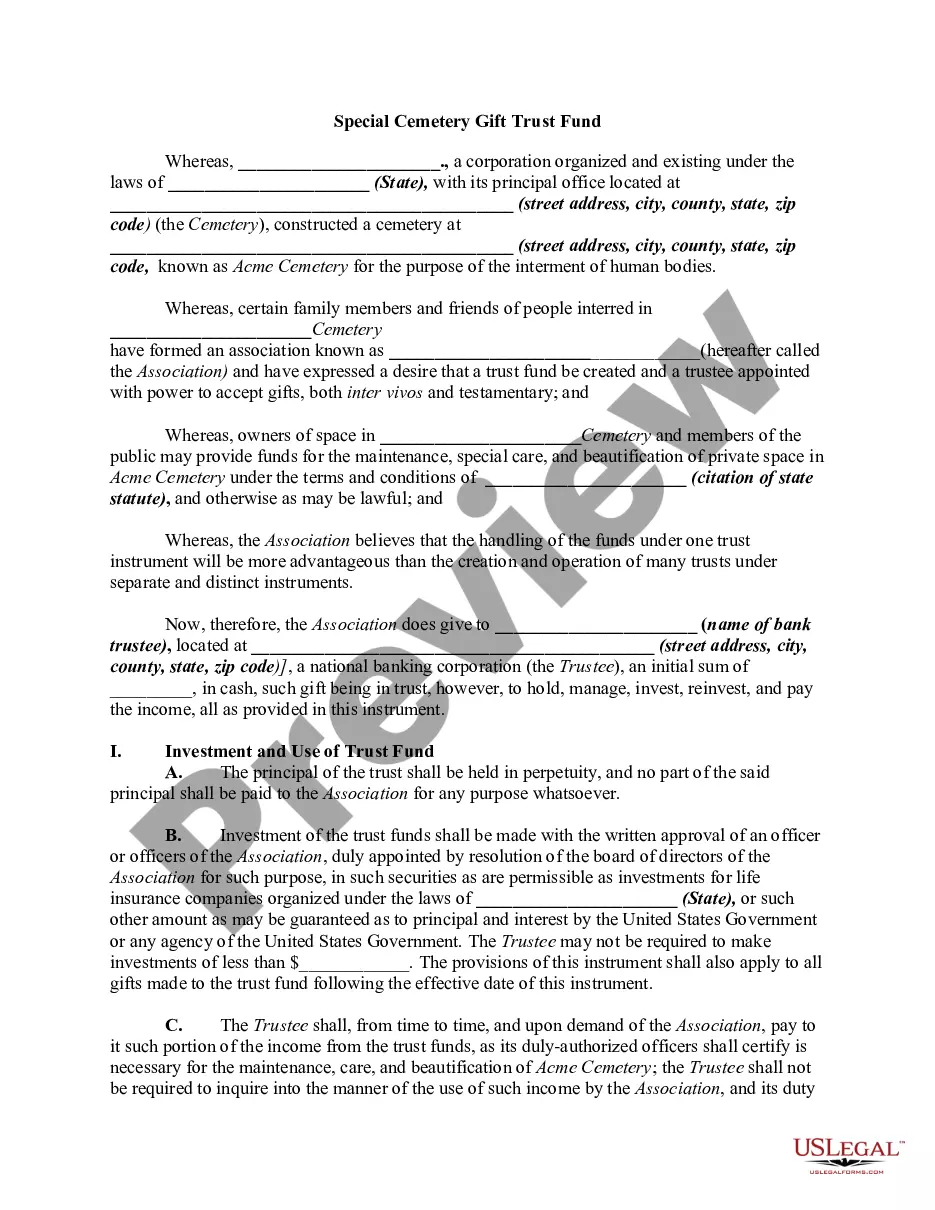
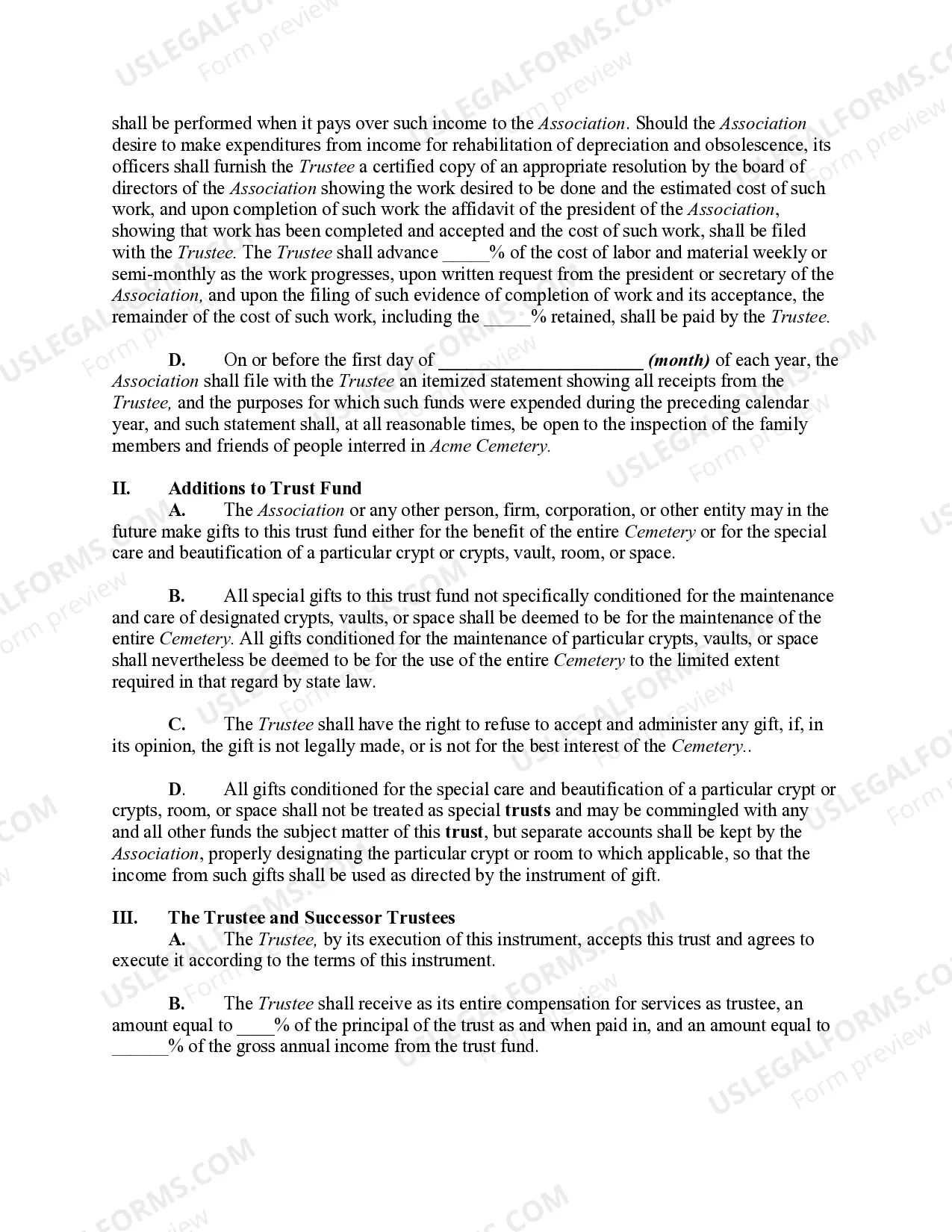
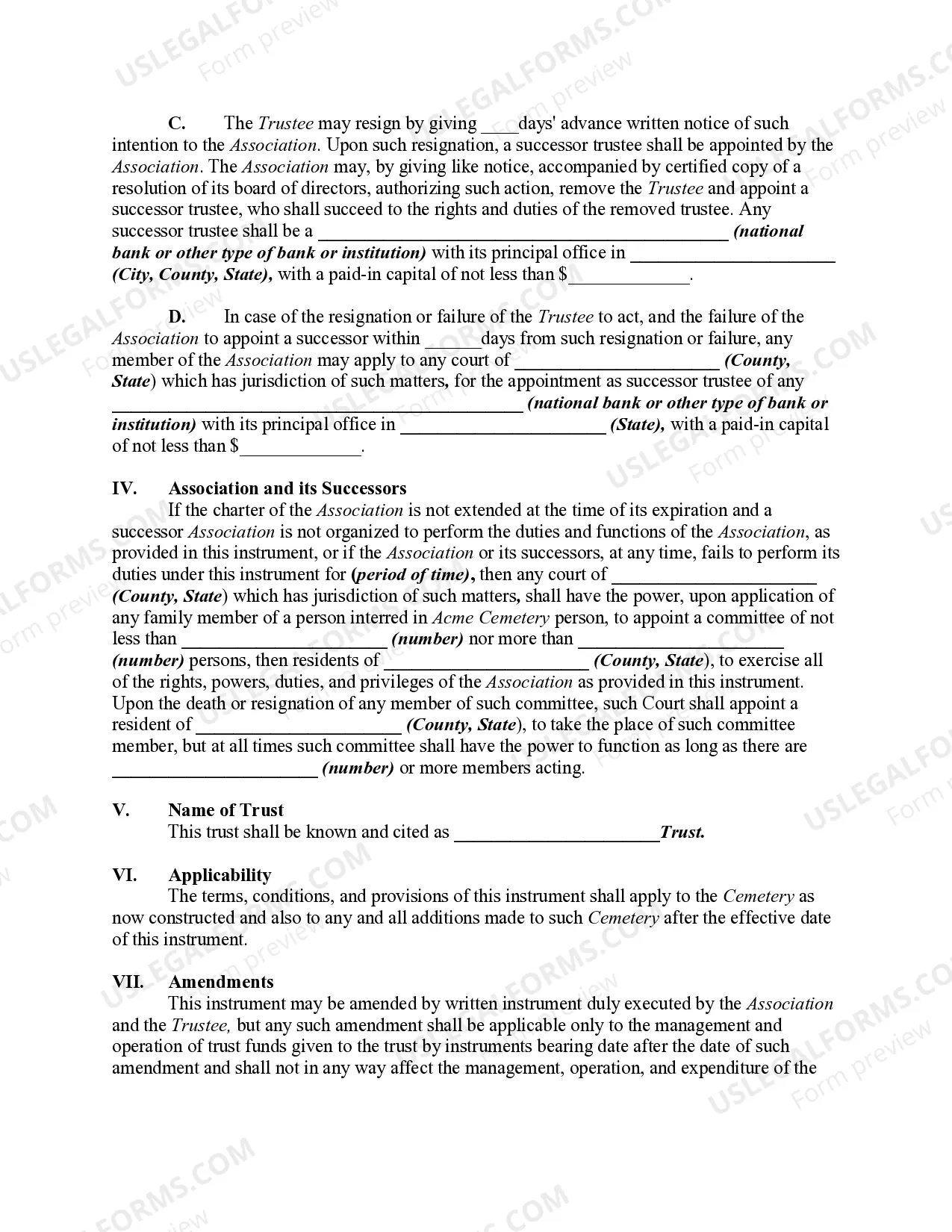
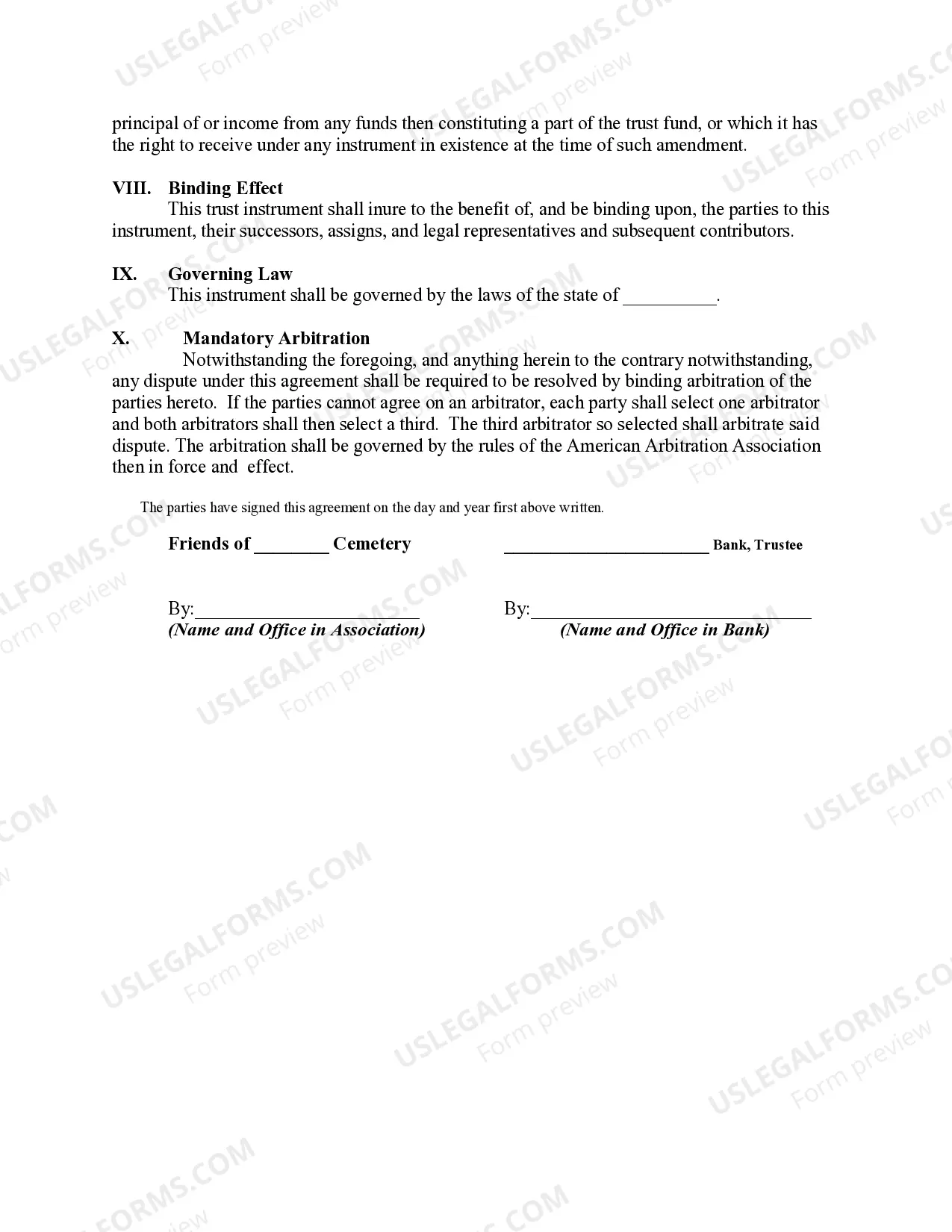

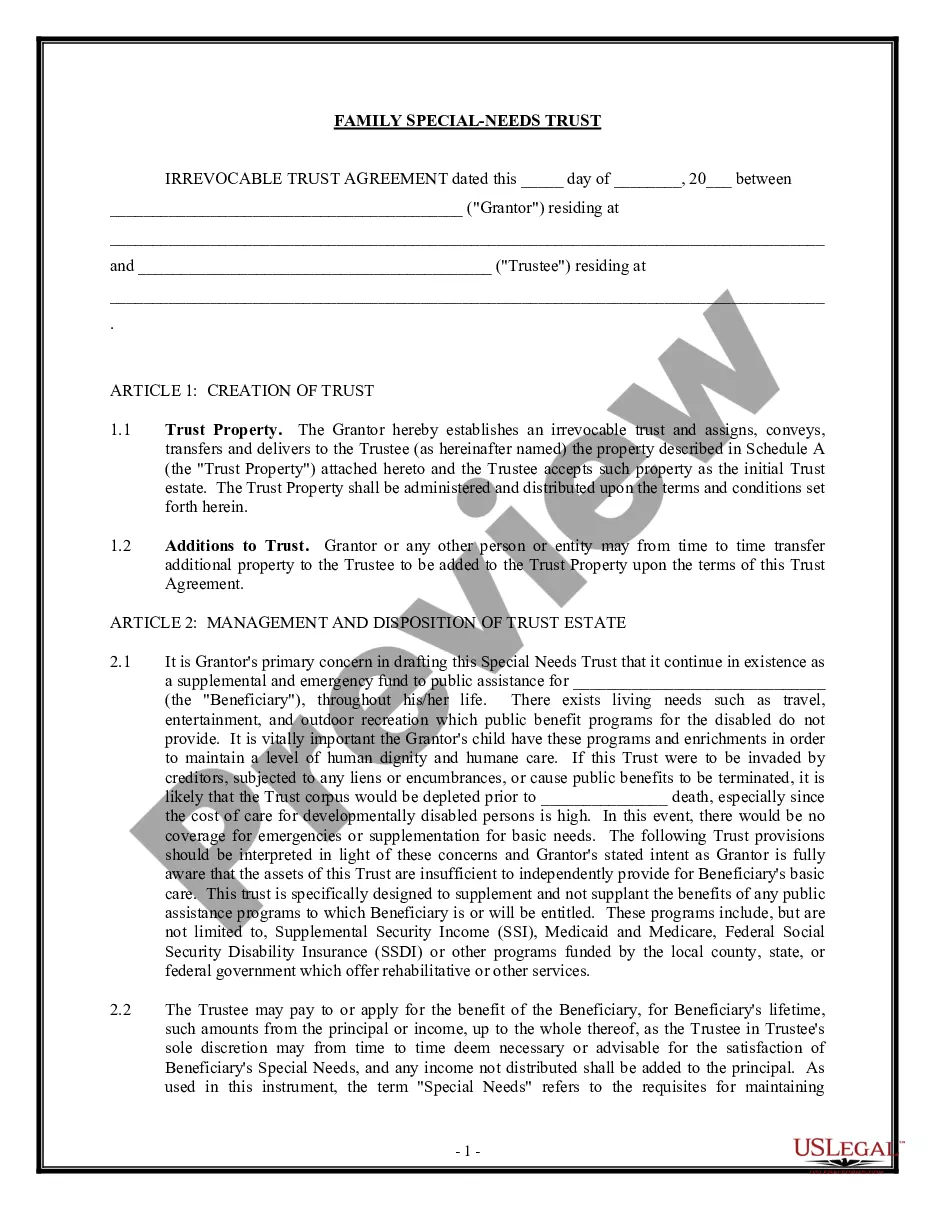
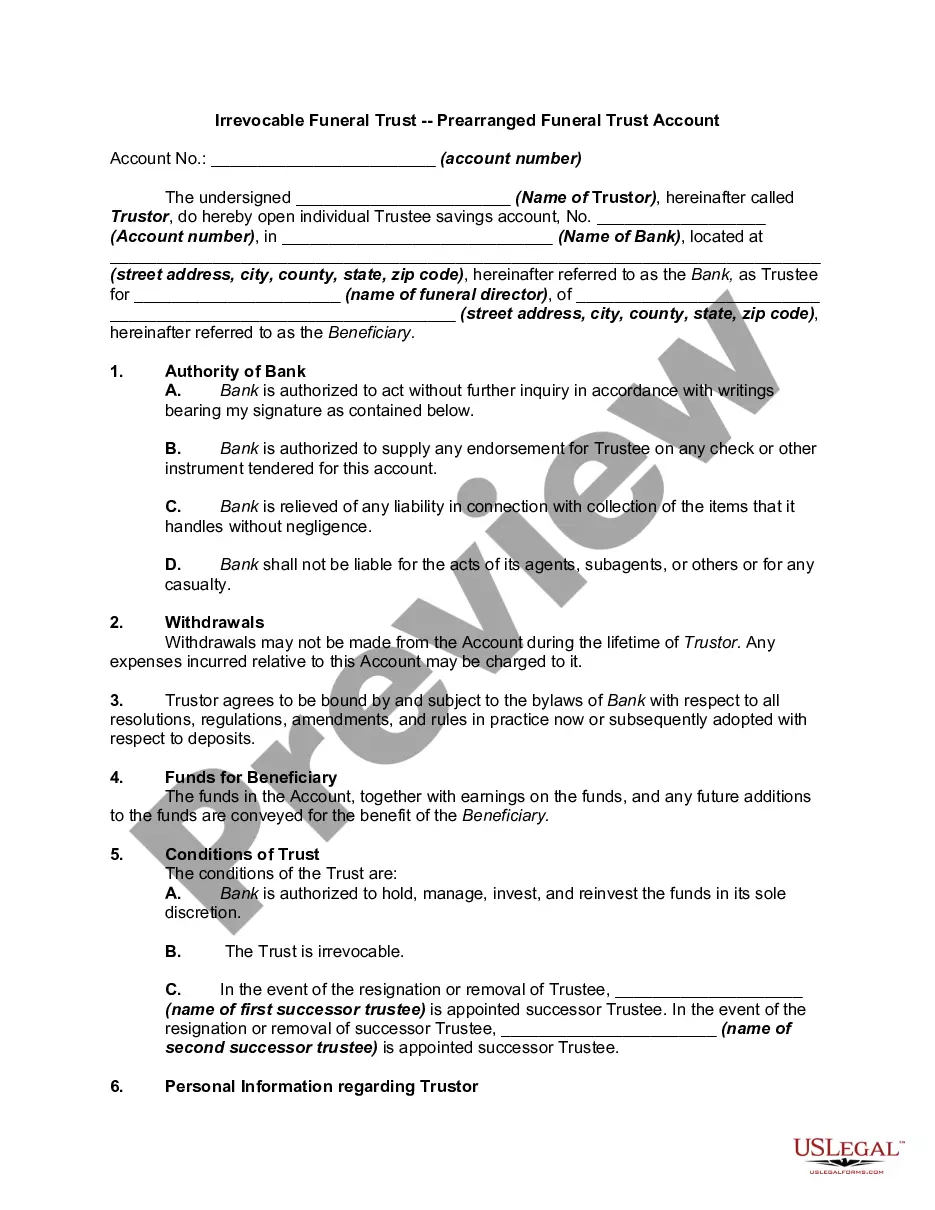
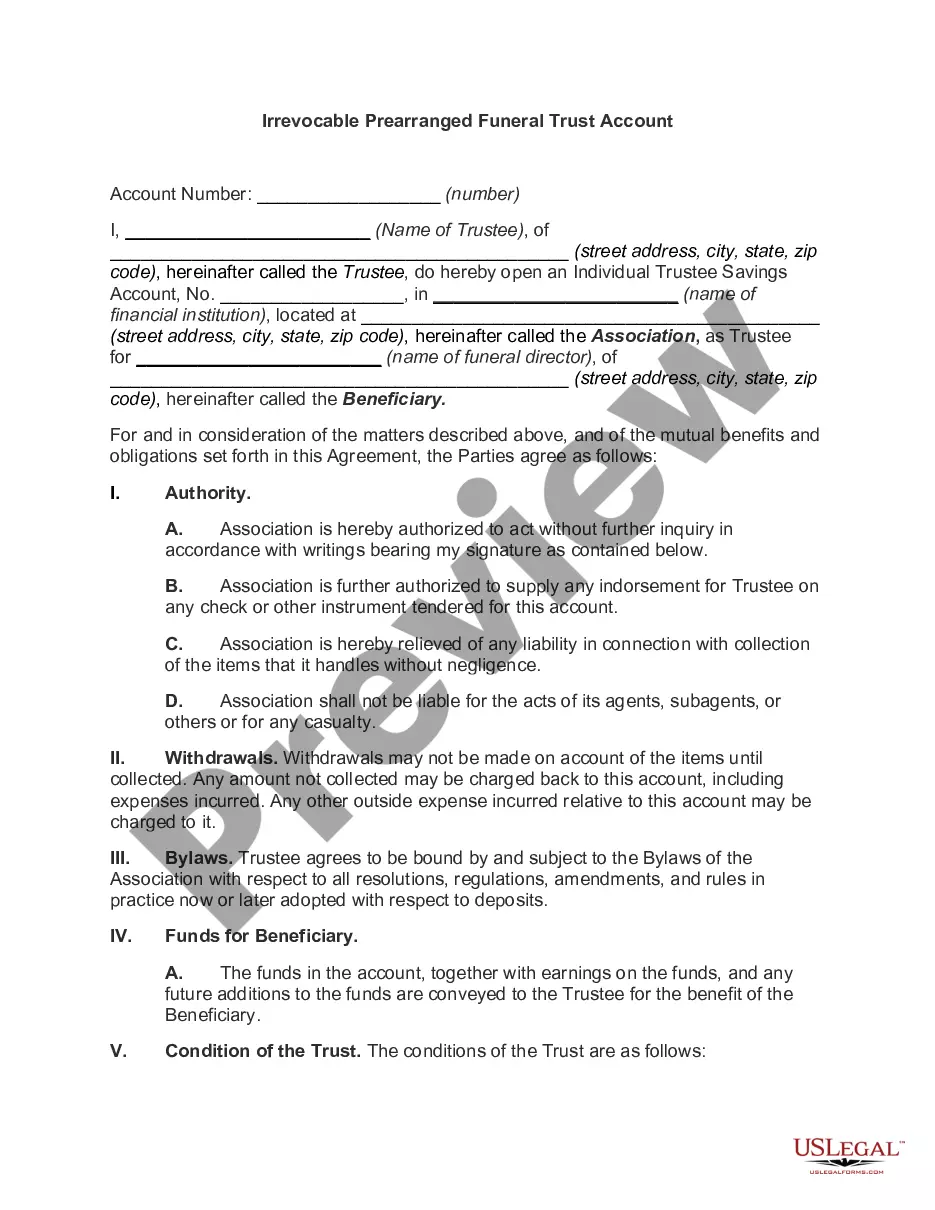
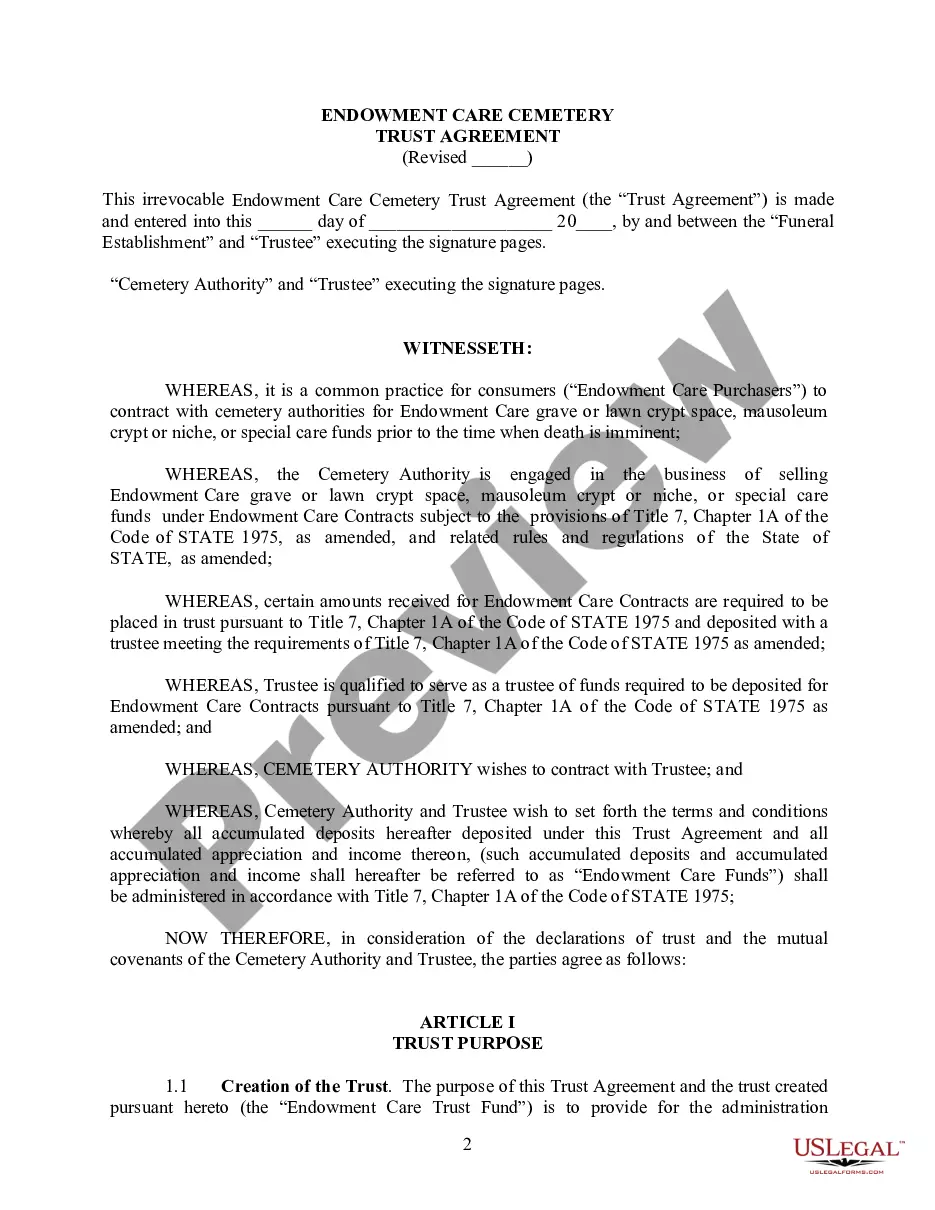

How to fill out Special Cemetery Gift Trust Fund?
You can dedicate multiple hours online searching for the legal document format that meets the state and federal requirements you desire.
US Legal Forms offers a vast selection of legal documents that are assessed by experts.
You can effortlessly download or print the Montana Special Cemetery Gift Trust Fund from our service.
First, ensure you have selected the appropriate format for the area/city you choose. Review the form description to confirm you have chosen the correct form. If available, utilize the Preview button to review the format as well. To find another version of the form, use the Search area to locate the format that fits your needs and specifications. Once you have found the format you require, click Buy now to proceed. Choose the pricing plan you prefer, enter your credentials, and register for a free account on US Legal Forms. Complete the transaction. You may use your credit card or PayPal account to purchase the legal document. Select the format of the document and download it to your device. Make adjustments to the document if possible. You can complete, amend, and sign the Montana Special Cemetery Gift Trust Fund. Obtain and print numerous document templates using the US Legal Forms website, which offers the largest collection of legal documents. Utilize professional and state-specific templates to manage your business or personal requirements.
- If you already possess a US Legal Forms account, you can Log In and click on the Acquire button.
- After that, you can complete, edit, print, or sign the Montana Special Cemetery Gift Trust Fund.
- Every legal document format you receive is your own property indefinitely.
- To obtain another copy of the downloaded form, visit the My documents tab and click on the appropriate button.
- If you are accessing the US Legal Forms website for the first time, follow the simple instructions outlined below.
Form popularity
FAQ
Generally, you cannot bury someone on your property in Montana because of legal restrictions. Cemeteries are designated areas for such purposes. The Montana Special Cemetery Gift Trust Fund can assist you in understanding your options and help you plan for a proper burial in compliance with the law.
Burying someone in your backyard in Montana is typically not allowed due to state regulations. Most burials must occur in recognized cemeteries. However, you can use the Montana Special Cemetery Gift Trust Fund to ensure that all necessary arrangements are made in accordance with the law.
Spreading ashes in Montana is generally permitted, but you must follow certain guidelines. It is important to respect local regulations and private property rights. Utilizing the Montana Special Cemetery Gift Trust Fund can provide clarity on this topic and help you navigate the rules effectively.
While you might wish to establish a burial plot on your land, Montana law typically restricts burial practices to licensed cemeteries. You can explore options to include a burial trust within the Montana Special Cemetery Gift Trust Fund to cover cemetery costs and preserve your burial preferences.
In many cases, you cannot legally be buried in your own yard in Montana. State laws require that burials occur in designated cemetery areas. However, the Montana Special Cemetery Gift Trust Fund can help you plan for burial needs and ensure compliance with local regulations.
You must report all dividend income on the 1041, and you report the share of dividend income for each beneficiary on Schedule K-1s. You must furnish a copy of each K-1 to the appropriate beneficiary, and attach all copies to Form 1041 when you file the return with the Internal Revenue Service.
Section 663(b) allows a trustee or executor to make an election to treat all or any portion of amounts paid to beneficiaries within 65 days of the close of the trust's or estate's tax year as though they were made on the last day of the prior tax year.
In order to use the 65-Day Rule, the trustee must make the 663(b) election by checking the box on line 6 under other information on page two of IRS Form 1041, the trust's fiduciary income tax return. To be valid, the election must be made by filing form 1041 by its due date, including extensions.
They are sometimes able to wait until 1099s are actually issued to determine if a distribution under IRC 663(b) is indeed beneficial. How is the election made? The 663(b) election is made by checking the box on line 6 under Other Information at the bottom of page 2 of form 1041.
The federal gift tax law provides that every person can give a present interest gift of up to $14,000 each year to any individual they want. This means that each parent can each give each of their children and grandchildren $14,000 (two parents permits a total gift per recipient of $28,000).