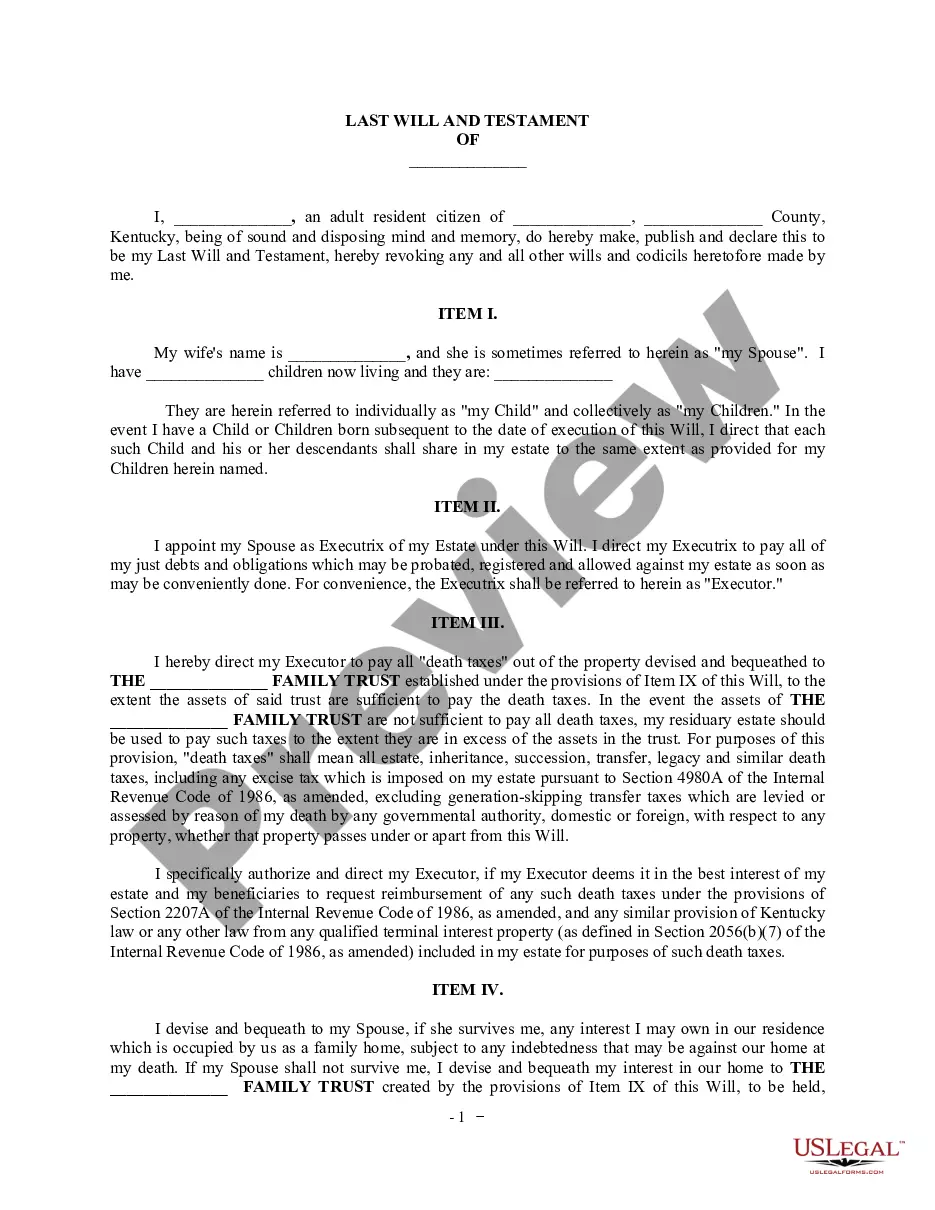
Montana Last Will and Testament for other Persons
What this document covers
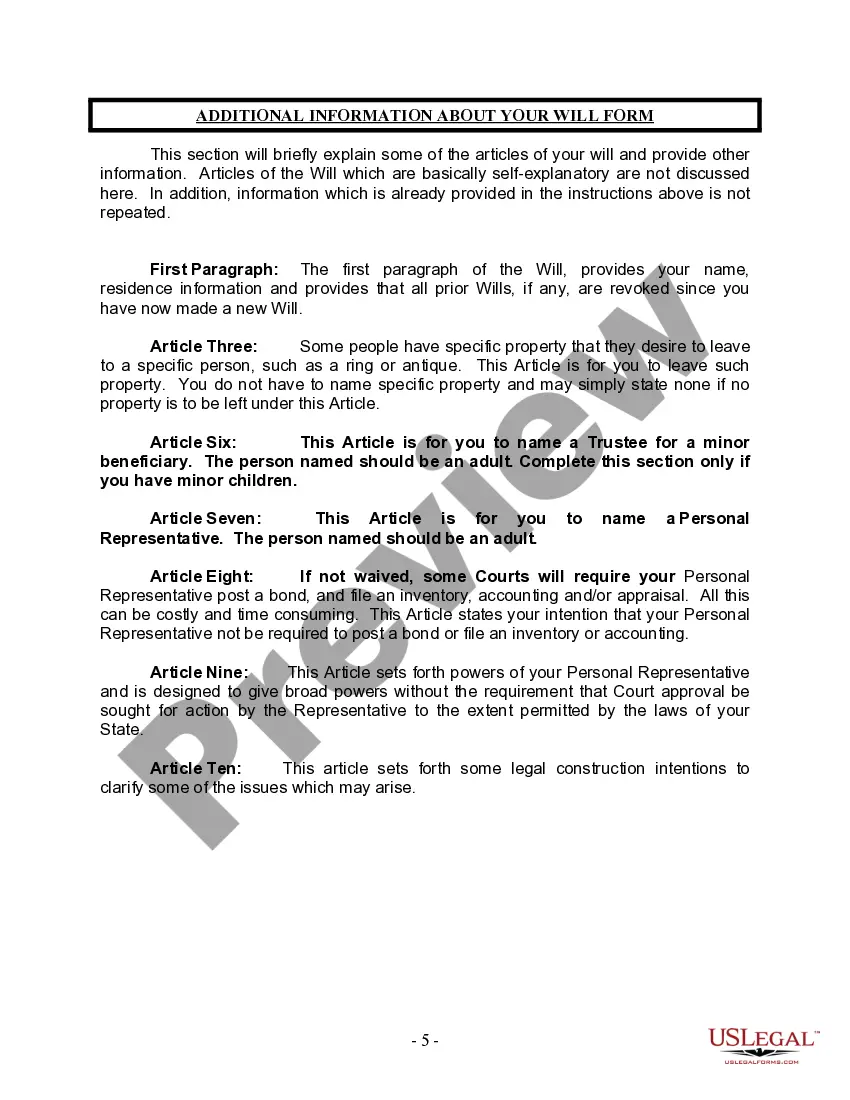
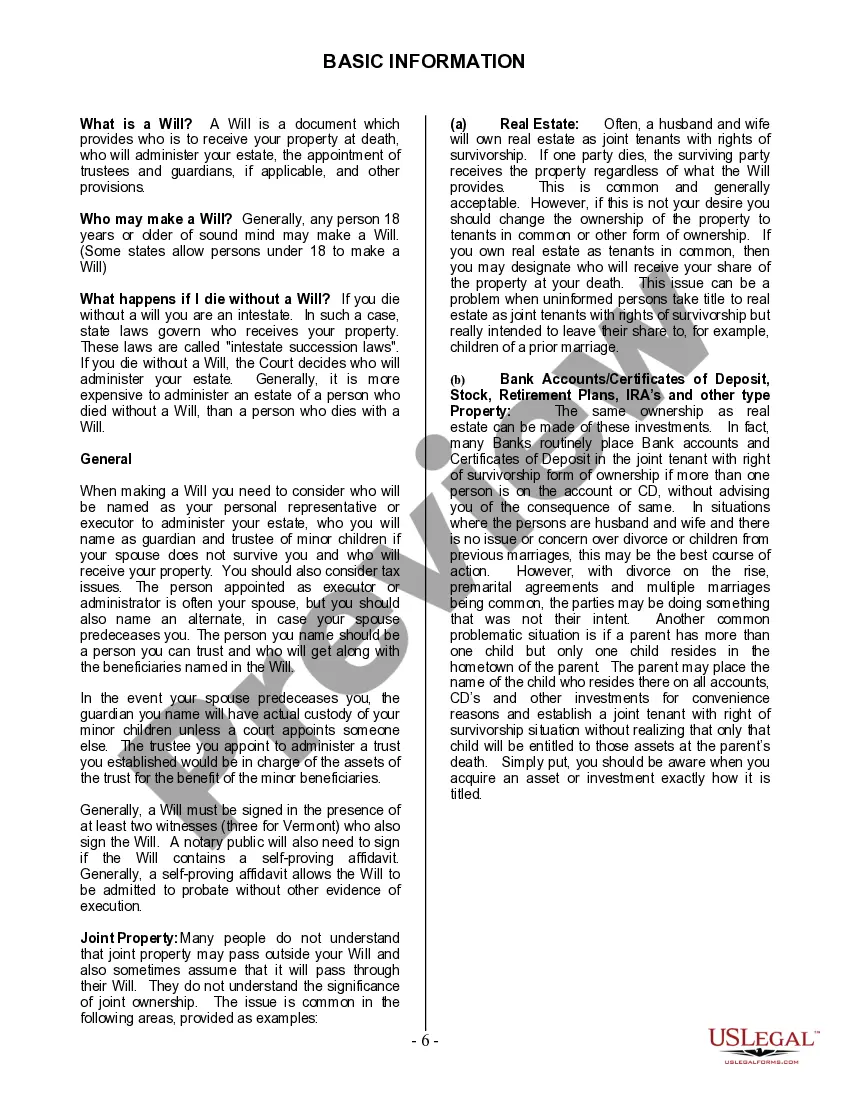
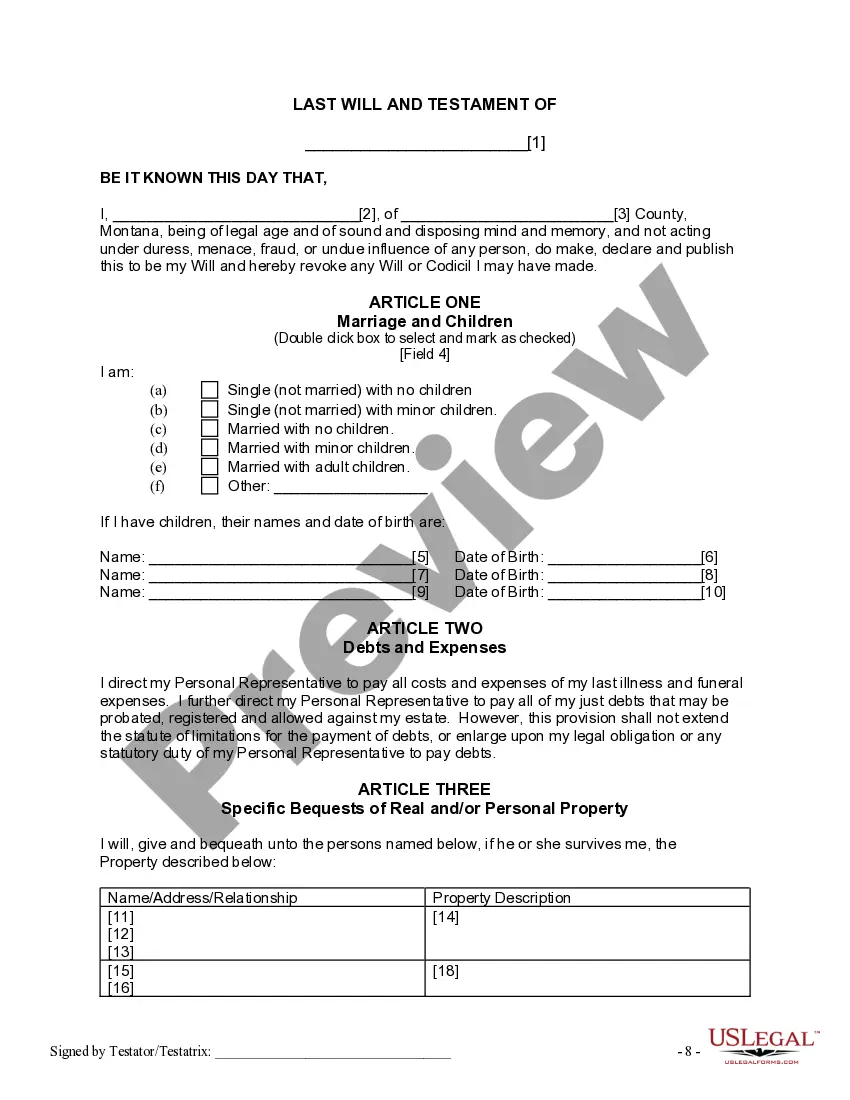
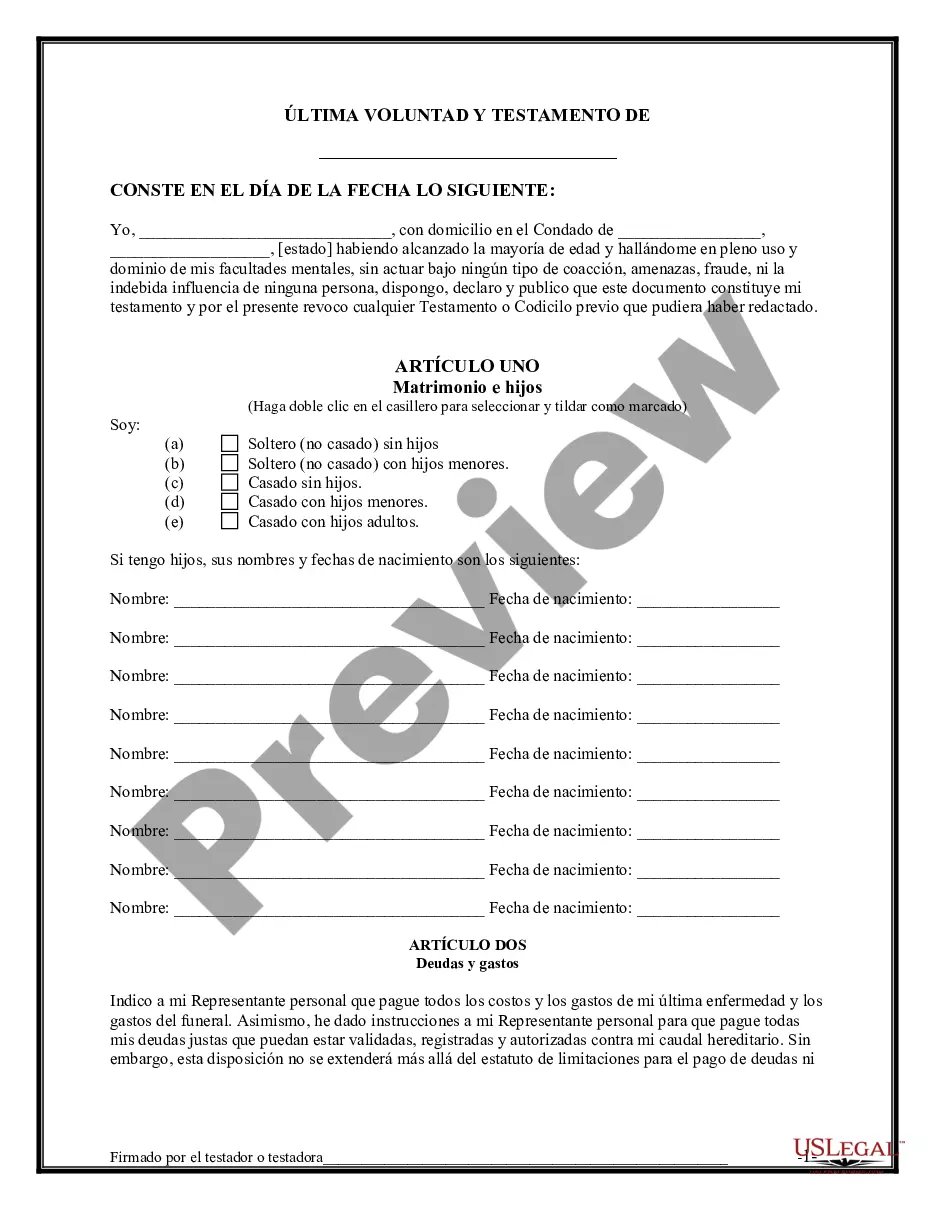
This form is a Last Will and Testament specifically tailored for residents of Montana. It outlines how your assets will be distributed after your death, including appointing an executor for your estate and addressing guardianship for minor children, if applicable. This particular will is useful if you do not have another document that suits your current needs, allowing you to capture your wishes and legal directives in a structured manner.
Key components of this form
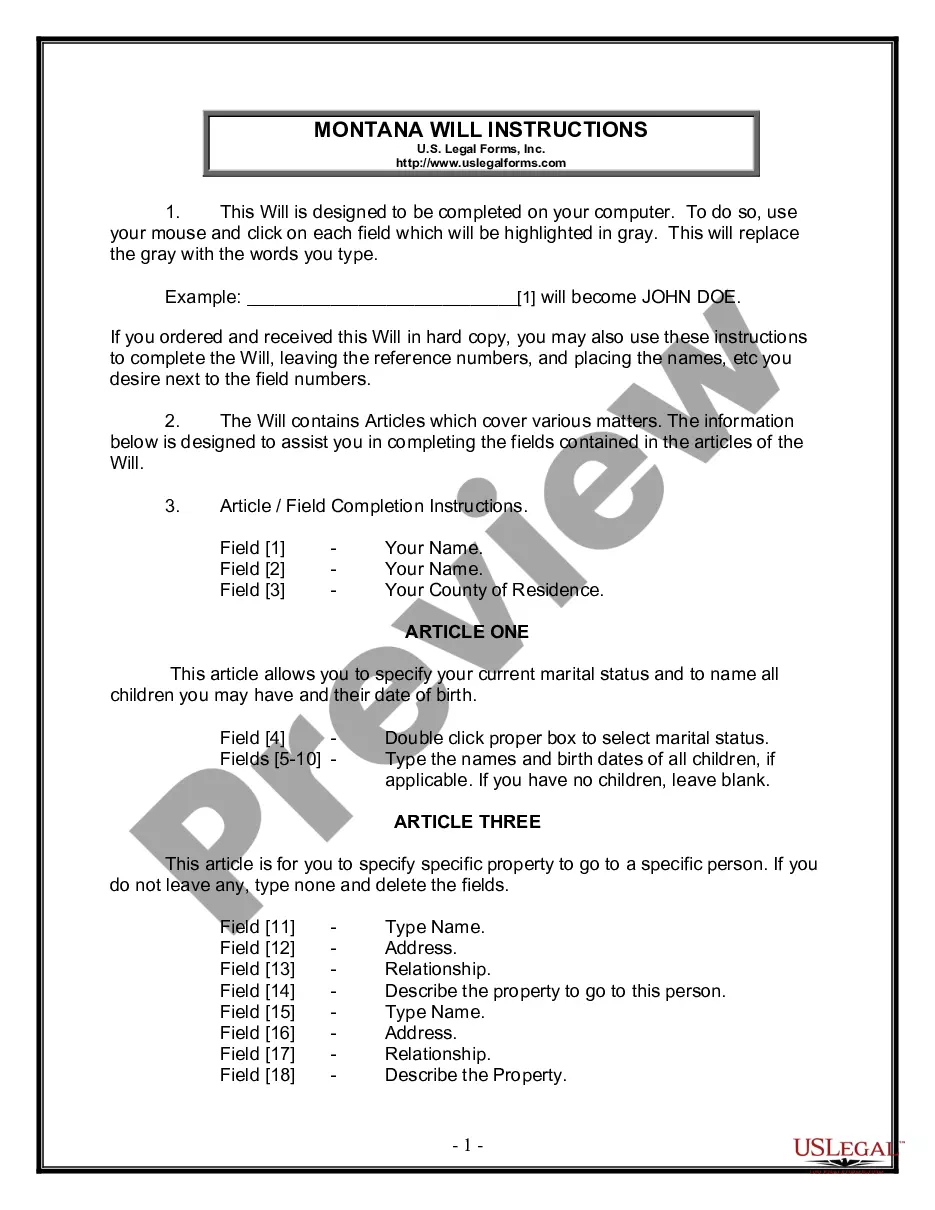
- Your name and county of residence
- Marital status and children's information
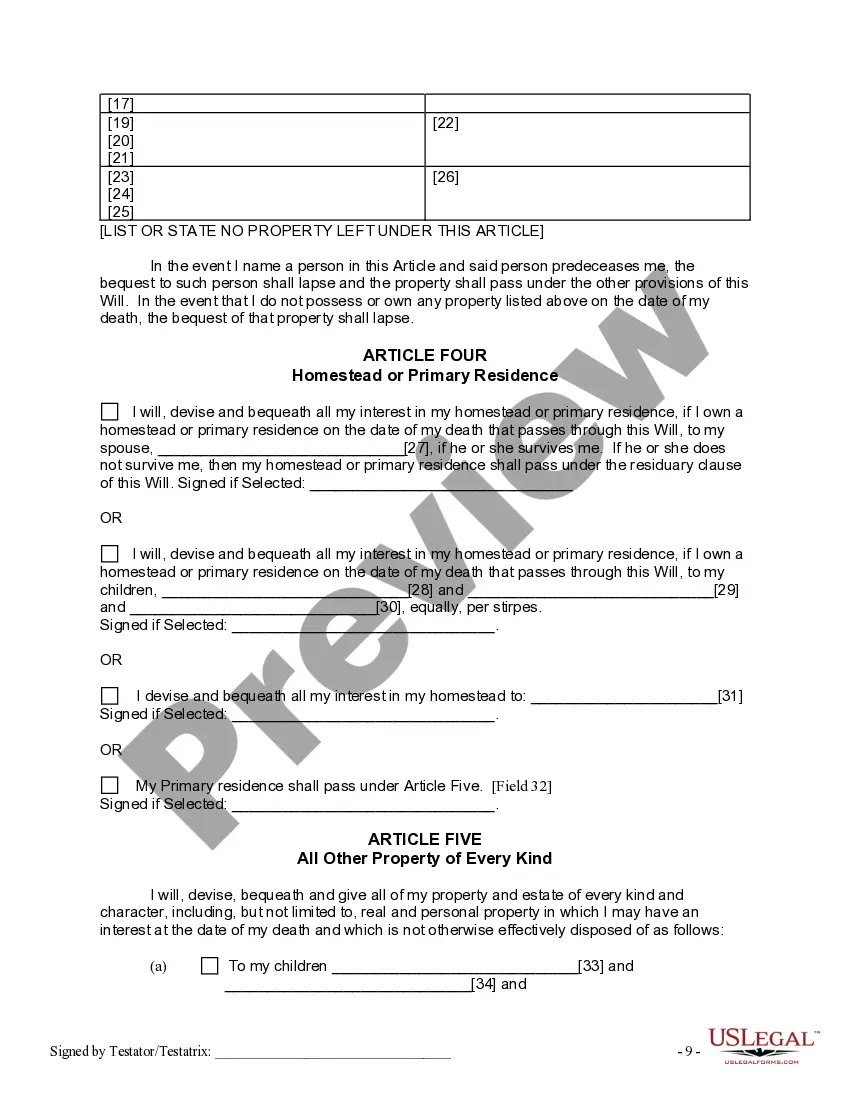
- Specific bequests of property
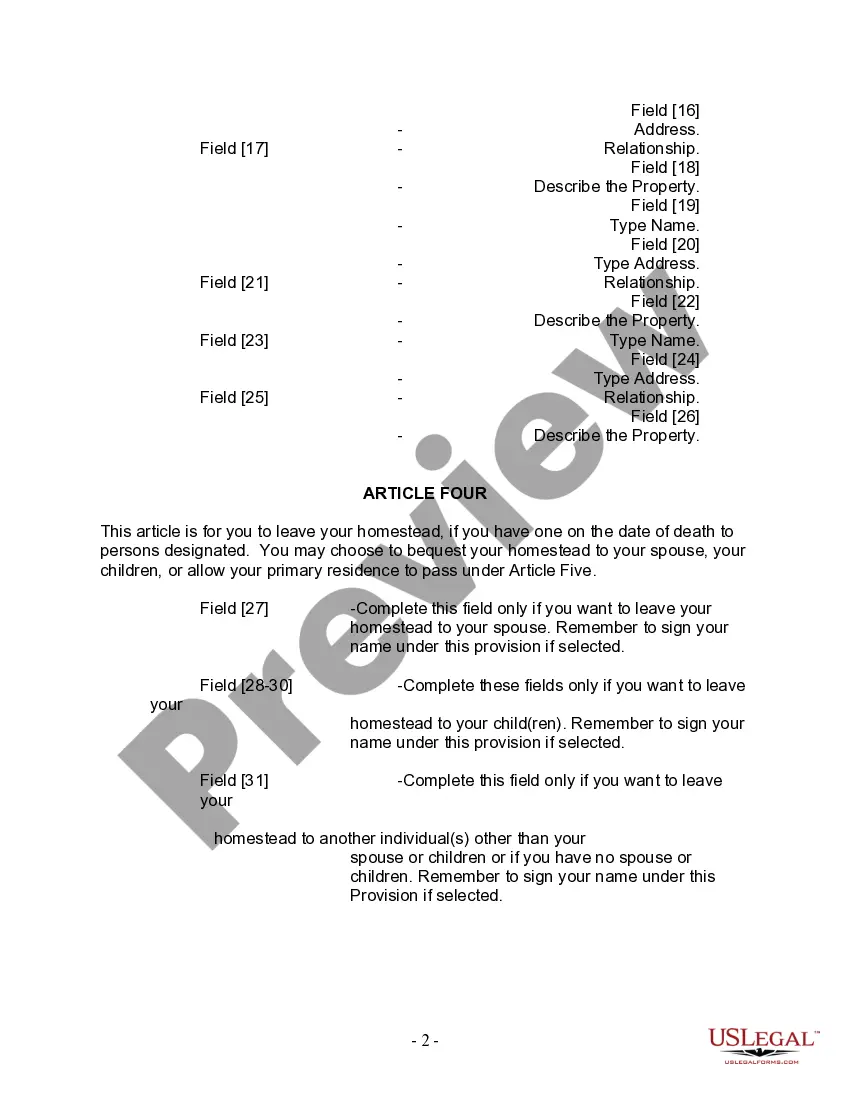
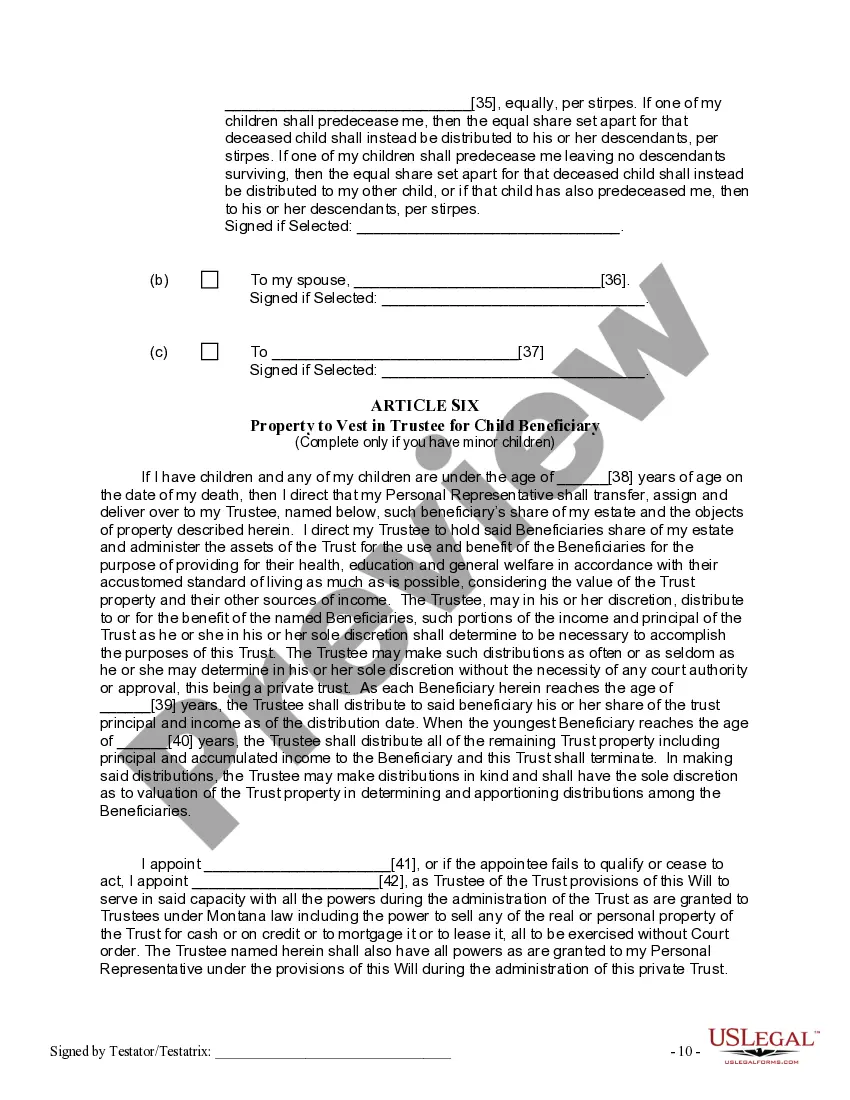
- Homestead or primary residence distribution
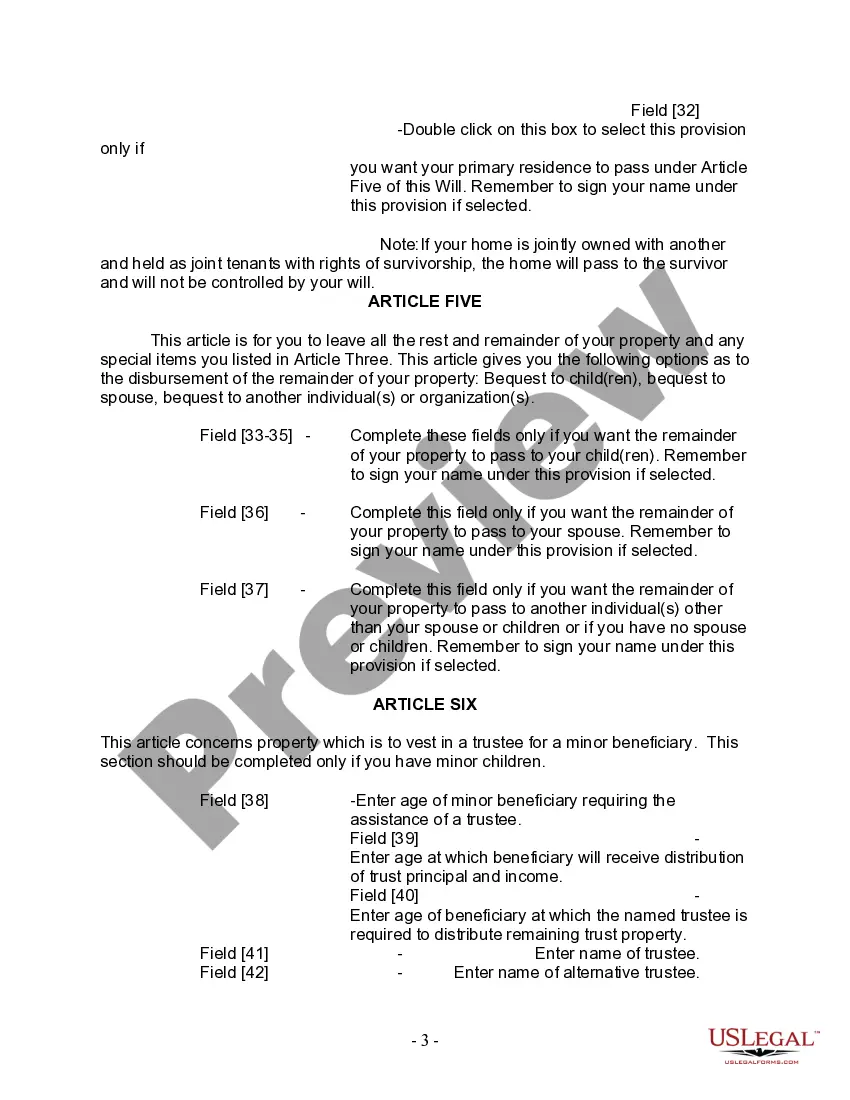
- Appointment of a personal representative and trustee for minor beneficiaries
- Provisions for debts and funeral expenses




Situations where this form applies
This will form is essential when you want to ensure your property is distributed according to your wishes after your death. Use this form if you are a resident of Montana and do not have a previous will that clearly states your desires for asset distribution, guardianship, or executor appointments. It is particularly important for individuals with minor children or specific bequests.
Who needs this form
- Individuals aged 18 or older
- Residents of Montana
- People who wish to designate guardians for minor children
- Those with specific property to bequeath to others
- Anyone looking to ensure their assets are distributed according to their wishes
Steps to complete this form
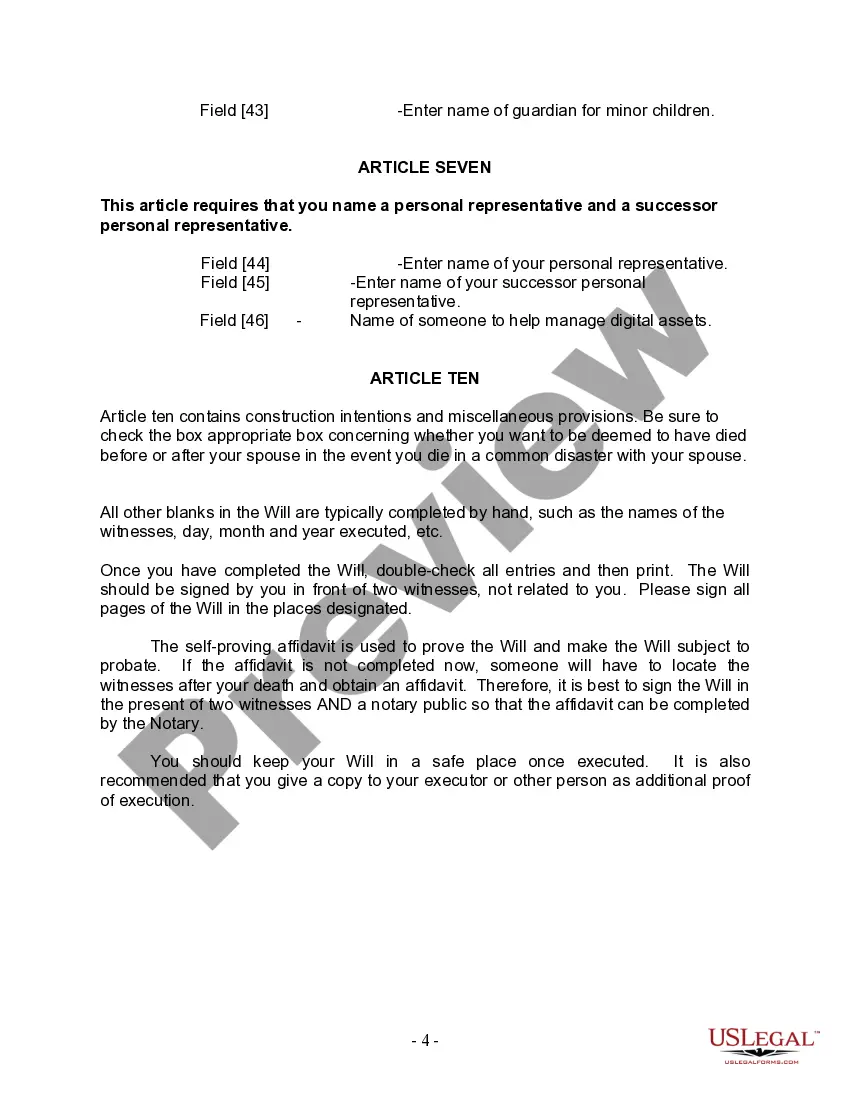
- Fill out your name and county of residence in the designated fields.
- Specify your marital status and list your children along with their dates of birth, if applicable.
- Identify and describe any specific property you wish to bequeath in Article Three.
- Choose the distributions for your homestead and other property in Articles Four and Five.
- Designate a personal representative and, if necessary, a trustee for minor beneficiaries.
- Sign the will in front of two witnesses and a notary public to ensure its validity.
Does this form need to be notarized?
This document requires notarization to meet legal standards. US Legal Forms provides secure online notarization powered by Notarize, allowing you to complete the process through a verified video call, available 24/7.
Get your form ready online
Our built-in tools help you complete, sign, share, and store your documents in one place.
Make edits, fill in missing information, and update formatting in US Legal Forms—just like you would in MS Word.
Download a copy, print it, send it by email, or mail it via USPS—whatever works best for your next step.
Sign and collect signatures with our SignNow integration. Send to multiple recipients, set reminders, and more. Go Premium to unlock E-Sign.
If this form requires notarization, complete it online through a secure video call—no need to meet a notary in person or wait for an appointment.
We protect your documents and personal data by following strict security and privacy standards.

Make edits, fill in missing information, and update formatting in US Legal Forms—just like you would in MS Word.

Download a copy, print it, send it by email, or mail it via USPS—whatever works best for your next step.

Sign and collect signatures with our SignNow integration. Send to multiple recipients, set reminders, and more. Go Premium to unlock E-Sign.

If this form requires notarization, complete it online through a secure video call—no need to meet a notary in person or wait for an appointment.

We protect your documents and personal data by following strict security and privacy standards.
Avoid these common issues
- Not signing the will or failing to have the required witnesses present.
- Overlooking the appointment of a successor personal representative.
- Failing to update the will after major life changes, such as marriage or the birth of children.
- Neglecting to specify certain belongings that hold sentimental value.
Benefits of completing this form online
- Convenient editing and customization of the will directly on your computer.
- Access to legal templates drafted by licensed attorneys, ensuring compliance with Montana law.
- Ability to conveniently save and print your completed will at any time.
- Immediate availability without the need for an in-person appointment with an attorney.
Legal use & context
- This will provides clear instructions on the distribution of your estate based on the laws governing wills in Montana.
- It allows you to specify guardianship for minor children, a crucial aspect for safely managing their welfare posthumously.
- Executing this will properly may prevent disputes among family members and provide peace of mind.
Key takeaways
- Creating a will is essential for ensuring your estate is managed according to your wishes.
- Using this last will and testament form can help clarify your intentions and reduce complications in the event of your passing.
- It is critical to include specific provisions for minor children and the executor of your estate.
- Accurate completion and notarization of the will are vital for legal enforceability.
Looking for another form?
Form popularity
FAQ
Beneficiaries of a will must be notified after the will is accepted for probate. 3feff Moreover, probated wills are automatically placed in the public record. If the will is structured to avoid probate, there are no specific notification requirements.
While your will should still be valid in the new state, there may be differences in the new state's laws that may make certain provisions of the will invalid. In addition, moving is a good excuse to consult an attorney to make sure your estate plan in general is up to date.
No, in Montana, you do not need to notarize your will to make it legal. However, Montana allows you to make your will "self-proving" and you'll need to go to a notary if you want to do that. A self-proving will speeds up probate because the court can accept the will without contacting the witnesses who signed it.
Obviously, the person who is named as executor or personal representative is entitled to a copy of the will. He or she is in charge of applying for probate, managing the decedent's property, and making sure the instructions in the will get carried out.
You can legally prepare your own will, it can even be handwritten. This type of will is known as a "holographic will." In Montana, your handwritten will must be signed by you. Your signature must also be located on any material provisions, and no witnesses will need to be present for the signing of your will.
A will doesn't have to be notarized to be valid. But in most states, you'll want to add a self-proving affidavit to your will, which must be signed by your witnesses and notarized.If you sign your will in a lawyer's office, the lawyer will provide a notary public.
The will of a decedent must be filed with the Clerk of Court so the personal representative may proceed with the administration of the estate. Montana has both formal (court-directed) and informal probate as well as a simplified probate process for small estates.
A notarized will does not need to be probated.When a person dies leaving behind a will that is not notarized, the law requires that its validity be ascertained by a notary or by a court. Similarly, any non-notarized modification made to a will must be probated, whether the will is notarized or not.