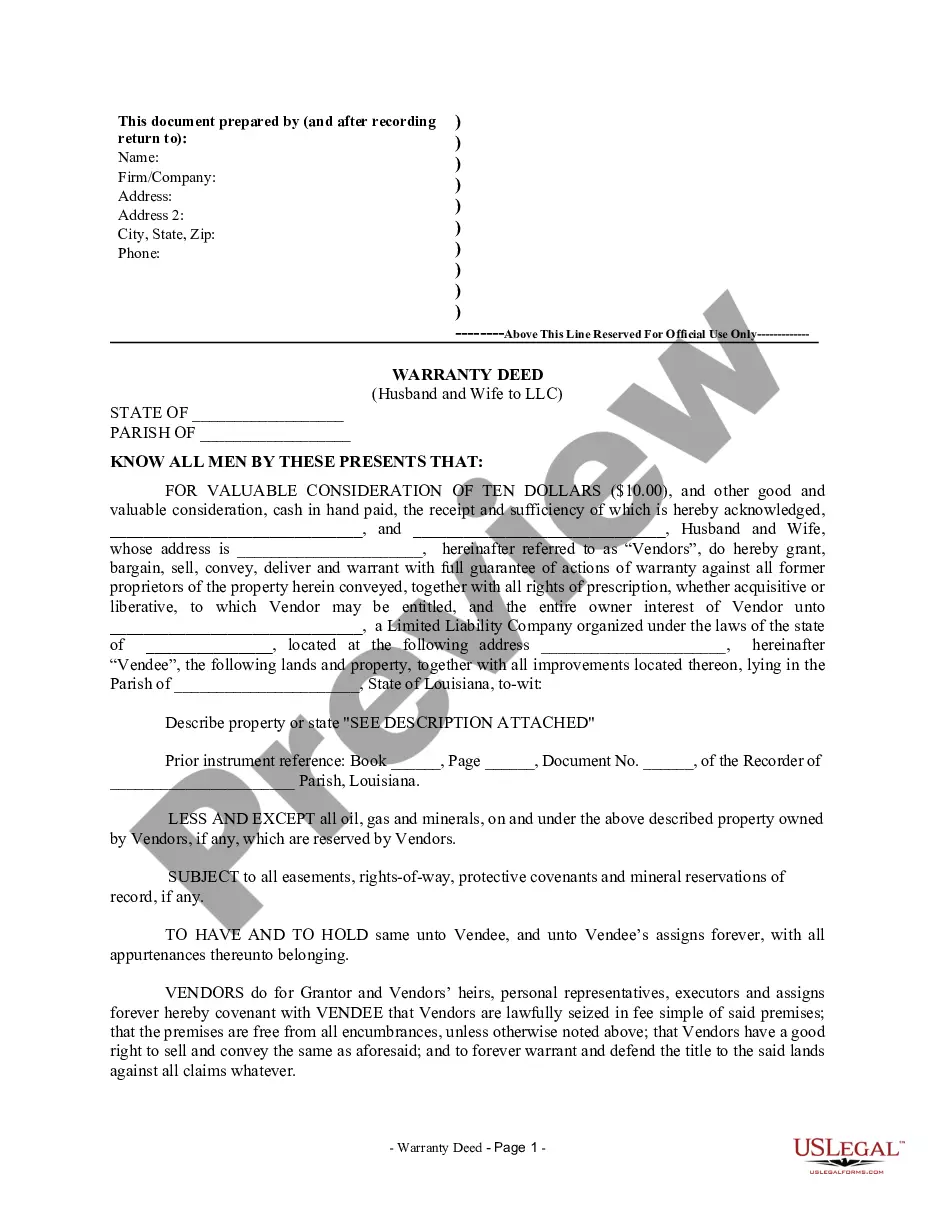
North Carolina Letter from Tenant to Landlord responding to Notice to Terminate for Noncompliance - Noncompliant condition caused by Landlord's own deliberate or negligent act
Overview of this form
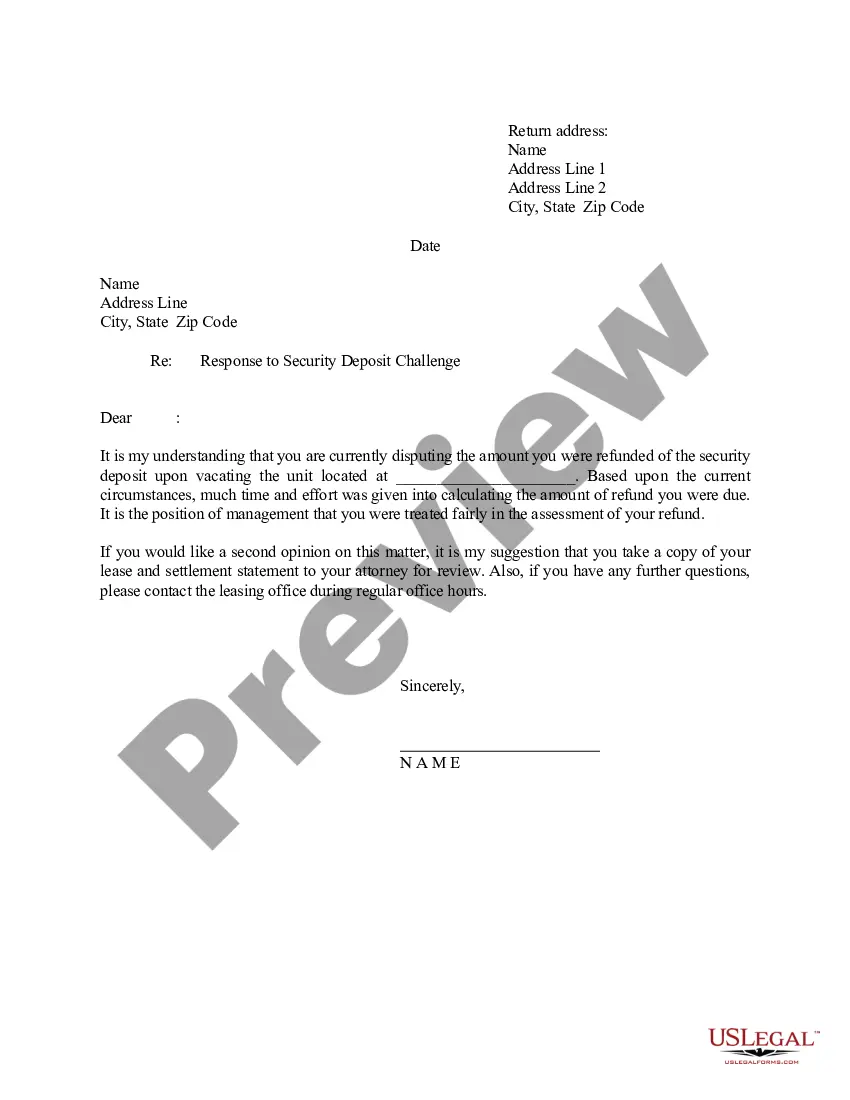
This form is a Letter from Tenant to Landlord responding to a Notice to Terminate for Noncompliance. It allows a tenant to formally assert that the noncompliance leading to eviction stems from the landlord's own actions or negligence. This document specifically addresses situations where the landlord is at fault, distinguishing it from letters that may simply acknowledge a notice without contesting it.
Key components of this form
- Identification of the tenant and landlord involved in the issue.
- A clear statement regarding the landlord's actions that caused the noncompliant conditions.
- A request for immediate repairs and a cessation of eviction proceedings.
- Addressing how legal rights are reserved for potential future claims.
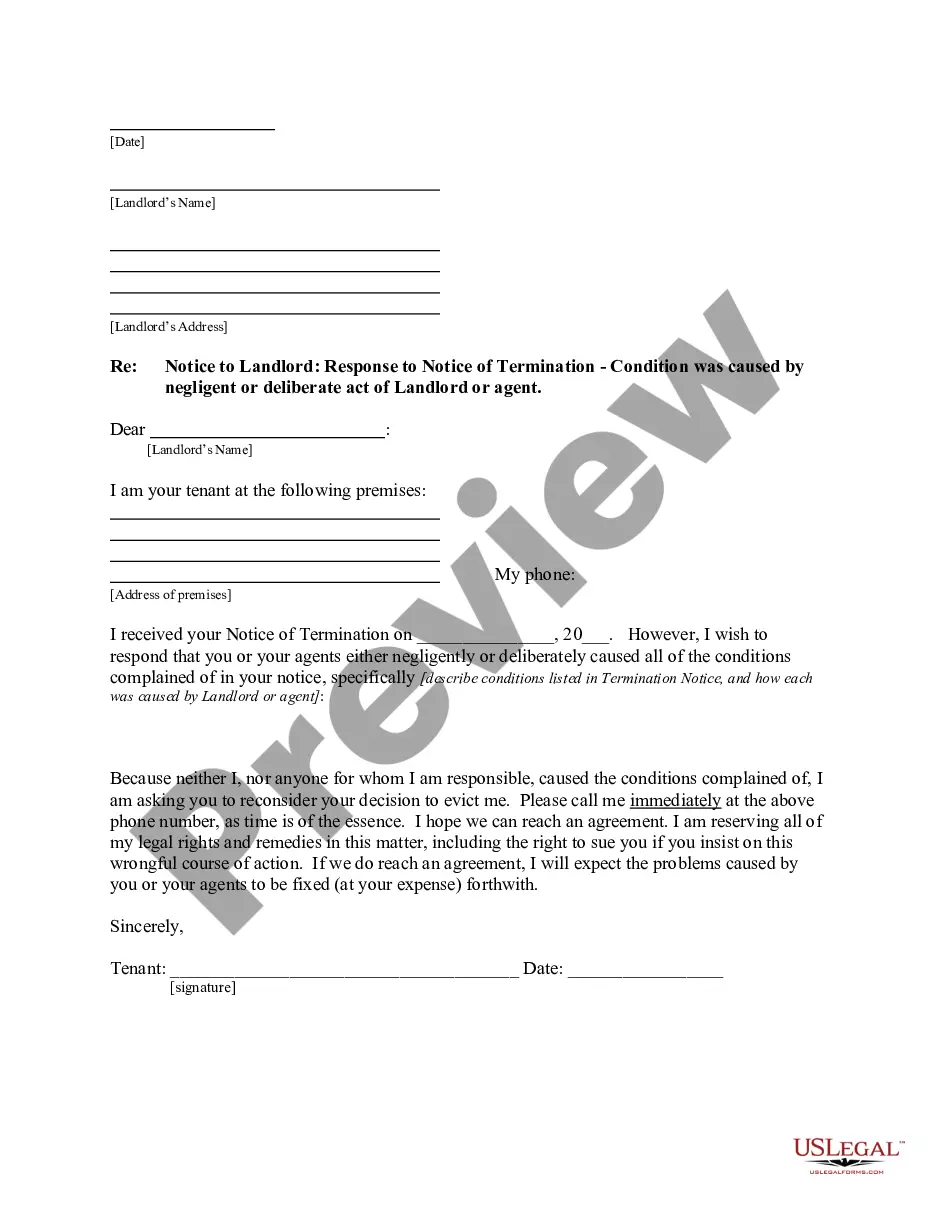
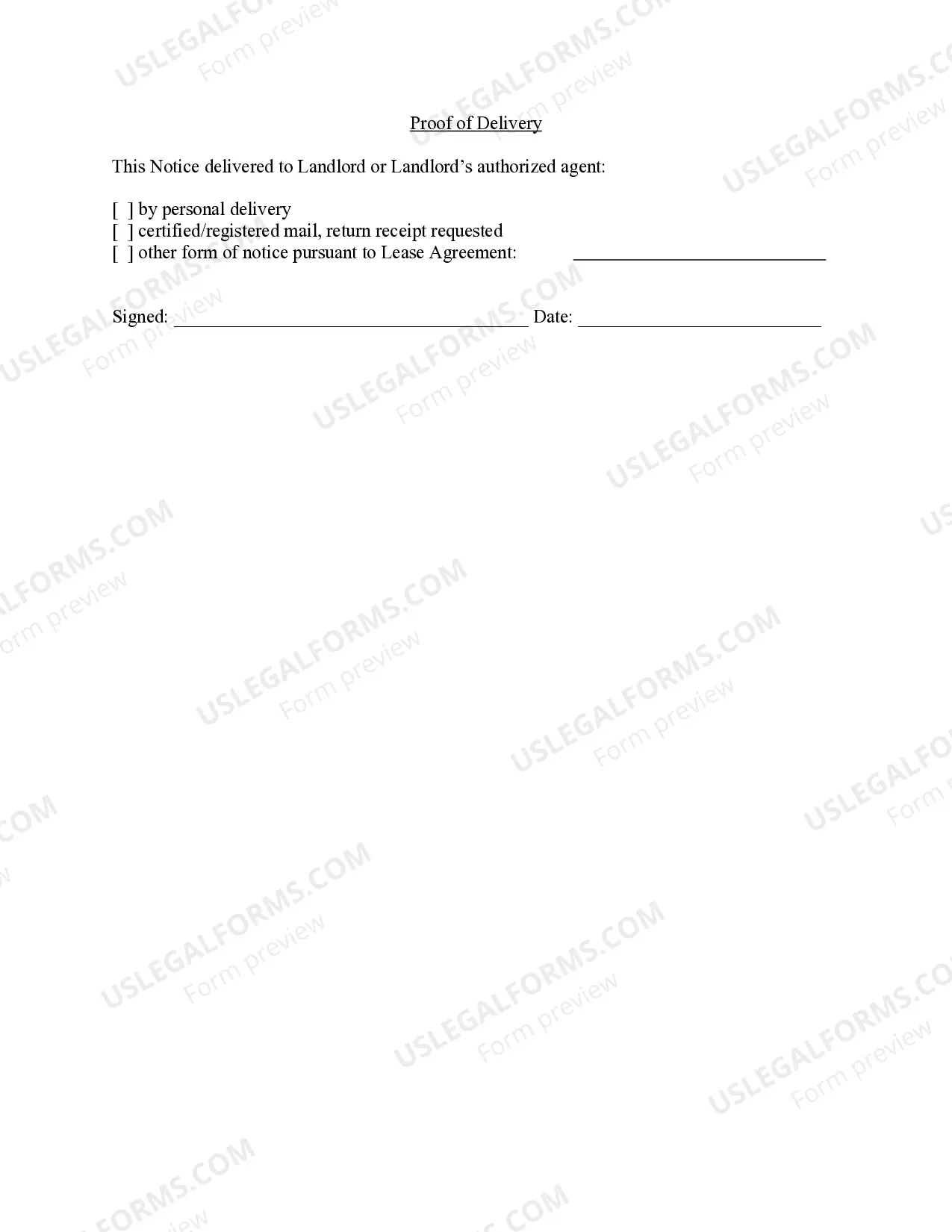
- Proof of delivery method for the notification to the landlord.



When to use this form
This form should be used when a tenant receives a notice of eviction for noncompliance with rental agreements, but believes that the situation leading to the notice is due to the landlord's actions or negligence. Examples include failure to make necessary repairs, violating health codes, or any deliberate act that impacts the tenant's living conditions.
Who needs this form
- Tenants who have received an eviction notice for noncompliance.
- Individuals who believe their eviction is unjust due to the landlord's negligence.
- Renters seeking to assert their rights while requesting necessary repairs.
How to complete this form
- Identify the parties involved, including the tenant and landlord.
- Specify the property address for which the eviction notice has been issued.
- Clearly state the reasons for contesting the eviction, citing landlord negligence.
- Request immediate repairs and the halting of the eviction process.
- Sign and date the letter to validate it.
Does this form need to be notarized?
This form does not typically require notarization unless specified by local law. Ensure to check local regulations for any additional requirements.
Get your form ready online
Our built-in tools help you complete, sign, share, and store your documents in one place.
Make edits, fill in missing information, and update formatting in US Legal Forms—just like you would in MS Word.
Download a copy, print it, send it by email, or mail it via USPS—whatever works best for your next step.
Sign and collect signatures with our SignNow integration. Send to multiple recipients, set reminders, and more. Go Premium to unlock E-Sign.
If this form requires notarization, complete it online through a secure video call—no need to meet a notary in person or wait for an appointment.
We protect your documents and personal data by following strict security and privacy standards.

Make edits, fill in missing information, and update formatting in US Legal Forms—just like you would in MS Word.

Download a copy, print it, send it by email, or mail it via USPS—whatever works best for your next step.

Sign and collect signatures with our SignNow integration. Send to multiple recipients, set reminders, and more. Go Premium to unlock E-Sign.

If this form requires notarization, complete it online through a secure video call—no need to meet a notary in person or wait for an appointment.

We protect your documents and personal data by following strict security and privacy standards.
Common mistakes to avoid
- Failing to provide specific details about the landlord's actions.
- Overlooking the need to keep a copy of the letter for personal records.
- Using vague language instead of clearly stating the demands.
Why complete this form online
- Convenient access to a legally vetted template drafted by licensed attorneys.
- Easy editing features allow for customization to individual situations.
- Reliable and secure process for creating essential legal documents.
Legal use & context
- This form is intended to protect tenants' rights and promote communication with landlords.
- It serves as a legal document that can support future litigation if necessary.
- Proper use can help prevent illegal eviction scenarios.
Main things to remember
- Use this form to respond to an eviction notice based on landlord negligence.
- Clearly state your claims and requests within the letter.
- Always keep copies of correspondence for your records and future reference.
Looking for another form?
Form popularity
FAQ
North Carolina law says that your landlord must keep your housing fit and safe. It also says that you, the tenant, must pay your rent, keep your home clean, and not damage your home. To make the law work, both the tenant and the landlord must do their part.
4 The filing fee for the Writ of Possession is $25. The sheriff also has to serve your tenant with the Writ of Possession, which costs another $30 per tenant. The removal of the tenant from the property (padlocking process) with the sheriff usually takes place about 5 to 7 days after filing the Writ of Possession.
Many landlords will be curious about the North Carolina eviction timeline as they start the process. Usually, the process takes about three to four weeks. You have to wait for the 10 day notice period, followed by the 7-day court summons period. Then, the tenant has up to 10 days to move out.
If you're seeking damages for emotional distress caused by a landlord's discrimination, or punitive damages for especially blatant and intentional discrimination, a lawsuit may well be your best bet. Understand what's involved in suing your landlord. You may file a lawsuit in either federal or state court.
Benefits of Suing Your Landlord Filing a lawsuit does have some potential advantages for tenants. Could Motivate a Landlord to Settle Outside of Court: Notifying your landlord of your intention to sue him or her could motivate your landlord to do everything in their power to avoid actually going to court.
Start a written record. The problems with my landlord started almost immediately after I moved in. Check your lease agreement. If your landlord agreed to something in your lease, he has to follow it. Send written requests. Decide if you have a case. Seek legal assistance. File a civil lawsuit. Fight discrimination.
Notice Requirements for North Carolina Landlords A landlord can simply give you a written notice to move, allowing you seven days as required by North Carolina law and specifying the date on which your tenancy will end.
A Writ of Possession in NC gives the county sheriff the authority to remove the tenant out of your rental property. After the Writ of Possession is issued by the court, the sheriff would be required to carry out the eviction seven days after it's issued.
If you have a complaint about landlord/tenant issues contact us for help or call toll free within North Carolina at 1-877-5-NO-SCAM.