North Carolina Brood Mare Lease Agreement
Overview of this form
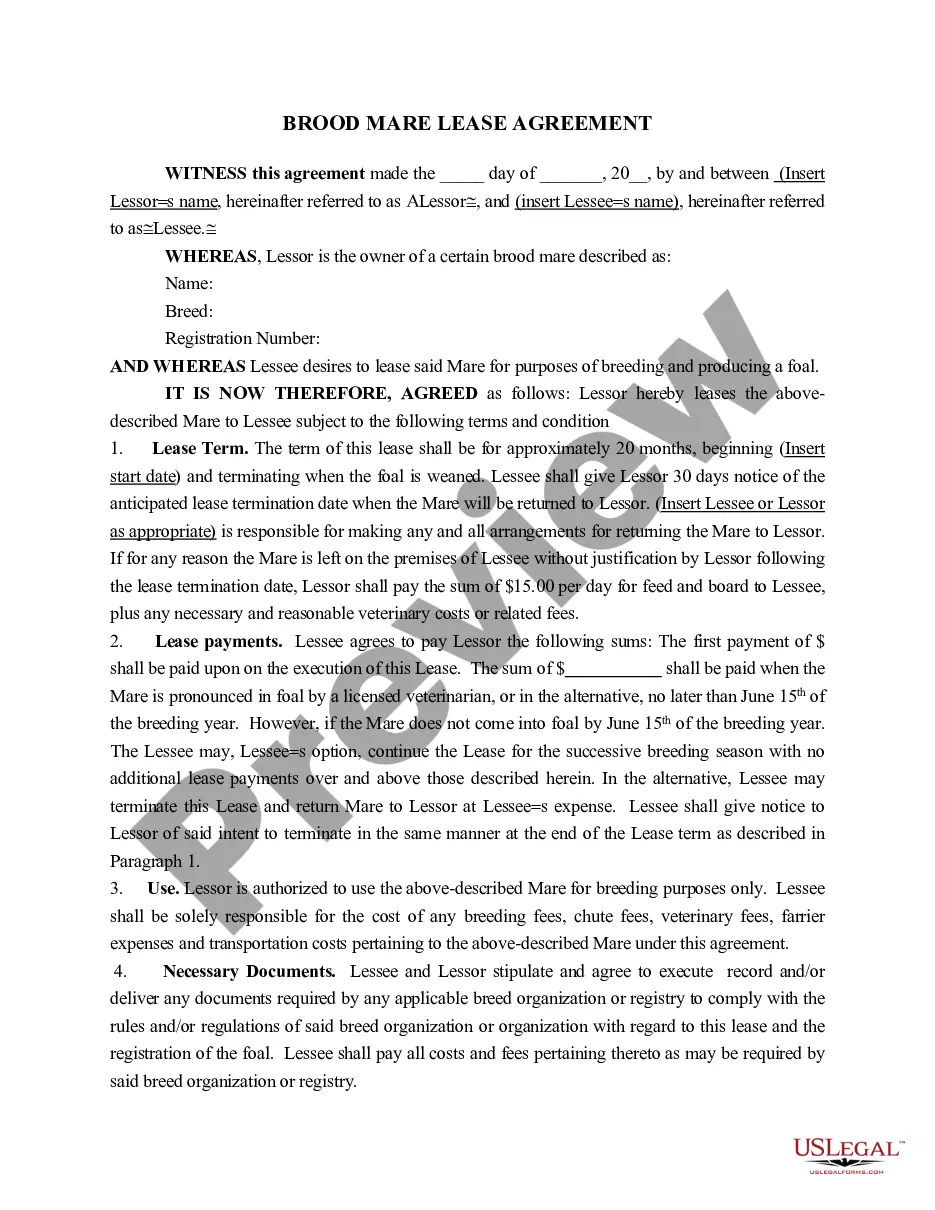
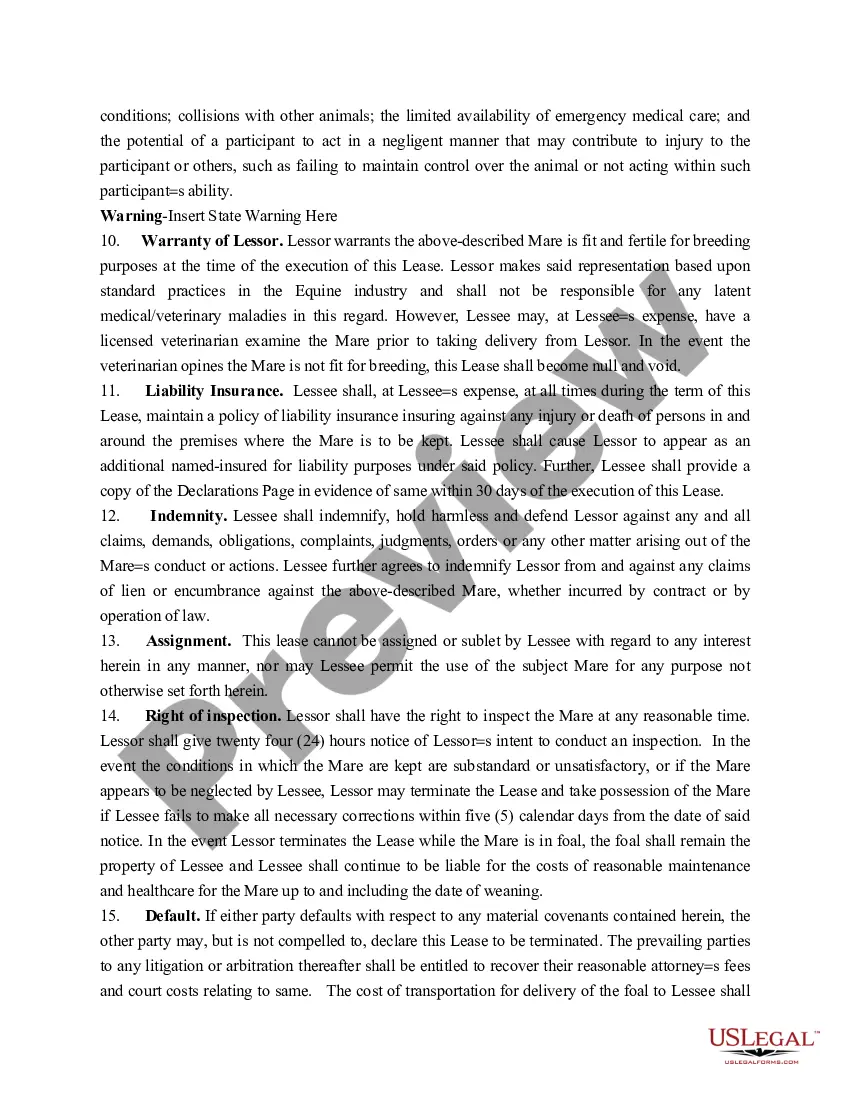
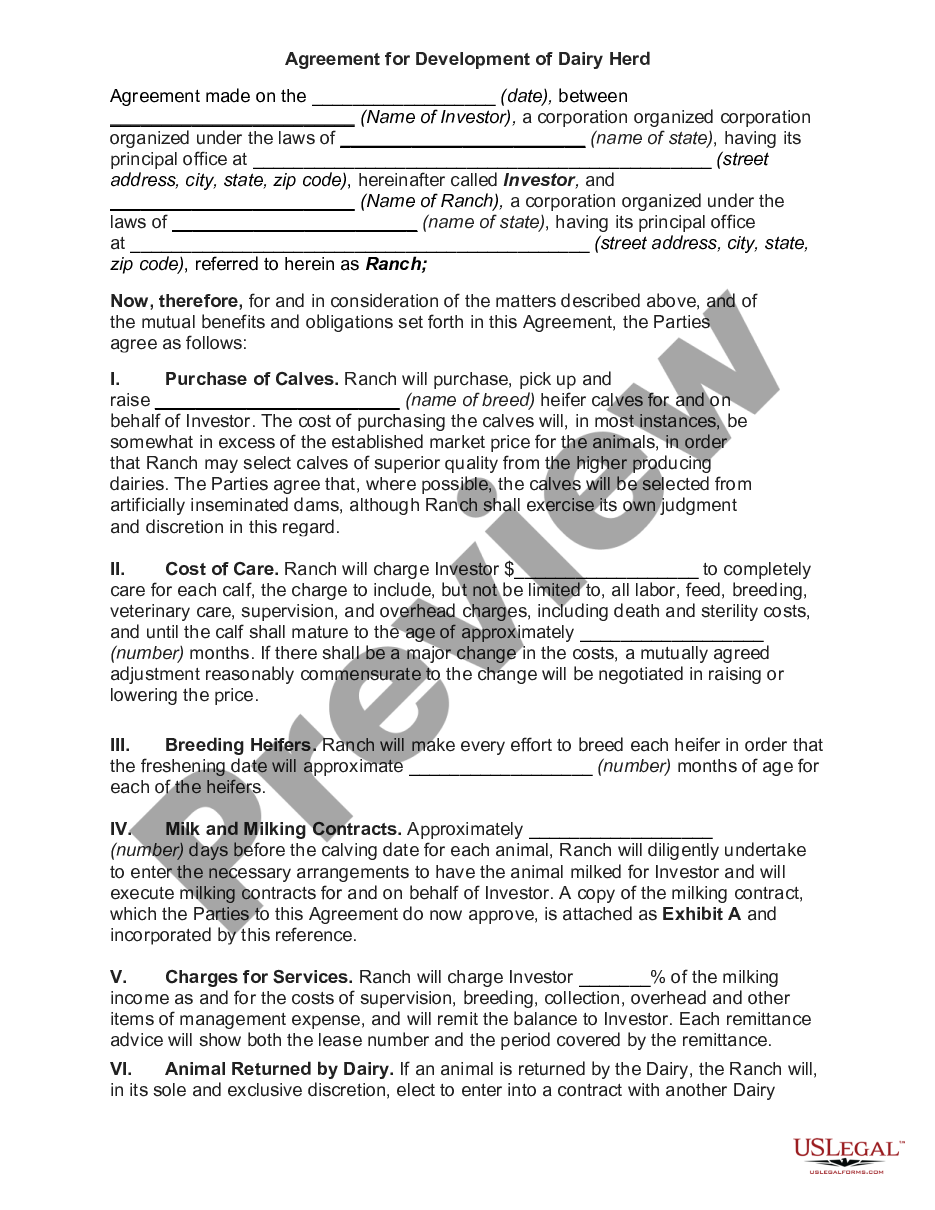
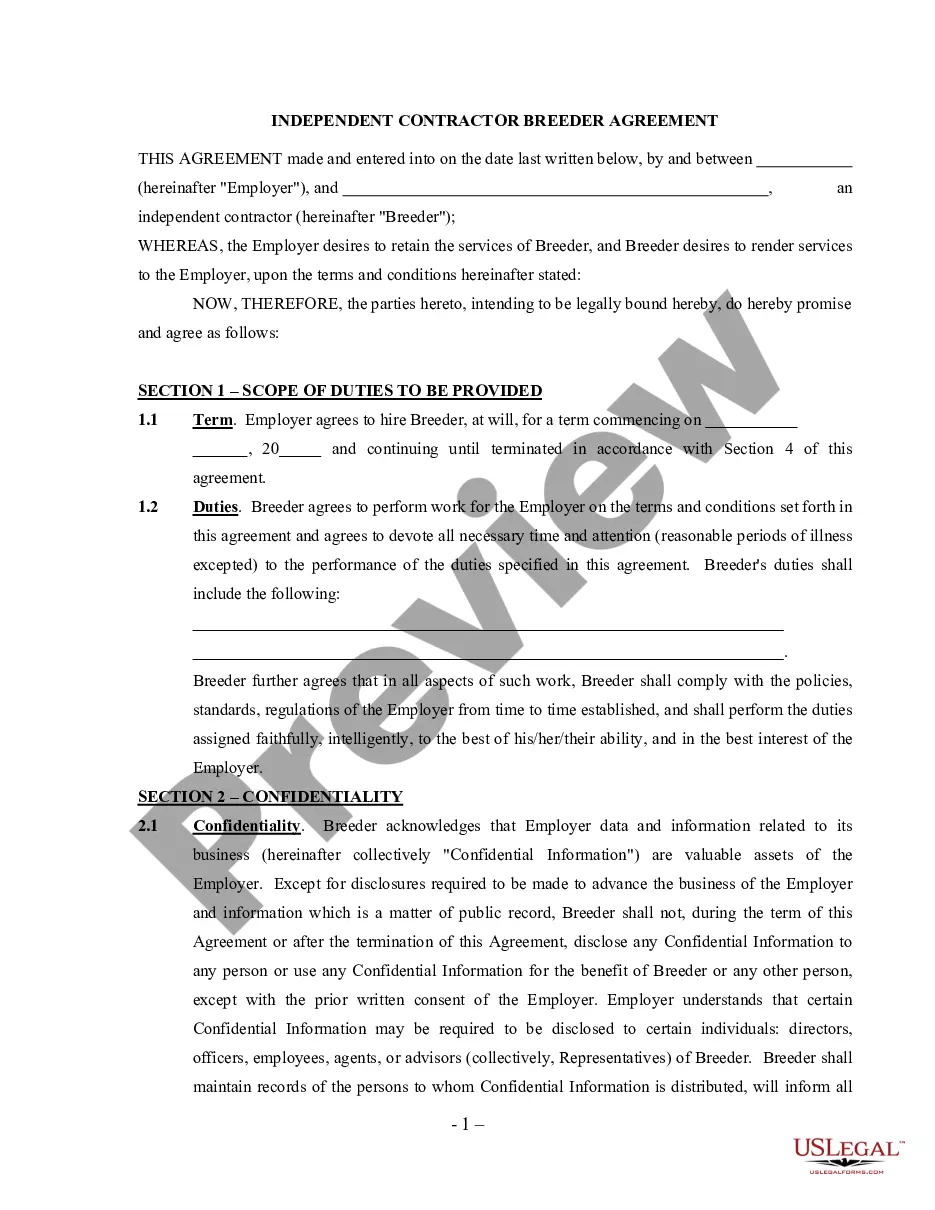
The North Carolina Brood Mare Lease Agreement is a legal document designed for leasing a mare specifically for breeding purposes. Unlike general horse lease agreements, this form focuses on the conditions of breeding and the responsibilities of both the lessor and lessee. It outlines important provisions such as lease duration, care and maintenance obligations, costs associated with breeding, and risk management, which are essential for successful breeding operations.
Key components of this form
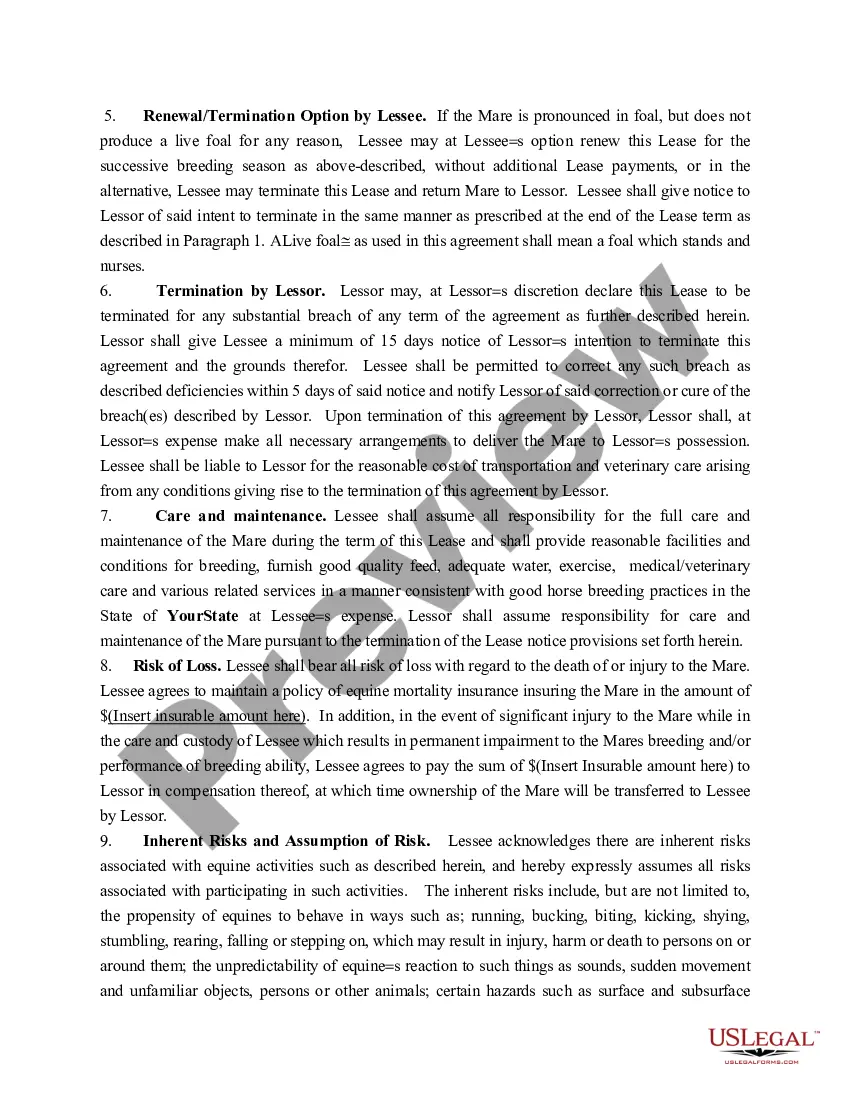
- Lease Term: Specifies the duration of the lease, typically around 20 months, concluding when the foal is weaned.
- Use: Limits the use of the mare to breeding purposes only, detailing financial responsibilities for breeding-related costs.
- Necessary Documents: Requires both parties to execute any necessary paperwork related to the mare's registry and foal registration.
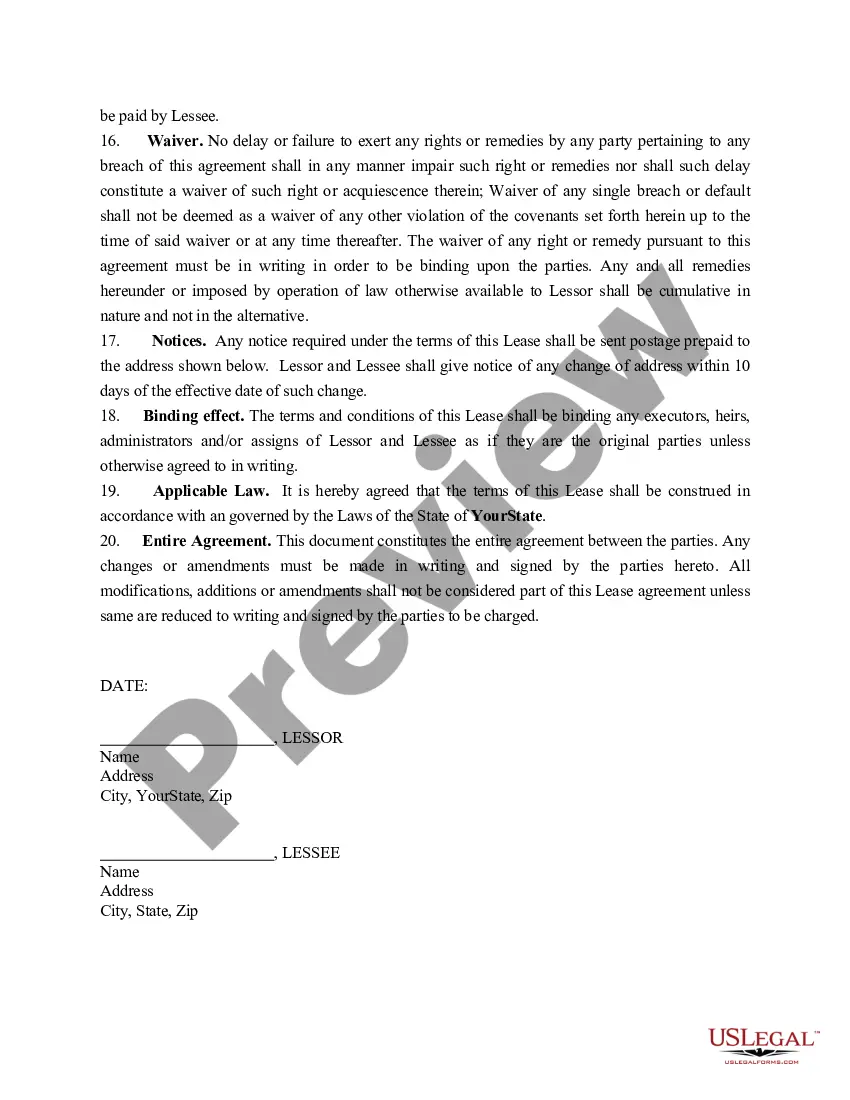
- Assignment: Prohibits the lessee from subletting or assigning their interest in the lease.
- Notices: Details how formal communication should be conducted between the parties.
- Entire Agreement: Confirms that the document represents the complete agreement between the parties and can only be modified in writing.

When to use this form
This form should be utilized when an individual (lessee) wishes to lease a mare for the sole purpose of breeding. It is useful for breeders looking to temporarily use another's mare without transferring ownership. This document provides clear guidelines around responsibilities and costs, which is crucial to avoid misunderstandings during the breeding process.
Who needs this form
- Individuals breeding horses who need to lease a mare for breeding.
- Horse owners looking to lease out their mare to others under specific breeding conditions.
- Breeding farms and individuals involved in horse competitions who require a formal agreement for breeding arrangements.
How to complete this form
- Identify the parties involved: Fill in the names and addresses of the lessor and lessee.
- Specify the mare and its registration details: Enter the mare's name, breed, and registration number.
- Set the lease term: Insert the start date and plan for when the mare will be returned.
- Detail financial responsibilities: Clearly outline any costs the lessee will incur related to breeding.
- Review and sign: Both parties should read the agreement carefully, ensuring all terms are clear before signing.
Does this form need to be notarized?
In most cases, this form does not require notarization. However, some jurisdictions or signing circumstances might. US Legal Forms offers online notarization powered by Notarize, accessible 24/7 for a quick, remote process.
Get your form ready online
Our built-in tools help you complete, sign, share, and store your documents in one place.
Make edits, fill in missing information, and update formatting in US Legal Forms—just like you would in MS Word.
Download a copy, print it, send it by email, or mail it via USPS—whatever works best for your next step.
Sign and collect signatures with our SignNow integration. Send to multiple recipients, set reminders, and more. Go Premium to unlock E-Sign.
If this form requires notarization, complete it online through a secure video call—no need to meet a notary in person or wait for an appointment.
We protect your documents and personal data by following strict security and privacy standards.

Make edits, fill in missing information, and update formatting in US Legal Forms—just like you would in MS Word.

Download a copy, print it, send it by email, or mail it via USPS—whatever works best for your next step.

Sign and collect signatures with our SignNow integration. Send to multiple recipients, set reminders, and more. Go Premium to unlock E-Sign.

If this form requires notarization, complete it online through a secure video call—no need to meet a notary in person or wait for an appointment.

We protect your documents and personal data by following strict security and privacy standards.
Mistakes to watch out for
- Failing to specify the lease term clearly, which can lead to disputes.
- Not outlining all financial responsibilities, causing confusion over who pays for breeding costs.
- Neglecting to review and sign necessary documents related to mare registration.
Why complete this form online
- Convenience: Access and complete the form at any time, from anywhere.
- Editability: Easily modify details before finalizing agreements.
- Reliability: Receive a professionally drafted document tailored to meet legal standards.
Quick recap
- The North Carolina Brood Mare Lease Agreement is crucial for clearly defining roles in a brood mare leasing arrangement.
- It is essential for both owners and breeders to understand their rights and obligations to avoid disputes.
- Carefully completing the form ensures compliance with North Carolina laws, safeguarding both parties involved.
Looking for another form?
Form popularity
FAQ
Perhaps Cumberland's most famous inhabitants are its feral horses. Horses have roamed the island wild for over 500 years, delivered to its shores by the Spanish. Today, there are an estimated 130 to 150 horses on the island.
The Corolla Wild Horses are located in the northernmost beaches of the Outer Banks, in the 4WD area that's just north of Corolla. Wild horses, also known as Wild Ponies, are also found on Ocracoke Island, and can be viewed at the Ocracoke Pony Pen just south of the Hatteras / Ocracoke ferry docks.
Wild horses roam the beaches of the Outer Banks and Crystal Coast. Take a guided tour to see them at Corolla and Shackleford Banks. For 500 years, the most enduring and endearing residents of the Outer Banks, the wild Colonial Spanish Mustangs, have called this sliver of land between sound and sea home.
The Outer Banks, barrier islands off the coast of North Carolina, are home to some unlikely animals. Horses descended from Spanish mustangs have been living wild here for hundreds of years. To survive on these islands, the horses dig for freshwater and swim from island to island in search of fresh grazing areas.
Wild horses roam the beaches of the Outer Banks and Crystal Coast. Corolla, to the north, and Shackleford Banks, the southernmost of the barrier-island chain, have herds of about 100 stallions, mares, and foals that call their beaches and dunes home.
Waipi'o Valley, Hawaii. The 50th state typically conjures up visions of palm trees and hula dancers, but the Big Island's Valley of the Kings is also home to a wild horse herd. McCullough Peaks. Cumberland Island, Ga. Tonto National Forest, Ariz. Chincoteague, Va. Virginia Range, Nev. Onaqui herd. Gower Peninsula, Wales.
Wild horses inhabit the protected beaches, pine forests, and salt marshes of Assateague Island, a 37-mile coastal split between Maryland and Virginia. On a protected barrier island off the Atlantic coast of Maryland and Virginia, more than 300 untamed horses wander freely.