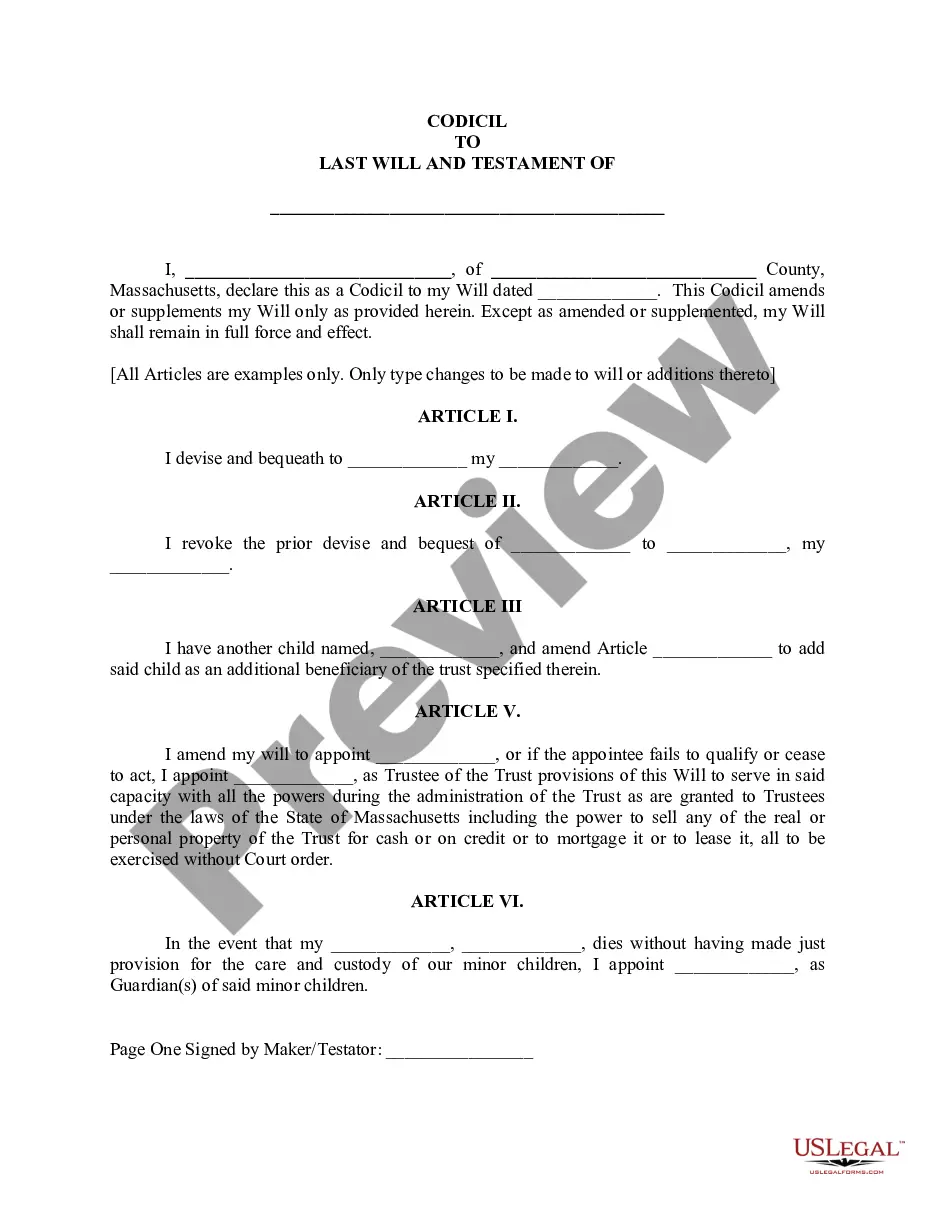
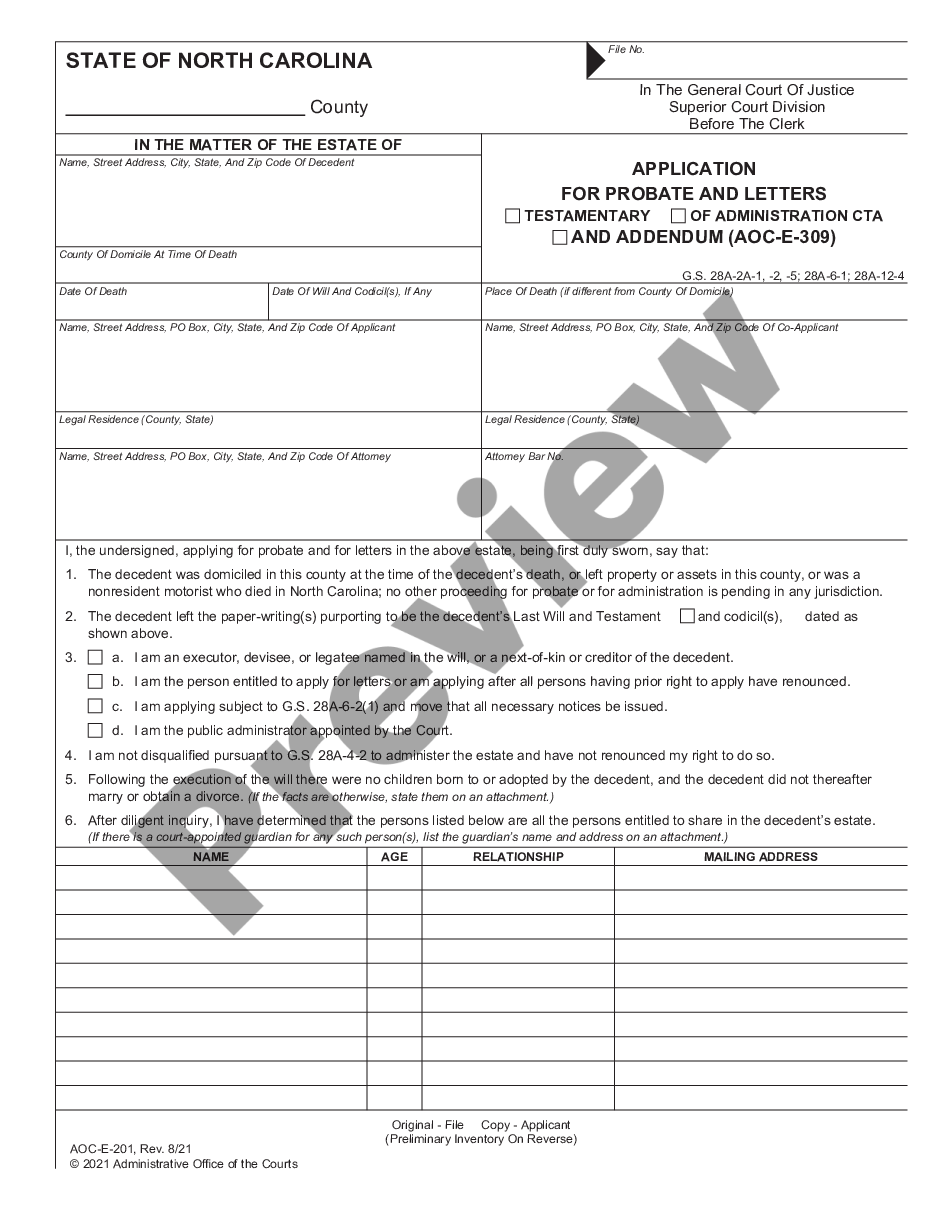
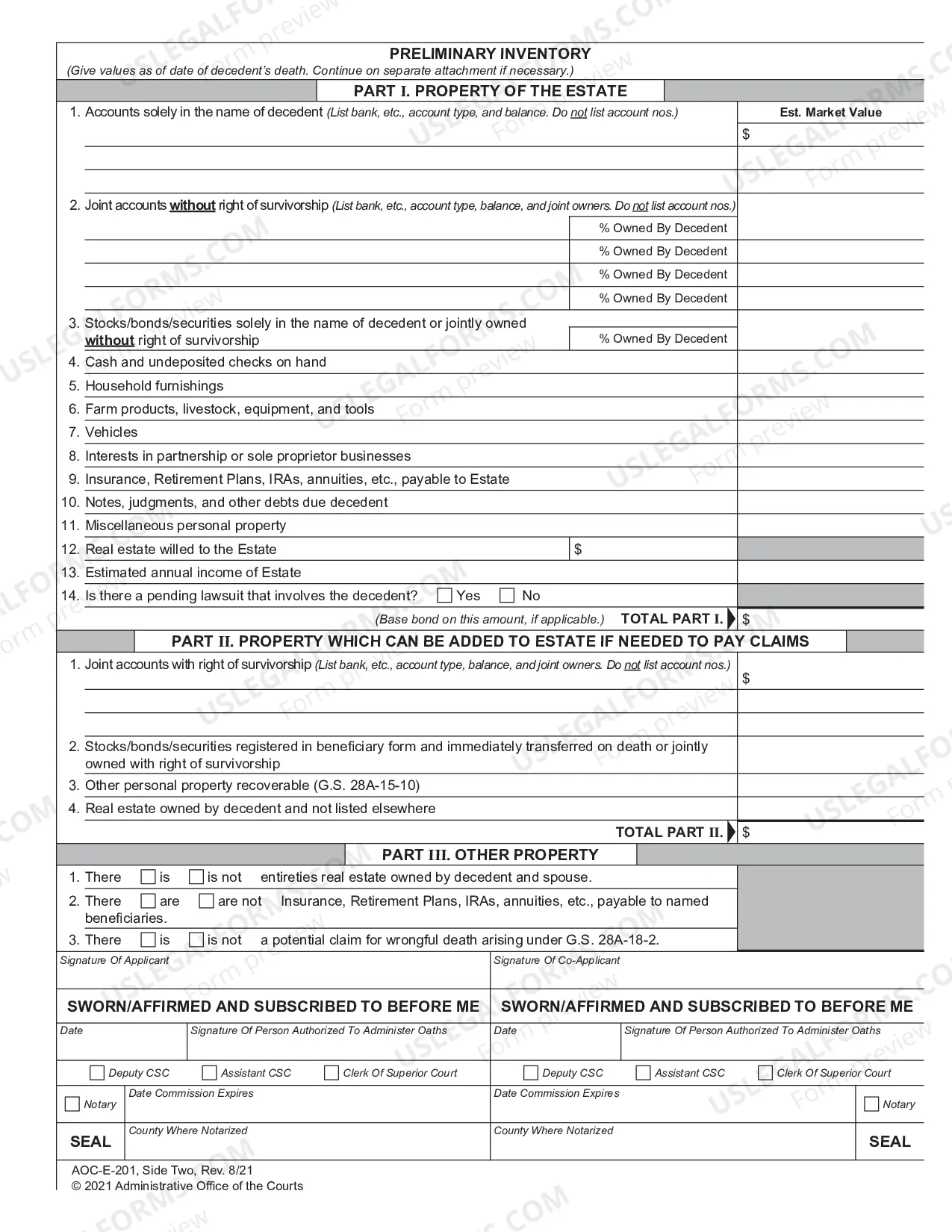
North Carolina Application For Probate and Letters - Testamentary of / Administration CTA

Is notarization required?
This form does not typically require notarization to be legally valid. However, some jurisdictions or document types may still require it. US Legal Forms provides secure online notarization powered by Notarize, available 24/7 for added convenience.
Get your form ready online
Our built-in tools help you complete, sign, share, and store your documents in one place.
Make edits, fill in missing information, and update formatting in US Legal Forms—just like you would in MS Word.
Download a copy, print it, send it by email, or mail it via USPS—whatever works best for your next step.
Sign and collect signatures with our SignNow integration. Send to multiple recipients, set reminders, and more. Go Premium to unlock E-Sign.
If this form requires notarization, complete it online through a secure video call—no need to meet a notary in person or wait for an appointment.
We protect your documents and personal data by following strict security and privacy standards.

Make edits, fill in missing information, and update formatting in US Legal Forms—just like you would in MS Word.

Download a copy, print it, send it by email, or mail it via USPS—whatever works best for your next step.

Sign and collect signatures with our SignNow integration. Send to multiple recipients, set reminders, and more. Go Premium to unlock E-Sign.

If this form requires notarization, complete it online through a secure video call—no need to meet a notary in person or wait for an appointment.

We protect your documents and personal data by following strict security and privacy standards.
Looking for another form?
Form popularity
FAQ
What are letters testamentary? When a person dies and has properly executed a last will and testament that names another person to manage his estate, the court issues letters testamentary.
There are two components of letter of testamentary cost: the court fee and the attorney's fees. The court fee ranges from $45 to $1,250, depending on the gross value of the estate. The attorney's fees start at about $2,500 and can go up depending on the complexity of the case.
Letters testamentary are not issued when there is no will. When a person dies intestate, or without a will, the court issues letters of administration and appoints someone to distribute the decedent's property.
Letters testamentary and letters of administration are legal documents issued by the clerk of court that give a person authority to serve as the personal representative of the estate. These letters will often be requested by institutions such as banks or insurance companies during estate administration.
A Letter of Testamentarysometimes called a Letter of Administration or Letter of Representationis a document granted by a local court. The document simply states that you are the legal executor for a particular estate and that you have the ability to act as such.
1Find the local probate court or surrogate's court, as it's sometimes called.2File the will and a certified copy of the testator's death certificate .3Fill out the necessary paperwork , like a petition form, and provide any additional documents.
Most likely you will need an attorney to obtain letters testamentary. Many attorneys offer a free consultation. At least meet with an attorney to make sure letters testamentary is what you need.
The purpose of a letter of testamentary is to show you have the legal right to act as an executor of a particular person's estate.