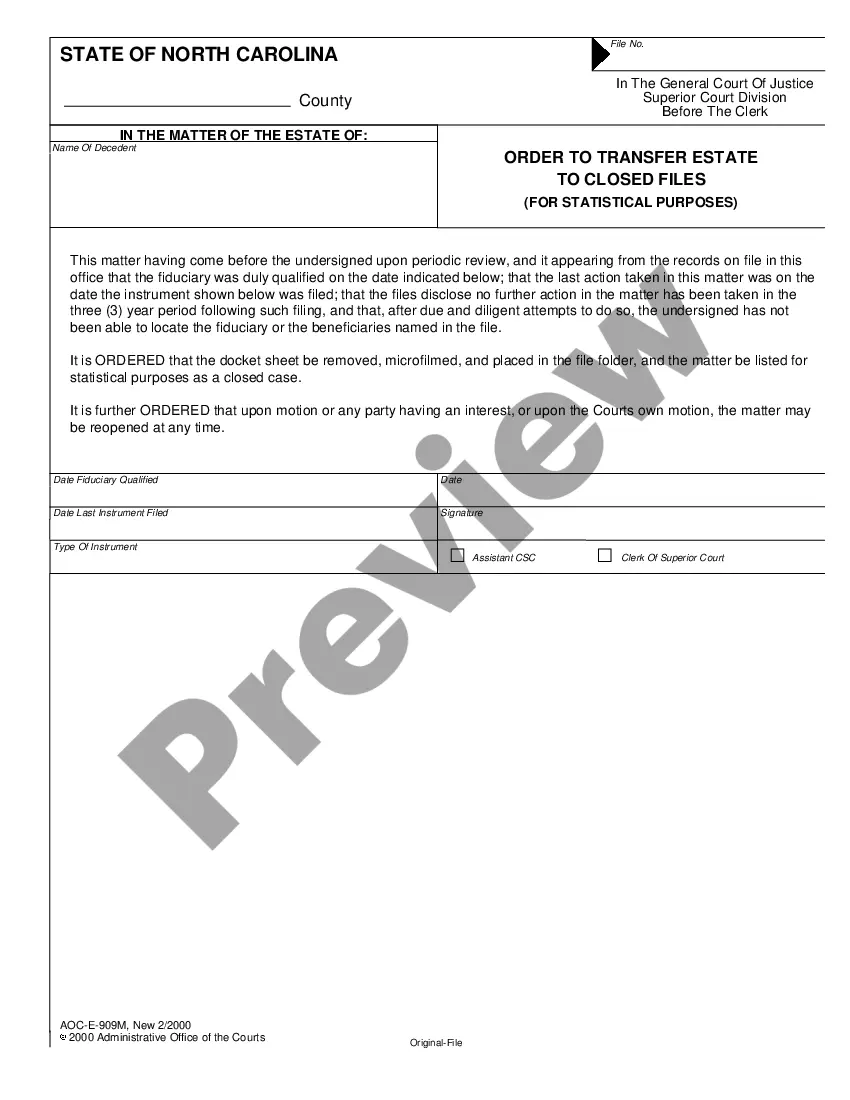
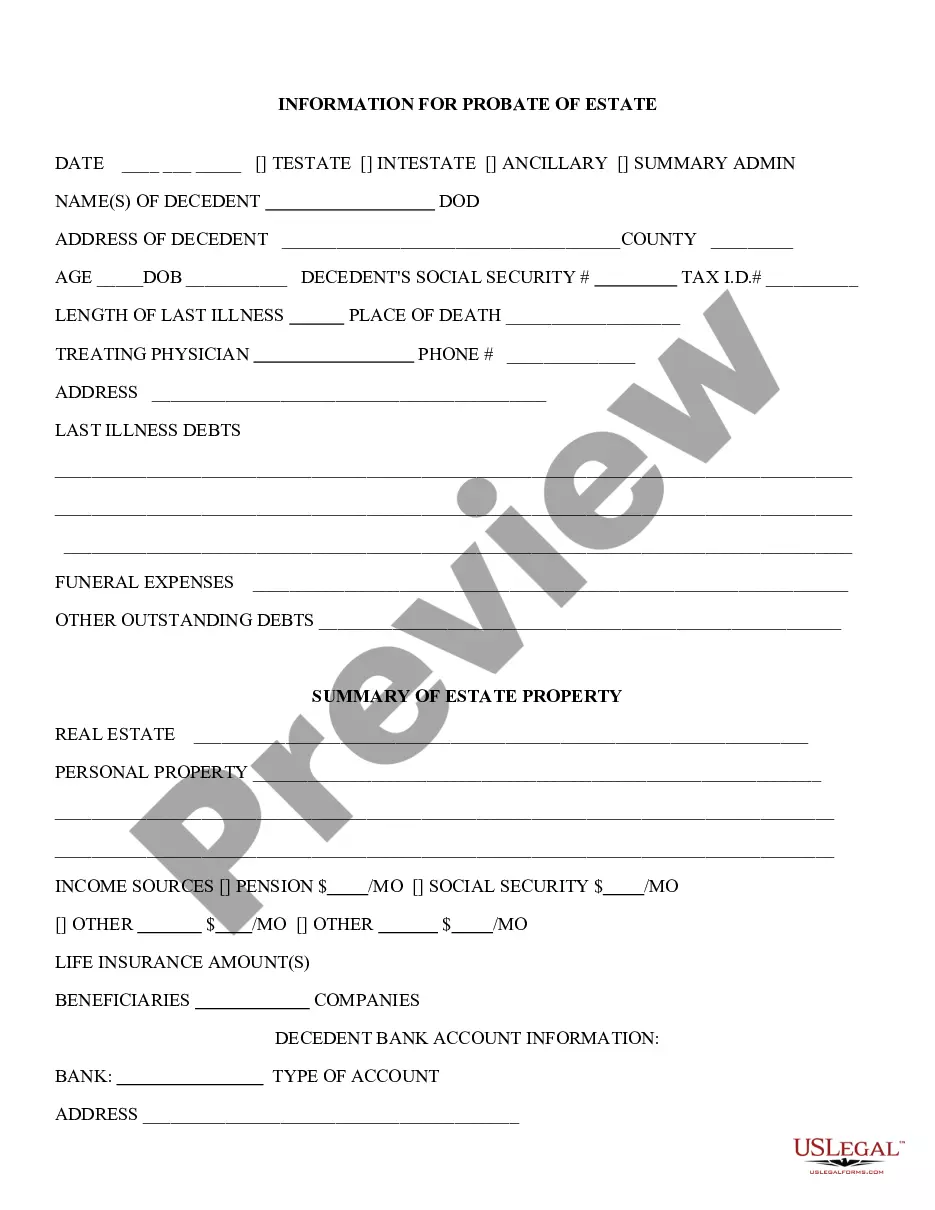
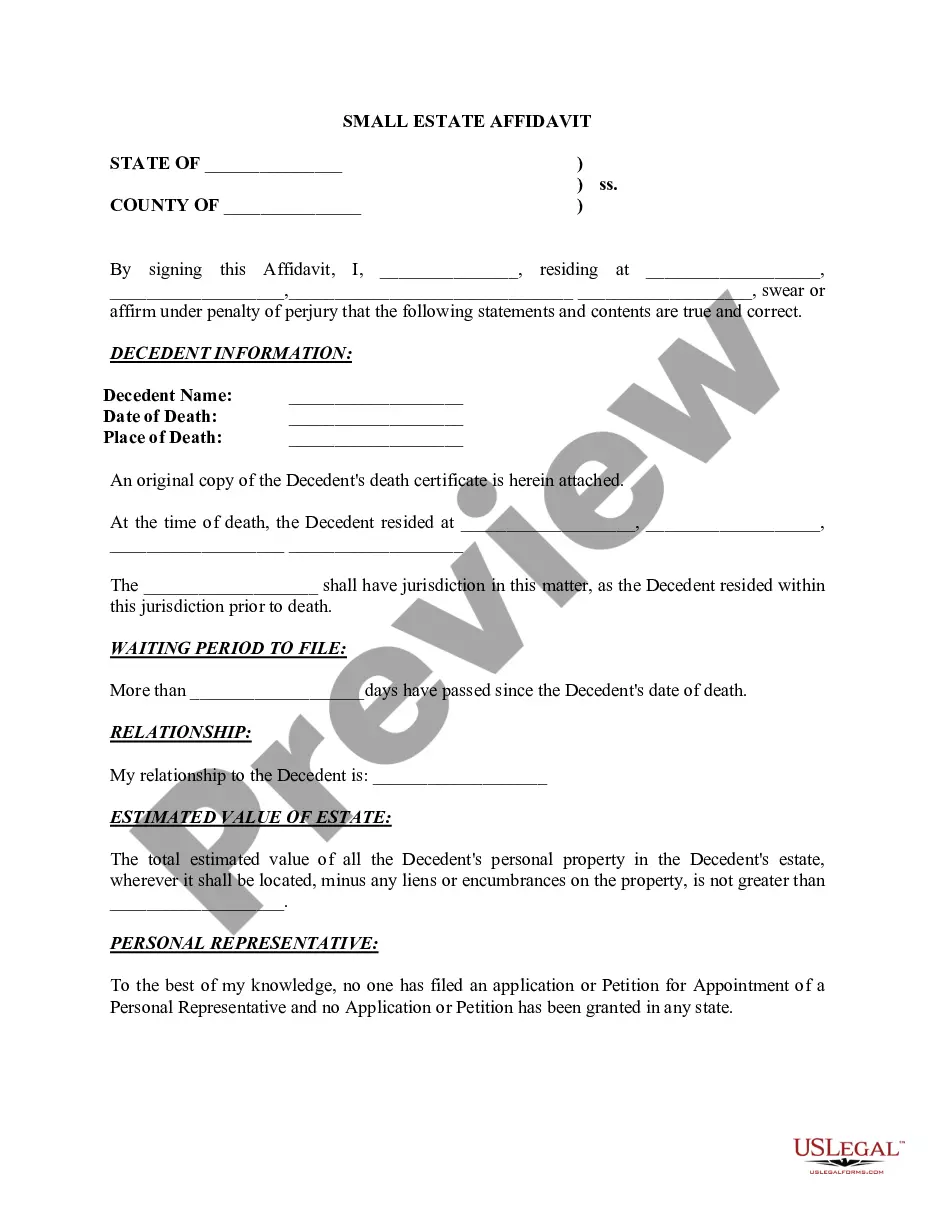
Order to Transfer Estate to Closed Files (for statistical purposes): This is an official form from the North Carolina Administration of the Courts (AOC), which complies with all applicable laws and statutes. USLF amends and updates the forms as is required by North Carolina statutes and law.
North Carolina Order to Transfer Estate to Closed Files for Statistical Purposes
Instant download
This website is not affiliated with any governmental entity
Public form
Description
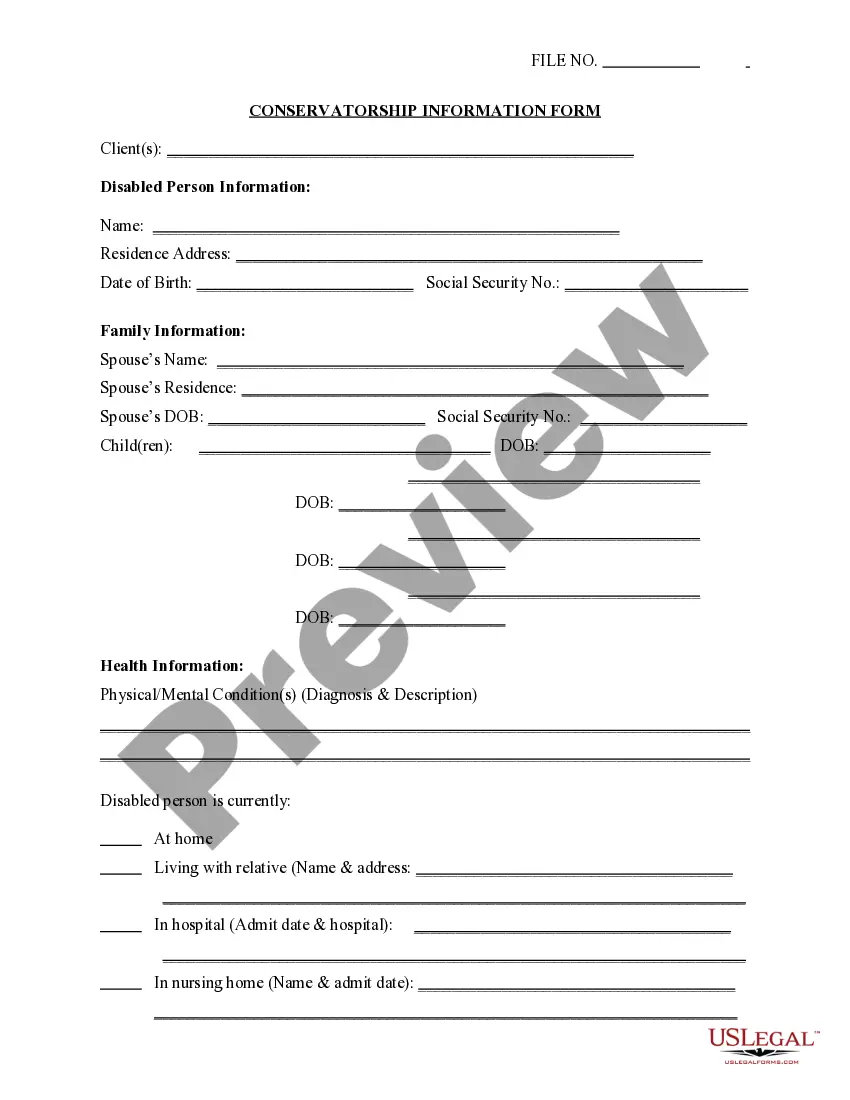
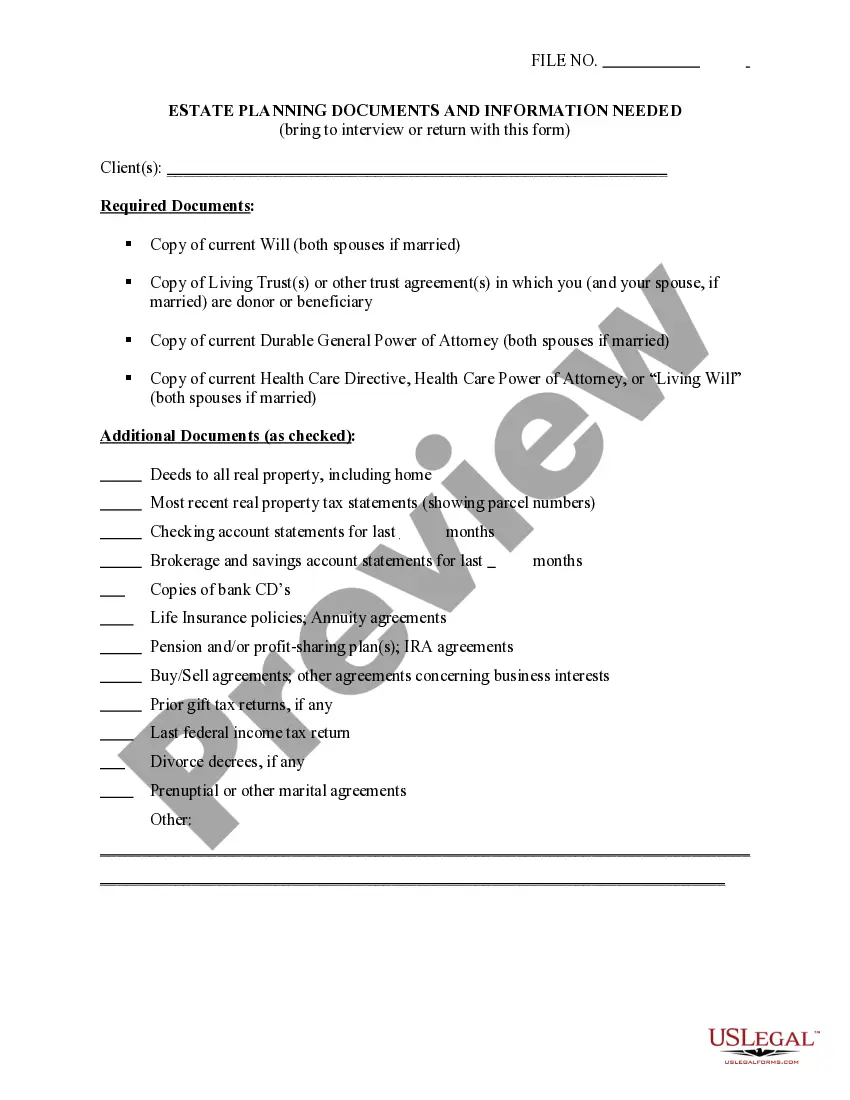
Get your form ready online
Our built-in tools help you complete, sign, share, and store your documents in one place.
Built-in online Word editor
Make edits, fill in missing information, and update formatting in US Legal Forms—just like you would in MS Word.
Export easily
Download a copy, print it, send it by email, or mail it via USPS—whatever works best for your next step.
E-sign your document
Sign and collect signatures with our SignNow integration. Send to multiple recipients, set reminders, and more. Go Premium to unlock E-Sign.
Notarize online 24/7
If this form requires notarization, complete it online through a secure video call—no need to meet a notary in person or wait for an appointment.
Store your document securely
We protect your documents and personal data by following strict security and privacy standards.

Make edits, fill in missing information, and update formatting in US Legal Forms—just like you would in MS Word.

Download a copy, print it, send it by email, or mail it via USPS—whatever works best for your next step.

Sign and collect signatures with our SignNow integration. Send to multiple recipients, set reminders, and more. Go Premium to unlock E-Sign.

If this form requires notarization, complete it online through a secure video call—no need to meet a notary in person or wait for an appointment.

We protect your documents and personal data by following strict security and privacy standards.
Looking for another form?
How to fill out North Carolina Order To Transfer Estate To Closed Files For Statistical Purposes?
Steer clear of expensive attorneys and locate the North Carolina Order to Transfer Estate to Closed Files for Statistical Purposes you require at a reasonable cost on the US Legal Forms site.
Utilize our straightforward categories feature to search for and obtain legal and tax documents. Review their descriptions and preview them prior to downloading.
Select to receive the document in PDF or DOCX format. Click Download and locate your template in the My documents section. You can save the document to your device or print it out. After downloading, you can complete the North Carolina Order to Transfer Estate to Closed Files for Statistical Purposes by hand or using editing software. Print it and reuse the document multiple times. Achieve more for less with US Legal Forms!
- Additionally, US Legal Forms provides users with step-by-step instructions on how to download and complete each form.
- US Legal Forms members simply need to Log In and retrieve the specific document they require in their My documents section.
- Those who have not yet subscribed must follow the guidelines outlined below.
- Ensure the North Carolina Order to Transfer Estate to Closed Files for Statistical Purposes is suitable for your state.
- If available, review the description and utilize the Preview option before downloading the templates.
- If you’re certain the document meets your requirements, click on Buy Now.
- If the form is incorrect, use the search tool to find the correct one.
- Next, set up your account and select a subscription plan.
- Make your payment via credit card or PayPal.
Form popularity
FAQ
No. North Carolina law does not require a formal reading of the will.A decedent's will becomes a public record when it is filed, after the decedent's death, with the clerk of court. Any person may view a public record or request a copy of a public record for a fee.
You should expect it to take a minimum of six months to a year to settle an estate because of the legal notice requirements and time that creditors have to submit claims against the estate. Creditors have 90 days from the first publication date of the notice of probate.
The Probate Process in North CarolinaProbate in North Carolina is a fairly straightforward process. The state court system provides many fill-in-the-blanks forms online, and the process is relatively informal. The superior court clerk, an elected county official, acts as the probate judge.
People often question whether they need to file their wills with the court after signing the documents. In North Carolina, people who create wills can choose to file them with the Superior Court for safekeeping. After a North Carolina resident dies, his or her will must be filed with the probate court.
No. North Carolina law does not require a formal reading of the will.After someone has died, the will may be filed with a clerk of court. A decedent's will becomes a public record when it is filed, after the decedent's death, with the clerk of court.
For the years 17601868, most wills are in the offices of the clerk of the superior court in the county where the testator legally resided. FamilySearch has begun digitizing their collection of these wills: North Carolina, Probate Records, 1735-1970 - free.
How Long Does It Take to Get through the Probate Process? The length of time that a probate proceeding may last is difficult to determine, but people should generally assume that it will take at least four months. Creditors must be given 90 days, which alone accounts for a three-month period.
Search the house. It sounds obvious, but the first place you should look is at the deceased's home, as many people store their Will (or a copy of it) in their home. Ask their solicitor. Ask their bank. Carry out a Will search.
Obtain a Will From Probate Court The best way to view the will is to get the probate court file number. The executor can give you this information. You may also be able to access the file number by phone, online, or in person at the courthouse by providing the deceased's name and date of death.