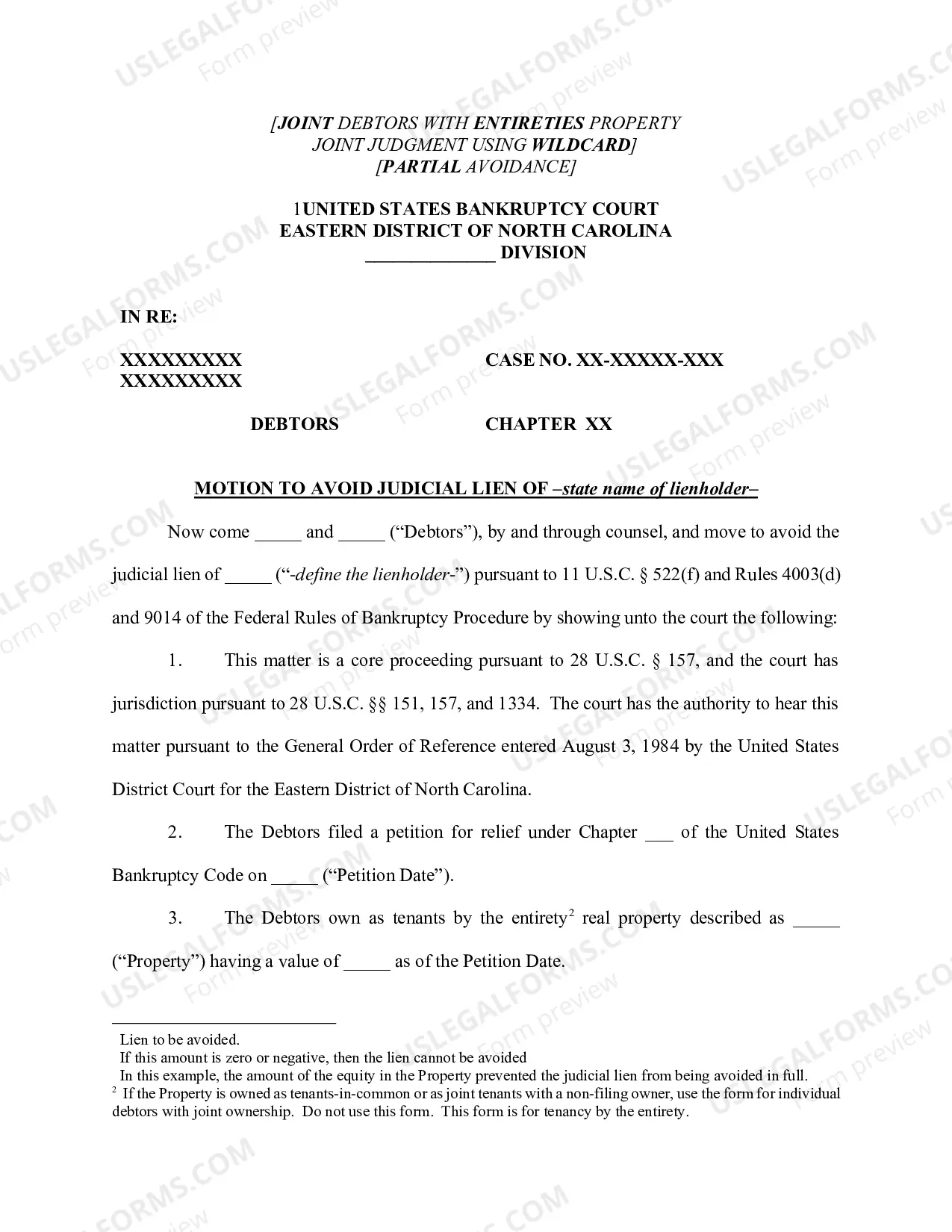
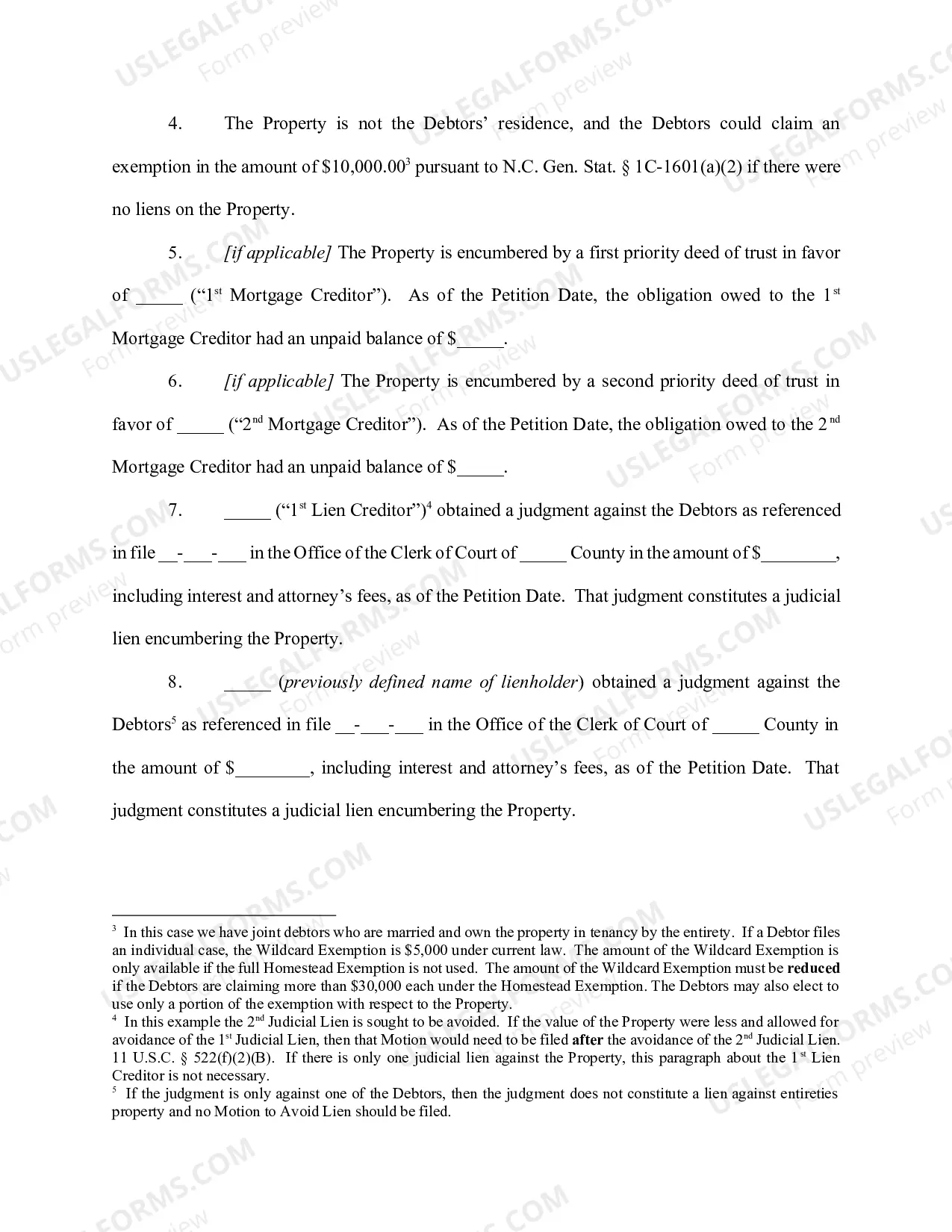
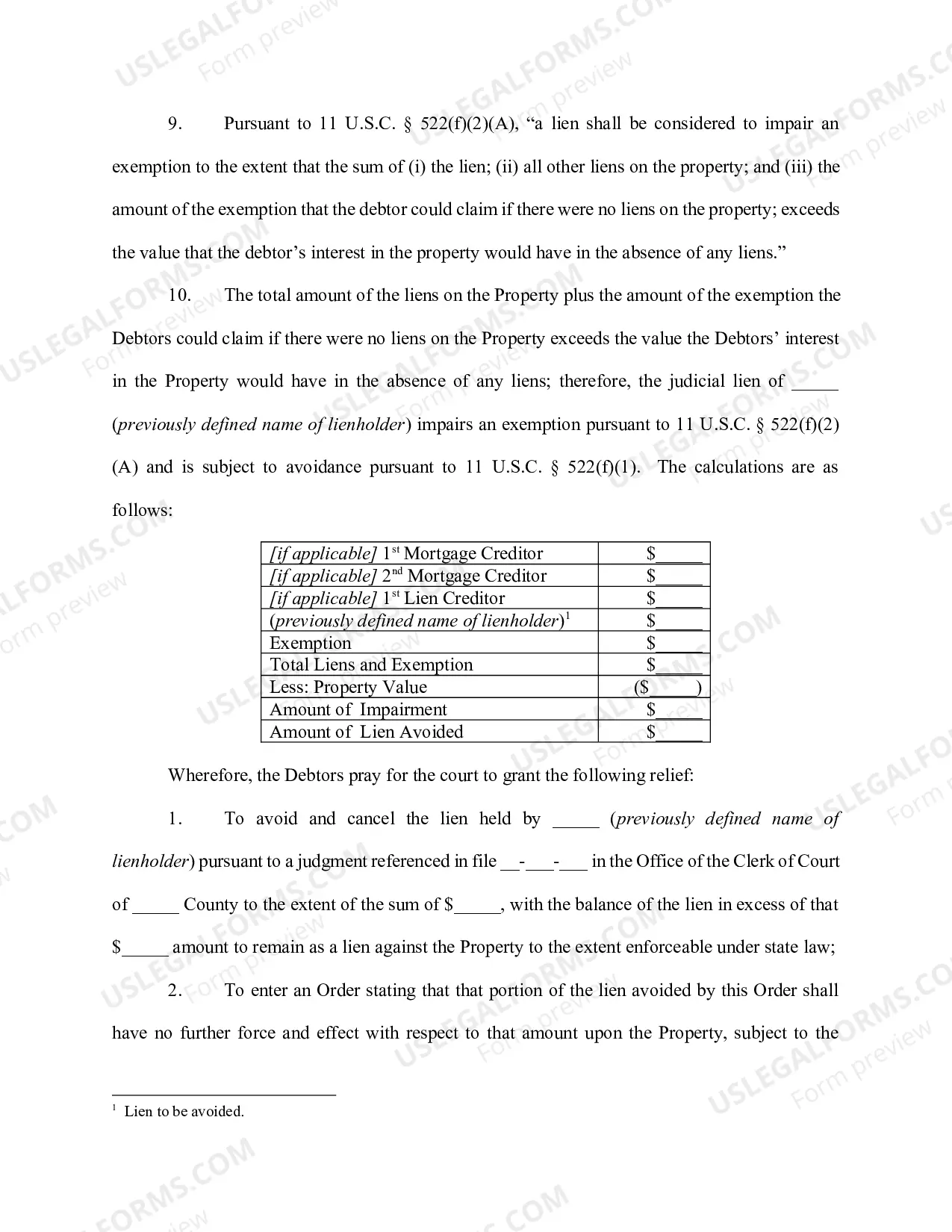
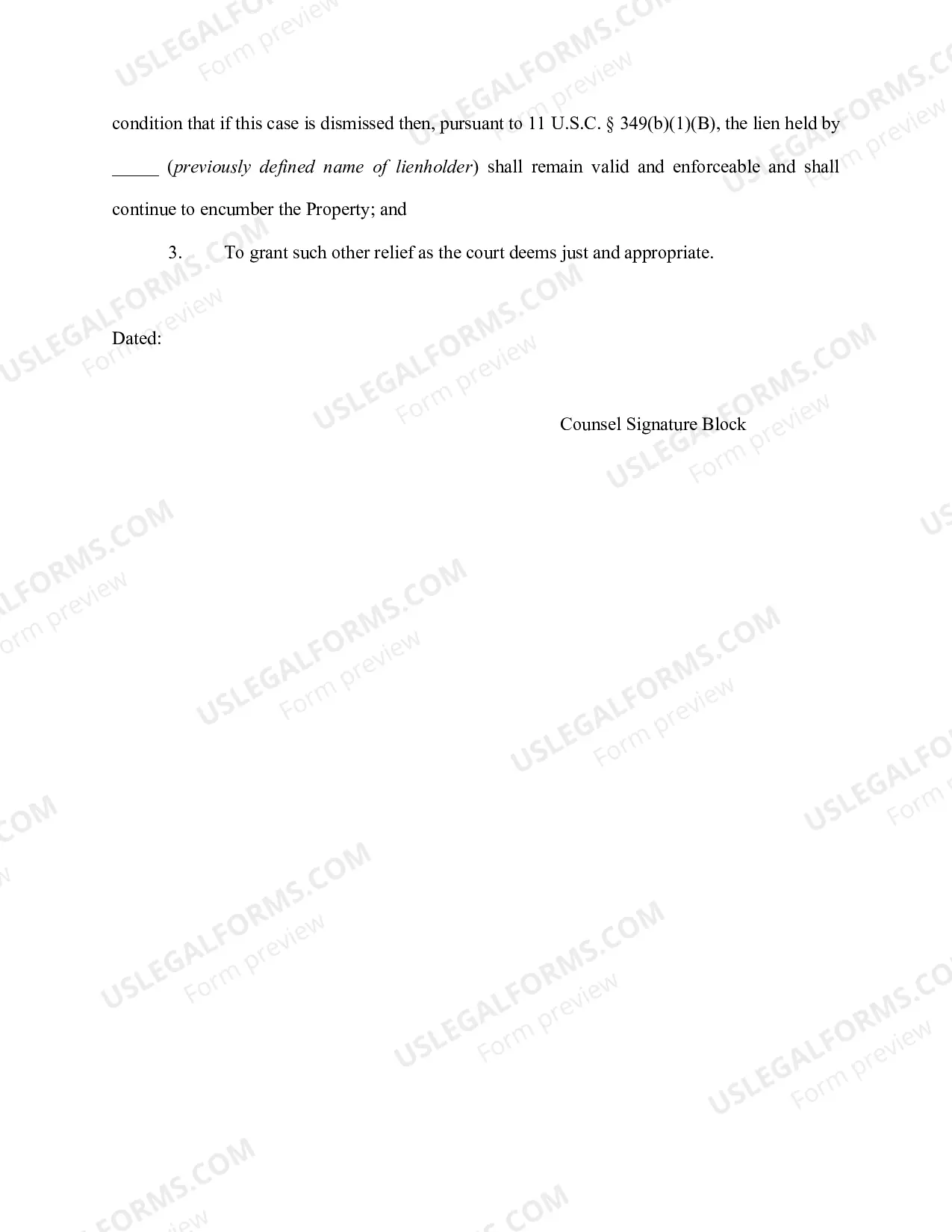
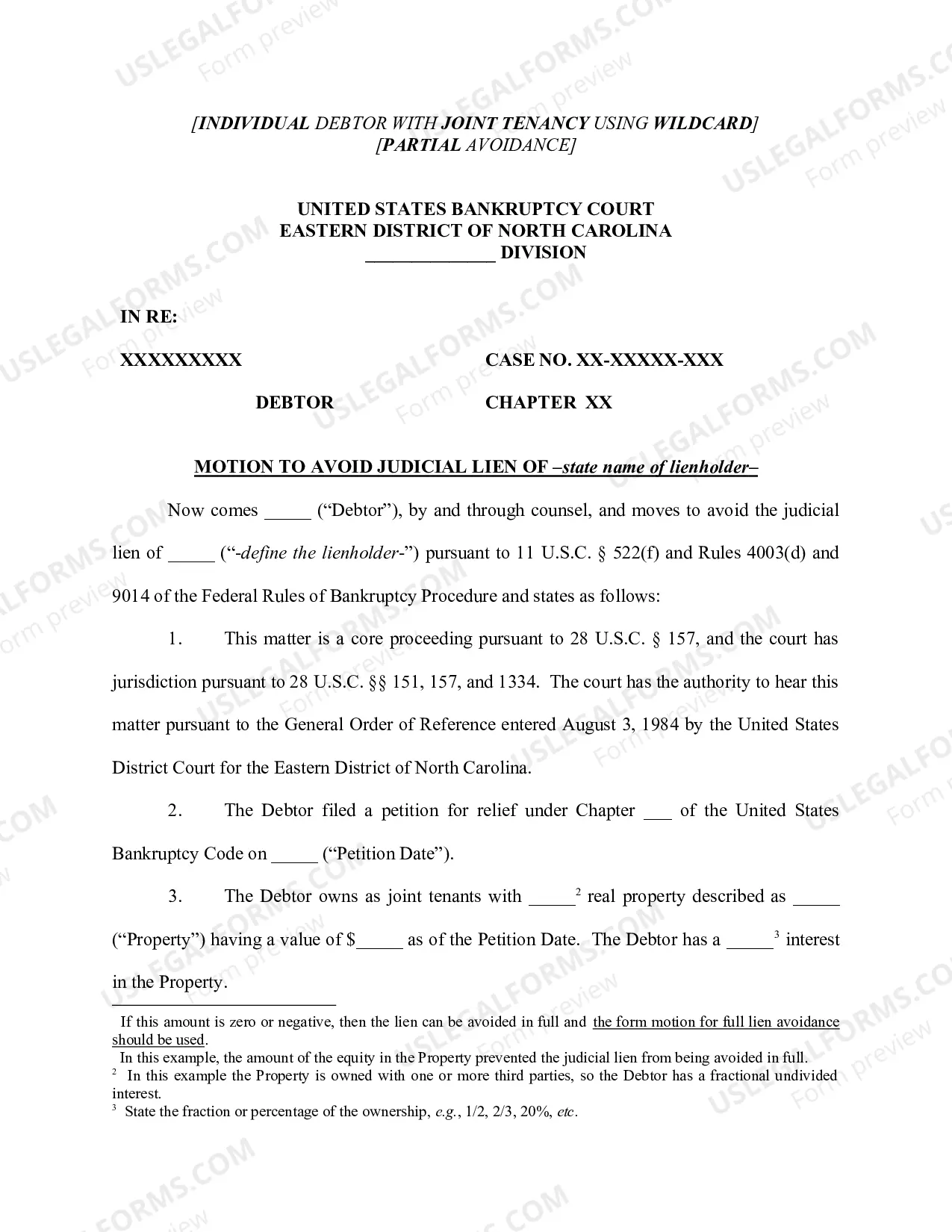
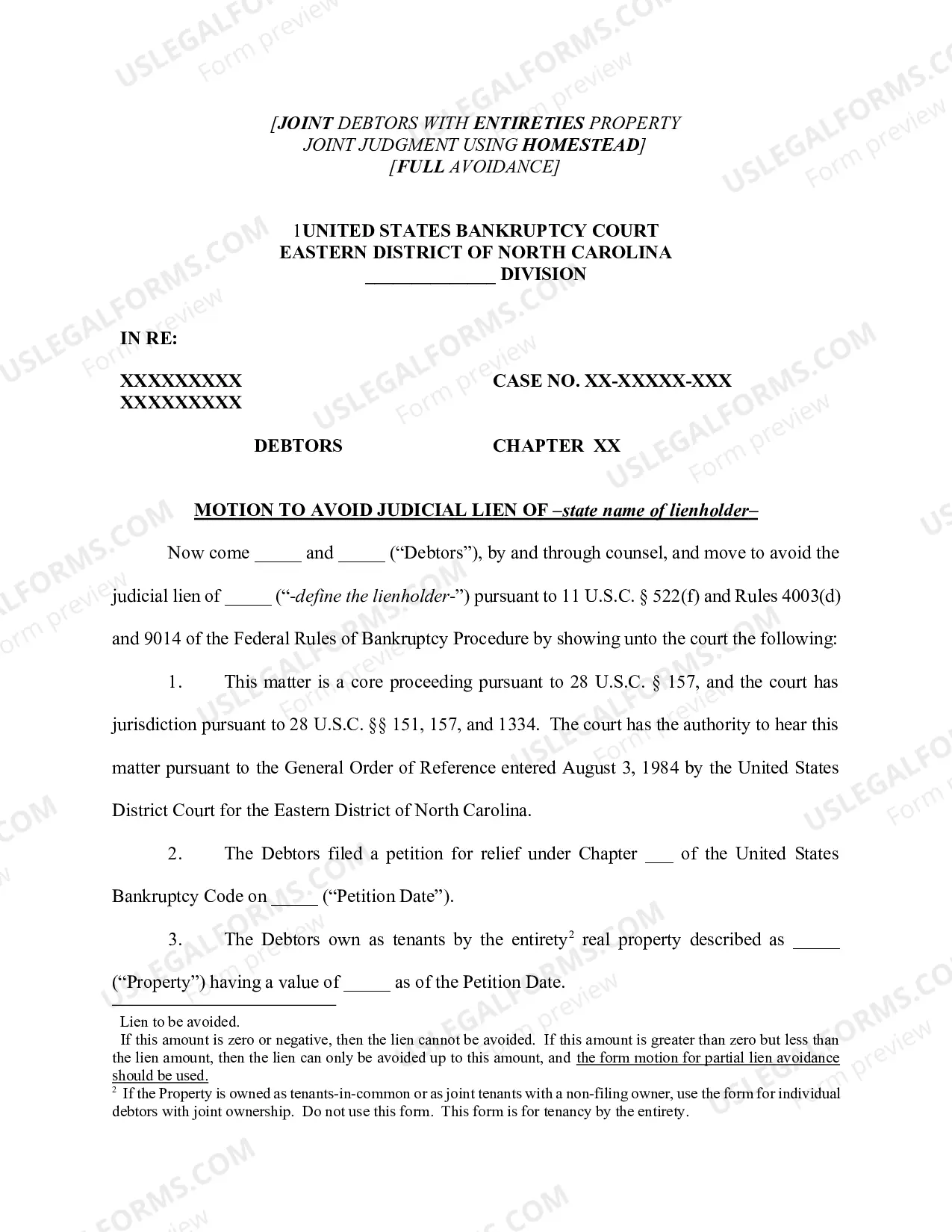
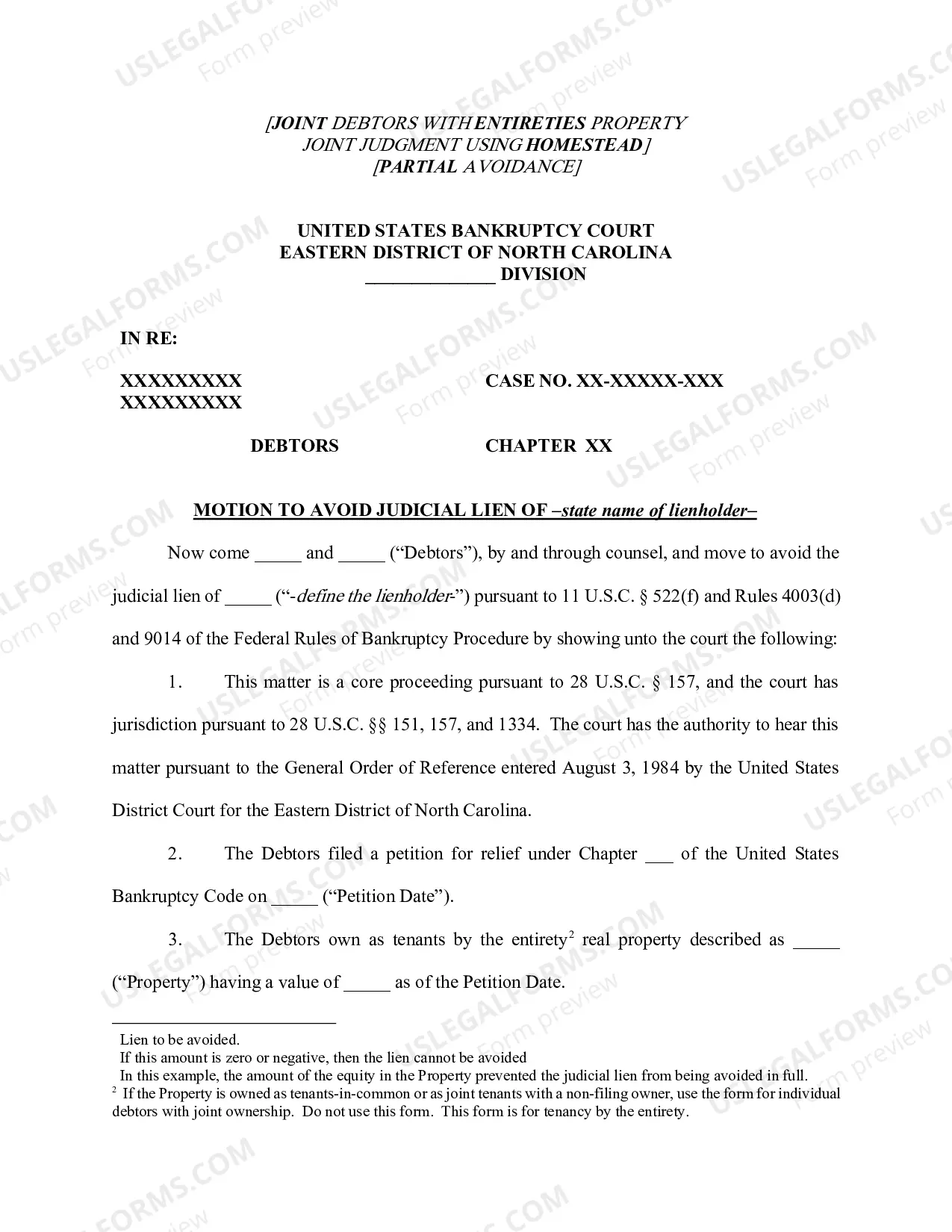
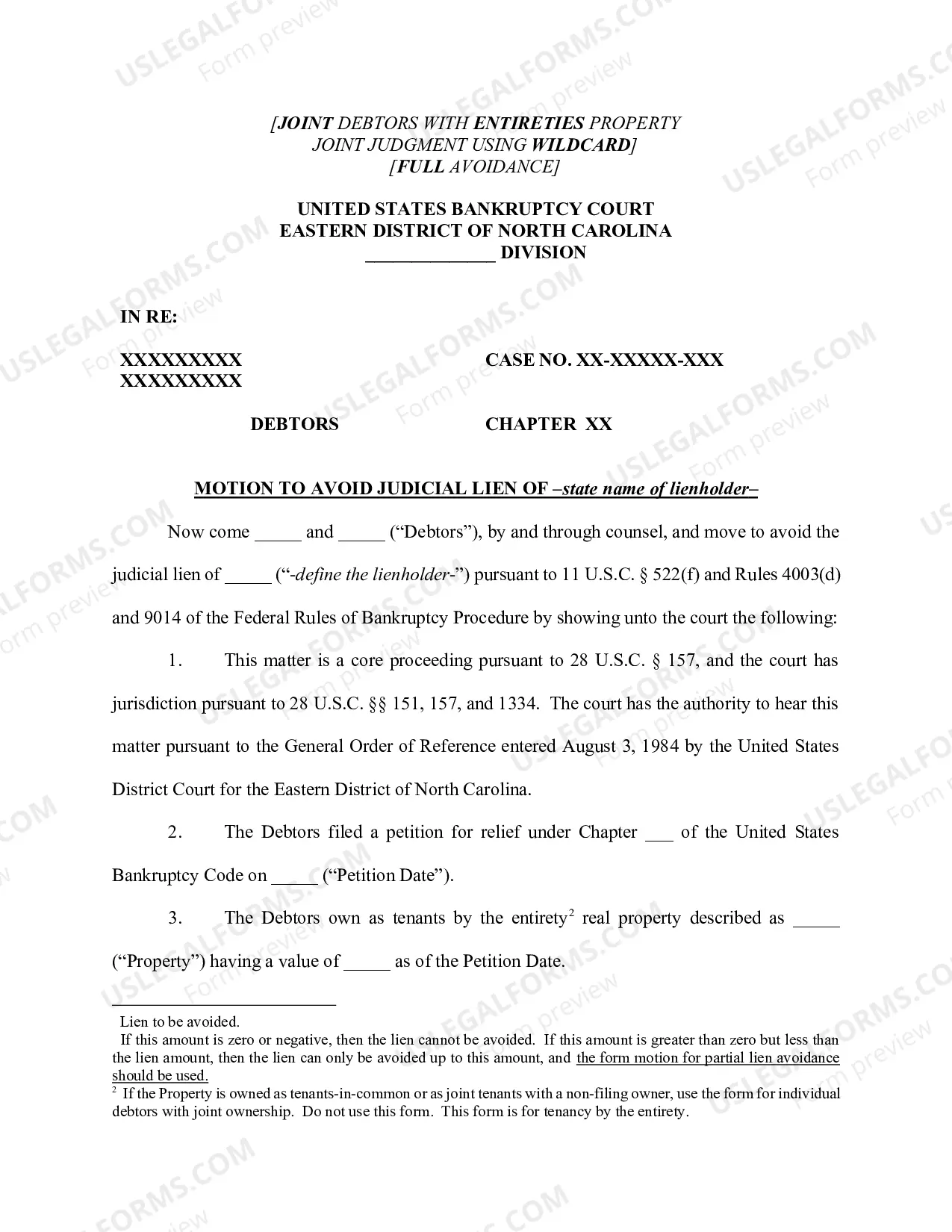
North Carolina Joint Debtors Entire tieses Ownership - Wildcard Exemption — Partial Avoidance is a property exemption available to married couples in North Carolina who jointly own property and are jointly liable for debt. Entire ties ownership is a form of joint ownership in which the property and debt are jointly and indivisibly owned by both spouses. The wildcard exemption allows a debtor to exempt any property up to $5,000, or $10,000 if the debtor is married. Partial avoidance allows the debtor to exempt part of a claim, such as a partial payment, in order to reduce the debtor’s overall liability. Types of North Carolina Joint Debtors Entire tieses Ownership - Wildcard Exemption — Partial Avoidance includeEntirtheseses Ownership, Wildcard Exemption, and Partial Avoidance.
North Carolina Joint Debtors - Entireties Ownership - Wildcard Exemption - Partial Avoidance
Description
Get your form ready online
Our built-in tools help you complete, sign, share, and store your documents in one place.
Make edits, fill in missing information, and update formatting in US Legal Forms—just like you would in MS Word.
Download a copy, print it, send it by email, or mail it via USPS—whatever works best for your next step.
Sign and collect signatures with our SignNow integration. Send to multiple recipients, set reminders, and more. Go Premium to unlock E-Sign.
If this form requires notarization, complete it online through a secure video call—no need to meet a notary in person or wait for an appointment.
We protect your documents and personal data by following strict security and privacy standards.

Make edits, fill in missing information, and update formatting in US Legal Forms—just like you would in MS Word.

Download a copy, print it, send it by email, or mail it via USPS—whatever works best for your next step.

Sign and collect signatures with our SignNow integration. Send to multiple recipients, set reminders, and more. Go Premium to unlock E-Sign.

If this form requires notarization, complete it online through a secure video call—no need to meet a notary in person or wait for an appointment.

We protect your documents and personal data by following strict security and privacy standards.
Looking for another form?
How to fill out North Carolina Joint Debtors - Entireties Ownership - Wildcard Exemption - Partial Avoidance?
Drafting legal documents can be quite a hassle unless you have accessible fillable templates. With the US Legal Forms online collection of formal documentation, you can be assured that the blanks you encounter align with federal and state laws and have been validated by our experts.
Therefore, if you need to complete the North Carolina Joint Debtors - Entireties Ownership - Wildcard Exemption - Partial Avoidance, our platform is the ideal location to acquire it.
Document compliance verification. You should thoroughly examine the content of the form you desire and ensure it meets your requirements and adheres to your state law regulations. Reviewing your document and checking its general description will assist you in doing just that.
- Acquiring your North Carolina Joint Debtors - Entireties Ownership - Wildcard Exemption - Partial Avoidance from our collection is as simple as pie.
- Previously registered users with an active subscription just need to Log In and click the Download button once they find the appropriate template.
- Furthermore, if necessary, users can retrieve the same document from the My documents section of their account.
- However, even if you are new to our service, registering with a valid subscription will only take a few moments. Here’s a concise guide for you.
Form popularity
FAQ
A wildcard exemption allows North Carolina joint debtors to protect a certain amount of property from creditors during bankruptcy. This exemption is particularly useful for those with entireties ownership, as it provides additional flexibility in safeguarding assets. By using the wildcard exemption, debtors can often avoid partial avoidance of their property, which can help maintain financial stability. If you want to learn more about how this exemption works, consider exploring the resources available on the US Legal Forms platform.
A notice of right to have exemptions designated in North Carolina informs debtors of their rights to claim specific exemptions during bankruptcy proceedings. This document outlines the assets that can be protected under state law and highlights the importance of making informed choices. For joint debtors in North Carolina, understanding this notice helps ensure that you maximize your legal protections. Accessing resources like US Legal Forms can aid in navigating this process effectively.
A wild card exemption is a legal provision that allows debtors to protect a specific amount of property from creditors during bankruptcy. This exemption provides flexibility, as it can be applied to various types of assets, depending on individual circumstances. For North Carolina joint debtors, the wild card exemption can be a crucial component of a comprehensive asset protection strategy. Familiarizing yourself with this exemption can empower you in times of financial uncertainty.
The wild card exemption in North Carolina serves as a versatile tool for debtors to shield assets during bankruptcy proceedings. It allows individuals to exempt up to $5,000 of property, which can be particularly helpful when navigating financial challenges. As a North Carolina joint debtor, leveraging this exemption can make a significant difference in preserving your financial stability. Understanding how to apply this exemption can lead to better outcomes for your situation.
In North Carolina, the wildcard exemption permits individuals to protect additional property not covered by specific exemptions. This exemption can cover up to $5,000 in value, providing a safety net for joint debtors. It is particularly useful for individuals who may not have significant equity in their home or specific exempt assets. Utilizing the wildcard exemption effectively can enhance your asset protection strategy.
The federal wildcard exemption allows you to exempt up to $1,325 of any property you own, with additional benefits if combined with other exemptions. This flexibility is beneficial for North Carolina joint debtors, as it allows for more strategic asset protection. You can use this exemption in conjunction with your state exemptions to maximize your protection during bankruptcy. It is crucial to understand how this applies to your specific situation.
In North Carolina, Chapter 7 exemptions allow individuals to protect certain types of property from liquidation. You can exempt your homestead, personal property, and retirement accounts, among other assets. Importantly, North Carolina includes a wildcard exemption that provides additional flexibility for joint debtors. Understanding these exemptions helps in making informed decisions regarding your financial future.
Filling out Schedule C involves listing your exempt property according to federal and North Carolina exemptions. You need to identify the property you want to exempt, including claiming the wildcard exemption when applicable. Make sure to clearly document the value of each item and provide accurate descriptions. The US Legal Forms platform can guide you through this process, ensuring you maximize your exemptions effectively.
Yes, North Carolina recognizes tenancy by the entirety, a form of ownership that allows married couples to jointly own property. This type of ownership provides legal benefits, including protection from creditors. If one spouse faces financial difficulties, the property cannot be seized to satisfy individual debts. This makes tenancy by the entirety a valuable option for North Carolina joint debtors seeking to safeguard their assets.