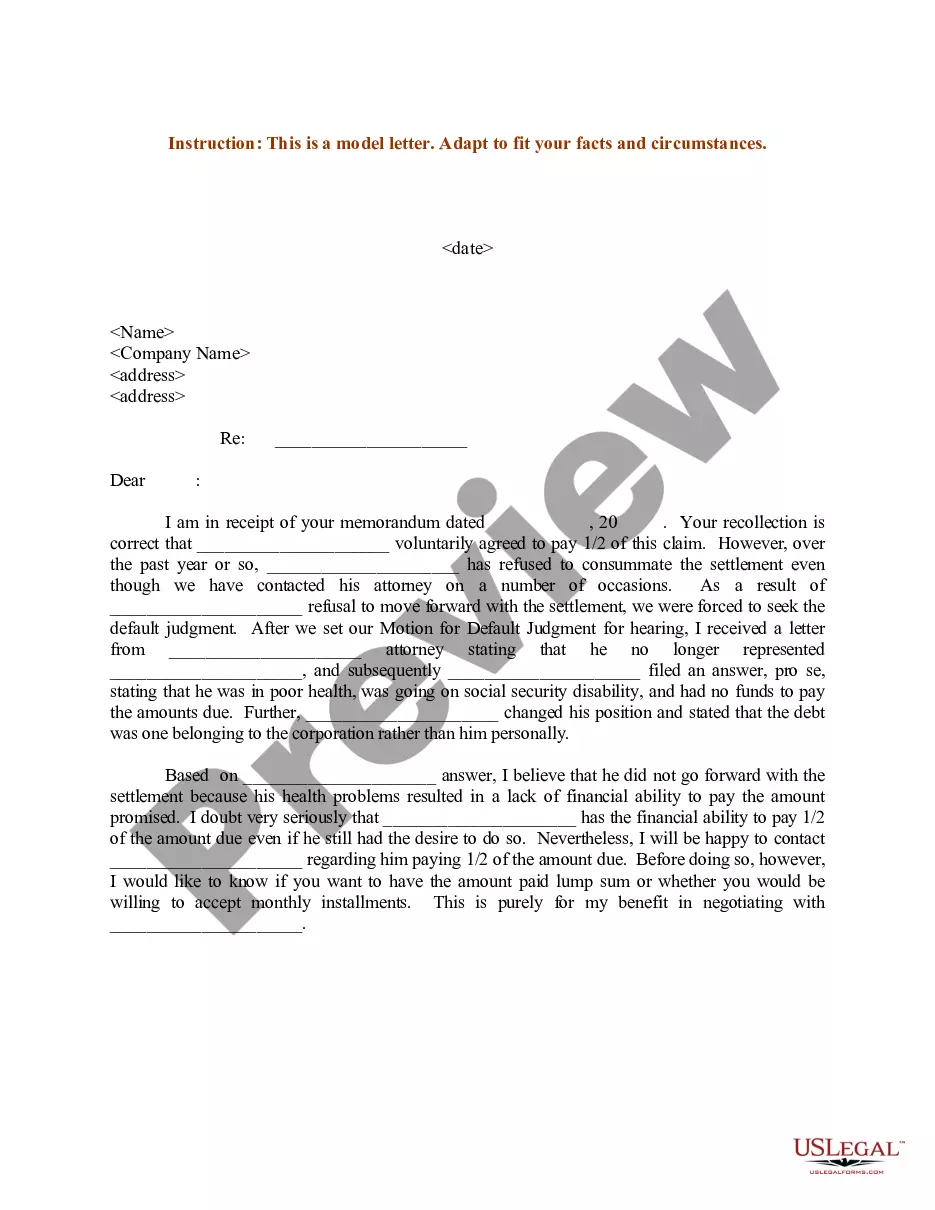
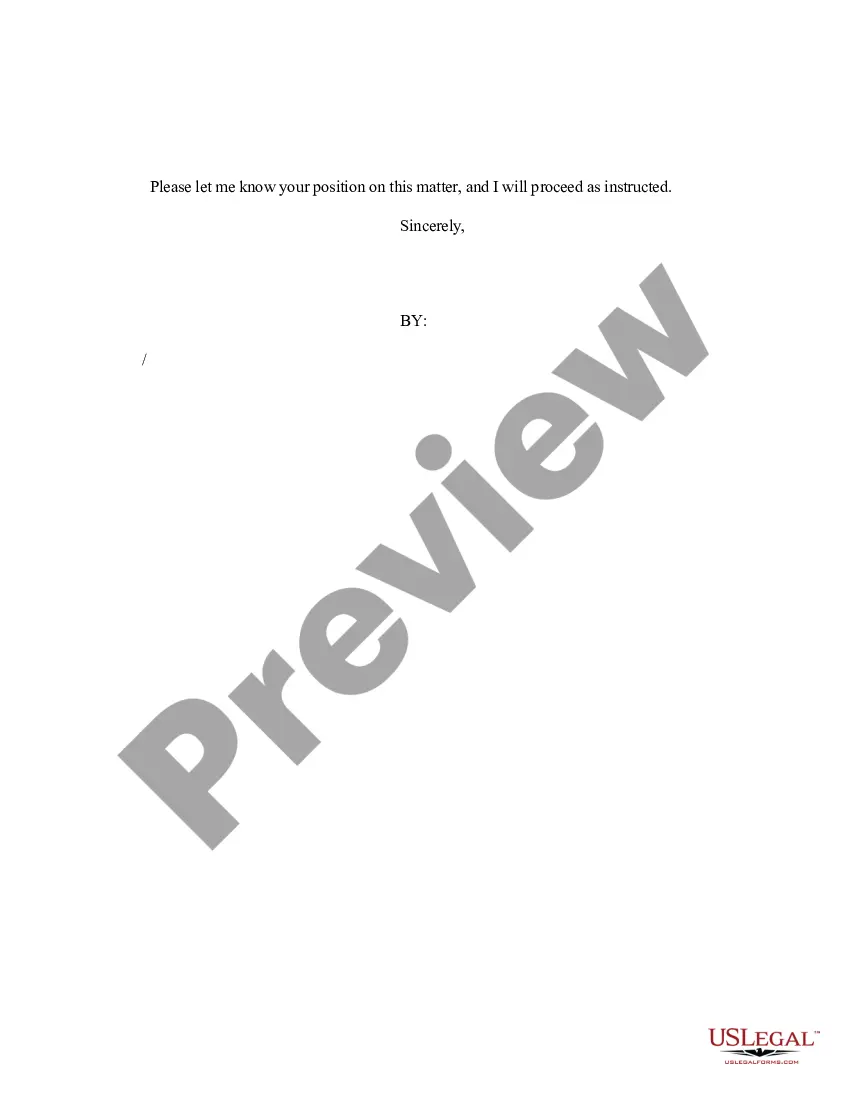
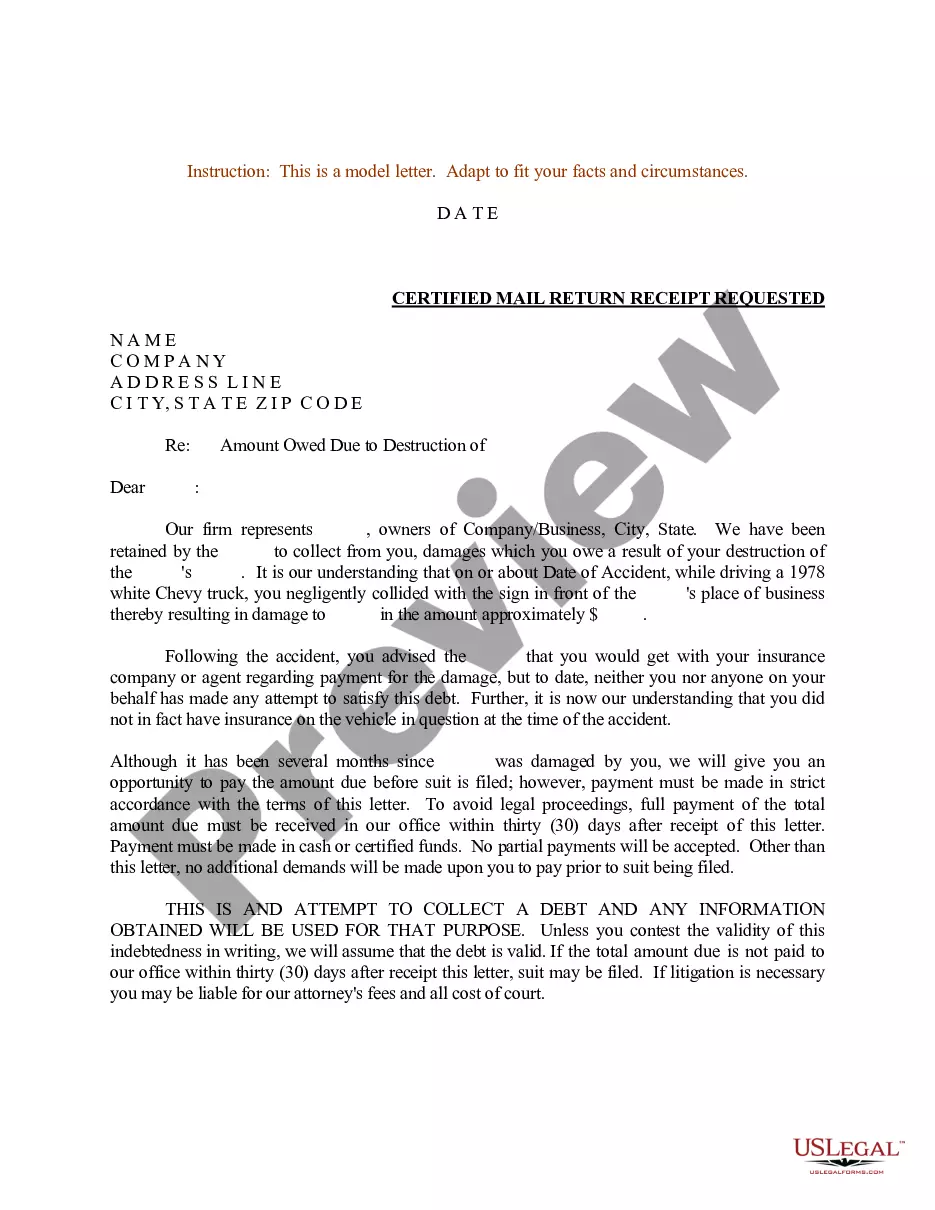
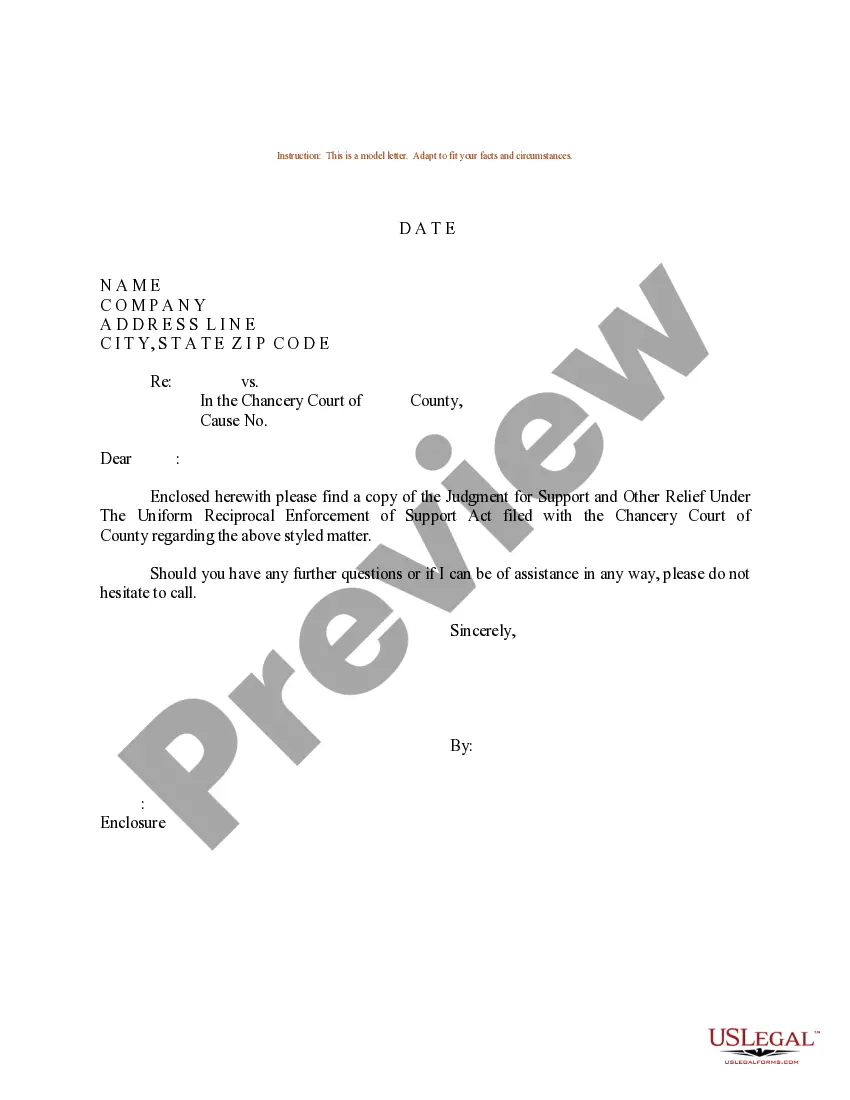
This form is a sample letter in Word format covering the subject matter of the title of the form.
North Carolina Sample Letter for Recovery of Judgment from Defendants
State:
Multi-State
Category:
Control #:
US-0026LTR
Format:
Word;
Rich Text
48 downloads
Description
Free preview



Get your form ready online
Our built-in tools help you complete, sign, share, and store your documents in one place.
Built-in online Word editor
Make edits, fill in missing information, and update formatting in US Legal Forms—just like you would in MS Word.
Export easily
Download a copy, print it, send it by email, or mail it via USPS—whatever works best for your next step.
E-sign your document
Sign and collect signatures with our SignNow integration. Send to multiple recipients, set reminders, and more. Go Premium to unlock E-Sign.
Notarize online 24/7
If this form requires notarization, complete it online through a secure video call—no need to meet a notary in person or wait for an appointment.
Store your document securely
We protect your documents and personal data by following strict security and privacy standards.

Make edits, fill in missing information, and update formatting in US Legal Forms—just like you would in MS Word.

Download a copy, print it, send it by email, or mail it via USPS—whatever works best for your next step.

Sign and collect signatures with our SignNow integration. Send to multiple recipients, set reminders, and more. Go Premium to unlock E-Sign.

If this form requires notarization, complete it online through a secure video call—no need to meet a notary in person or wait for an appointment.

We protect your documents and personal data by following strict security and privacy standards.
Looking for another form?
How to fill out Sample Letter For Recovery Of Judgment From Defendants?
Are you currently in a situation where you require documents for either business or personal purposes almost every day.
There are numerous legal document templates available online, but finding ones you can trust is not easy.
US Legal Forms offers thousands of form templates, such as the North Carolina Sample Letter for Recovery of Judgment from Defendants, that are designed to comply with state and federal regulations.
If you locate the right form, click on Get now.
Choose the pricing plan you need, fill out the required information to process your payment, and complete the order using your PayPal or credit card. Select a convenient document format and download your copy. Find all of the document templates you have purchased in the My documents list. You can download an additional copy of the North Carolina Sample Letter for Recovery of Judgment from Defendants anytime, if needed. Just access the required form to download or print the document template. Use US Legal Forms, the most extensive collection of legal forms, to save time and avoid errors. The service provides professionally crafted legal document templates that can be used for a variety of purposes. Create your account on US Legal Forms and start making your life easier.
- If you are already familiar with the US Legal Forms website and have your account, simply Log In.
- Then, you can download the North Carolina Sample Letter for Recovery of Judgment from Defendants template.
- If you do not have an account and wish to start using US Legal Forms, follow these steps.
- Find the form you need and ensure it is for the correct city/area.
- Use the Review button to examine the form.
- Check the description to confirm that you have selected the correct form.
- If the form is not what you are looking for, utilize the Search field to find the form that meets your needs and requirements.
Form popularity
FAQ
Ignoring a lawsuit can lead to a default judgment against you, meaning the court may automatically rule in favor of the plaintiff. This judgment can affect your credit score and lead to wage garnishments or property liens. It's crucial to respond to any legal notice promptly. For effective communication and resolution, you can use a North Carolina Sample Letter for Recovery of Judgment from Defendants to address the situation and protect your interests.
Enforcing Your Civil Judgement In North Carolina Step 1: Remember that Judgment Debtors Have Legally-Protected Rights. ... Step 2: File A Writ of Execution. ... Step 3: Observe the Legal Time Limits. ... Step 4: Analyze Risk before Litigating.
In North Carolina, the legal term for eviction is ?summary ejectment.? The case starts when the landlord files a document that is called a Complaint in Summary Ejectment, which is also called an ?eviction complaint.? In an eviction case, the landlord is the plaintiff. The tenant is the defendant.
If he does, a sheriff's deputy in that county will attempt to enforce the judgment by seizing the judgment debtor's property and selling that property to pay for your judgment.
NORTH CAROLINA A judgment is a lien on real property for ten years from the entry date. N.C. Gen. Stat.
The debtor is free to purchase new property without attachment of the liens, but the subject property is still tethered to the liens. Under North Carolina law judgment liens expire ten years from entry of the judgement.
In the state of North Carolina, a judgment may be granted this ?renewal? one time. Ultimately giving every judgment granted in the state a shelf life of 20 years.
Many people reach an agreement about the terms of payment after the court decides how much money one party must pay the other. If there is no agreement, the winning party can begin the collections process. The clerk of superior court will record the judgment, and interest will begin to accrue if it is not paid.
In North Carolina, a judgment is enforceable for 10 years from the date it was entered. After that point, it no longer can be enforced and is expired. Prior to the expiration of the judgment, the judgment creditor could seek to have it extended for another 10 years once.