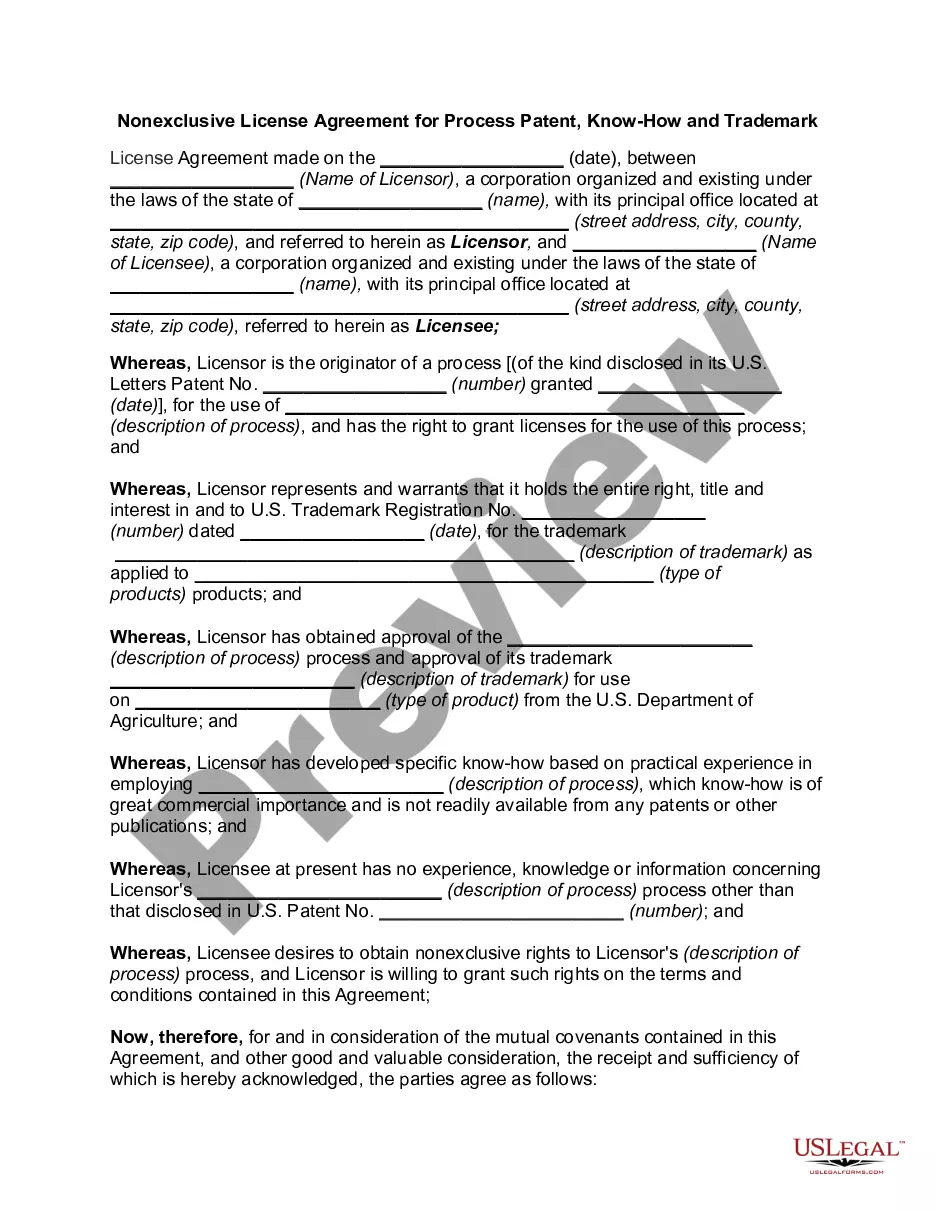
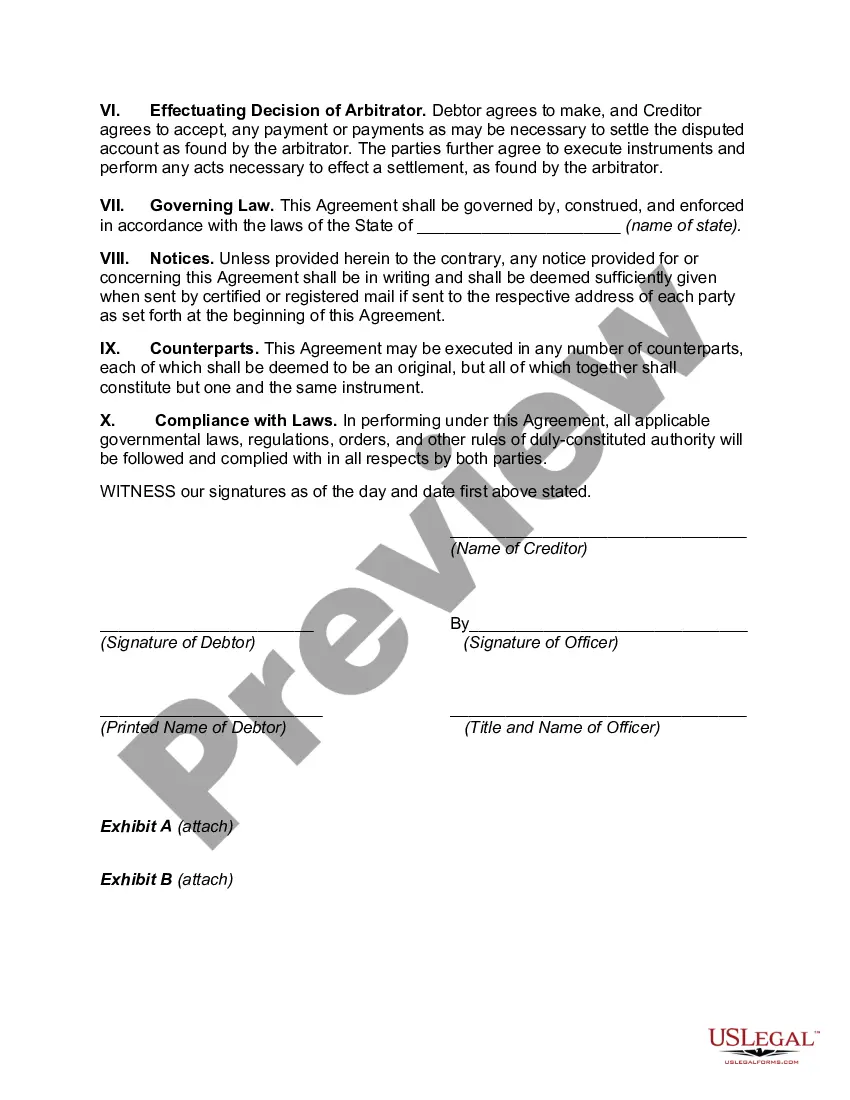
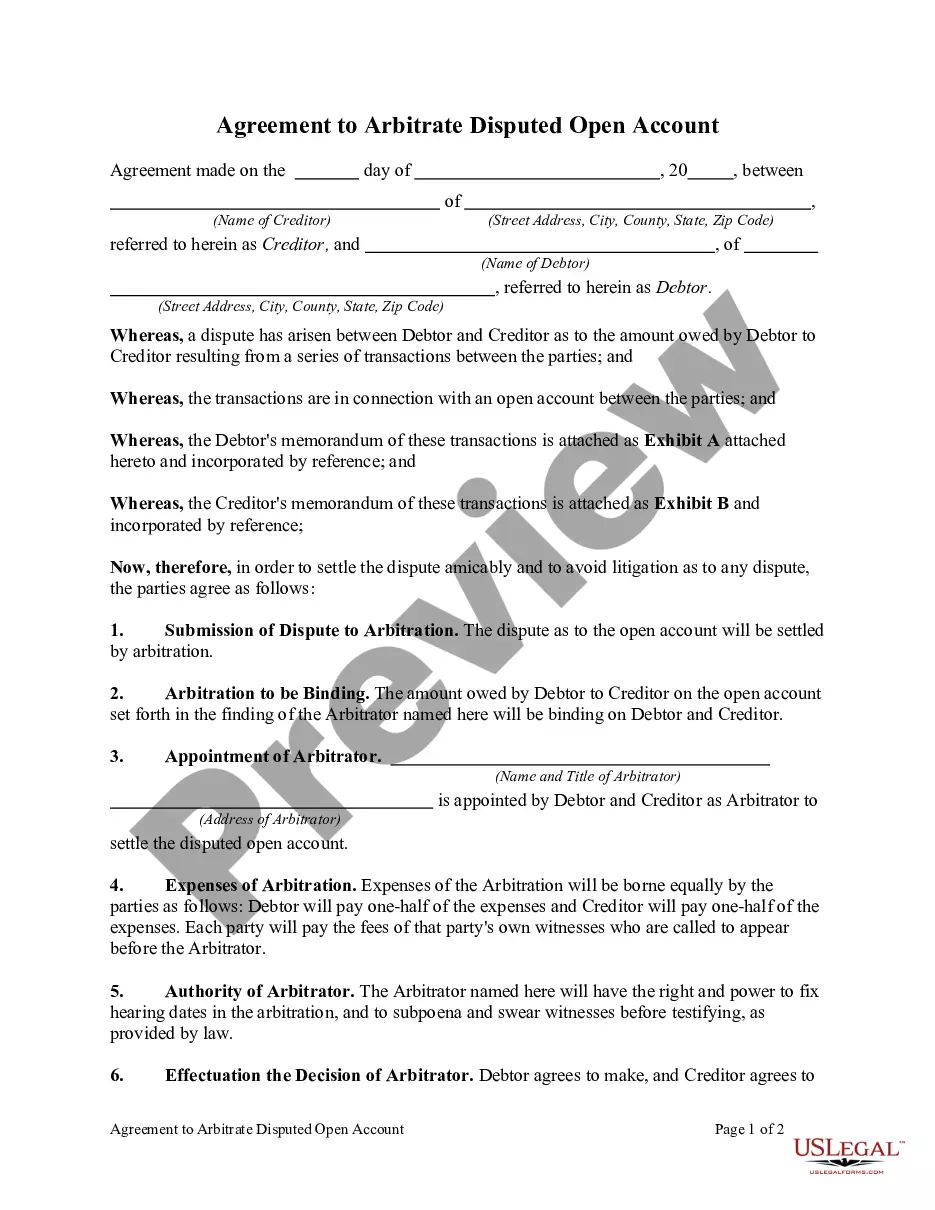
North Carolina Agreement to Arbitrate Disputed Open Account
Description

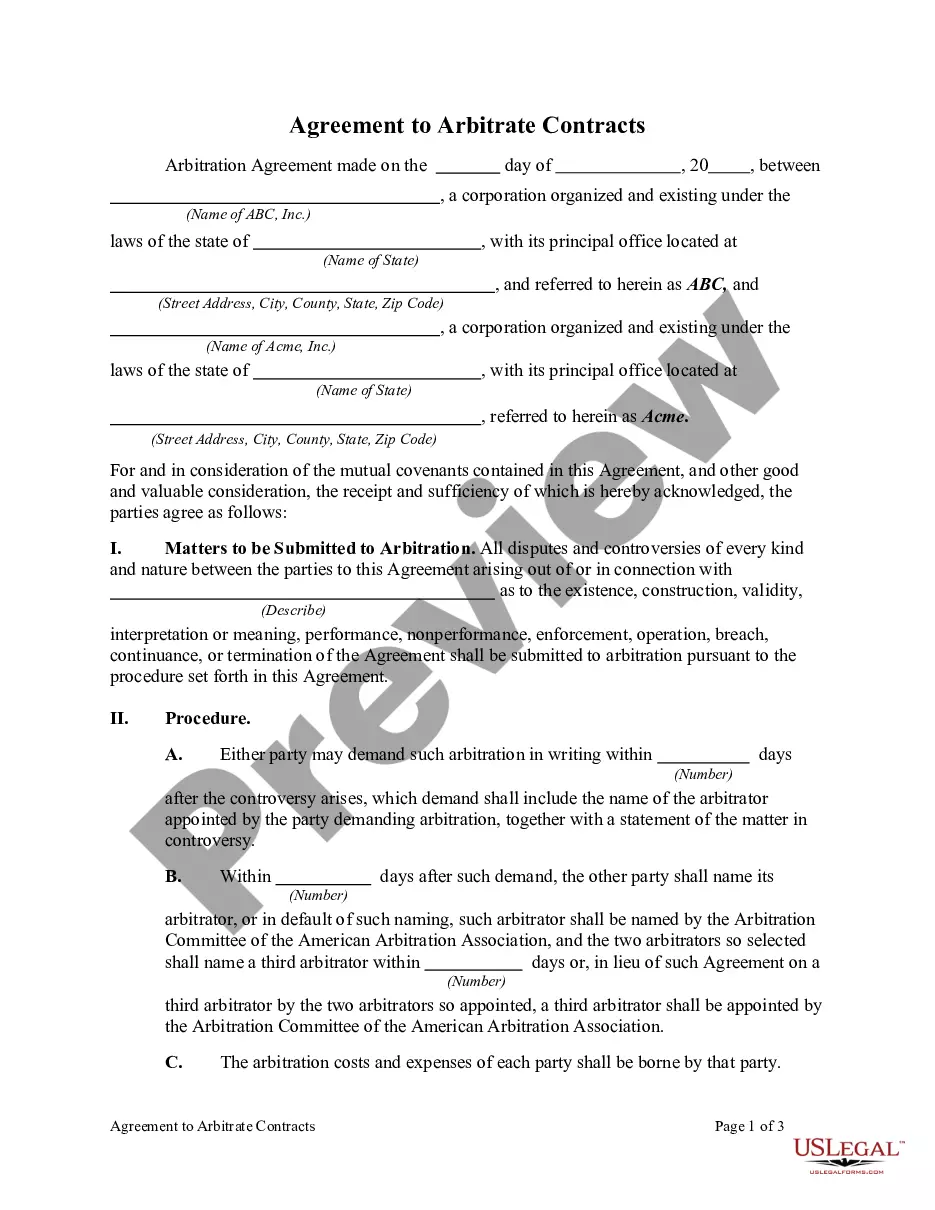
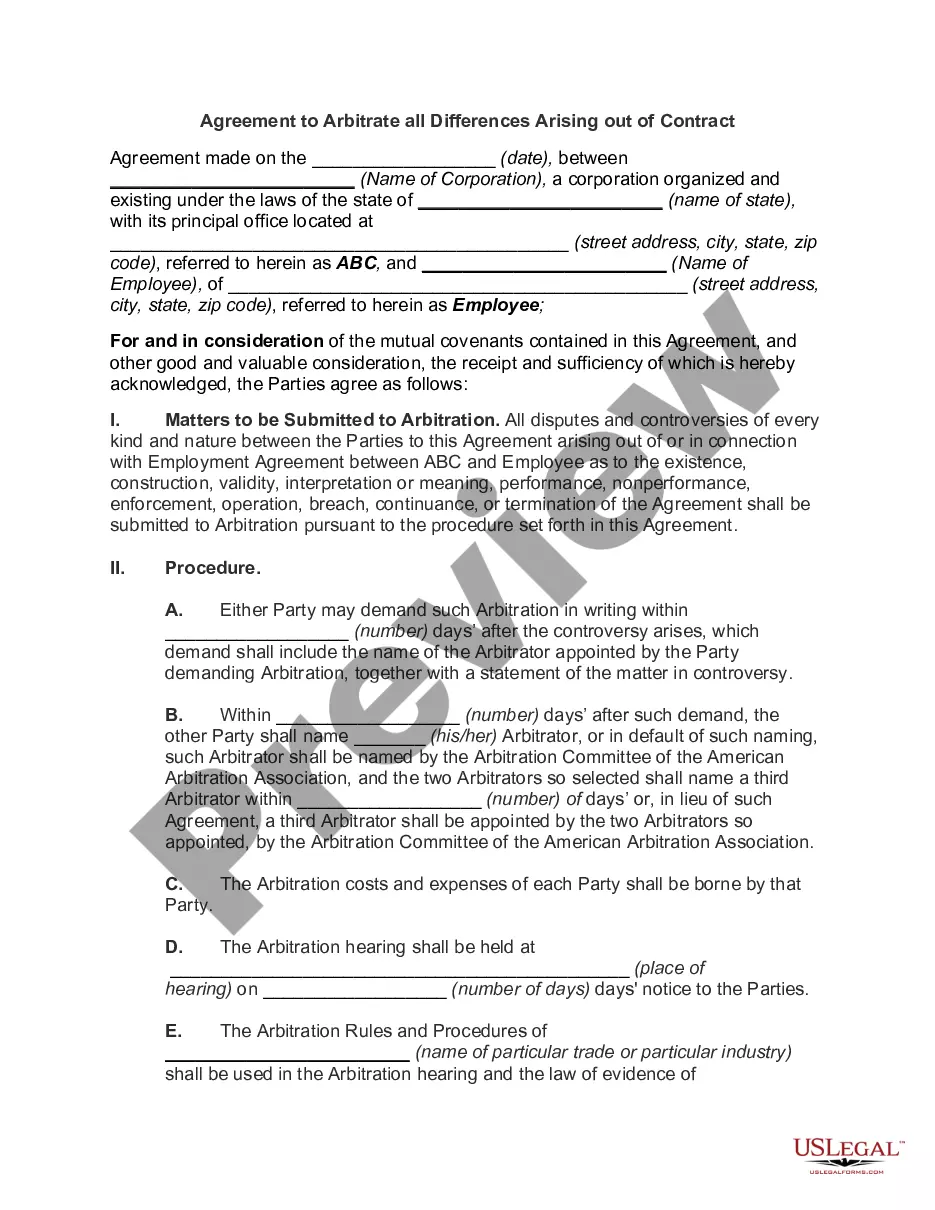
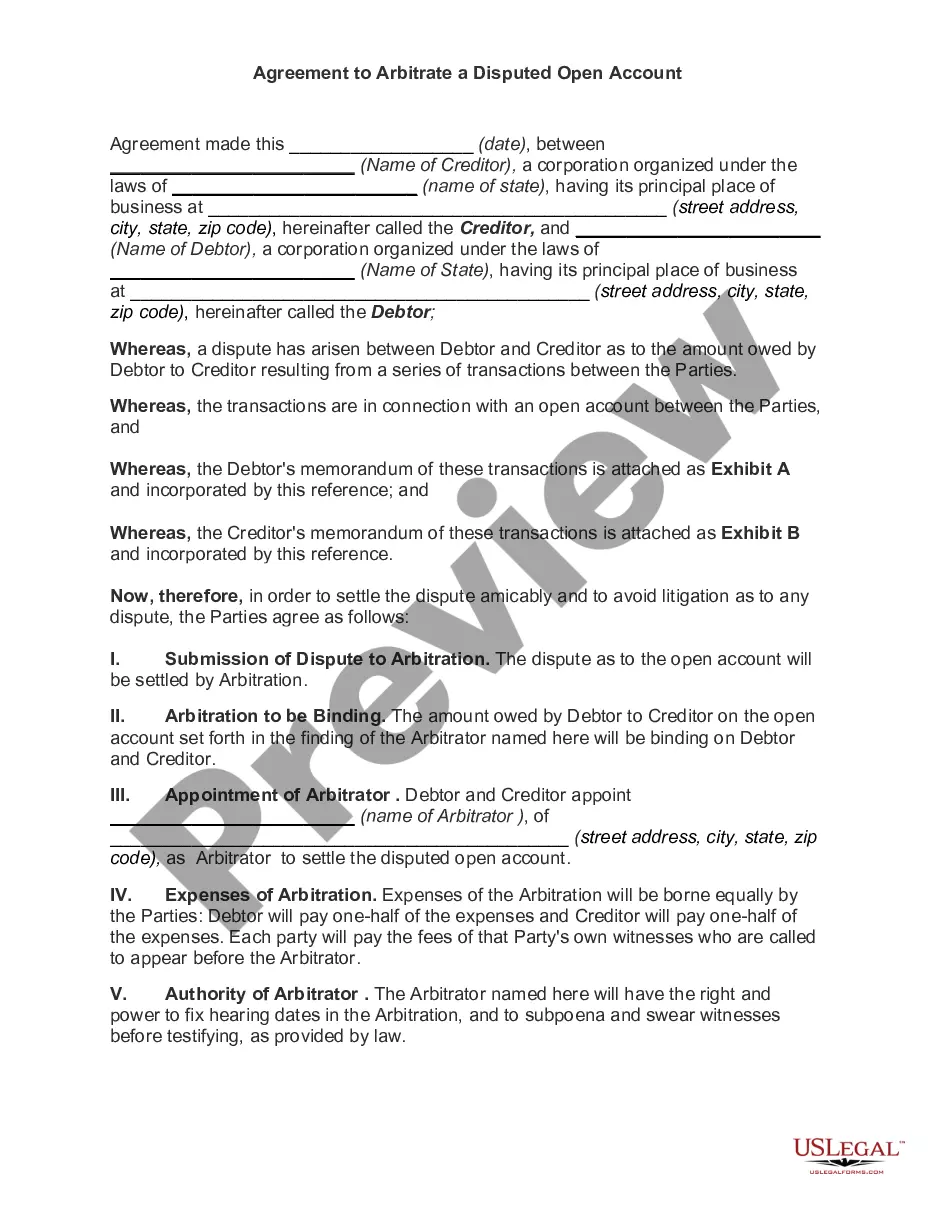
Get your form ready online
Our built-in tools help you complete, sign, share, and store your documents in one place.
Make edits, fill in missing information, and update formatting in US Legal Forms—just like you would in MS Word.
Download a copy, print it, send it by email, or mail it via USPS—whatever works best for your next step.
Sign and collect signatures with our SignNow integration. Send to multiple recipients, set reminders, and more. Go Premium to unlock E-Sign.
If this form requires notarization, complete it online through a secure video call—no need to meet a notary in person or wait for an appointment.
We protect your documents and personal data by following strict security and privacy standards.

Make edits, fill in missing information, and update formatting in US Legal Forms—just like you would in MS Word.

Download a copy, print it, send it by email, or mail it via USPS—whatever works best for your next step.

Sign and collect signatures with our SignNow integration. Send to multiple recipients, set reminders, and more. Go Premium to unlock E-Sign.

If this form requires notarization, complete it online through a secure video call—no need to meet a notary in person or wait for an appointment.

We protect your documents and personal data by following strict security and privacy standards.
Looking for another form?
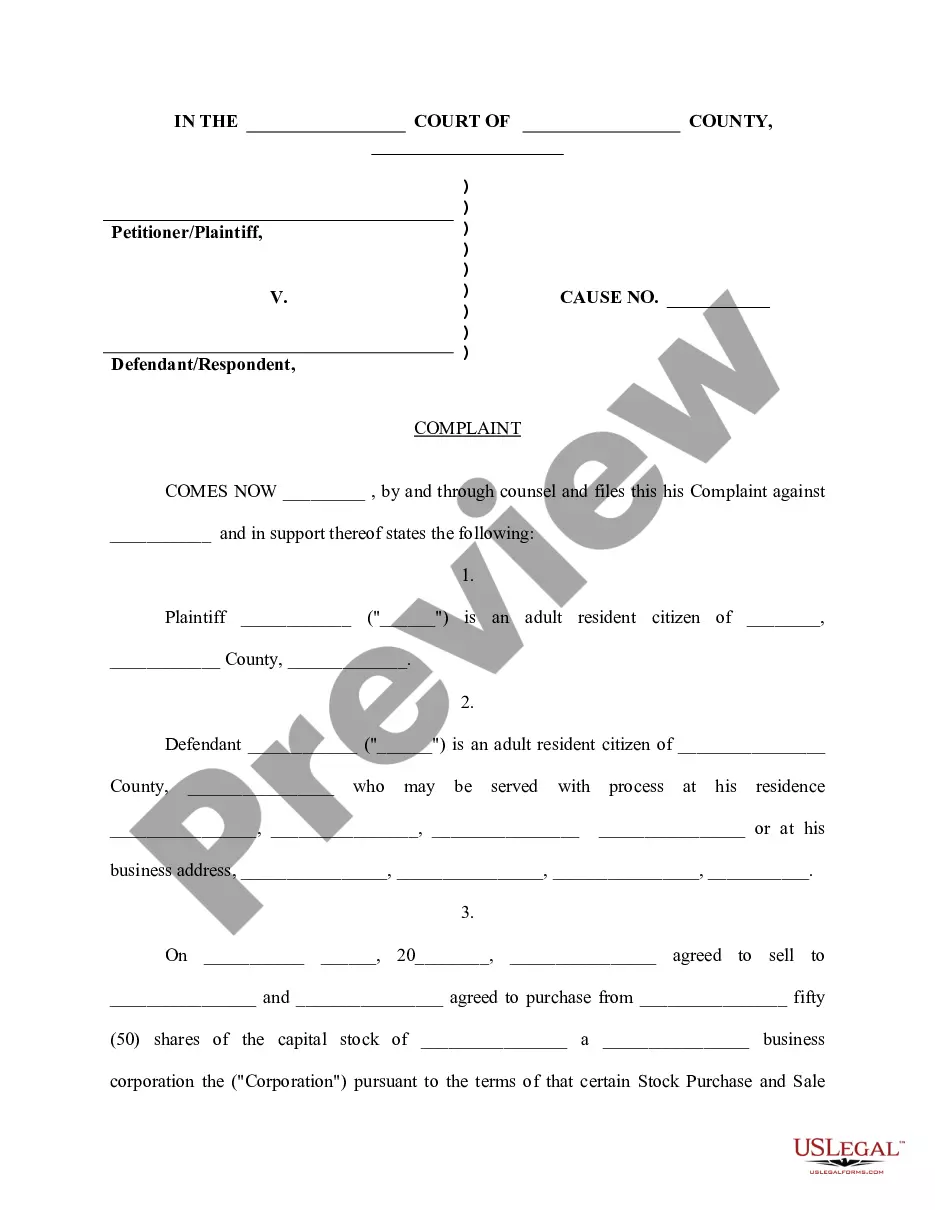
How to fill out Agreement To Arbitrate Disputed Open Account?
Are you presently in a role where you require documents for either business or specific tasks almost all the time.
There are numerous legal document templates accessible online, but locating forms you can trust is not straightforward.
US Legal Forms offers thousands of template options, such as the North Carolina Agreement to Arbitrate Disputed Open Account, that are crafted to satisfy federal and state requirements.
Once you obtain the appropriate form, click on Acquire now.
Choose the pricing plan you prefer, fill in the necessary details to create your account, and complete the transaction using your PayPal or credit card.
- If you are already acquainted with the US Legal Forms website and possess an account, simply Log In.
- After that, you can download the North Carolina Agreement to Arbitrate Disputed Open Account template.
- If you do not have an account and wish to start using US Legal Forms, follow these steps.
- Find the form you need and ensure it is for the correct city/state.
- Use the Review button to examine the form.
- Check the outline to ensure you have selected the correct form.
- If the form does not meet your needs, utilize the Lookup section to find a form that fits your requirements.
Form popularity
FAQ
Instead of a judge or a jury deciding your case, the arbitrator actually listens to the evidence typically in a more informal abbreviated way and then rules in the case. Typically, the decision of the arbitrator is binding, meaning neither side can appeal.
First, any valid arbitration agreement must reflect the conscious, mutual and free will of the parties to resort to arbitration and not to other means of dispute resolution, including State courts. The consent of both parties to submit their dispute to arbitration is the cornerstone of arbitration.
To enforce the right to arbitrate, the party must then file a motion to stay the lawsuit in favor of arbitration. If both parties to the agreement ignore the right to arbitrate, the right is waived.
Takeaway. When there is any dispute as to the validity of an arbitration agreement, parties shall decide whether they should go to the court or the arbitral tribunal by considering whether it is clear on the evidence and the construction of the agreements on the question of jurisdiction.
Arbitration hearings are limited by rule to one hour and take place in the courthouse. The hearings are conducted in a serious but relaxed atmosphere, with the rules of evidence serving as a guide. At the hearing, each side of a dispute will have a chance to tell their story to the arbitrator.
Meena Vijay Khaitan it was held: - "It will be noticed that under the Act of 1996 the arbitral tribunal is presently invested with power under sub-section (1) of section 16 to rule on its own jurisdiction including ruling on any objection concerning the presence or validity of the arbitration agreement and for that
After the evidence is presented, the arbitrator, like a judge, will make a decision about the case. The arbitrator's decision can give parties a realistic idea of the outcome of their case. If neither party appeals the decision, it will be binding, like an order by a judge.
First, any valid arbitration agreement must reflect the conscious, mutual and free will of the parties to resort to arbitration and not to other means of dispute resolution, including State courts. The consent of both parties to submit their dispute to arbitration is the cornerstone of arbitration.
For this reason, businesses often prefer to arbitrate their disputes, and include arbitration provisions in their contracts. North Carolina courts generally enforce these provisions, citing the state's strong public policy favoring the settlement of disputes by arbitration. Johnston Cnty. v.
A defendant can waive the arbitration requirement by engaging in a court litigation that the consumer initiates, by refusing to pay arbitration fees or refusing to participate in the arbitration, or (according to some courts) by initiating collection litigation in a public forum against the consumer prior to the