North Carolina Verification of Subscribing Witness
About this form
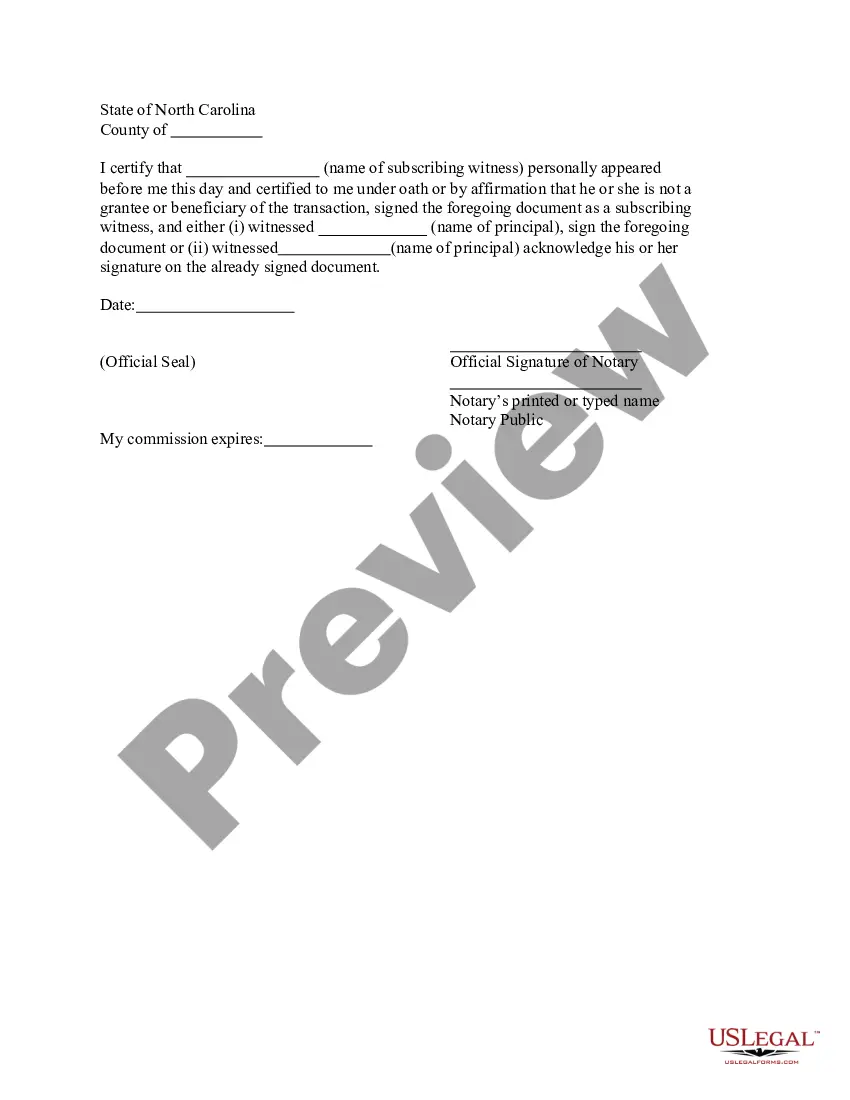
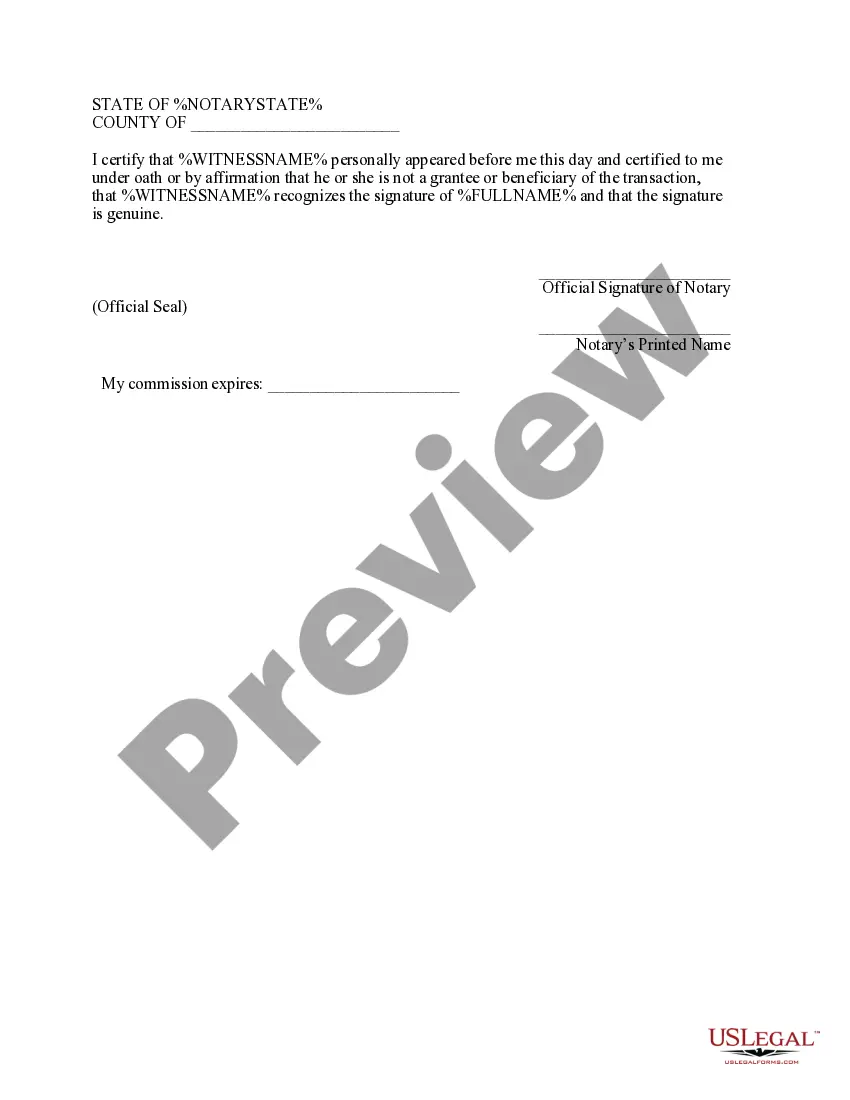
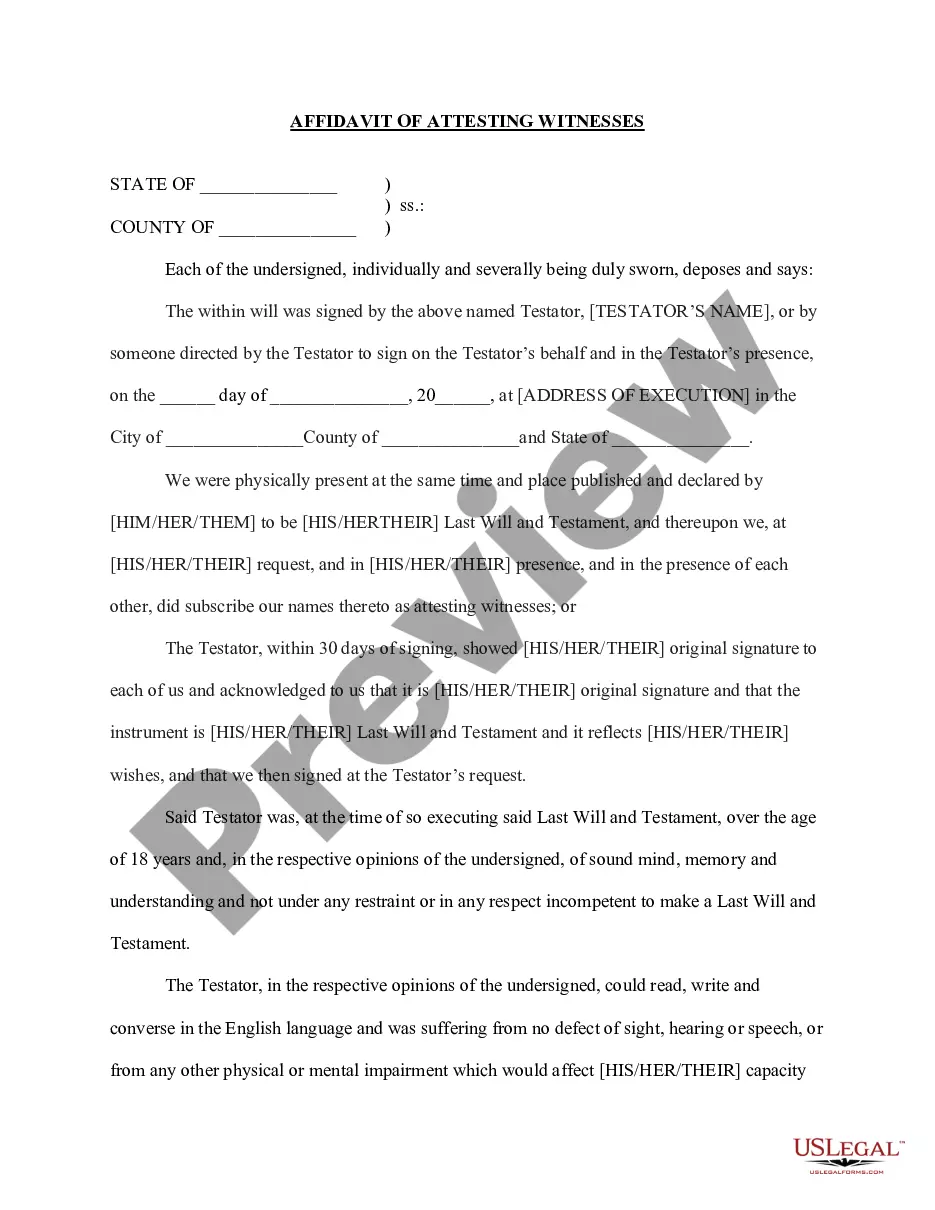
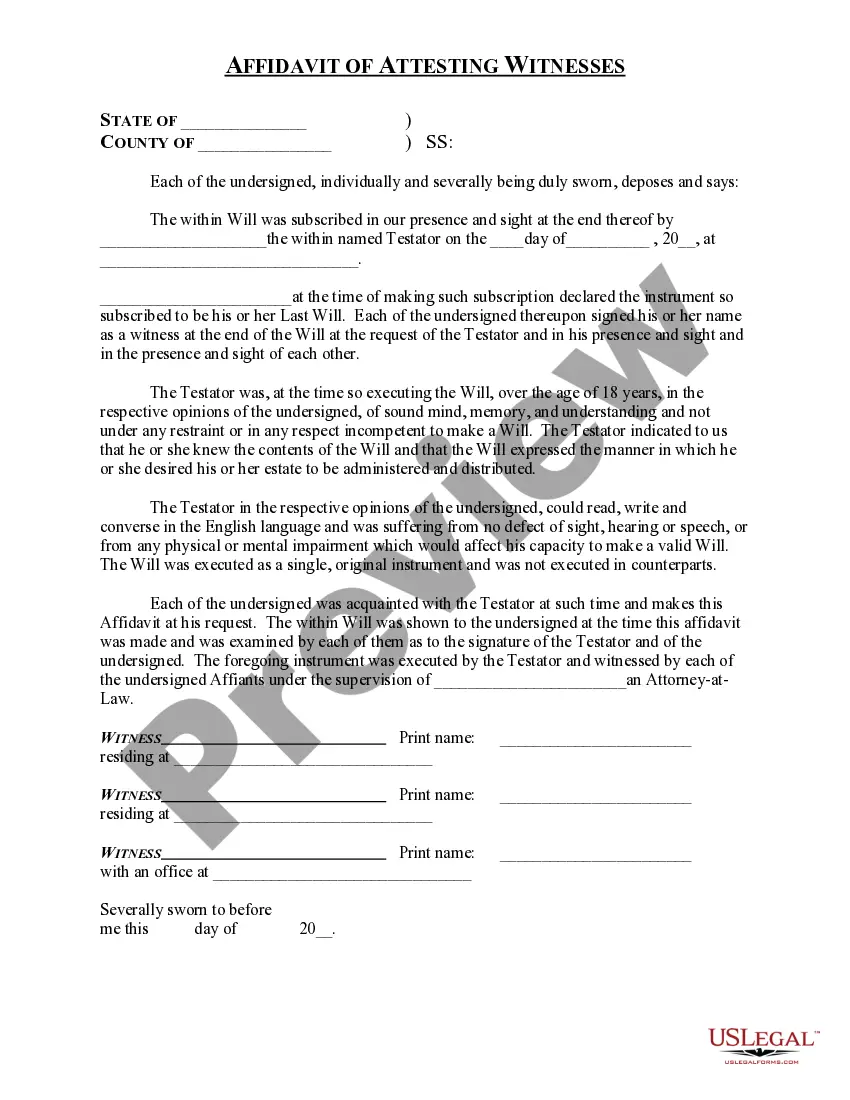
The Verification of Subscribing Witness form is a legal document used to authenticate the presence and signature of a witness to a contract or other legal documents. This form serves to confirm that the witness has observed the signing of the document and affirms that they are not a party to the transaction. It is distinct from general witness statements as it includes a formal verification under oath, making it more suitable for legal processes where witness credibility is crucial.
What’s included in this form
- Names of the subscribing witness and the principal signatory.
- Certification statement indicating the witness's presence during the signing of the document.
- Oath or affirmation verifying the non-involvement of the witness in the transaction.
- Date of the verification.
- Notary acknowledgment and seal, if applicable.

Situations where this form applies
This form is needed when a legal document requires a witness, especially in cases where the validity of the witness's testimony may be questioned. It is often used in property transactions, wills, and other agreements where the signing must be validated to prevent disputes over legitimacy.
Who needs this form
- Individuals executing a legal agreement that requires a witness.
- Notaries public who are providing witness verification services.
- Legal professionals assisting clients with contract formalities.
Completing this form step by step
- Identify the subscribing witness and enter their full name.
- Fill in the principal's name who the witness observed signing the document.
- Clearly state the date on which the verification is performed.
- Have the subscribing witness sign the form in the designated area.
- If required, present the document to a notary for sealing and further validation.
Notarization guidance
Yes, this form must be notarized to be legally valid. This adds an additional layer of verification and authenticity, which is important in legal matters. US Legal Forms offers integrated online notarization services, available twenty-four hours a day, ensuring secure video calls and legal acceptance without the need for travel.
Get your form ready online
Our built-in tools help you complete, sign, share, and store your documents in one place.
Make edits, fill in missing information, and update formatting in US Legal Forms—just like you would in MS Word.
Download a copy, print it, send it by email, or mail it via USPS—whatever works best for your next step.
Sign and collect signatures with our SignNow integration. Send to multiple recipients, set reminders, and more. Go Premium to unlock E-Sign.
If this form requires notarization, complete it online through a secure video call—no need to meet a notary in person or wait for an appointment.
We protect your documents and personal data by following strict security and privacy standards.

Make edits, fill in missing information, and update formatting in US Legal Forms—just like you would in MS Word.

Download a copy, print it, send it by email, or mail it via USPS—whatever works best for your next step.

Sign and collect signatures with our SignNow integration. Send to multiple recipients, set reminders, and more. Go Premium to unlock E-Sign.

If this form requires notarization, complete it online through a secure video call—no need to meet a notary in person or wait for an appointment.

We protect your documents and personal data by following strict security and privacy standards.
Common mistakes to avoid
- Failing to ensure the witness was present during the signing of the document.
- Neglecting to include the notaryâs seal when required.
- Leaving out essential details such as dates or names, leading to invalidation.
Main things to remember
- The Verification of Subscribing Witness is essential for validating the signing of legal documents.
- Accurate completion, including notarization when necessary, is crucial for legal validity.
- Understanding the role of the witness can prevent potential disputes or legal challenges.
Looking for another form?




Form popularity
FAQ
Both credible witnesses must personally know the document signer and possess an acceptable identification document to present to the notary for positive identification. When two credible witnesses are used, they both complete the credible witness affidavit, sign it and print their names under their signatures.
California allows Notaries to identify the signer through one or two credible identifying witnesses under certain situations. A credible witness is an individual who personally knows the signer and can vouch for the signer's identity to the Notary.
In the case of an un-witnessed will, two witnesses (called non-subscribing witnesses because they have not written or subscribed their name on the document) must swear that the signature on the will is that of the testator.There are many states that require a will to be witnessed.
The signer does not possess any of the identification documents authorized by law to establish the signer's identity; The credible witness does not have a financial interest and is not named in the document signed.
A person who signs a document indicating that they have witnessed a signature. For example, a person who witnesses the signing of a will is a subscribing witness.
What is the difference between a credible witness and a subscribing witness? Notice that the credible witnesses only signs the journal and not the document whereas the subscribing witness must sign both.A credible identifying witness is an individual who knows and can verify the identity of a signer.
The proof of execution by subscribing witness certificate is used when a principal signer who cannot appear before the Notary directs a third party (the subscribing witness) to witness that principal's signing or acknowledging of his or her signature on a document and then to bring the signed document to the Notary for