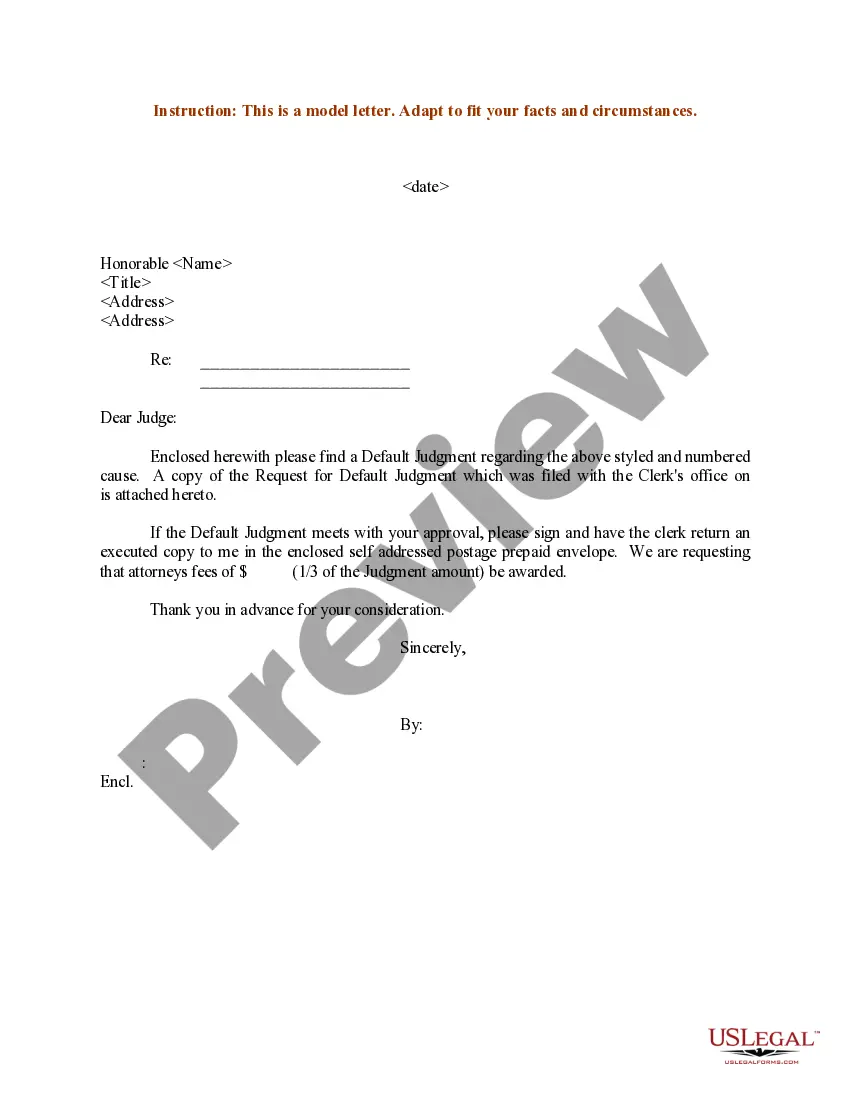
North Dakota Sample Letter to Judge submitting Default Judgment
Description

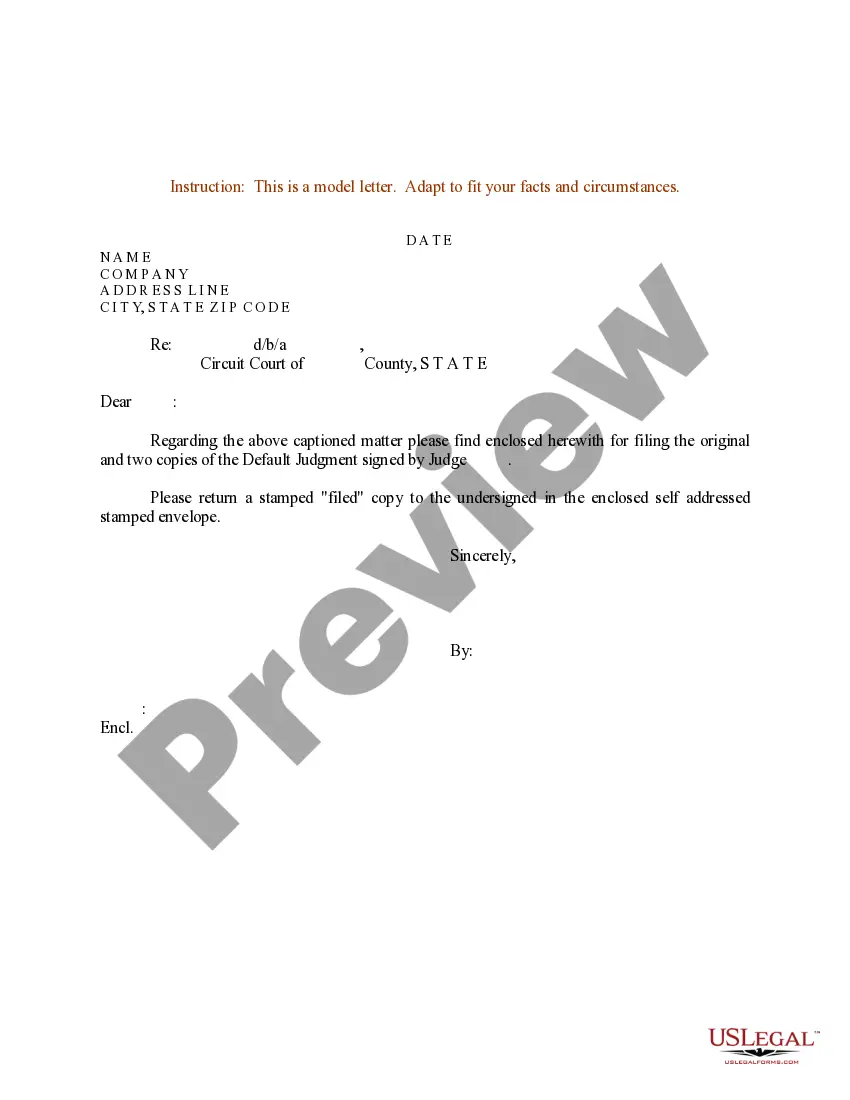
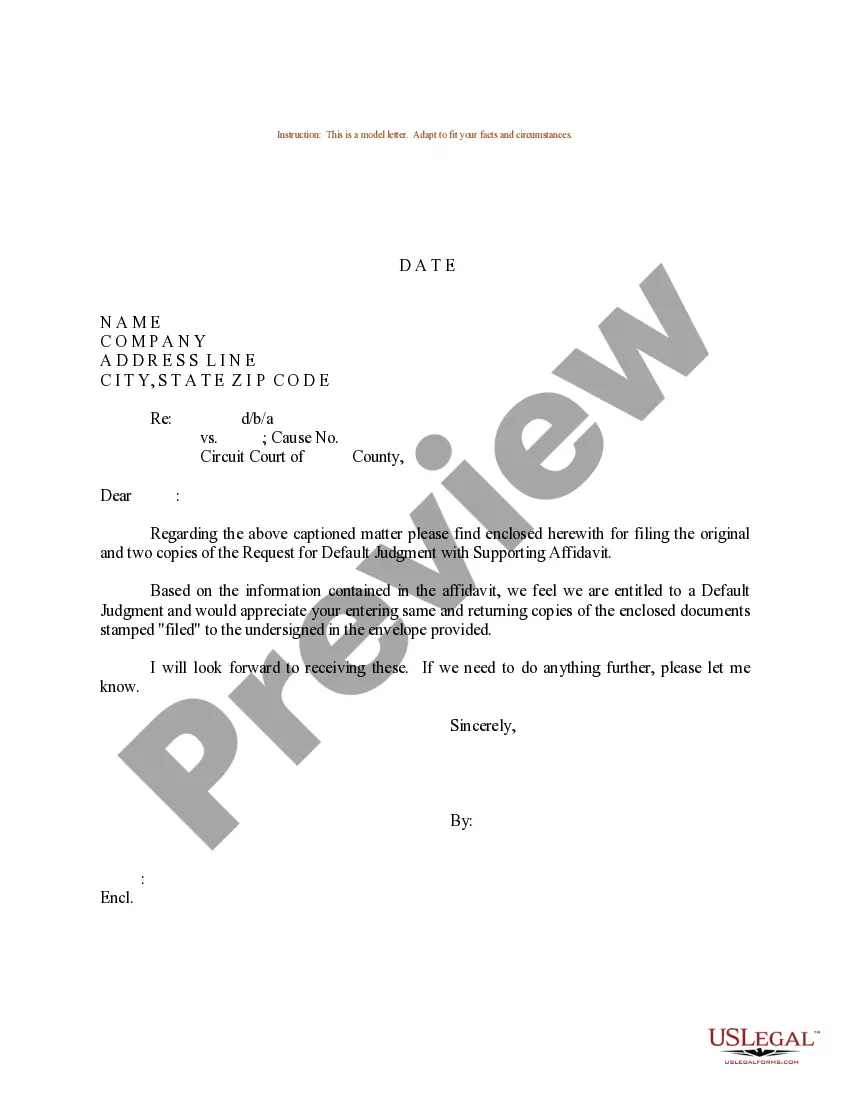
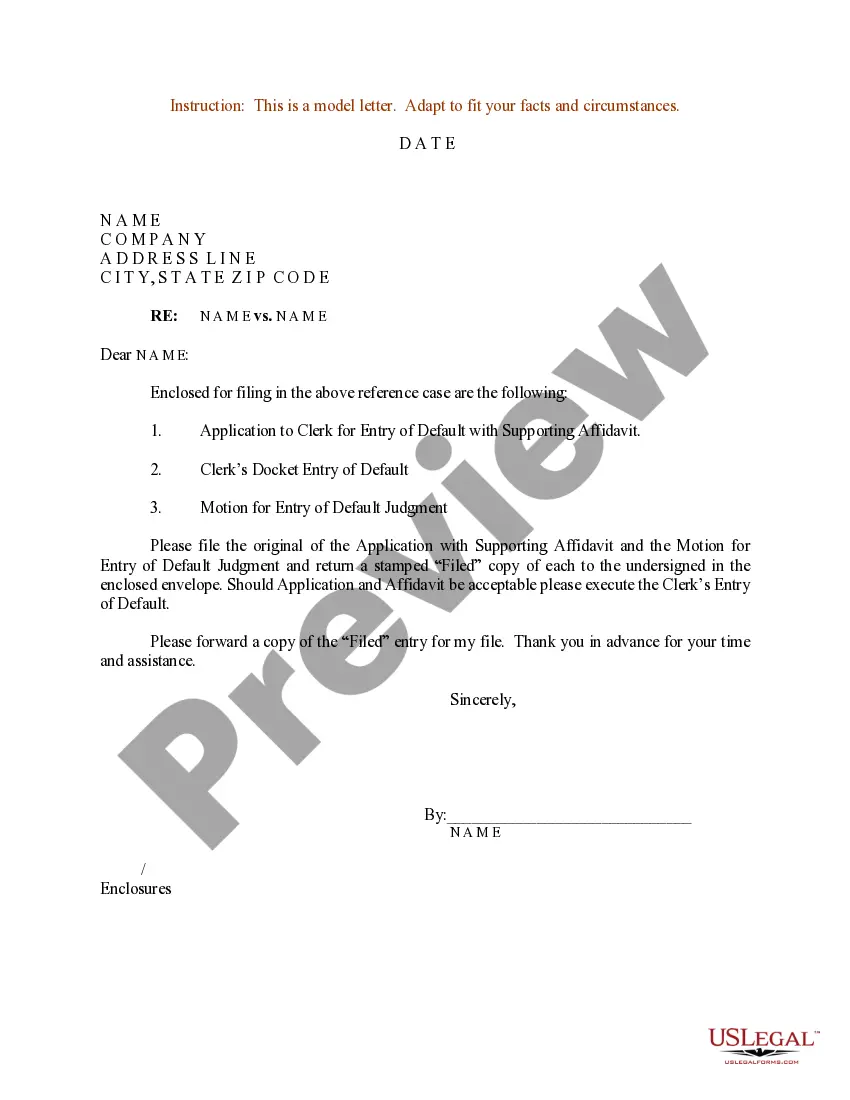
Get your form ready online
Our built-in tools help you complete, sign, share, and store your documents in one place.
Make edits, fill in missing information, and update formatting in US Legal Forms—just like you would in MS Word.
Download a copy, print it, send it by email, or mail it via USPS—whatever works best for your next step.
Sign and collect signatures with our SignNow integration. Send to multiple recipients, set reminders, and more. Go Premium to unlock E-Sign.
If this form requires notarization, complete it online through a secure video call—no need to meet a notary in person or wait for an appointment.
We protect your documents and personal data by following strict security and privacy standards.

Make edits, fill in missing information, and update formatting in US Legal Forms—just like you would in MS Word.

Download a copy, print it, send it by email, or mail it via USPS—whatever works best for your next step.

Sign and collect signatures with our SignNow integration. Send to multiple recipients, set reminders, and more. Go Premium to unlock E-Sign.

If this form requires notarization, complete it online through a secure video call—no need to meet a notary in person or wait for an appointment.

We protect your documents and personal data by following strict security and privacy standards.
Looking for another form?

How to fill out Sample Letter To Judge Submitting Default Judgment?
You might spend hours online searching for the legal document template that meets state and federal requirements you need.
US Legal Forms provides thousands of legal forms that are assessed by professionals.
It is easy to obtain or generate the North Dakota Sample Letter to Judge submitting Default Judgment from your services.
If available, utilize the Preview option to view the document template simultaneously. If you want to find another version of the form, use the Lookup field to locate the template that fits your requirements and needs. Once you have found the template you want, click Get now to proceed. Choose the pricing plan you prefer, enter your details, and register for an account on US Legal Forms. Complete the transaction. You can use your credit card or PayPal account to pay for the legal form. Select the format of the document and download it to your device. Make edits to your document if needed. You can complete, modify, sign, and generate the North Dakota Sample Letter to Judge submitting Default Judgment. Access and generate thousands of document templates using the US Legal Forms website, which offers the largest collection of legal forms. Use professional and state-specific templates to meet your business or personal needs.
- If you already have a US Legal Forms account, you can Log In and click on the Obtain option.
- Then, you can complete, modify, generate, or sign the North Dakota Sample Letter to Judge submitting Default Judgment.
- Every legal document template you purchase is yours indefinitely.
- To obtain an additional copy of a purchased form, visit the My documents tab and click on the relevant option.
- If you are using the US Legal Forms website for the first time, follow the straightforward instructions below.
- First, ensure you have selected the correct document template for your county/area of interest.
- Check the form description to confirm you have chosen the right form.
Form popularity
FAQ
(a) Default and entry. When a defendant has failed to appear, plead or proceed to trial of an action reached and called for trial, or when the court orders a dismissal for any other neglect to proceed, the plaintiff may seek a default judgment against him.
For example, if a defendant issues a written offer of judgment of $30,000 and the plaintiff chooses to let that offer lapse and to go to trial, the plaintiff must receive a judgment in excess of $30,000 to avoid having to pay the defendant's court costs.
A very important fact you should keep in mind is that California courts do impose a timeline for seeking entry of a default judgment. Specifically, a request for entry of default must be filed within 10 days following a defendant's failure to timely file and serve a responsive pleading.
Rule 68 provides that the defendant may serve on plaintiff an offer of judgment at any point up to fourteen days before trial. In the offer, the defendant must state that it will allow a judgment to be taken against it for a specific sum of money or on other specific terms, along with costs then accrued.
Failure to Respond: If a defendant fails to answer the complaint or file a motion to dismiss within the time limit set forth in the summons, the defendant is in default. The plaintiff can ask the court clerk to make a note of that fact in the file, a procedure called entry of default.
Records. The clerk of the district court must keep records of criminal proceedings in the form prescribed by the Director of the Administrative Office of the United States Courts. The clerk must enter in the records every court order or judgment and the date of entry.
If, within 14 days after being served, the opposing party serves written notice accepting the offer, either party may then file the offer and notice of acceptance, plus proof of service. The clerk must then enter judgment.
The Final Judgment Rule (sometimes called the ?One Final Judgment Rule?) is the legal principle that appellate courts will only hear appeals from the ?final? judgment in a case. A plaintiff or defendant cannot appeal rulings of the trial court while the case is still ongoing.