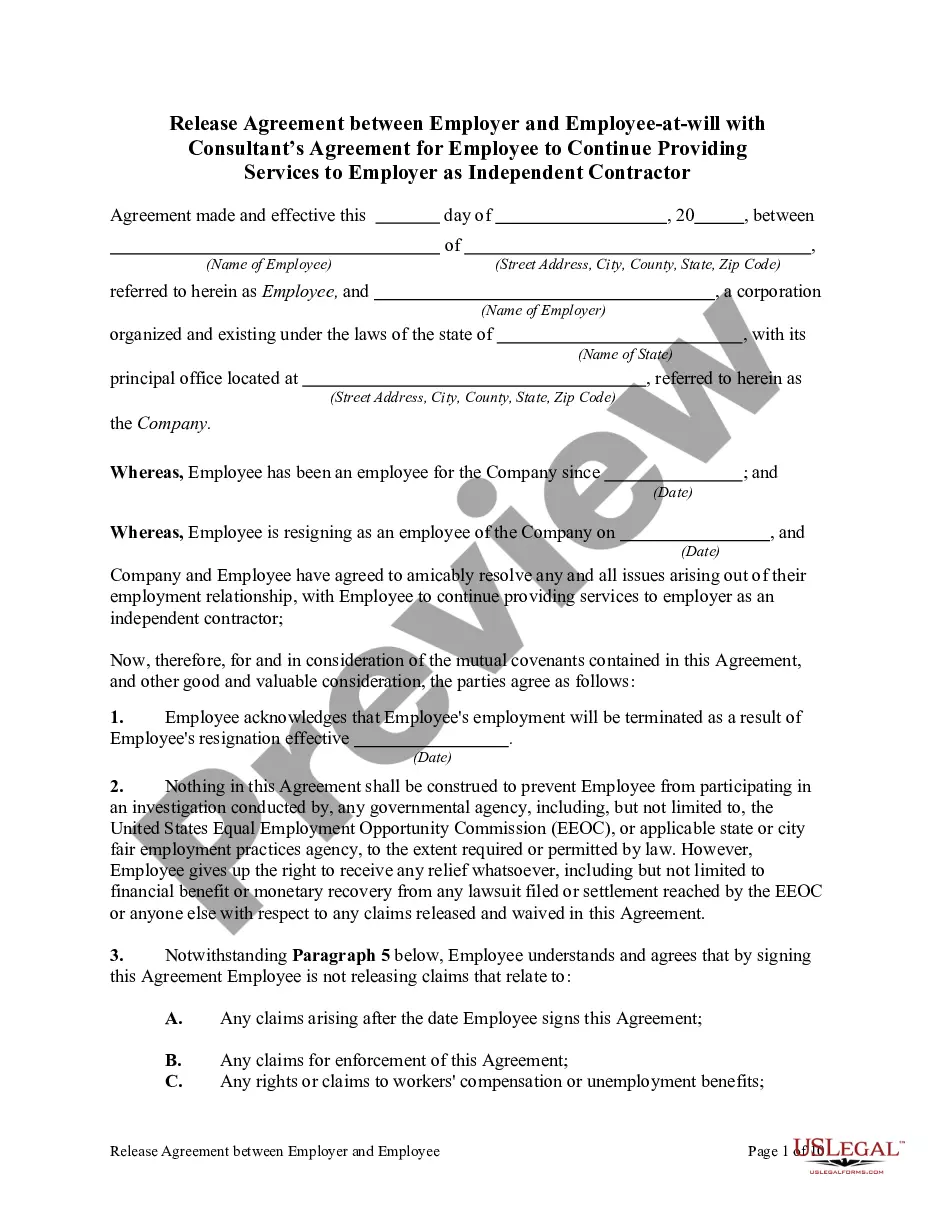
North Dakota Discovery - Sample Letter to Opposing Counsel regarding Deposition and Subpoena Duces Tecum
Description
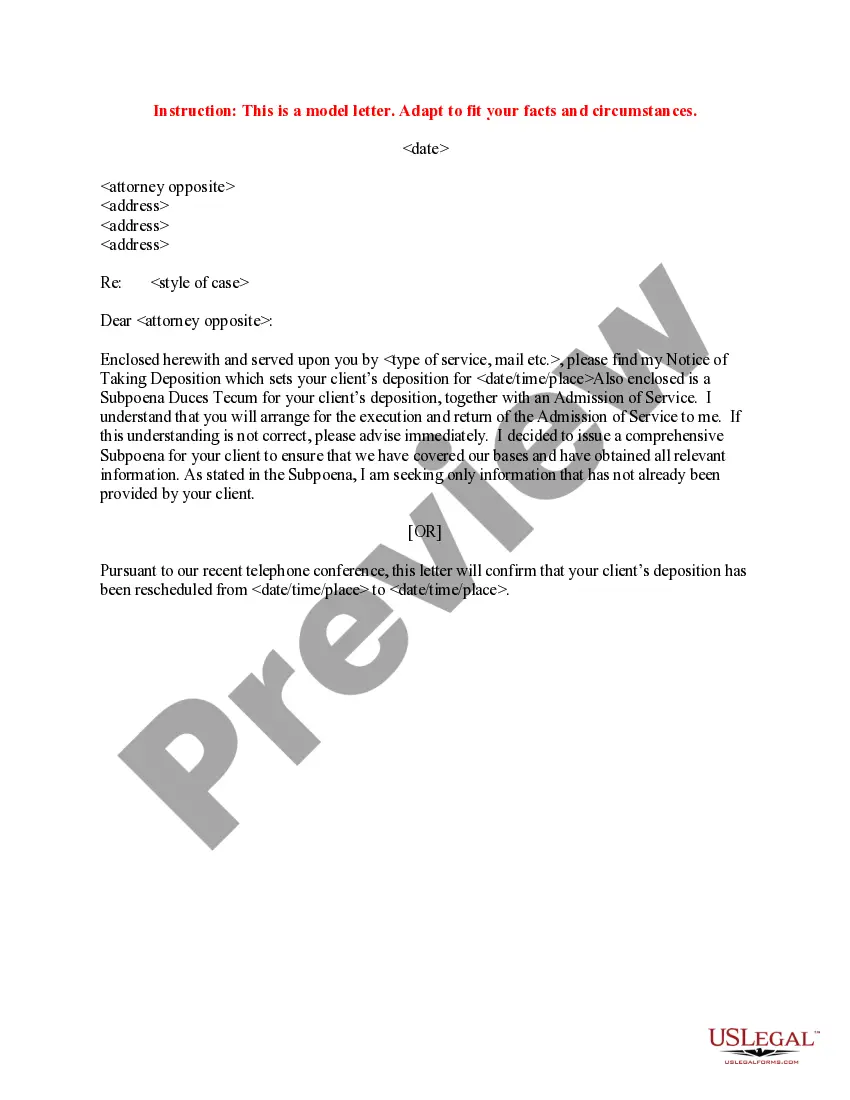
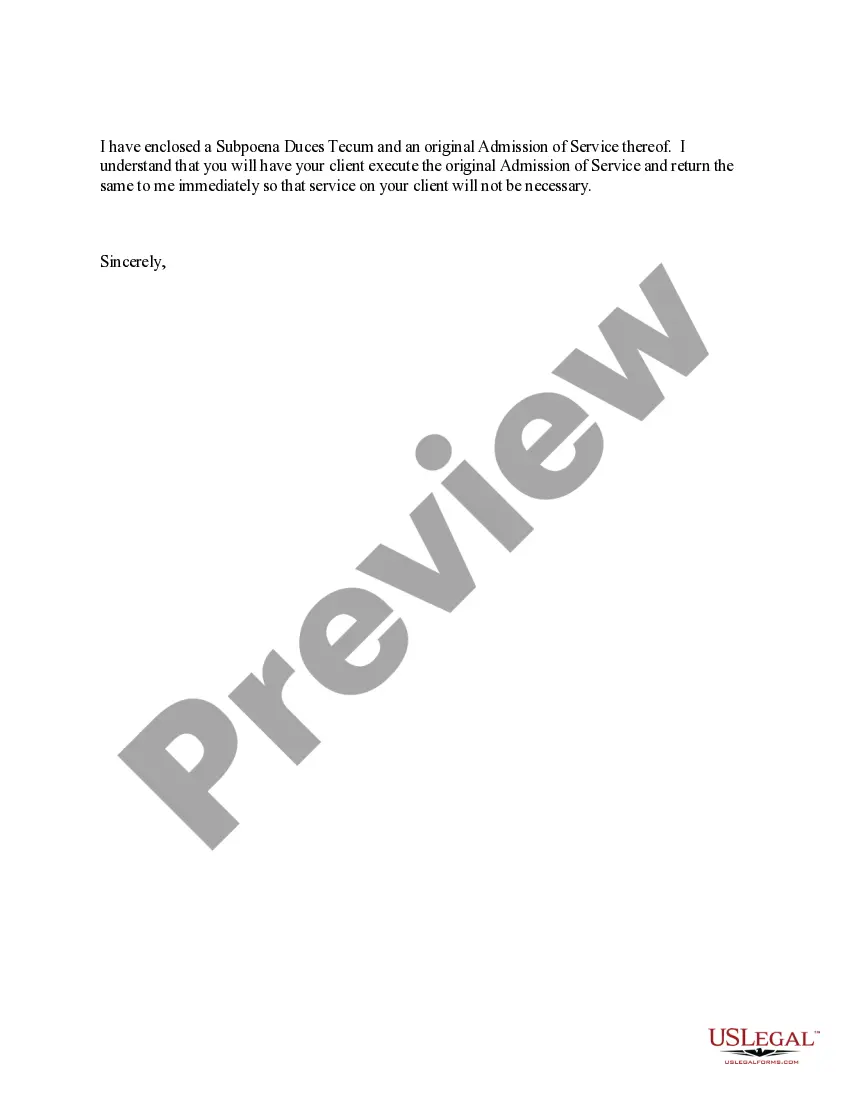
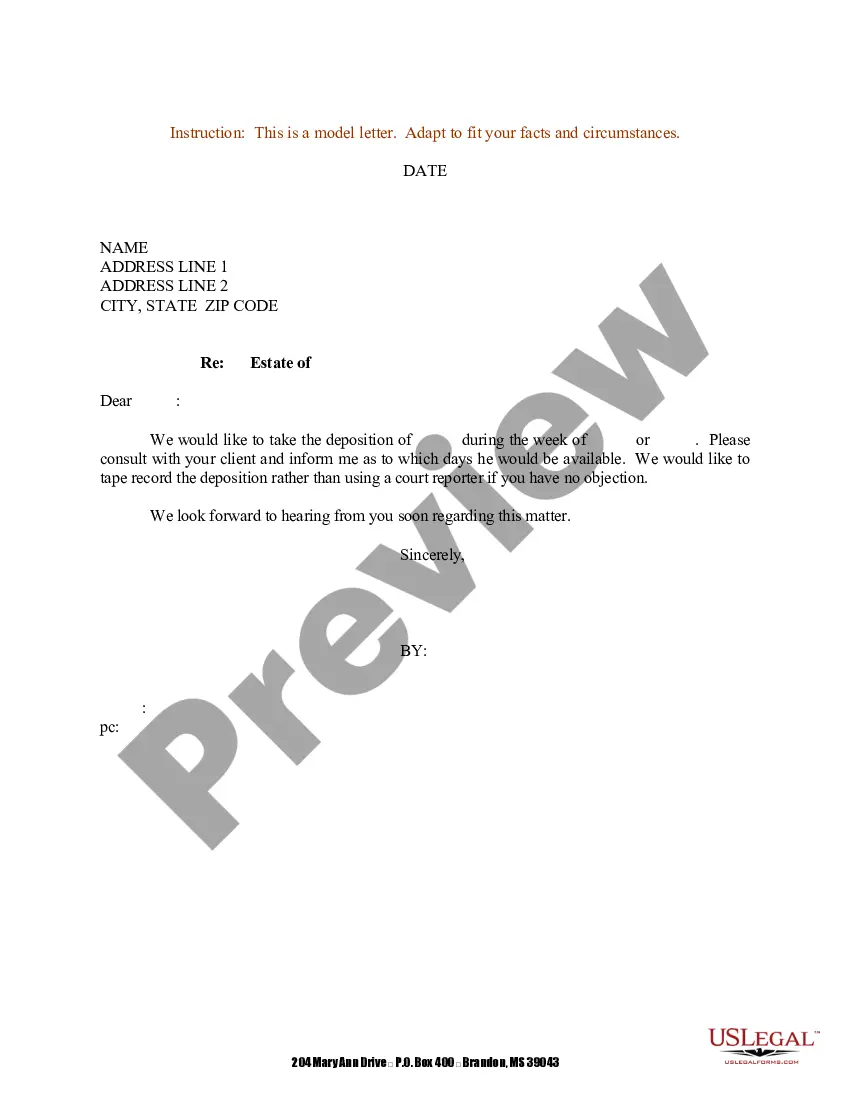
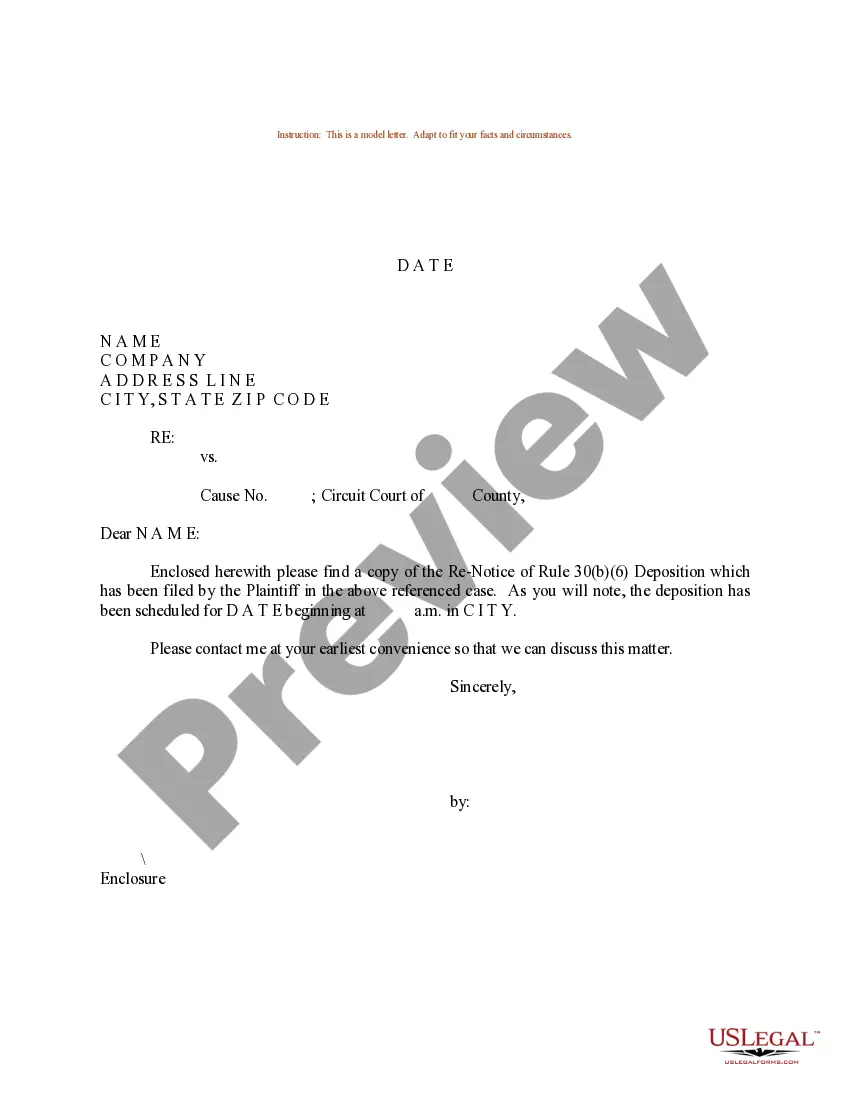
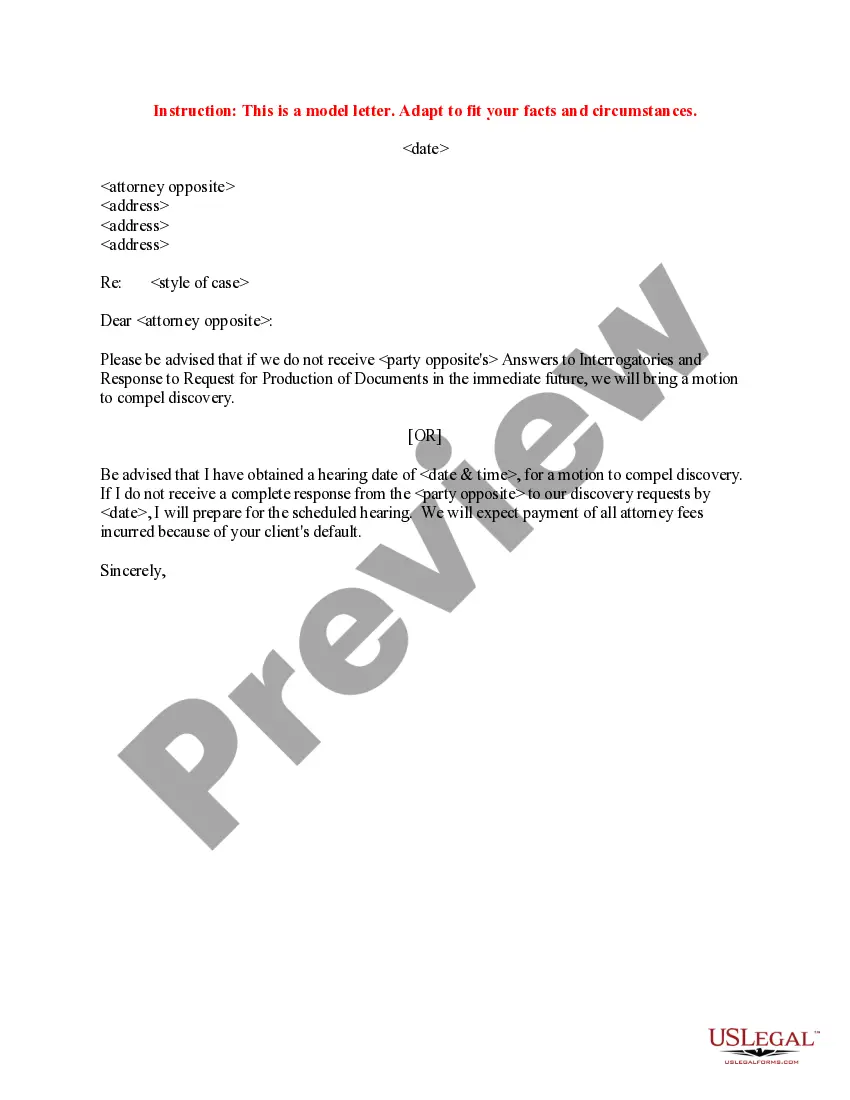
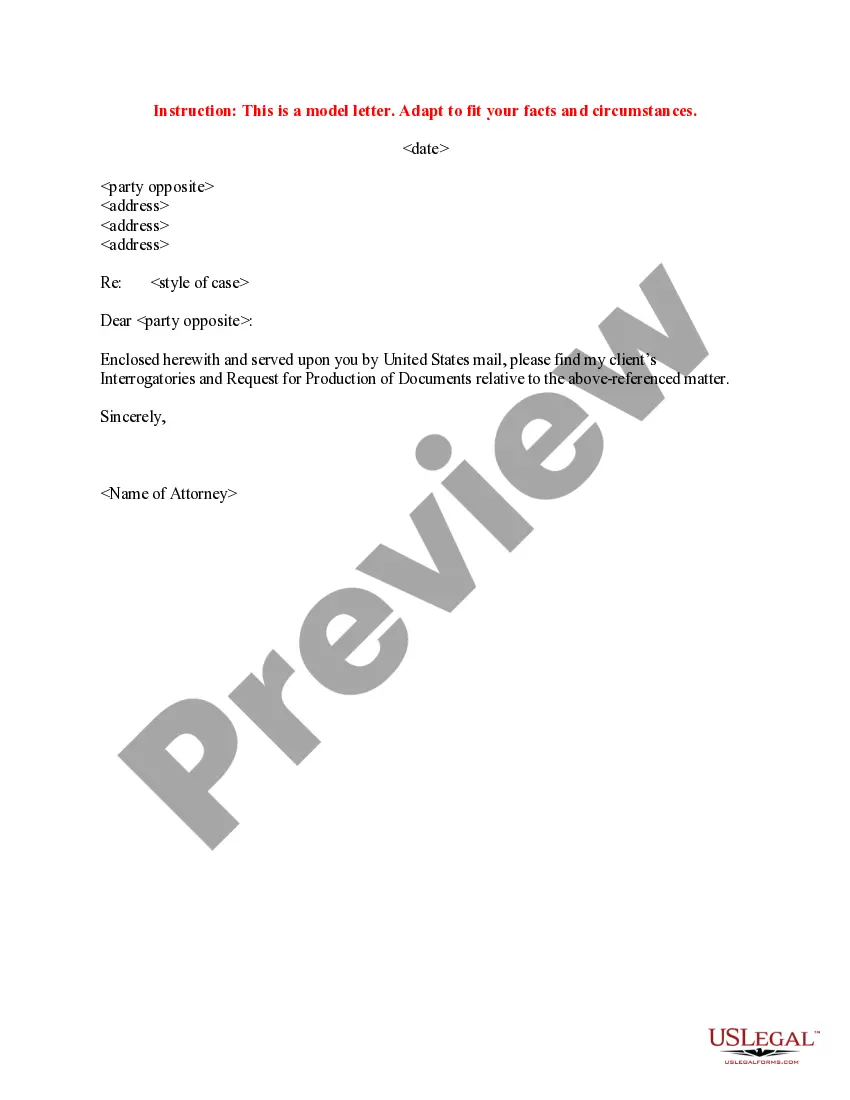
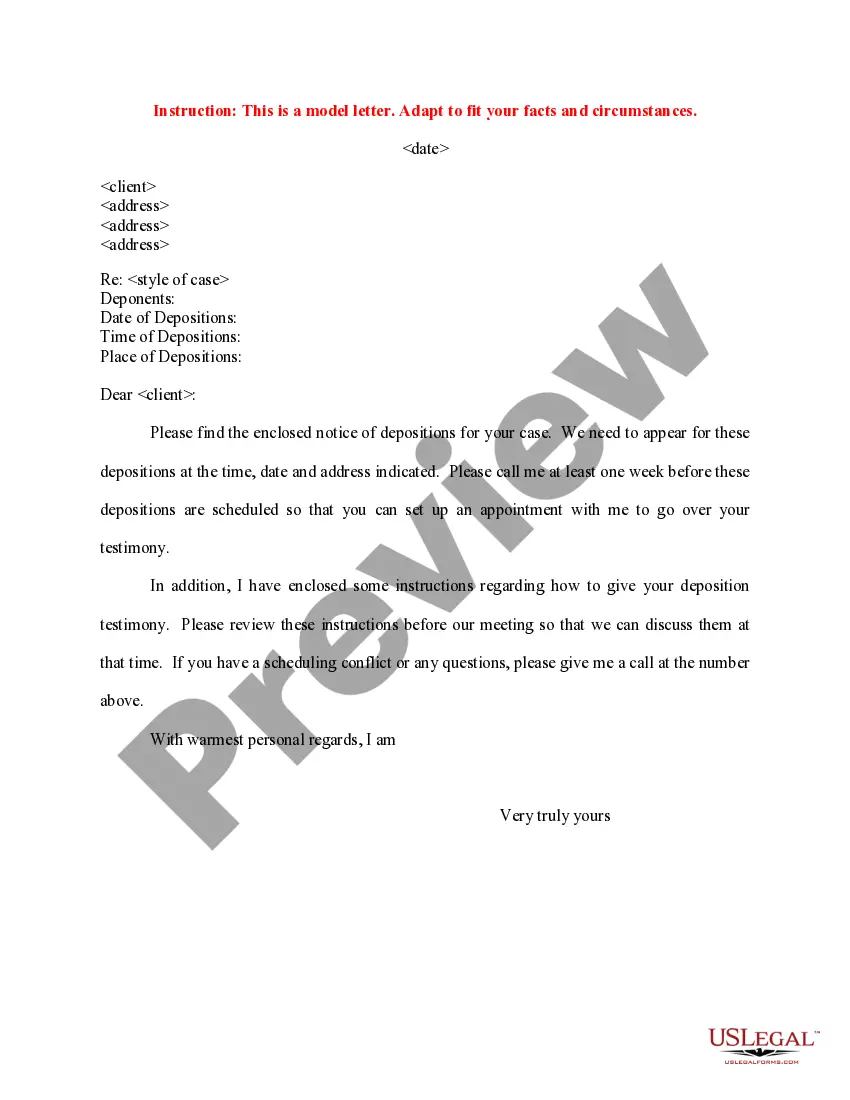




How to fill out Discovery - Sample Letter To Opposing Counsel Regarding Deposition And Subpoena Duces Tecum?
If you wish to comprehensive, down load, or print out lawful document layouts, use US Legal Forms, the largest assortment of lawful types, which can be found on the Internet. Make use of the site`s simple and handy search to get the paperwork you want. A variety of layouts for business and personal purposes are categorized by types and states, or keywords and phrases. Use US Legal Forms to get the North Dakota Discovery - Sample Letter to Opposing Counsel regarding Deposition and Subpoena Duces Tecum within a few click throughs.
If you are previously a US Legal Forms customer, log in to your accounts and click the Down load key to obtain the North Dakota Discovery - Sample Letter to Opposing Counsel regarding Deposition and Subpoena Duces Tecum. You may also accessibility types you formerly downloaded in the My Forms tab of your own accounts.
If you work with US Legal Forms for the first time, follow the instructions under:
- Step 1. Ensure you have chosen the form for the proper metropolis/country.
- Step 2. Use the Review method to look through the form`s information. Never overlook to read through the information.
- Step 3. If you are unhappy together with the develop, make use of the Research field on top of the display screen to discover other models from the lawful develop format.
- Step 4. Once you have discovered the form you want, select the Acquire now key. Select the prices program you prefer and add your accreditations to sign up for an accounts.
- Step 5. Method the financial transaction. You can utilize your charge card or PayPal accounts to finish the financial transaction.
- Step 6. Select the formatting from the lawful develop and down load it in your system.
- Step 7. Complete, change and print out or signal the North Dakota Discovery - Sample Letter to Opposing Counsel regarding Deposition and Subpoena Duces Tecum.
Each lawful document format you get is the one you have eternally. You possess acces to each develop you downloaded within your acccount. Go through the My Forms portion and choose a develop to print out or down load once again.
Be competitive and down load, and print out the North Dakota Discovery - Sample Letter to Opposing Counsel regarding Deposition and Subpoena Duces Tecum with US Legal Forms. There are many professional and express-certain types you can utilize for the business or personal demands.
Form popularity
FAQ
8 Tips for Dealing with Difficult Opposing Counsel Point out Common Ground. ... Don't be Afraid to Ask Why. ... Separate the Person from the Problem. ... Focus on your Interests. ... Don't Fall for your Assumptions. ... Take a Calculated Approach. ... Control the Conversation by Reframing. ... Pick up the Phone.
Dear [Opposing Counsel Name], I am writing to follow up on our recent communication regarding [case name]. I have not yet received a response from you regarding [list the specific issue or question]. Please let me know your thoughts as soon as possible so that we can continue to move forward with the case. 14 Outlook Email Templates For Lawyers - Phillip Hughes philliphughes.co.uk ? tips-and-tricks ? email... philliphughes.co.uk ? tips-and-tricks ? email...
As a rule, lawyers should avoid carbon copying or blind carbon copying clients on email, especially those to opposing counsel. And if doing so is necessary, the lawyer should first explain to the client why the lawyer is using CC or BCC, and that the client should not respond to all.
When you are emailing the opposing counsel, always be mindful of your tone, words, and spelling. Double-check and then check again before entering an email address in the ?To:? line and hitting ?send.? Make copies of all correspondence and never copy or blind carbon copy your client in emails with the opposing counsel.
Rule 37 authorizes the court to direct that parties or attorneys who fail to participate in good faith in the discovery process pay the expenses, including attorney's fees, incurred by other parties as a result of that failure. Rule 37. Failure to Make Disclosures or to Cooperate in Discovery cornell.edu ? rules ? frcp ? rule_37 cornell.edu ? rules ? frcp ? rule_37
Some are, some are not. The general rule is that all communications between parties is open and unprotected . However an exception applies to communications as part of an effort to settle the case. It is wise to head all such communications with the words ??Without Prejudice".
This letter is often called a good faith letter. And it is needed under many courts' rules before you can file a motion to compel discovery if the other party ignores your requests or provides evasive responses or move for sanctions if your opponent refuses to comply with the court's discovery order. Meet and Confer: Good Faith Letter for Incomplete Discovery cpollardlaw.com ? personal-injury-attorney-virginia cpollardlaw.com ? personal-injury-attorney-virginia
(i) a party may through interrogatories require any other party to identify each person whom the other party expects to call as an expert witness at trial; to state: the subject matter on which the expert is expected to testify; the substance of the facts and opinions to which the expert is expected to testify; and. RULE 26. GENERAL PROVISIONS GOVERNING DISCOVERY North Dakota Supreme Court (.gov) ? rules ? ndrcivp North Dakota Supreme Court (.gov) ? rules ? ndrcivp