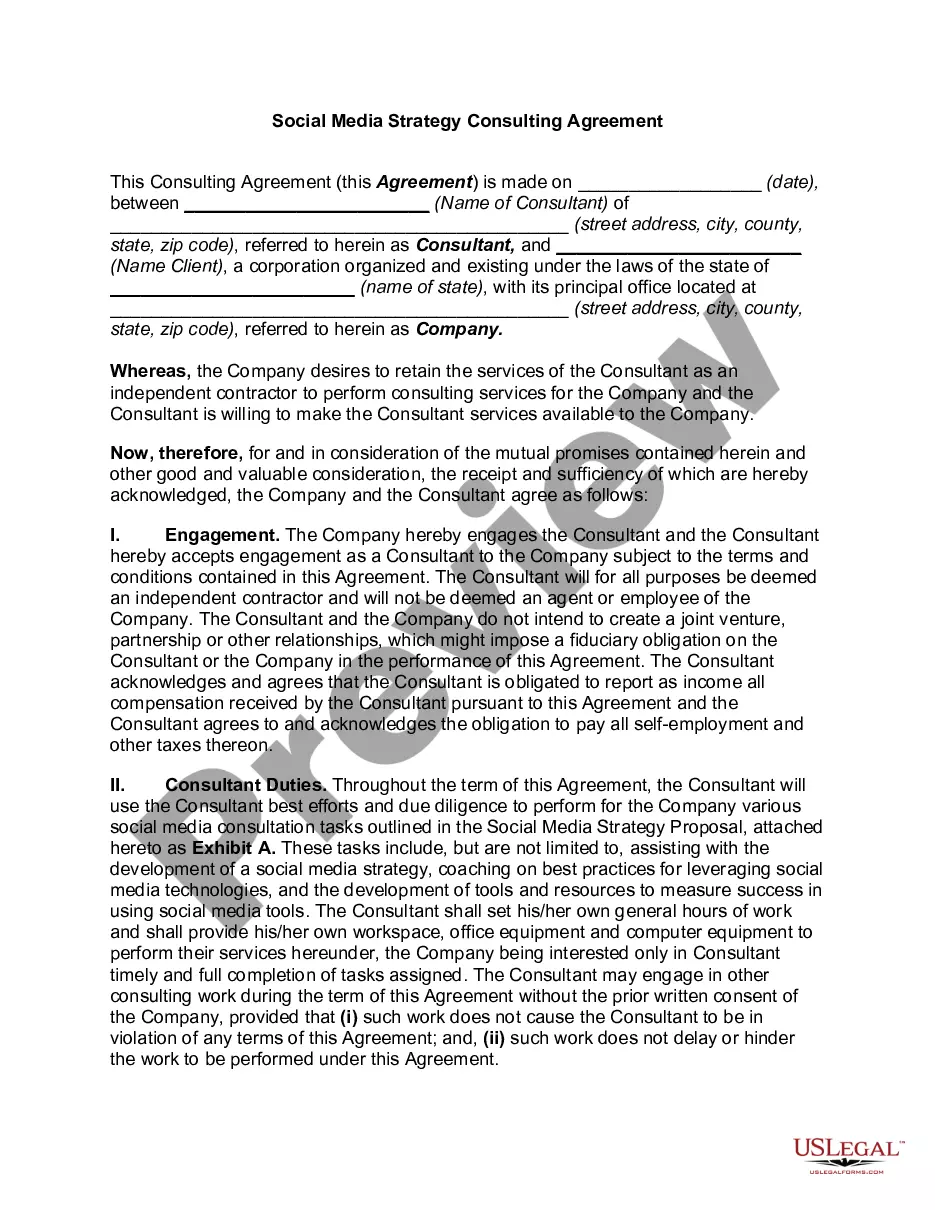
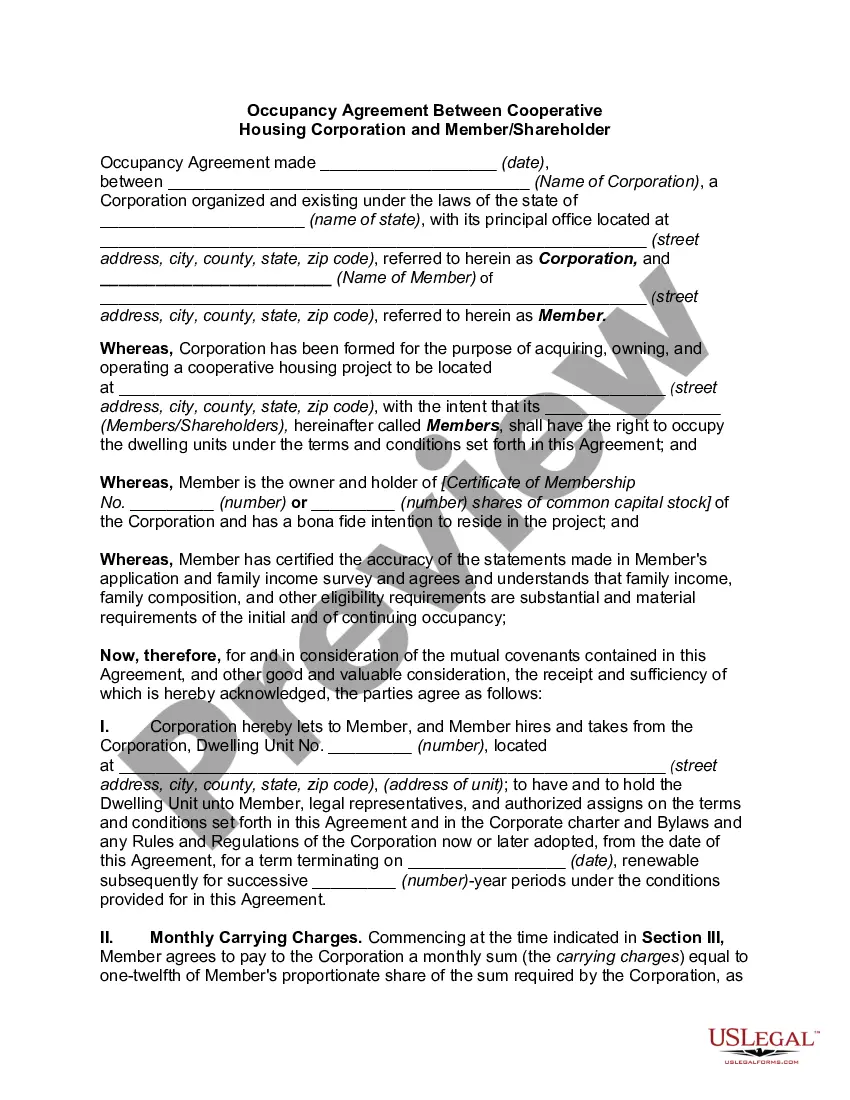
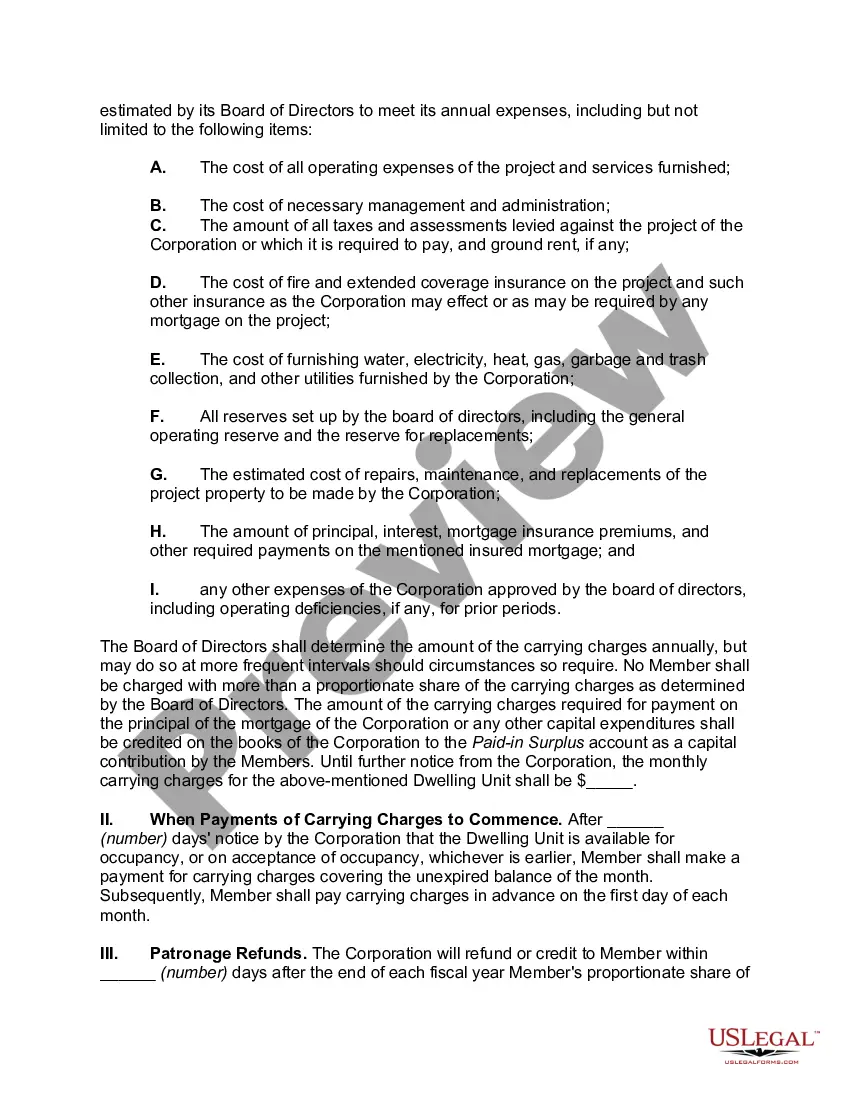
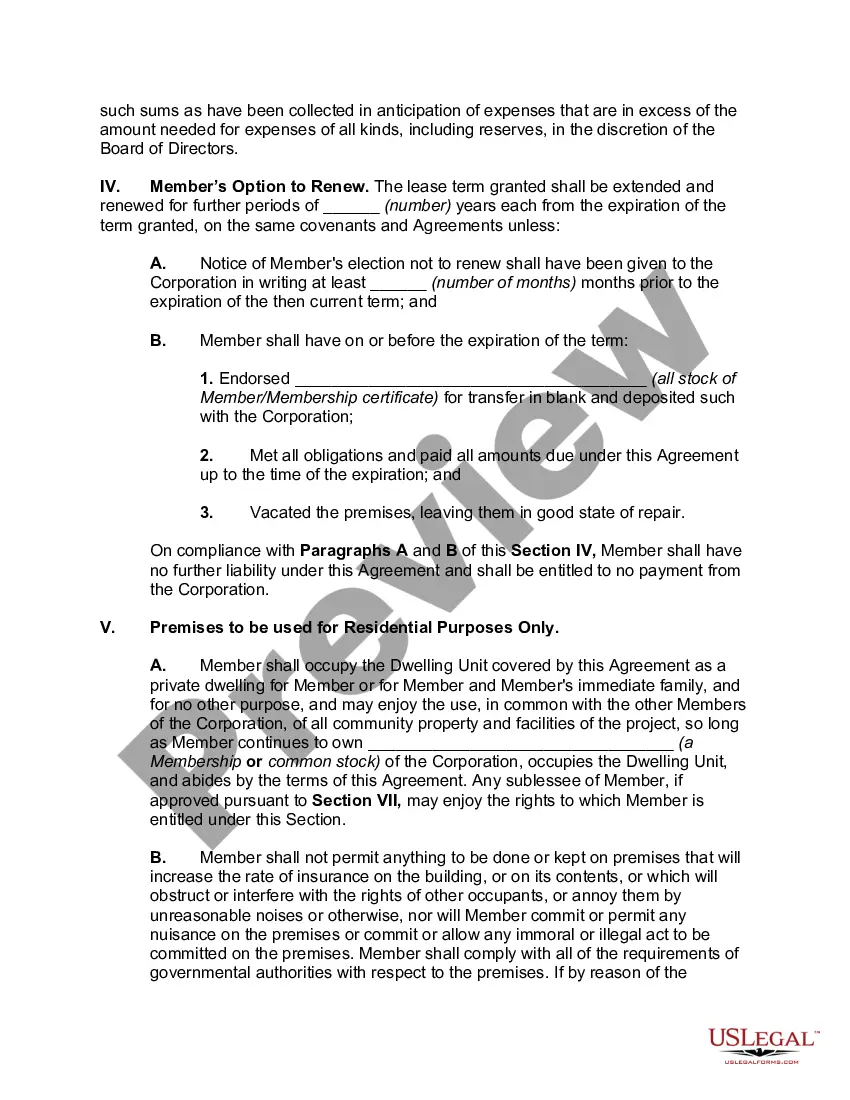
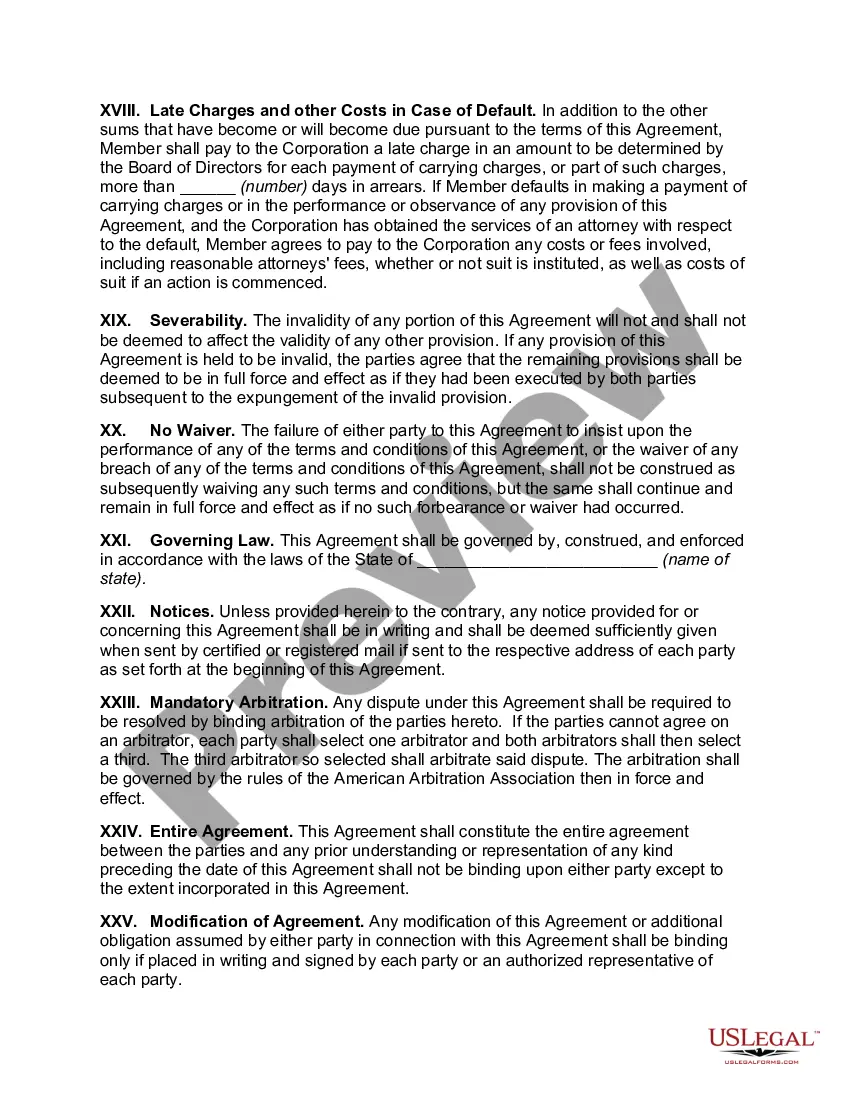
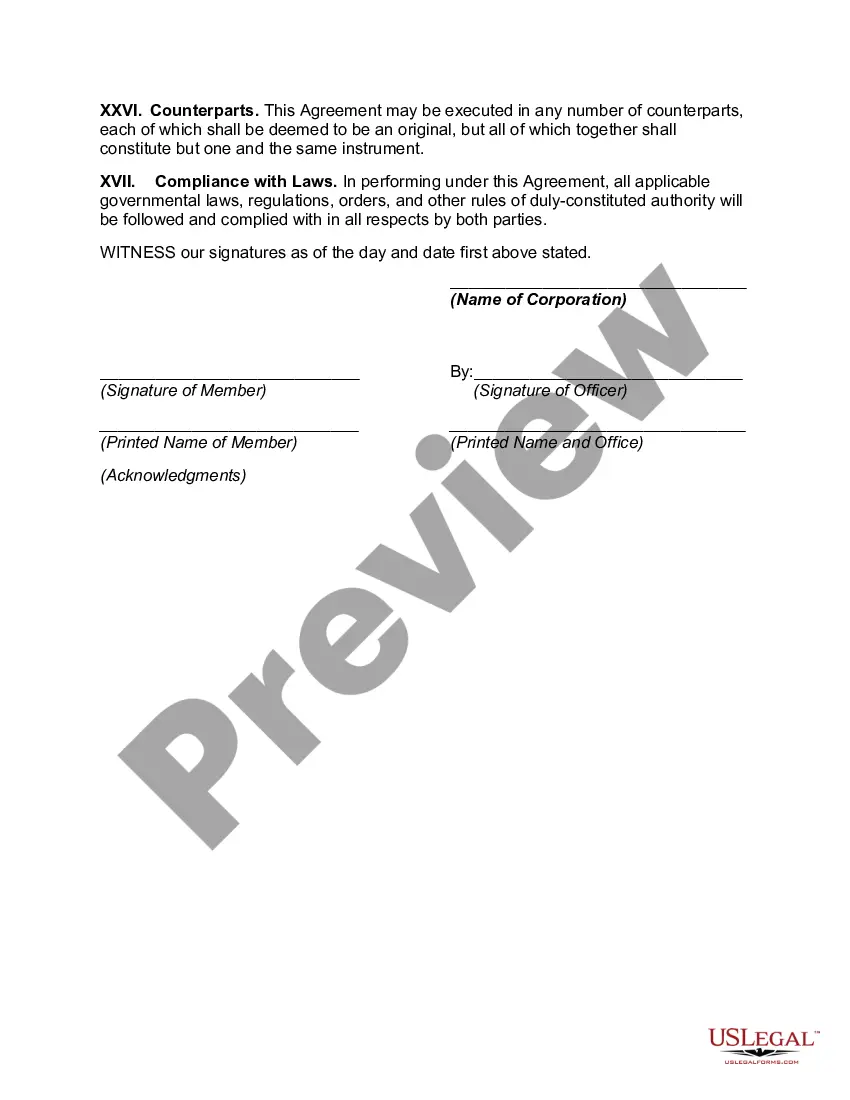
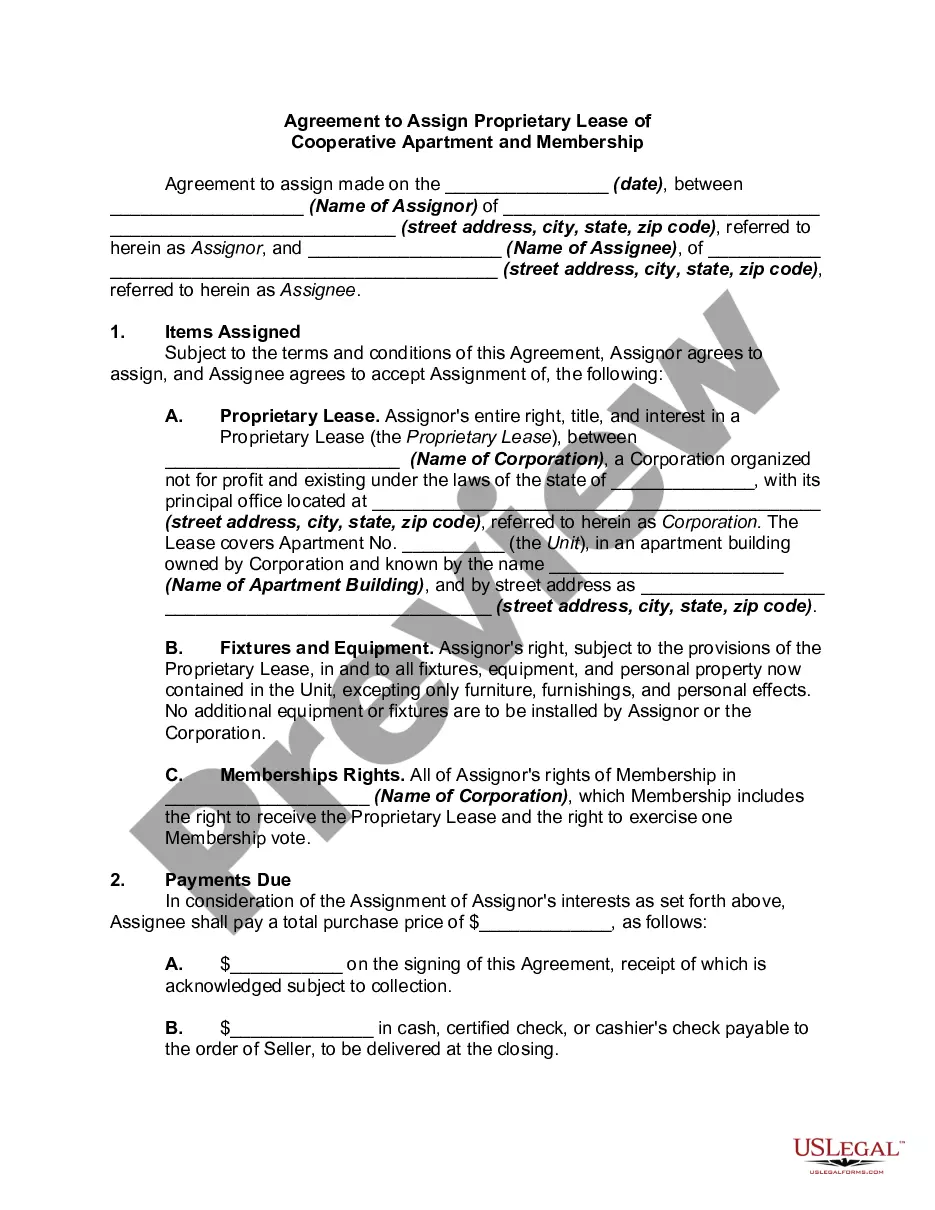
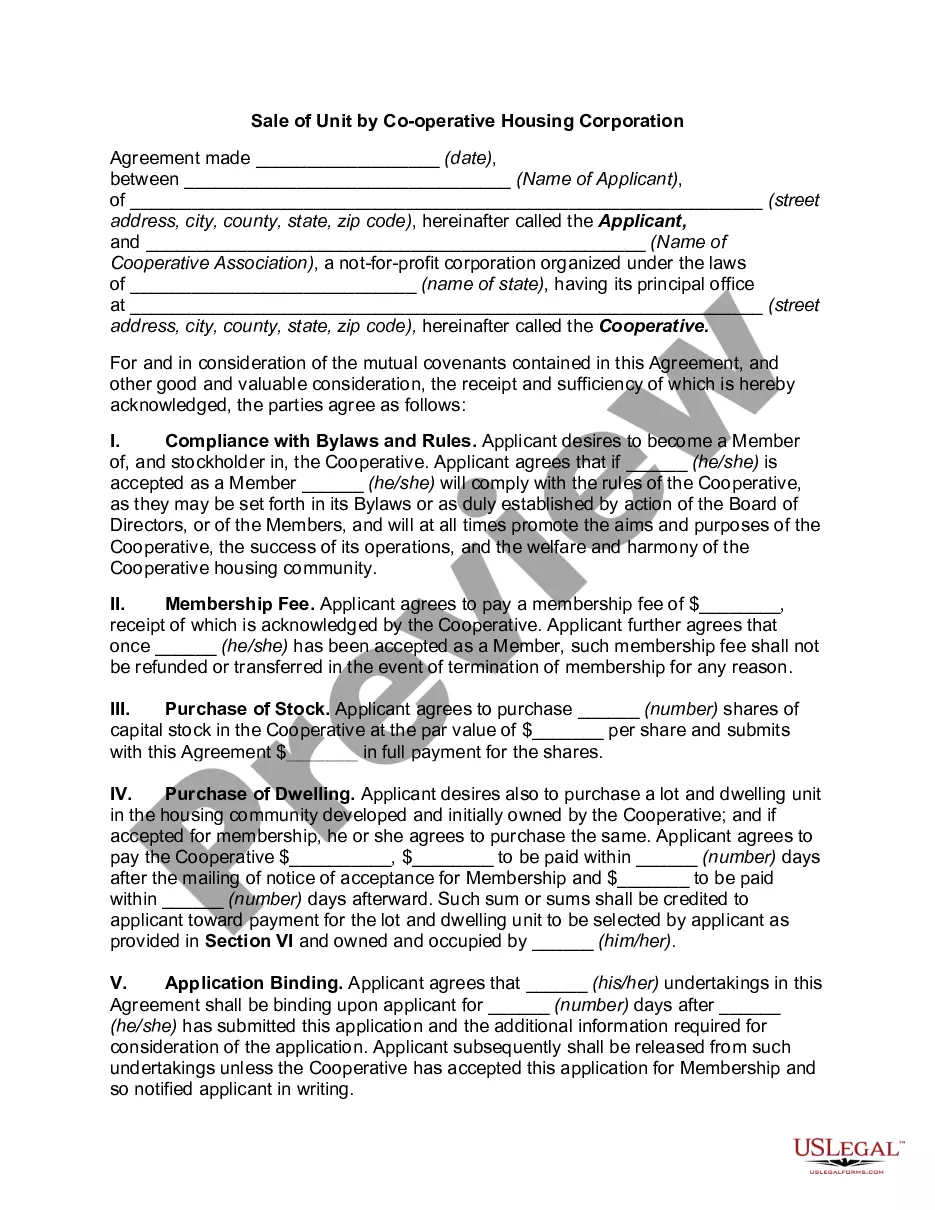
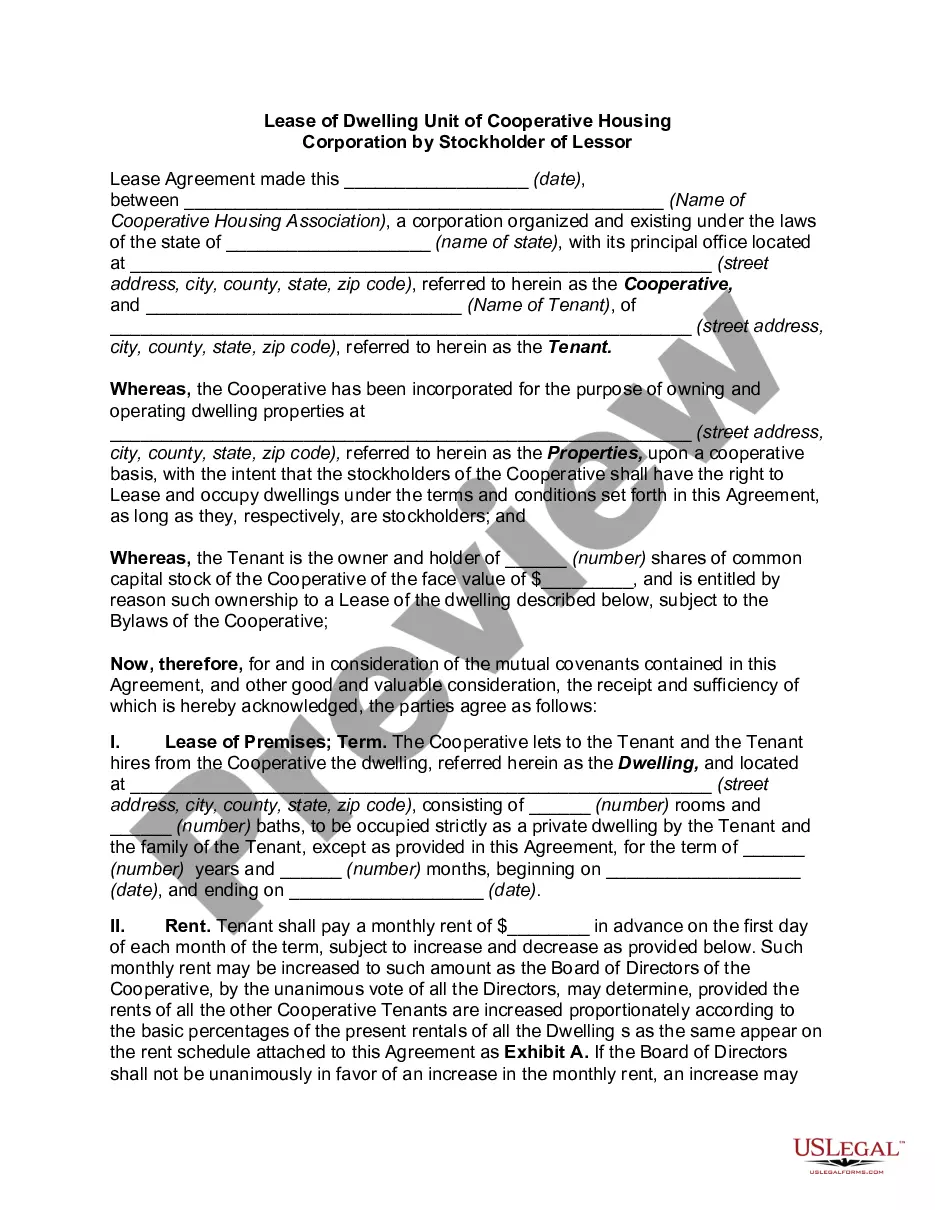
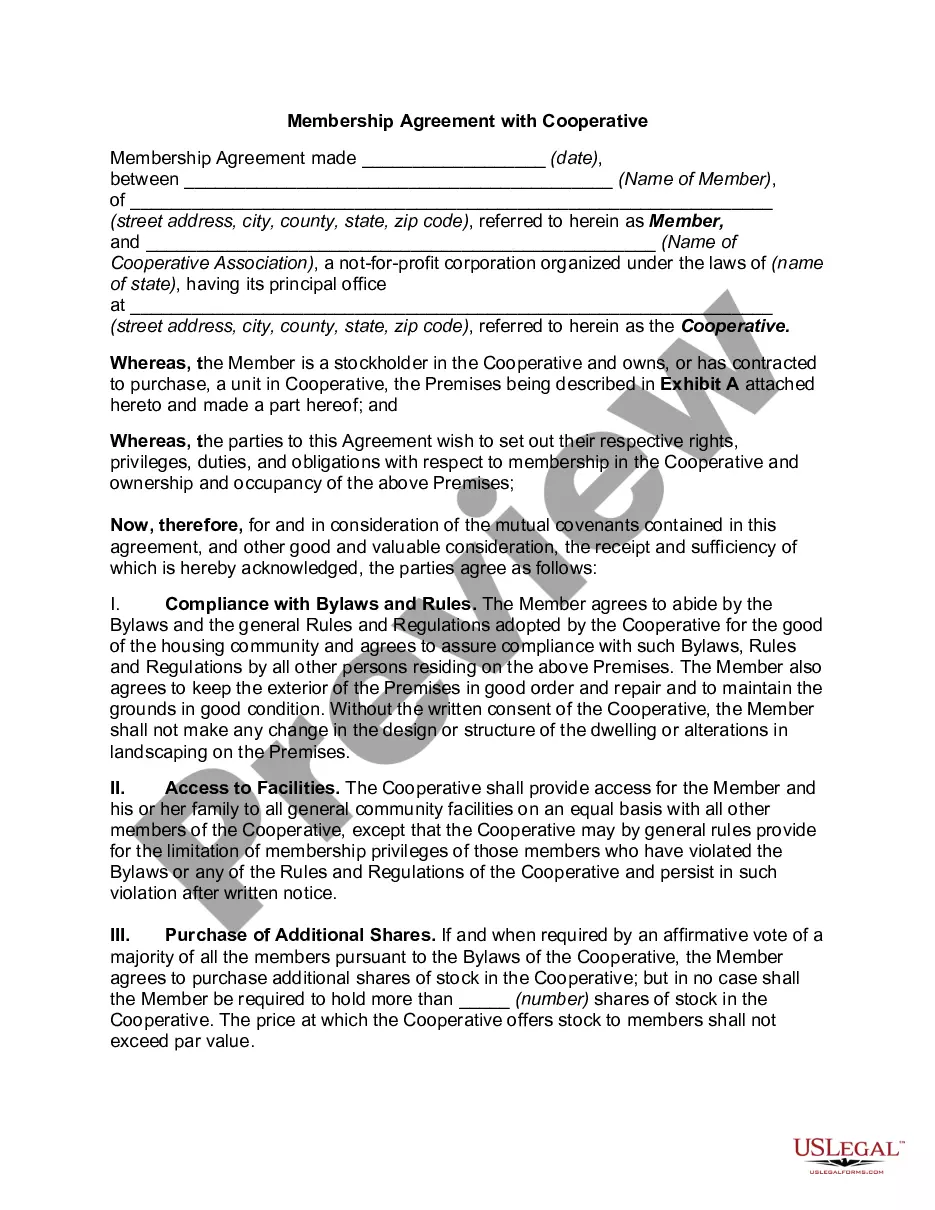
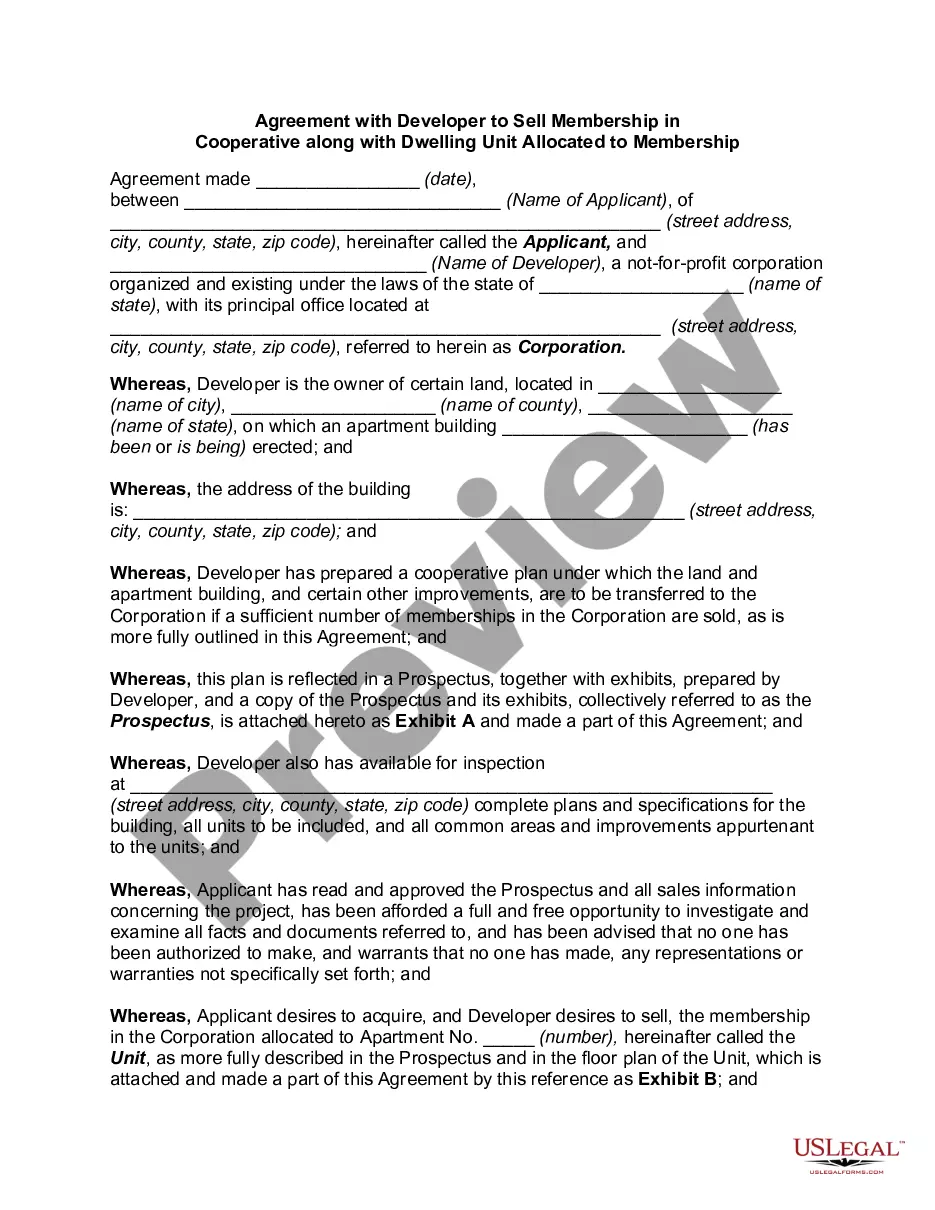
North Dakota Occupancy Agreement Between Cooperative Housing Corporation and Member/Shareholder
Description
Get your form ready online
Our built-in tools help you complete, sign, share, and store your documents in one place.
Make edits, fill in missing information, and update formatting in US Legal Forms—just like you would in MS Word.
Download a copy, print it, send it by email, or mail it via USPS—whatever works best for your next step.
Sign and collect signatures with our SignNow integration. Send to multiple recipients, set reminders, and more. Go Premium to unlock E-Sign.
If this form requires notarization, complete it online through a secure video call—no need to meet a notary in person or wait for an appointment.
We protect your documents and personal data by following strict security and privacy standards.

Make edits, fill in missing information, and update formatting in US Legal Forms—just like you would in MS Word.

Download a copy, print it, send it by email, or mail it via USPS—whatever works best for your next step.

Sign and collect signatures with our SignNow integration. Send to multiple recipients, set reminders, and more. Go Premium to unlock E-Sign.

If this form requires notarization, complete it online through a secure video call—no need to meet a notary in person or wait for an appointment.

We protect your documents and personal data by following strict security and privacy standards.
Looking for another form?



How to fill out Occupancy Agreement Between Cooperative Housing Corporation And Member/Shareholder?
If you wish to extensive, obtain, or produce legal document templates, utilize US Legal Forms, the most significant collection of legal documents available online.
Leverage the website's straightforward and user-friendly search to retrieve the forms you require.
A selection of templates for commercial and individual purposes is categorized by types and requests, or keywords.
Step 3. If you are not satisfied with the form, use the Search box at the top of the screen to find alternative versions of the legal form template.
Step 4. Once you have found the form you need, select the Buy now button. Choose the payment plan you prefer and provide your information to create an account.
- Utilize US Legal Forms to secure the North Dakota Occupancy Agreement Between Cooperative Housing Corporation and Member/Shareholder with just a few clicks.
- If you are already a US Legal Forms user, Log In to your account and click the Download button to acquire the North Dakota Occupancy Agreement Between Cooperative Housing Corporation and Member/Shareholder.
- You can also access forms you previously downloaded within the My documents section of your account.
- If you are using US Legal Forms for the first time, refer to the steps outlined below.
- Step 1. Ensure you have chosen the form for the appropriate city/region.
- Step 2. Use the Review option to inspect the form's details. Don't forget to read the description.
Form popularity
FAQ
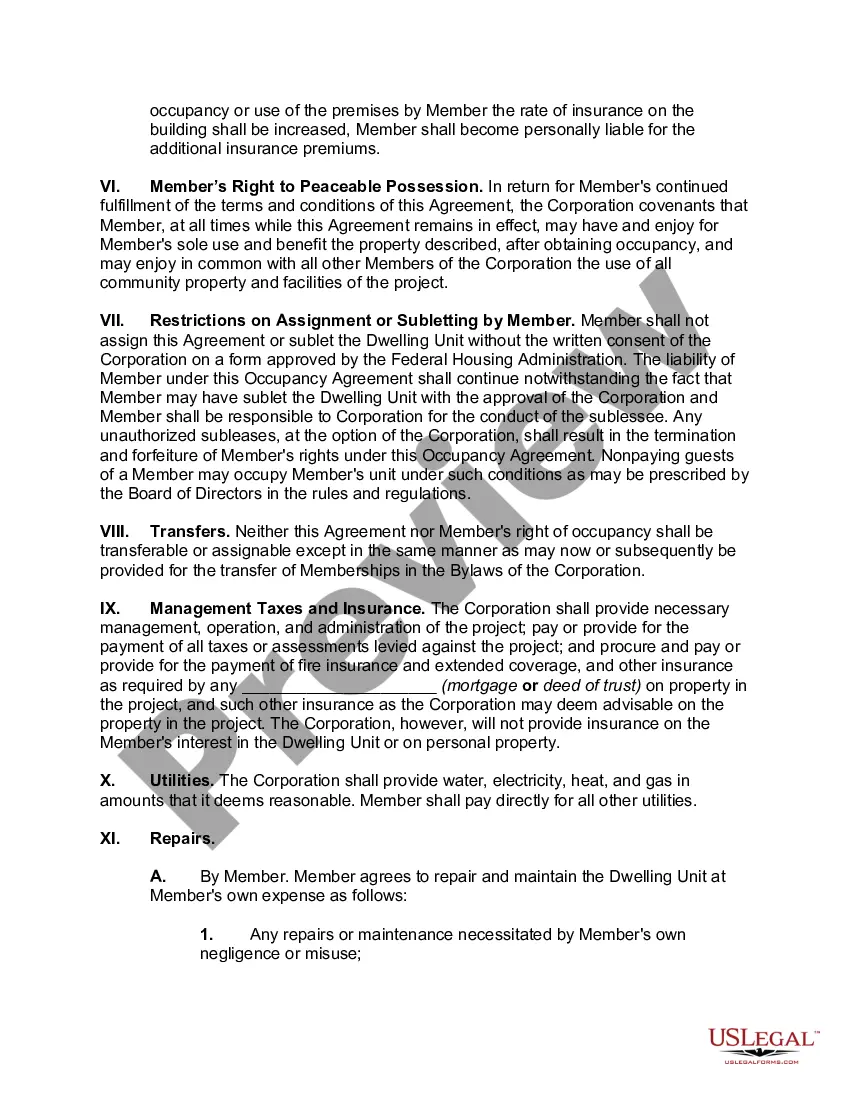
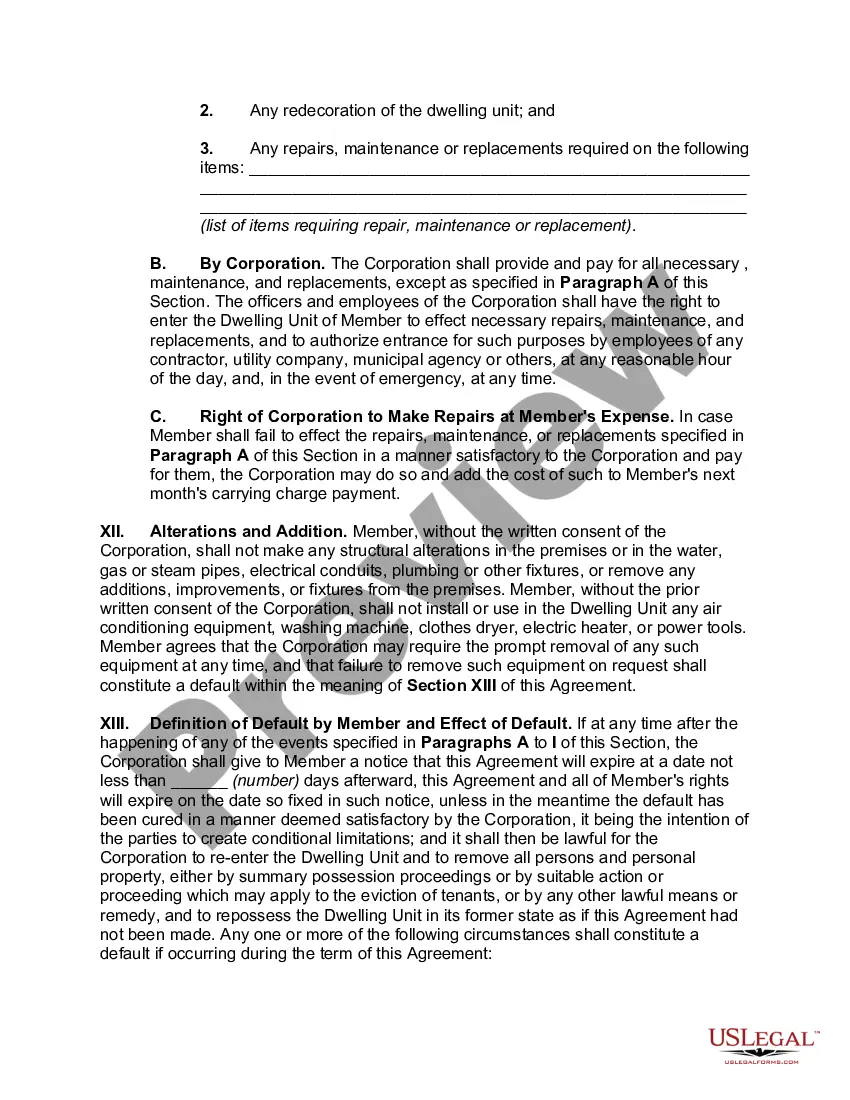
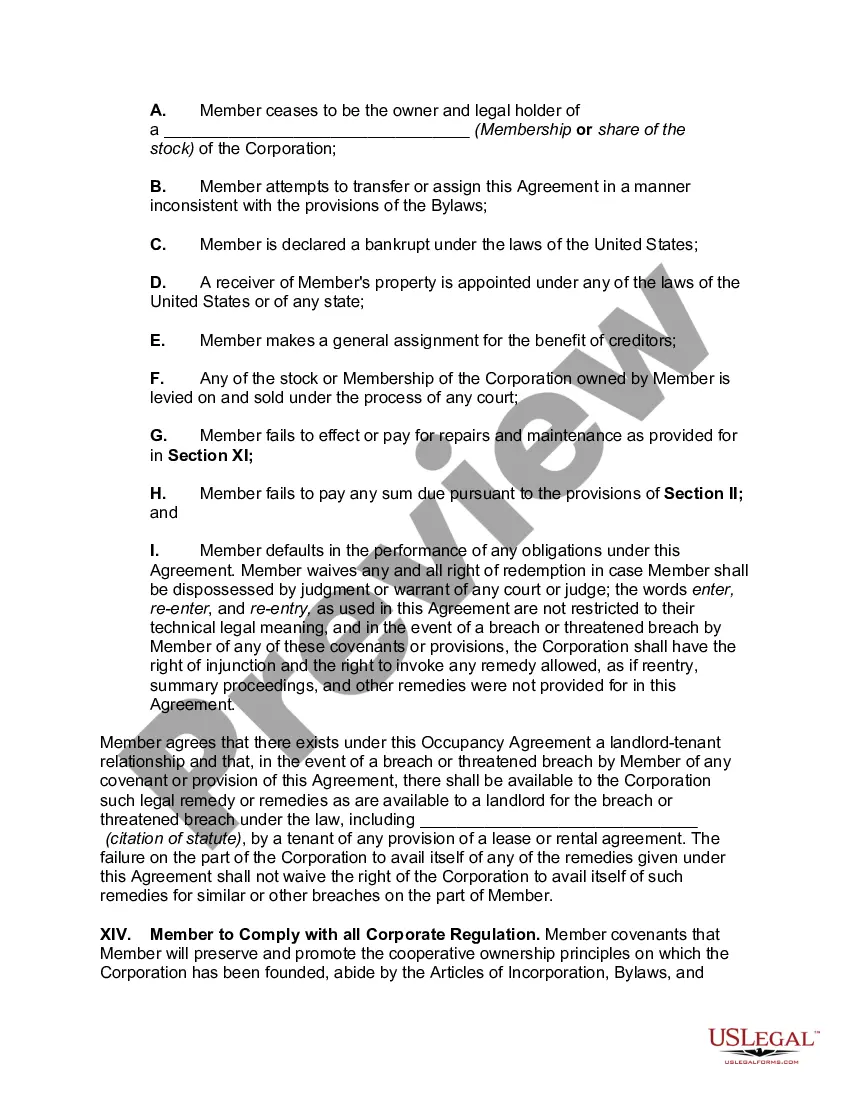
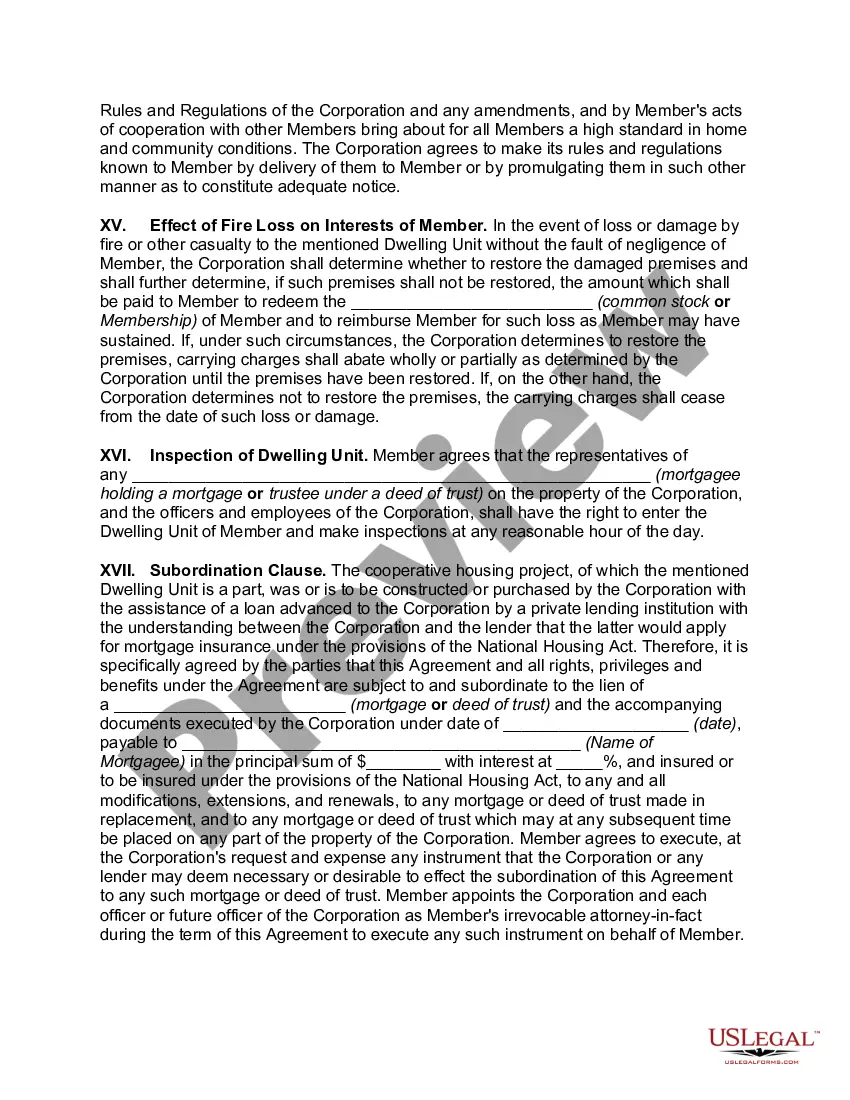
Shareholders of a cooperative are individuals or entities that own shares in the cooperative housing corporation. They have rights and responsibilities outlined in a North Dakota Occupancy Agreement Between Cooperative Housing Corporation and Member/Shareholder. Shareholders play an active role in the cooperative's decision-making processes and contribute to the community. This shared ownership model fosters cooperation and stability within the housing arrangement.
Yes, a co-op has shareholders who are its members. These shareholders invest in the cooperative to gain rights to occupy units and participate in the management of the property. The North Dakota Occupancy Agreement Between Cooperative Housing Corporation and Member/Shareholder establishes the framework for shareholder rights and responsibilities, which helps maintain a balanced and fair community.
op owner has an interest or share in the entire building and a contract or lease that allows the owner to occupy a unit. While a condo owner owns a unit, a coop owner does not own the unit. Coops are collectively owned and managed by their residents, who own shares in a nonprofit corporation.
The shares of cooperative society are not issued to general public by advertisement and can be issued any time. Shares can be withdrawn member/ society as prescribed by rules in their byelaws. Shares are issued to general public or by invitation. In a company shares cannot be withdrawn by a share holder.
op, or housing cooperative, is a type of housing owned by a corporation made up of the owners within the coop. The corporation owns the interior, exterior and all common areas of the building.
A housing cooperative or "co-op" is a type of residential housing option that is actually a corporation whereby the owners do not own their units outright. Instead, each resident is a shareholder in the corporation based in part on the relative size of the unit that they live in.
In a co-operative with share capital, members may be required to hold shares as part of their membership, but voting control is linked to membership and not to the number of shares held.
Ownership "Shares" in a Co-op The number of shares owned can be based on the size of the unit. As shareholders in the property, tenants get voting rights on issues affecting the property, including fees, common spaces, improvements, and when new prospective buyers are approved to live in the building.
A cooperative is a legal entity owned and democratically controlled by its members. Members often have a close association with the enterprise as producers or consumers of its products or services, or as its employees. The legal entities have a range of social characteristics.
op, or housing cooperative, is a type of housing owned by a corporation made up of the owners within the coop. The corporation owns the interior, exterior and all common areas of the building.