Nebraska Jury Instructions - Defendant's Failure to Testify
Description




How to fill out Jury Instructions - Defendant's Failure To Testify?
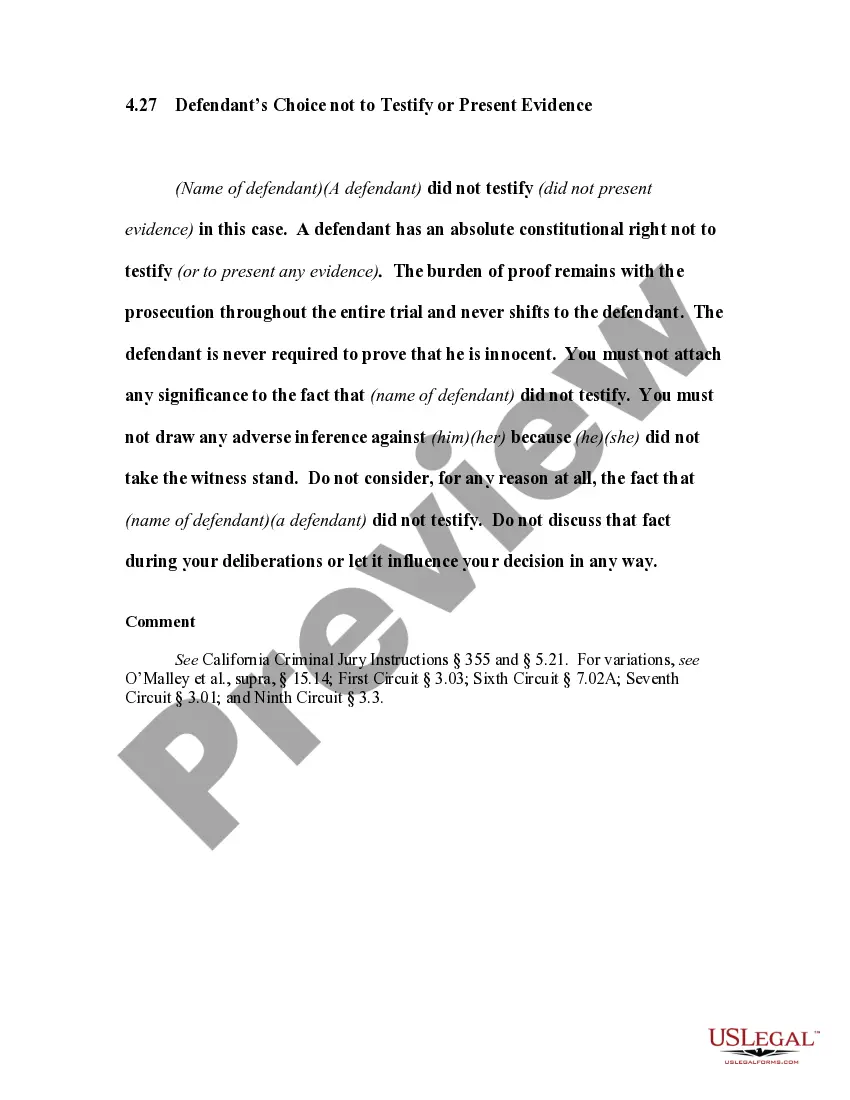
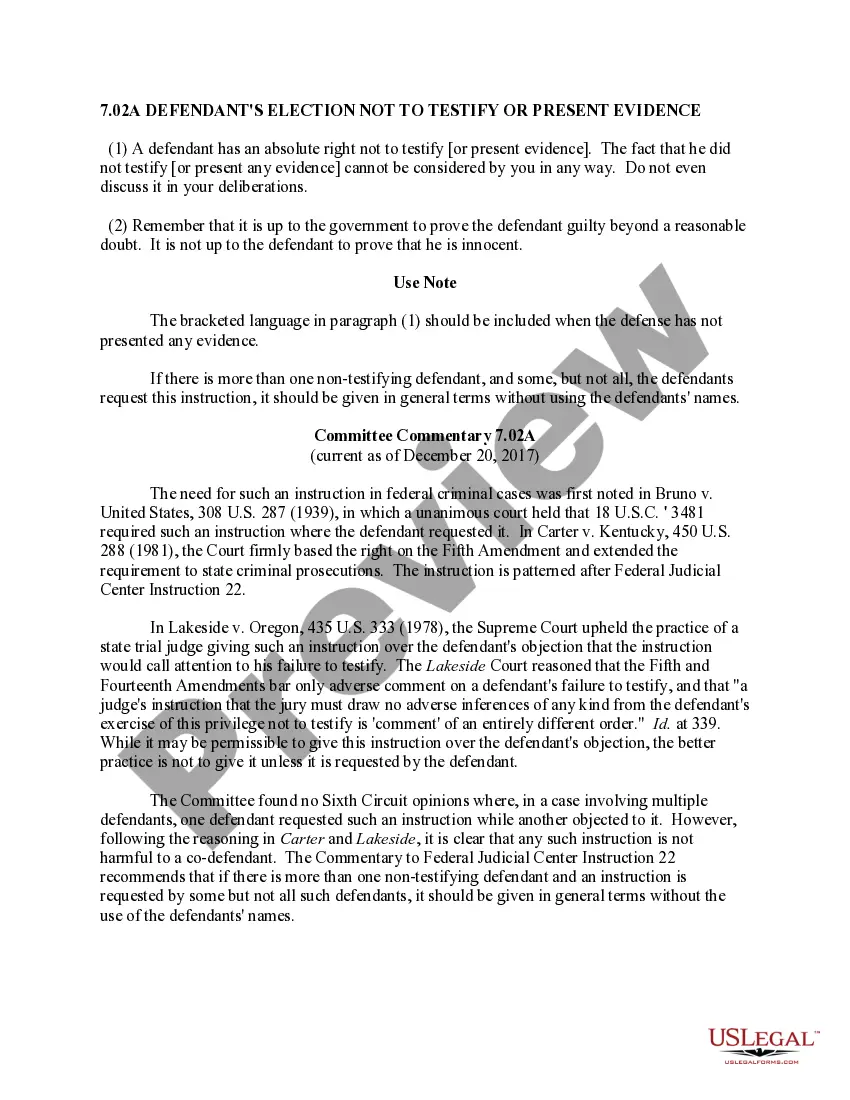
Selecting the appropriate legal document format can be a challenge. Naturally, there are numerous templates accessible online, but how will you acquire the legal form you require? Utilize the US Legal Forms website. The service offers thousands of templates, including the Nebraska Jury Instructions - Defendant's Failure to Testify, which can be utilized for business and personal purposes. All of the forms are reviewed by specialists and comply with federal and state regulations.
If you are currently registered, Log Into your account and click the Download button to access the Nebraska Jury Instructions - Defendant's Failure to Testify. Use your account to browse through the legal forms you have previously purchased. Navigate to the My documents section of your account and obtain another copy of the document you desire.
If you are a new user of US Legal Forms, here are straightforward steps for you to follow: First, ensure you have selected the correct form for your jurisdiction. You can review the form using the Preview button and examine the form description to confirm it is the appropriate one for your needs. If the form does not meet your requirements, use the Search field to find the suitable form. Once you are confident the form is acceptable, click the Get now button to obtain the document. Choose the payment method you prefer and enter the necessary information. Create your account and pay for the order using your PayPal account or credit card. Select the file format and download the legal document to your device. Complete, modify, print, and sign the acquired Nebraska Jury Instructions - Defendant's Failure to Testify.
- US Legal Forms is the largest collection of legal documents available with numerous file templates.
- Utilize the service to download professionally crafted documents that comply with state regulations.
- Make sure to choose the appropriate form for your city or county.
- Review the form using the preview feature to ensure it meets your needs.
- If necessary, search for the right form using the search bar.
- Confirm your selection and proceed to download the document.
Form popularity
FAQ
Proof beyond a reasonable doubt is proof that leaves you firmly convinced the defendant is guilty. It is not required that the government prove guilt beyond all possible doubt. A reasonable doubt is a doubt based upon reason and common sense and is not based purely on speculation.
Reasonable doubt is insufficient evidence that prevents a judge or jury from convicting a defendant of a crime. If it cannot be proved without a doubt that a defendant in a criminal case is guilty, then that person should not be convicted.
Both the federal and the state Constitutions guarantee a defendant the right to confront or meet the witnesses against him face to face. Implicit in confrontation is the right to cross-examine all witnesses.
The judge instructs the jury about the relevant laws that should guide its deliberations. (In some jurisdictions, the court may instruct the jury at any time after the close of evidence. This sometimes occurs before closing arguments.) The judge reads the instructions to the jury.
In it, a young journalist (Metcalfe) sets himself up as a murderer to expose the unethical practices of a star prosecutor with a trumped up conviction record (Douglas), but finds himself unable to produce the evidence he had prepared to restore his innocence.
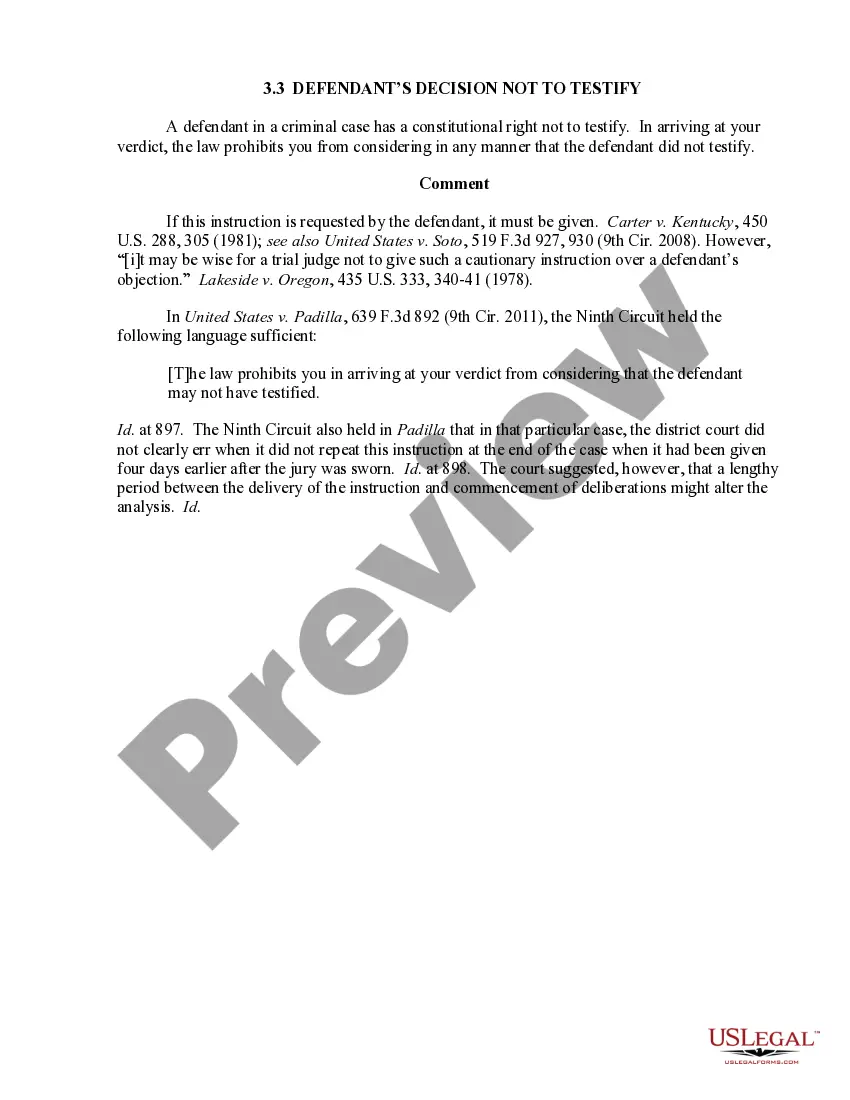
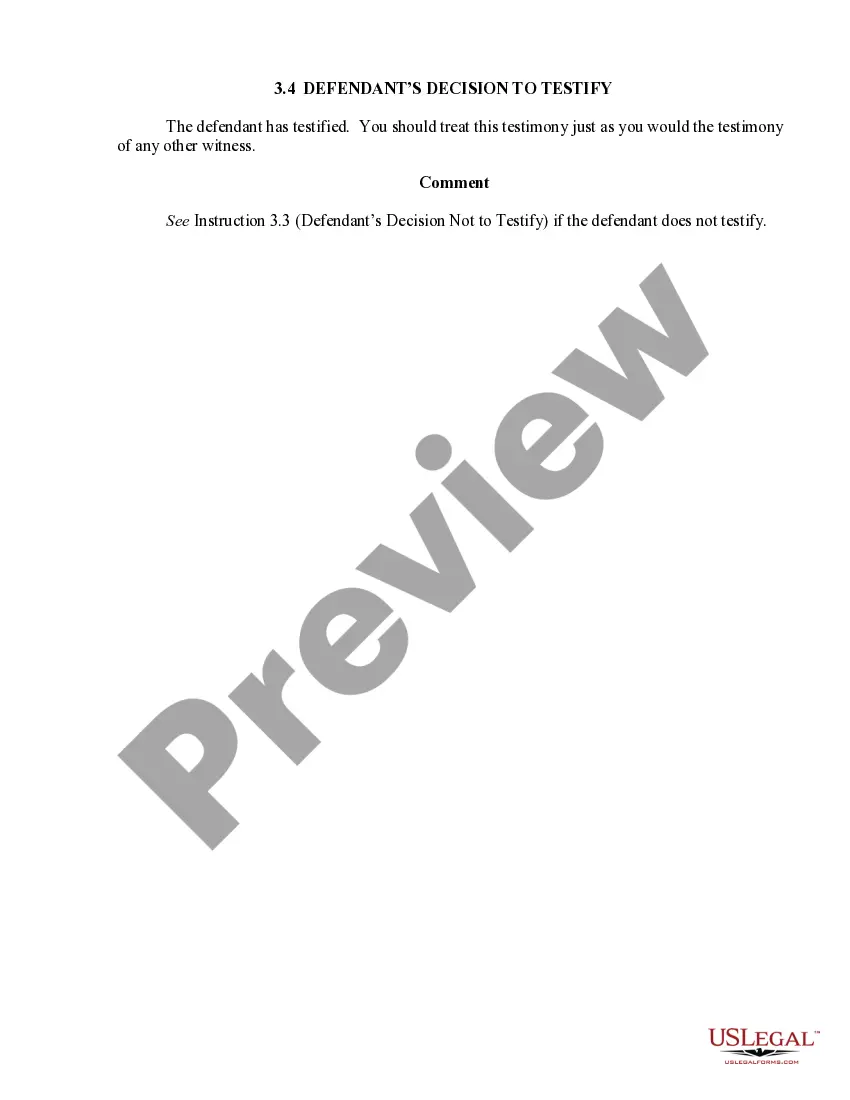
' The Court holds that upon a defendant's proper request, a state trial judge has a constitutional obligation to instruct the jury that no adverse inference is to be drawn from the defendant's failure to testify.
When a party has the burden of proving any claim [or affirmative defense] by a preponderance of the evidence, it means you must be persuaded by the evidence that the claim [or affirmative defense] is more probably true than not true.
In criminal cases, the prosecution is required to prove the defendant's guilt beyond a reasonable doubt. This means that the evidence presented must be so convincing that no reasonable person could have any doubts about the defendant's guilt.