New Hampshire Limited Appearance or Withdrawal by Attorney
Overview of this form
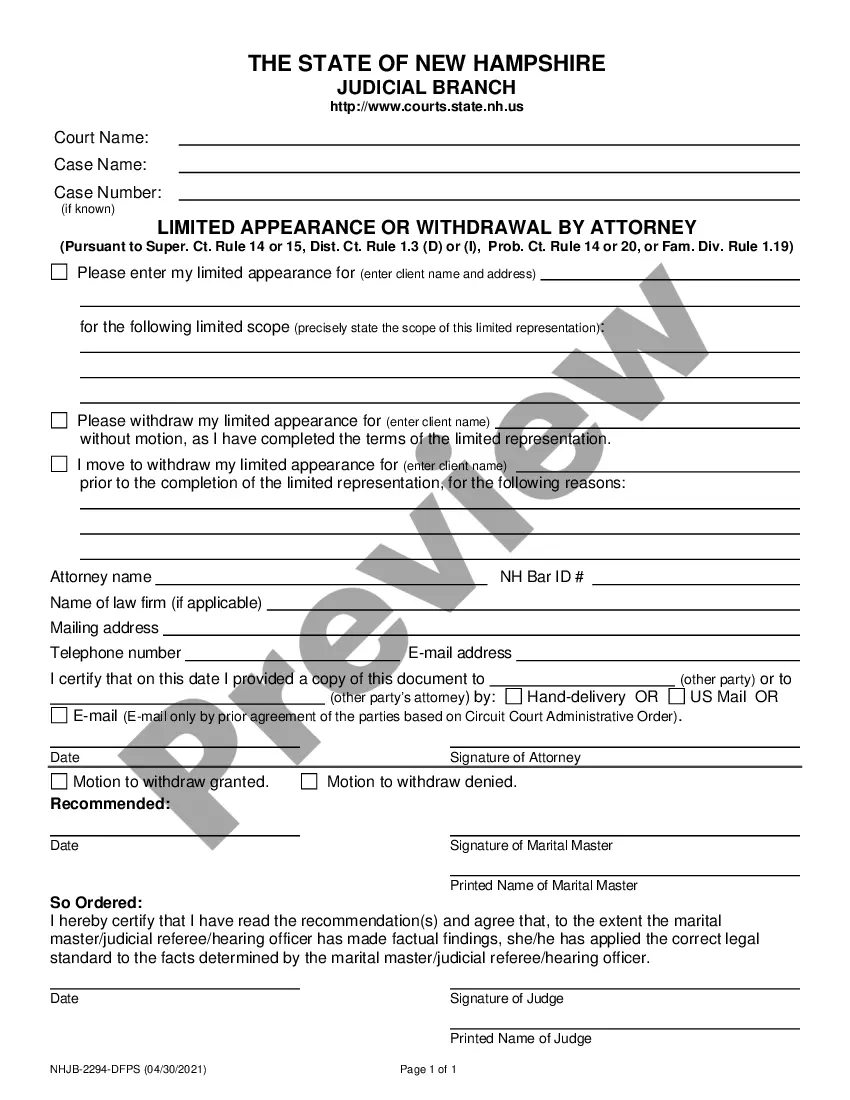
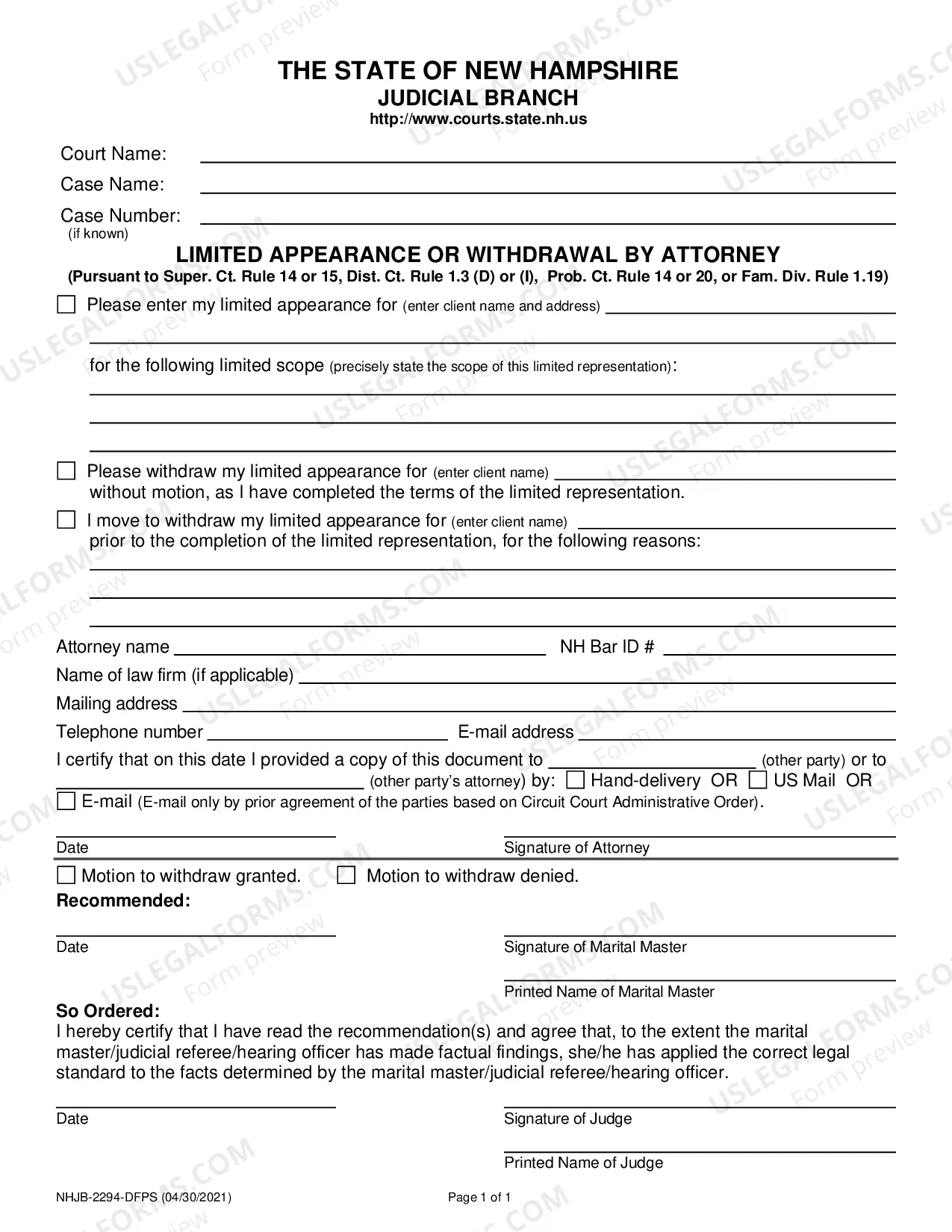
The Limited Appearance or Withdrawal by Attorney form is an official document used in New Hampshire that allows an attorney to represent a client for a specific and limited purpose. This form can be completed to either enter a limited appearance on behalf of the client or to formally withdraw from that representation. It is important to note that this form is distinct from other legal documents, as it addresses limited representation scenarios and complies fully with state laws and regulations related to legal appearances and withdrawals.
Main sections of this form
- Client information: Including name and address of the client.
- Scope of representation: A precise description of the limited aspects of legal representation.
- Withdrawal sections: Options to withdraw either upon completion of terms or through motion.
- Attorney details: Name, bar ID, law firm information, and contact details.
- Service certification: Indicates how and when other parties were notified.
- Judicial approval: Sections for signatures of relevant judicial officials to formalize the process.
When to use this form
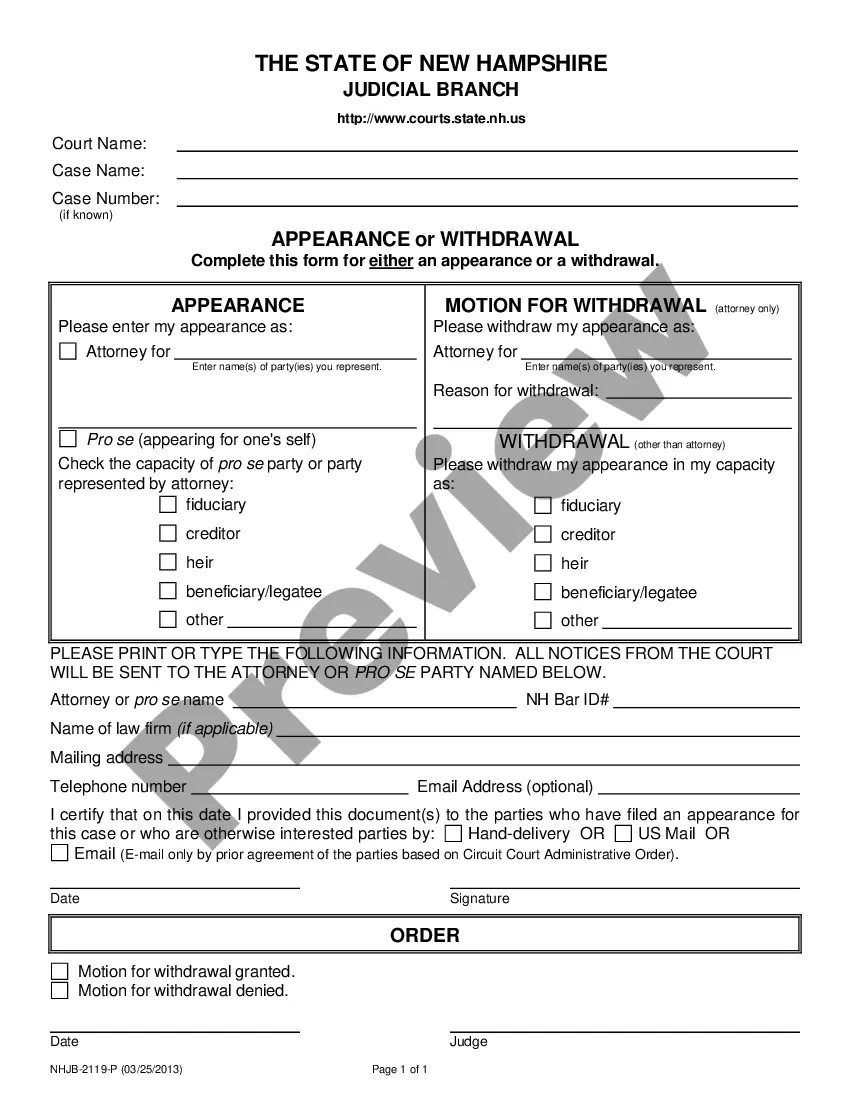
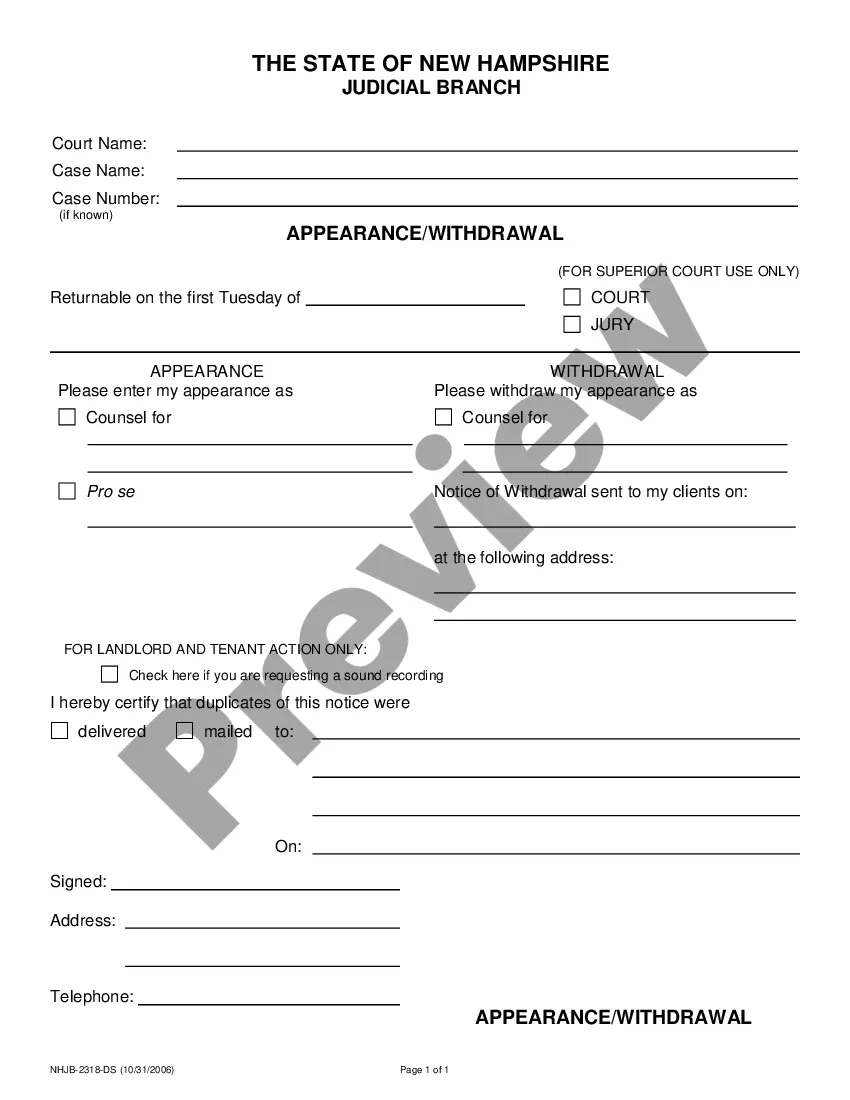
This form is necessary in situations where an attorney needs to represent a client in a specific matter without taking on full representation. It is appropriate to use this form if an attorney wishes to limit their involvement due to time constraints, budget considerations, or other specific agreements with the client. Additionally, the form is utilized when the attorney must withdraw from the case after the limited representation has been fulfilled, or if the attorney must withdraw before completing the terms for valid reasons.
Intended users of this form
- Attorneys providing limited representation to clients.
- Clients who need legal representation for a specific issue without full legal engagement.
- Attorneys seeking to withdraw from a case for any agreed-upon reasons.
- Legal professionals familiar with New Hampshire state laws and practices.
Completing this form step by step
- Enter the clientâs full name and address at the top of the form.
- Clearly specify the limited scope of the representation intended.
- Select either to withdraw upon completion of terms or to submit a motion for withdrawal and provide the reasons for this motion.
- Complete your contact details, including your attorney name, bar ID, and law firm information if applicable.
- Certify the method of service to other parties and include the date and your signature as the attorney.
Notarization requirements for this form
This form does not typically require notarization unless specified by local law. Therefore, it is important to verify the requirements specific to your case or jurisdiction before submitting the form.
Get your form ready online
Our built-in tools help you complete, sign, share, and store your documents in one place.
Make edits, fill in missing information, and update formatting in US Legal Forms—just like you would in MS Word.
Download a copy, print it, send it by email, or mail it via USPS—whatever works best for your next step.
Sign and collect signatures with our SignNow integration. Send to multiple recipients, set reminders, and more. Go Premium to unlock E-Sign.
If this form requires notarization, complete it online through a secure video call—no need to meet a notary in person or wait for an appointment.
We protect your documents and personal data by following strict security and privacy standards.

Make edits, fill in missing information, and update formatting in US Legal Forms—just like you would in MS Word.

Download a copy, print it, send it by email, or mail it via USPS—whatever works best for your next step.

Sign and collect signatures with our SignNow integration. Send to multiple recipients, set reminders, and more. Go Premium to unlock E-Sign.

If this form requires notarization, complete it online through a secure video call—no need to meet a notary in person or wait for an appointment.

We protect your documents and personal data by following strict security and privacy standards.
Avoid these common issues
- Failing to clearly define the scope of limited representation.
- Not including the correct client information or attorney details.
- Neglecting to certify the service of the document to the other party.
- Using outdated versions of the form that do not comply with the latest state laws.
Why complete this form online
- Convenience of immediate access and availability for download.
- Editability to tailor the form to specific needs of the case.
- Up-to-date legal forms that comply with current state regulations.
- Easy completion process with step-by-step guidance.
Looking for another form?
Form popularity
FAQ
The court may request an explanation for the withdrawal, while the lawyer may be bound to keep confidential the facts that would constitute such an explanation. The lawyer's statement that professional considerations require termination of the representation ordinarily should be accepted as sufficient.
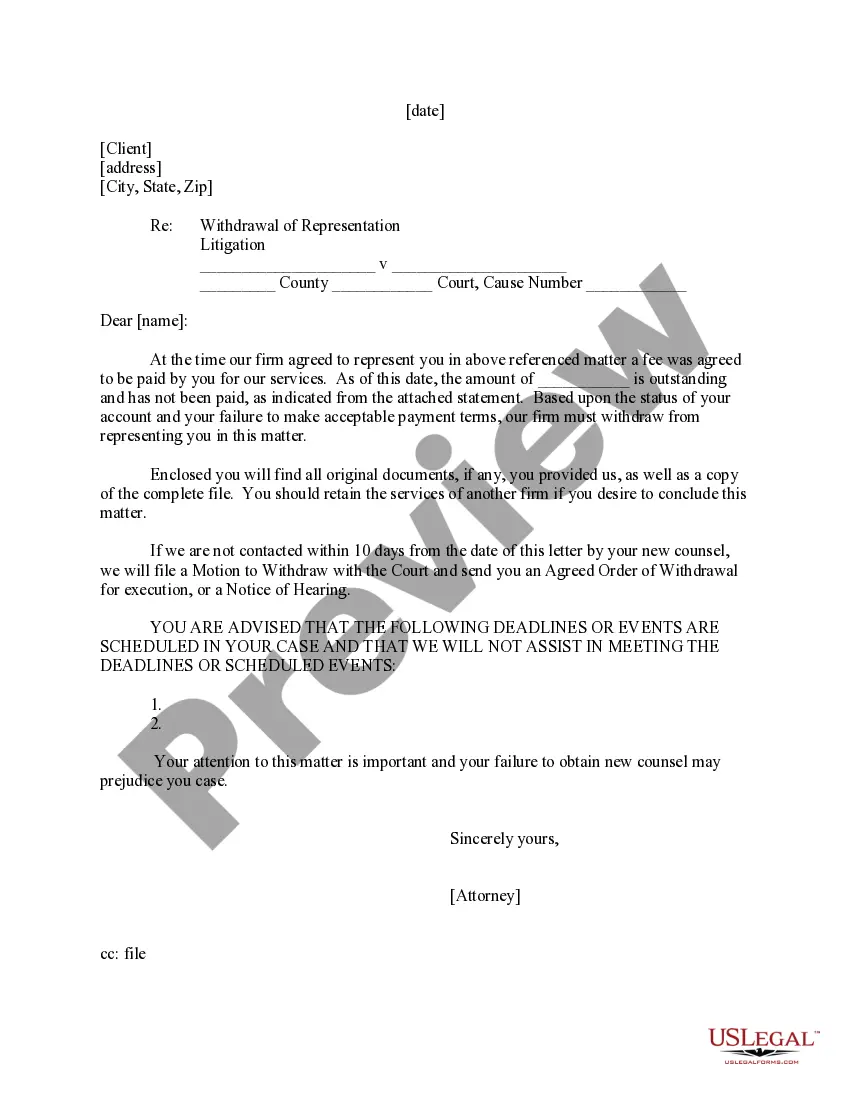
Withdrawal from representation, in United States law, occurs where an attorney terminates a relationship of representing a client.Where litigation has been filed and an attorney is representing the client in court, permission of the court must usually be sought in support of an attorney's withdrawal.
If a lawyer does withdraw from a case, he or she still has ongoing duties. For example, he or she must maintain client confidentiality. Additionally, if the lawyer has any of the client's property, he or she must return it. He or she must provide the client's file upon request and cooperate with the transfer process.
The answer depends. If the attorney is withdrawing due to your inability to pay or a difference in opinion as to bow the case should be presented should not have a negative affect on you. However, if the attorney withdraws for ethical reasons that may look questionable.
It is difficult for a lawyer to withdraw from representing a client. Judges have discretion in appointing guardian ad litem or indigent cases to attorneys. Judges have discretion in appointing guardian ad litem or indigent cases to attorneys.
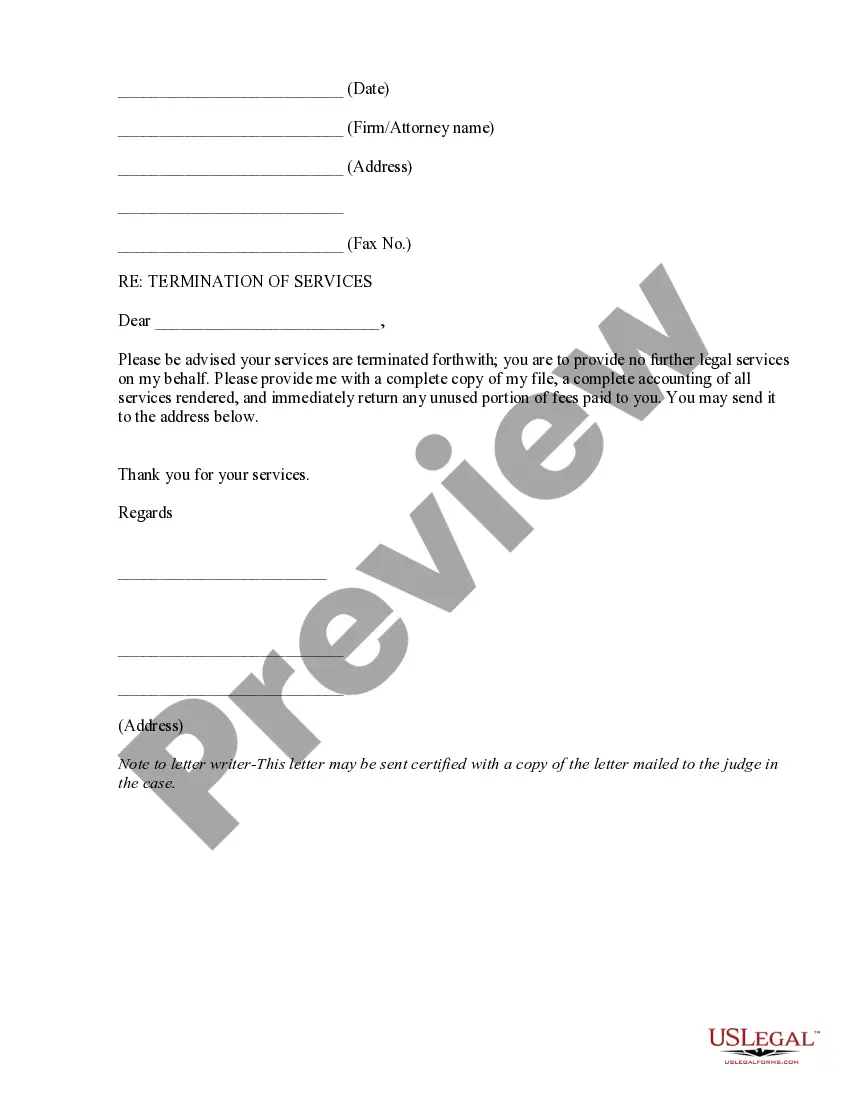
A motion to withdraw is a document an attorney files with the court when that attorney no longer wishes to represent his client.
Lawyers can withdraw based on the fact their client refuses to be truthful, refuses to follow the attorney's advice, demands to pursue an unethical course of action, demands unrealistic results, desires to mislead the Court, refuses to cooperate with their counsel as well as countless other reasons.
A Motion to Withdraw Appearance is filed by an attorney to ask the judge for leave (permission) to discontinue representing a person/party. Usually happens when a client-attorney relationship has been terminated (lawyer quits or is fired)...
Withdrawal from representation, in United States law, occurs where an attorney terminates a relationship of representing a client.Where litigation has been filed and an attorney is representing the client in court, permission of the court must usually be sought in support of an attorney's withdrawal.