New Hampshire Waiver of Extradition
What is this form?
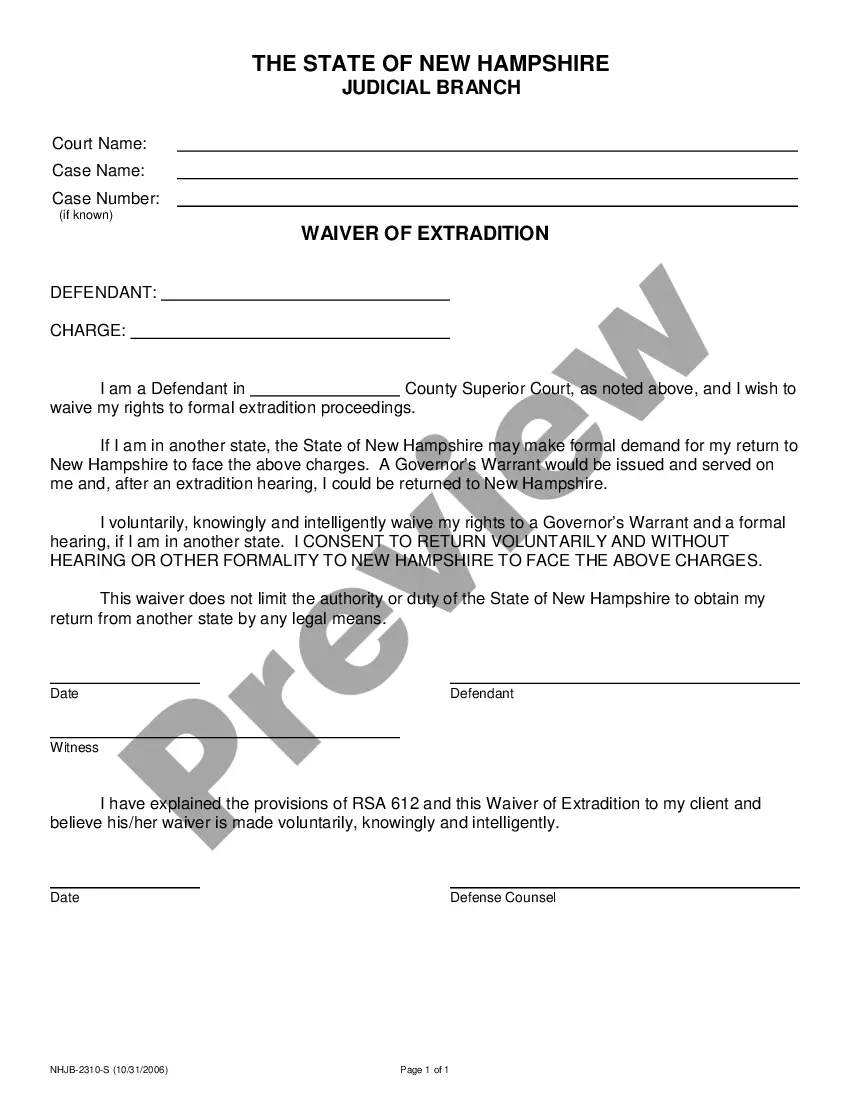
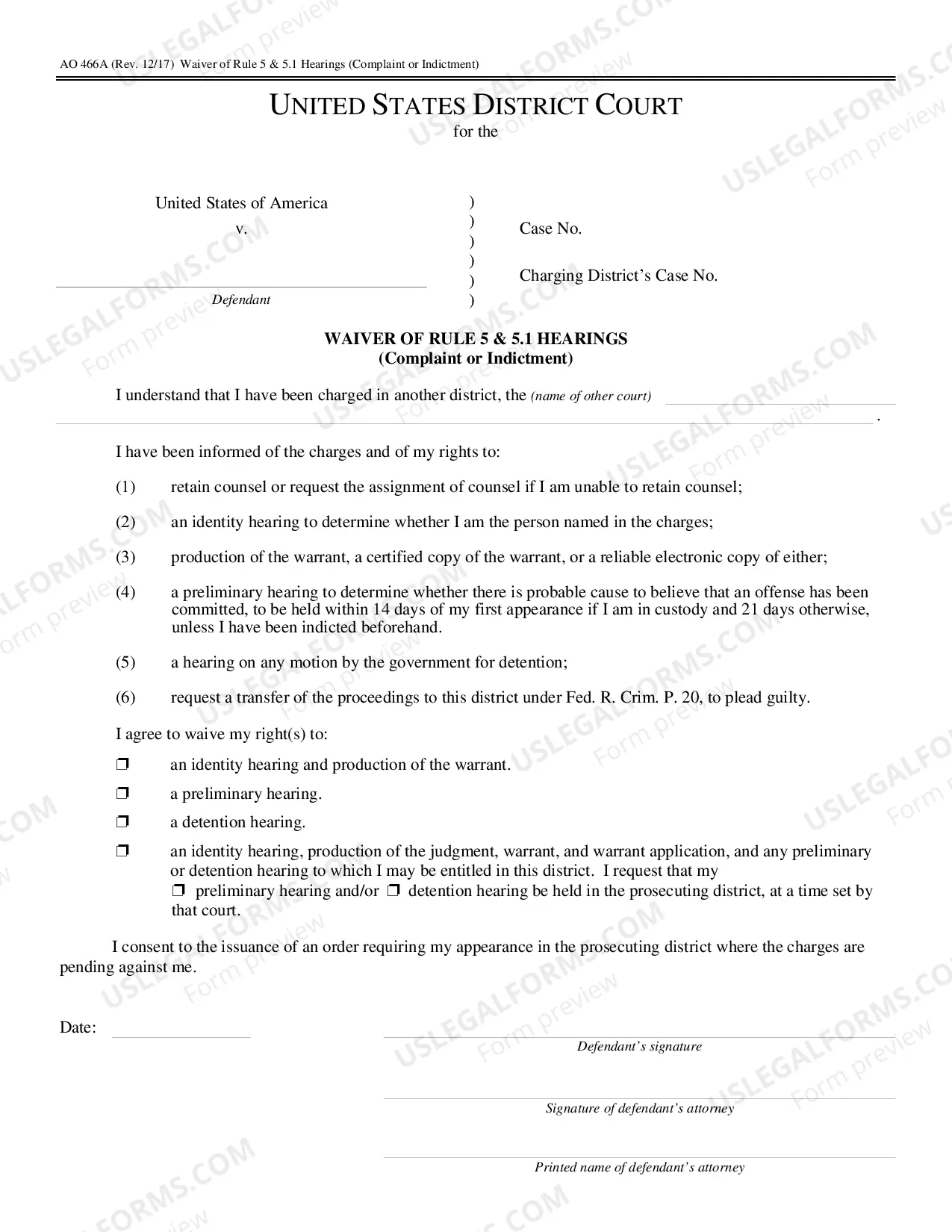
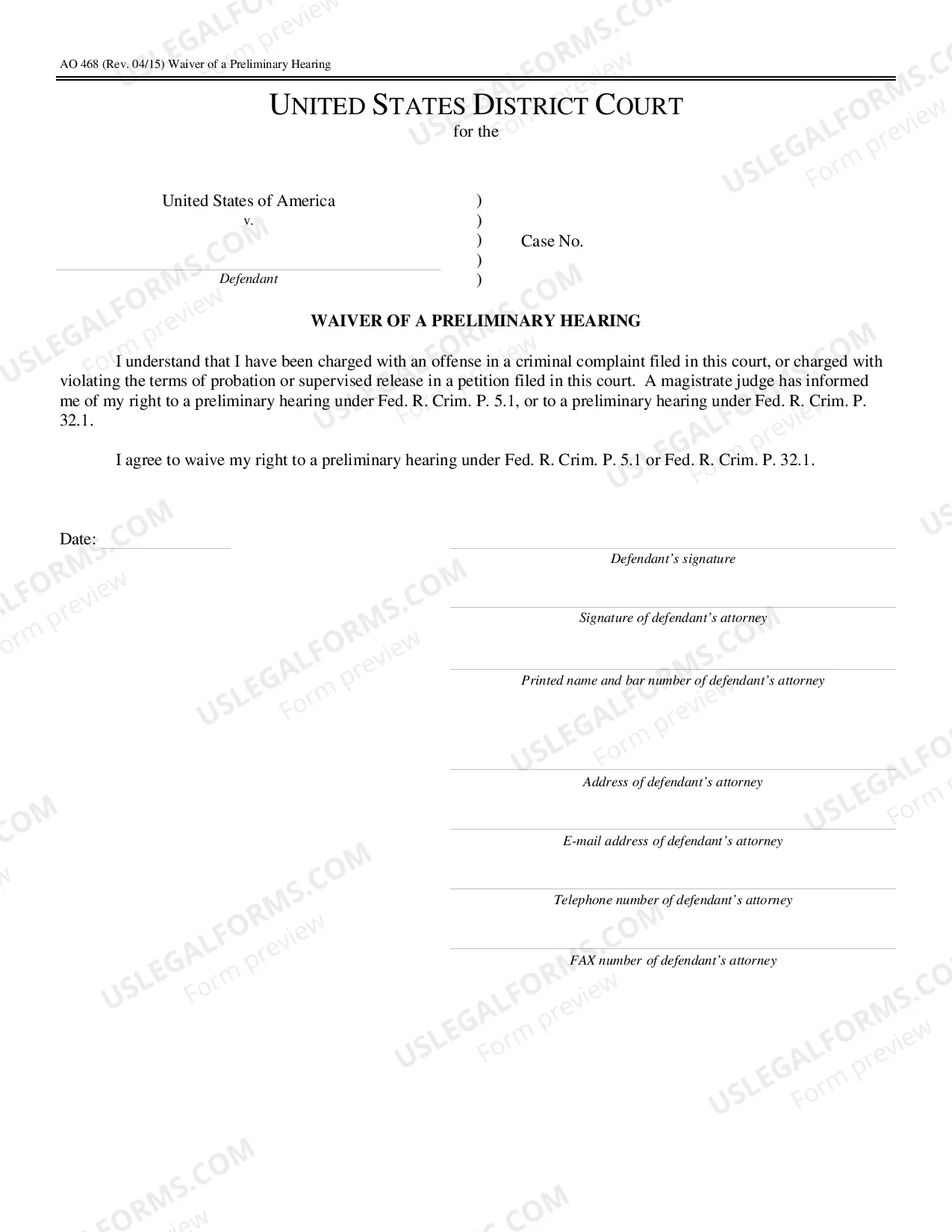
The Waiver of Extradition is an official legal form used by a defendant in a criminal case to voluntarily give up their rights to formal extradition proceedings. This form is important for individuals who wish to return to New Hampshire from another state without undergoing the formal legal processes typically associated with extradition. Unlike other forms that may deal with extradition requests, this Waiver allows for a quicker resolution by consenting to return to face charges without a Governor's Warrant or hearing.
Main sections of this form
- Defendant identification: Information about the defendant involved in the case.
- Charge details: A section to specify the criminal charges the defendant faces.
- Consent statement: The defendant's voluntary consent to waive extradition rights.
- Signature lines: Areas for the defendantâs signature and a witness to affirm the waiver.
- Defense counsel declaration: A section for legal representation to assert the waiver's validity.
When to use this form
Who should use this form
- Defendants facing criminal charges in New Hampshire who are currently residing in another state.
- Individuals wishing to streamline their legal process by waiving formal extradition rights.
- Legal representatives assisting clients who aim to return to New Hampshire quickly.
Instructions for completing this form
- Identify the defendant by entering their full name in the designated area.
- Specify the criminal charges in the provided section for clarity.
- Read the consent statement carefully before signing to ensure understanding of the implications.
- Have a witness sign the form to validate the waiver.
- If applicable, defense counsel should sign and date the form to confirm the waiver's validity.
Notarization requirements for this form
This form does not typically require notarization unless specified by local law. It is advisable to check with legal counsel to confirm specific state requirements.
Get your form ready online
Our built-in tools help you complete, sign, share, and store your documents in one place.
Make edits, fill in missing information, and update formatting in US Legal Forms—just like you would in MS Word.
Download a copy, print it, send it by email, or mail it via USPS—whatever works best for your next step.
Sign and collect signatures with our SignNow integration. Send to multiple recipients, set reminders, and more. Go Premium to unlock E-Sign.
If this form requires notarization, complete it online through a secure video call—no need to meet a notary in person or wait for an appointment.
We protect your documents and personal data by following strict security and privacy standards.

Make edits, fill in missing information, and update formatting in US Legal Forms—just like you would in MS Word.

Download a copy, print it, send it by email, or mail it via USPS—whatever works best for your next step.

Sign and collect signatures with our SignNow integration. Send to multiple recipients, set reminders, and more. Go Premium to unlock E-Sign.

If this form requires notarization, complete it online through a secure video call—no need to meet a notary in person or wait for an appointment.

We protect your documents and personal data by following strict security and privacy standards.
Avoid these common issues
- Failing to provide complete information in the defendant identification section.
- Neglecting to include a signature from a witness or defense counsel.
- Not fully understanding the implications of waiving extradition rights before signing.
Benefits of completing this form online
- Immediate access to the form, allowing for quick completion and submission.
- The ability to edit the form as necessary to ensure all information is accurate.
- Reliability in accessing legally vetted forms that comply with current laws.
Looking for another form?
Form popularity
FAQ
Occasionally a Governor will refuse to extradite (send the person back) if he/she is satisfied that the prosecution is not warranted, despite a constitutional mandate that "on demand of the Executive authority of the State from which a fugitive from justice fled, be delivered up, to be removed to the State having
Extradition is an action wherein one jurisdiction delivers a person accused or convicted of committing a crime in another jurisdiction, over to the other's law enforcement. It is a cooperative law enforcement procedure between the two jurisdictions and depends on the arrangements made between them.
Waiving Extradition A defendant may want to establish a history of cooperating with authorities so may decide to waive extradition to avoid law enforcement going through the extra expense and frustration of challenging extradition.
Extradition is expensive and usually states do not extradite people for minor offenses. However, once an arrest warrant is issued, a person can be taken into custody if they come into contact with a law enforcement officer for any reason.
A defendant may want to establish a history of cooperating with authorities so may decide to waive extradition to avoid law enforcement going through the extra expense and frustration of challenging extradition.
If the fugitive refuses to waive extradition, the original state prepares a request to have the fugitive returned. Extradition requests are made from the office of one state's governor to the other.
It is nearly impossible to fight extradition, so if you are extradited, it's likely that you will be brought under jurisdiction of the requesting country. The United States has a rule on extradition between states called the Extradition of Fugitives Clause.
Any state where you may reside will generally cooperate with a felony extradition, but different laws govern this process in different states. The demanding state will create and send an arrest warrant to the state where you reside asking that you be detained and transported back to them.