This form is a Petition For Writ Of Habeas Corpus By Person In State Custody based on Lack of Voluntariness of confession and Ineffective Assistance of Counsel. Adapt to your specific circumstances. Don't reinvent the wheel, save time and money.
New Hampshire Petition For Writ Of Habeas Corpus By Person In State Custody - Lack of Voluntariness - Ineffective Assistance of Counsel
Instant download
Description
Free preview






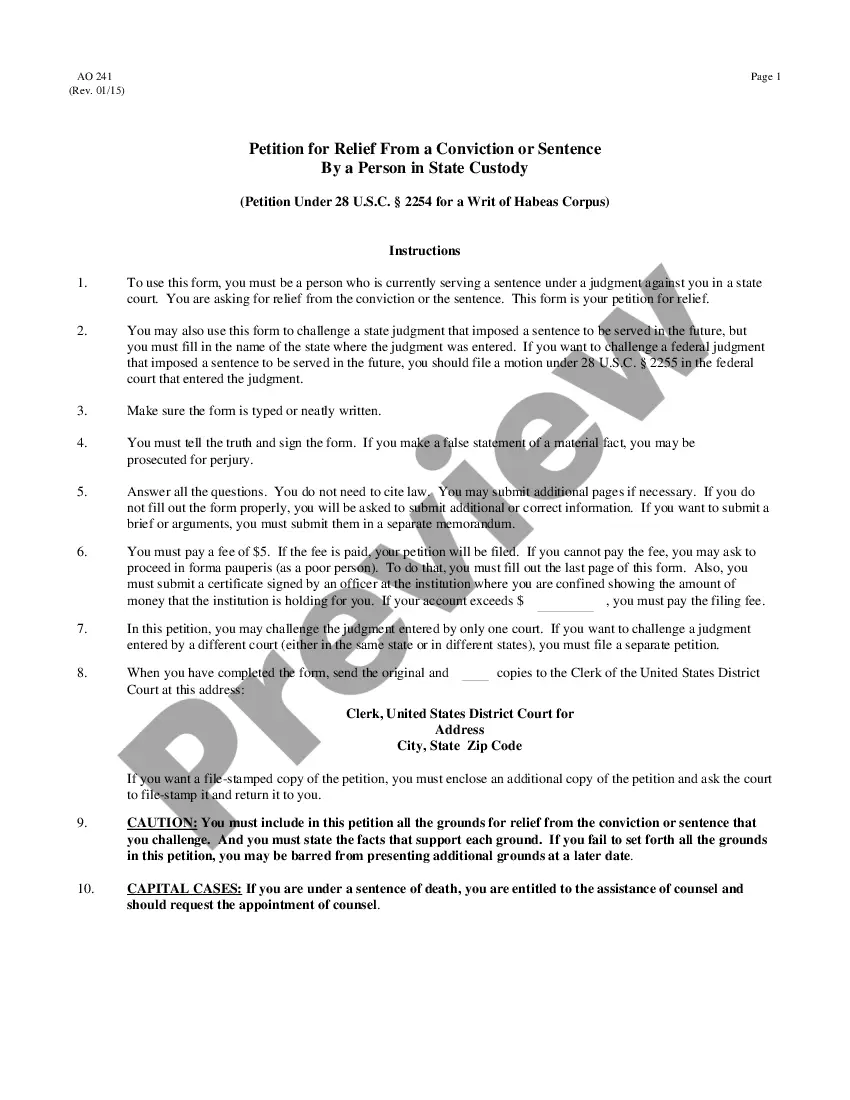
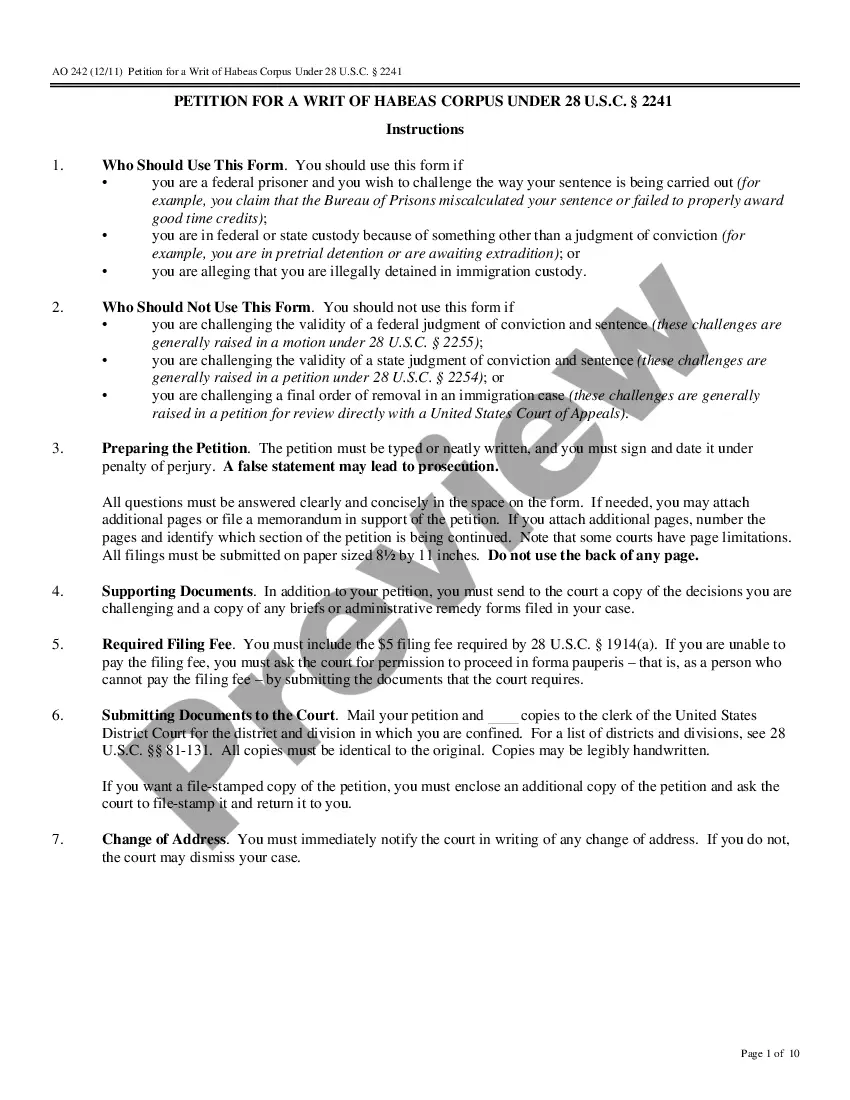



How to fill out Petition For Writ Of Habeas Corpus By Person In State Custody - Lack Of Voluntariness - Ineffective Assistance Of Counsel?
Finding the appropriate legal document template can be challenging. Naturally, there are numerous templates available online, but how can you locate the legal form you need? Utilize the US Legal Forms website. The service offers a vast array of templates, including the New Hampshire Petition For Writ Of Habeas Corpus By Person In State Custody - Lack of Voluntariness - Ineffective Assistance of Counsel, which can be utilized for both business and personal needs. All the forms are reviewed by experts and comply with state and federal regulations.
If you are already a registered user, sign in to your account and click the Download button to obtain the New Hampshire Petition For Writ Of Habeas Corpus By Person In State Custody - Lack of Voluntariness - Ineffective Assistance of Counsel. Use your account to review the legal forms you have previously purchased. Visit the My documents section of your account to retrieve another copy of the document you need.
If you are a new user of US Legal Forms, here are simple instructions for you to follow: First, ensure you have chosen the correct form for your city/region. You can preview the form using the Preview button and review the form details to confirm it is suitable for you. If the form does not meet your needs, use the Search field to find the correct form. Once you are certain that the form is appropriate, click the Get now button to obtain the form. Select the pricing plan you prefer and enter the required information. Create your account and complete your order using your PayPal account or credit card. Choose the document format and download the legal document template to your device. Complete, modify, print, and sign the received New Hampshire Petition For Writ Of Habeas Corpus By Person In State Custody - Lack of Voluntariness - Ineffective Assistance of Counsel.
US Legal Forms provides an extensive library of legal templates designed for easy access and compliance.
- US Legal Forms is the largest repository of legal forms where you can find various document templates.
- Utilize the service to download professionally crafted documents that adhere to state requirements.
- Access a wide range of legal templates for personal or business use.
- Ensure your documents are compliant with legal standards before use.
- Benefit from expert-reviewed forms that meet your specific needs.
- Easily navigate the website to find the forms you require.
Form popularity
FAQ
To file a New Hampshire Petition For Writ Of Habeas Corpus By Person In State Custody - Lack of Voluntariness - Ineffective Assistance of Counsel, you should submit your petition to the New Hampshire Superior Court. This court has jurisdiction over matters related to habeas corpus. Make sure to include all necessary information and documentation to support your claim. If you need assistance with the filing process, consider using USLegalForms, which provides resources and templates to help you navigate your legal journey.
Grounds for a habeas corpus petition can include unlawful detention, lack of voluntariness, and ineffective assistance of counsel. Each of these grounds highlights a potential violation of rights during legal proceedings. In New Hampshire, when filing a petition, it is crucial to detail these issues clearly, particularly in a New Hampshire Petition For Writ Of Habeas Corpus By Person In State Custody - Lack of Voluntariness - Ineffective Assistance of Counsel. You can find useful resources on uslegalforms to help you understand and articulate these grounds effectively.
To write a petition for a writ of habeas corpus, start by identifying the specific grounds for your request, such as lack of voluntariness or ineffective assistance of counsel. Clearly outline the facts of your case and include any supporting documents that validate your claims. It is advisable to reference the New Hampshire Petition For Writ Of Habeas Corpus By Person In State Custody - Lack of Voluntariness - Ineffective Assistance of Counsel. For assistance, consider using uslegalforms, which provides templates and expert advice on drafting legal petitions.
A writ of habeas corpus for child custody allows a person to challenge the legality of a child's detention or custody arrangement. This legal tool can be critical in situations where there are concerns about the child's welfare or the legality of the custody decision. In New Hampshire, the process may involve filing a New Hampshire Petition For Writ Of Habeas Corpus By Person In State Custody - Lack of Voluntariness - Ineffective Assistance of Counsel. Utilizing resources from uslegalforms can provide valuable insights into how to navigate this process effectively.
Writing a writ of habeas corpus involves clearly stating the legal grounds for your request. You need to articulate how your detention violates your rights, especially focusing on aspects like lack of voluntariness or ineffective assistance of counsel. It’s important to include specific details about your case and reference the New Hampshire Petition For Writ Of Habeas Corpus By Person In State Custody - Lack of Voluntariness - Ineffective Assistance of Counsel. Using a platform like uslegalforms can help streamline this process by providing templates and guidance.
It can be issued by Supreme Court or the High Court against both public authorities as well as private individuals.
In exercising writ jurisdiction, the powers of the Supreme Court and High Court are concurrent. Assertion. A Habeas Corpus writ petition dismissed by the Supreme Court can be admitted by the High Court under article 226 of the Constitution.
The writ, Habeas Corpus is not issued in the following cases: Detention is lawful. The proceeding is for the contempt of a legislature or a court. Detention is by a competent court.
A federal petition for writ of habeas corpus under 28 U.S.C. § 2254 is used by a (1) state prisoner (2) being held in state custody (3) to challenge the validity of a state criminal conviction or sentence (4) for the purpose of obtaining release from custody.
Any order denying a petition for writ of habeas corpus must contain a brief statement of the reasons for the denial. An order only declaring the petition to be "denied" is insufficient. (Subd (g) amended and relettered effective January 1, 2002; adopted as subd (e) effective January 1, 1982.)