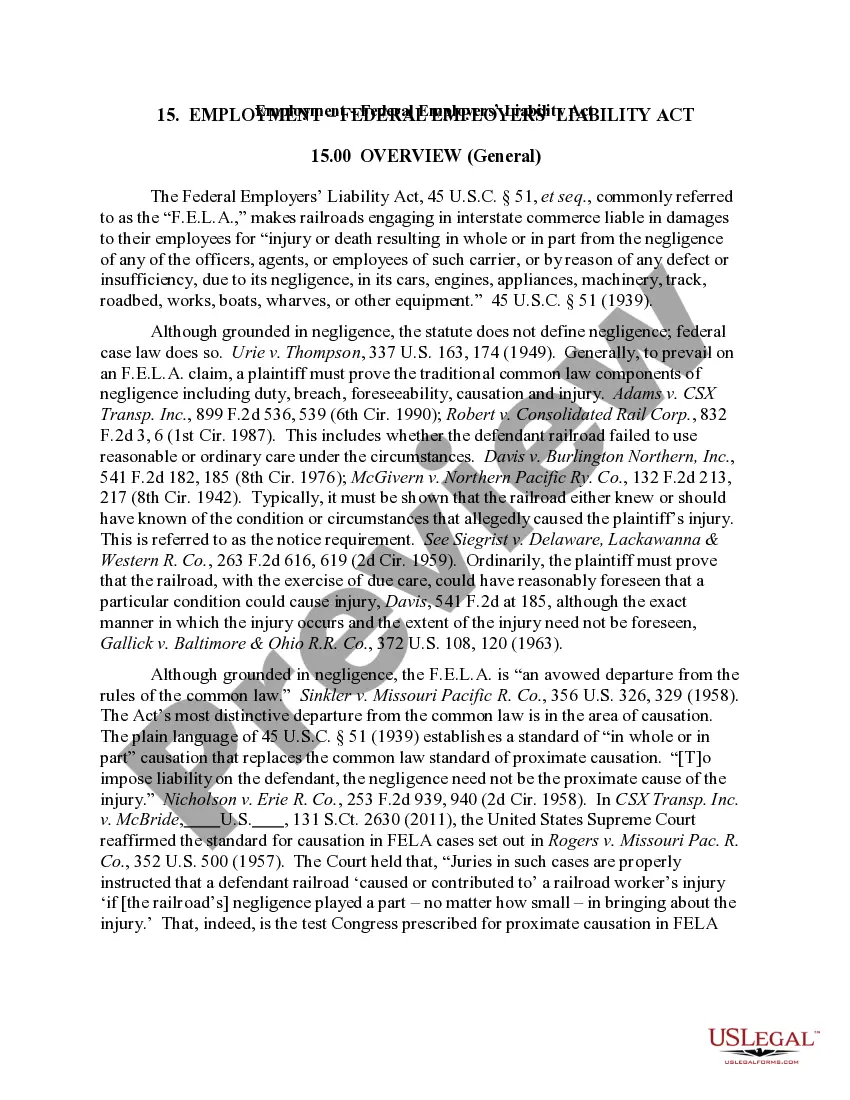
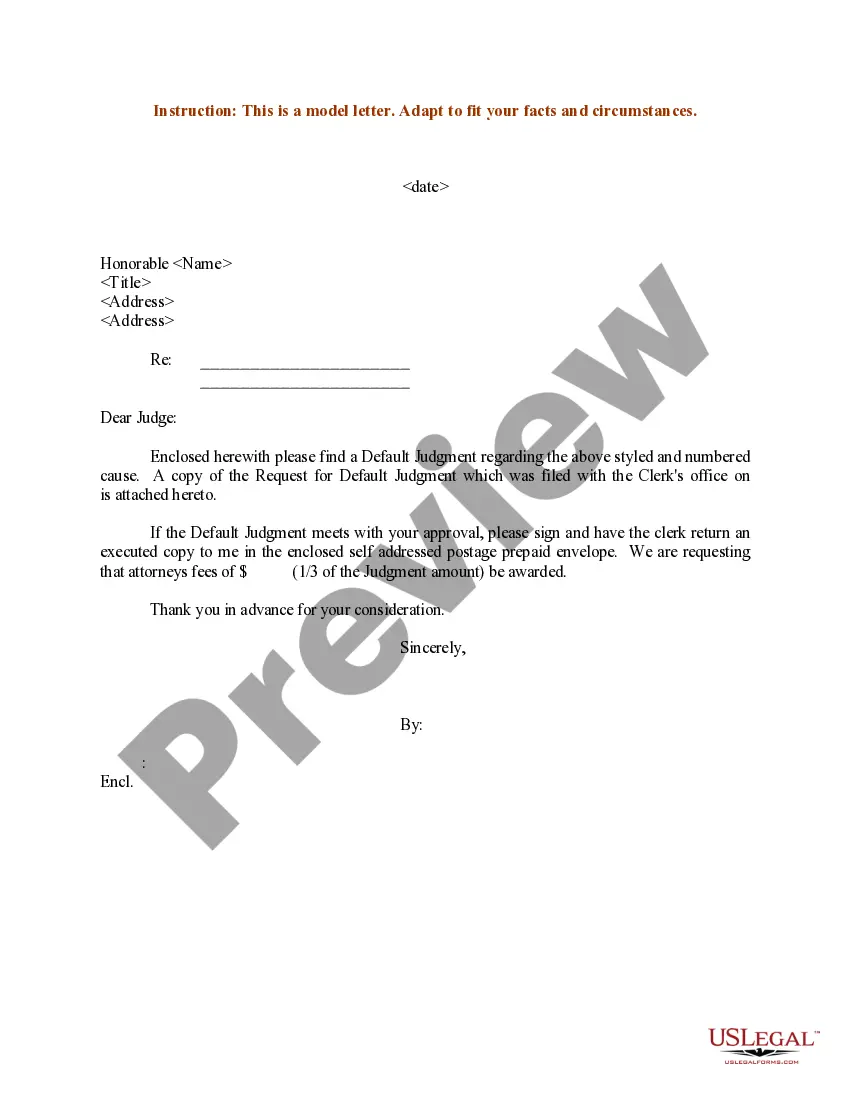
New Hampshire Sample Letter to Judge submitting Default Judgment
Description

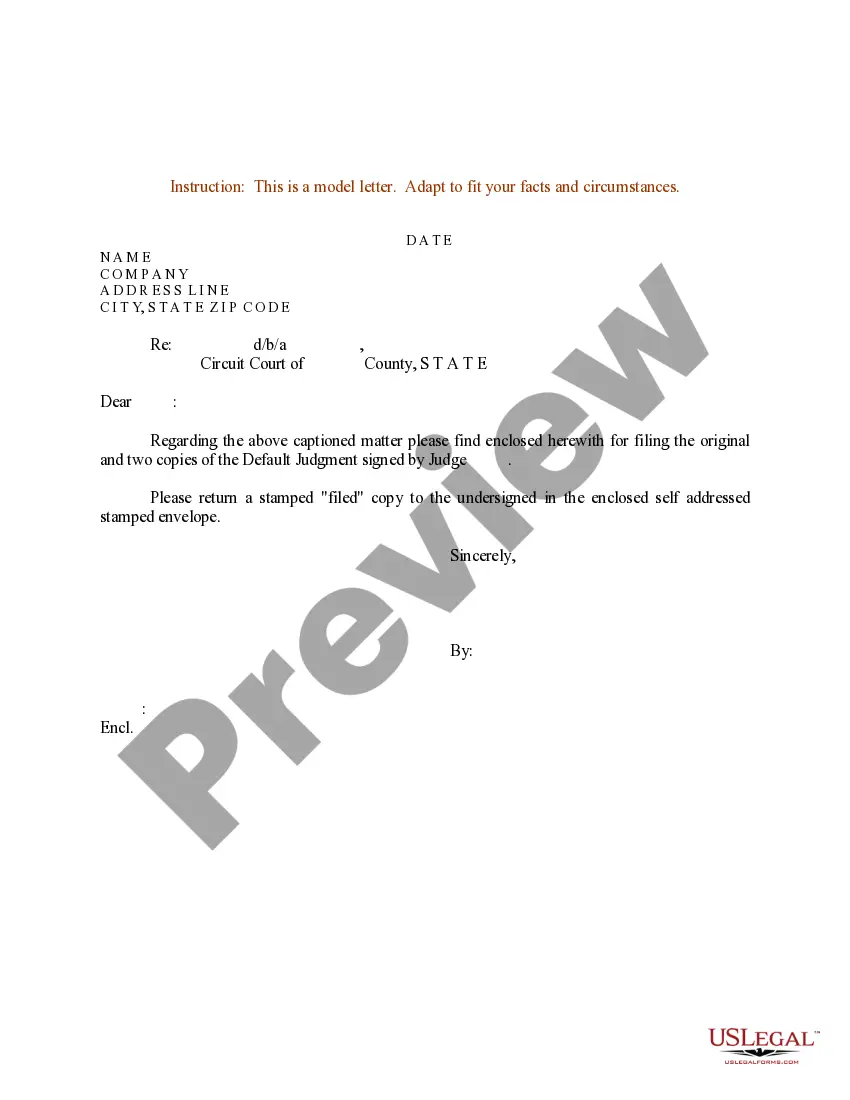
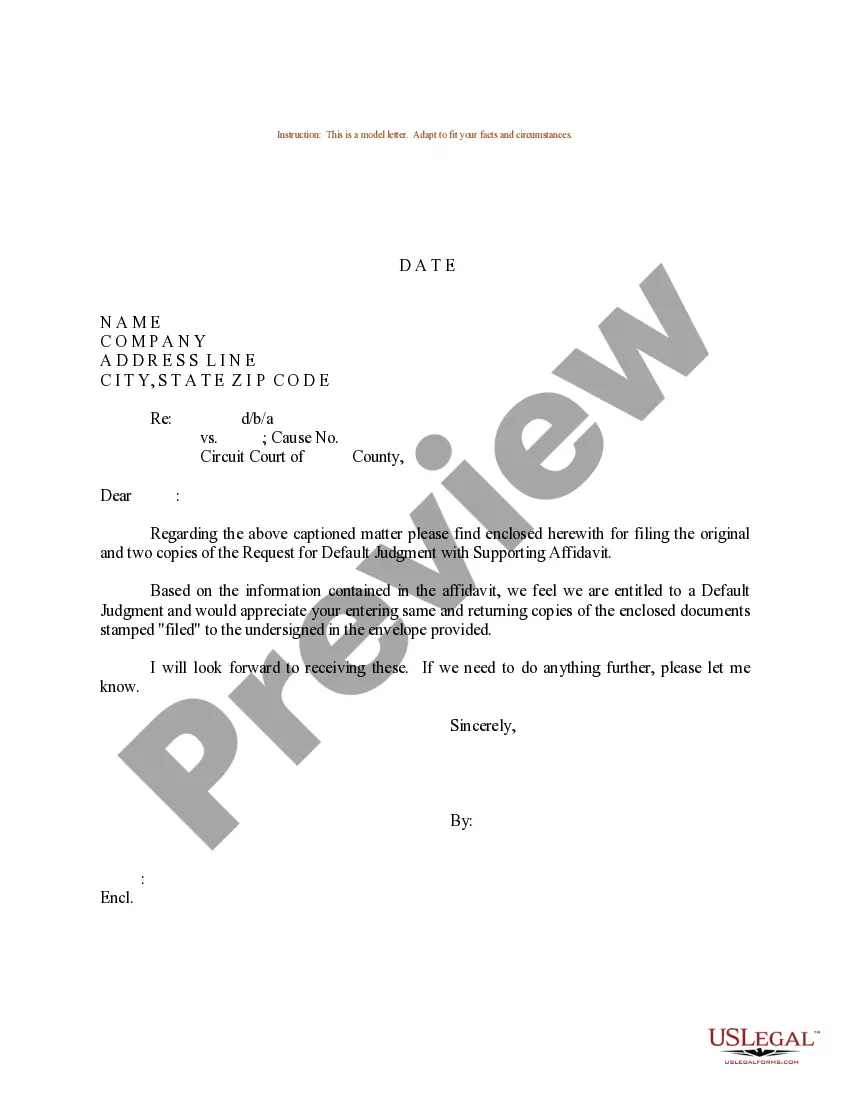
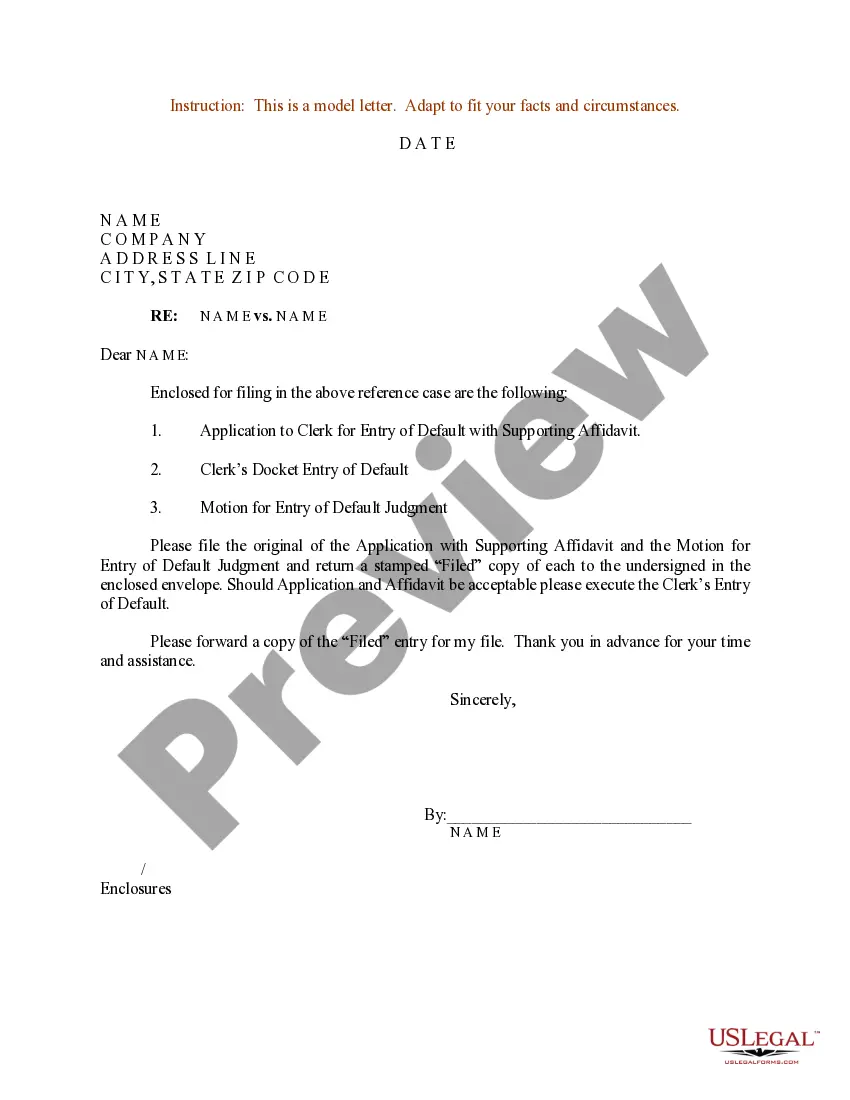
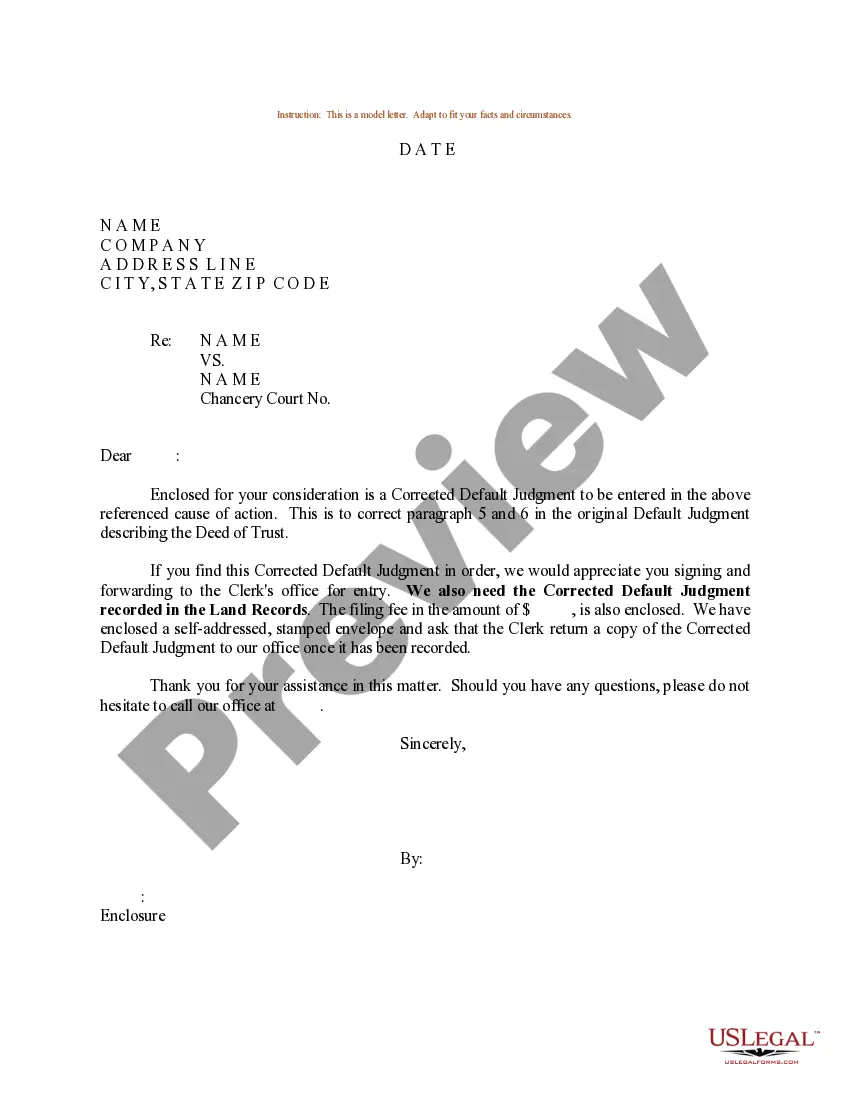

How to fill out Sample Letter To Judge Submitting Default Judgment?
If you need to compile, acquire, or print legal document templates, utilize US Legal Forms, the largest repository of legal forms available online.
Take advantage of the site's simple and user-friendly search to find the documents you require.
Numerous templates for business and personal purposes are organized by categories and states, or keywords. Use US Legal Forms to obtain the New Hampshire Sample Letter to Judge submitting Default Judgment in just a few clicks.
Every legal document template you purchase is yours indefinitely. You will have access to every form you saved in your account.
Navigate to the My documents section and select a form to print or download again. Complete and acquire, and print the New Hampshire Sample Letter to Judge submitting Default Judgment with US Legal Forms. There are millions of professional and state-specific forms available for your business or personal needs.
- If you are already a US Legal Forms user, Log In to your account and click on the Download button to retrieve the New Hampshire Sample Letter to Judge submitting Default Judgment.
- You may also access forms you previously saved in the My documents section of your account.
- If you are using US Legal Forms for the first time, follow the steps below.
- Step 1. Ensure you have selected the form for the correct city/state.
- Step 2. Use the Review option to inspect the form’s details. Don’t forget to read the information.
- Step 3. If you are not satisfied with the form, utilize the Search field at the top of the screen to find other versions of the legal form template.
- Step 4. After locating the form you need, click the Get now button. Choose the pricing plan you prefer and enter your details to register for the account.
- Step 5. Complete the transaction. You can use your Visa or Mastercard or PayPal account to finalize the purchase.
- Step 6. Select the format of the legal form and download it to your device.
- Step 7. Fill out, modify, and print or sign the New Hampshire Sample Letter to Judge submitting Default Judgment.
Form popularity
FAQ
Rule 7 - Pleadings, Motions and Objections, General (a) Every Complaint shall contain in the caption, or in the body of the Complaint, the names and addresses of all parties to the proceedings. (b) No filing which is contained in a letter, will be accepted by the clerk, as such, or acted on by the court.
(a) An Answer or other responsive pleading shall be filed with the court within 30 days after the person filing said pleading has been served with the pleading to which the Answer or response is made.
Rule 19 contemplates the transfer of whole cases, or of particular proceedings in cases, even in the absence of a related pending case or proceeding in the county to which transfer is sought.
A motion to strike the default shall: (1) set forth all the facts and circumstances explaining why the tenant defaulted and all the reasons why the court should strike the default; (2) specifically set forth the defendant's defense to the landlord-tenant writ filed by the plaintiff and all the facts upon which the ...
Motions -- General. (a) A request for court order must be made by motion which must (1) be in writing unless made during a hearing or trial, (2) state with particularity the grounds for seeking the order, and (3) state the relief sought.
(5) Finding of Probable Cause. If the court determines that there is probable cause to believe that a charged offense has been committed and the defendant committed it, the court shall hold the defendant to answer for action by the grand jury.
Should counsel, or parties if unrepresented, be unable to reach an acceptable agreement as to any of the required matters, the court shall issue such orders as it deems appropriate.