New Hampshire Worksheet - Industry and Competitive Forces Analysis

State:
Multi-State
Control #:
US-04039BG
Format:
Word; 
Rich Text
Instant download

Description

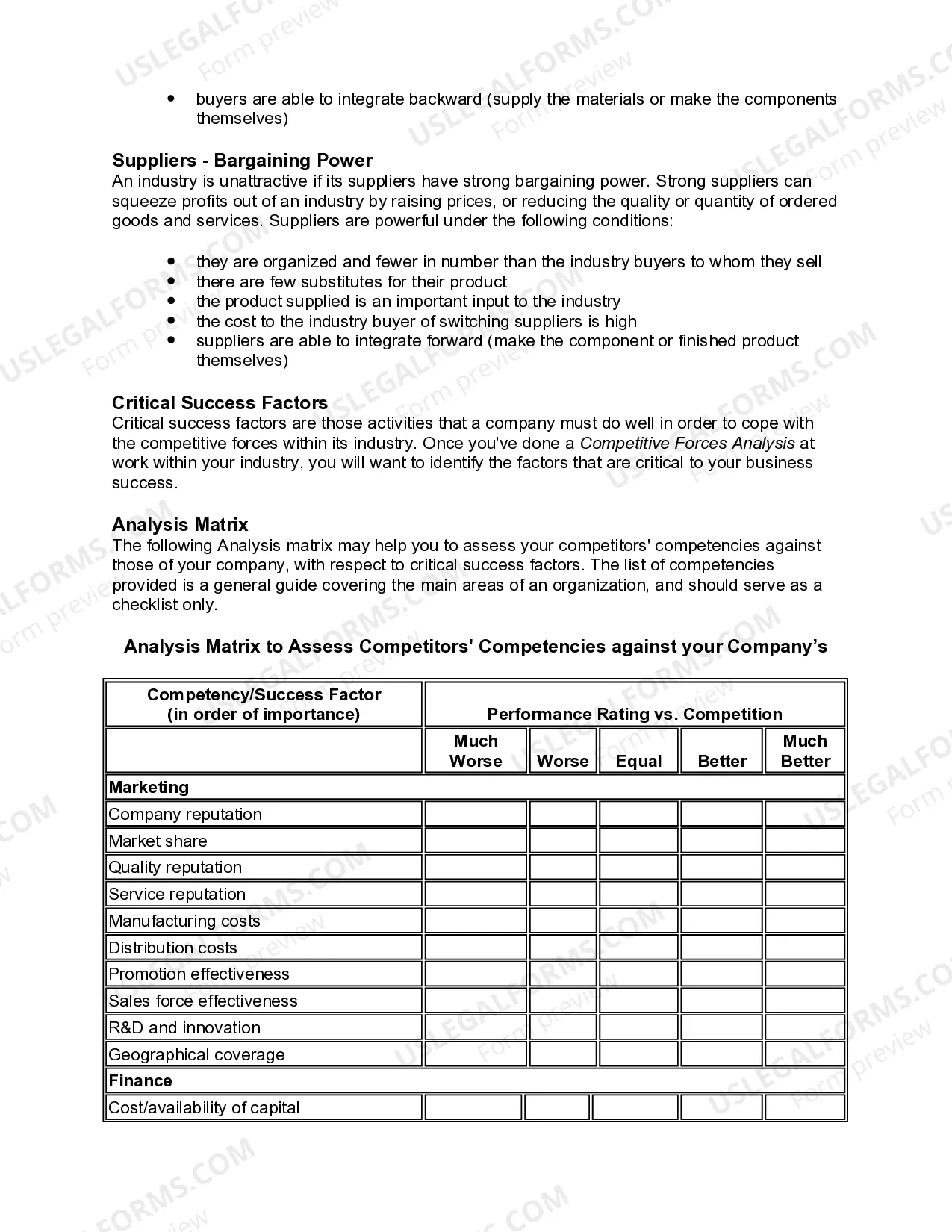
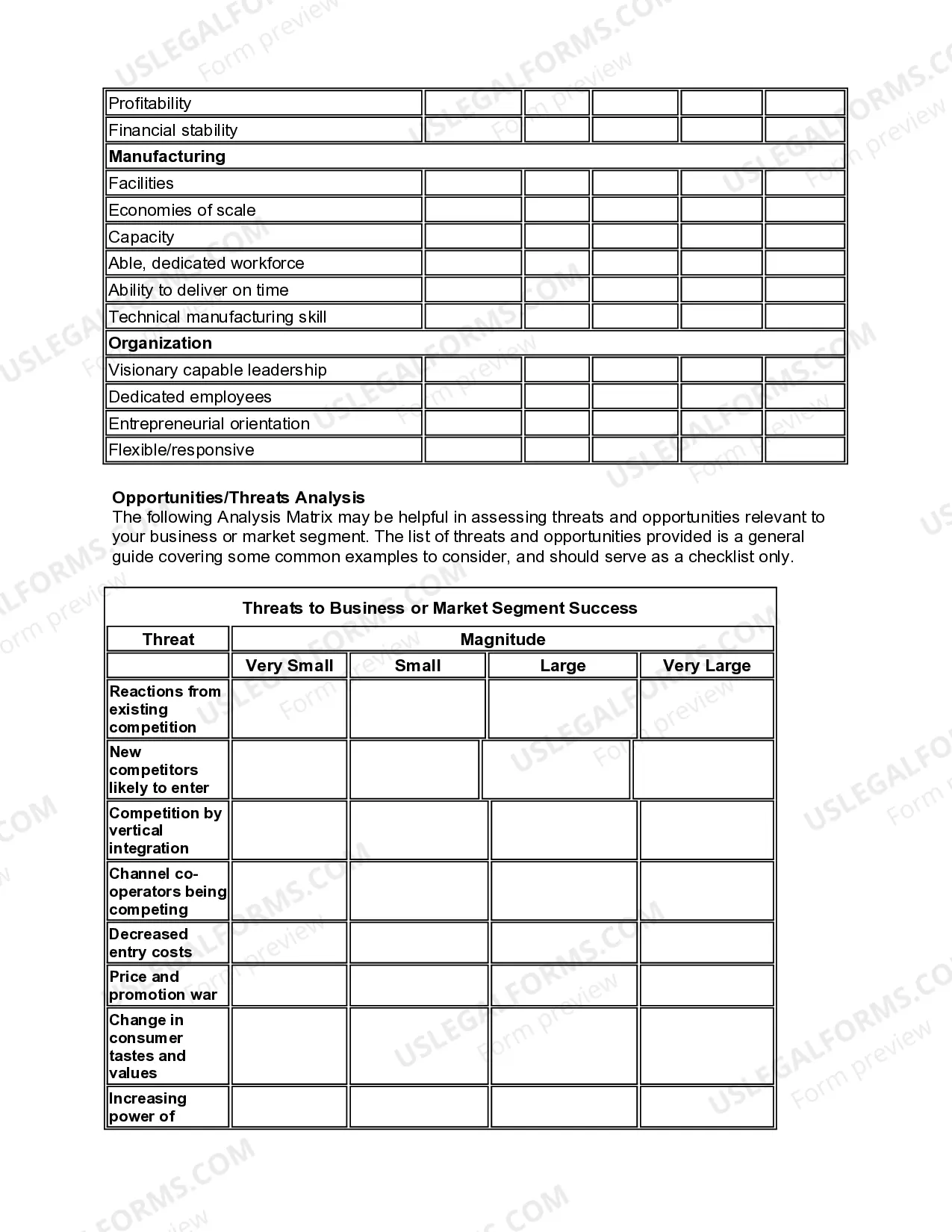
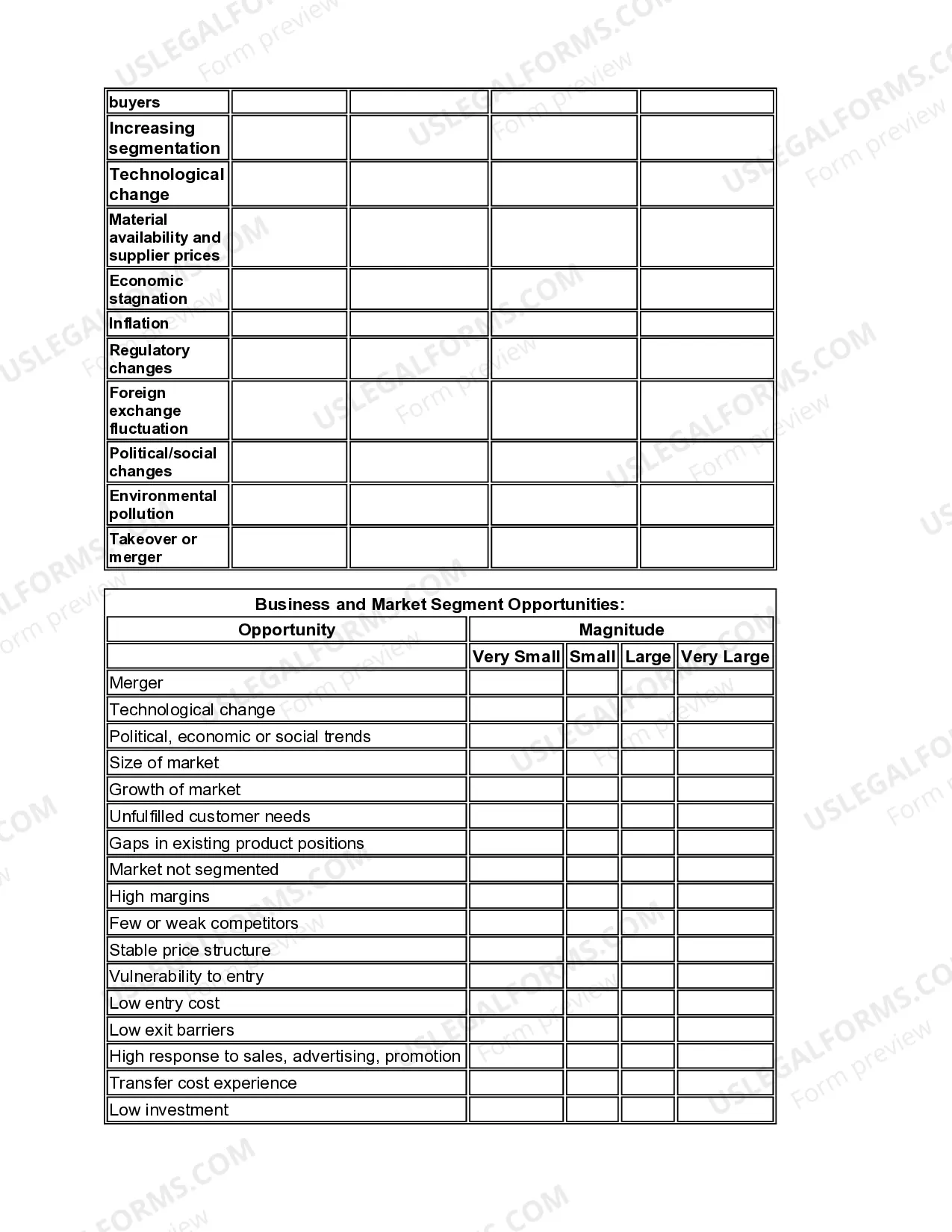
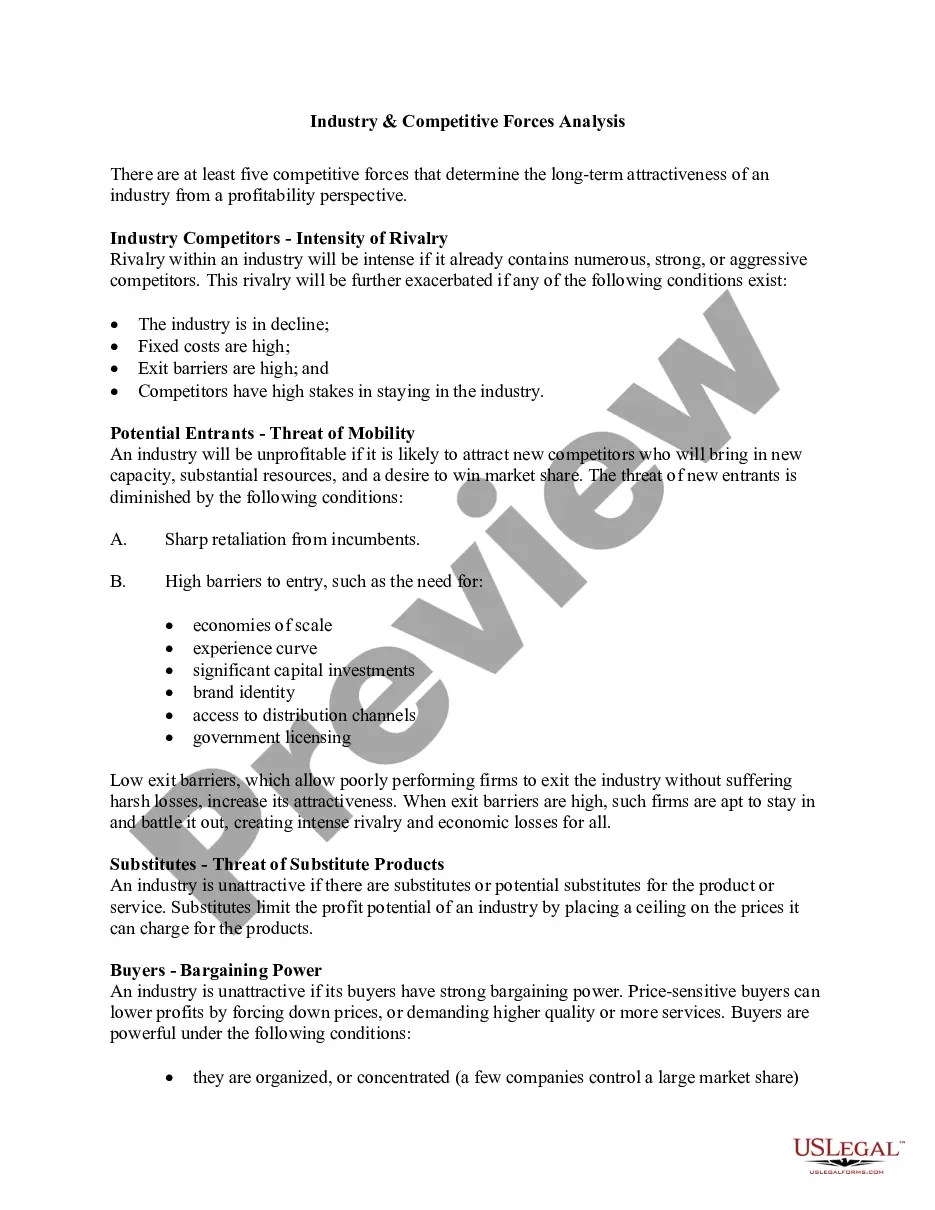
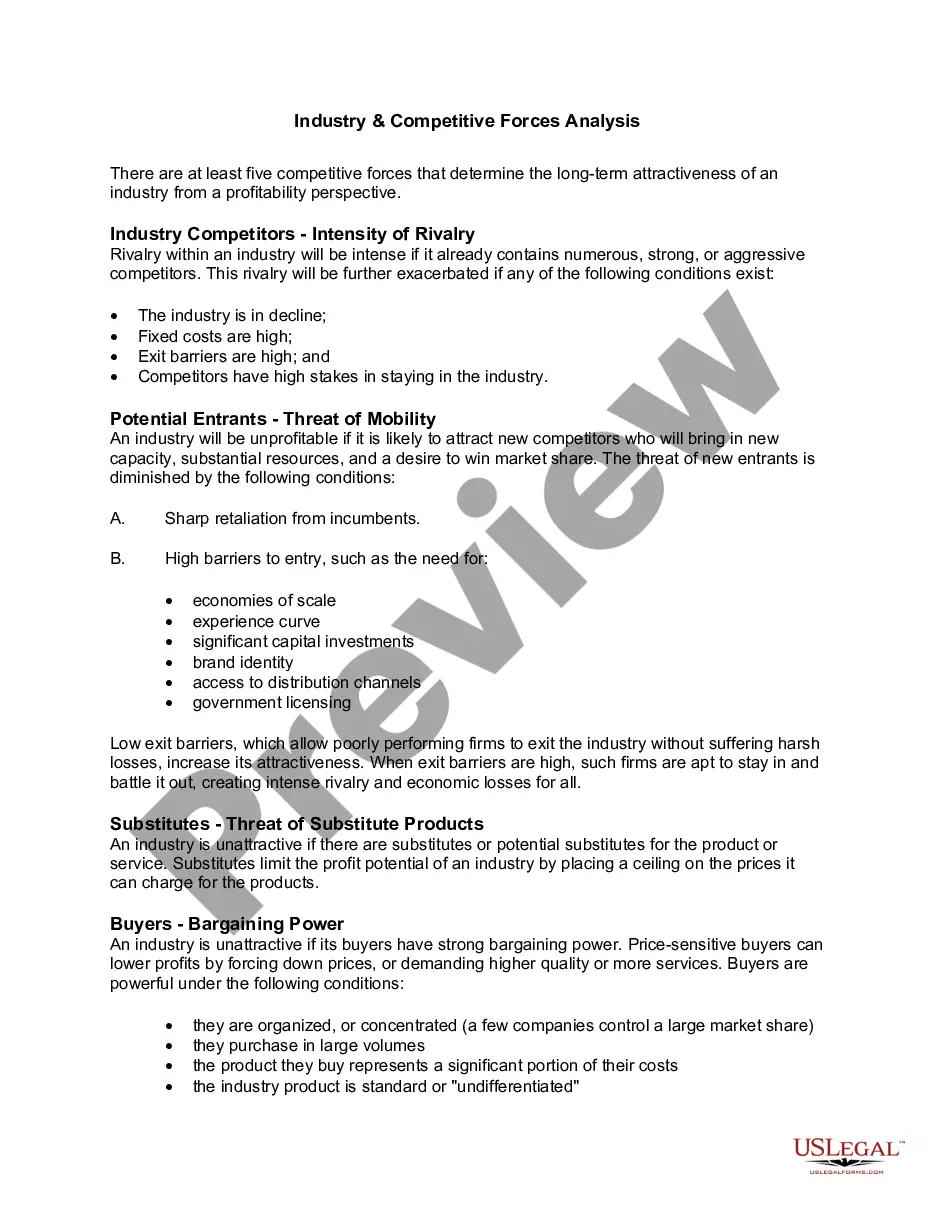
How intense is competition in your industry, or the industry you want to enter? You should know the answer before you make your marketing plans. There are at least five competitive forces that determine the long-term attractiveness of an industry from a profitability perspective. The five forces are as follows:


" Industry Competitors - Intensity of Rivalry;

" Potential Entrants - Threat of Mobility;

" Substitutes - Threat of Substitute Products; and

" Suppliers - Bargaining Power.

Free preview
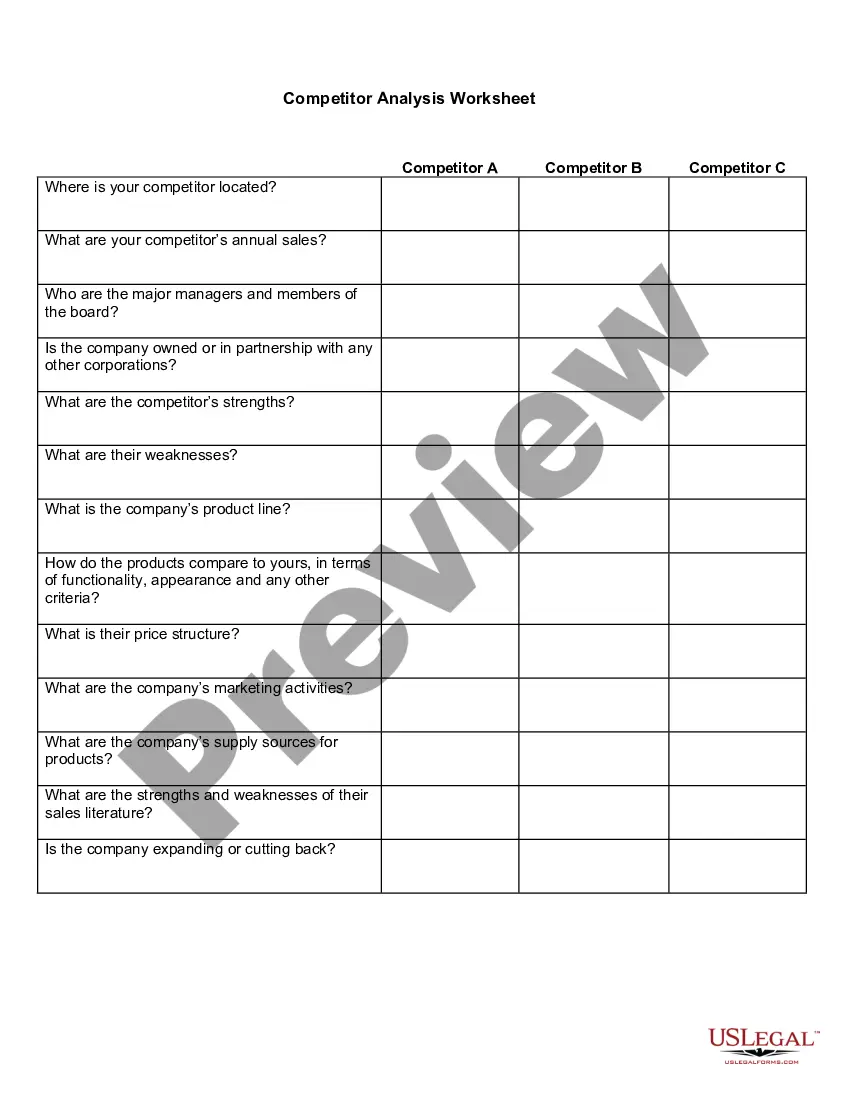
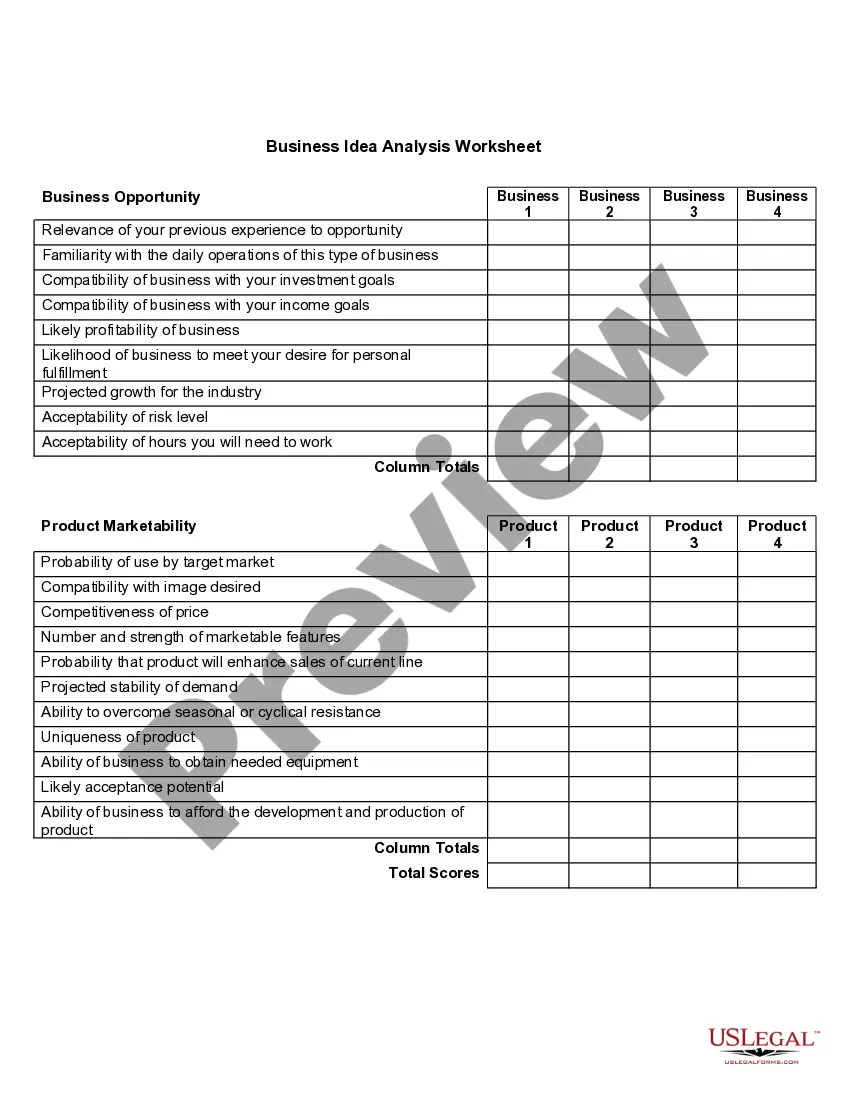
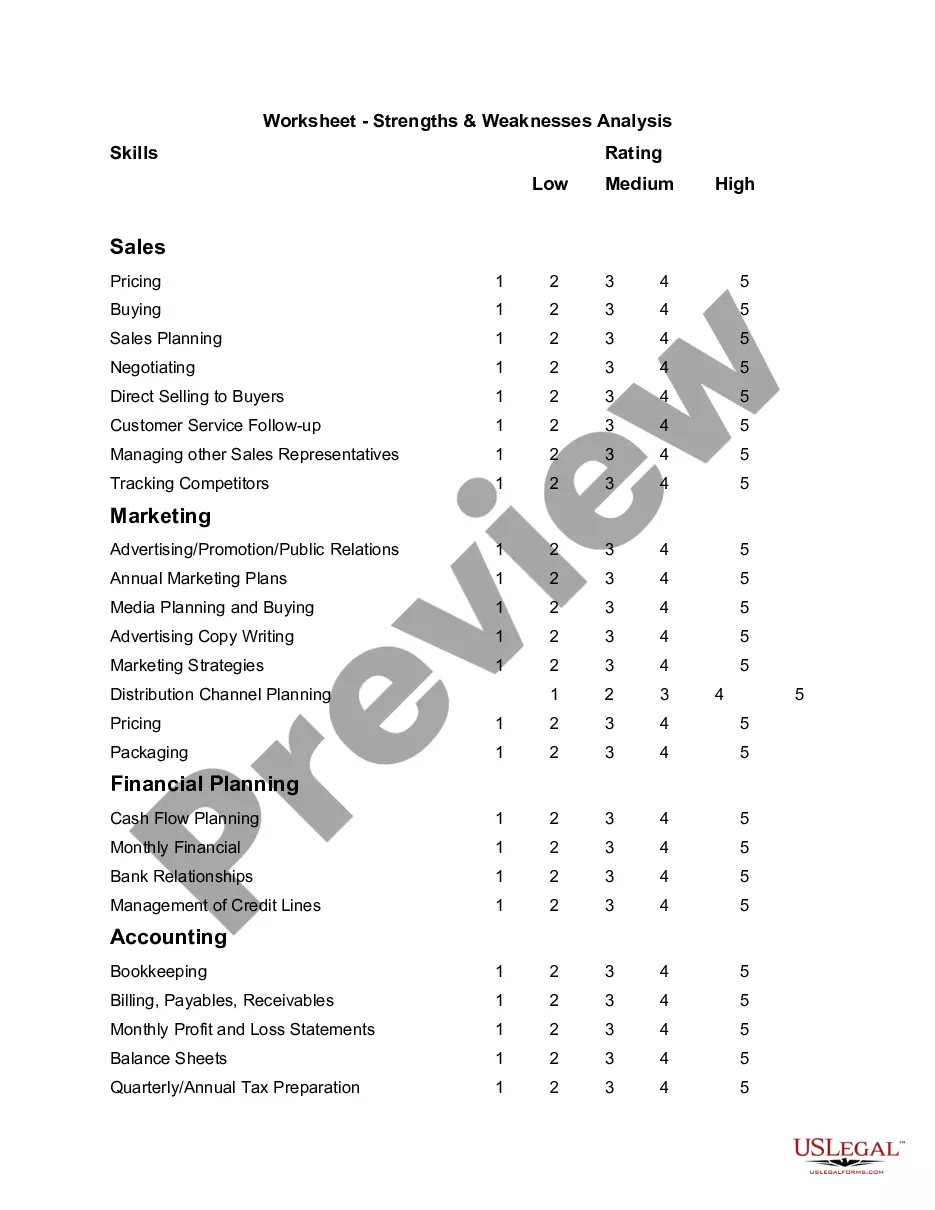
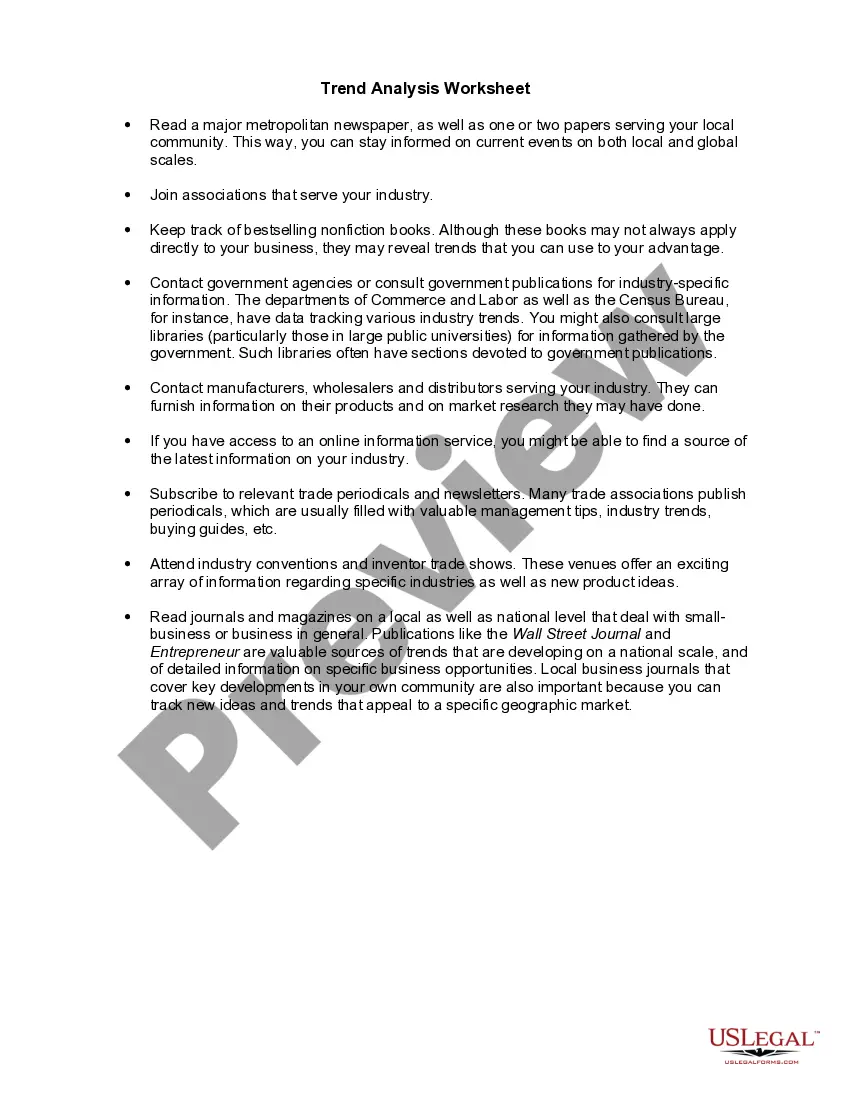
  • Preview Worksheet - Industry and Competitive Forces Analysis
  • Preview Worksheet - Industry and Competitive Forces Analysis
  • Preview Worksheet - Industry and Competitive Forces Analysis
  • Preview Worksheet - Industry and Competitive Forces Analysis
  • Preview Worksheet - Industry and Competitive Forces Analysis

How to fill out Worksheet - Industry And Competitive Forces Analysis?

US Legal Forms - one of the largest collections of legal documents in the United States - offers a diverse array of legal document templates that you can download or print.

By utilizing the website, you will access thousands of templates for business and personal purposes, organized by categories, states, or keywords. You can find the latest versions of documents like the New Hampshire Worksheet - Industry and Competitive Forces Analysis within moments.

If you already have an account, Log In and retrieve the New Hampshire Worksheet - Industry and Competitive Forces Analysis from your US Legal Forms library. The Download button will appear on every document you view.

If the document does not suit your needs, use the Search box at the top of the page to find one that does.

When you are satisfied with the document, confirm your choice by clicking the Buy now button. Next, select the payment plan you prefer and enter your information to register for the account. Complete the purchase. Use a credit card or PayPal account to finalize the transaction. Choose the format and download the document to your device. Make modifications. Fill out, edit, print, and sign the saved New Hampshire Worksheet - Industry and Competitive Forces Analysis. Each template you added to your account does not expire and belongs to you indefinitely. So, if you wish to download or print another copy, simply navigate to the My documents section and click on the document you need. Access the New Hampshire Worksheet - Industry and Competitive Forces Analysis with US Legal Forms, the most extensive library of legal document templates. Utilize thousands of professional and state-specific templates that meet your business or personal requirements and needs.

  1. You can access all previously saved templates in the My documents section of your account.
  2. If you are using US Legal Forms for the first time, here are simple instructions to get you started.
  3. Make sure you have chosen the correct document for your city/state.
  4. Click on the Review button to inspect the document's content.
  5. Examine the document summary to confirm that you have selected the correct template.
Form popularity

FAQ

An example of the power of customers in Porter's 5 Forces is when customers have numerous alternatives available, allowing them to easily switch to competing products. This competitive pressure can force businesses to enhance quality or lower prices to retain customer loyalty. By analyzing customer power using the New Hampshire Worksheet - Industry and Competitive Forces Analysis, companies can develop strategies to improve their market position.

To fill out Porter's 5 Forces, first, identify each of the five forces: the threat of new entrants, the bargaining power of suppliers, the bargaining power of customers, the threat of substitute products, and industry rivalry. Use the New Hampshire Worksheet - Industry and Competitive Forces Analysis to gather information about your specific industry. Gather data, evaluate each force, and analyze how they affect your overall business strategy.

Porter's Five Forces is a framework for analyzing a company's competitive environment. The number and power of a company's competitive rivals, potential new market entrants, suppliers, customers, and substitute products influence a company's profitability.

Porter's Five Forces Framework Model analyses the competitive forces within the environment in which a company operates, to assess the potential for profitability in an industry. Porter consists of the threat of new entrants, the threat of substitute, buyer power, supplier power, and rivalry among existing competitors.

Porter's 5 Forces identifies competition, new entrants into the industry, supplier power, buyer power, and the threat of substitute products and services in the market. PESTLE examines political, economic, sociocultural, technological, legal, and environmental factors.

Porter's 5 Forces is a framework for industry analysis and business strategy development formed by Michael E. Porter of Harvard Business School in 1979....Step 1 Preparation is Key.Step 2 Threat of New Entry.Step 3 Threat of Substitution.Step 4 Supplier Power.Step 5 Buyer Power.More items...

Porter's 5 Forces is an analytical model that helps marketers and business managers look at the 'balance of power' in a market between different organizations on a global level, and to analyze the attractiveness and potential profitability of an industry sector.

Industry analysisalso known as Porter's Five Forces Analysisis a very useful tool for business strategists. It is based on the observation that profit margins vary between industries, which can be explained by the structure of an industry.

Michael Porter has identified five forces that are widely used to assess the structure of any industry. Porter's five forces are the: Bargaining power of suppliers, 2022 Bargaining power of buyers, 2022 Threat of new entrants, 2022 Threat of substitutes, and 2022 Rivalry among competitors.

The weekly benefit amount is calculated by dividing the sum of the wages earned during the highest quarter of the base period by 26, rounded down to the next lower whole dollar. The result cannot exceed the utmost weekly benefit permitted by rule.

Trusted and secure by over 3 million people of the world’s leading companies

New Hampshire Worksheet - Industry and Competitive Forces Analysis