New Hampshire Written Revocation of Will
About this form
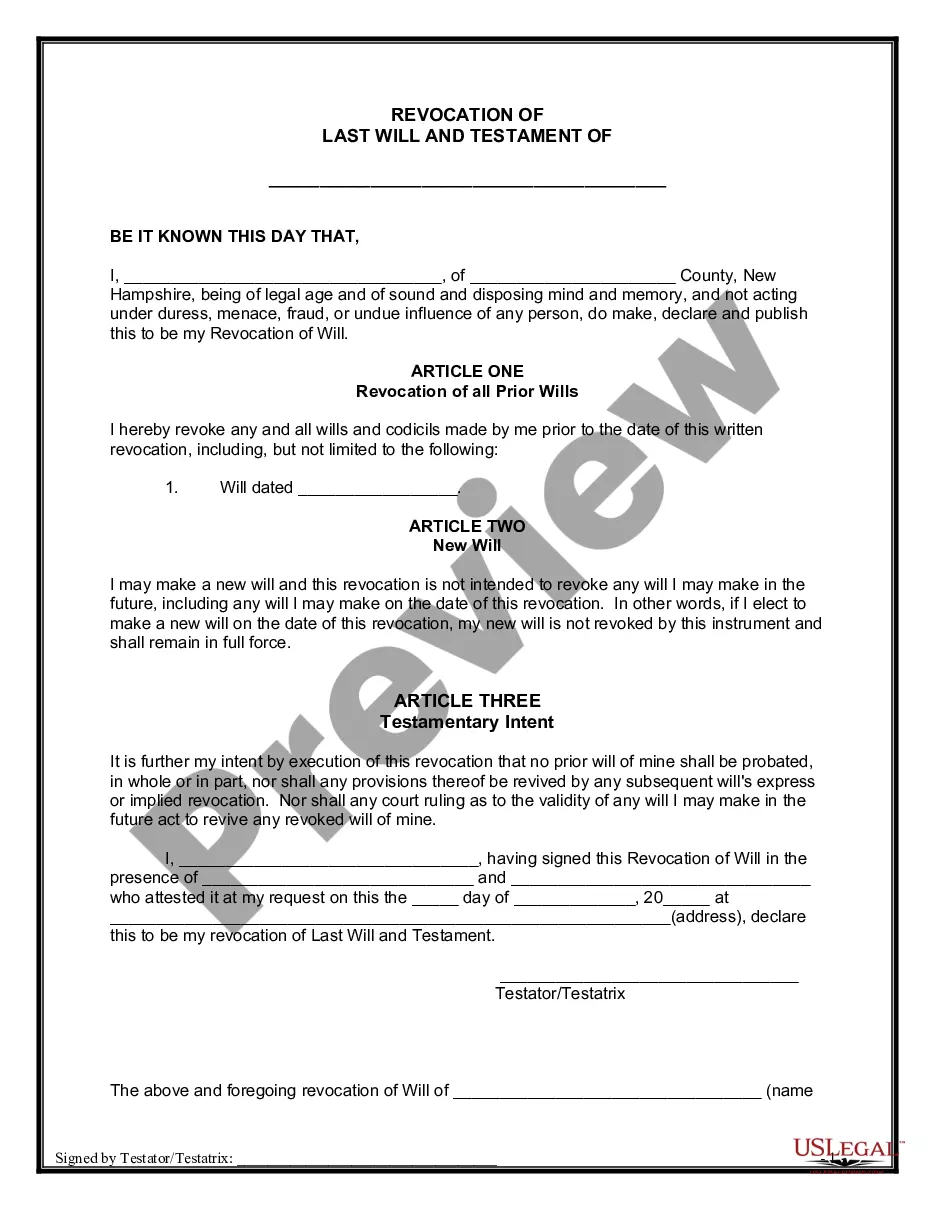
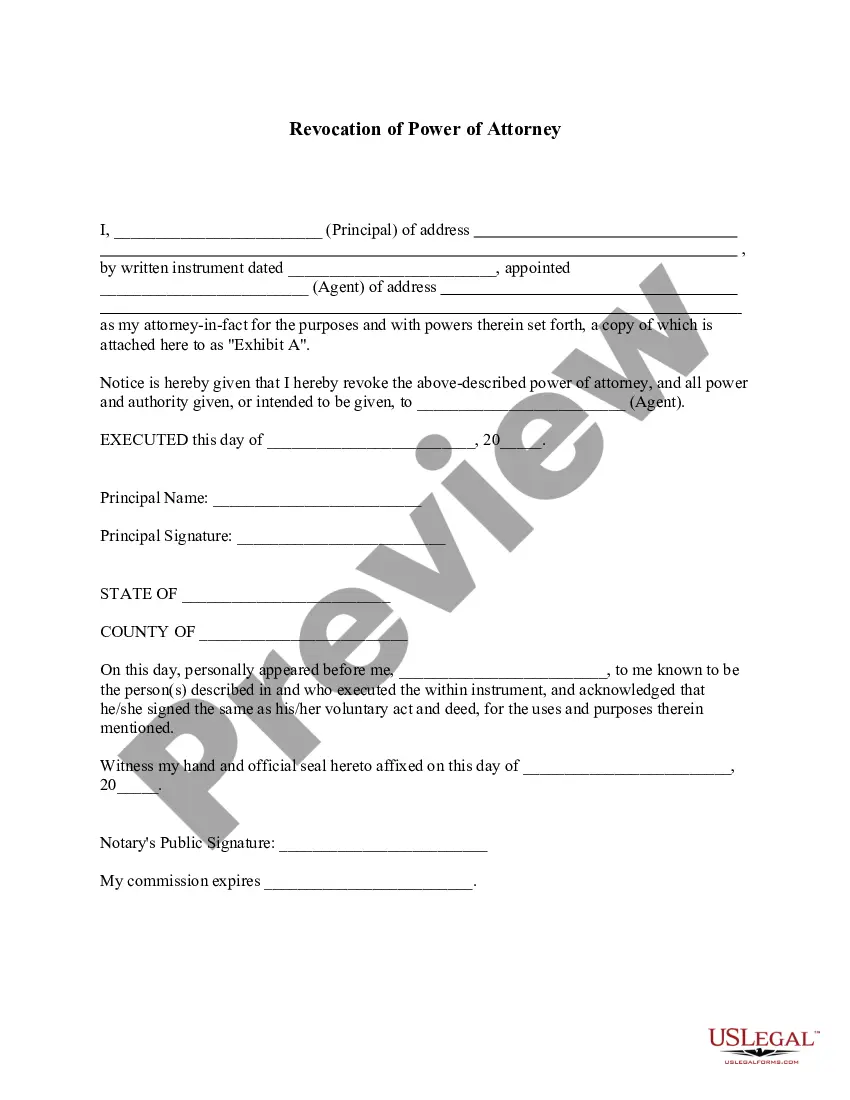
The Written Revocation of Will is a legal document used to revoke a previously executed will. This form serves to provide clear evidence of your intent to cancel a prior will, ensuring that it does not get probated. Unlike a new will that typically includes a revocation clause, this separate document formally indicates that the preceding will has been nullified. This is particularly useful if there are concerns that an unwanted will could be favored by heirs over your true intentions.
Form components explained
- Revocation declaration: Clearly states that all previous wills and codicils are revoked.
- New will clause: Acknowledges that any future wills made will not be affected by this revocation.
- Testamentary intent: Affirms the testator's desire to prevent any prior will from being probated.
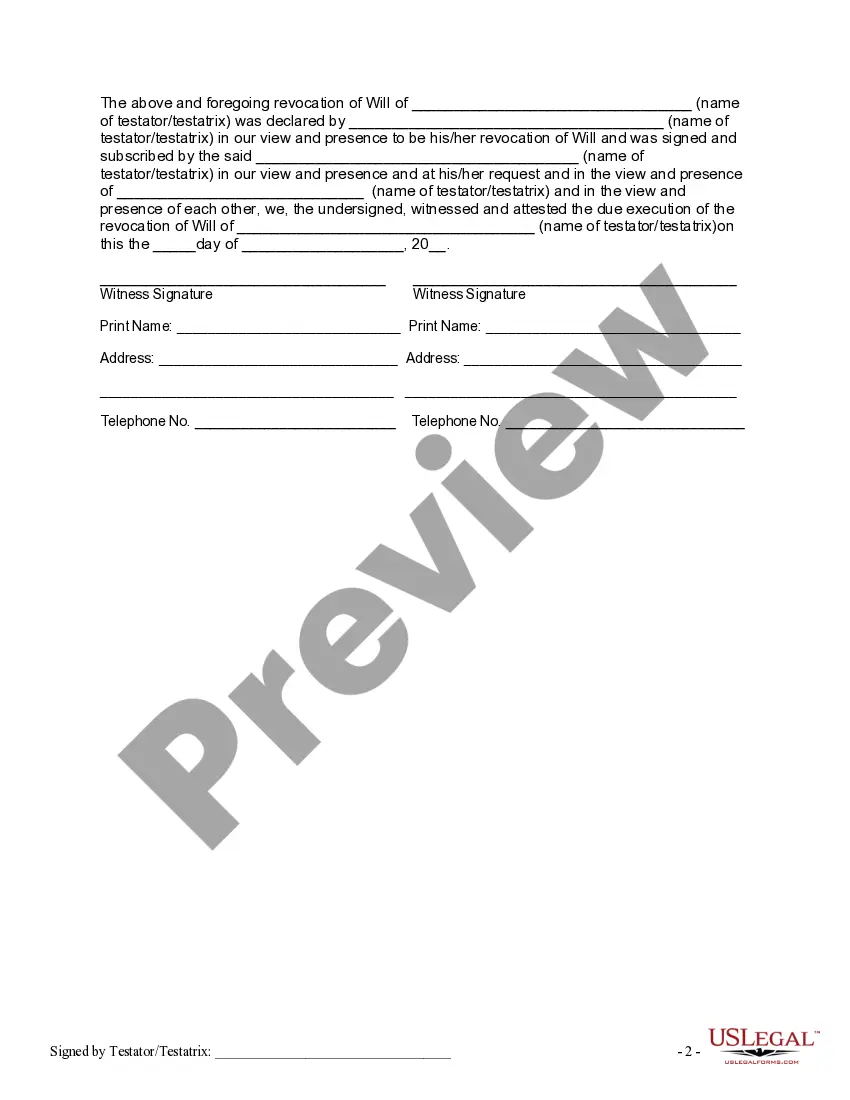
- Witness signatures: Requires the signatures of witnesses who can attest to the revocation.
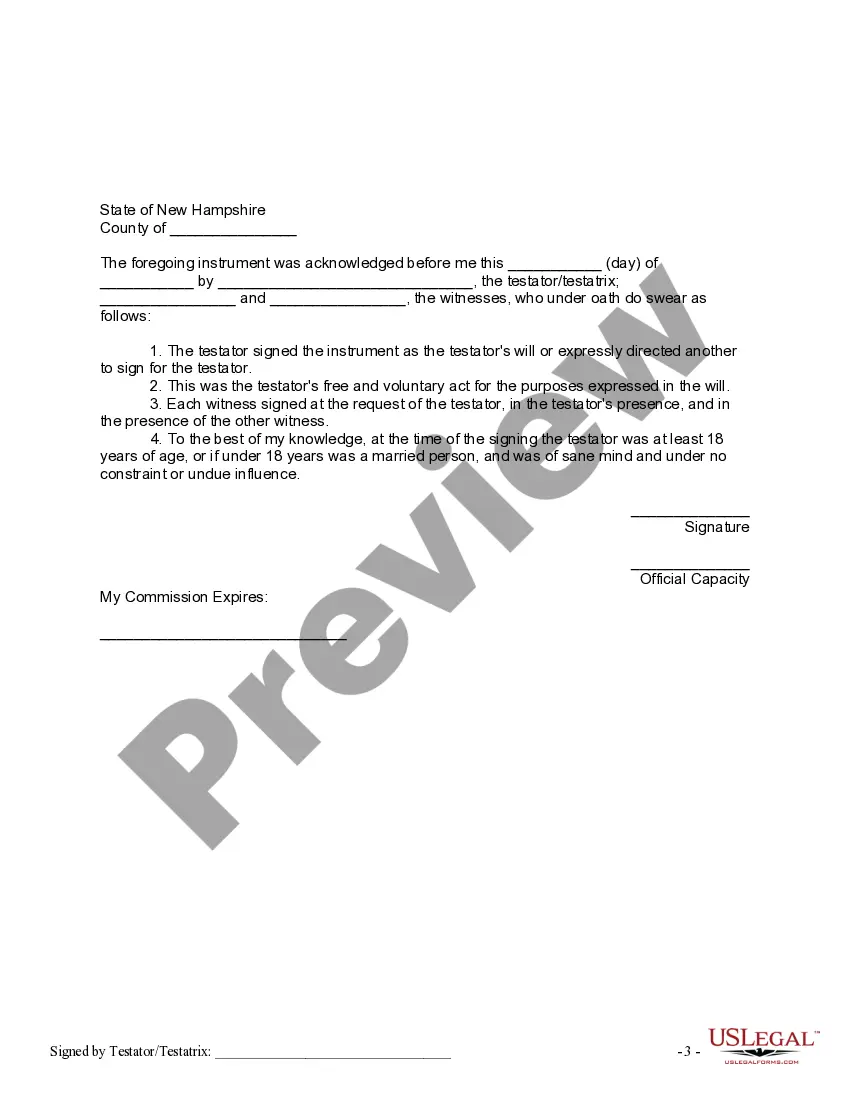
- Notarization section: Includes an acknowledgment that may need to be completed by a notary public.
Common use cases
This form should be utilized when you want to ensure that a former will is not executed, particularly if you have concerns about an earlier document being used against your wishes. Common scenarios include changes in personal circumstances, such as marriage, divorce, or the birth of children, which may necessitate a change in your estate plans. This document provides clarity and prevents confusion among potential heirs regarding your intentions.
Who needs this form
- Individuals who have created a new will and want to revoke an old one.
- People seeking to clarify their intentions regarding their estate planning.
- Anyone concerned about potential disputes among heirs regarding the validity of prior wills.
- Testators in situations where clear documentation of revocation is necessary to prevent misunderstanding.
Instructions for completing this form
- Identify the testator's name and address at the top of the form.
- Clearly indicate the date of the will(s) being revoked in the revocation clause.
- State your intent to revoke all previous wills in the appropriate section.
- Provide spaces for the signatures and printed names of witnesses after execution.
- If required, complete the notarization section to have the document formally acknowledged.
Does this document require notarization?
This document requires notarization to meet legal standards. US Legal Forms provides secure online notarization powered by Notarize, allowing you to complete the process through a verified video call, available 24/7.
Get your form ready online
Our built-in tools help you complete, sign, share, and store your documents in one place.
Make edits, fill in missing information, and update formatting in US Legal Forms—just like you would in MS Word.
Download a copy, print it, send it by email, or mail it via USPS—whatever works best for your next step.
Sign and collect signatures with our SignNow integration. Send to multiple recipients, set reminders, and more. Go Premium to unlock E-Sign.
If this form requires notarization, complete it online through a secure video call—no need to meet a notary in person or wait for an appointment.
We protect your documents and personal data by following strict security and privacy standards.
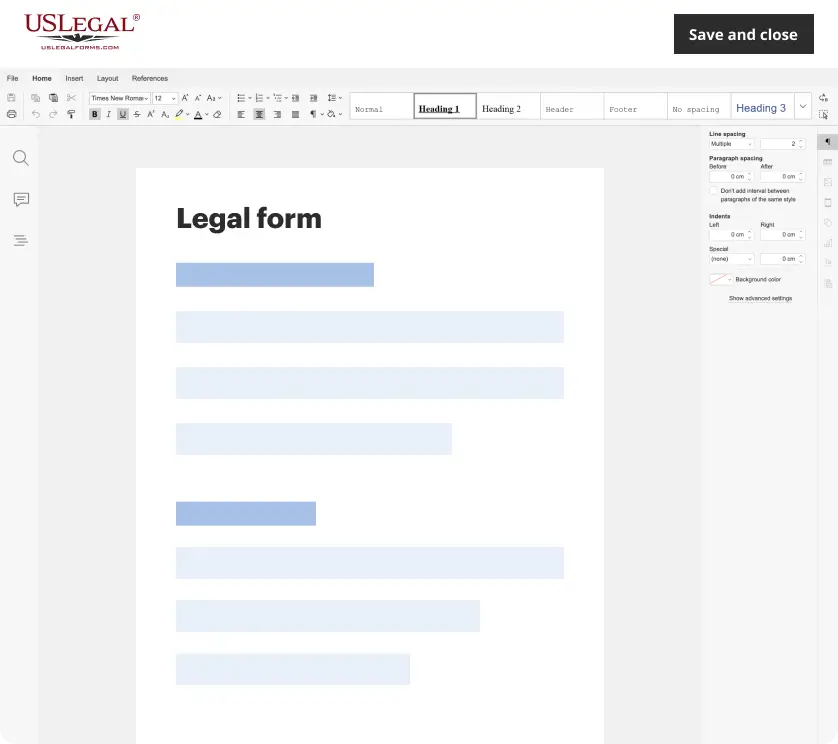
Make edits, fill in missing information, and update formatting in US Legal Forms—just like you would in MS Word.
Download a copy, print it, send it by email, or mail it via USPS—whatever works best for your next step.
Sign and collect signatures with our SignNow integration. Send to multiple recipients, set reminders, and more. Go Premium to unlock E-Sign.
If this form requires notarization, complete it online through a secure video call—no need to meet a notary in person or wait for an appointment.
We protect your documents and personal data by following strict security and privacy standards.
Typical mistakes to avoid
- Failing to sign the form in the presence of witnesses.
- Not accurately completing the witness signatures or printed names.
- Omitting the date when revoking previous wills.
- Neglecting to review state-specific requirements for notarization.
Why complete this form online
- Convenience of downloading and filling out the form at your own pace.
- Access to legal templates drafted by licensed attorneys, ensuring compliance.
- Ability to make updates easily without needing to start from scratch.
- Secure storage options for your completed documents to prevent loss.
Looking for another form?




Form popularity
FAQ
A typical provision in most wills is a provision that all previous will and codicils are revoked with the signing of the new will. Therefore, if your current will has this provision then the old one is revoked and no longer valid.
The most common way to revoke a will is to execute a new one that states an intent to revoke all previously made wills. To revoke a will without making a new one, tear, burn, cancel, deface, obliterate or destroy it. This must be done with the intention of revoking it, and not done accidentally.
Fraud or Undue Influence A nonfamily caregiver forcing the testator to leave them an inheritance. A family member getting the testator to sign a will by pretending it is just a general legal document that needs a signature.
The testator can cancel his will at any time during his life time registered or non registered . It does not require stamp duty.
A testator can revoke a will by making changes to parts of an existing will. The newly-amended will, now called a codicil, has the effect of creating a new will because it can change key aspects of an existing will, including new beneficiaries and property designations.
Alberta Wills can be changed at any time simply by visiting your lawyer.In some situations, wills are automatically revoked, such as when you get married. Consider making an entirely new will when you need to make major changes and using a codicil for small changes.
Generally, you can revoke a will by (1) destroying the old will, (2) creating a new will or (3) making changes to an existing will. In some circumstances, simply giving away all or your property and assets before you die can have the effect of revoking a will (subject to estate tax penalties).
When a person (the 'Testator') makes a valid Will, section 20 of the Wills Act 1837 states that it can only be revoked in three ways: by the Testator making another Will or codicil; by them signing a revocation provision (a professionally drafted Will will always include this provision) or by destruction.