New Jersey Deed of Distribution to Three Individuals
Understanding this form
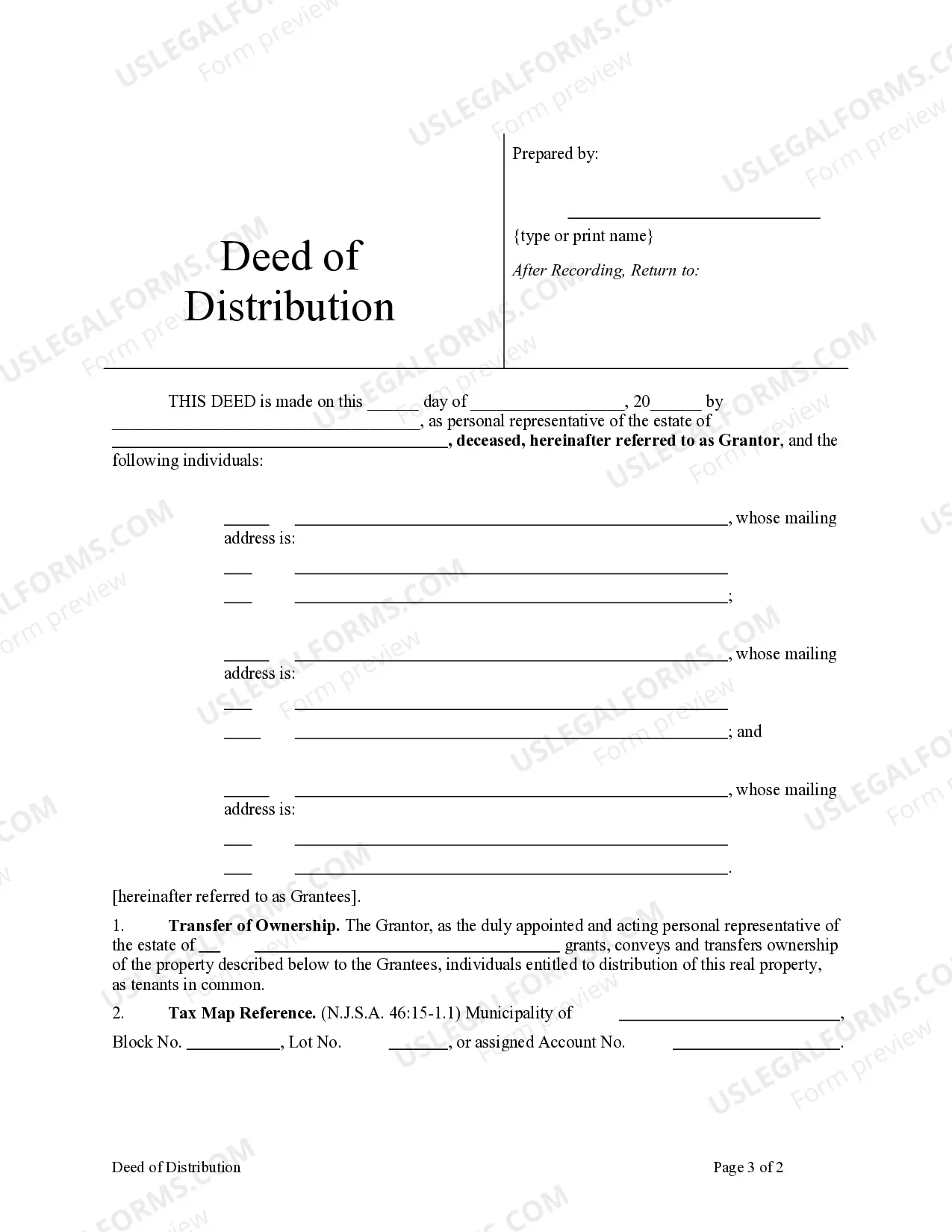
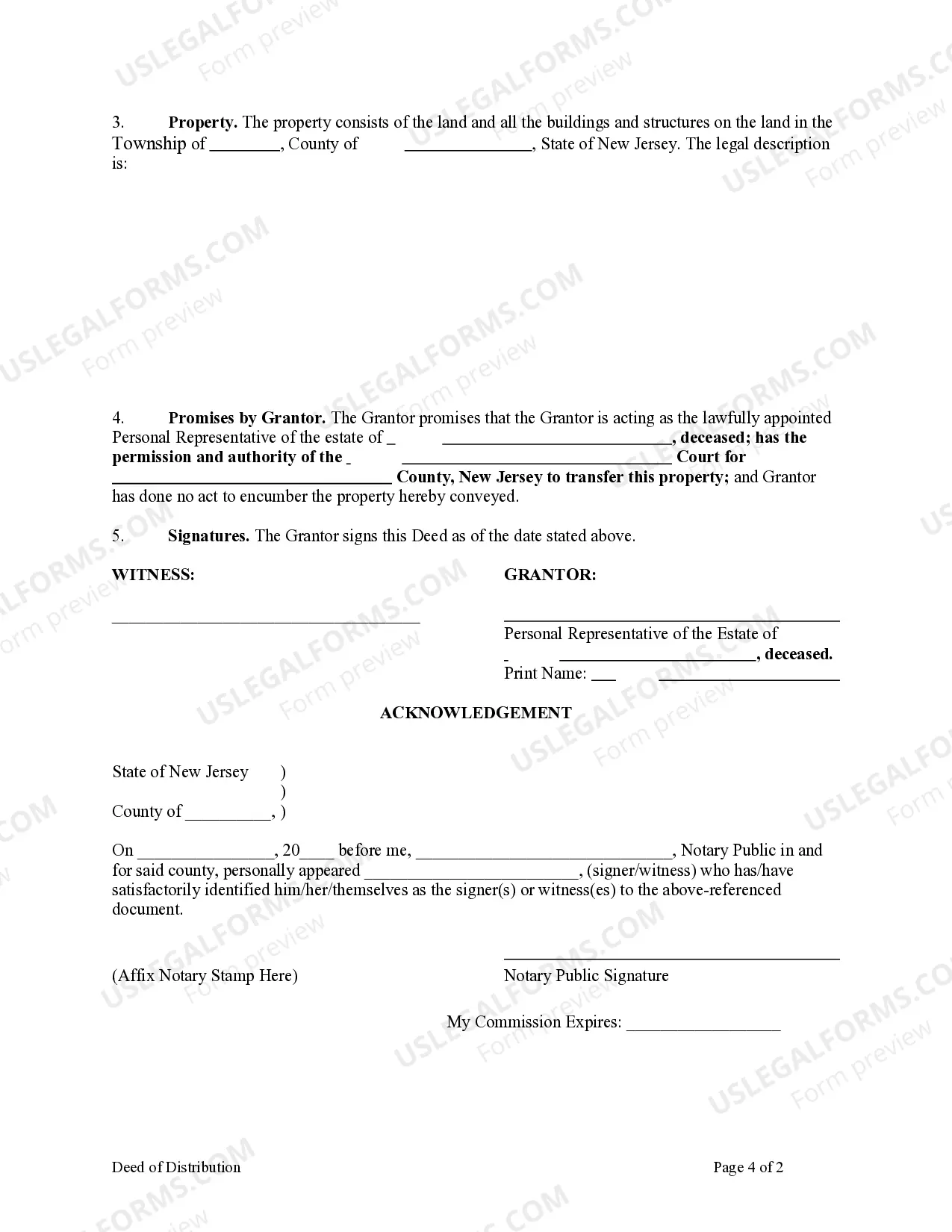
The Deed of Distribution to Three Individuals is a legal document used when a personal representative of an estate transfers property to the beneficiaries. This form serves to officially convey ownership while ensuring that the transfer complies with state laws. It is distinct from other real estate deeds as it specifically addresses distributions from an estate rather than typical property sales or transfers.
What’s included in this form
- Identification of the Grantor (personal representative) and Grantees (beneficiaries).
- Detailed description of the property being transferred.
- Grantor's warranties regarding their authority and the status of the property title.
- Legal compliance with applicable state statutory laws.


Situations where this form applies
This form should be used when an estate is settled and the personal representative has been appointed. It is necessary to officially distribute assets to beneficiaries, especially when multiple individuals are meant to receive portions of the estate. If you are handling the estate of a deceased person and need to transfer real property to three beneficiaries, this deed is essential.
Who needs this form
- Personal representatives or executors of an estate.
- Beneficiaries awaiting property distribution from a deceased individual's estate.
- Estate attorneys or legal professionals involved in the estate administration process.
How to complete this form
- Identify the parties involved: the Grantor and the Grantees.
- Describe the property being transferred clearly.
- Enter the date of the transaction.
- Ensure the Grantor affirms their authority and the status of the property title.
- Complete any additional requirements or filings according to state regulations.
Does this form need to be notarized?
This form must be notarized to be legally valid. US Legal Forms provides secure online notarization powered by Notarize, allowing you to complete the process through a verified video call.
Get your form ready online
Our built-in tools help you complete, sign, share, and store your documents in one place.
Make edits, fill in missing information, and update formatting in US Legal Forms—just like you would in MS Word.
Download a copy, print it, send it by email, or mail it via USPS—whatever works best for your next step.
Sign and collect signatures with our SignNow integration. Send to multiple recipients, set reminders, and more. Go Premium to unlock E-Sign.
If this form requires notarization, complete it online through a secure video call—no need to meet a notary in person or wait for an appointment.
We protect your documents and personal data by following strict security and privacy standards.

Make edits, fill in missing information, and update formatting in US Legal Forms—just like you would in MS Word.

Download a copy, print it, send it by email, or mail it via USPS—whatever works best for your next step.

Sign and collect signatures with our SignNow integration. Send to multiple recipients, set reminders, and more. Go Premium to unlock E-Sign.

If this form requires notarization, complete it online through a secure video call—no need to meet a notary in person or wait for an appointment.

We protect your documents and personal data by following strict security and privacy standards.
Avoid these common issues
- Failing to accurately describe the property being transferred.
- Not ensuring the Grantor has proper authority to make the transfer.
- Ignoring state-specific requirements that may apply to the distribution.
- Leaving out required signatures or dates.
Benefits of using this form online
- Convenience of downloading and completing the form at your own pace.
- Editability allows for easy correction of any errors before finalizing.
- Reliability from using legally reviewed templates created by licensed attorneys.
What to keep in mind
- The Deed of Distribution is crucial for legally transferring property to beneficiaries after settling an estate.
- Accuracy and compliance with state laws are important to ensure the validity of the property transfer.
- Using online templates can streamline the process and reduce errors.
Looking for another form?
Form popularity
FAQ
Be in English or include an English translation (N.J.S.A. Identify the grantor / grantee (N.J.S.A. Be signed by the grantor with the name printed underneath (N.J.S.A. Include the name and mailing address of the grantee (N.J.S.A. Be notarized (N.J.S.A.
An executor is entitled to receive 6% of all income received. (N.J.S.A. 3B:18-13) For example, if an estate receives $50,000 income from stocks and bonds held in a brokerage account. The executor would be entitled to $3,000.
Yes you can. This is called a transfer of equity but you will need the permission of your lender. If you are not married or in a civil partnership you may wish to consider creating a deed of trust and a living together agreement which we can explain to you.
When done properly, a deed is recorded anywhere from two weeks to three months after closing.
Adding someone to your house deed requires the filing of a legal form known as a quitclaim deed. When executed and notarized, the quitclaim deed legally overrides the current deed to your home. By filing the quitclaim deed, you can add someone to the title of your home, in effect transferring a share of ownership.
The simplest way to add a spouse to a deed is through a quitclaim deed. This type of deed transfers whatever ownership rights you have so that you and your spouse now become joint owners. No title search or complex transaction is necessary. The deed will list you as the grantor and you and your spouse as grantees.
It is possible to be named on the title deed of a home without being on the mortgage. However, doing so assumes risks of ownership because the title is not free and clear of liens and possible other encumbrances.If a mortgage exists, it's best to work with the lender to make sure everyone on the title is protected.
Any creditor who wishes to make a claim against the estate's assets must do so within 9 months under New Jersey law. The 9 months begins on the date of debtor's death. The executor/personal representative cannot distribute assets to beneficiaries until all claims are satisfied.
To add a co-owner, the bank would have to create a new home loan agreement, which must be registered after paying the due stamp duty and registration charges. The bank would also insist on making the co-owner a co-borrower in the home loan applicable.