New Jersey Renunciation And Disclaimer of Property received by Intestate Succession
What is this form?
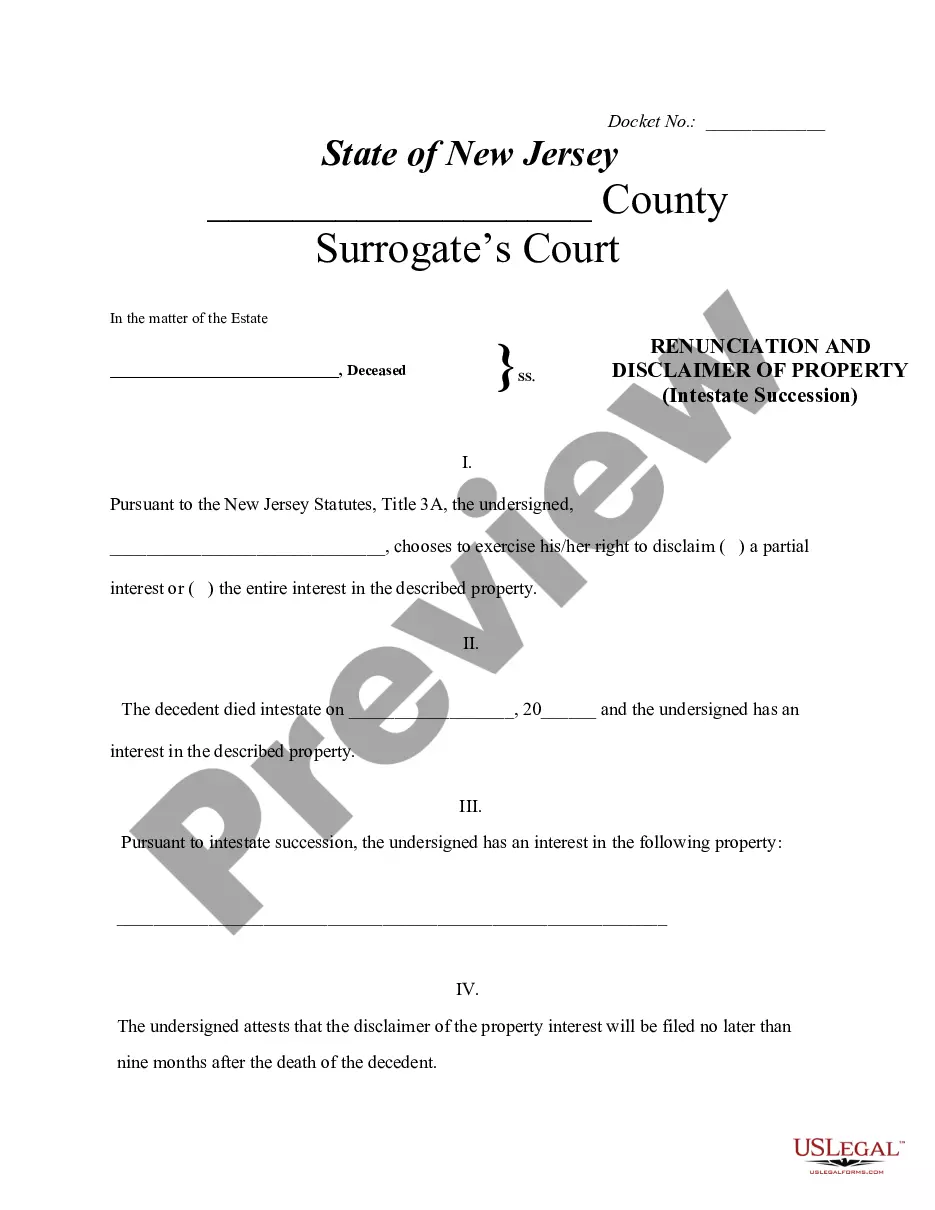
The Renunciation and Disclaimer of Property received by Intestate Succession is a legal document used by individuals who inherit property from a deceased person who did not leave a will. By completing this form, a beneficiary can legally refuse to accept all or part of their inheritance, which can simplify the distribution of assets and help avoid potential tax implications. This form is specifically governed by New Jersey Statutes, Title 3A, distinguishing it from similar disclaimers in other jurisdictions.
Key parts of this document
- Declaration of intent to disclaim a partial or entire interest in the property.
- Details regarding the decedent, including the date of death.
- A description of the property being disclaimed.
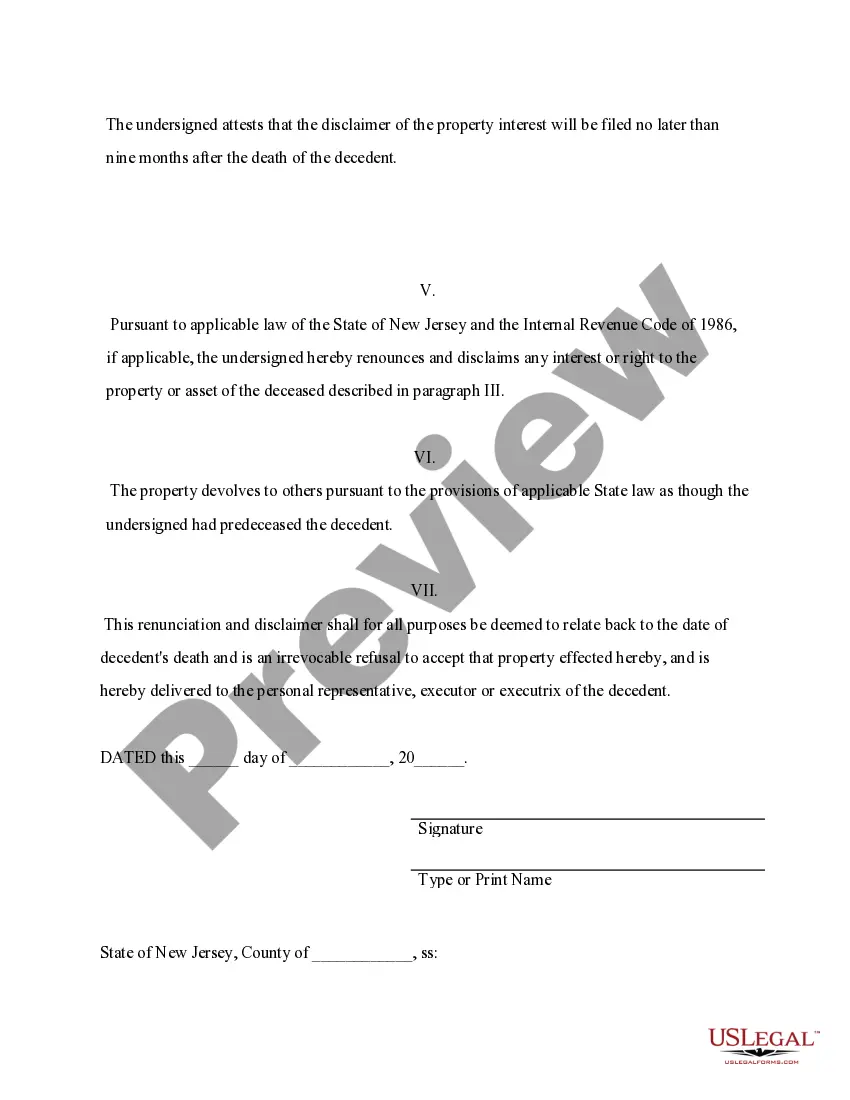
- Confirmation that the disclaimer will be filed within nine months of the decedent's death.
- A statement of how the property will be distributed following the disclaimer.
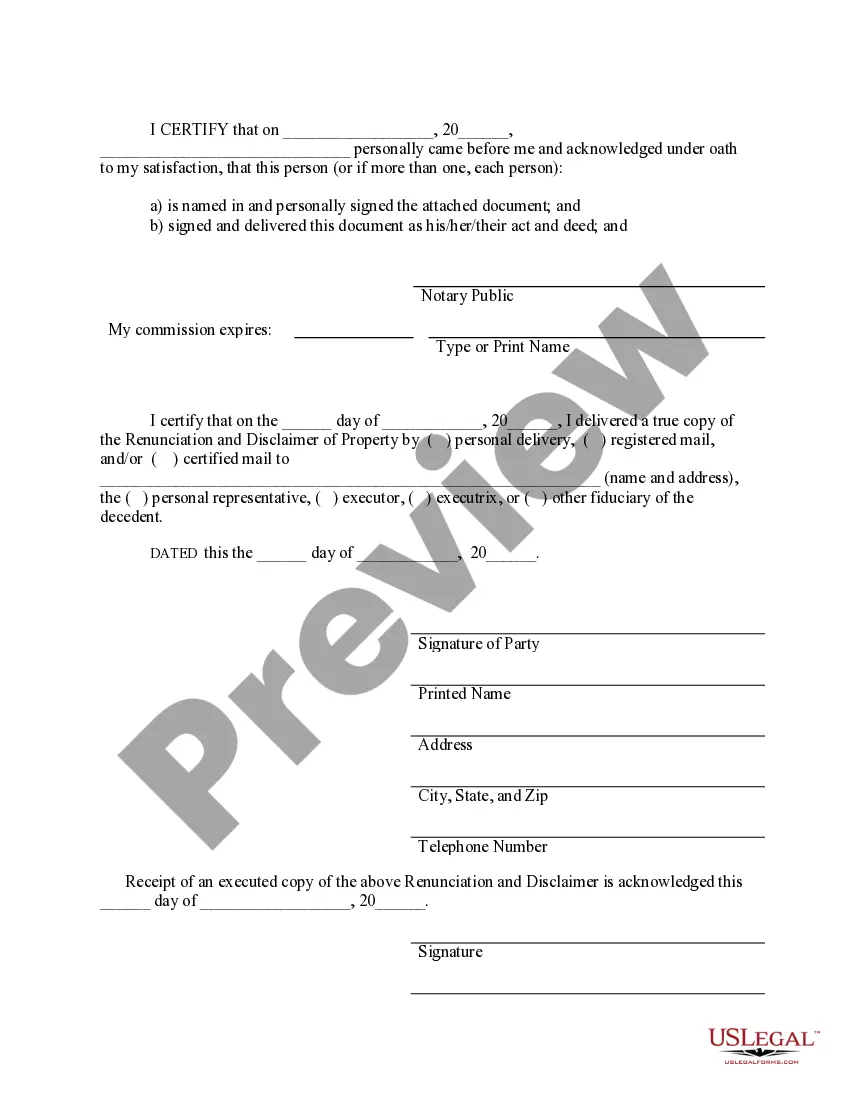
- Signature and date of the individual disclaiming the property.
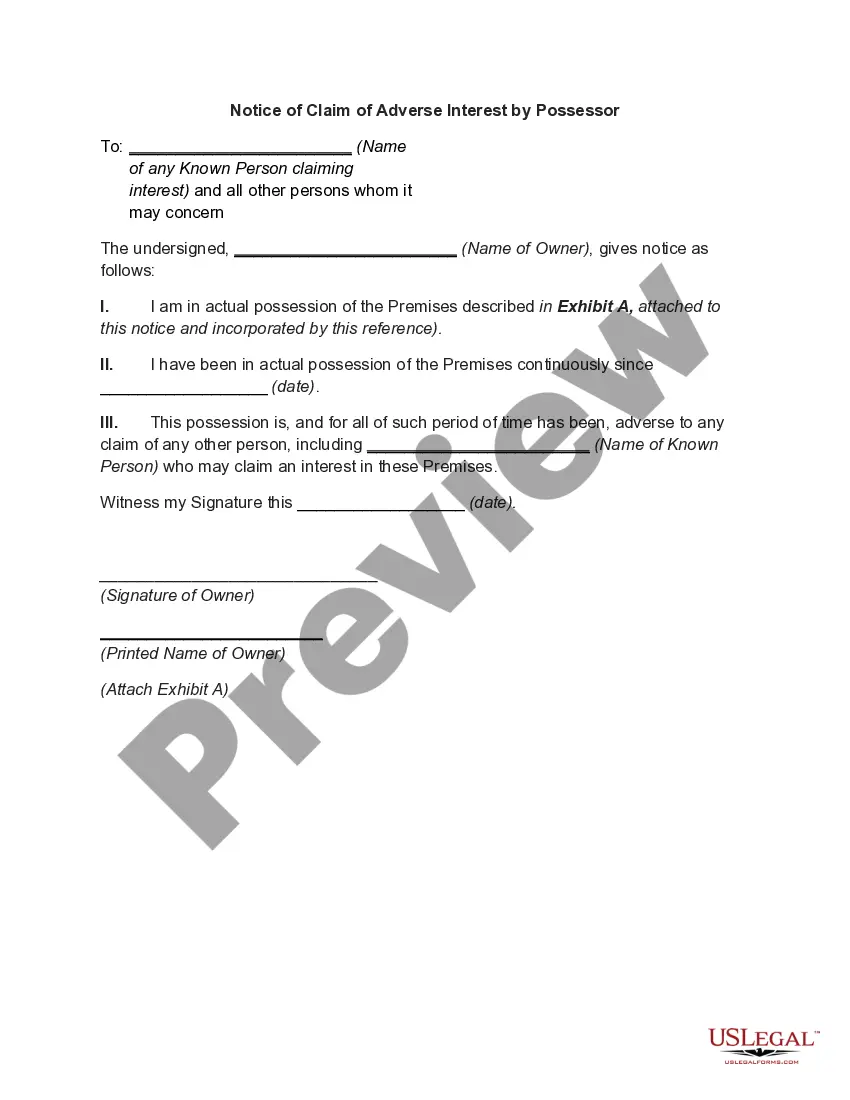
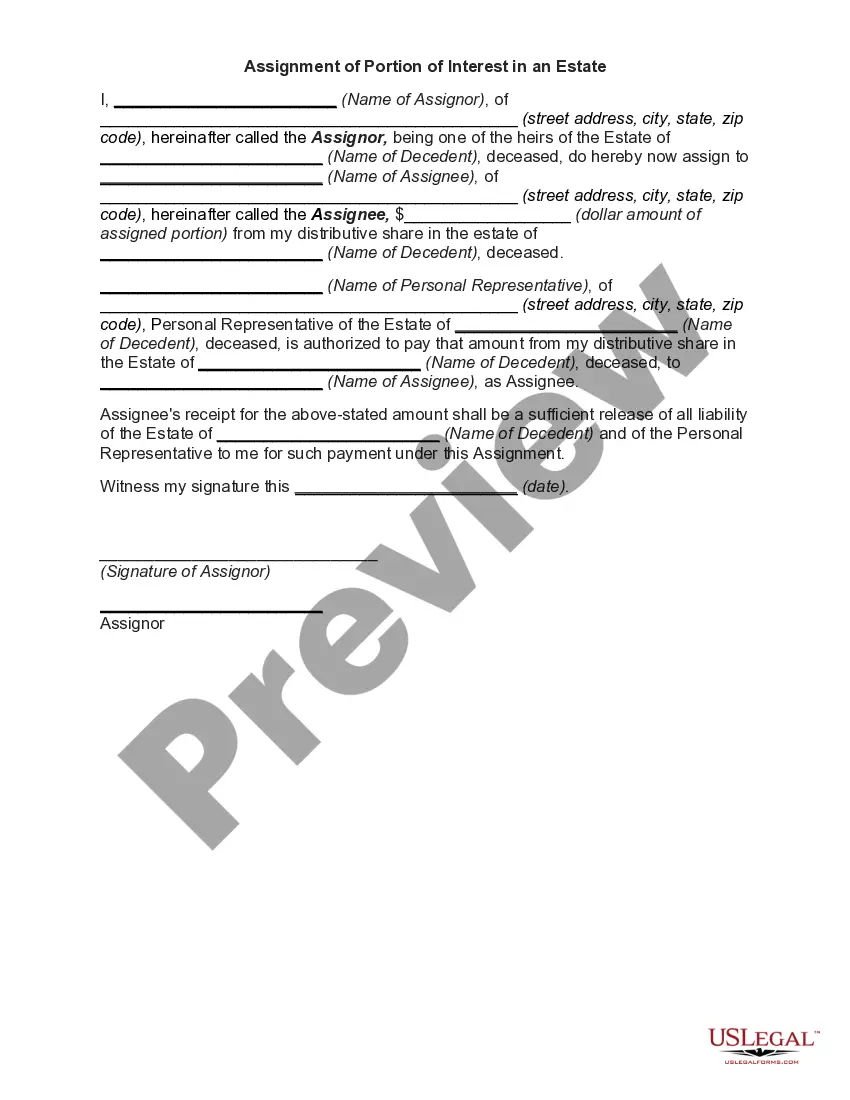

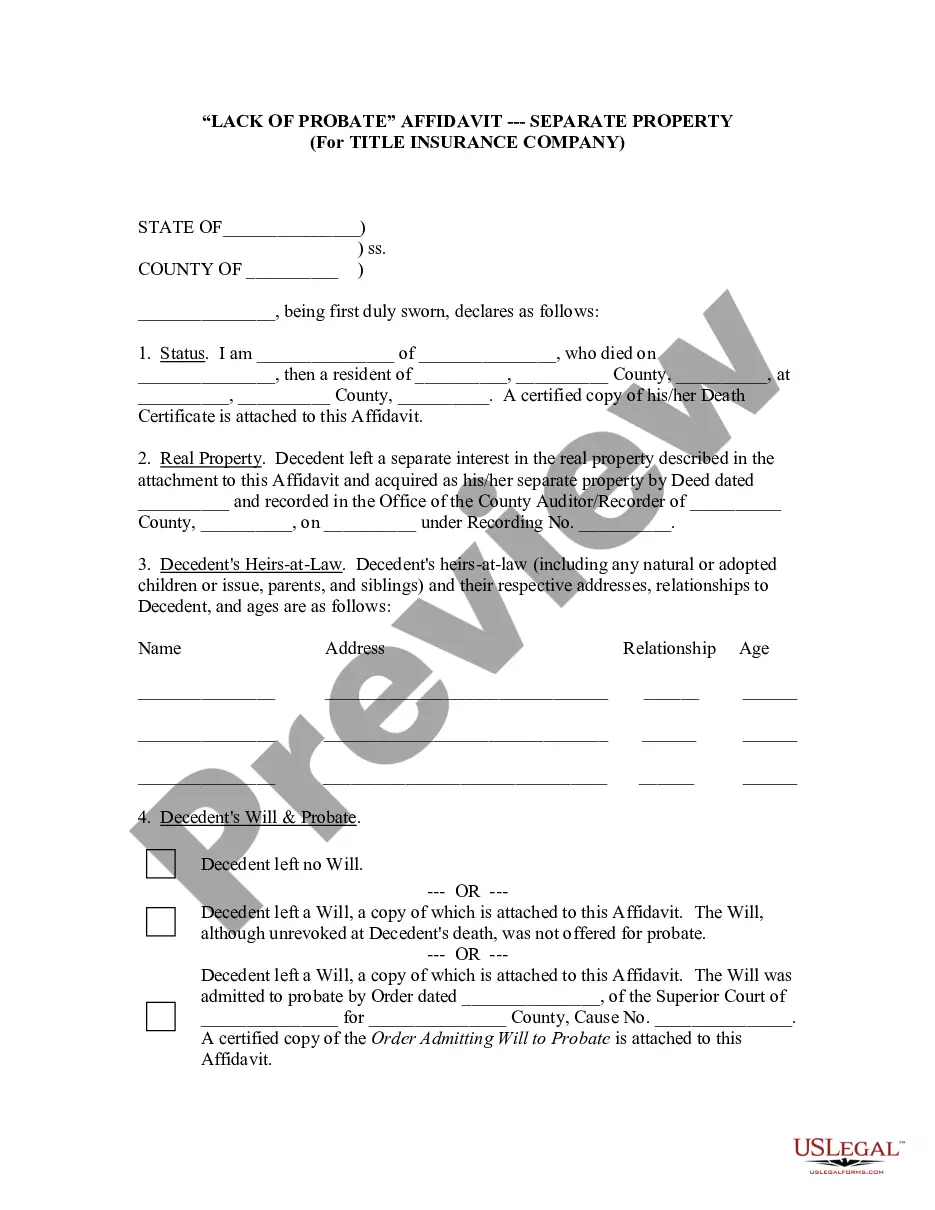
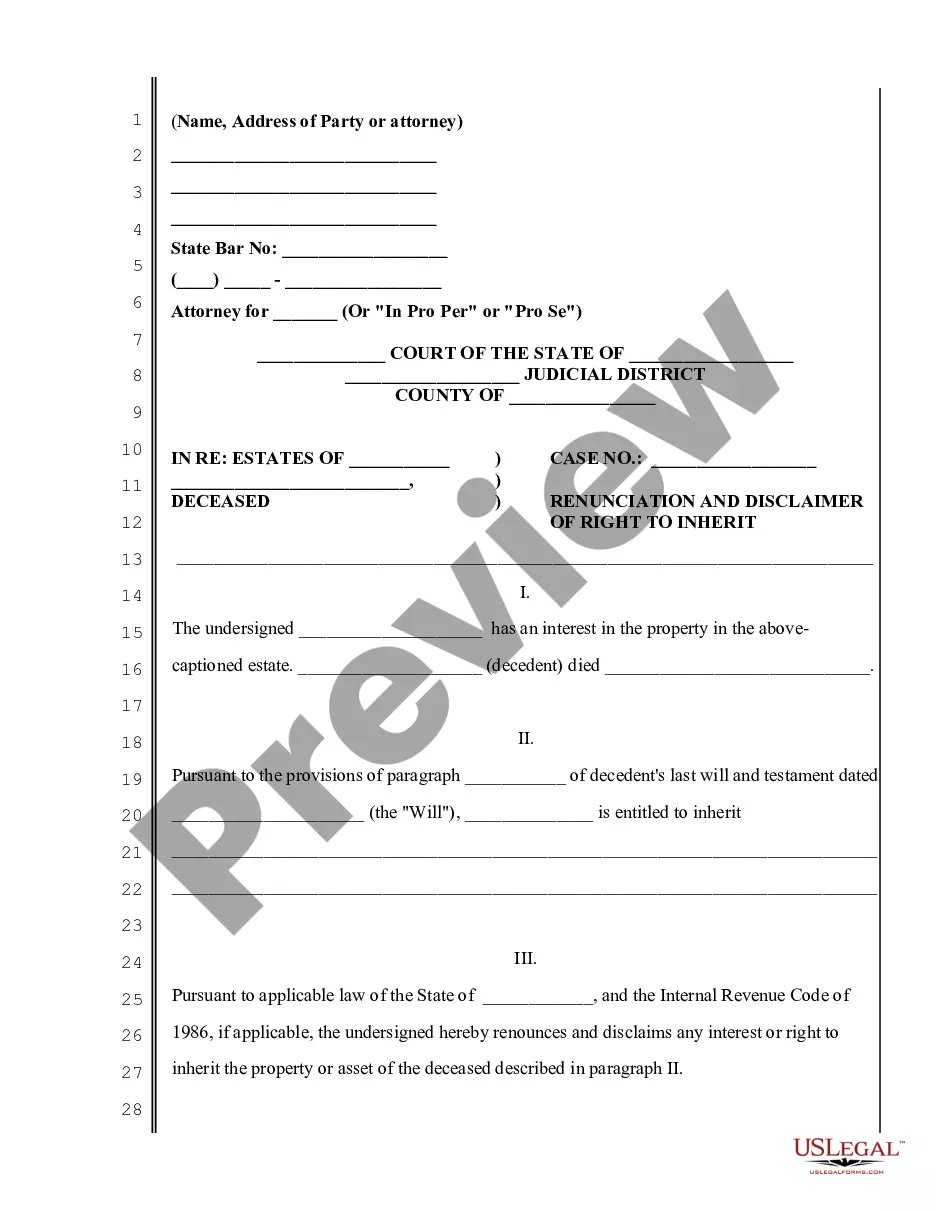
Situations where this form applies
This form should be used when a beneficiary of an estate wishes to refuse inheritance rights to property received through intestate succession. It is particularly relevant if the beneficiary may not want to take on potential debts associated with the property or if they prefer that it passes to another heir. Filing this disclaimer correctly can ensure that the property is distributed according to New Jersey law.
Who needs this form
- Beneficiaries of an estate who have received property through intestate succession.
- Individuals seeking to legally refuse all or part of an inheritance.
- Individuals who want to comply with state-specific laws regarding property disclaimers.
Instructions for completing this form
- Fill in the name of the deceased individual and their date of death.
- Indicate whether you are disclaiming a partial or total interest in the property.
- Provide a clear description of the property you are choosing to disclaim.
- Sign and date the document to officially execute the disclaimer.
- Ensure that the completed form is submitted within nine months of the decedent's death.
Does this form need to be notarized?
To make this form legally binding, it must be notarized. Our online notarization service, powered by Notarize, lets you verify and sign documents remotely through an encrypted video session.
Get your form ready online
Our built-in tools help you complete, sign, share, and store your documents in one place.
Make edits, fill in missing information, and update formatting in US Legal Forms—just like you would in MS Word.
Download a copy, print it, send it by email, or mail it via USPS—whatever works best for your next step.
Sign and collect signatures with our SignNow integration. Send to multiple recipients, set reminders, and more. Go Premium to unlock E-Sign.
If this form requires notarization, complete it online through a secure video call—no need to meet a notary in person or wait for an appointment.
We protect your documents and personal data by following strict security and privacy standards.

Make edits, fill in missing information, and update formatting in US Legal Forms—just like you would in MS Word.

Download a copy, print it, send it by email, or mail it via USPS—whatever works best for your next step.

Sign and collect signatures with our SignNow integration. Send to multiple recipients, set reminders, and more. Go Premium to unlock E-Sign.

If this form requires notarization, complete it online through a secure video call—no need to meet a notary in person or wait for an appointment.

We protect your documents and personal data by following strict security and privacy standards.
Common mistakes to avoid
- Failing to file the disclaimer within the nine-month deadline.
- Leaving sections incomplete, which can lead to delays or rejection.
- Not providing a clear description of the property being disclaimed.
Why complete this form online
- Convenient access to download and complete the form anytime.
- Editable templates make it easy to customize your disclaimer as needed.
- Secure and reliable process ensures your legal documents are handled appropriately.
Looking for another form?
Form popularity
FAQ
1Put the disclaimer in writing.2Deliver the disclaimer to the person in control of the estate usually the executor or trustee.3Complete the disclaimer within nine months of the death of the person leaving the property.4Do not accept any benefit from the property you're disclaiming.
"Errors and omissions" disclaimer "The author assumes no responsibility or liability for any errors or omissions in the content of this site. The information contained in this site is provided on an "as is" basis with no guarantees of completeness, accuracy, usefulness or timeliness..."
1a : a denial or disavowal of legal claim : relinquishment of or formal refusal to accept an interest or estate. b : a writing that embodies a legal disclaimer. 2a : denial, disavowal. b : repudiation.
Fill in all the necessary information on the right sidebar. Click Generate at the end. Done! Your Disclaimer has been generated.
They also had to sign a disclaimer saying that they would not put his information to use. She said she was coerced by an officer into signing a disclaimer saying she would not take her complaint further. That's why we issue a disclaimer with our referrals.
If you want to put a disclaimer, some sort of author's note is always an acceptable thing to do. However, a better and more fluent way to do it would be by including it in an attention getter or another sentence early on in the essay. Phrase it in a way that clearly shows what the word represents in the essay.
Put your disclaimer where users can easily find it. You can put your disclaimer or disclaimers on a separate page, then link to that page in your website menu, website footer, or impressum page if you have one. You should also put your disclaimers on relevant content.
In your disclaimer, cover any and all liabilities for the product or service that you provide. You should warn consumers of any dangers or hazards posed by your product. You should list specific risks while at the same time acknowledging that the list is not exhaustive. For example, you could write, NOTICE OF RISK.
A disclaimer is generally any statement intended to specify or delimit the scope of rights and obligations that may be exercised and enforced by parties in a legally recognized relationship.