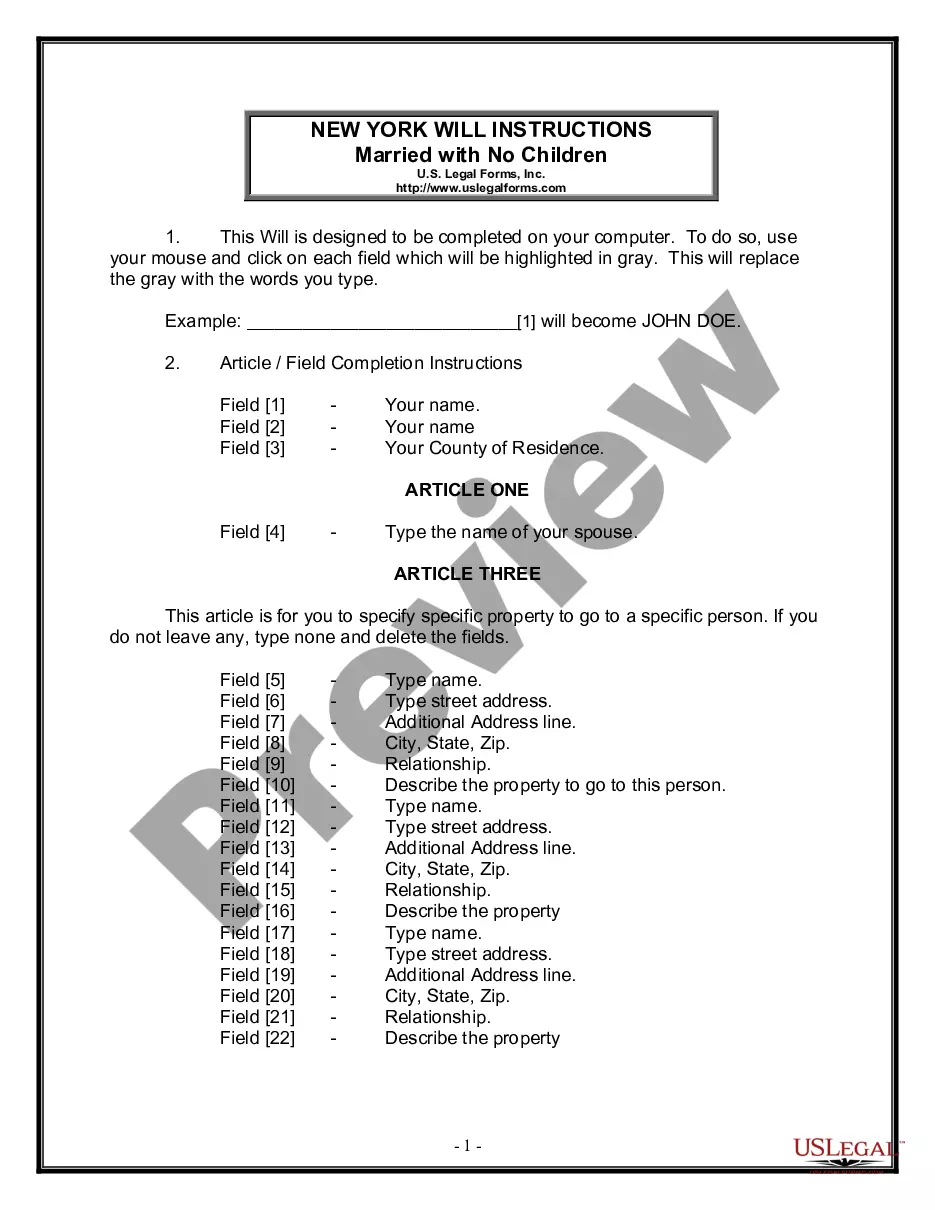
New Jersey Commercial Building or Space Lease
What this document covers
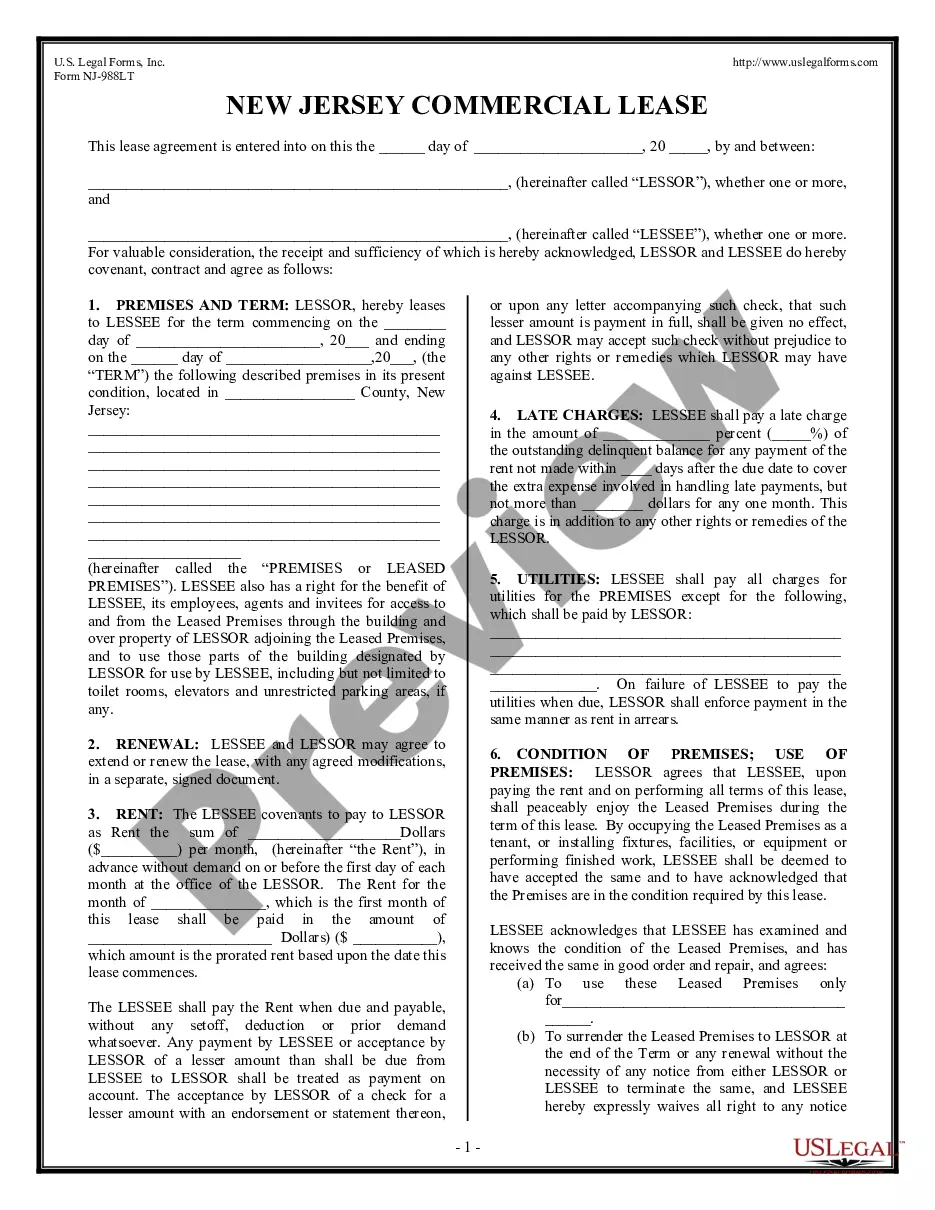
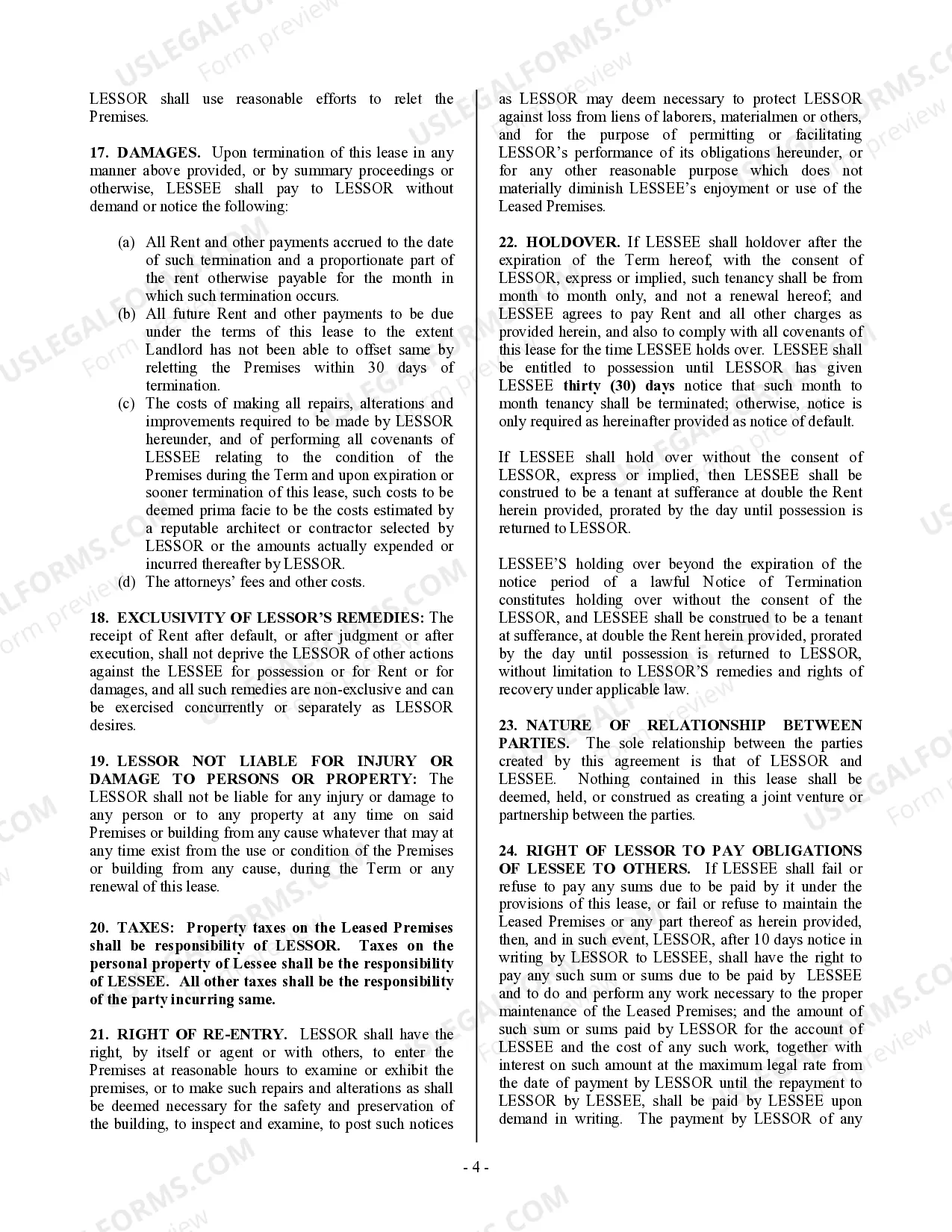
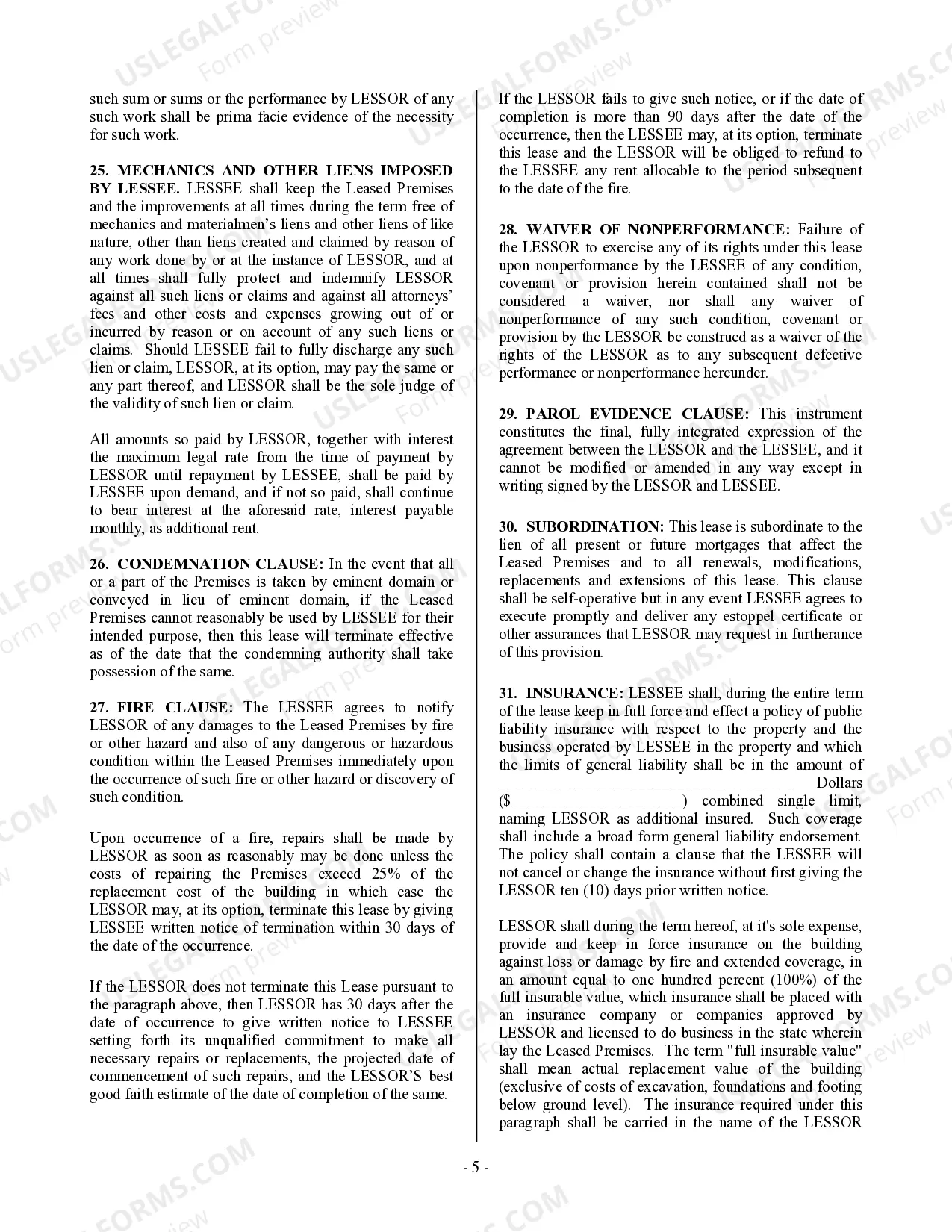
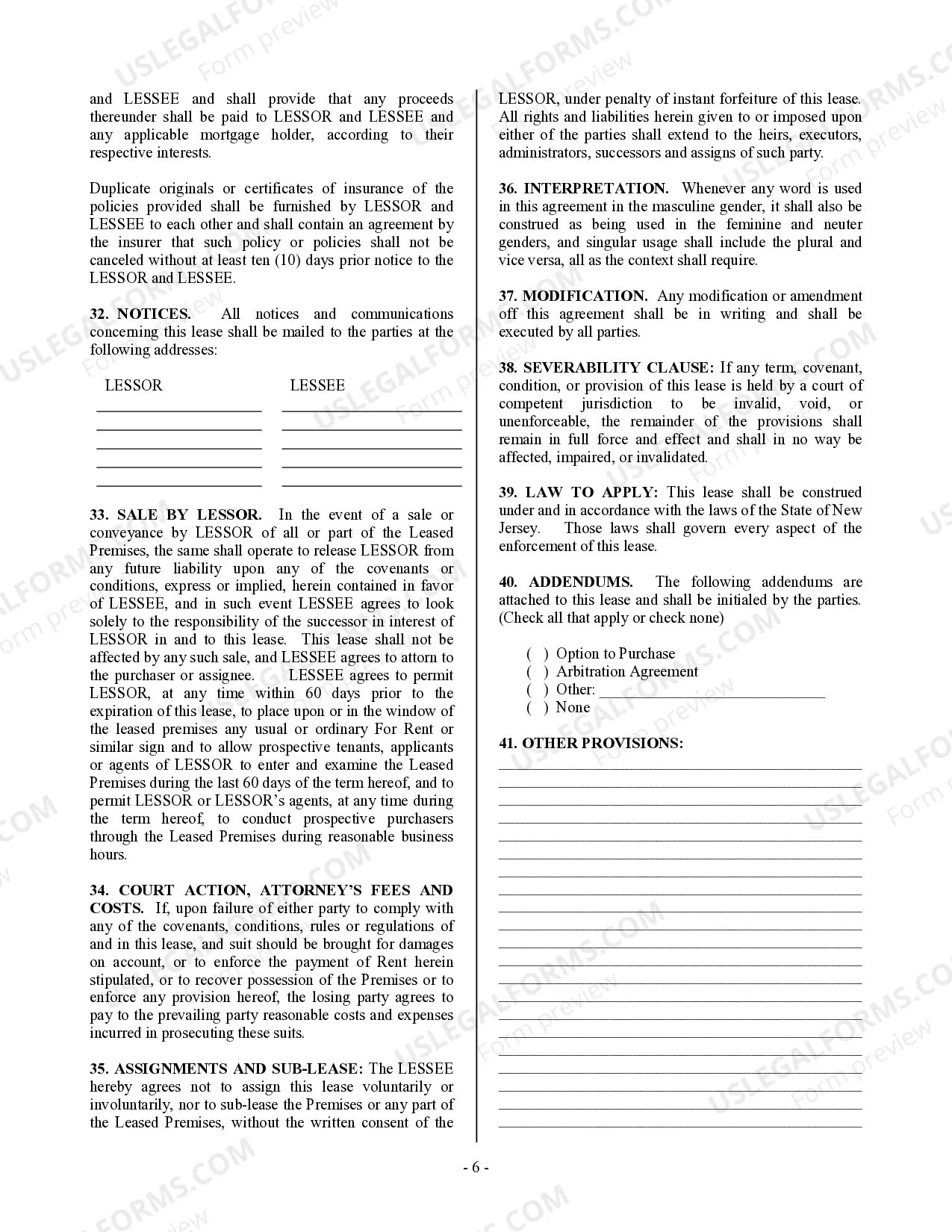
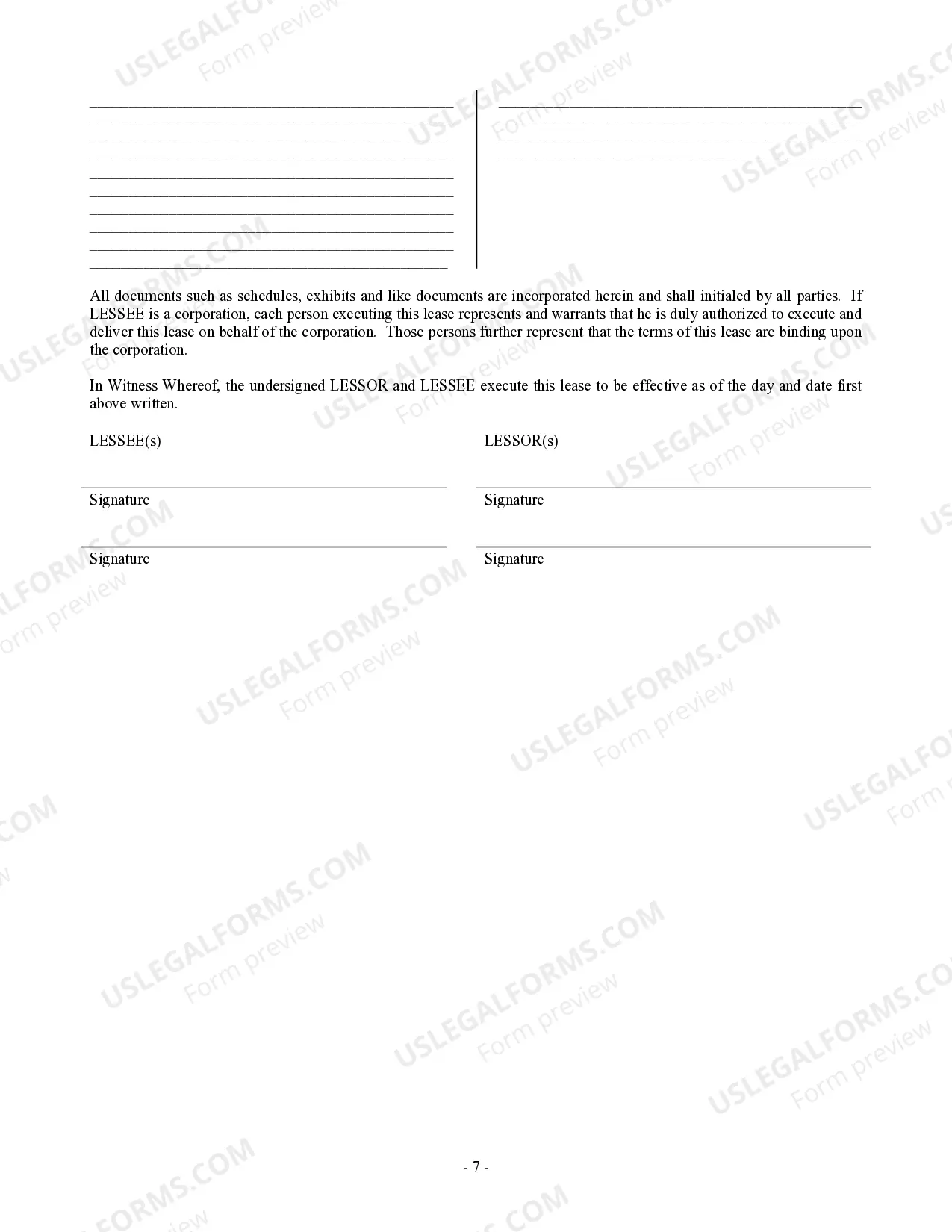
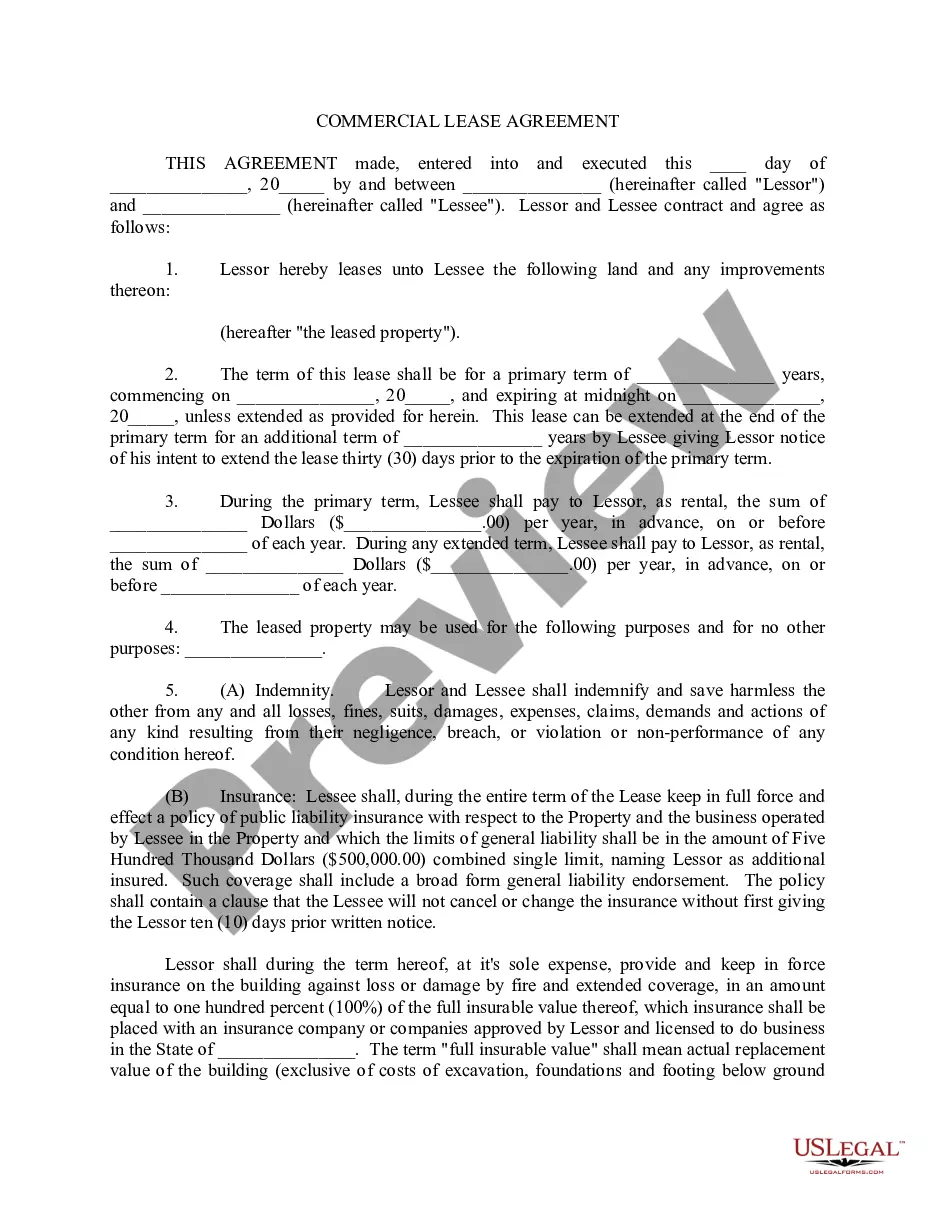
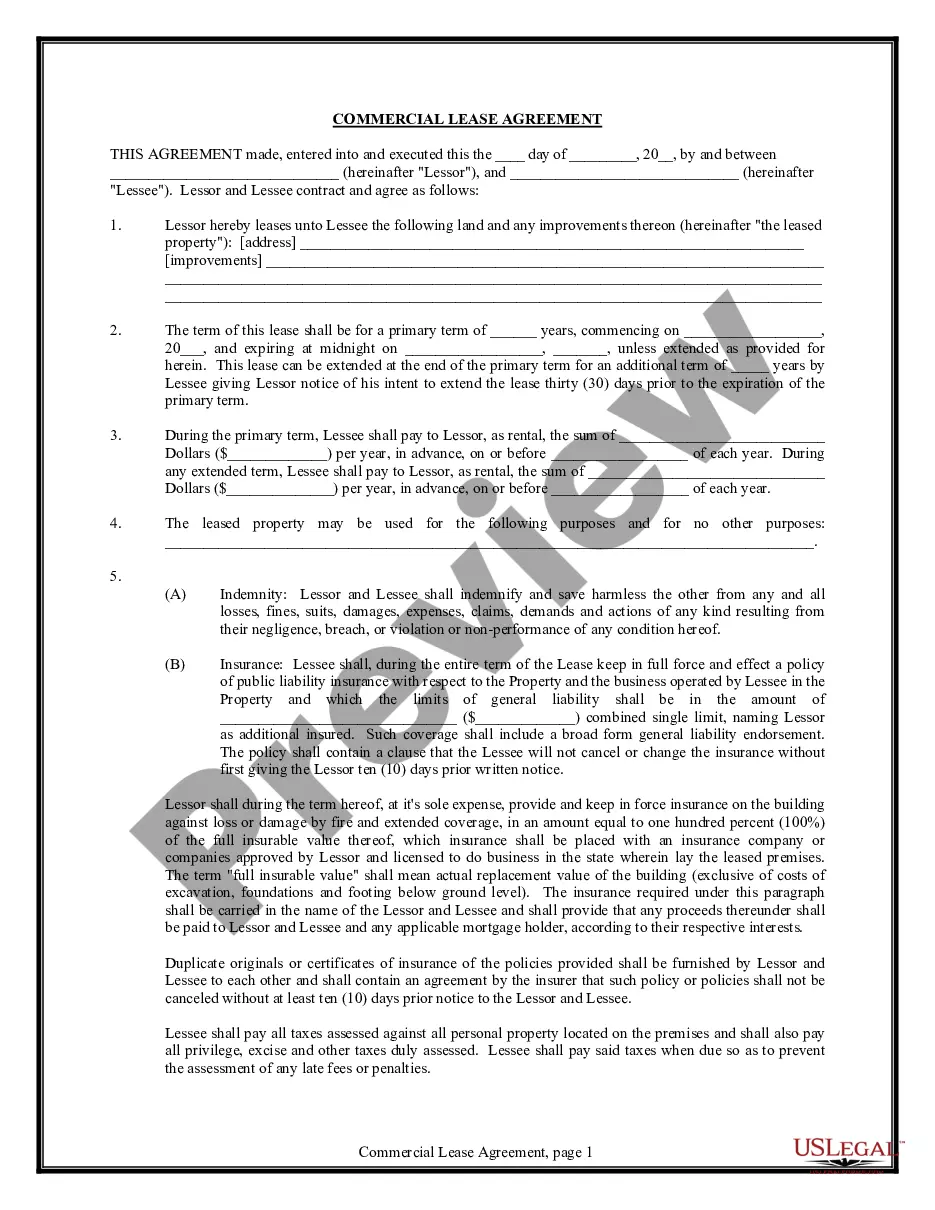
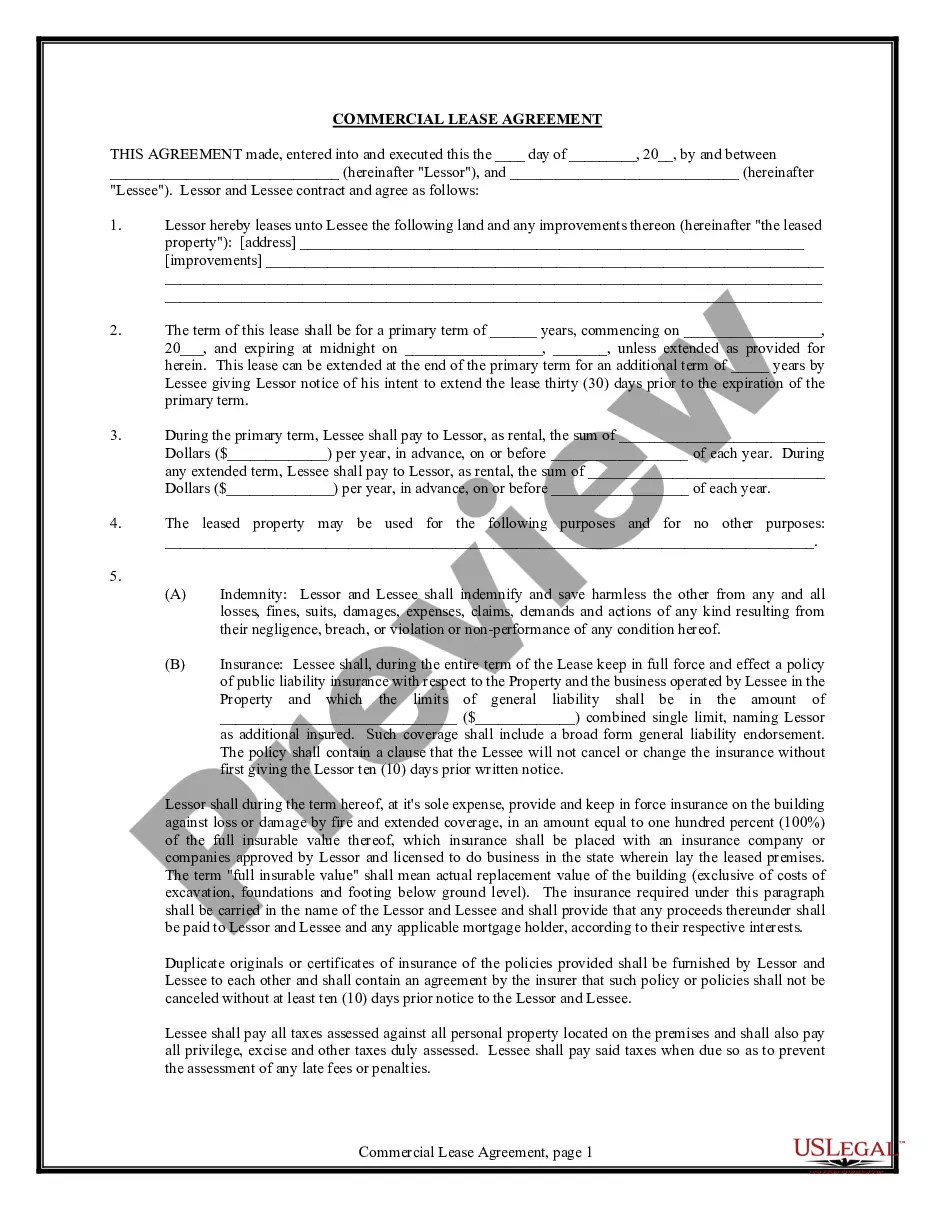
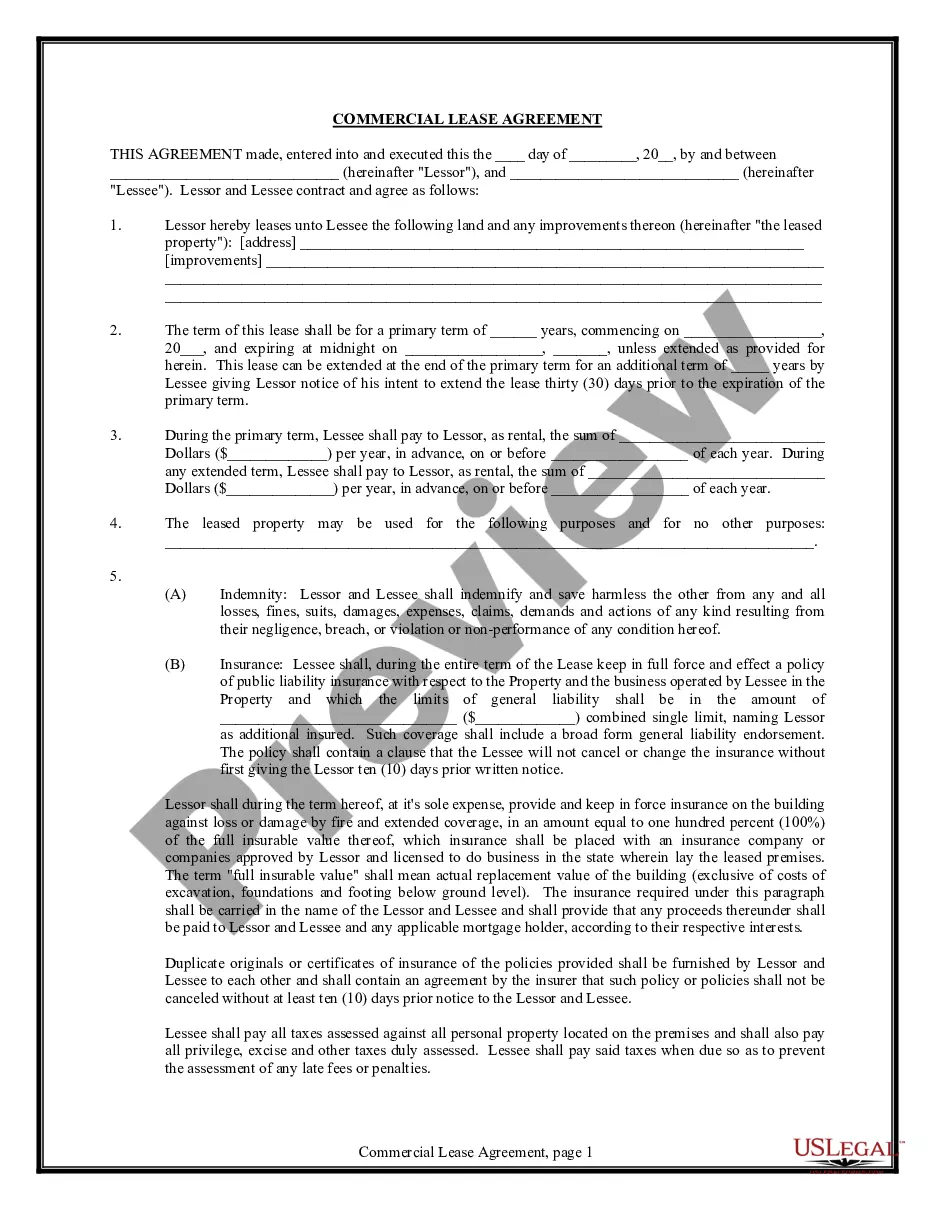
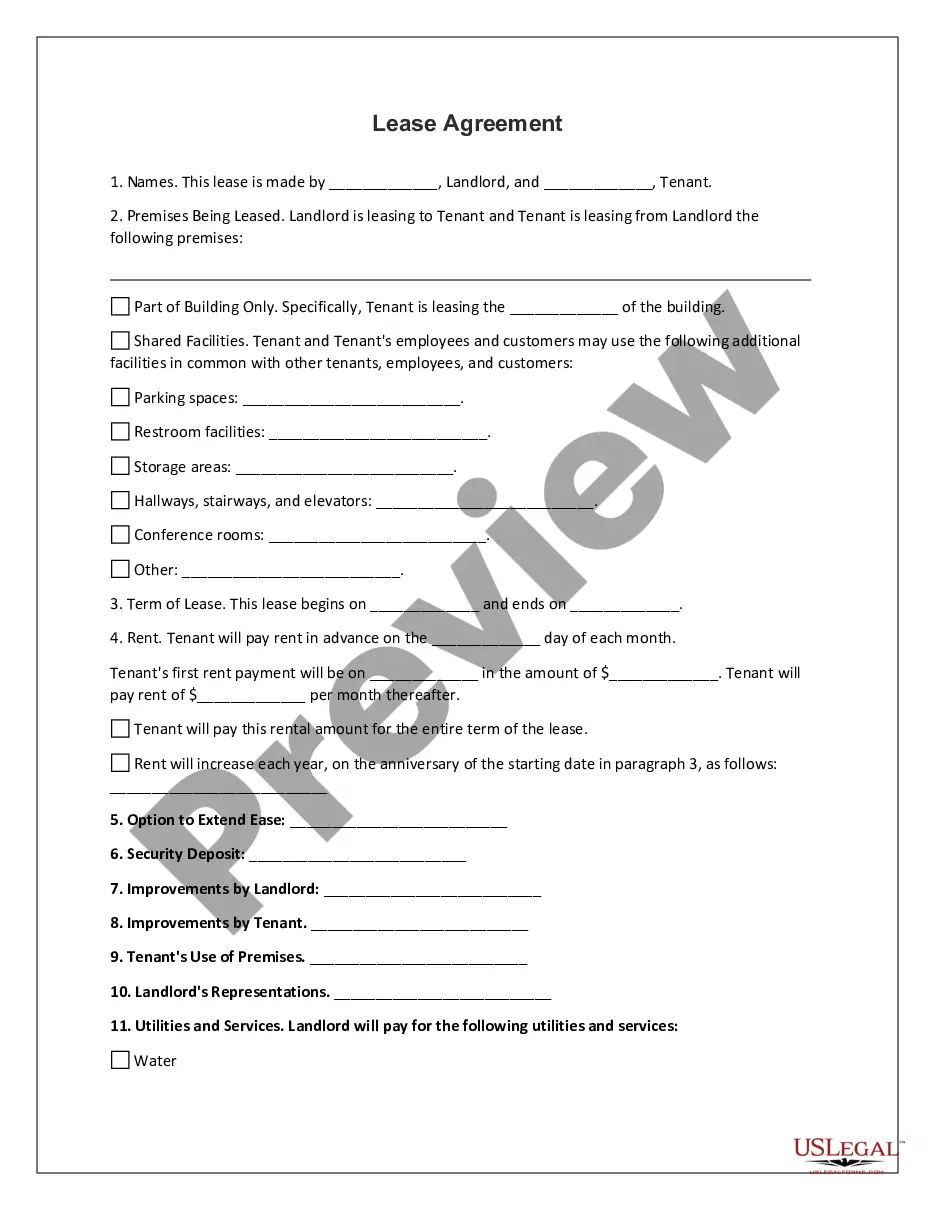
The Commercial Building or Space Lease is a detailed legal document designed for leasing commercial property in New Jersey. This form outlines the responsibilities and rights of both the lessor (landlord) and lessee (tenant), covering essential aspects such as the lease term, rent payment, and conditions of the premises. Unlike residential leases, this commercial lease accommodates business operations, making it vital for establishing clear agreements in a commercial setting.
Form components explained
- Parties involved: Identification of the lessor and lessee.
- Premises and term: Details about the leased property and duration of the lease.
- Rent: Specifications on payment amount and schedule.
- Utilities: Responsibilities for utility costs and payments.
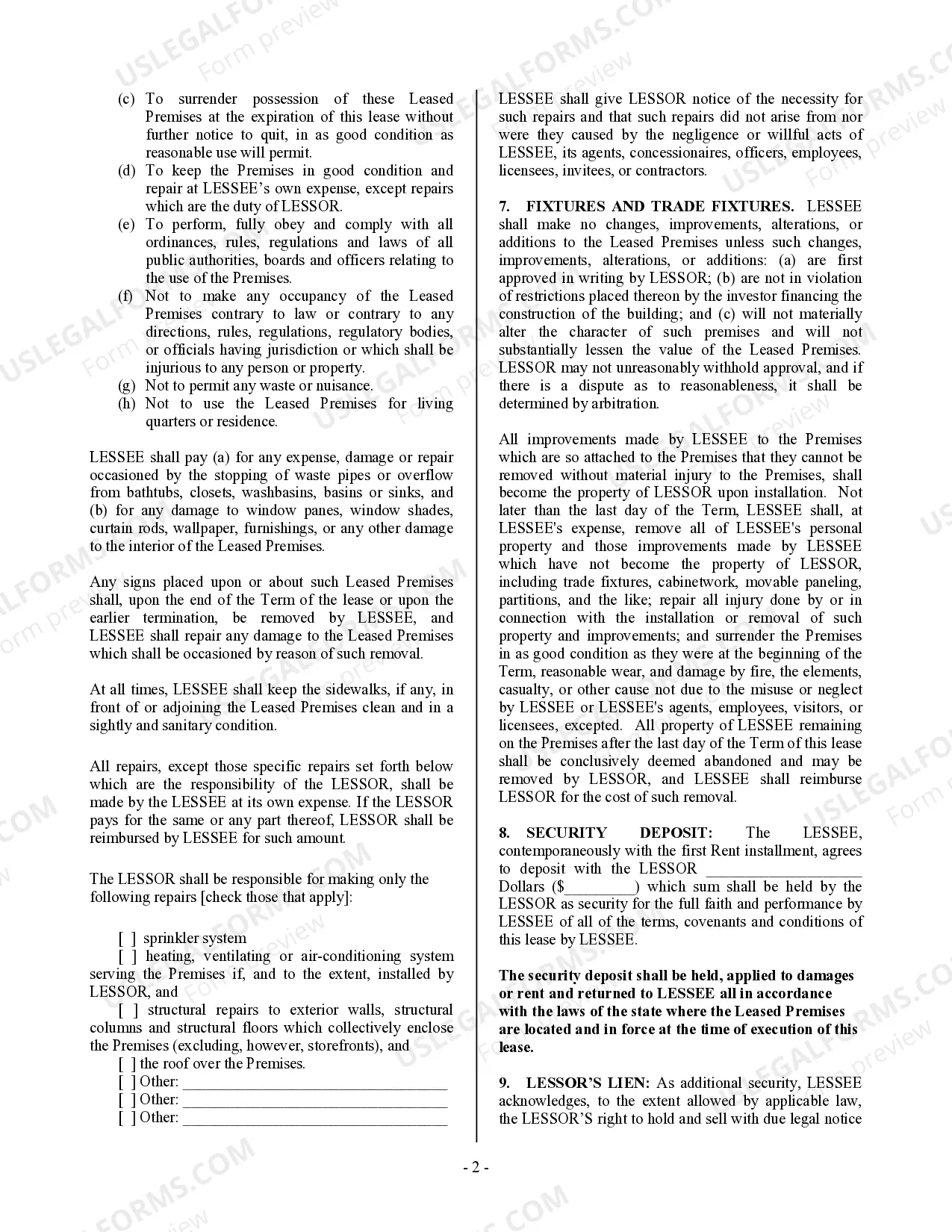
- Condition and use of premises: Obligations regarding property upkeep and permitted uses.
- Security deposit: Terms regarding the deposit held by the lessor.
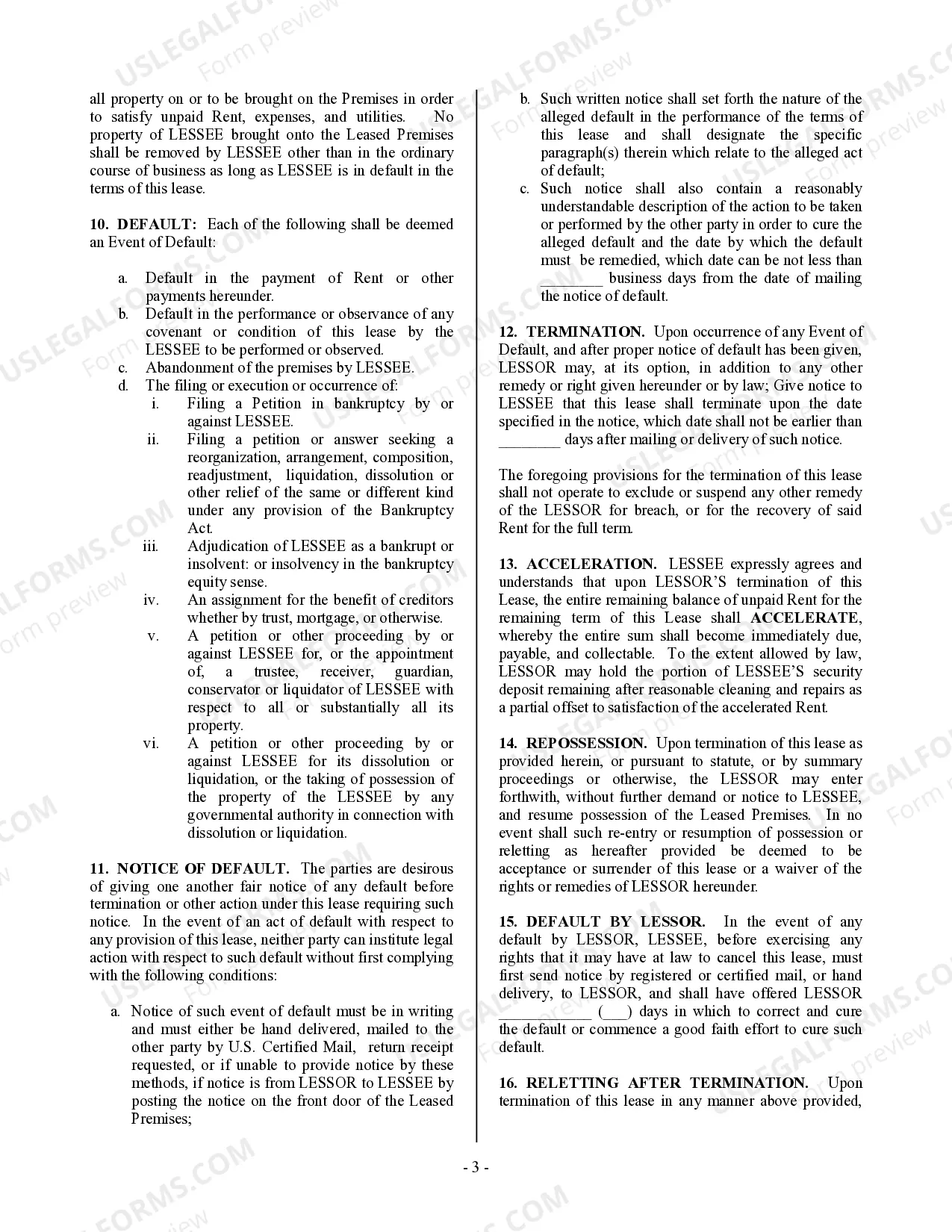
- Default and termination: Conditions that lead to lease termination and default procedures.
When to use this form
This form is necessary when a business seeks to lease commercial property for its operations. Use this form when you want to establish a clear contractual relationship that details the terms of the lease, including payment, use of space, and responsibilities for maintenance. It is suitable for businesses looking to rent office space, retail locations, warehouses, or any other commercial premises.
Intended users of this form
- Business owners seeking commercial space for lease.
- Property owners or investors leasing their commercial property.
- Legal representatives drafting or reviewing lease agreements for businesses.
- Anyone negotiating commercial lease terms looking to document their agreement legally.
How to prepare this document
- Identify the parties: Fill in the names and addresses of the lessor and lessee.
- Specify the property: Enter a detailed description of the leased premises.
- Determine lease term: Indicate the start and end dates of the lease.
- Set rental terms: Clearly state the monthly rent and due dates for payments.
- Outline deposit and conditions: Specify the security deposit amount and any conditions for property use.
Does this document require notarization?
In most cases, this form does not require notarization. However, some jurisdictions or signing circumstances might. US Legal Forms offers online notarization powered by Notarize, accessible 24/7 for a quick, remote process.
Common mistakes to avoid
- Failing to clearly define the leased premises or including ambiguous descriptions.
- Not detailing all financial obligations, such as utilities and late charges.
- Overlooking the renewal and termination provisions, which can lead to disputes later.
Benefits of using this form online
- Convenient access: Download and fill out the form at your convenience without needing a physical visit.
- Editability: Easily customize the form to suit your specific lease terms and conditions.
- Reliable legal framework: The form is drafted by licensed attorneys, ensuring legal accuracy and enforceability.
What to keep in mind
- The Commercial Building or Space Lease is essential for formalizing agreements between landlords and tenants.
- Completing the lease correctly prevents potential disputes regarding terms and conditions.
- Using this form helps comply with New Jersey's commercial leasing laws.


Form popularity
FAQ
When a commercial office property is sold, the new owner has an expectation of returns on the property.You don't need to sign a new lease with the new owner, although the new owner may offer short term rent reductions or other concessions for tenants who extend their lease term or expand their square footage.
Even if the landlord sells the property, the lease would survive the sale of the property and the new landlord would step in the shoes of the old landlord and take on the responsibilities and the rights of the previous landlord without having to sign a new lease with the current tenant.
The process for retailers qualifying for a commercial lease can vary from landlord to landlord. Landlords consider several factors including tenant mix, personal credit history of the owner, company balance sheet, profit and loss statements, open credit lines, and growth projections.
A Triple Net Lease (NNN Lease) is the most common type of lease in commercial buildings. In a NNN lease, the rent does not include operating expenses. Operating expenses include utilities, maintenance, property taxes, insurance and property management.
Your lease remains valid in case a rental property is sold, and your former landlord is obliged to provide you with a name and address of a new landlord.This means that tenants cannot be forced to leave or asked to pay a different rent until the current lease expires.
What happens to your tenancy? Nothing will happen to your tenancy during the contractual term. Your landlord's interest will be sold subject to any existing leases, which means that the buyer will inherit you as a tenant and become your new landlord.
If the commercial tenant is a shell corporation and/or does not have any assets of value, the commercial tenant may choose to walk away from its commercial lease obligations.Often the landlord will require guarantees in order to prevent a commercial tenant from walking away from its lease obligations.
Summary. There are different types of leases, but the most common types are absolute net lease, triple net lease, modified gross lease, and full-service lease. Tenants and proprietors need to understand them fully before signing a lease agreement.