New Jersey Utility Easement Agreement
What is this form?
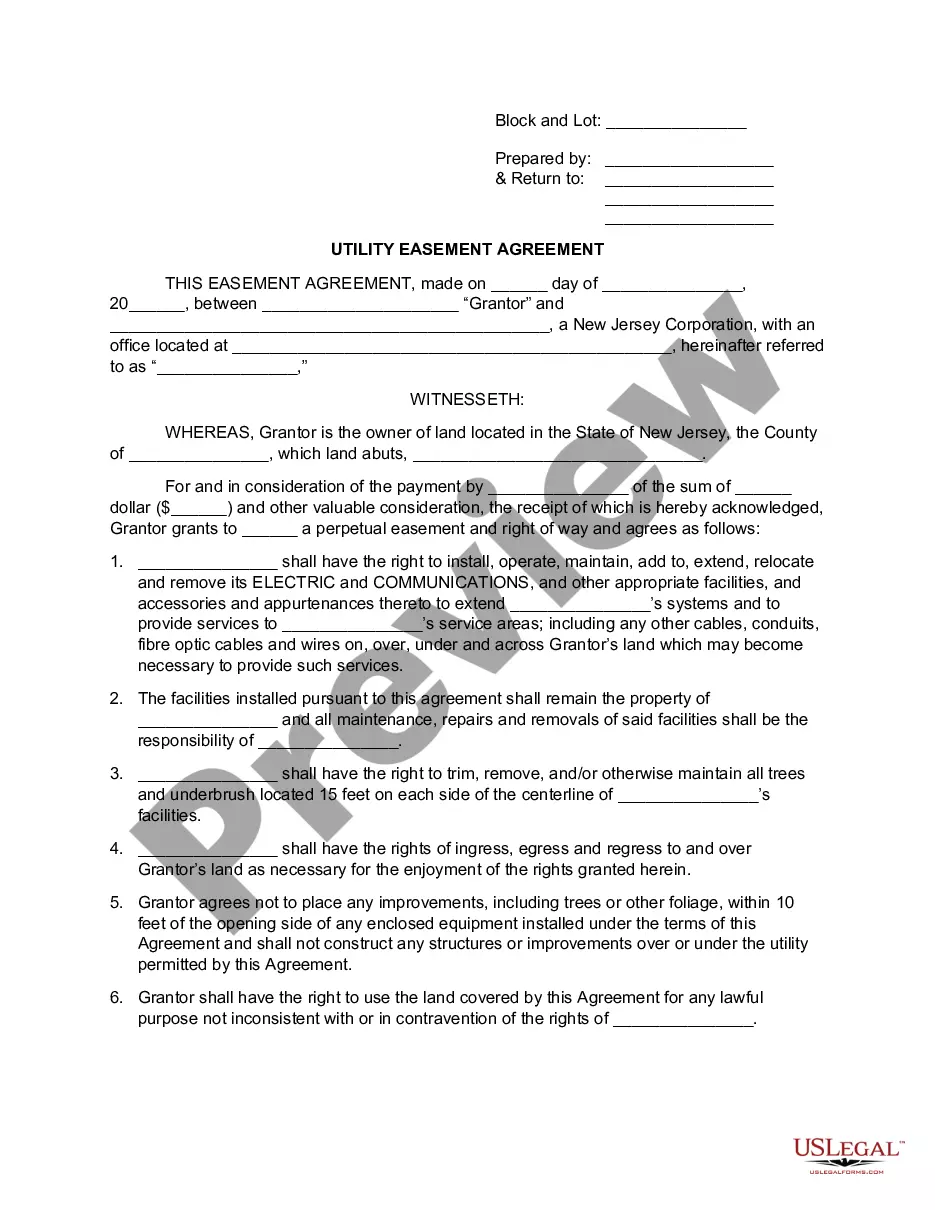
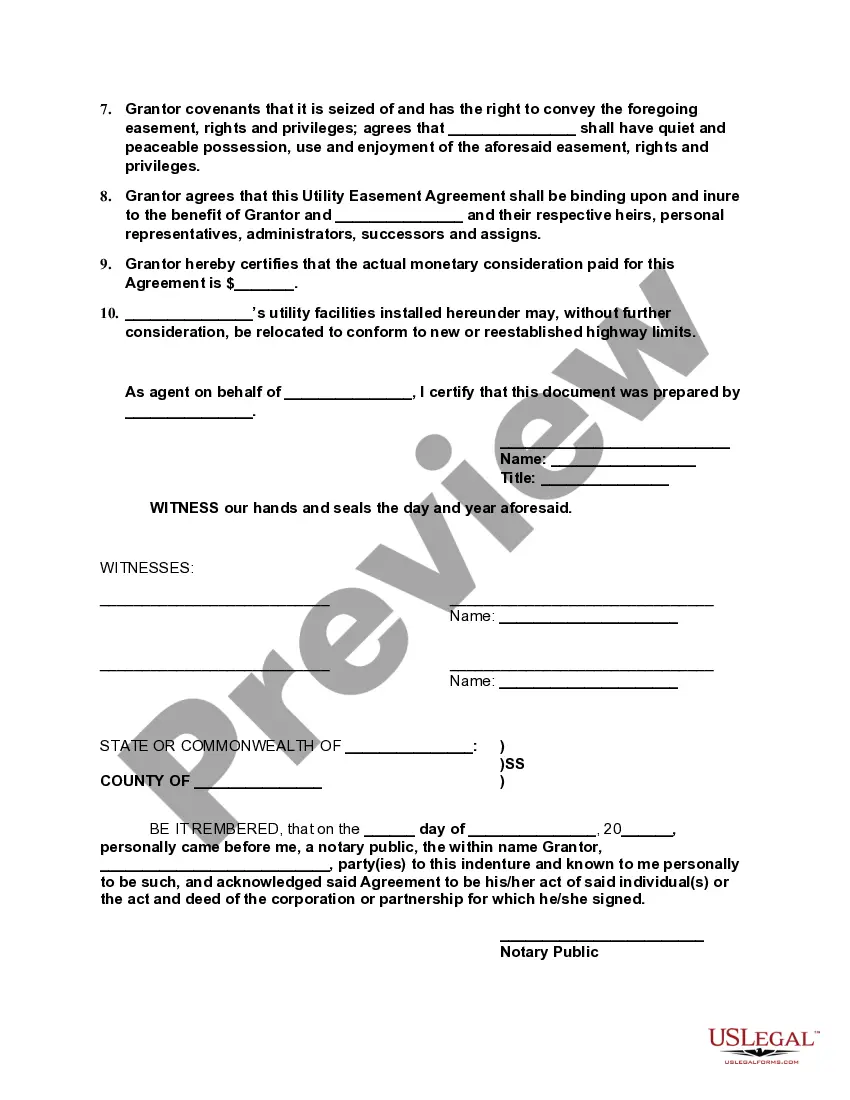
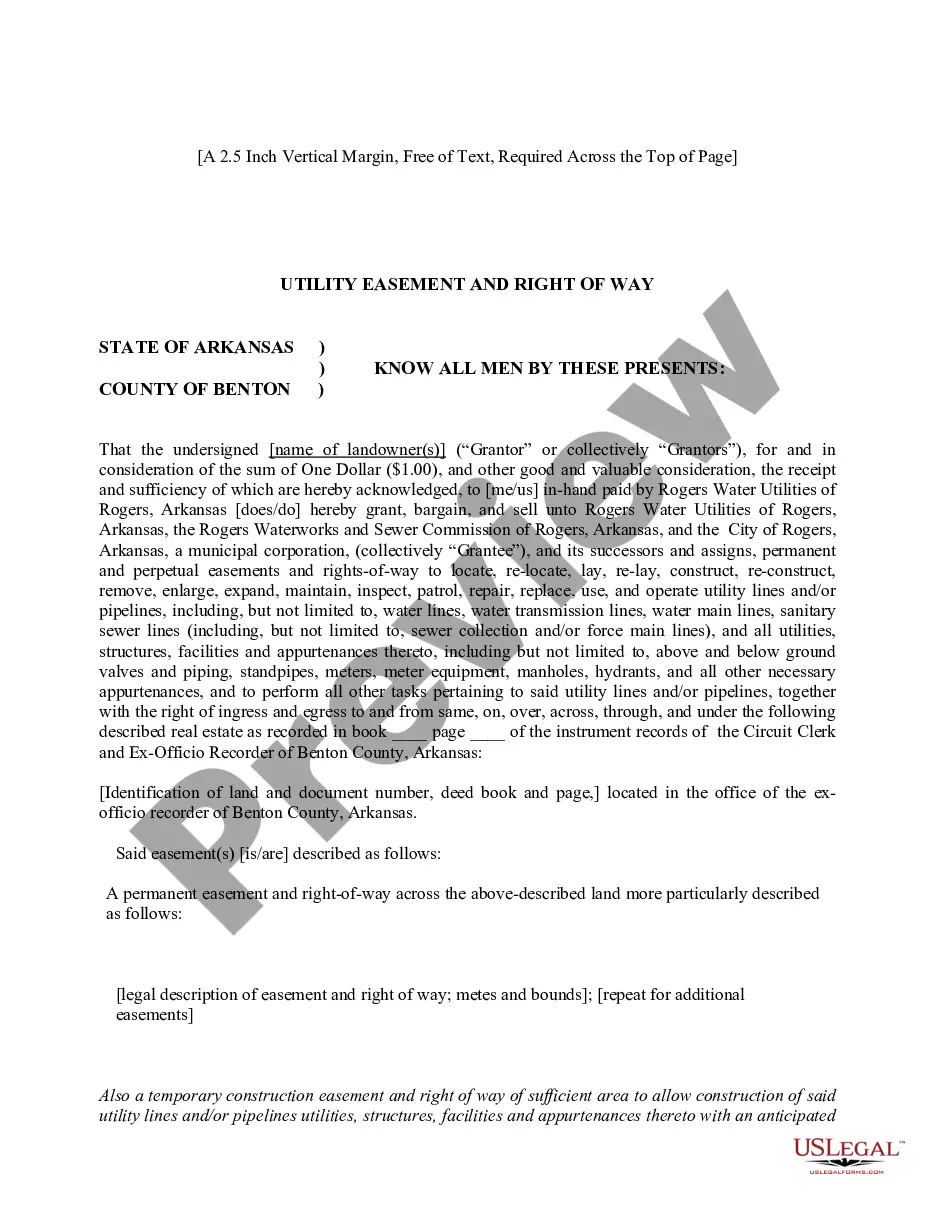
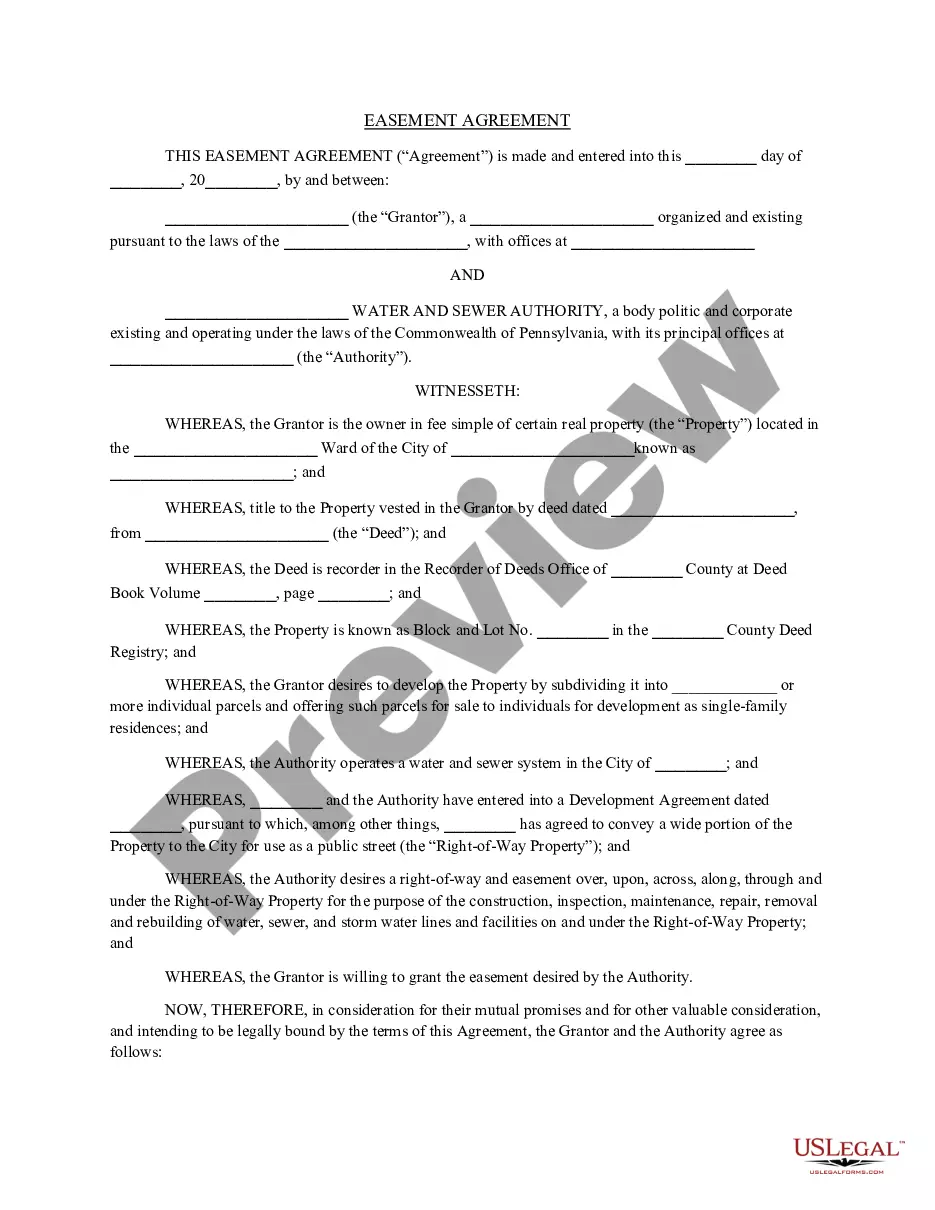
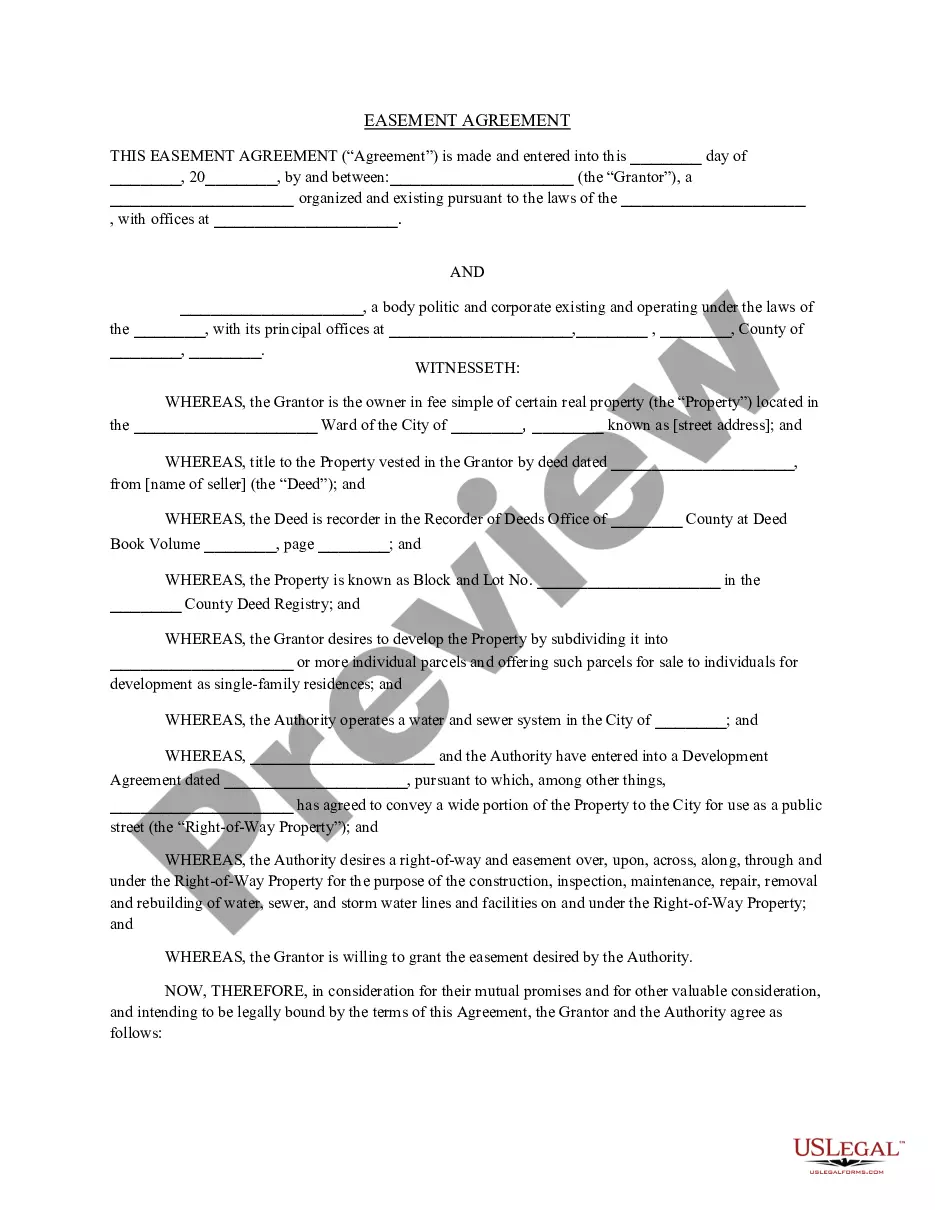
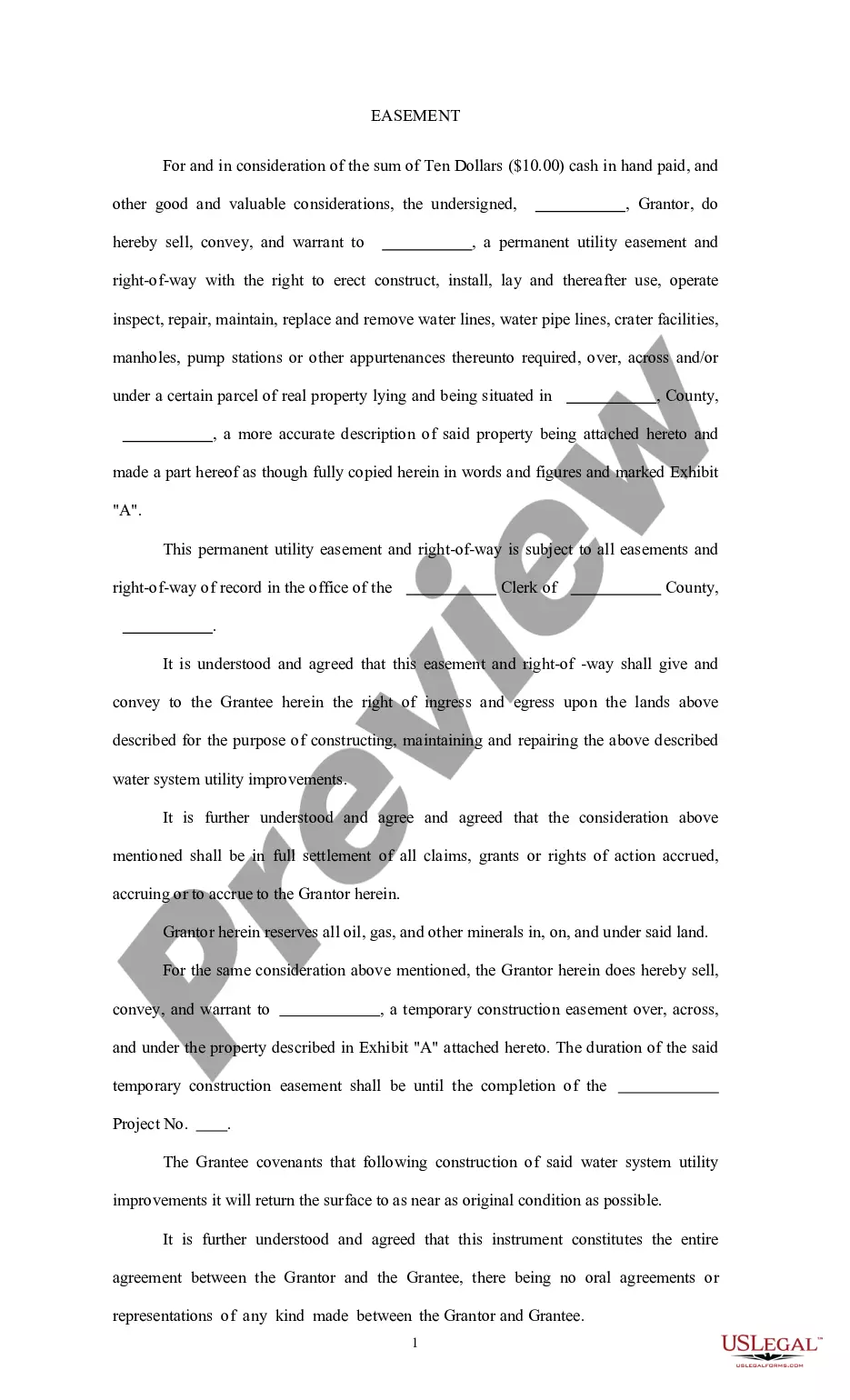
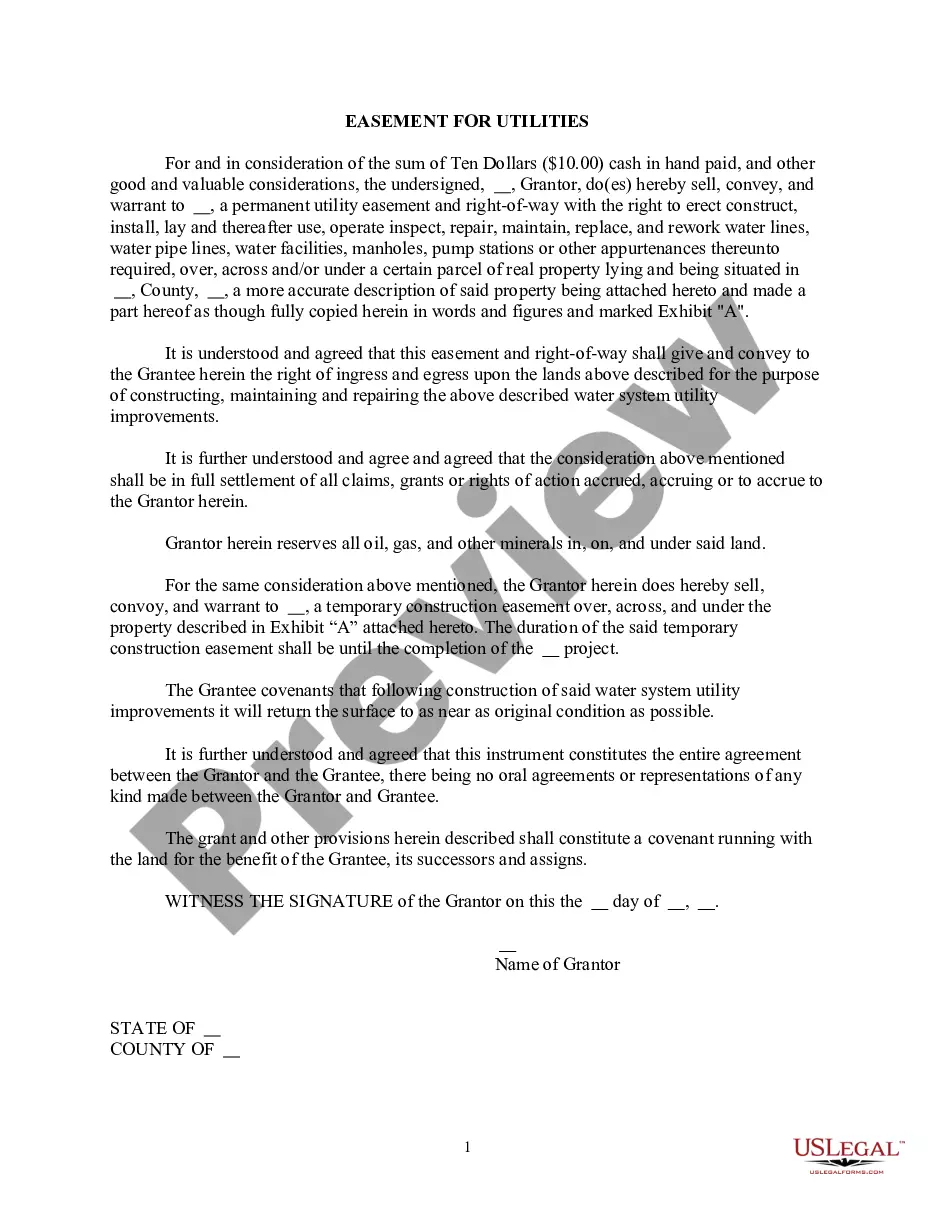
The Utility Easement Agreement is a legal document that grants a utility company the right to access and use a portion of a property owner's land for the installation and maintenance of utility infrastructure, such as electric poles and telecommunications equipment. This agreement clearly defines the rights granted to the utility company while allowing the property owner to maintain some usage rights. Unlike other forms of property agreements, this one specifically pertains to utility access and operations, ensuring both parties have defined expectations and responsibilities.
Form components explained
- Block and Lot: Designates the property involved in the easement.
- Grantor and Grantee Details: Identifies the property owner (Grantor) and the utility entity (Grantee) receiving the easement.
- Scope of Easement: Details the rights granted, including installation, maintenance, and removal of utility equipment.
- Land Use Restrictions: Specifies limitations on the Grantorâs use of the easement area.
- Ingress and Egress Rights: Grants the utility company access to the easement for operation and maintenance.
- Witness and Notary Section: Validates the agreement through witnesses and a notary public.
Common use cases
This form is needed when a property owner allows a utility company to access their land for construction or maintenance of utility infrastructure. Common scenarios include new construction of power lines, telecommunications systems, or when existing utilities need to be upgraded or expanded. It protects both the property owner's rights and the utilityâs ability to operate effectively.
Intended users of this form
Individuals or entities who should consider using this form include:
- Property owners who need to grant easements to utility companies.
- Utilities looking to secure rights to access land for service provision.
- Real estate developers needing to establish utility accesses for new projects.
- Landowners involved in negotiations over utility placements on their property.
Completing this form step by step
- Identify the block and lot number for the property in question.
- Enter the names of the Grantor and the utility company (Grantee).
- Specify the monetary consideration for the easement.
- Clearly state the scope of rights granted to the utility company.
- Ensure that both parties sign the form in the presence of witnesses.
- Have the document notarized to verify authenticity and legality.
Does this document require notarization?
Yes, this form must be notarized to be legally valid. Notarization verifies the identities of the parties involved and confirms that signatures are authentic. US Legal Forms offers integrated online notarization, allowing for secure video calls with licensed notaries at any time, ensuring a smooth and compliant process.
Get your form ready online
Our built-in tools help you complete, sign, share, and store your documents in one place.
Make edits, fill in missing information, and update formatting in US Legal Forms—just like you would in MS Word.
Download a copy, print it, send it by email, or mail it via USPS—whatever works best for your next step.
Sign and collect signatures with our SignNow integration. Send to multiple recipients, set reminders, and more. Go Premium to unlock E-Sign.
If this form requires notarization, complete it online through a secure video call—no need to meet a notary in person or wait for an appointment.
We protect your documents and personal data by following strict security and privacy standards.

Make edits, fill in missing information, and update formatting in US Legal Forms—just like you would in MS Word.

Download a copy, print it, send it by email, or mail it via USPS—whatever works best for your next step.

Sign and collect signatures with our SignNow integration. Send to multiple recipients, set reminders, and more. Go Premium to unlock E-Sign.

If this form requires notarization, complete it online through a secure video call—no need to meet a notary in person or wait for an appointment.

We protect your documents and personal data by following strict security and privacy standards.
Common mistakes
- Failing to specify the exact location and extent of the easement.
- Not including adequate consideration for the easement.
- Omitting signatures from witnesses or failing to have the document notarized.
- Providing incomplete or incorrect details about the parties involved.
Why use this form online
- Convenience of immediate access and download from anywhere.
- Editable templates allow for customized agreements suited to specific needs.
- Access to guidance and support for proper completion of the form.
- Reliability through professionally drafted templates, ensuring legal validity.
Looking for another form?
Form popularity
FAQ
When termed as a utility easement, it means a utility company's right to access and control the portion of another person's land that is located near utility facilities and structures (i.e. utility poles, transformers, overhead or underground electrical lines).
When termed as a utility easement, it means a utility company's right to access and control the portion of another person's land that is located near utility facilities and structures (i.e. utility poles, transformers, overhead or underground electrical lines).
So, having an easement on a property may have a permanent outcome on the property with rights of the home owner. But not all easements are bad.If you live in a rural area, you run into bad easement issues more often, typically where the easement was created by a parcel owner next to your land.
The bottom line is that developers and builders who are presented with utility company easement forms should not just sign them, but think about the kinds of issues they can present. It is easier to negotiate these concessions up front before the lines go in, than to ask the utility company to amend its easement later.
An easement can decrease the value of a real estate, increase the value of the real estate or it can have no impact on the value of the real estate at all. The most important fact is that each property and situation should be evaluated on individual basis, taking into account all the circumstances.
An easement held by an electricity provider allows it to erect and maintain electric power equipment on your land. The easement gives the electric power company the right to use a property for this specific purpose only.
1. Easement in gross. In this type of easement, only property is involved, and the rights of other owners are not considered. For example, a public utility line easement would be an easement in gross and would be recorded in the public records.
An easement in gross is personal to the party that receives the benefit of easement. An example of an easement in gross is an easement to a utility company to run a power line across a burdened piece of property. The utility company is the benefited party and there isn't necessarily a benefited parcel of land.