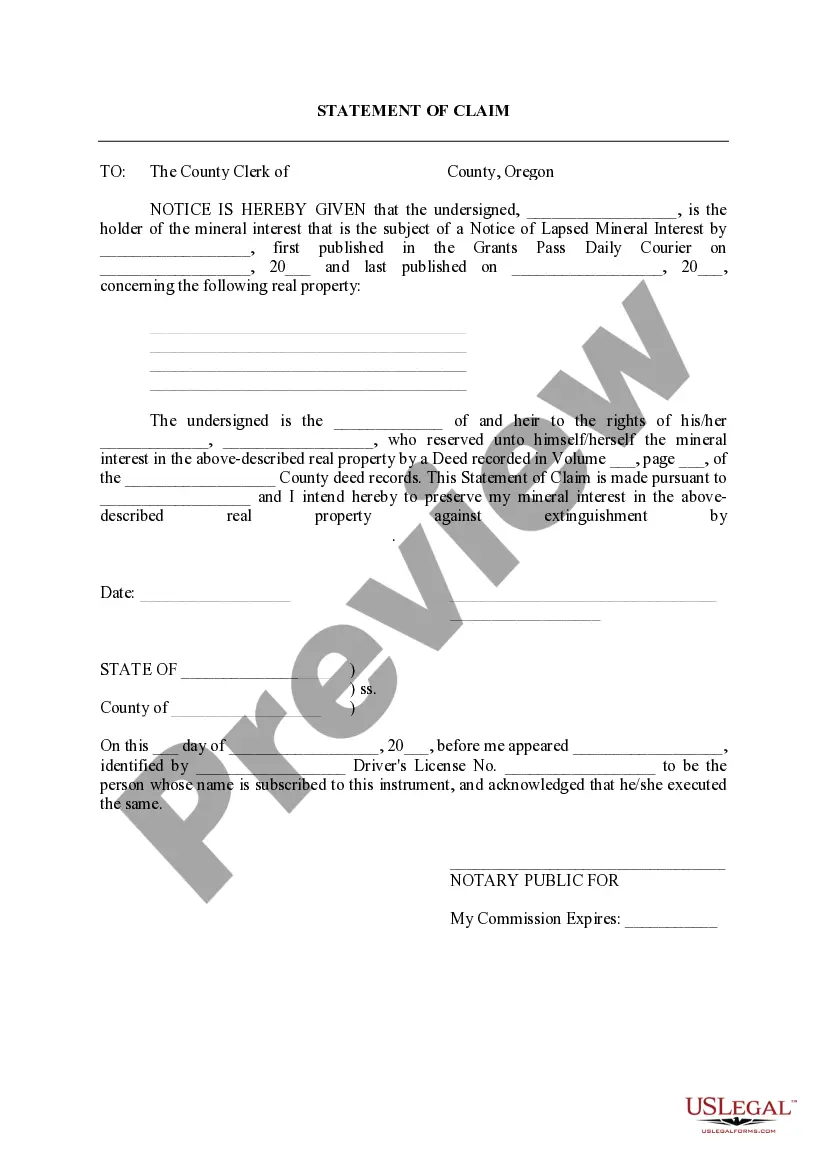
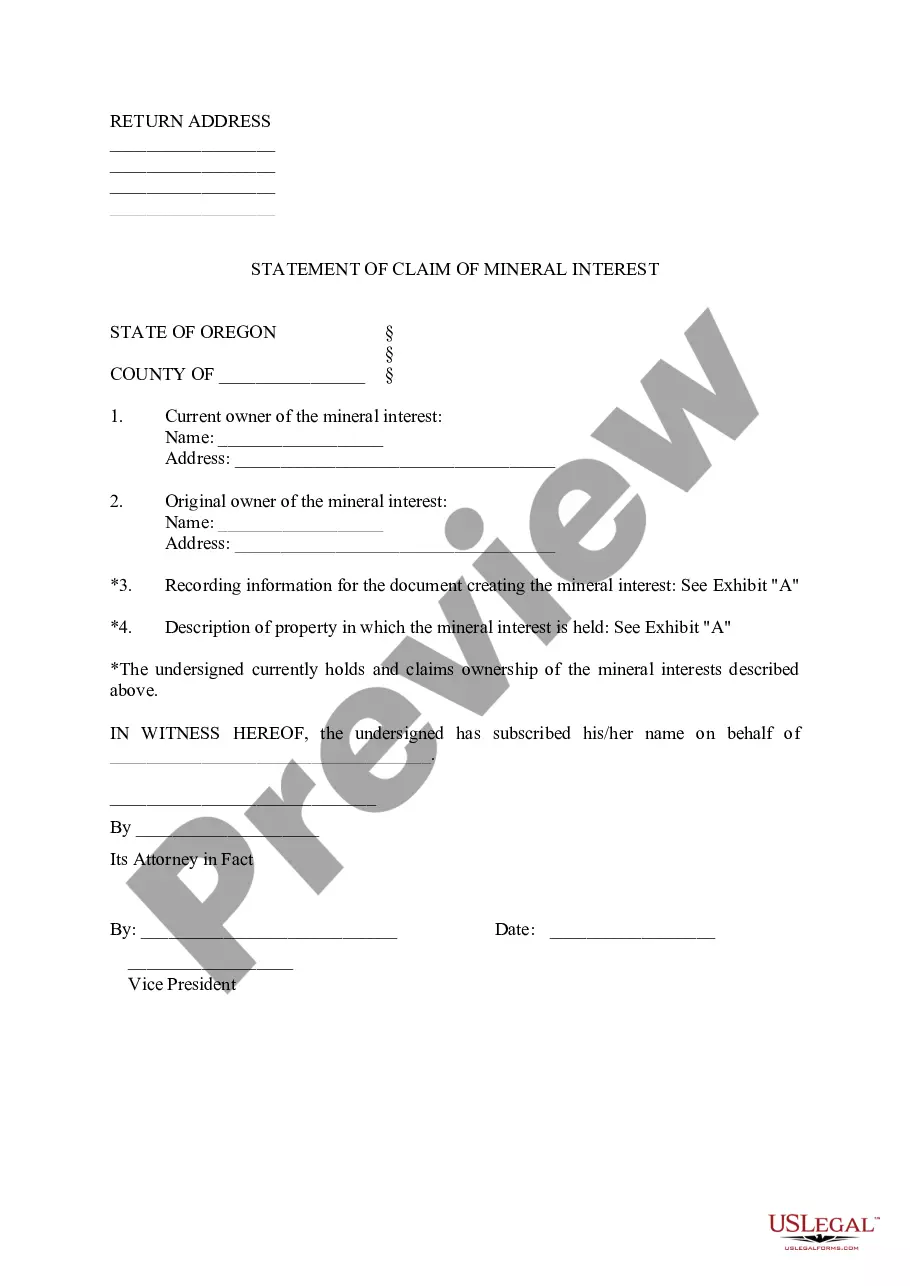
New Jersey Complaint Consumer Fraud Act by Tenant for Mold
What is this form?
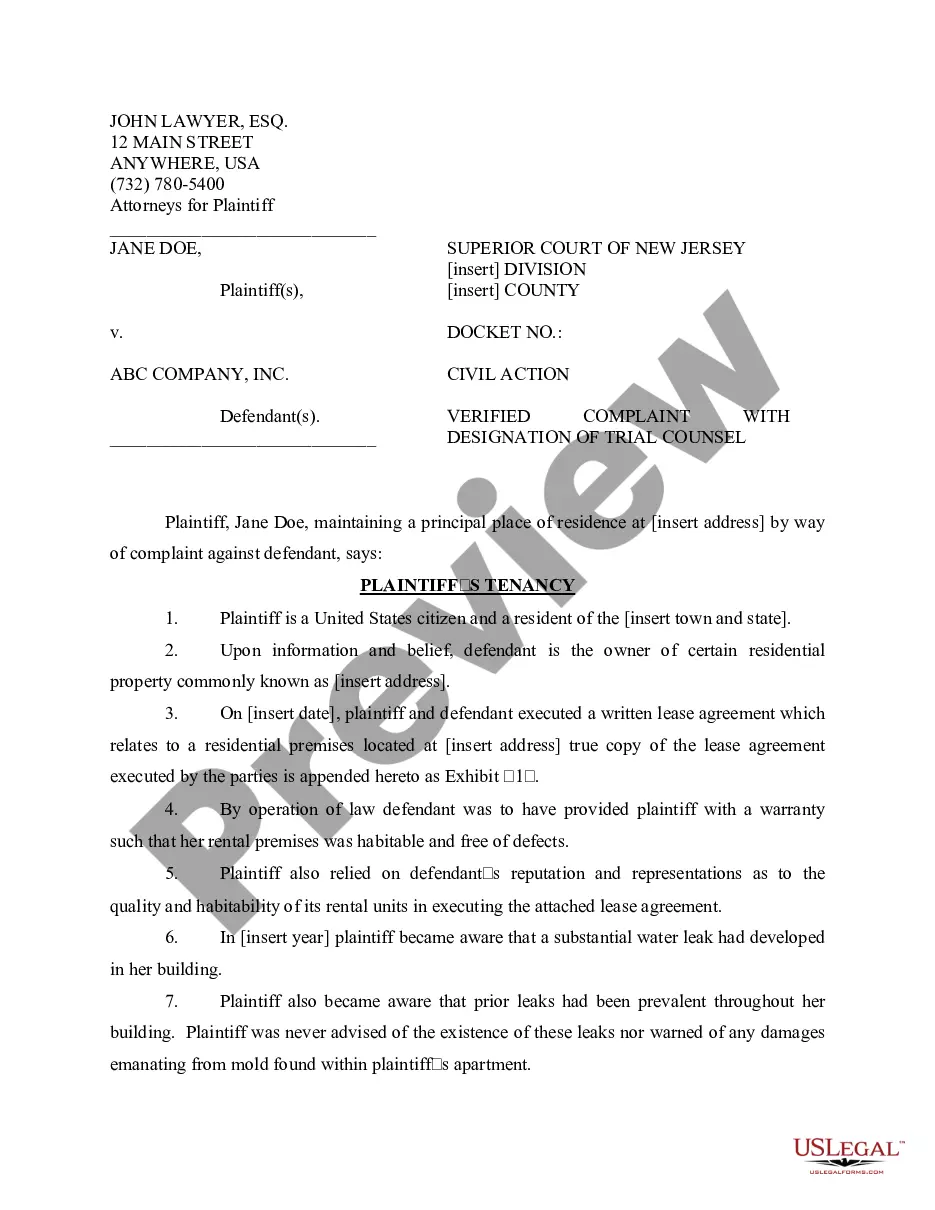
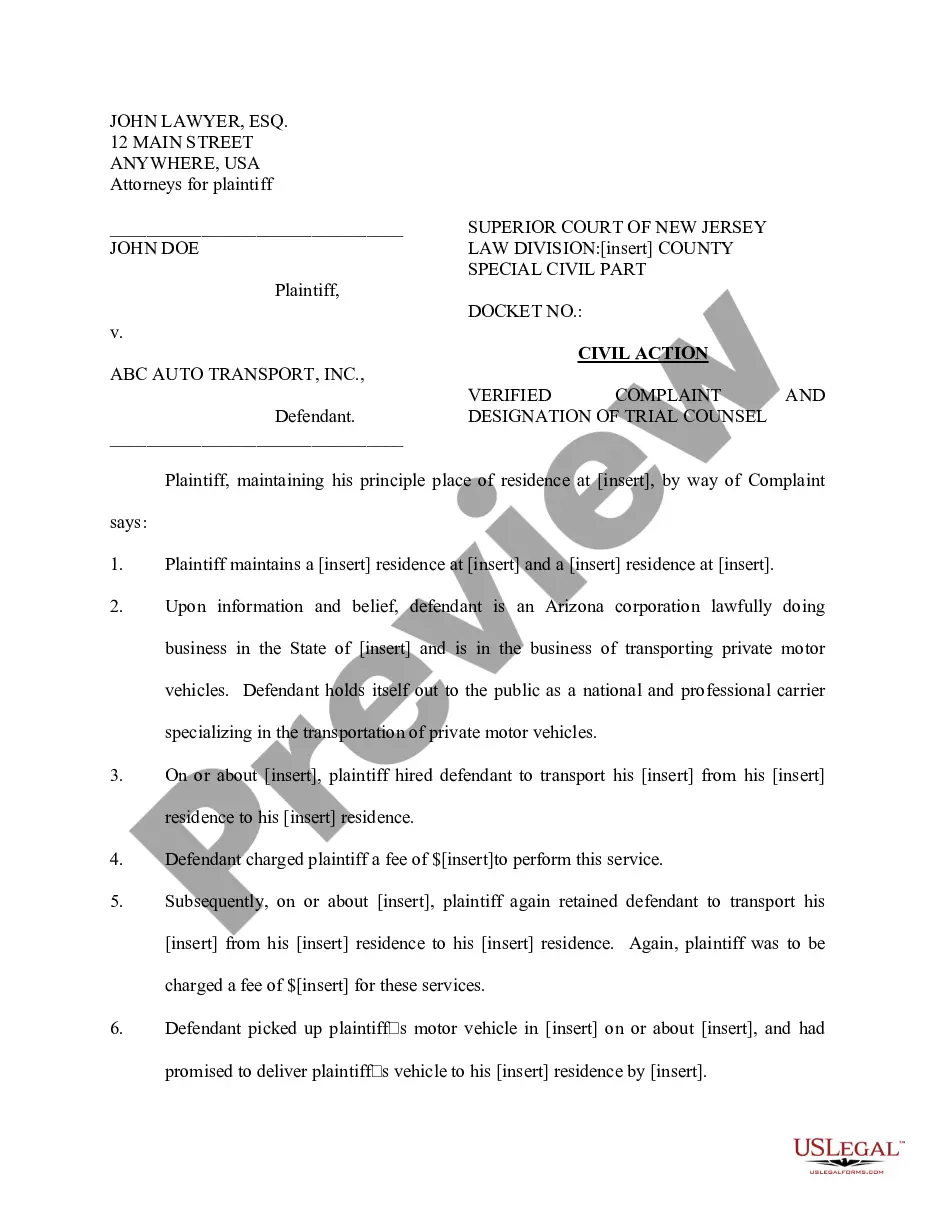
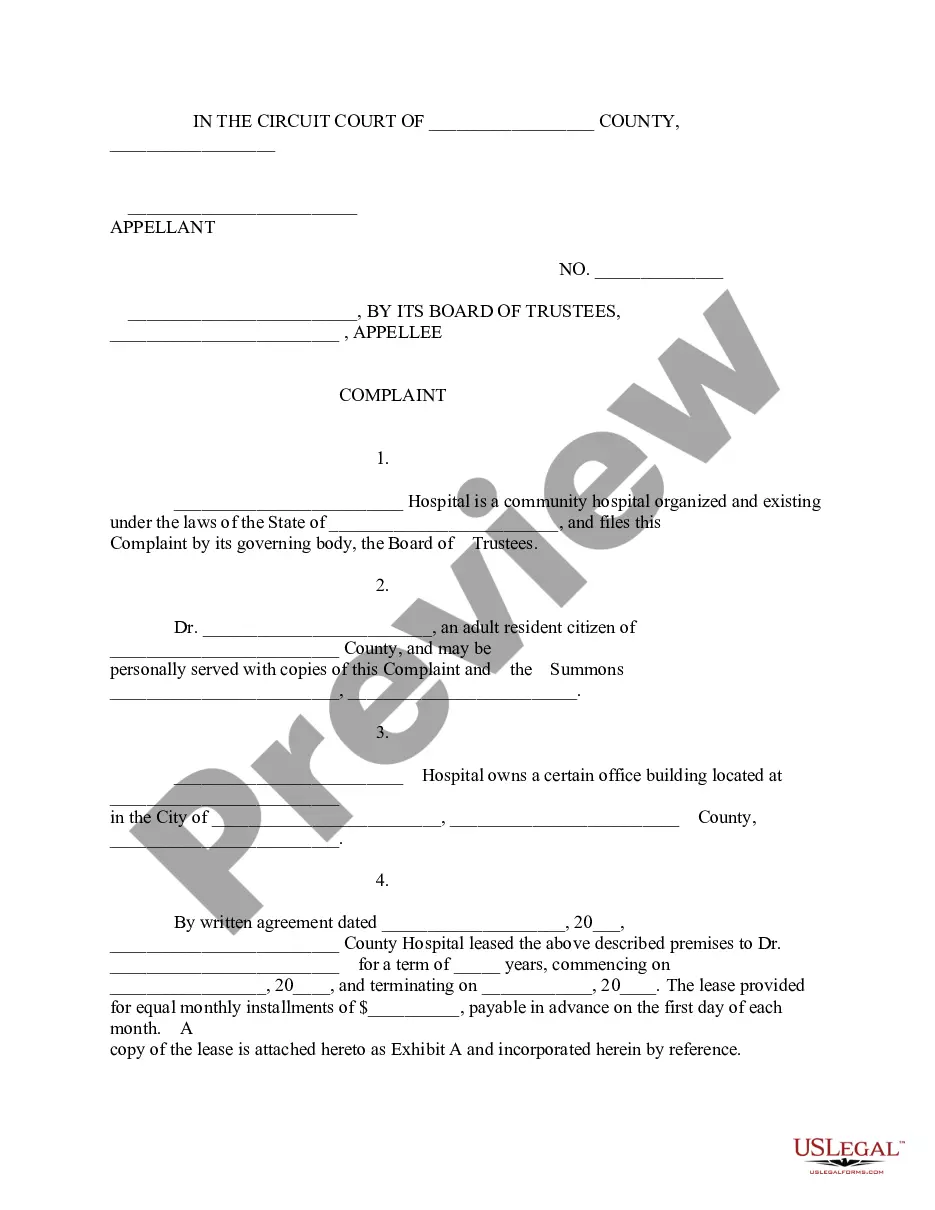
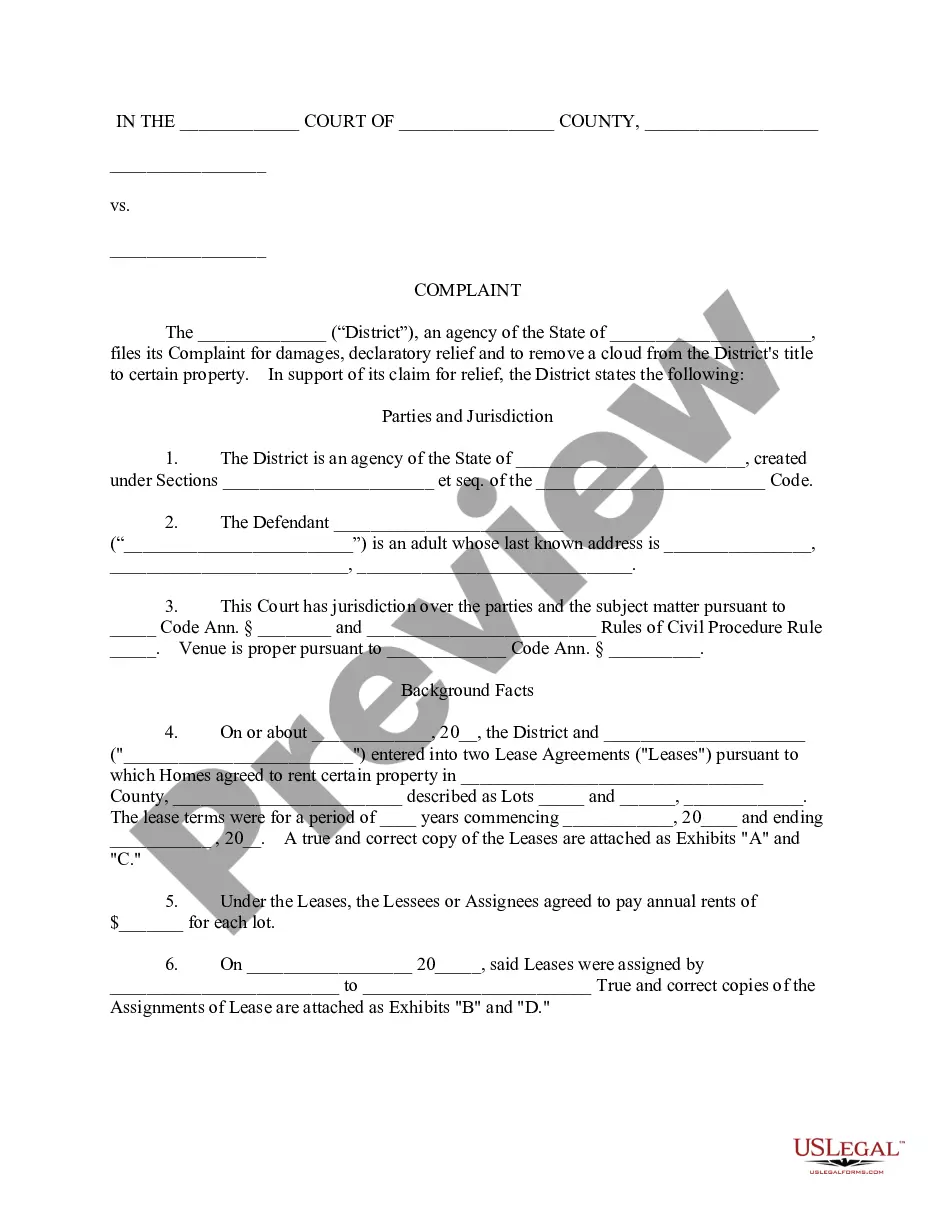
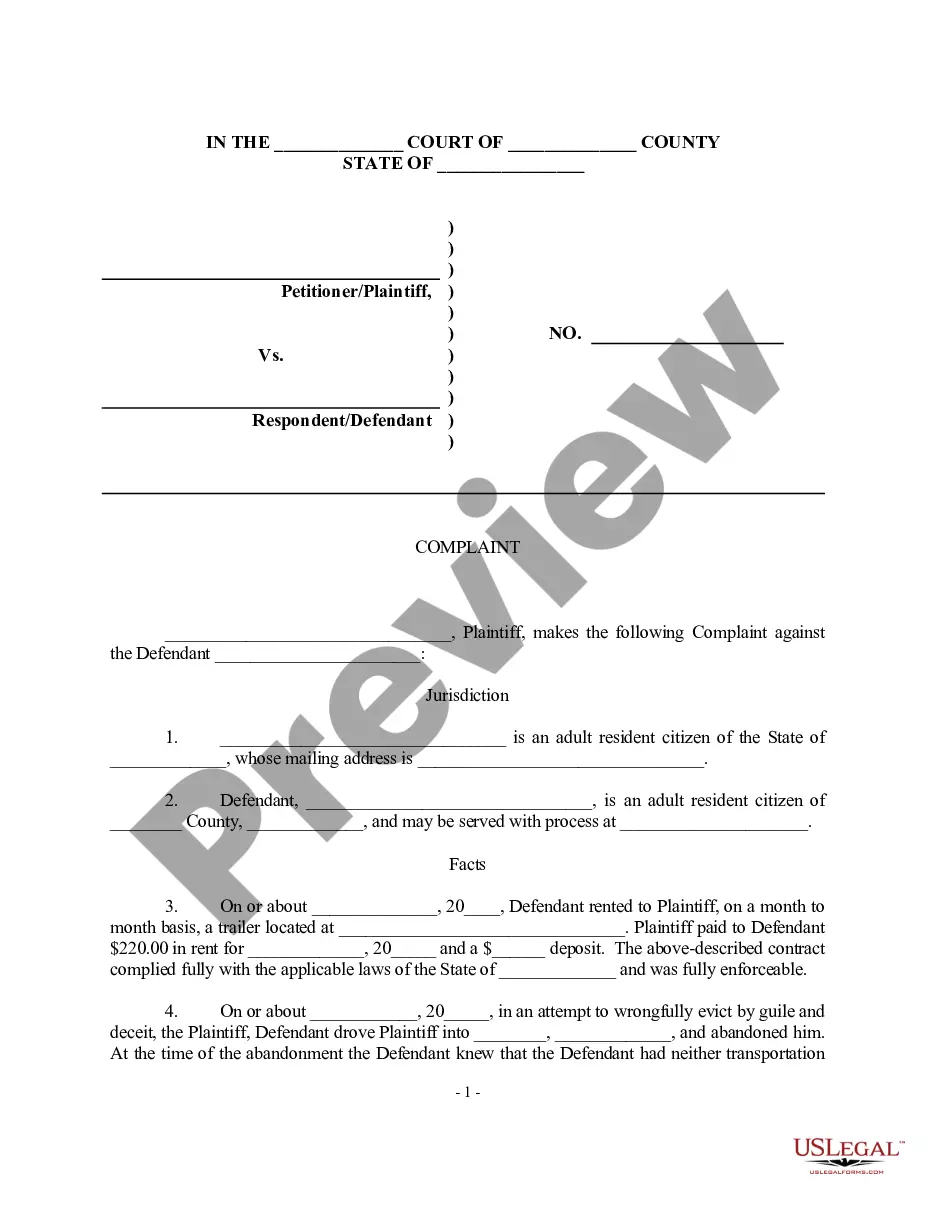
This form is a Complaint for consumer fraud and breach of contract related to mold issues in a rental property. It is specifically designed for tenants who have experienced significant harm due to mold, which can render a residence uninhabitable. By using this Complaint under the Consumer Fraud Act, tenants can seek damages and other forms of relief from landlords who fail to uphold their obligations, distinguishing it from other landlord-tenant forms.
What’s included in this form
- Identification of the parties involved - plaintiff and defendant information
- Details regarding the lease agreement, including dates and property address
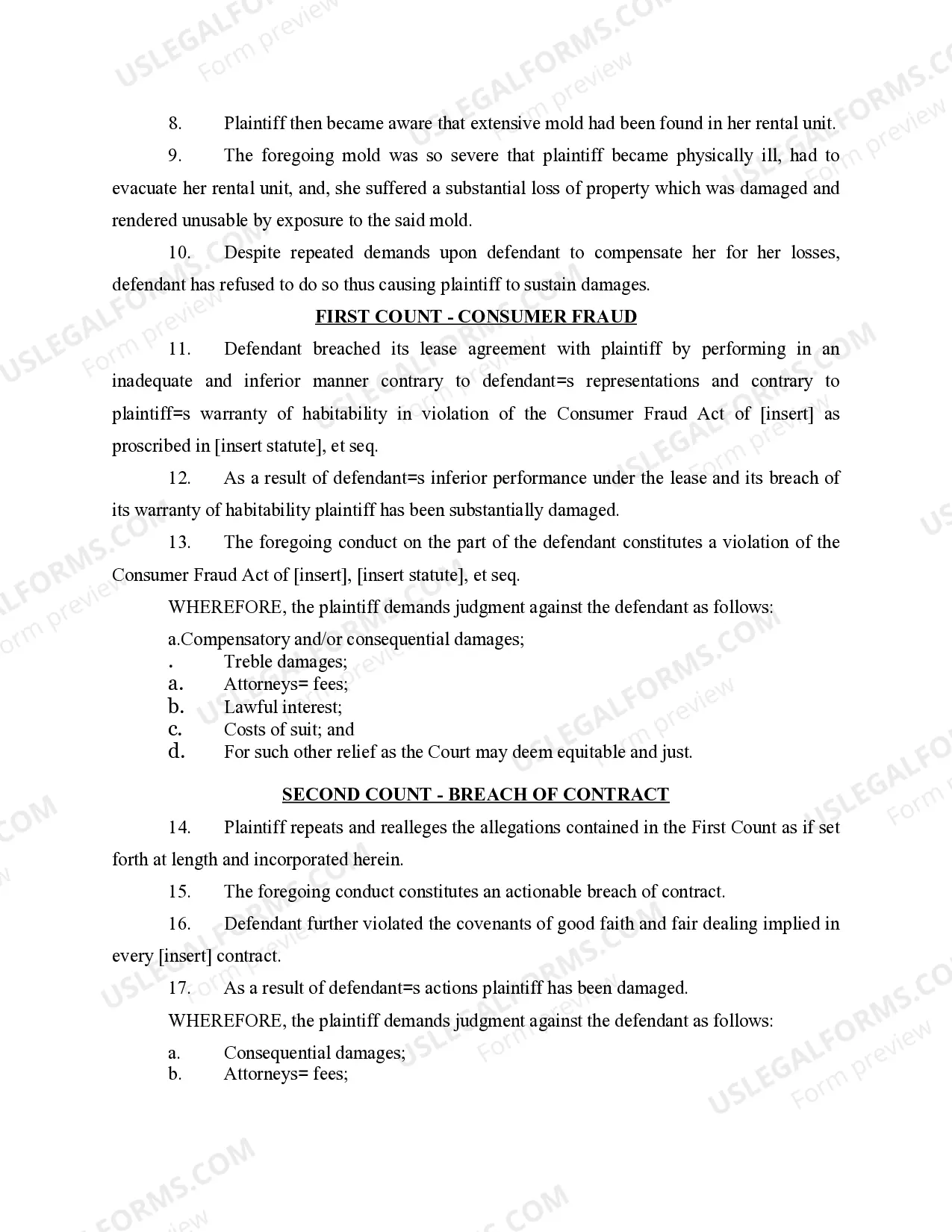
- Allegations of mold presence and its impact on the tenant's health and property
- Claims for breach of the warranty of habitability and consumer fraud
- Request for specific damages and other legal remedies
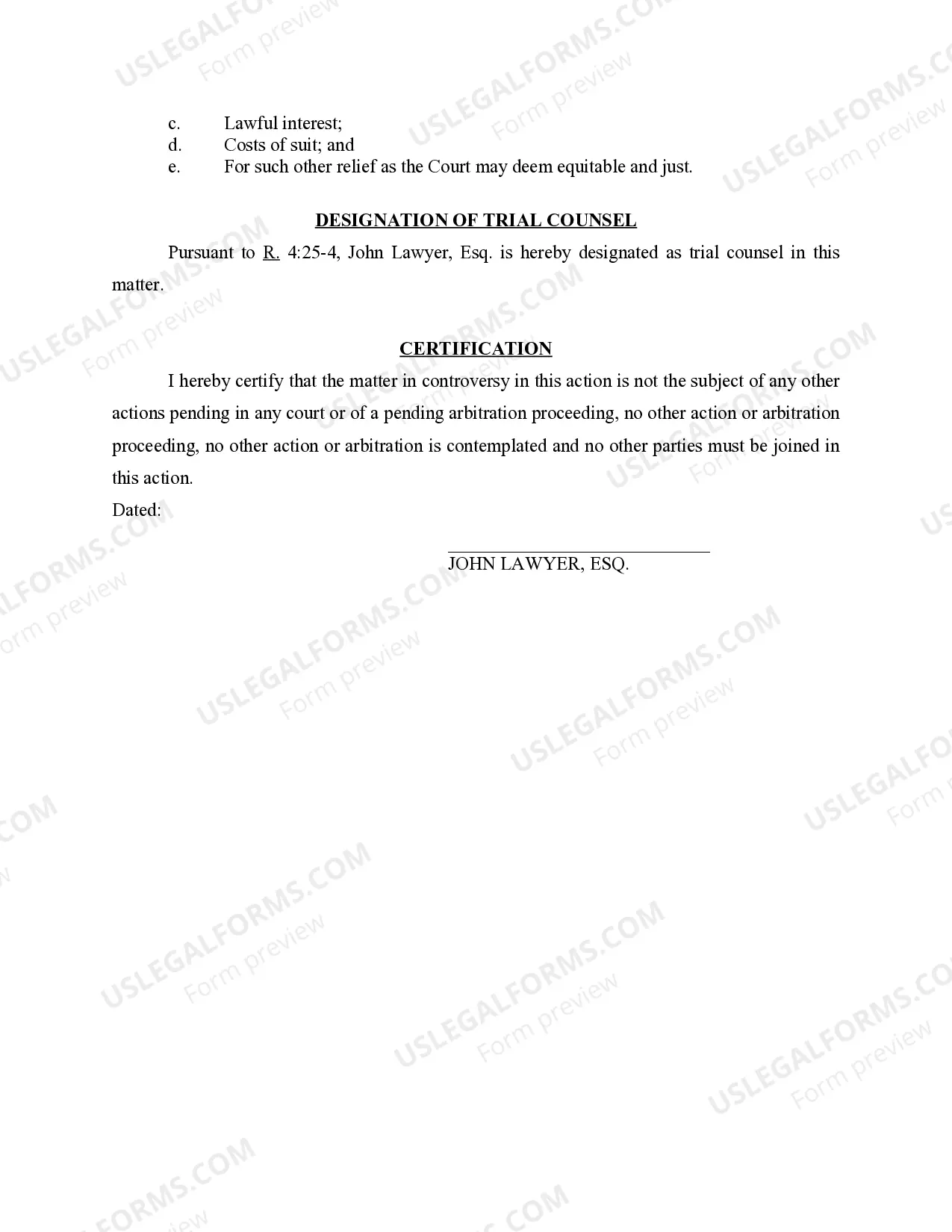
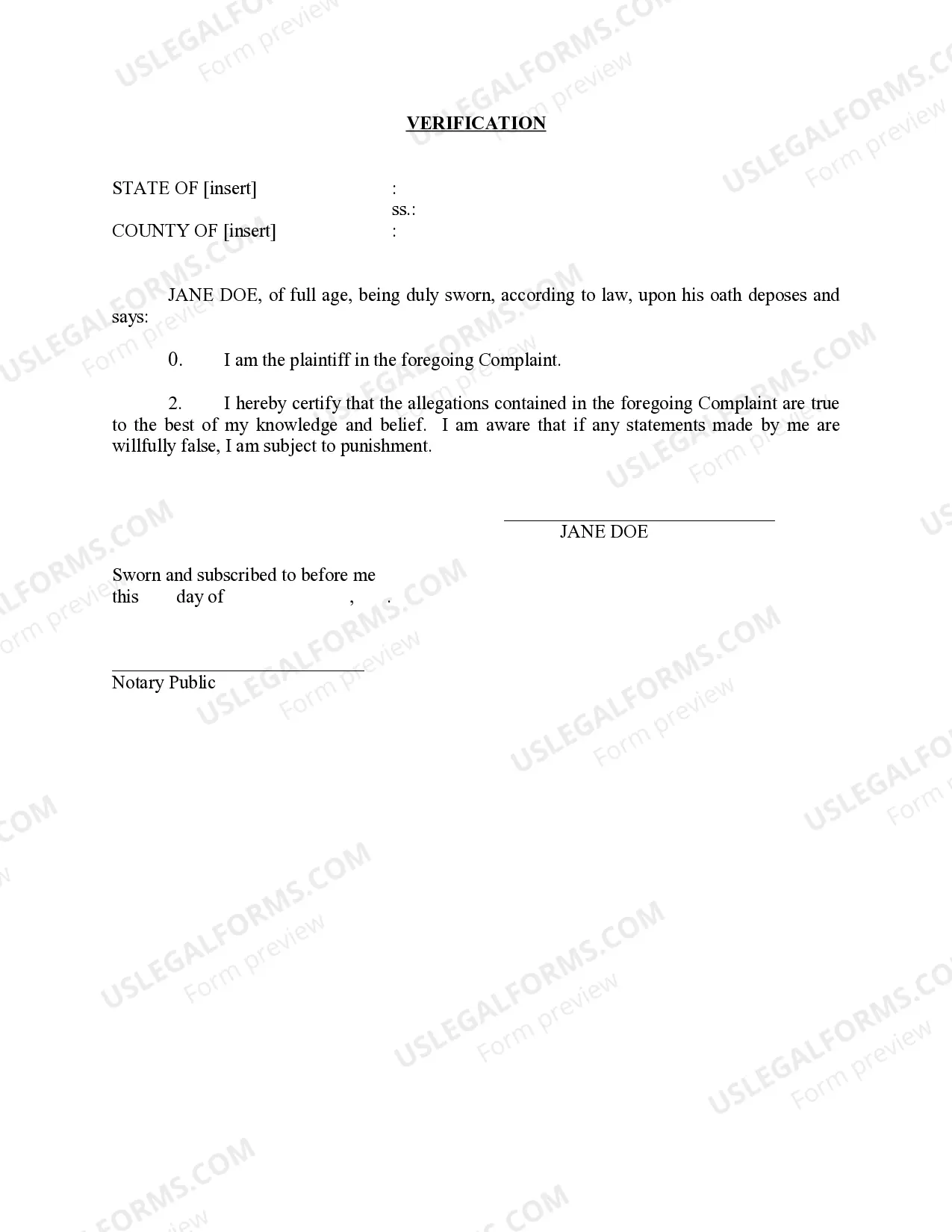
- Designation of trial counsel and certification by the plaintiff
When to use this form
This form should be utilized when a tenant has suffered damages due to mold in their rental unit, which the landlord failed to address despite known issues. It's appropriate in situations where the tenant seeks compensation for health issues, property damage, or if a landlord has misrepresented the habitability of the property. It can also be used when attempting to enforce rights under the Consumer Fraud Act.
Who can use this document
- Tenants who have experienced health issues due to mold in their rented homes
- Individuals seeking compensation for property damage caused by mold
- Users who believe their landlord has violated the terms of their lease agreement
- People in jurisdictions where consumer protection laws regarding housing apply
Steps to complete this form
- Identify the parties by entering the plaintiff's and defendant's names and addresses.
- Specify the rental property's address and the date the lease was signed.
- Describe the mold issues and the impact on your health and property.
- Detail your claims under the Consumer Fraud Act and breach of contract provisions.
- Indicate the types of damages sought, including any consequential losses.
- Sign and date the complaint, then have it notarized if necessary.
Is notarization required?
This form must be notarized to be legally valid. US Legal Forms provides secure online notarization powered by Notarize, allowing you to complete the process through a verified video call.
Get your form ready online
Our built-in tools help you complete, sign, share, and store your documents in one place.
Make edits, fill in missing information, and update formatting in US Legal Forms—just like you would in MS Word.
Download a copy, print it, send it by email, or mail it via USPS—whatever works best for your next step.
Sign and collect signatures with our SignNow integration. Send to multiple recipients, set reminders, and more. Go Premium to unlock E-Sign.
If this form requires notarization, complete it online through a secure video call—no need to meet a notary in person or wait for an appointment.
We protect your documents and personal data by following strict security and privacy standards.

Make edits, fill in missing information, and update formatting in US Legal Forms—just like you would in MS Word.

Download a copy, print it, send it by email, or mail it via USPS—whatever works best for your next step.

Sign and collect signatures with our SignNow integration. Send to multiple recipients, set reminders, and more. Go Premium to unlock E-Sign.

If this form requires notarization, complete it online through a secure video call—no need to meet a notary in person or wait for an appointment.

We protect your documents and personal data by following strict security and privacy standards.
Avoid these common issues
- Failing to provide accurate details about the property or lease agreement.
- Overlooking the requirement for a clear description of the damages caused by mold.
- Not specifying all claims under relevant statutes, potentially limiting recovery.
- Missing signature or notarization which may invalidate the form.
Why use this form online
- Convenient access to legally vetted templates drafted by licensed attorneys.
- Customizable to fit individual circumstances before downloading.
- Time-saving without the need for office visits or appointments.
- Access to online notarization options for quick legal validation.
Legal use & context
- This complaint serves as a formal action taken by a tenant against a landlord for fraud and breach of contract.
- It is enforceable under New Jersey state law, particularly regarding tenant rights and consumer protection statutes.
- Carefully document all communications with the landlord to support your claims.
Key takeaways
- The form serves as a Complaint for issues related to mold in a rental property.
- It allows tenants to seek legal redress for consumer fraud and breach of contract.
- Completing the form correctly is essential for a successful claim.
- Tenants in New Jersey can utilize this form to enforce their rights effectively.
Looking for another form?

Form popularity
FAQ
Tenants may be able to file their complaints with their city or county rent control board, local tenant association, rental housing association, district attorney's office and consumer protection agency. California residents can find the appropriate agencies based on the nature of their complaint by contacting the
Uninhabitable conditions can include dangerous ones, such as holes in the floor, unsafe or exposed wiring, or non-working air conditioning in dangerously hot summer months. Gross infestations of roaches, fleas or other pests are also uninhabitable conditions.
If the structure is unstable or there is a severe problem with damp in the property, it may be deemed uninhabitable.If the layout is unsafe, if there isn't enough natural light, or if there is not enough ventilation, the problem may be uninhabitable.
Because mold presents a health hazard or renders the home unlivable, it is the landlord's responsibility to restore the property to a livable state. If the mold occurred as a result of something the tenant did or did not do, the landlord can charge the tenant for the cost of the mold removal.
The landlord is legally responsible for removing the mold and reimbursing you for any additional costs you have sustained. Even if you don't suffer any injuries, a landlord's failure to maintain a mold-free environment violates the implied warranty of habitability.
Sue your landlord. You can bring a lawsuit to force your landlord to clean the mold and fix the underlying problem. Withhold your rent. Fix the problem and deduct the cost from your rent. Move out.
When a home is condemned, the owner (and tenants, if any) are notified in writing that the building must be vacated. A sign is attached to the building stating that the dwelling is not fit for human habitation, and that it cannot be occupied.The owner of the building may be ordered to repair or demolish the building.
In California, residential leases have an implied warranty of habitability.If the presence of mold affects the livability of the apartment and the health and safety of the tenants, the landlord is in violation of this warranty and the tenant should move out.