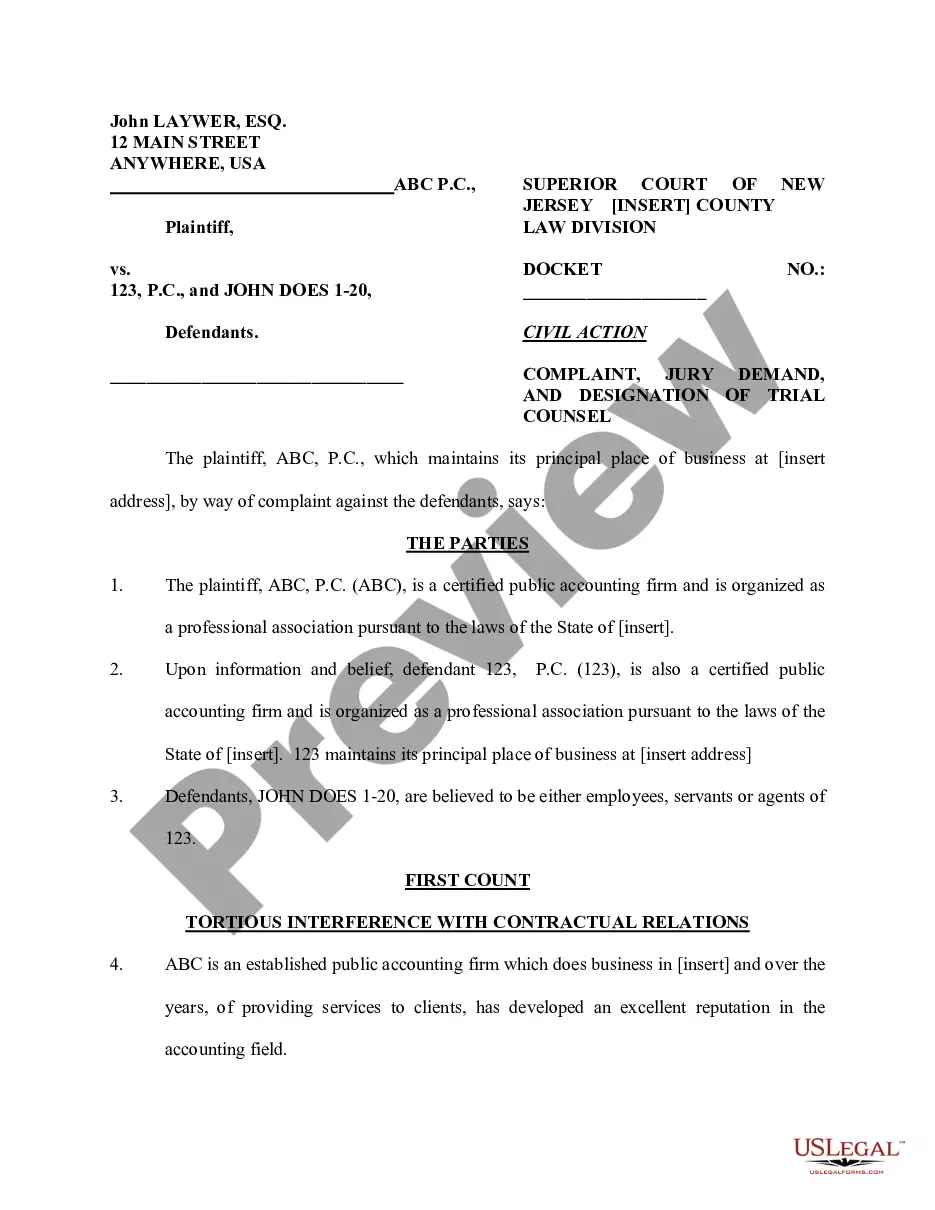
New Jersey Complaint Tortious Interference with Contract Relations
What is this form?
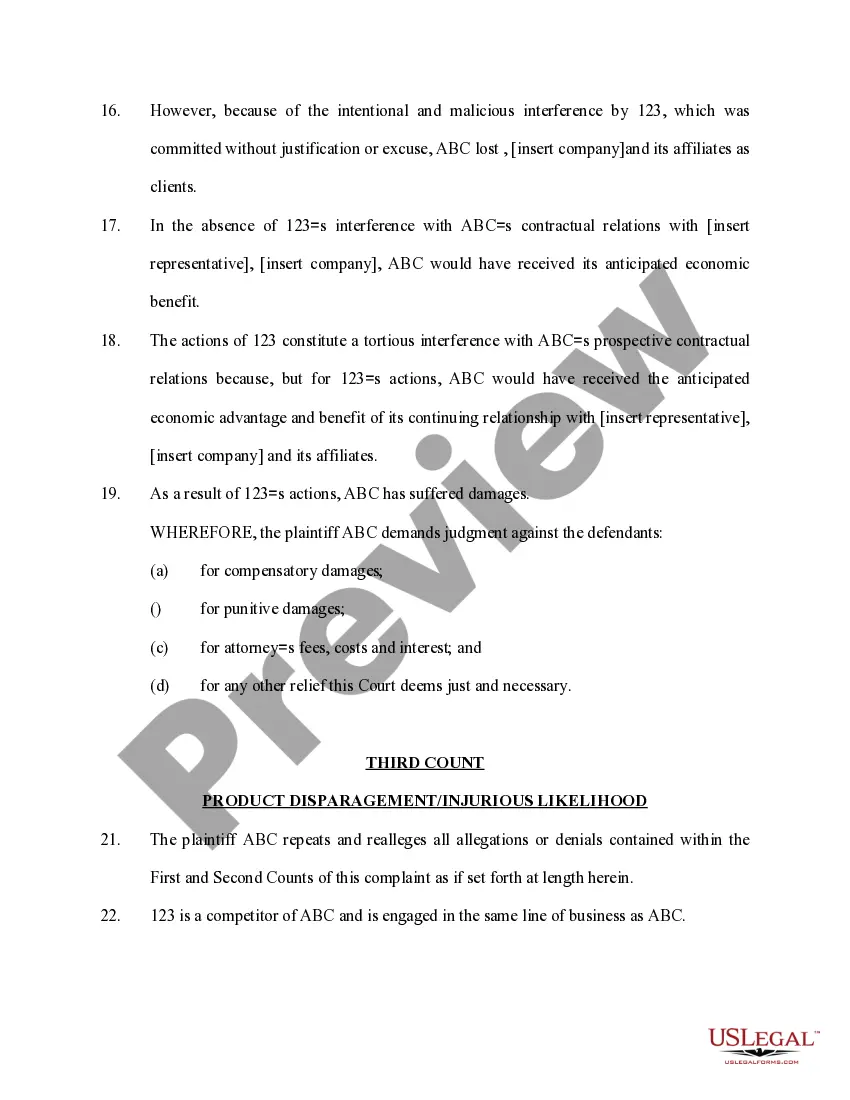
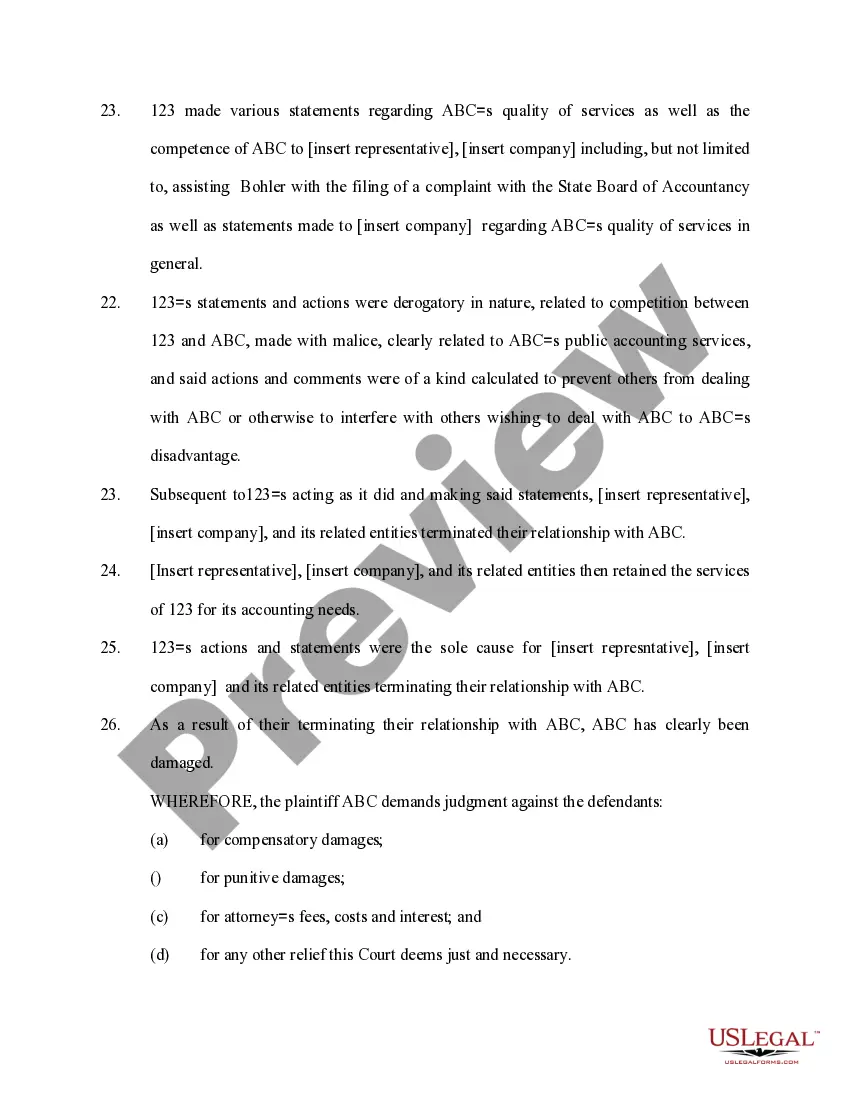
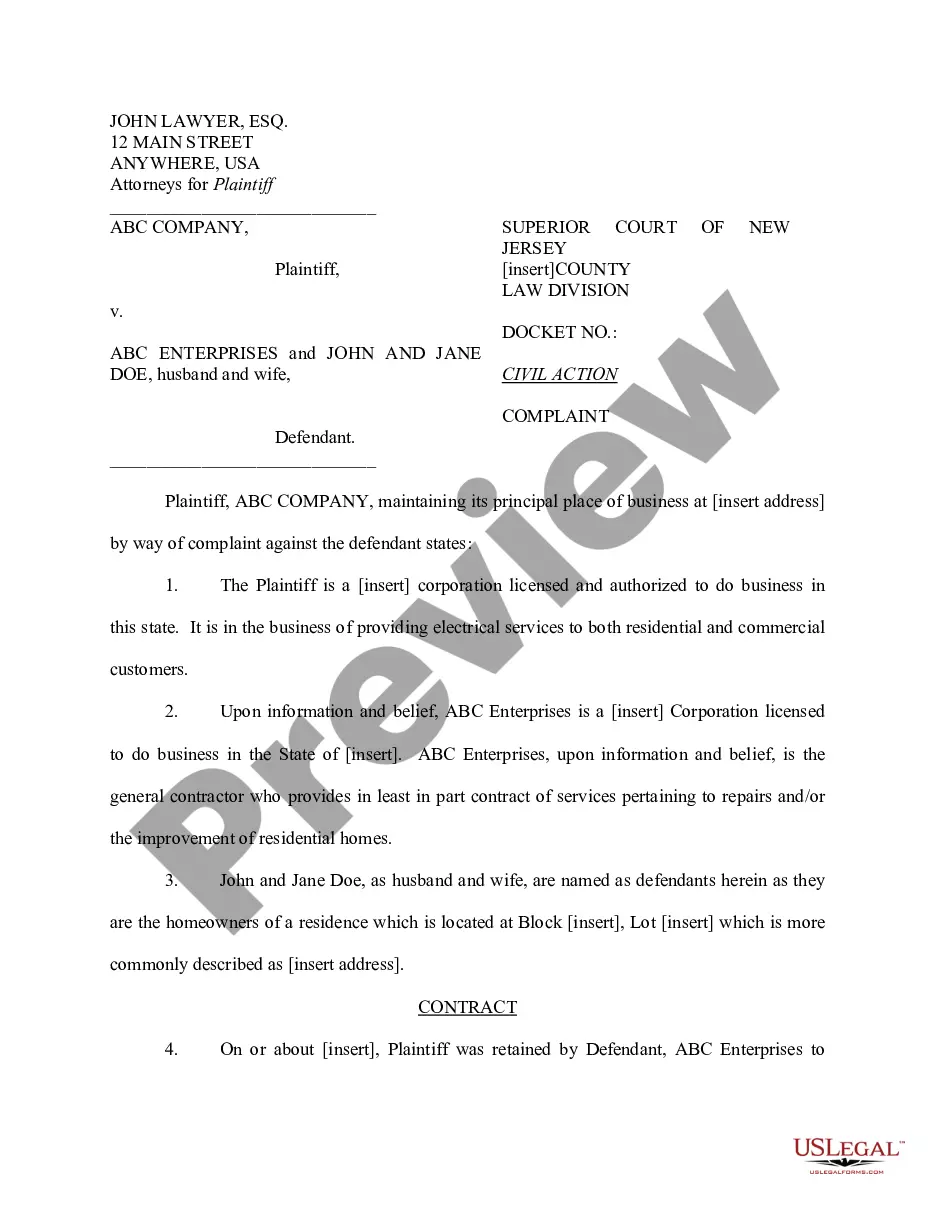
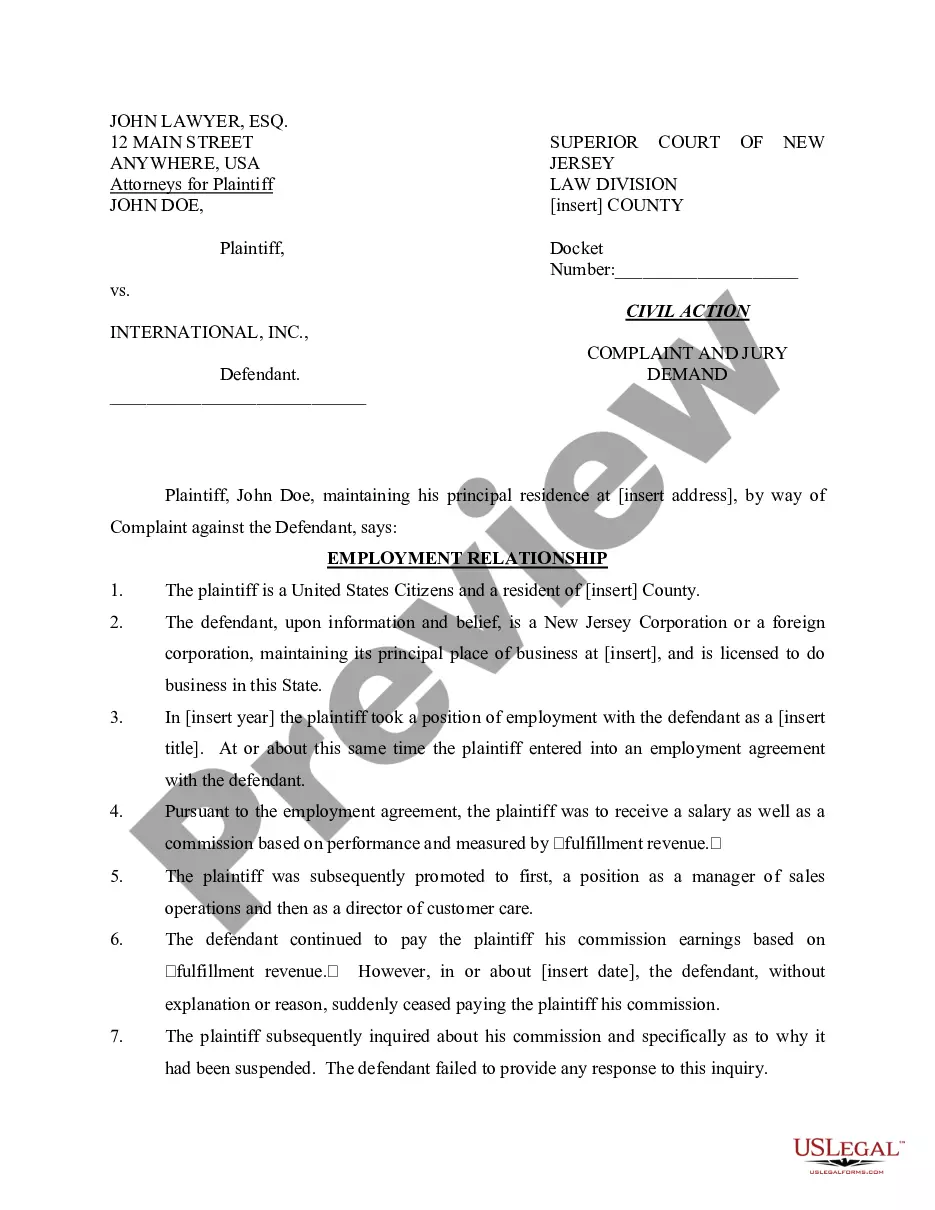
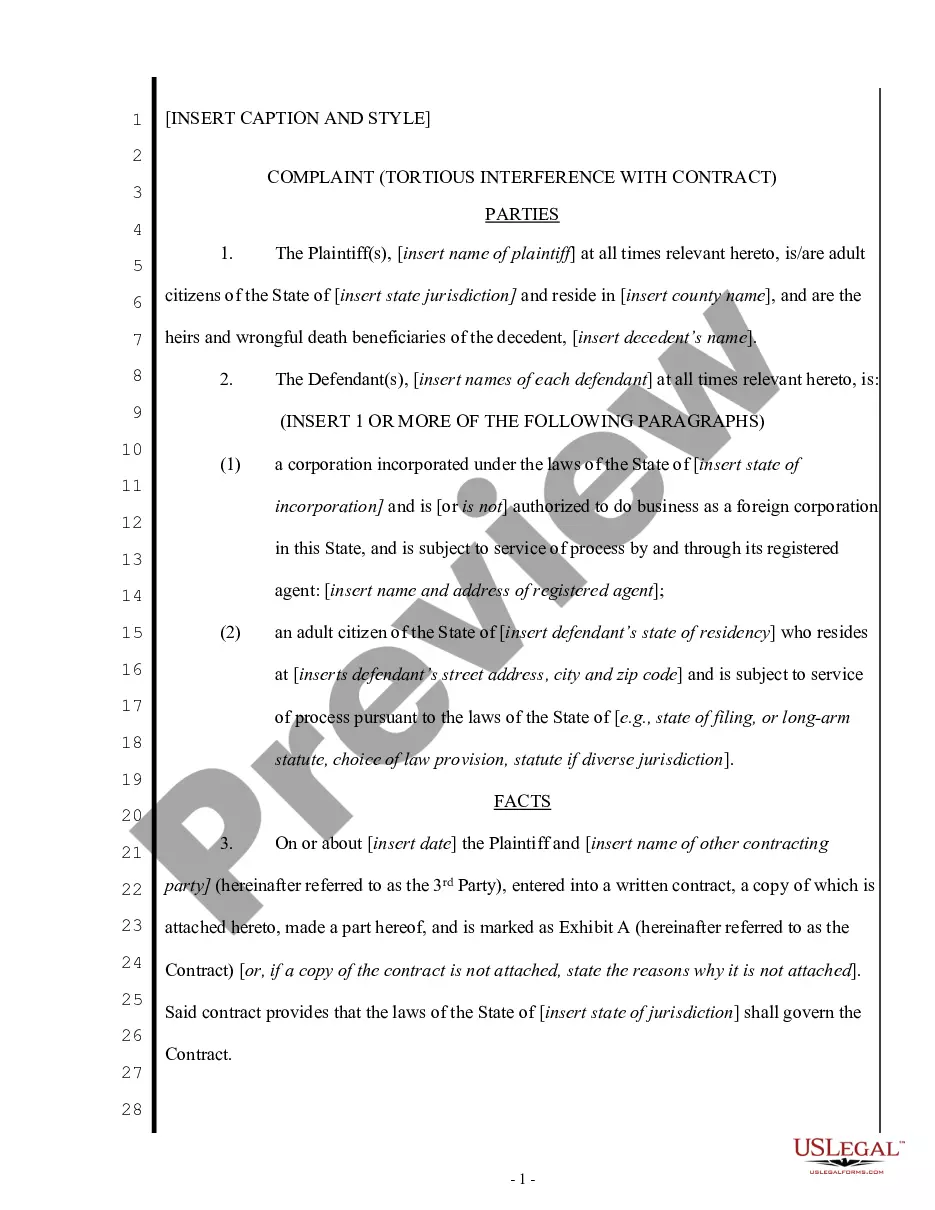
This form is a Complaint for Tortious Interference with Contract Relations specific to civil proceedings in New Jersey. It is used when an individual or business believes that another party has unlawfully interfered with a contractual relationship resulting in damages. This form differs from general contract complaints by focusing specifically on intentional tortious actions that disrupt existing or prospective business relationships.
Key components of this form
- Parties involved: Identification of the plaintiff and defendants, including their addresses and business details.
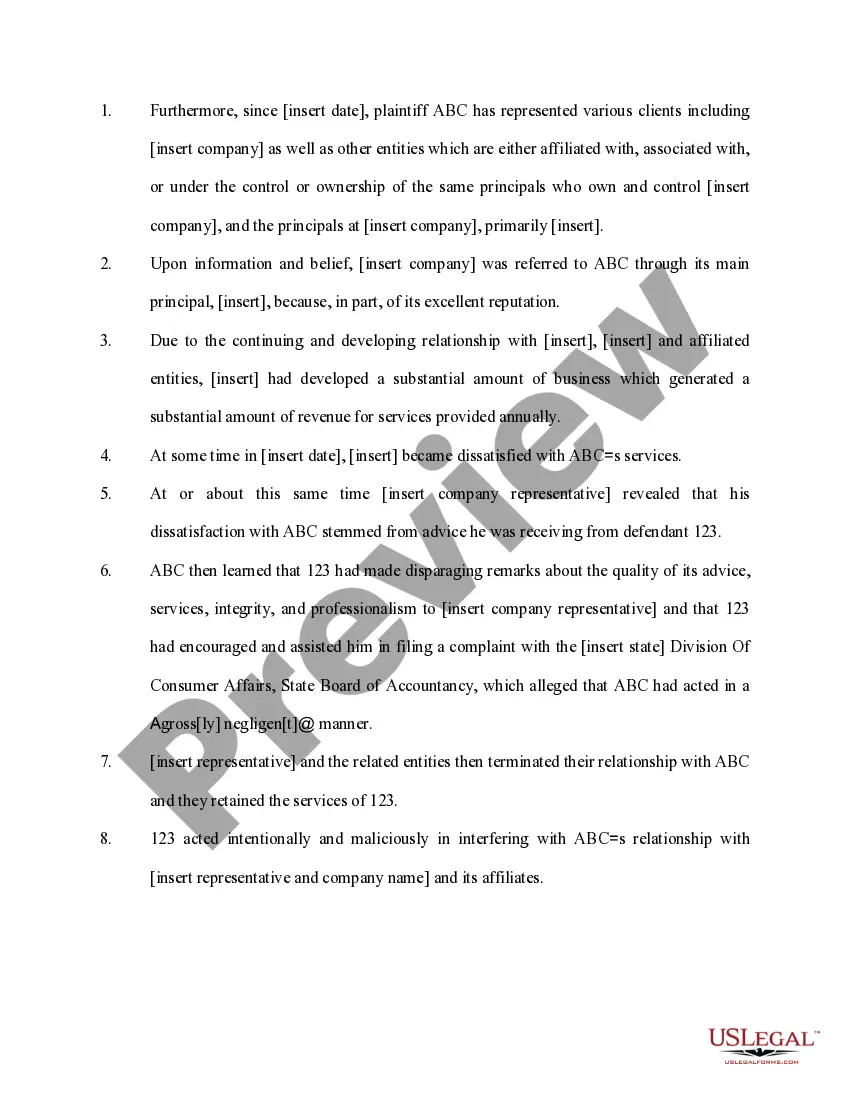
- Claims: A detailed account of the tortious interference, outlining the contractual relationship and the actions leading to the complaint.
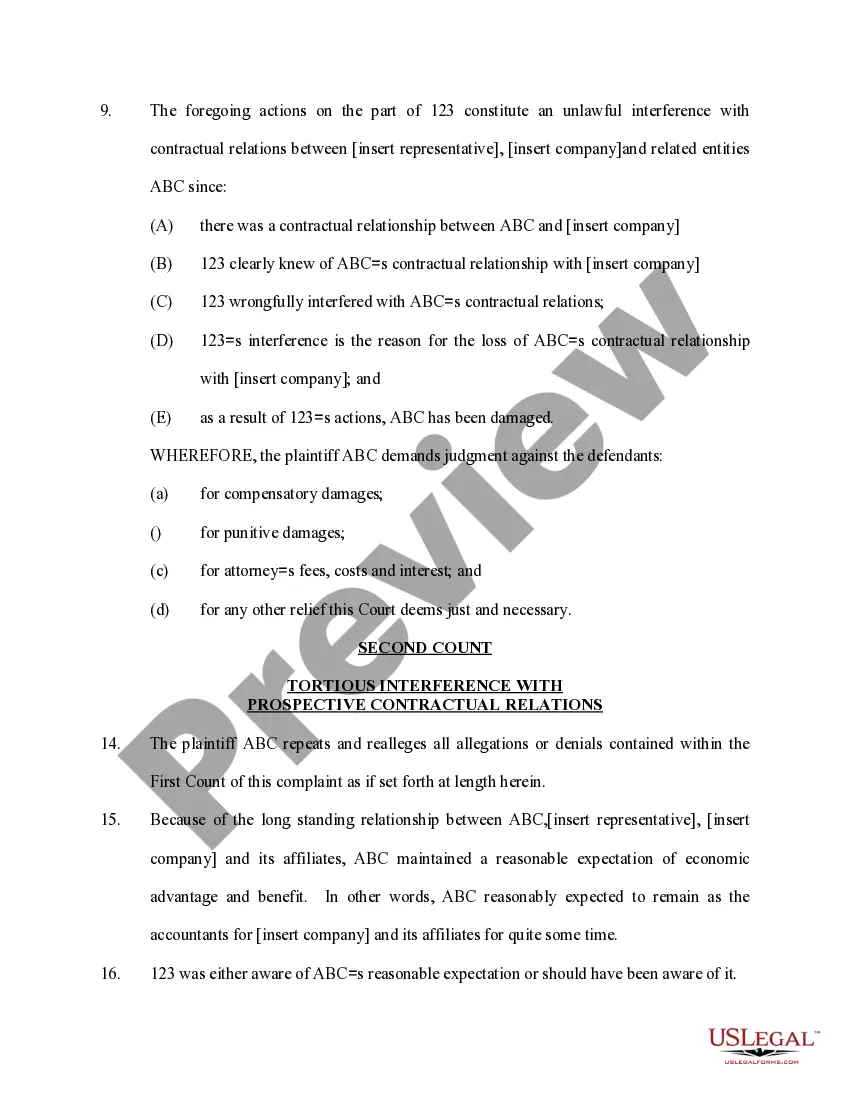
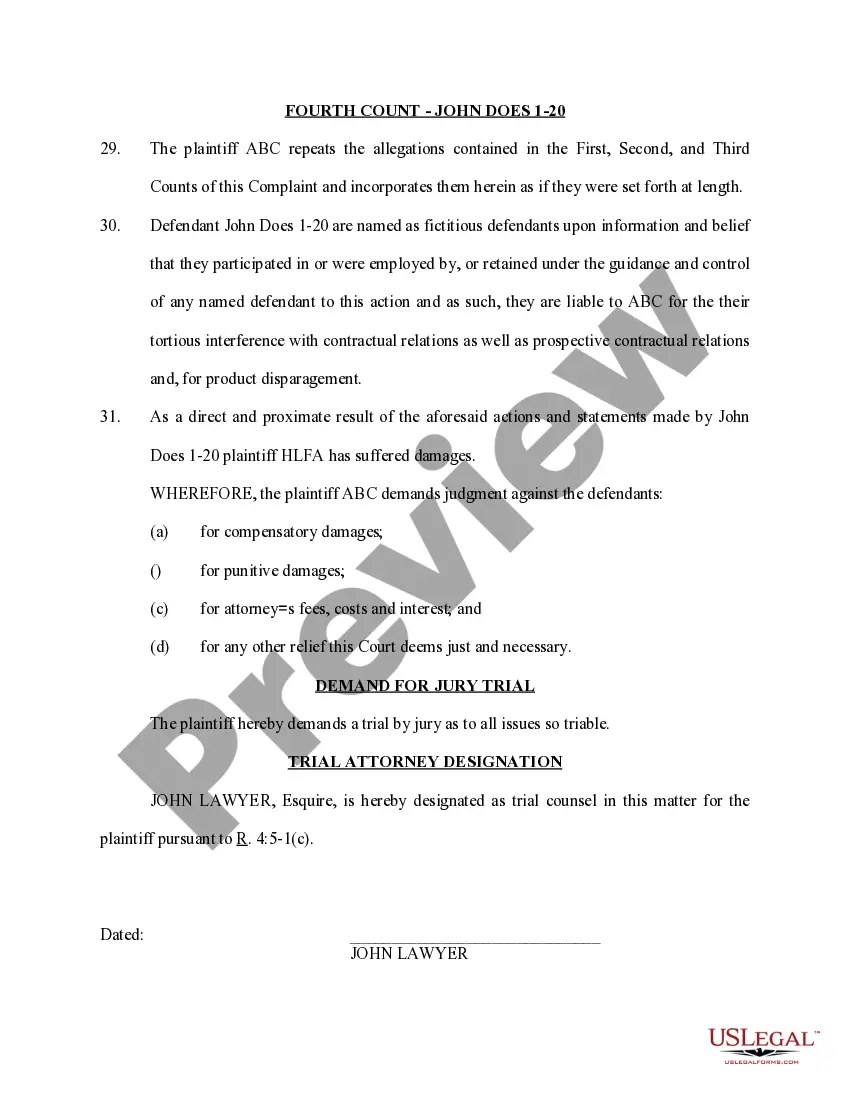
- Legal grounds: Specific counts for tortious interference with both existing and prospective contractual relationships.
- Damages sought: Specification of compensatory and punitive damages, along with attorney's fees and court costs.
- Jury demand: A request for a jury trial on all issues that are triable by jury.


When to use this form
This form is appropriate when a business believes that a competitor or another party has deliberately interfered with its contractual agreements or potential business prospects. For example, if a competitor spreads false information that leads to the loss of clients, this form allows the injured party to seek legal recourse in court.
Who should use this form
- Businesses or individuals who have suffered damages due to another party's interference in their contractual relations.
- Parties seeking to recover losses incurred from wrongful actions affecting their business relationships.
- Legal representatives of businesses intending to file a tortious interference complaint in New Jersey.
Instructions for completing this form
- Identify the parties: Fill in the names and addresses of the plaintiff and defendants.
- State the claims: Clearly articulate the details of the tortious interference, including relevant dates and communications.
- Specify damages: Outline the damages being sought, including both compensatory and punitive amounts.
- Include a jury request: Indicate a demand for a jury trial if desired.
- Sign and date: Both parties or their legal representatives should sign and date the complaint after all fields are completed.
Notarization guidance
Notarization is not commonly needed for this form. However, certain documents or local rules may make it necessary. Our notarization service, powered by Notarize, allows you to finalize it securely online anytime, day or night.
Get your form ready online
Our built-in tools help you complete, sign, share, and store your documents in one place.
Make edits, fill in missing information, and update formatting in US Legal Forms—just like you would in MS Word.
Download a copy, print it, send it by email, or mail it via USPS—whatever works best for your next step.
Sign and collect signatures with our SignNow integration. Send to multiple recipients, set reminders, and more. Go Premium to unlock E-Sign.
If this form requires notarization, complete it online through a secure video call—no need to meet a notary in person or wait for an appointment.
We protect your documents and personal data by following strict security and privacy standards.

Make edits, fill in missing information, and update formatting in US Legal Forms—just like you would in MS Word.

Download a copy, print it, send it by email, or mail it via USPS—whatever works best for your next step.

Sign and collect signatures with our SignNow integration. Send to multiple recipients, set reminders, and more. Go Premium to unlock E-Sign.

If this form requires notarization, complete it online through a secure video call—no need to meet a notary in person or wait for an appointment.

We protect your documents and personal data by following strict security and privacy standards.
Avoid these common issues
- Failing to accurately identify all parties involved in the complaint.
- Omitting specific details related to the alleged tortious interference.
- Not clearly stating the damages and relief sought.
- Neglecting to sign the form or provide the necessary dates.
Benefits of completing this form online
- Convenient access to professionally drafted legal forms from anywhere, at any time.
- Editable templates: Tailor the form easily to meet specific needs and circumstances.
- Reliability: Use templates created by licensed attorneys to ensure compliance with legal standards.
Quick recap
- This form addresses claims of tortious interference with contractual relations.
- It is essential for protecting business interests from unlawful disruptions.
- Ensure complete and accurate information to avoid common filing errors.
Looking for another form?
Form popularity
FAQ
Tortious interference is a common law tort allowing a claim for damages against a defendant who wrongfully interferes with the plaintiff's contractual or business relationships. See also intentional interference with contractual relations.
Tortious interference is a common law tort allowing a claim for damages against a defendant who wrongfully interferes with the plaintiff's contractual or business relationships. See also intentional interference with contractual relations.
The requisite elements of tortious interference with contract claim are: (1) the existence of a valid and enforceable contract between plaintiff and another; (2) defendant's awareness of the contractual relationship; (3) defendant's intentional and unjustified inducement of a breach of the contract; (4) a subsequent
The aggrieved party can bring a suit for tortious interference with a contract or business expectancy in many circumstances. If you believe you've been the victim of tortious interference, you should contact an experienced business and commercial lawyer to learn about your options.
Contract between plaintiff and a third party. defendant knew of contract. defendant improperly induced third party to breach the contract or made the contract impossible. harm to plaintiff.
To prevail on the claim, plaintiff must prove four elements: (1) that a valid contract existed, (2) that defendant had knowledge of the contract, (3) that defendant acted intentionally and improperly, and (4) that plaintiff was injured by the defendant's actions.
Tortious interference is a common law tort allowing a claim for damages against a defendant who wrongfully interferes with the plaintiff's contractual or business relationships. See also intentional interference with contractual relations.
The requisite elements of tortious interference with contract claim are: (1) the existence of a valid and enforceable contract between plaintiff and another; (2) defendant's awareness of the contractual relationship; (3) defendant's intentional and unjustified inducement of a breach of the contract; (4) a subsequent