New Jersey Distributorship Agreement
Description
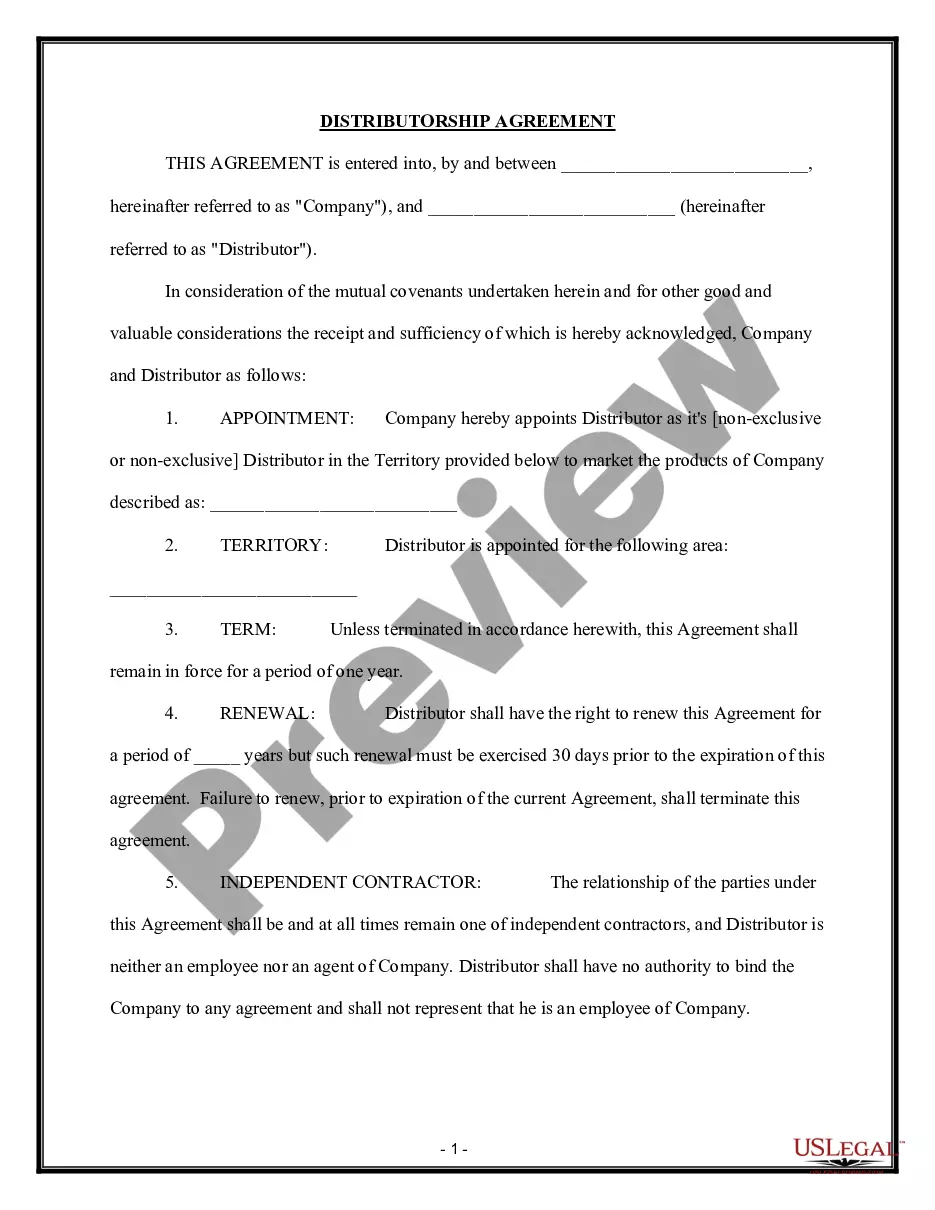
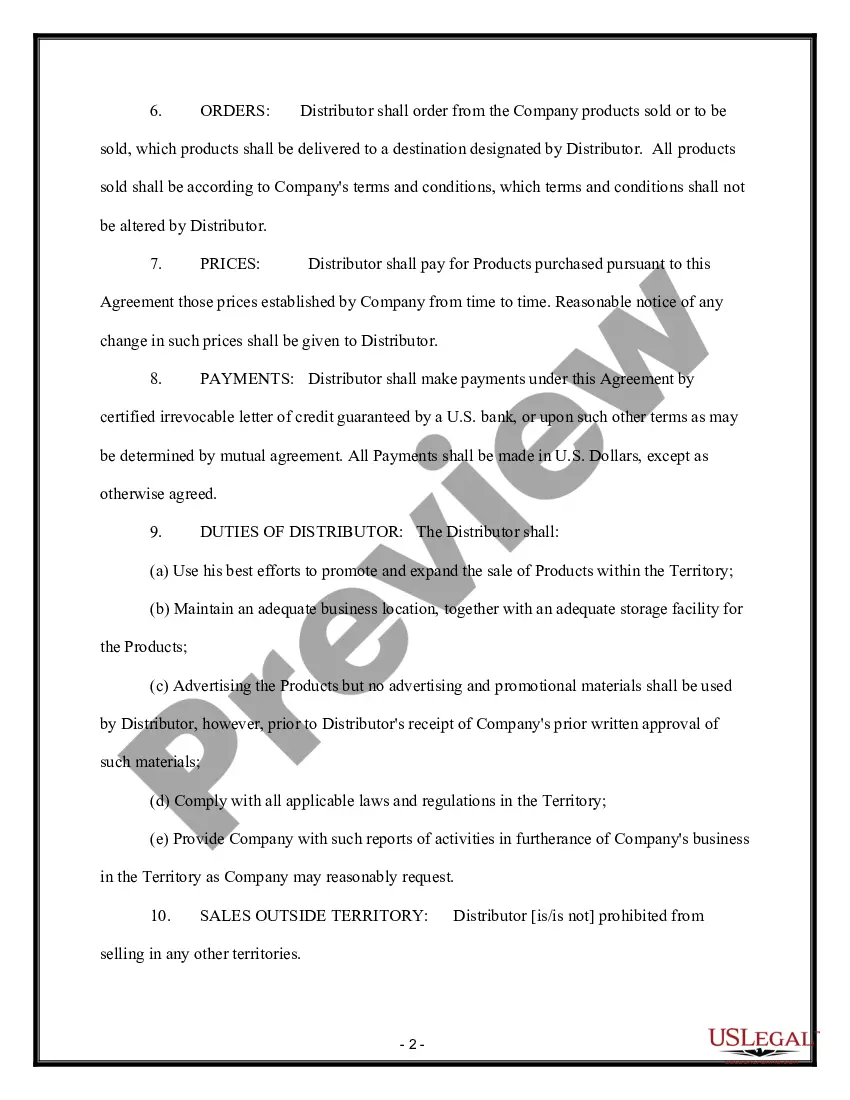
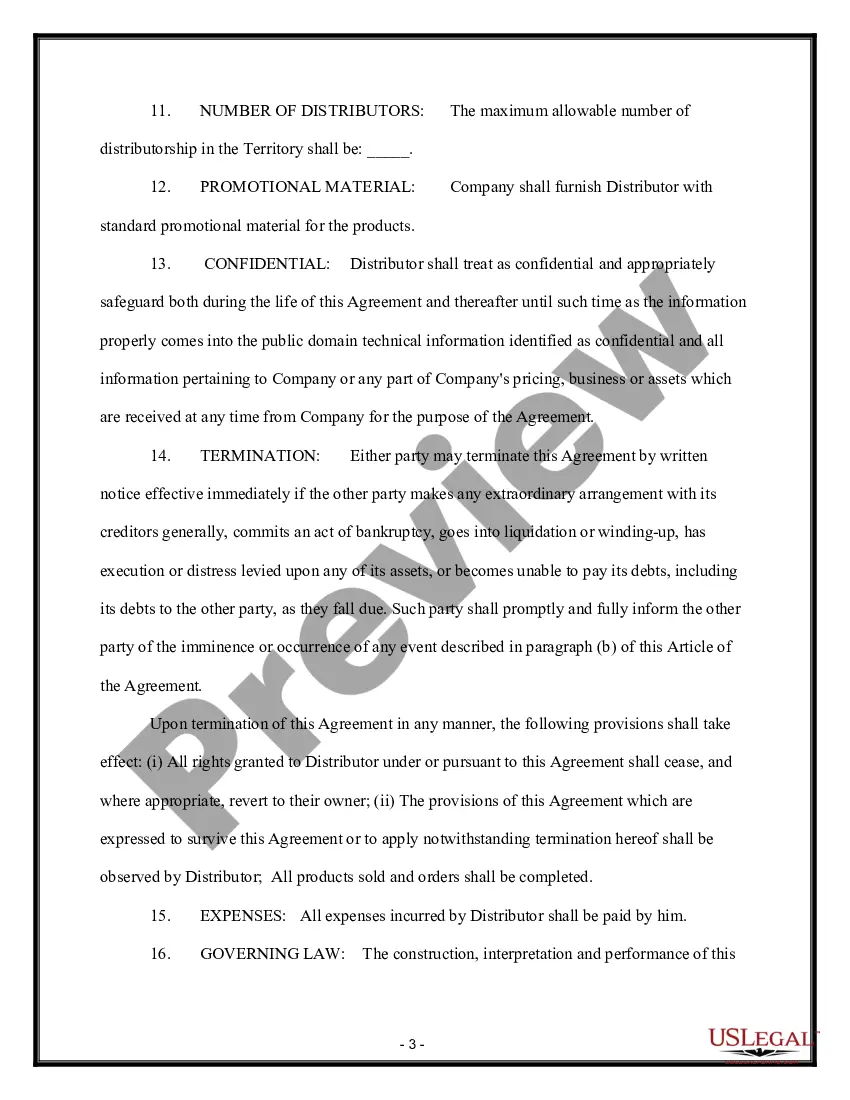
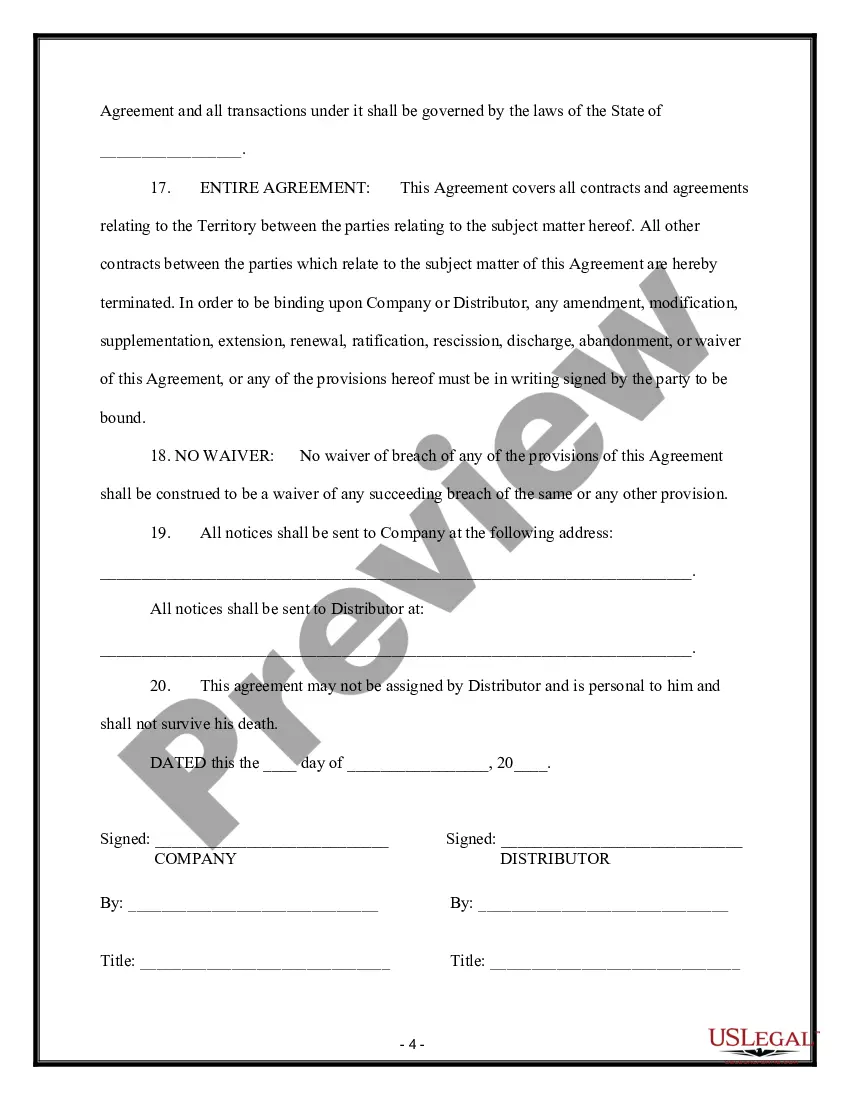
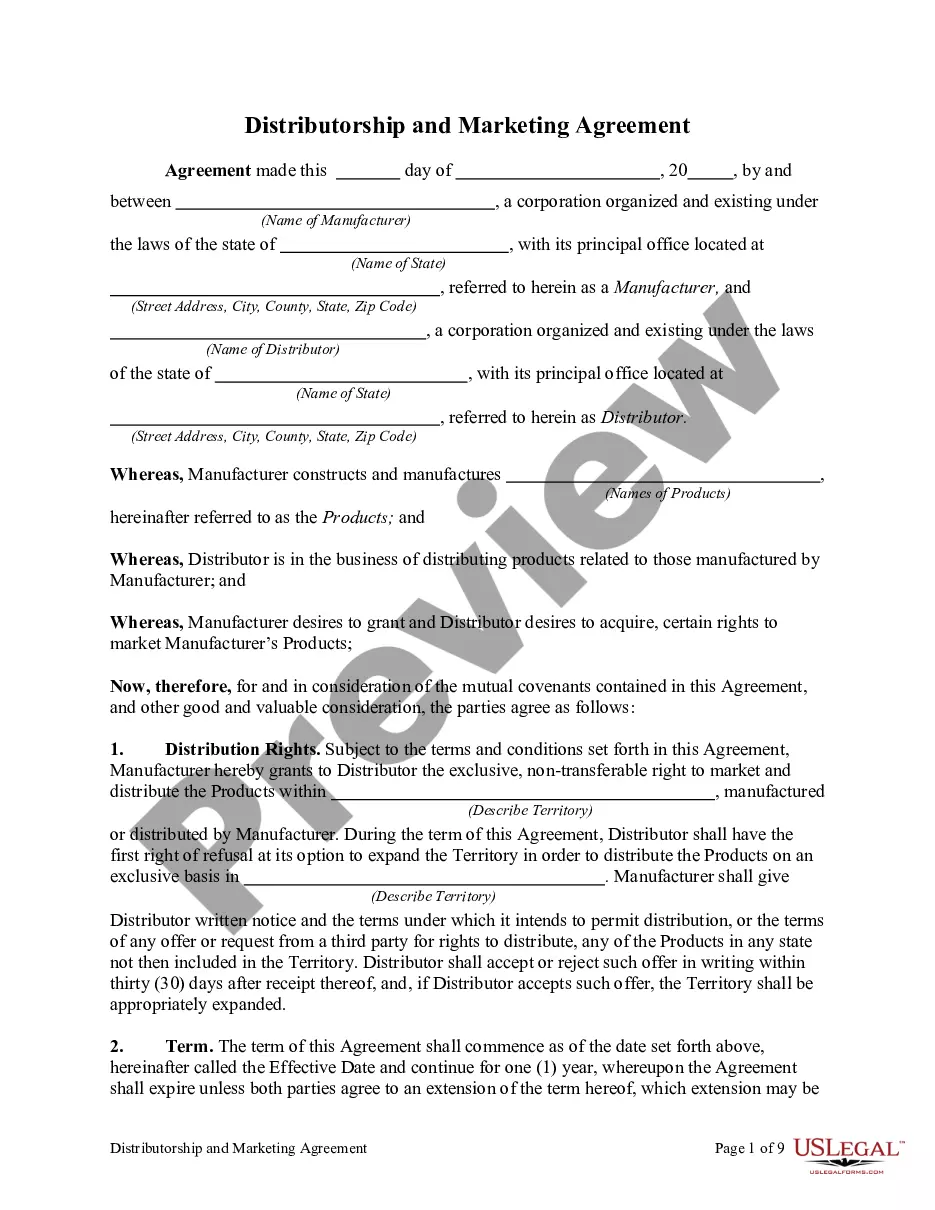
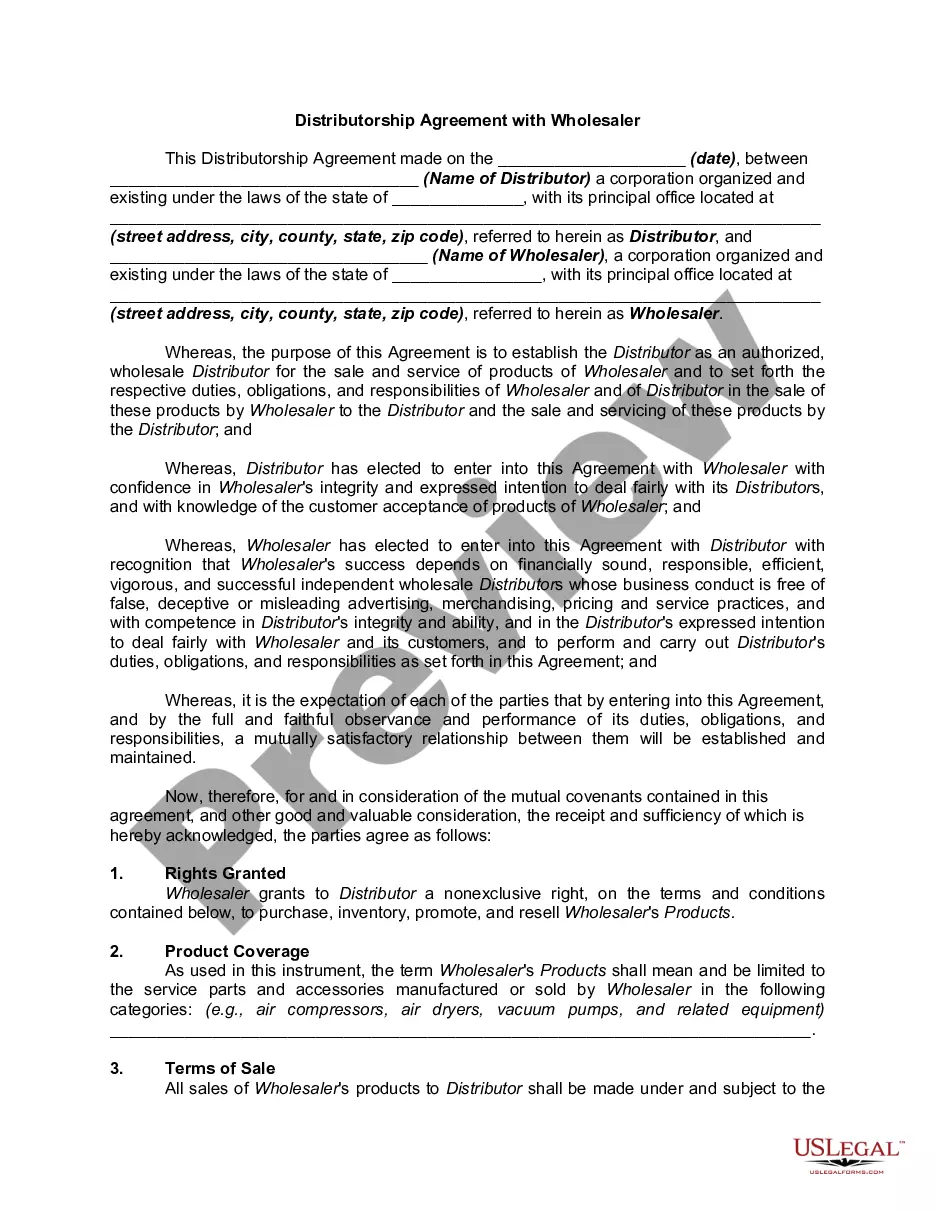
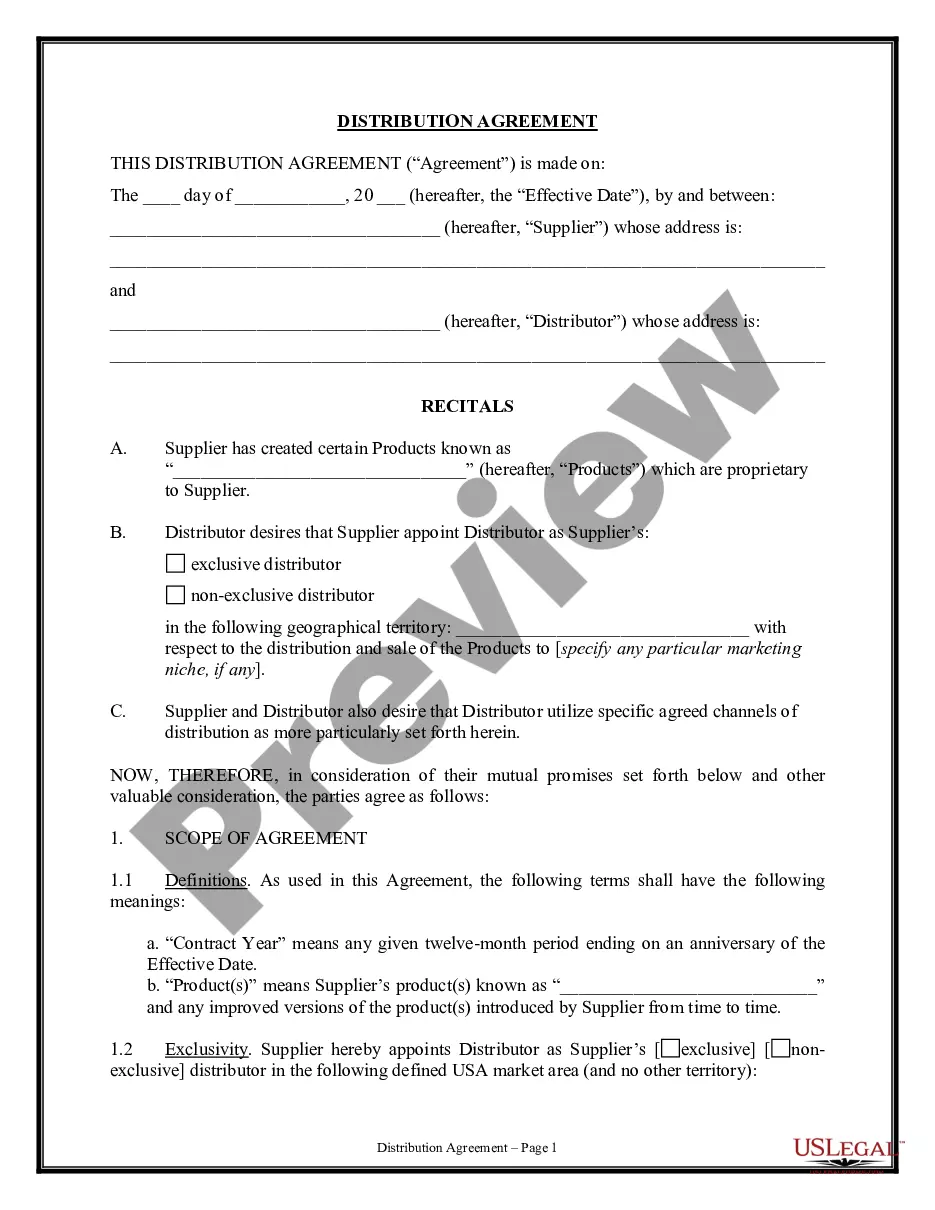
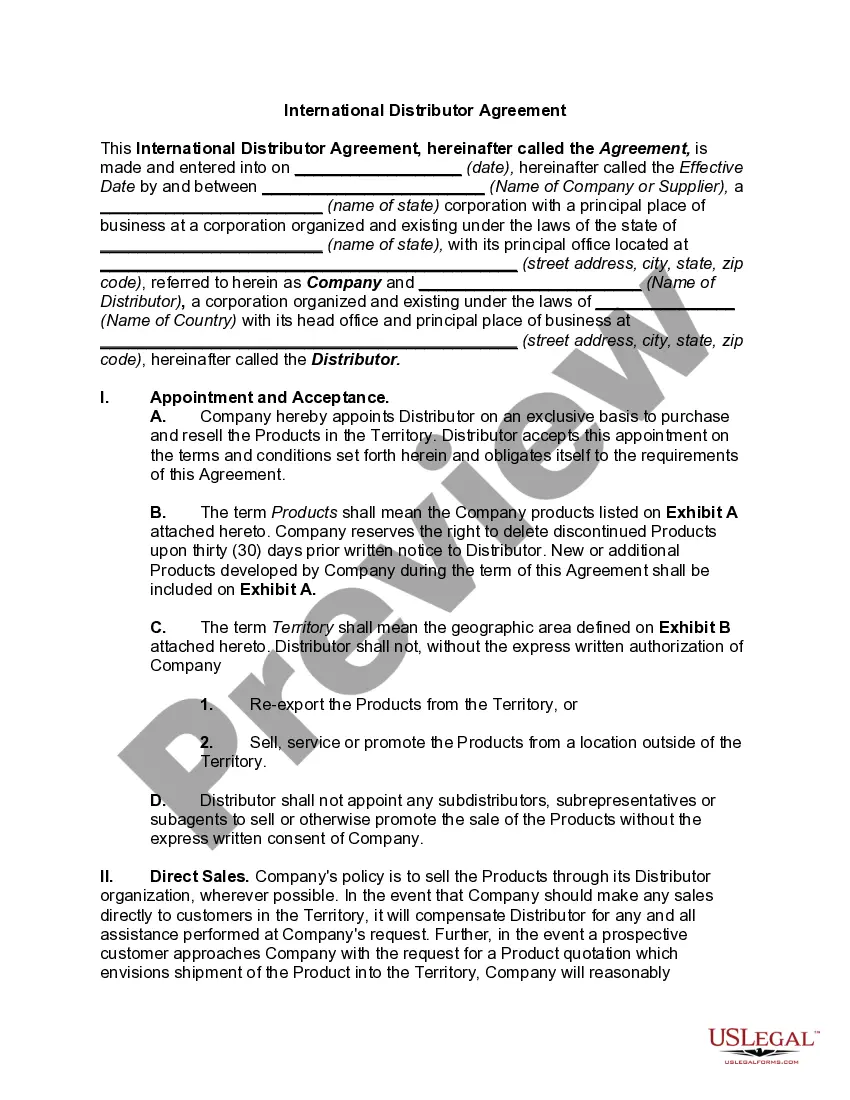
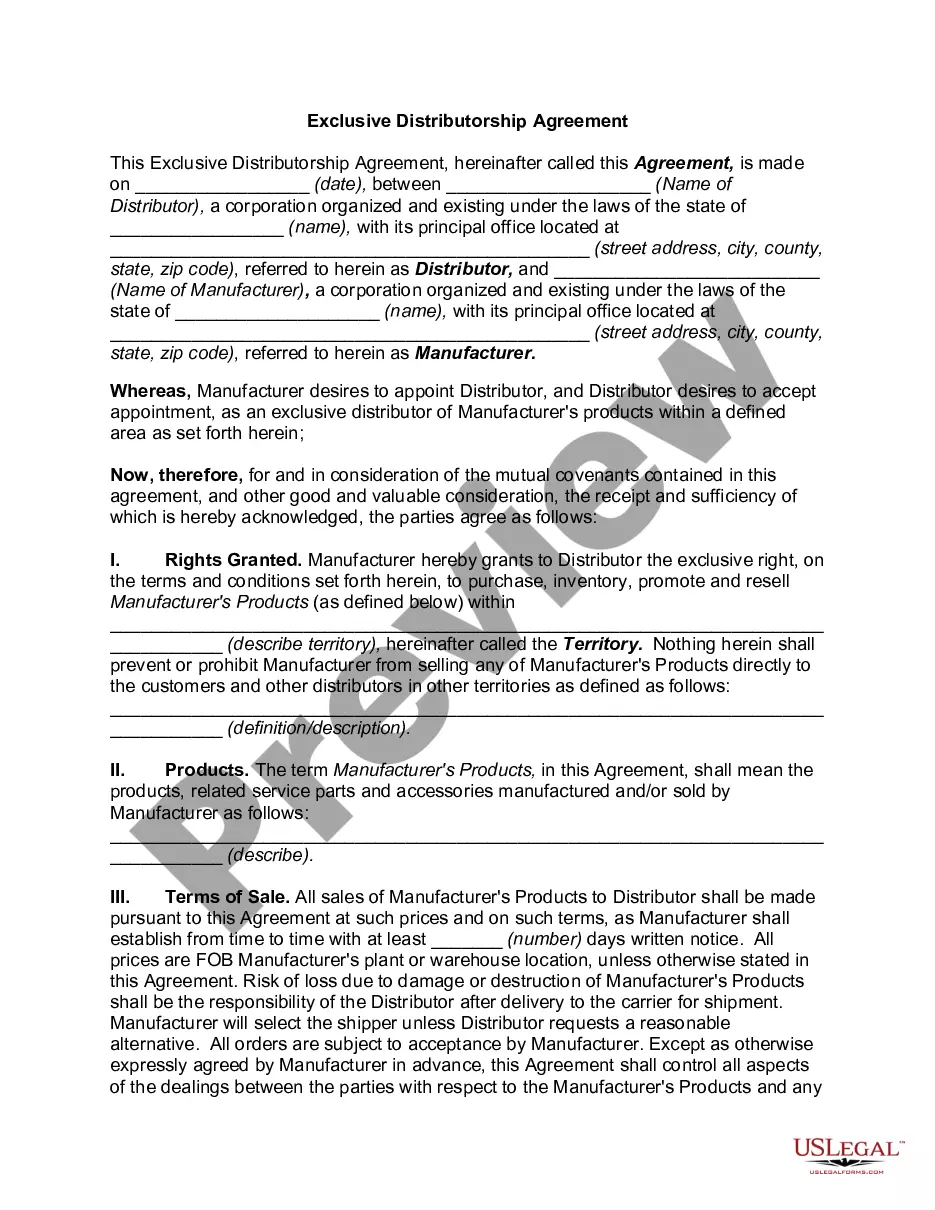




How to fill out Distributorship Agreement?
If you require extensive, download, or create legal document templates, utilize US Legal Forms, the largest repository of legal forms, accessible online.
Employ the site’s simple and convenient search to find the documents you need.
Numerous templates for business and personal purposes are categorized by types and states, or keywords.
Step 5. Process the order. You can utilize your credit card or PayPal account to complete the transaction.
Step 6. Select the format of the legal document and download it to your device.Step 7. Complete, edit, and print or sign the New Jersey Distributorship Agreement. Each legal document template you purchase is yours indefinitely.
You have access to every document you saved in your account. Choose the My documents section and select a document to print or download again.
Be proactive and download, and print the New Jersey Distributorship Agreement with US Legal Forms. There are numerous professional and state-specific forms you can utilize for your business or personal requirements.
- Utilize US Legal Forms to obtain the New Jersey Distributorship Agreement with a few clicks.
- If you are currently a US Legal Forms user, Log In to your account and click on the Download button to acquire the New Jersey Distributorship Agreement.
- You can also access forms you have previously saved from the My documents section of your account.
- If you are using US Legal Forms for the first time, refer to the instructions below.
- Step 1. Ensure you have selected the form for the correct city/state.
- Step 2. Use the Preview option to review the form’s details.
- Step 3. If you are unsatisfied with the form, take advantage of the Search field at the top of the screen to find alternative versions of the legal document template.
- Step 4. Once you have located the form you require, choose the Get now button. Select the pricing plan you prefer and input your details to register for the account.
Form popularity
FAQ
In New Jersey, a contract, including a New Jersey Distributorship Agreement, must contain several key elements. First, there must be an offer and acceptance, demonstrating a mutual agreement. Additionally, the parties involved must have the legal capacity to enter into a contract, and the agreement must have a lawful purpose. Consider using uslegalforms to access templates that meet these requirements and simplify the process.
Filling out a New Jersey Distributorship Agreement is straightforward. Begin by entering the names of the parties involved, followed by a clear description of the product or service in question. Ensure you include terms regarding payment, distribution rights, and duration of the agreement. Lastly, both parties should review the document carefully and sign it to make it legally binding.
In NJ, a contract becomes legally binding when it includes all elements of offer, acceptance, consideration, competent parties, and a lawful objective. It's crucial that all parties demonstrate a mutual understanding and intention to form an agreement. When drafting a New Jersey Distributorship Agreement, ensuring these requirements are met will help enforce the contract if necessary.
In New Jersey, limited liability companies (LLCs) typically benefit from, but are not required to have, an operating agreement. This document lays out the management structure and operational procedures, fostering clarity within the business. For those engaged in a New Jersey Distributorship Agreement, having a well-defined operating agreement can enhance overall business operations.
To create a binding contract in New Jersey, you need an offer made by one party, the acceptance of that offer by another, consideration exchanged between the parties, and a legal purpose for the agreement. Each element is essential for enforcing a New Jersey Distributorship Agreement in a court of law, ensuring fairness and clarity in business dealings.
In New Jersey, a contract becomes legally binding when it contains an offer, acceptance, consideration, the capacity of parties, and a legal purpose. Additionally, both parties must intend to enter into a binding agreement. When forming a New Jersey Distributorship Agreement, ensuring these elements are present can protect both parties involved.
A distributor acts as an intermediary who purchases products from manufacturers and sells them to retailers or directly to consumers. In contrast, a dealer typically sells products directly to customers and may not necessarily maintain a larger inventory. Understanding these distinctions can be crucial when drafting a New Jersey Distributorship Agreement, as each role carries different responsibilities and obligations.
To make a New Jersey Distributorship Agreement, start by gathering necessary information about the products, terms, and parties involved. Then, use templates available through platforms like US Legal Forms to ensure you include all essential elements. After drafting, review it thoroughly with legal counsel, then have both parties sign to finalize the agreement.
A New Jersey Distributorship Agreement includes critical components such as the scope of the distribution rights, payment terms, delivery schedules, and termination conditions. It should also detail product specifications and any obligations regarding marketing or promotional efforts. Ensuring all aspects are covered can help create a solid foundation for the partnership.
A New Jersey Distributorship Agreement typically involves a relationship where the distributor purchases products from the supplier to resell, while a dealer agreement generally involves selling products on behalf of the supplier. Distributors often manage larger territories and may handle inventory, while dealers focus on retail sales. Understanding these distinctions can help you choose the right agreement for your business.