New Jersey Electronic Publishing Agreement
Description
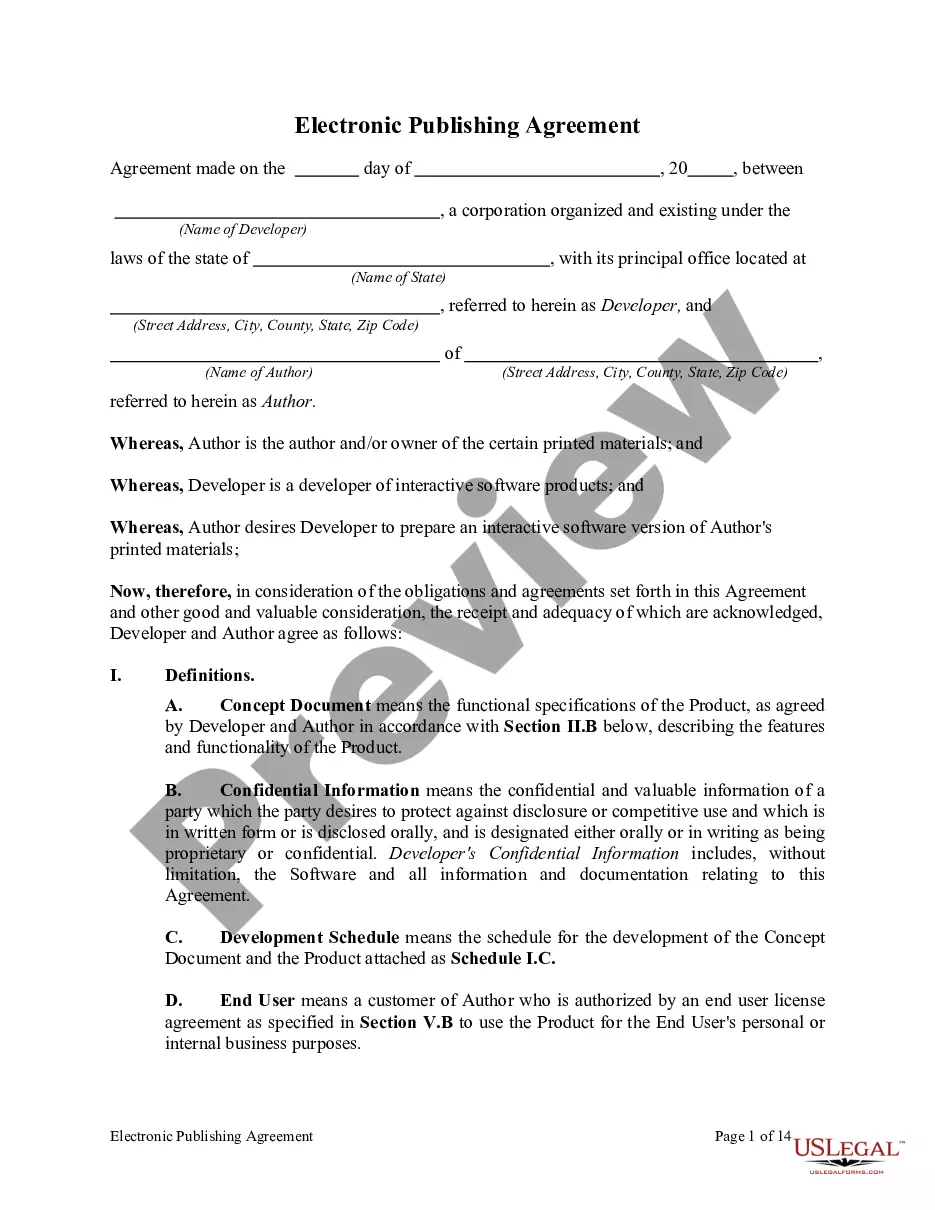
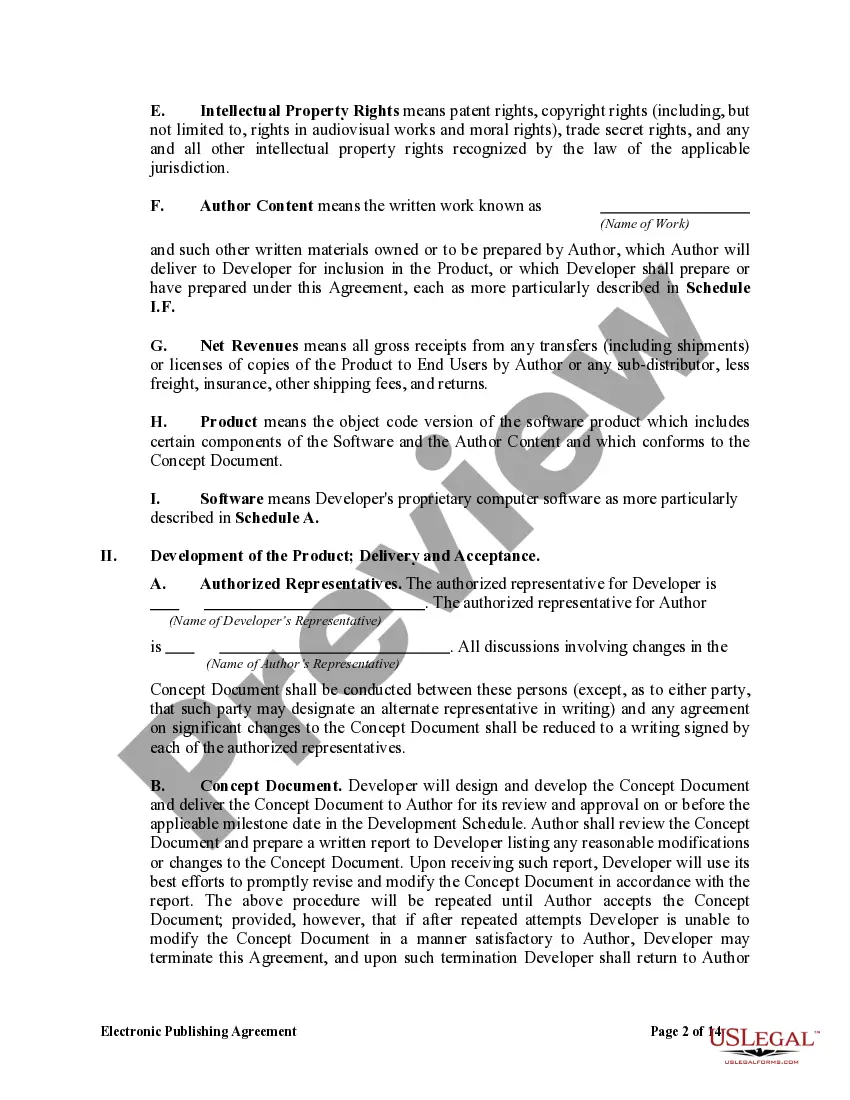
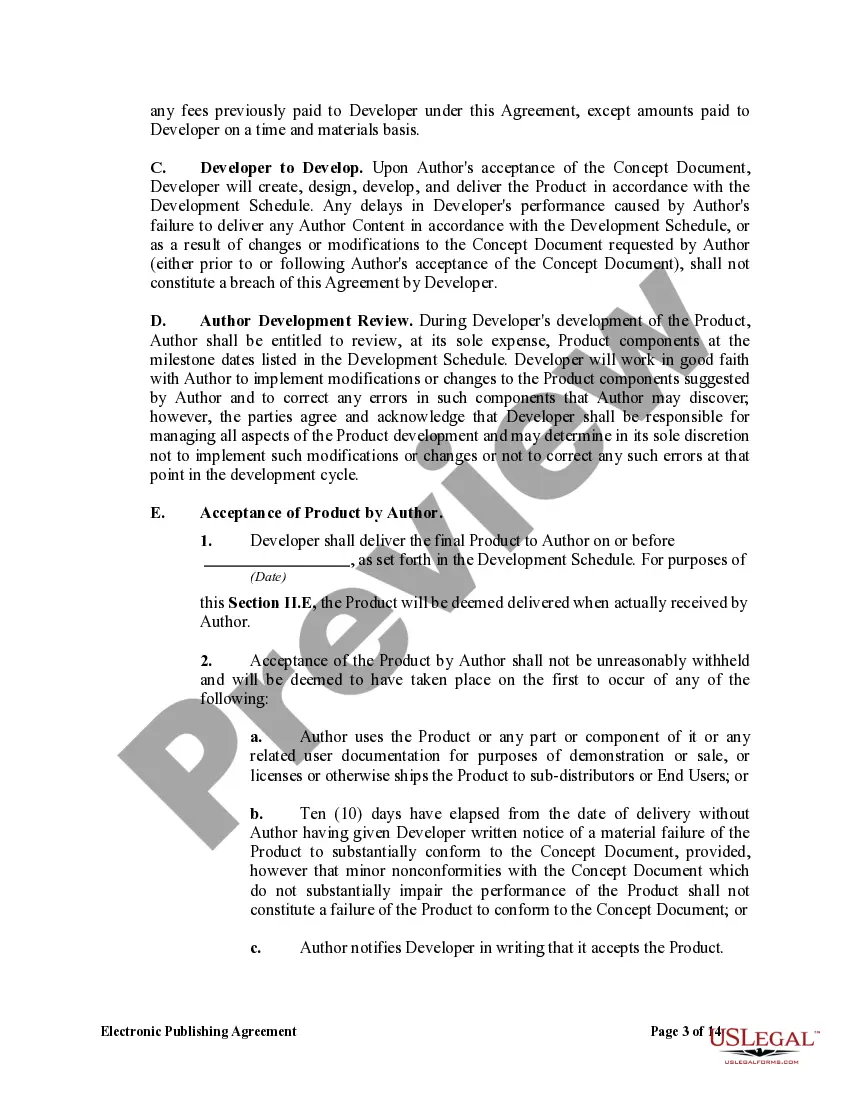
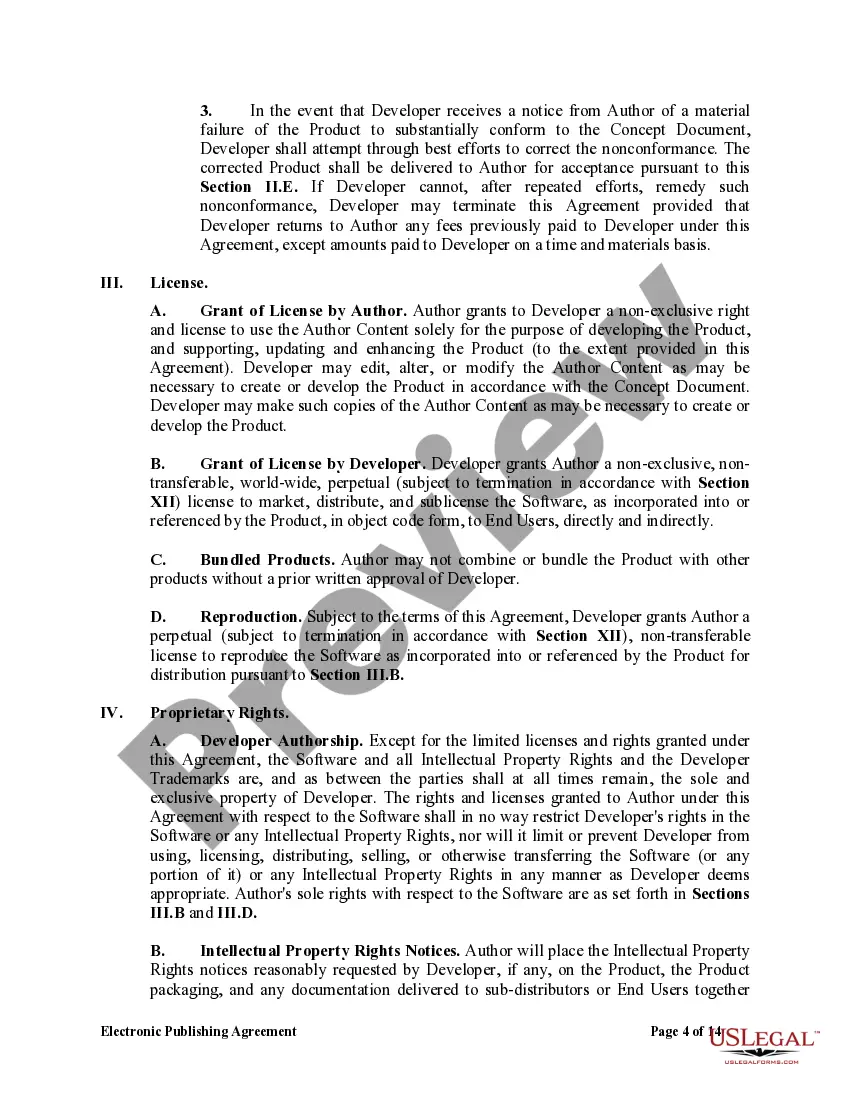
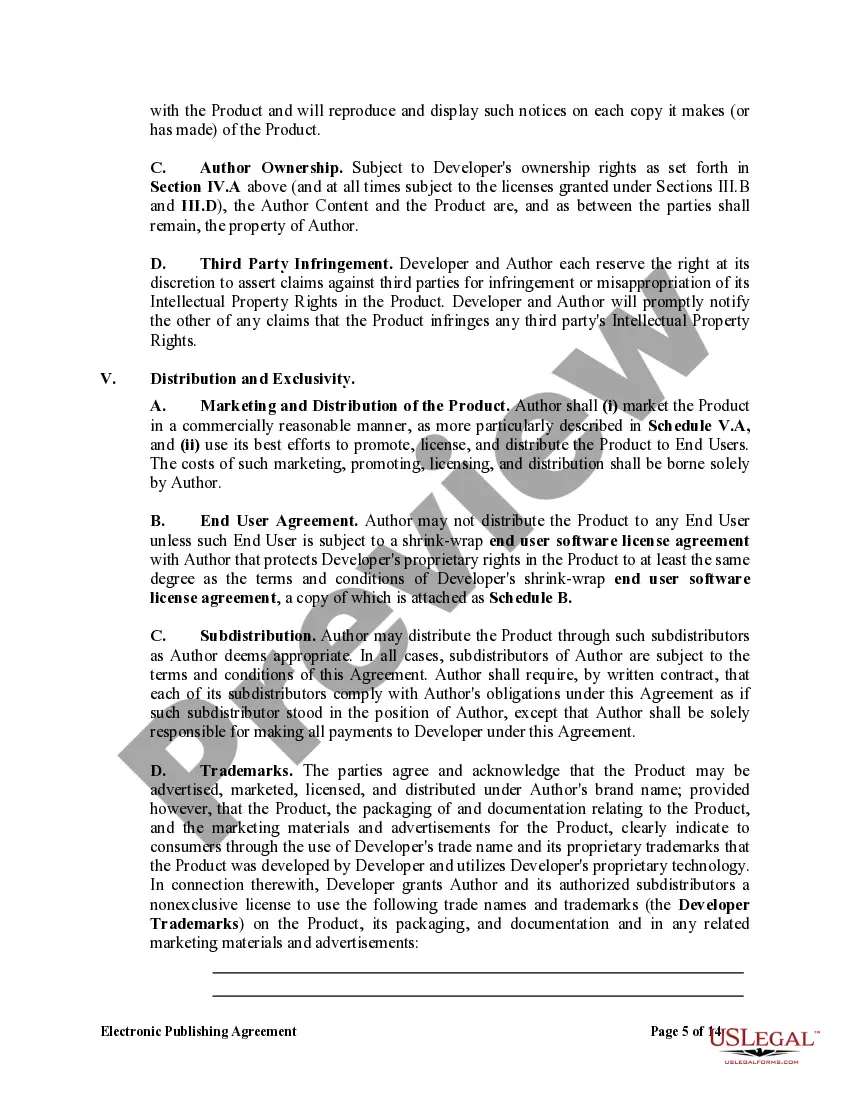
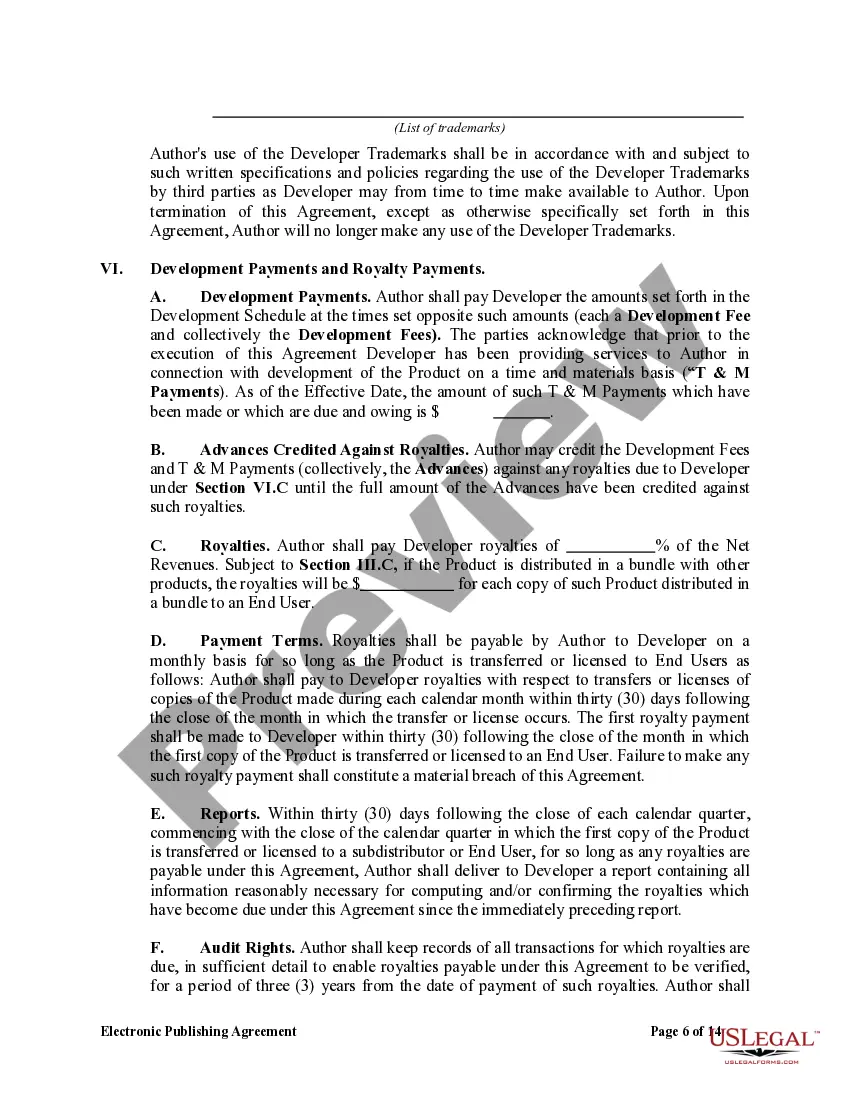
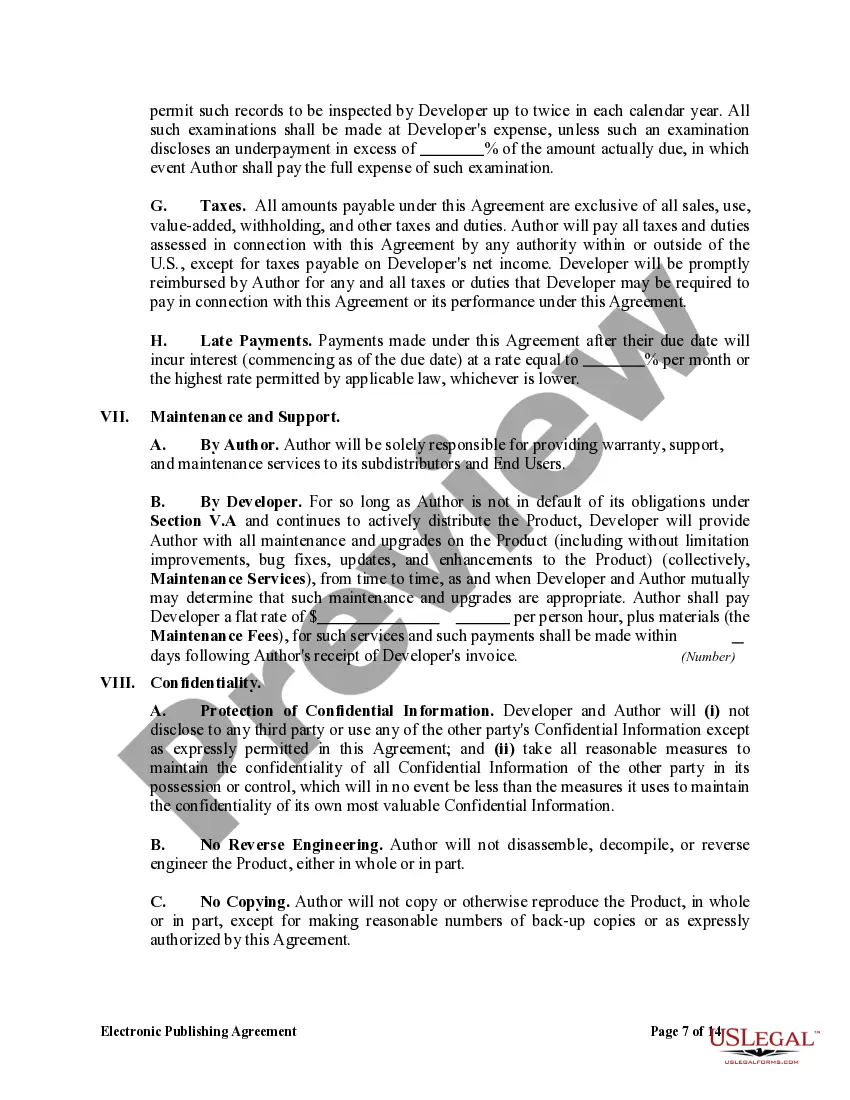
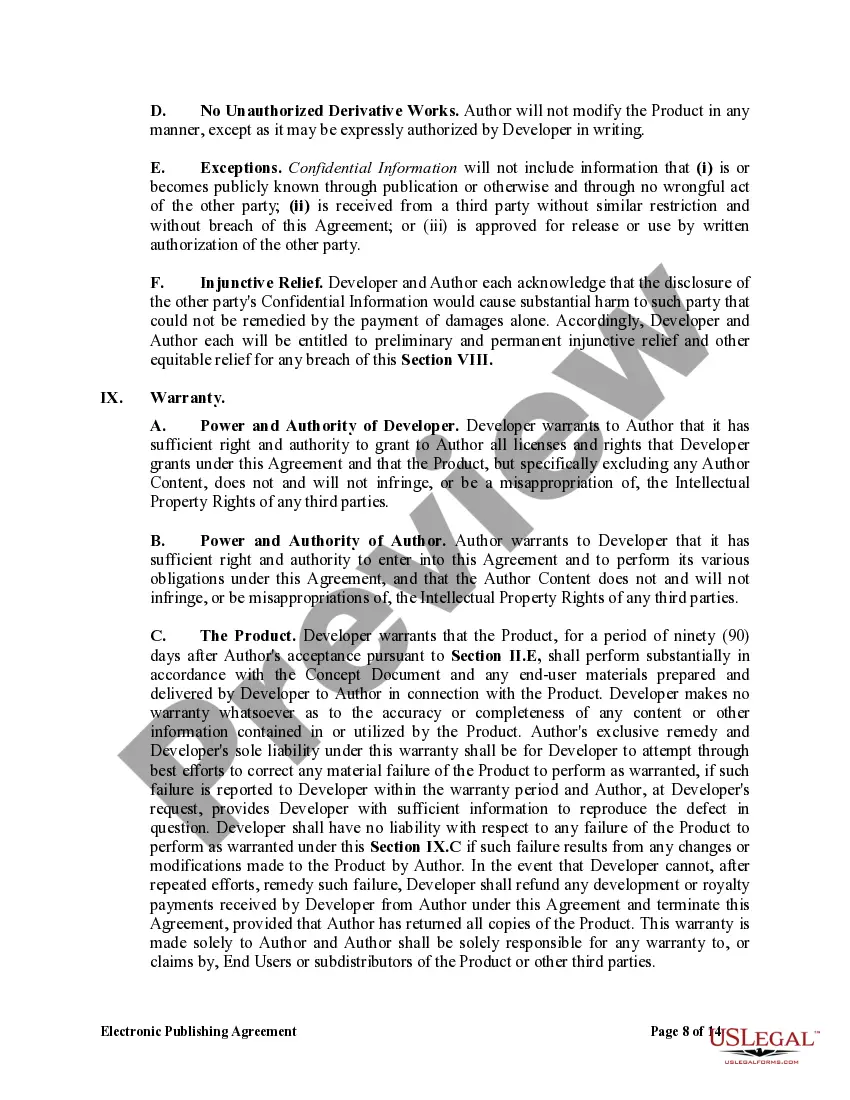
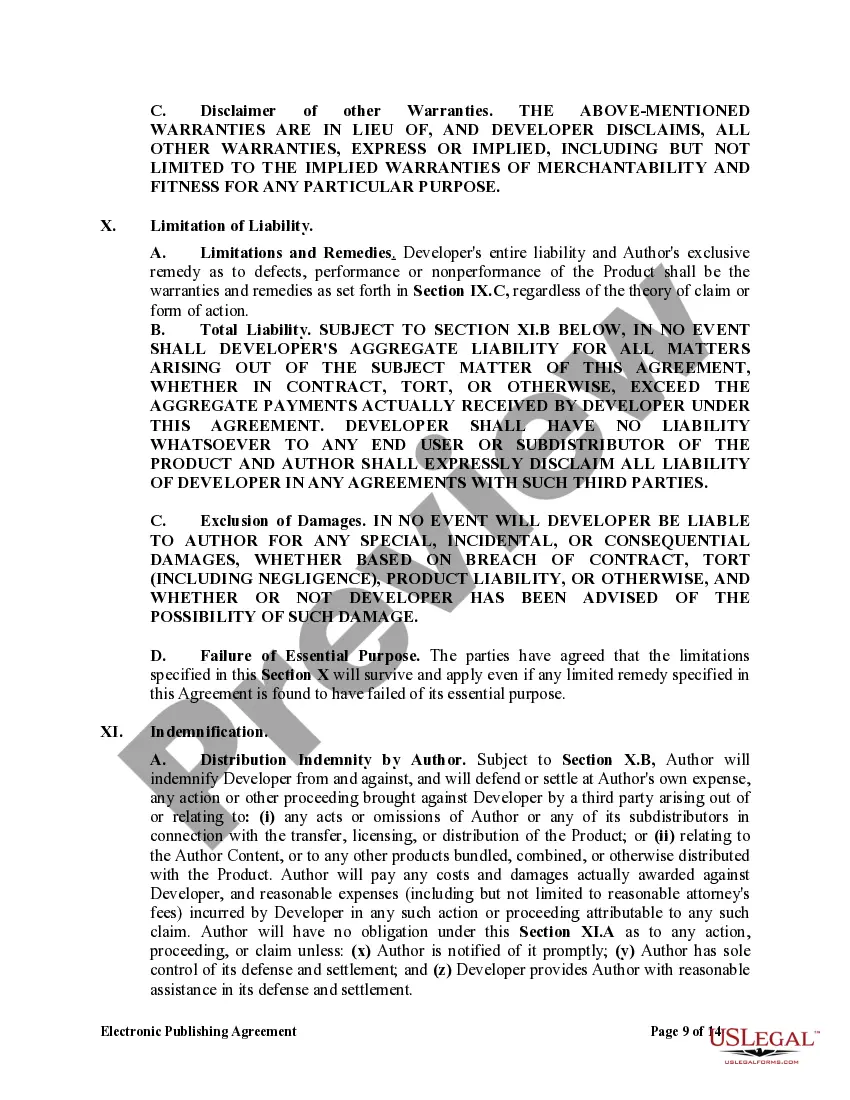
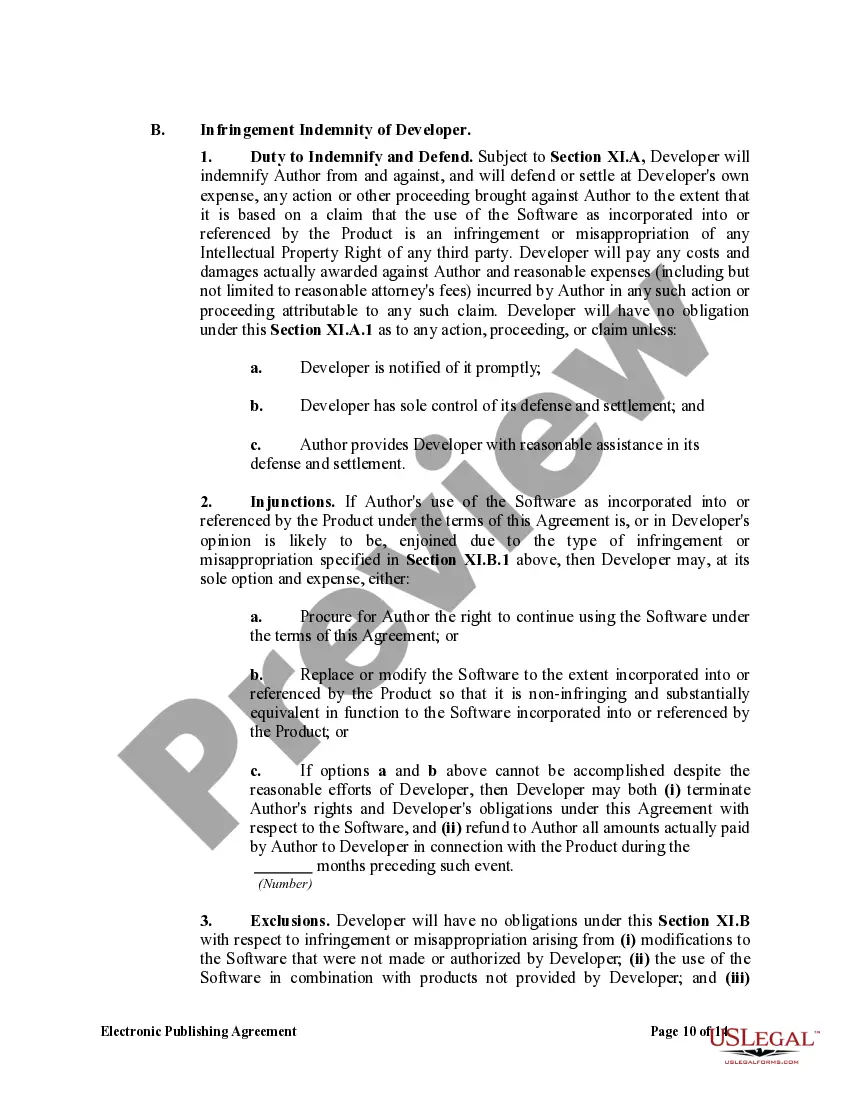


How to fill out Electronic Publishing Agreement?
You might spend numerous hours online attempting to discover the official document template that aligns with the federal and state requirements you need.
US Legal Forms offers a vast array of official forms that can be reviewed by professionals.
It is easy to obtain or create the New Jersey Electronic Publishing Agreement through the service.
Consult the form description to confirm that you have chosen the right one. If available, use the Review button to examine the document template as well.
- If you already have a US Legal Forms account, you can Log In and click on the Obtain button.
- Then, you can complete, edit, print, or sign the New Jersey Electronic Publishing Agreement.
- Every official document template you obtain is yours forever.
- To get another copy of the purchased form, visit the My documents section and click on the respective button.
- If you are using the US Legal Forms website for the first time, follow the simple instructions provided below.
- First, ensure that you have selected the correct document template for your area/town of choice.
Form popularity
FAQ
Obtaining a publishing contract involves several steps, starting with developing a strong manuscript and preparing a query letter. Once you engage with publishers or agents, you negotiate the terms outlined in the contract. If you're pursuing a New Jersey Electronic Publishing Agreement, consider exploring platforms like uslegalforms that can provide templates and guidance to facilitate the process. This approach ensures you are well-prepared for negotiations and can secure a favorable contract.
A 50 50 publishing deal refers to arrangements where profits from the sale of a work are split equally between the author and the publisher. This model can be beneficial for both parties, as it aligns their interests in promoting the book. If you are considering a New Jersey Electronic Publishing Agreement, make sure to discuss scenarios specific to digital sales and marketing, ensuring both sides understand the potential revenue streams.
Royalties in publishing agreements refer to the payments an author receives for the sale of their work. These can vary widely based on the type of agreement, with typical rates ranging from 5% to 25% of net sales. In a New Jersey Electronic Publishing Agreement, you may find tailored royalty structures that reflect the unique nature of digital content distribution. It's essential to clarify these terms upfront to set realistic expectations.
A typical publishing contract involves multiple components, including the author’s obligations, the publisher’s responsibilities, and the financial terms of the deal. It delineates the rights to publish the work, the length of the agreement, and how sales will be tracked and reported. In the case of a New Jersey Electronic Publishing Agreement, such contracts become more intricate with clauses about digital rights and electronic distribution channels. Understanding these details helps in protecting your interests.
A typical publishing deal outlines the rights and obligations of both the author and the publisher. It generally includes terms related to royalties, advances, and the distribution of the work. When it comes to a New Jersey Electronic Publishing Agreement, you can expect it to focus on digital aspects of publication, including eBook rights and online marketing strategies. It’s vital to be clear about these terms to ensure a mutually beneficial agreement.
The basic publishing contract serves as a foundational agreement between an author and a publisher, outlining the scope of the publishing relationship. It usually includes key details such as rights granted, royalty percentages, and the duration of the relationship. In a New Jersey Electronic Publishing Agreement, you might also find clauses specific to digital content and online distribution. Therefore, it's essential to read and understand every part of it before signing.
To terminate a publishing agreement, you typically need to follow the specific provisions outlined in the contract. Most agreements include termination clauses, allowing one or both parties to exit the deal under certain conditions. If you are dealing with a New Jersey Electronic Publishing Agreement, ensure that you comply with state laws and the terms laid out in your contract. It’s often wise to consult a legal professional to guide you through this process.
A traditional publishing contract is an agreement between an author and a publisher, specifying the terms under which the publisher will publish the author’s work. This contract usually covers aspects such as royalties, distribution, and rights. In the context of a New Jersey Electronic Publishing Agreement, it may also address digital rights and electronic distribution. Understanding these elements can help you navigate the publishing process more effectively.
Yes, New Jersey permits self-employed individuals to claim various tax deductions. These deductions can help lower your overall tax liability. For more comprehensive information about self-employment tax deductions, referring to the New Jersey Electronic Publishing Agreement is recommended.
The New Jersey Business Tax (CBT) must be filed by corporations and limited liability companies doing business in the state. Understanding your filing responsibilities is crucial for compliance. The New Jersey Electronic Publishing Agreement can provide clear directions on filing requirements and deadlines.